
Jewish food is hard to pin to a map. It moved with the people who cooked it, so one book can hold Ashkenazi brisket, Iraqi stews, Roman artichokes and Mexican Shabbat dishes. Being a Mexican kitchen, we were especially pleased to find that last one, Sabor Judío, on this list.
This guide gives eight books from named authors and established publishers, for holidays, for Shabbat and for ordinary dinners. We say which rest on a named review and which on the publisher’s details, and where stock kept out a title you might expect.
Julia’s earns a commission on purchases made through links on this page, at no cost to you. Recommendations are based on what a restaurant kitchen looks for in a cookbook, the Amazon listing, publisher and author information and published reviews, which we name where we use them.
Quick verdict: the best Jewish cookbook to start with
For most cooks, start with Leah Koenig’s The Jewish Cookbook: more than 400 home recipes from communities around the world. For holidays, choose The Jewish Holiday Table from the Jewish Food Society. For a weekly Friday night, choose Adeena Sussman’s Shabbat.
The other five cover modern Jewish cooking with a sense of humor, Rome’s Jewish kitchen, Jewish Mexican food, kosher comfort recipes and a guide from an Australian cooking club.
Five Jewish cookbooks side by side
Five of the eight, one for each kind of cook. All eight are described in full below.
| Cookbook | Best for | Recipes | Length | Buy on Amazon |
|---|---|---|---|---|

The Jewish Cookbook, Leah KoenigBest overall
|
The widest view of Jewish food | More than 400 | 432 pages, hardcover | View on Amazon |

The Jewish Holiday Table, Naama Shefi and Devra FerstBest for holidays
|
Holiday meals | 135 | 400 pages, hardcover | View on Amazon |

Shabbat, Adeena SussmanBest for Shabbat
|
A weekly Friday night | Not stated | 384 pages, hardcover | View on Amazon |

Jew-Ish, Jake CohenBest modern voice
|
Modern, funny, inventive | Not stated | 272 pages, hardcover | View on Amazon |

Sabor Judío, Ilan Stavans and Margaret E. BoyleBest for Mexican kitchens
|
Jewish Mexican cooking | 100 | 296 pages, hardcover | View on Amazon |
Cover images from Amazon. Page counts and formats are from the Amazon listings for the editions linked. Recipe counts are from the publisher’s copy.
Our picks for the best Jewish cookbook, book by book
All eight were in stock, in print and new, and sold by Amazon when we checked. We have not cooked from these books; where we describe a strength, we say whose view it is. Only one of them is described by its publisher as kosher, so check each recipe if you keep kosher.
1. The Jewish Cookbook, Leah Koenig – Hundreds of Dishes, Many Countries
This is the broad survey. Phaidon describes more than 400 home-cooking recipes covering everyday and holiday food from the Middle East, the Americas, Europe, Asia and Africa, with contributions from chefs including Yotam Ottolenghi, Michael Solomonov and Alex Raij.
Publishers Weekly, in a 2019 review we read, calls it “an excellent, thoughtful entry in Phaidon’s expanding lineup of accessible cookbooks.” It points to a chapter on fritters, Middle Eastern and South African recipes, an American Southern kugel and clear writing on challah shapes and rugelach.
Koenig has written for the New York Times and Saveur, among others, per her publisher. Her Portico is also on this list. PW notes that many of the dishes are humble and home-style, which is what you want from a book you will actually cook from.
Why we like it
- More than 400 recipes, per Phaidon
- Five regions of the world
- Warm Publishers Weekly review
- Chef contributions from Ottolenghi and others
Key specifications
| Author | Leah Koenig |
|---|---|
| Publisher | Phaidon |
| Year | 2019 |
| Pages | 432 |
| Format | Hardcover |
| Recipes | More than 400 |
| Focus | Jewish home cooking worldwide |
| Best for | Most home cooks |
Why we recommend it
If you want one book that covers the whole Jewish table, this is the safest first choice.
Skip it if you want a strong personal story. A survey like this keeps its author in the background.
Pros and cons
Pros
- Very wide range
- Strong PW review
- Clear writing
Cons
- Big and heavy
- Less personal voice
2. The Jewish Holiday Table, Naama Shefi and Devra Ferst – 135 Recipes for the Calendar
Collected by the Jewish Food Society, the nonprofit Shefi founded in 2017, this book has 135 recipes with stories about how holidays are kept through food, according to the publisher. Sample menus include a Persian Rosh Hashanah feast, a Ukrainian-Mexican Seder and an Iraqi Purim spread.
The copy also tells of two grandmothers whose Hanukkah doughnuts compete, a Moroccan sfenj and an Egyptian zalabia, which gives a good idea of the book’s range and tone. Claudia Roden is quoted on “moving stories and delicious recipes imbued with memories and history,” and Ottolenghi and Solomonov also praise it. We read those through the publisher.
We found no Publishers Weekly review at this ISBN. The organization behind it is focused on preservation, per the publisher, which may explain the book’s global reach.
Why we like it
- 135 recipes, per the publisher
- Menus for specific holidays
- Global range of traditions
- Praise from Claudia Roden, via the publisher
Key specifications
| Author | Naama Shefi and Devra Ferst |
|---|---|
| Publisher | Artisan |
| Year | 2024 |
| Pages | 400 |
| Format | Hardcover |
| Recipes | 135 |
| Focus | Holiday recipes and stories |
| Best for | Holiday hosts |
Why we recommend it
If you host holidays and would like a menu with a story behind it, this is the book to buy.
Skip it if you want quick weeknight food. It is organized around occasions.
Pros and cons
Pros
- Great for hosts
- Global traditions
- Good stories
Cons
- Occasion focus
- No PW review at this ISBN
3. Shabbat, Adeena Sussman – Recipes for the Day of Rest
The practical problem of Shabbat is food that holds and does not need last-minute work. Sussman’s publisher describes hearty mains that need little active work, room-temperature salads and sides, pantry staples such as pickled mango spread and tomato jam, and desserts, with profiles of local cooks in Israel.
Sussman wrote Sababa and has coauthored fourteen cookbooks, per the publisher, and she writes from Tel Aviv near Carmel Market. The publisher calls it an instant New York Times bestseller and quotes Michael Solomonov and Michael Twitty, the latter on “a celebration of family recipes and personal revelations.” We read those through the publisher.
Publishers Weekly’s page says it has not reviewed the book. We did not find a recipe count. Our Middle Eastern cookbook guide covers other books with an Israeli focus.
Why we like it
- Hearty mains with little active work, per the publisher
- Room-temperature salads and sides
- Pantry staple recipes
- Profiles of local cooks
Key specifications
| Author | Adeena Sussman |
|---|---|
| Publisher | Avery |
| Year | 2023 |
| Pages | 384 |
| Format | Hardcover |
| Recipes | Not stated |
| Focus | Shabbat meals |
| Best for | Weekly hosts |
Why we recommend it
If you host Friday dinner regularly, or would like to start, this solves the real problem: what can sit and still taste good.
Skip it if you want a broad Jewish cookbook. This is built around a single weekly meal.
Pros and cons
Pros
- Solves a real planning problem
- Experienced author
- Useful staples
Cons
- Recipe total not confirmed by us
- PW has not reviewed it
4. Jew-Ish, Jake Cohen – Reinvented Recipes, Big Personality
Jake Cohen reworks his Ashkenazi heritage and borrows from his husband’s Persian-Iraqi traditions, according to his publisher, in dishes such as a saffron-yellow latke, roasted tomato brisket and matzo tiramisu.
Publishers Weekly’s 2021 review, which we read, is worth knowing about. It calls the book chatty and inventive and likes pastrami biscuits and gravy and salted honey chopped liver, along with his notes on brisket. But it finds the humor uneven, with some jokes landing poorly, and it calls his voice “a love it or leave it proposition.”
Publisher copy quotes Joan Nathan calling him “the creative, youthful future of Jewish food,” read through the publisher. We list no recipe count because we did not find one. His follow-up, I Could Nosh, was also in stock, but one Cohen book is enough for this list.
Why we like it
- Reinvented classics, per the publisher
- Reviewed by Publishers Weekly
- Three kinds of kugel, per PW
- Praise from Joan Nathan, via the publisher
Key specifications
| Author | Jake Cohen |
|---|---|
| Publisher | Harvest |
| Year | 2021 |
| Pages | 272 |
| Format | Hardcover |
| Recipes | Not stated |
| Focus | Ashkenazi and Persian-Iraqi twists |
| Best for | Cooks who like humor |
Why we recommend it
If you like a cookbook with jokes and want your matzo in unexpected places, this is good fun.
Skip it if you do not enjoy a loud author. PW says his voice is not for everyone.
Pros and cons
Pros
- Inventive recipes
- Named review
- Fun tone
Cons
- Uneven humor, says PW
- Not a traditional reference
5. Sabor Judío, Ilan Stavans and Margaret E. Boyle – Where Jewish and Mexican Food Meet
This is the book on the list we most wanted to read. It explores the blend of Jewish and Mexican food traditions through 100 personal recipes from Jewish Mexicans around the world, arranged by breakfast, lunch and dinner, with dishes for Shabbat and Jewish holidays, according to the publisher.
It also traces Jewish immigration to Mexico from 1492 to the present and explains how the two cuisines merged, largely through the work of Ashkenazi, Sephardic, Mizrahi and converso women. The authors spent a decade collecting recipes and stories from households. Ilan Stavans teaches at Amherst College and Margaret Boyle at Bowdoin College, and Leah Koenig wrote the preface.
It comes from a university press, so expect scholarship alongside the food. We found no quoted praise in what we read and no Publishers Weekly review at this ISBN, so this rests on the publisher’s and authors’ details. For Mexican food on its own terms, see our best Mexican cookbooks guide.
Why we like it
- 100 recipes, per the publisher
- Traces Jewish immigration to Mexico
- A decade of collecting, per the publisher
- Includes Shabbat and holiday dishes
Key specifications
| Author | Ilan Stavans and Margaret E. Boyle |
|---|---|
| Publisher | University of North Carolina Press |
| Year | 2024 |
| Pages | 296 |
| Format | Hardcover |
| Recipes | 100 |
| Focus | Jewish Mexican cooking |
| Best for | Readers of food history |
Why we recommend it
If you cook Mexican food and want to see a part of its story few books tell, this is the one.
Skip it if you want a general Jewish cookbook. It covers one community in depth.
Pros and cons
Pros
- Rare subject
- Scholarly authors
- Family recipes
Cons
- University press tone
- No named review in our sources
6. Portico, Leah Koenig – Rome’s Jewish Kitchen
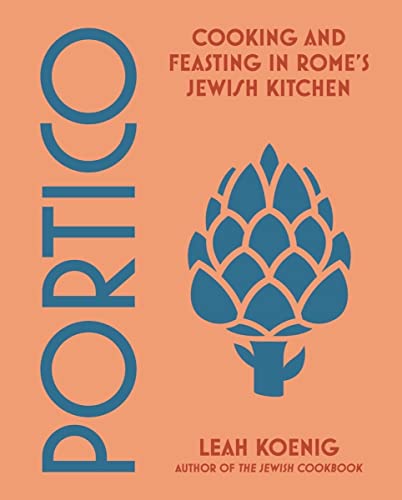
Koenig’s second book here is much narrower: the cooking of Rome’s Jewish community, which the publisher calls the oldest in Europe. It has over 100 recipes, from braised meats and rustic pastas to fried foods and desserts, including stracotto di manzo and carciofi alla giudia.
Publishers Weekly, in a 2023 review we read, calls it an inviting introduction and says the recipes are approachable. It highlights the artichoke, described as the “heart and soul of Roman Jewish cuisine,” and a kosher amatriciana made with dried salt beef, along with pantry and Shabbat menu guidance.
The publisher says the book won an IACP Award. If the Italian side appeals more, our best Italian cookbook guide covers the wider country.
Why we like it
- Over 100 recipes, per the publisher
- Approachable, per PW
- Shabbat menu guidance
- IACP Award, per the publisher
Key specifications
| Author | Leah Koenig |
|---|---|
| Publisher | W. W. Norton |
| Year | 2023 |
| Pages | 336 |
| Format | Hardcover |
| Recipes | Over 100 |
| Focus | Rome’s Jewish community |
| Best for | Italian food lovers |
Why we recommend it
If you love Roman food or artichokes and want a place with a real story, this is a pleasure.
Skip it if you want coverage of many Jewish communities. It stays in Rome.
Pros and cons
Pros
- Strong PW review
- Focused story
- Approachable recipes
Cons
- One city only
- Some sourcing for artichokes and salt beef
7. Eat Jewish, Melinda Strauss – Kosher Comfort Food

Melinda Strauss answers questions about Judaism and posts Jewish recipes on social media, according to her publisher, and was a full-time food blogger before that. The book pairs over 100 kosher recipes with stories about Jewish life, history and heritage, and it answers common questions about customs.
It covers challah, dips, soups, dairy and non-dairy dishes, desserts and holiday meals. Publisher copy quotes Kenden Alfond in the Jewish Book Council, “The word that best describes it is ‘comfort,'” and Library Journal saying her recipes “more than earn her a place on the shelf.” We read those through the publisher.
We found no Publishers Weekly review at this ISBN. It is the only book on this page that its publisher describes as kosher throughout, which is why it is here. Rely on your own standards for anything beyond that.
Why we like it
- Over 100 kosher recipes, per the publisher
- Answers questions about customs
- Dairy and non-dairy chapters
- Jewish Book Council praise, via the publisher
Key specifications
| Author | Melinda Strauss |
|---|---|
| Publisher | Rock Point |
| Year | 2025 |
| Pages | 256 |
| Format | Hardcover |
| Recipes | Over 100 |
| Focus | Kosher home recipes and Jewish customs |
| Best for | Kosher households |
Why we recommend it
If you keep kosher, or want to learn the basics of Jewish customs along with the recipes, this is a friendly place to begin.
Skip it if you want a chef’s creativity or a study of history. It aims for comfort.
Pros and cons
Pros
- Kosher, per the publisher
- Beginner friendly
- Explains customs
Cons
- Simple by design
- No PW review at this ISBN
8. A Year of Jewish Cooking, Monday Morning Cooking Club – Family Recipes, Festival by Festival

The Monday Morning Cooking Club is a group of three women from Sydney’s Jewish community, Lisa Goldberg, Merelyn Chalmers and Natanya Eskin, according to the publisher. They began in 2006 by writing a charity cookbook, and they have been collecting recipes from older generations ever since.
This guidebook is arranged around the festival and ritual calendar, from Shabbat dinners and shiva to Purim, Pesach, Shavuot and Sukkot, and it was written because adult children kept asking for help making familiar family dishes. That is a good reason to write a cookbook.
It is dated September 2026 on the listing. The quotes on the publisher’s page refer to the club’s earlier books and not this one, so we are not using them. We found no Publishers Weekly review at this ISBN and no recipe count. It comes from an Australian publisher, so check whether the measures suit your kitchen.
Why we like it
- Follows the Jewish calendar
- Covers festivals and rituals
- 20 years of collected family recipes, per the publisher
- Written with new cooks in mind
Key specifications
| Author | Monday Morning Cooking Club |
|---|---|
| Publisher | Simon & Schuster Australia |
| Year | 2026 |
| Pages | 256 |
| Format | Hardcover |
| Recipes | Not stated |
| Focus | Jewish festival calendar |
| Best for | Next-generation cooks |
Why we recommend it
If your family’s recipes are about to pass to you and you feel unready, this was written for exactly that moment.
Skip it if you need US measures confirmed. We could not confirm them.
Pros and cons
Pros
- Calendar structure
- Practical purpose
- Family recipes
Cons
- US measures not confirmed
- No named review in our sources
How to choose a Jewish cookbook for your kitchen
Think first about when you plan to cook from it.
- Every day or holidays? Koenig, Cohen and Strauss work on an ordinary night. The Jewish Holiday Table and A Year of Jewish Cooking follow the calendar.
- Which community? Rome, Mexico, Israel, Sydney or everywhere at once. The books here differ a good deal, and the family traditions you grew up with may point the way.
- Do you keep kosher? Eat Jewish is described as kosher by its publisher. For the others, read each recipe.
- What will you bake? Challah takes a good scale and a little practice. Our kitchen scale and bread baking book guides can help, and a Dutch oven does the work for brisket.
How we chose these Jewish cookbooks
We searched Amazon’s book listings first and kept print editions from named authors at established publishers, plain in stock with a new lead offer. We left out every title already on our other book pages, including Zahav, Jerusalem and Arabesque, and Beejhy Barhany’s Gursha, which fits here too, appears on our African cookbook page, so it is not repeated. Author, year, format and page count come from the Amazon listing. Recipe counts and descriptions come from the publisher’s copy, as carried by booksellers, unless we credit someone else.
Here is what stands behind each pick. The Jewish Cookbook, Jew-Ish and Portico have Publishers Weekly reviews we read ourselves. The Jewish Holiday Table, Shabbat and Eat Jewish have praise we read only as quoted by the publisher. Sabor Judío and A Year of Jewish Cooking rest on publisher and author details.
Stock ruled out the biggest names, and we would rather say so than pretend otherwise. Joan Nathan’s King Solomon’s Table, My Life in Recipes and Joan Nathan’s Jewish Holiday Cookbook were low in stock when we checked. Her Jewish Cooking in America and Claudia Roden’s The Book of Jewish Food were not available for immediate shipping. If you find them new, they are worth a look.
Jewish cookbook questions, answered
What is the best Jewish holiday cooking book?
The Jewish Holiday Table, with 135 recipes and menus for specific holidays. A Year of Jewish Cooking is a gentler guide organized by the calendar.
Are these cookbooks kosher?
Only Eat Jewish is described as kosher by its publisher. PW mentions a kosher amatriciana in Portico, but check each recipe in the other books.
Why aren’t Joan Nathan and Claudia Roden on the list?
Their major Jewish food books were low in stock or not available for immediate shipping when we checked. We only list books that were plainly in stock.
Is there a book about Jewish food in Mexico?
Yes. Sabor Judío has 100 recipes from Jewish Mexican households and traces the history back to 1492.
How are these different from Middle Eastern cookbooks?
There is overlap, especially with Israeli food. Our best Middle Eastern cookbook guide covers Zahav, Jerusalem and others.
Which Jewish cookbook should you buy first?
Buy The Jewish Cookbook if you want the widest view. Choose The Jewish Holiday Table for hosting, Shabbat for Friday nights and Sabor Judío if the Mexican side of the story draws you in. For books from the wider region, see our best Middle Eastern cookbook guide.
And if you would rather let us do the cooking tonight, see the menu or call to order.