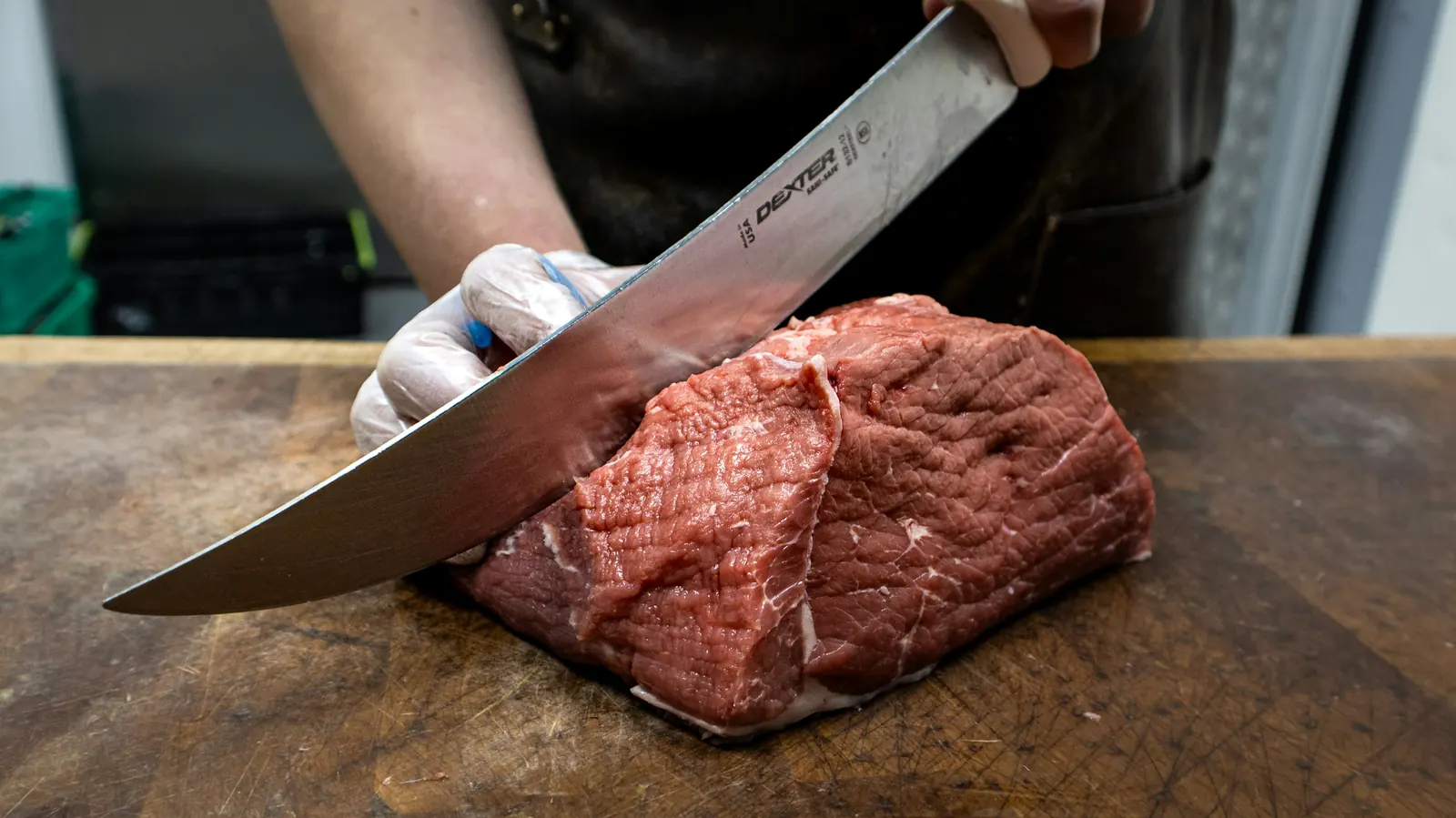
A boning knife does the jobs a chef’s knife is too wide and too stiff for. In a Mexican kitchen that means taking the bone out of a pork shoulder before it goes into an adobo for al pastor, splitting chicken thighs off the frame for tinga, trimming silverskin from a flank steak before it hits the grill for fajitas, and cleaning the fat cap off a brisket or a beef cheek before a long braise. The blade is narrow so it can turn around a joint, and the point is sharp so it can follow a bone without tearing the meat.
Buying one comes down to two choices: stiff or flexible, and curved or straight. This guide explains both, then compares nine boning knives from Victorinox, Zwilling, Wüsthof, Mercer, Dexter-Russell, Mac, Shun and Global, using the specifications each maker or listing states and the published findings of America’s Test Kitchen, which we cite.
Julia’s earns a commission on purchases made through links on this page, at no cost to you. Recommendations are based on what a restaurant kitchen looks for, product specifications and verified buyer reports.
Quick verdict: which boning knife to buy
For most kitchens, the best boning knife is the Victorinox Fibrox Pro 6-inch Flexible Boning Knife: a narrow, straight, moderately flexible blade on a non-slip handle, which America’s Test Kitchen named a Best Buy and Victorinox rates as dishwasher safe. If you want a forged German knife, choose the Zwilling Four Star 5.5-inch Flexible Boning Knife, a sibling of the Zwilling knife that won America’s Test Kitchen’s boning knife review. If you break down a lot of chicken, the stiff, Japanese-style Mac Japanese Series 6-inch Honesuki is built for poultry joints.
Below, the five standouts side by side, then all nine boning knives in full.
Five boning knives compared
Our five standout picks, one for each kind of cook, with the specifications each maker or listing states. All nine are reviewed in full below.
| Boning knife | Best for | Blade | Flex | Buy on Amazon |
|---|---|---|---|---|
| Chicken, pork and everyday trimming | 6 in, straight, extra narrow | Flexible | View on Amazon | |
| Pork shoulder, brisket, silverskin | 6 in, curved | Semi-stiff | View on Amazon | |
| A forged knife to match a German set | 5.5 in, thin, forged | Flexible | View on Amazon | |

Mac Japanese Series 6-inch HonesukiBest for chicken
|
Breaking down whole chickens | 6.13 in, 3 mm thick, single bevel | Stiff | View on Amazon |
| Heavier cuts on a small budget | 6 in, Japanese high-carbon steel | Stiff | View on Amazon |
Product images from Amazon. Blade lengths, flex and steels are as stated by each maker or listing; check the listing before you buy.
Our picks for the best boning knife
These nine knives cover the ways a boning knife gets used: flexible blades for chicken and pork that hug the bone, semi-stiff and stiff blades for heavier cuts and fat caps, a Japanese honesuki for poultry joints, and forged knives that match a German or Japanese set. Each pick explains who it suits and gives one honest reason to skip it. If you clean whole fish, a longer, thinner fillet knife does that job better; see our guide to the best fish knife set.
1. Victorinox Fibrox Pro 6-inch Flexible Boning Knife – Narrow, Flexible and Easy Care

This is the boning knife to buy if you only buy one. Victorinox describes the blade as straight-edged and extra narrow, 5.9 inches long (sold as a 6-inch knife), on the textured Fibrox Pro handle made of thermoplastic elastomer. The whole knife weighs about 3 ounces, according to Victorinox.
America’s Test Kitchen tested six flexible boning knives and named this Victorinox a co-Best Buy. Its testers found its moderate flexibility let it hug the curves of bones and joints closely, which is what you want when you take a thigh bone out of a chicken for tacos or work the blade bone out of a pork shoulder. The same review notes that several testers found the thicker handle a touch unwieldy.
Care is simple. Victorinox lists the knife as dishwasher safe, though hand washing and drying straight away is kinder to any edge. The Amazon listing’s own bullets call the blade both straight and curved; Victorinox’s product page settles it as straight, and the listing gives the model as 47513, which retailers cross-reference to Victorinox 5.6413.15.
Why we like it
- Named a co-Best Buy by America’s Test Kitchen
- Extra-narrow, flexible blade that follows the bone
- Non-slip Fibrox Pro handle
- Dishwasher safe and covered by a lifetime warranty, per Victorinox
Key specifications
| Model | 47513 (Victorinox 5.6413.15) |
|---|---|
| Blade length | 5.9 in (sold as 6-inch) |
| Flex | Flexible |
| Shape | Straight edge, extra narrow |
| Steel | Stainless steel (grade not stated by Victorinox) |
| Handle | Fibrox Pro thermoplastic elastomer |
| Dishwasher-safe (maker) | Yes |
| Warranty | Lifetime, against manufacturer’s defects |
Why we recommend it
It suits almost every home cook: the narrow, flexible blade handles chicken, pork shoulder and trimming jobs, the handle grips when wet, and the knife is light enough to use for a long session. It is also inexpensive enough that you will not worry about using it hard.
Skip it if you want a forged knife with some weight behind it, or if you mainly trim large beef cuts, where a stiffer blade gives more control.
Pros and cons
Pros
- Recommended by America’s Test Kitchen
- Flexible enough to hug bones
- Dishwasher safe, per Victorinox
- Light at about 3 oz
Cons
- Some testers found the handle thick
- Stamped, not forged
- Listing bullets contradict the blade shape
2. Victorinox Fibrox Pro 6-inch Curved Semi-Stiff Boning Knife – A Curve for Big Cuts

The same Fibrox Pro handle and Swiss-made blade as our top pick, but with a curved profile and, according to the listing, a semi-stiff blade. Victorinox gives the blade as 5.9 inches, curved, with a straight (non-serrated) edge, and the knife weighs about 3.4 ounces.
The curve matters on large, flat cuts. When you take the fat cap off a pork shoulder for carnitas or peel silverskin from a beef tenderloin, a curved blade lets you keep the edge angled up against the membrane while the handle stays clear of the board. The semi-stiff blade gives you more push than a flexible knife through cartilage and connective tissue, at the cost of a little give around small chicken joints.
America’s Test Kitchen included this knife in the same boning knife review but did not name it among its recommendations, so the flexible straight model above is the one with its endorsement. Victorinox lists this curved version as dishwasher safe and covers it with a lifetime warranty.
Why we like it
- Curved blade for trimming fat caps and silverskin
- Semi-stiff, per the listing, for more push through gristle
- Swiss made, about 3.4 oz
- Dishwasher safe, per Victorinox
Key specifications
| Model | 5.6603.15 |
|---|---|
| Blade length | 5.9 in (sold as 6-inch) |
| Flex | Semi-stiff (listing) |
| Shape | Curved |
| Steel | Stainless steel (grade not stated by Victorinox) |
| Handle | Fibrox Pro thermoplastic elastomer |
| Dishwasher-safe (maker) | Yes |
| Warranty | Lifetime |
Why we recommend it
Choose it if most of your boning work is on pork and beef: shoulders, briskets, flank and skirt steak. The curve and the firmer blade make long trimming strokes easier, and it costs about the same as the straight Fibrox.
Skip it if you mostly bone chicken; a flexible straight blade, or a honesuki, follows small poultry bones more closely.
Pros and cons
Pros
- Curve suits long trimming strokes
- Firmer blade through connective tissue
- Dishwasher safe, per Victorinox
Cons
- Less give around small joints
- Not among America’s Test Kitchen’s named picks
- Stamped, not forged
3. Zwilling Four Star 5.5-inch Flexible Boning Knife – Forged, Thin and Flexible

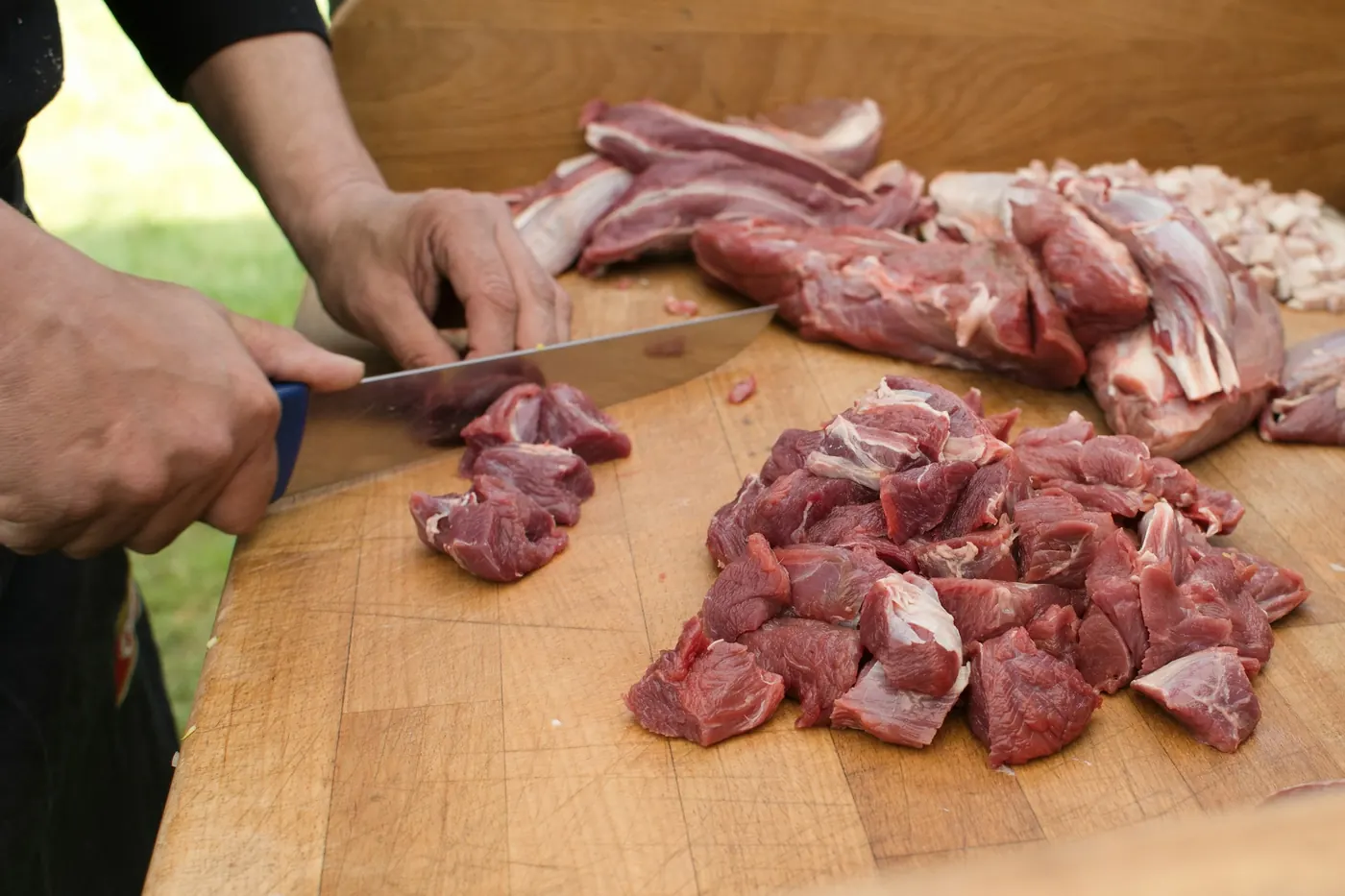
America’s Test Kitchen’s winning boning knife was the Zwilling Pro 5.5-inch Flexible Boning Knife, praised for an “ultrasharp, moderately flexible blade” and a slim handle that was easy to hold in different ways. That knife was low on stock on Amazon when we checked, so we list its in-stock sibling: the Four Star version, which shares the 5.5-inch length, the flexible blade and Zwilling’s forging, with a molded handle instead of the Pro’s riveted one.
Zwilling describes a long, thin, flexible blade forged from one piece of its special-formula high-carbon stainless steel, ice-hardened (FRIODUR) to 55–58 HRC, and made in Solingen, Germany. The matte black handle is plastic with at least 75% recycled content, bonded seamlessly to the tang, and the whole knife weighs about 0.21 lb.
At 5.5 inches it is the shortest knife on this list, which makes it nimble inside a chicken carcass or around the ball joint of a pork leg. Zwilling calls it dishwasher safe but recommends hand washing, and backs it with a lifetime warranty.
Why we like it
- Forged from a single piece of steel in Solingen
- Thin, flexible 5.5-inch blade
- Ice-hardened blade, 55–58 HRC per Zwilling
- Lifetime warranty
Key specifications
| Model | 31086-143 |
|---|---|
| Blade length | 5.5 in |
| Flex | Flexible |
| Shape | Straight, thin |
| Steel | High-carbon stainless, ice-hardened, 55–58 HRC |
| Handle | Molded plastic, 75%+ recycled content |
| Dishwasher-safe (maker) | Yes; hand wash recommended |
| Warranty | Lifetime |
Why we recommend it
It suits cooks who own German knives and want a boning knife that matches them in steel and feel, and anyone who does most of their boning on chicken and pork, where a short, flexible blade is easiest to steer.
Skip it if you want the exact knife America’s Test Kitchen tested: that is the Zwilling Pro, not the Four Star, and the two have different handles.
Pros and cons
Pros
- Forged German steel
- Short and nimble around joints
- Lifetime warranty
Cons
- Not the Zwilling model that won the ATK review
- Shortest blade here for big cuts
- Costs more than stamped knives
4. Wüsthof Classic 6-inch Boning Knife – Precise Tip, Triple-Riveted Handle
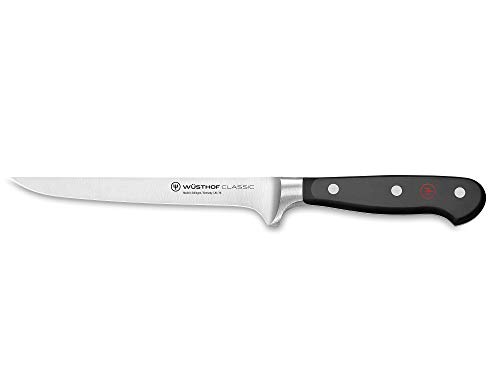
Wüsthof’s Classic line is the triple-riveted German knife many cooks picture first, and this boning knife comes from the same forge in Solingen. Wüsthof describes a slim, curved blade with a pointed tip, 16 cm (6 inches) long and 3.1 cm wide, forged from a single piece of its stainless steel and hardened to 58 HRC, for “removing bones and skinning meat in a professional way”.
The listing adds Wüsthof’s Precision Edge Technology (PEtec), which the maker says makes the edge 20% sharper with twice the edge retention of earlier models. The pointed tip is the useful part for kitchen work: it gets into the gap between a thigh and the backbone, and it lifts tendons and sinew without dragging meat with them.
One thing to know: Wüsthof’s own page for this model does not say whether the blade is stiff or flexible, while some retailers sell the same item number as a “flexible” boning knife. Wüsthof says it is hand wash only, dried straight away.
Why we like it
- Forged in Solingen, 58 HRC
- Slim, curved blade with a pointed tip
- Triple-riveted, full-tang Classic handle
- Matches a Wüsthof Classic set
Key specifications
| Model | 1040101416 |
|---|---|
| Blade length | 6 in (16 cm) |
| Flex | Not stated by Wüsthof |
| Shape | Slim, curved, pointed tip |
| Steel | Forged high-carbon stainless, 58 HRC |
| Handle | Synthetic, three rivets, full tang |
| Dishwasher-safe (maker) | No, hand wash only |
| Warranty | Not stated on the product page |
Why we recommend it
Choose it if you already cook with Wüsthof Classic knives or want a boning knife with a heavier, riveted handle and a fine point for detailed trimming work.
Skip it if you need to know exactly how much the blade flexes before you buy; Wüsthof does not say, and it is hand wash only.
Pros and cons
Pros
- Forged, full tang
- Fine, pointed tip
- Classic riveted handle
Cons
- Flex not stated by the maker
- Hand wash only
- Among the pricier knives here
5. Mercer Culinary Millennia 6-inch Stiff Boning Knife – A Firm Blade on a Budget

Mercer aims its Millennia series at professional chefs and home cooks alike, and this is the stiff boning knife in the line. The listing describes a one-piece blade of high-carbon Japanese steel for easy edge maintenance, and a handle with textured finger points for a non-slip grip. Mercer names its uses plainly: separating meat from the bone, deboning chicken, ham and fish, and trimming fat and sinew.
A stiff blade is the better choice when the meat is big and the bones are heavy. Working down the ribs of a pork loin, separating a beef chuck along its seams, or cutting the fat cap off a brisket all go faster when the blade does not bend away from the pressure you put on it. Mercer also makes the same knife with a flexible and a curved blade if you want to match the blade to the job.
Mercer is clear about care: wash by hand with warm water and mild soap, dry completely, and keep it out of the dishwasher. Its warranty covers defects in material and workmanship but excludes damage from dishwasher use.
Why we like it
- Stiff blade for heavier cuts and fat caps
- One-piece high-carbon Japanese steel, per Mercer
- Textured, non-slip handle
- Also sold in flexible and curved versions
Key specifications
| Model | M22306 |
|---|---|
| Blade length | 6 in |
| Flex | Stiff |
| Shape | Not stated |
| Steel | One-piece high-carbon Japanese steel |
| Handle | Textured, non-slip, with finger points |
| Dishwasher-safe (maker) | No, hand wash |
| Warranty | Repair or replace for defects; excludes dishwasher damage |
Why we recommend it
It suits cooks who break down pork and beef more than chicken and want a firm blade without spending much. It is also a sensible second boning knife next to a flexible one.
Skip it if you mostly bone chicken thighs; America’s Test Kitchen found that overly rigid blades could not hug a chicken breastbone or the bone in a pork shoulder as closely, leaving more meat behind.
Pros and cons
Pros
- Firm blade for big cuts
- Non-slip handle
- Budget-friendly
Cons
- Less give around small bones
- Hand wash only
- Blade shape not stated in the listing
6. Dexter-Russell Basics 6-inch Narrow Flexible Boning Knife – Made in the USA, NSF Listed

Dexter-Russell pitches the Basics line at chefs who want its quality at the most affordable level. This 6-inch narrow, flexible boning knife has a 400-series stain-free high-carbon steel blade, hollow ground for easy edge maintenance and quick re-sharpening, on a slip-resistant polypropylene handle, according to the listing. It is NSF listed and made in the USA.
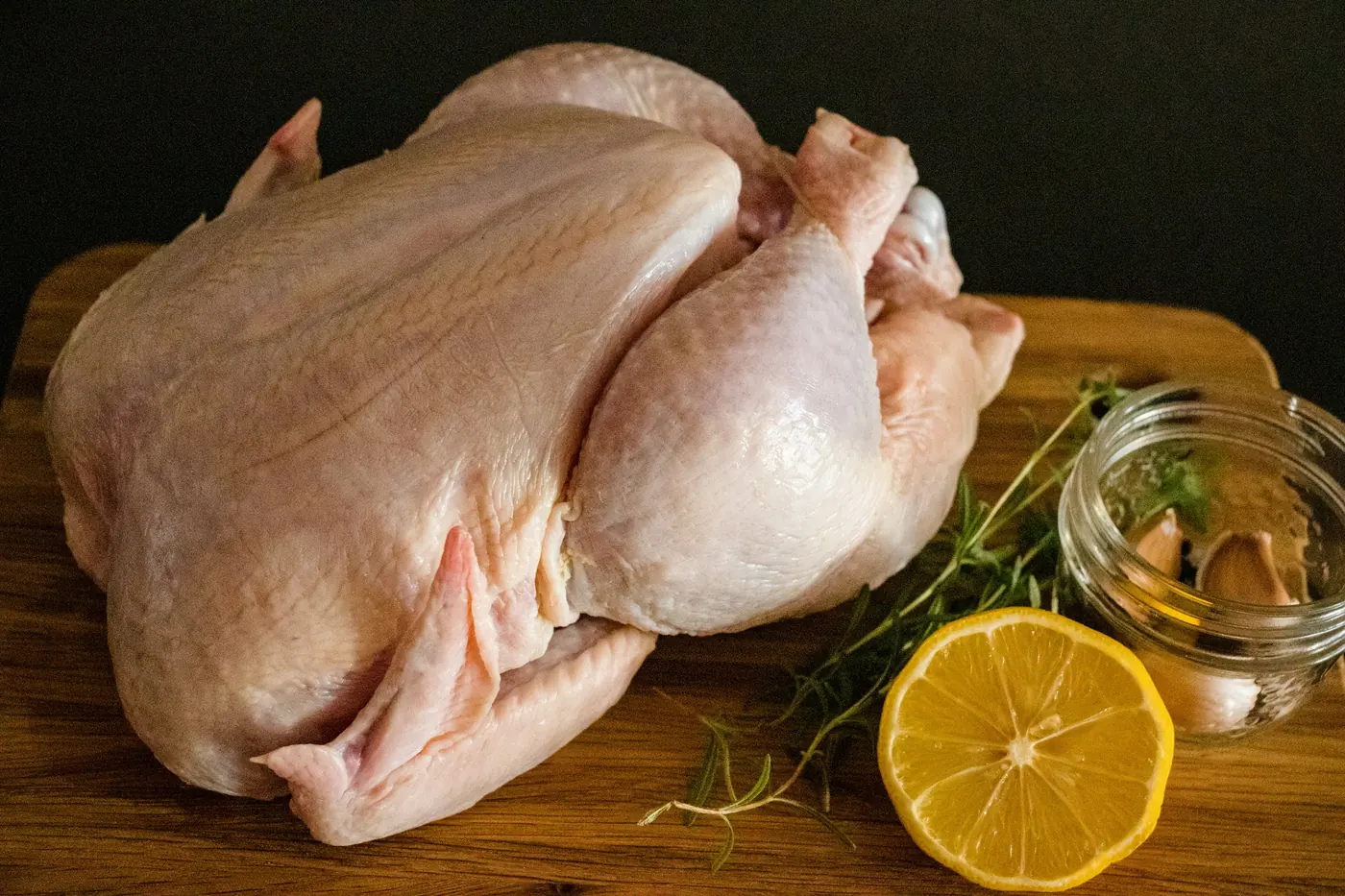
The white handle is the classic meat-room look, and it is easy to see when the knife is clean. The narrow blade is a good shape for chicken: split the leg from the thigh at the joint, then run the tip along the thigh bone and lift it out in one piece for grilled chicken tacos.
The listing says hand wash, and Dexter-Russell backs the knife with a limited lifetime warranty. One listing detail looks like a copy error: under included components it says “6-inch flexible fillet knife”, while the title, model and description all describe a boning knife.
Why we like it
- Narrow, flexible 6-inch blade
- 400-series stain-free high-carbon steel, hollow ground
- NSF listed, made in the USA
- Limited lifetime warranty
Key specifications
| Model | P94818 (item 31614) |
|---|---|
| Blade length | 6 in |
| Flex | Flexible |
| Shape | Narrow, straight |
| Steel | 400-series stain-free high-carbon steel |
| Handle | Polypropylene, slip resistant |
| Dishwasher-safe (maker) | No, hand wash |
| Warranty | Limited lifetime |
Why we recommend it
Choose it if you want a flexible boning knife made in the USA at a budget price, or a second knife to keep for raw poultry only.
Skip it if you want a dishwasher-safe knife; the listing says hand wash, which the Victorinox does not require.
Pros and cons
Pros
- Made in the USA
- NSF listed
- Easy to re-sharpen
Cons
- Hand wash only
- Plain, lightweight handle
- Listing has a copy error
7. Mac Japanese Series 6-inch Honesuki – Built for Poultry Joints
A honesuki is the Japanese answer to the boning knife, and it looks nothing like the others here. Mac calls it “a traditional Japanese-style poultry boning knife/cleaver”: a stout, triangular blade with a single-bevel edge and a stiff, pointed tip. Mac lists the blade at 6.13 inches long, 1.43 inches tall and 3.0 mm thick, and the knife at 6.5 ounces.
The design is built around chicken. In Mac’s words, the “thick, stiff blade has enough backbone to drive the knife through chicken joints or small fish bones”, while the pointed tip removes meat around the bones. In practice that means you can pop the legs off a whole bird, cut through the wing joints and take the breasts off the frame with one knife, then use the heel to cut the backbone for stock.
The listing gives molybdenum steel and a Pakkawood handle, made in Japan, with a limited 25-year warranty; it says hand washing is recommended and the knife is not dishwasher safe. A single-bevel edge is sharpened on one side, so ask Mac which hand it is ground for if you are left-handed.
Why we like it
- Designed for breaking down poultry, per Mac
- Stiff, 3 mm blade with a pointed tip
- Made in Japan, Pakkawood handle
- Limited 25-year warranty (listing)
Key specifications
| Model | BON-60 |
|---|---|
| Blade length | 6.13 in |
| Flex | Stiff |
| Shape | Triangular honesuki, single bevel |
| Steel | Molybdenum steel (listing) |
| Handle | Pakkawood |
| Dishwasher-safe (maker) | No, hand wash |
| Warranty | Limited 25-year (listing) |
Why we recommend it
Choose it if chicken is what you bone most: for tinga, pollo asado or a pot of caldo, a honesuki takes a whole bird apart faster and with less wrist strain than a flexible Western blade.
Skip it if you want one knife for everything, including skinning fish or trimming silverskin; the thick, stiff blade is not built to bend.
Pros and cons
Pros
- Purpose-built for poultry
- Stiff enough to cut through joints
- Made in Japan
Cons
- Single bevel needs care when sharpening
- No flex for fish or silverskin
- Hand wash only
8. Shun Classic Blonde 6-inch Boning & Fillet Knife – VG-MAX Steel, 16-Degree Edge

Shun makes this curved knife to cover both jobs, boning meat and filleting fish. The listing describes a VG-MAX steel core clad in Damascus stainless steel and a 16-degree edge, on a D-shaped blonde Pakkawood handle that suits left- and right-handed cooks. Cutlery and More, a Shun retailer, gives 60–61 HRC, a 2.4 mm spine, 34 layers of cladding per side and a weight of about 4.2 ounces, handmade in Seki, Japan.
A harder steel with a narrower edge angle is what makes Japanese knives feel so sharp, and that suits fine work: separating a chicken breast from the rib cage in one clean pass, or taking the skin off a fillet of snapper for fish tacos. The trade-off is that harder, thinner edges are more prone to chipping if you lever them against bone, so this is a knife for slicing along bones rather than prying at them.
Shun supports its knives with free sharpening and honing, according to the listing, and Cutlery and More lists a limited lifetime warranty. Wash it by hand. The original dark-handled Shun Classic version was low on stock when we checked; this blonde-handled version is listed with the same VG-MAX core and 6-inch length.
Why we like it
- VG-MAX core, 16-degree edge
- Curved blade for boning and filleting
- D-shaped handle for either hand
- Free sharpening service, per the listing
Key specifications
| Model | DM0743W |
|---|---|
| Blade length | 6 in |
| Flex | Not stated |
| Shape | Curved |
| Steel | VG-MAX core, Damascus stainless cladding |
| Handle | D-shaped blonde Pakkawood |
| Dishwasher-safe (maker) | No, hand wash recommended |
| Warranty | Limited lifetime (retailer) |
Why we recommend it
Choose it if you own Japanese knives, want the sharpest edge here, and will use it for both meat and fish.
Skip it if you cut through joints or scrape bones hard; a hard, thin edge can chip, and a German or Swiss blade is more forgiving.
Pros and cons
Pros
- Very sharp 16-degree edge
- Handles meat and fish
- Free sharpening service
Cons
- Hard edge can chip on bone
- Flex not stated
- Most expensive style here
9. Global 6.25-inch Heavyweight Boning Knife – Stiff Steel, All-Metal Handle

Global’s knives are recognizable at a glance: a stainless steel blade and a stainless steel handle with a dimpled grip. This GF-31 is the heavyweight boning knife from its forged GF line, with a 6.25-inch (16 cm) stiff blade that the listing describes as precisely balanced and made for boning meat and poultry. The blade is molybdenum/vanadium stainless steel; retailers name it as Global’s CROMOVA 18.
The handle is hollow stainless steel, which Cutlery and More says is filled with sand for balance, and it is molded for comfort and dimpled for grip. That gives the knife more heft than the stamped blades here, useful when you are working down the ribs of a loin or splitting a pork shoulder along its seams before it goes into an adobo.
The listing gives a lifetime warranty against defects and breakage. Retailers advise hand washing and drying straight away. Note that one retailer describes this blade as thin and flexible, which contradicts the listing’s “stiff”; we go with the listing and Knife Merchant, which both call it stiff.
Why we like it
- Stiff 6.25-inch blade for heavy cuts
- Forged, from Global’s heavier GF line
- Seamless stainless handle with no gaps to clean
- Lifetime warranty against defects and breakage
Key specifications
| Model | GF-31 |
|---|---|
| Blade length | 6.25 in (16 cm) |
| Flex | Stiff (listing) |
| Shape | Not stated |
| Steel | Molybdenum/vanadium stainless |
| Handle | Stainless steel, dimpled, weighted |
| Dishwasher-safe (maker) | Not stated; retailers say hand wash |
| Warranty | Lifetime, against defects and breakage |
Why we recommend it
It suits cooks who break down large cuts of pork and beef and want a stiff, weighty blade with a handle that has no rivets or seams to trap fat.
Skip it if your hands get greasy and cold when you butcher; some cooks find an all-metal handle slippery compared with textured plastic.
Pros and cons
Pros
- Stiff, weighty blade
- Seamless, easy-clean handle
- Lifetime warranty
Cons
- Metal handle can feel slick
- Sources disagree on flex
- Expensive for a boning knife
Stiff or flexible, curved or straight
These two choices matter more than the brand. Get them right for the meat you cut most and almost any knife on this list will serve you well.
Flexible blades bend a little under pressure, so the edge stays against the bone as it curves. America’s Test Kitchen puts it this way: a boning knife “has to have a certain degree of give so that it can bend and maneuver around bones, cartilage, and joints”, and in its testing overly rigid blades “couldn’t hug the breastbone on a piece of chicken or the bone in a pork shoulder”. Choose flexible for chicken, pork shoulder and lamb, and for taking skin off fish.
Stiff and semi-stiff blades push through connective tissue and stay straight when you lean on them. They are better for large beef cuts, pork loins and ribs, and for long trimming strokes under a fat cap. A Japanese honesuki is the stiffest of all, built to cut through poultry joints rather than around them.
Straight blades keep the whole edge in contact with the board and the bone, which gives control on smaller work. America’s Test Kitchen had “a slight preference for blades that were fairly straight”, though it noted that curved blades had their fans too.
Curved blades lift the edge upward toward the tip, which makes it easier to slide under silverskin, follow the curve of a rib or skin a large cut without the handle hitting the board.
How to choose a boning knife for your kitchen
1. Match the flex to the meat
Mostly chicken and pork shoulder: flexible. Mostly beef and big pork cuts: stiff or semi-stiff. Lots of whole chickens: consider a honesuki. If you cut everything, a moderately flexible straight blade, like our top pick, is the safest middle ground.
2. Length: 5 to 6.5 inches
Every knife here falls between 5.5 and 6.25 inches. Shorter is nimbler inside a chicken; longer reaches across a pork shoulder or brisket in fewer strokes. Six inches is the common size for a reason.
3. A handle that grips when greasy
Boning is wet, fatty work. Textured plastic handles, like the Victorinox, Mercer and Dexter-Russell, grip well when your hands are slick. Wood-composite and metal handles look better but can feel slippery, so a dry towel nearby helps.
4. Steel and edge
Softer German and Swiss steels are more forgiving if the edge meets bone; harder Japanese steels stay sharp longer and cut more cleanly but can chip. A boning knife should slice along bones, not pry at them, whatever the steel. Hone it before each session; our guide to the best knife sharpener covers keeping the edge.
5. Care and hygiene
Only the Victorinox knives and the Zwilling are rated dishwasher safe by their makers, and even Zwilling recommends hand washing. Wash a boning knife in hot, soapy water as soon as you finish with raw meat, dry it, and keep it apart from the knives you use for vegetables.
How we chose these nine boning knives
We started from what a restaurant kitchen asks of a boning knife: a narrow blade that follows bones closely, a point that gets into joints, a handle that stays secure when it is greasy, and an edge that is easy to keep sharp through a session of trimming pork shoulders or breaking down chickens. We then narrowed the field to knives from established makers that were sold on Amazon in the United States and in stock when we checked, with specifications we could confirm on the maker’s website or the brand’s own Amazon listing (each review says which). We covered flexible, semi-stiff and stiff blades, straight and curved shapes, stamped and forged construction, and a Japanese honesuki, rather than repeating near-identical knives. For how boning knives perform, we relied on America’s Test Kitchen’s review of flexible boning knives, and we say so wherever we quote it. We left out knives that were out of stock or low on stock, including the Zwilling Pro that won that review and the original Shun Classic, and unbranded listings. We have not used these products ourselves; where we describe how a knife performs, we say whose findings those are.
Using a boning knife on pork shoulder and chicken
Pork shoulder for al pastor or carnitas. Set the shoulder skin side down. Find the flat blade bone with the tip, then keep the edge angled toward the bone and cut along both faces in short strokes, peeling the meat back with your other hand as you go. Once the bone is free, open the shoulder out flat, trim off any thick fat and gristle, and slice it into even slabs for marinating. Our guide to what al pastor is explains where those slabs go next.
Chicken thighs. Lay the thigh skin side down and run the tip along both sides of the bone, then cut under it and lift it out, scraping the knuckle free at each end. A flexible blade or a honesuki makes this a few seconds’ work per thigh.
Trimming. For silverskin on a tenderloin or flank steak, slip the tip under one end, angle the edge slightly up into the membrane and pull the knife along while holding the membrane taut. A curved blade makes this easier.
Boning knife questions, answered
What is the best boning knife for home use?
The Victorinox Fibrox Pro 6-inch Flexible Boning Knife suits most home cooks: it is moderately flexible, light, inexpensive and dishwasher safe according to Victorinox, and America’s Test Kitchen named it a co-Best Buy in its boning knife review.
Which boning knife does America’s Test Kitchen recommend?
In its review of flexible boning knives, America’s Test Kitchen named the Zwilling Pro 5.5-inch Flexible Boning Knife its winner, and the Victorinox Fibrox Pro Boning Knife and a Friedr. Herder Don Carlos curved knife as Best Buys. The Zwilling Pro was low on stock when we checked, so we list the Zwilling Four Star, a sibling with the same length and flexible blade.
Which boning knife brands are worth buying?
Victorinox, Mercer and Dexter-Russell make the stamped, commercial-kitchen knives that most butchers and line cooks use. Wüsthof and Zwilling make forged German knives, and Shun, Mac and Global make Japanese knives with harder steel.
Is a boning knife the same as a fillet knife?
No. A fillet knife is longer, thinner and more flexible, made to bend along a fish’s backbone and take the skin off. A boning knife is shorter and firmer for meat and poultry. Some knives, like the Shun, are sold for both.
Can I bone a chicken with a chef’s knife?
You can, but a chef’s knife is wide and stiff, so it is harder to follow small bones and you leave more meat behind. A boning knife or a honesuki is easier and safer for the job. For everything else on the board, see our guide to the best chef knife.
Our pick for pork shoulders and whole chickens
Buy the Victorinox Fibrox Pro 6-inch Flexible Boning Knife if you want one boning knife that handles chicken, pork and trimming with minimal fuss. Choose the curved, semi-stiff Victorinox or the stiff Mercer if most of your boning is on pork and beef, the Zwilling Four Star or Wüsthof Classic if you want a forged knife to match a German set, and the Mac honesuki if whole chickens are your weekly job. Keep it sharp, keep it apart from your vegetable knives, and wash it as soon as you finish.
More specific guides: the best boning knives for deer and the best carving knife brands.
On a budget? See our guide to the best value boning knives.
Related guide: Best fillet knife.
Related guide: Best boning knife for chicken.
Related guide: Best butchery book.
Related guide: Boning knife vs fillet knife.
A boning knife is one specialist in a full knife kit; our guide to the best knife set covers the rest. For slow-cooked meat worth all that trimming, read what barbacoa is, and if you would rather someone else did the butchering tonight, see the menu or call to order.