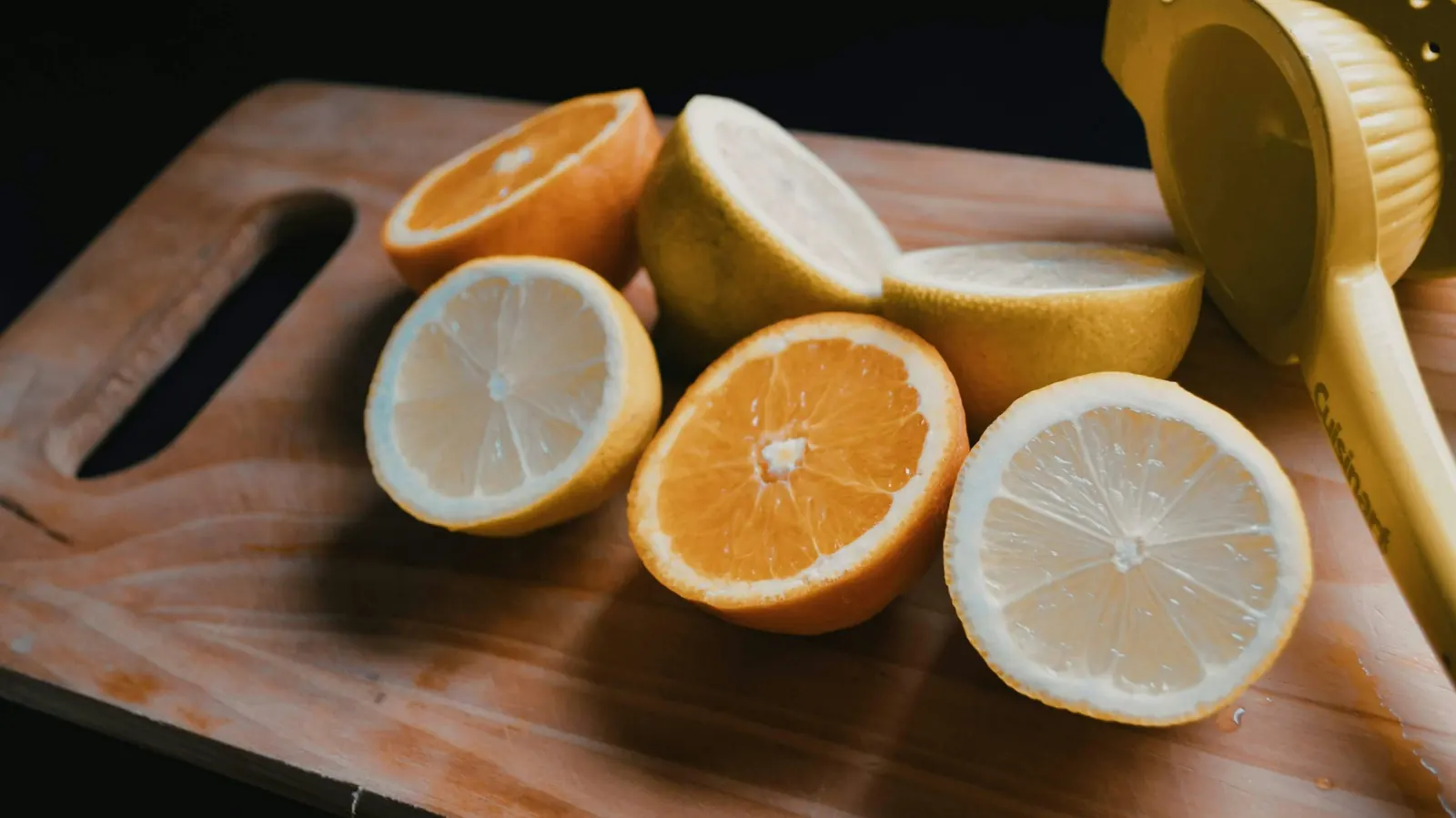
A lemon is a bigger, thicker-skinned fruit than the Persian limes a Mexican kitchen goes through by the case, and it usually brings a few seeds with it. That is why a squeezer sized for limes can disappoint on lemons: the half will not sit flat in a small cup, the handles will not close, and seeds end up in the lemonade or the cake batter.
This guide covers the tools that suit lemons: hinged handheld presses with a bowl wide enough for a lemon half, a fold-flat press, the classic painted aluminum squeezer, a stainless steel press, reamers with a seed catcher, a small juicer that measures as it goes, and a wedge squeezer for the table. If limes are your main fruit, our guide to the best lime squeezer is the better place to start.
Julia’s earns a commission on purchases made through links on this page, at no cost to you. Recommendations are based on what a restaurant kitchen looks for in a citrus tool, the makers’ own specifications and published equipment reviews, which we name.
Quick verdict: which lemon squeezer to buy
For most kitchens, the best lemon squeezer is the Chef’n FreshForce Lemon Squeezer: America’s Test Kitchen rated this exact model highly recommended in its review of manual citrus juicers, its 3-inch bowl fits a lemon half, a dual-gear hinge multiplies your grip, and it goes on the top rack of the dishwasher. If you juice lemons by the dozen for lemonade, the Dreamfarm Lemon Fluicer squeezed the highest lemon yield in that same review. For baking, where you need an exact amount, the OXO Good Grips Small Citrus Juicer measures the juice in its cup as you go.
Five lemon squeezers compared
Our five standout picks side by side, one for each kind of cook, with the bowl or cup size the maker or a published review states. All eight tools are reviewed in full below.
| Squeezer | Best for | Type | Bowl or cup | Buy on Amazon |
|---|---|---|---|---|

Chef’n FreshForce Lemon SqueezerBest overall
|
Everyday lemons, dressings, drinks | Hinged dual-gear press | 3-in bowl (ATK) | View on Amazon |

Dreamfarm Lemon FluicerMost juice
|
Lemonade batches, small drawers | Fold-flat side press | 3½-in bowl (ATK) | View on Amazon |

Bellemain Stainless Steel Lemon SqueezerBest stainless steel
|
No coating, dishwasher safe | Hinged 304 stainless press | Not stated (“Medium”) | View on Amazon |

OXO Good Grips Small Citrus JuicerBest for baking
|
Measured juice for recipes | Reamer on a measuring cup | 2.5-oz marked cup | View on Amazon |

IMUSA Yellow Lemon SqueezerBudget pick
|
Occasional lemons, a first squeezer | Hinged cast aluminum press | Not stated (8.6 in long) | View on Amazon |
Product images from Amazon. Bowl sizes marked ATK were measured by America’s Test Kitchen; the rest are as stated on each maker’s listing. Check the listing before you buy.
Our picks for the best lemon squeezer
These eight tools cover the ways people actually juice lemons: two hinged presses with a wide bowl, a fold-flat press, a painted aluminum squeezer in the classic yellow, a stainless steel press, a glass reamer that collects juice, a small measuring juicer, a handheld reamer with a seed catcher and a wedge squeezer for iced tea and fish. Each pick says who it suits and one honest reason to skip it.
1. Chef’n FreshForce Lemon Squeezer – Gears Do the Squeezing
The yellow FreshForce is the model America’s Test Kitchen named the winner in its review of manual citrus juicers: model 102-159-017, with a 3-inch juicing bowl, according to ATK. That bowl size matters for lemons. ATK found that press bowls at least 3 inches wide worked best, and that the smallest bowls could not fit large lemons, which cut their yield.
The difference from an ordinary hinged squeezer is a patented dual-gear mechanism in the hinge, which Chef’n says delivers up to 20 percent more juice than standard citrus squeezers with less hand strain. We have not found an independent measurement of that figure, but ATK called the tool sturdy and efficient, and its bowls “comfortably accommodated limes and lemons.” Chef’n builds it from nylon and stainless steel, and a basket catches pulp and pits.
It is the same tool, in yellow, as the lime-green version we recommend in our lime squeezer guide. The color is the only difference, so if you already own the green one, you do not need this one.
Why we like it
- Exact model rated highly recommended by America’s Test Kitchen
- 3-inch bowl fits a lemon half, per ATK
- Dual-gear hinge reduces hand strain, per Chef’n
- Top-rack dishwasher safe
Key specifications
| Model | 102-159-017 |
|---|---|
| Type | Hinged press with dual-gear mechanism |
| Material | Nylon and stainless steel |
| Cup size | 3 in (ATK); tool 10.25 in long |
| Seed/pulp control | Basket catches pulp and pits |
| Dishwasher safe | Yes, top rack (Chef’n) |
| Made in | Not stated |
| Care | Top rack of the dishwasher |
Why we recommend it
It suits anyone who juices a lemon or two most days, for dressings, marinades, tea or a drink, and wants one squeezer that also handles limes. The geared hinge helps if your grip is not as strong as it was.
Skip it if you want an all-metal tool. The body is nylon, and Chef’n does not state a warranty on the listing.
Pros and cons
Pros
- Independent review backing for this model
- Bowl wide enough for lemons
- Less grip needed than a plain hinge
Cons
- Nylon body, not all metal
- Juice-yield claim is the maker’s own
- Warranty not stated
2. Dreamfarm Lemon Fluicer – Squeezes from the Sides, Folds Flat
The Fluicer works differently from a classic hinged squeezer. Instead of pressing the lemon half flat, its hinged mechanism presses the fruit in half from the sides, the way you would squeeze it with your hands, which Dreamfarm says takes less force. A built-in pip catcher strains the juice and doubles as a funnel to aim it into a glass or a small bowl, and the whole tool folds flat for the drawer.
In America’s Test Kitchen’s review of manual citrus juicers, the Lemon Fluicer, model DFFU3451, gave the highest lemon yield of any tool in the review and was among the fastest through a batch of ten lemons. ATK measured its bowl at 3½ inches. The catch is mess: ATK rated it recommended rather than highly recommended because it was a little messy to juice lemons with.
Dreamfarm makes the Fluicer in three sizes and recommends this Lemon size for lemons and limes. The listing gives its length as 10 inches, but does not state the material or whether it can go in the dishwasher.
Why we like it
- Highest lemon yield in ATK’s review of manual juicers
- Side-press design needs less force, per Dreamfarm
- Pip catcher strains and funnels the juice
- Folds completely flat for storage
Key specifications
| Model | DFFU3451 (Lemon size) |
|---|---|
| Type | Fold-flat hinged side press |
| Material | Not stated |
| Cup size | 3½ in (ATK); tool 10 in long |
| Seed/pulp control | Built-in pip catcher and funnel |
| Dishwasher safe | Not stated |
| Made in | Not stated |
| Care | Not stated; rinse straight after use |
Why we recommend it
Choose it if you juice lemons in quantity, for a pitcher of lemonade or a lemon curd, and want every drop. It is also the easiest tool here to store.
Skip it if you hate drips on the counter. ATK found it a little messy with lemons, so work over a bowl.
Pros and cons
Pros
- Top lemon yield in ATK’s review
- Fast through a batch
- Stores flat
Cons
- Messier than a cup-style press
- Material and dishwasher care not stated
3. Bellemain Stainless Steel Lemon Squeezer – All Metal With Silicone Grips
If you would rather not have a coating that can chip or a nylon body, a stainless steel press is the alternative. Bellemain’s is made from 304 stainless steel, with what the maker describes as reinforced hinges, thick casting and strong levers. Thick silicone-bonded handles give a steadier grip than bare metal, which helps when your hands are wet with juice.
The bowl is designed to direct the juice downward while catching seeds and pulp, and Bellemain says it works with lemons, limes and suitably sized orange halves. It rinses clean or goes in the dishwasher, and stainless steel does not stain or react with lemon juice.
Two cautions. Bellemain does not state the bowl diameter, only the size “Medium”, and this squeezer has not been through America’s Test Kitchen’s review, so its yield is unmeasured. A Bellemain stainless squeezer appeared in Reviewed’s citrus juicer roundup with middling results, but we could not confirm it was this model.
Why we like it
- 304 stainless steel, no coating to chip
- Silicone-bonded handles for a steady grip
- Seed-catching bowl
- Dishwasher safe, per Bellemain
Key specifications
| Model | Lemon Press (black) |
|---|---|
| Type | Hinged press |
| Material | 304 stainless steel, silicone handles |
| Cup size | Not stated (“Medium”) |
| Seed/pulp control | Seed-catching bowl |
| Dishwasher safe | Yes (Bellemain) |
| Made in | Not stated |
| Care | Rinse or dishwasher |
Why we recommend it
Choose it if you want an all-metal squeezer that will not chip or stain and can go straight in the dishwasher. It is a good match for a kitchen that already favors stainless tools.
Skip it if you want a tool with an independent yield measurement behind it. The Chef’n and Dreamfarm presses above have one; this one does not.
Pros and cons
Pros
- Stainless steel body
- Grippy silicone handles
- Dishwasher safe
Cons
- Bowl size not stated
- No independent yield data for this model
4. IMUSA Yellow Lemon Squeezer – The Simple Cast Aluminum Classic
IMUSA’s painted cast aluminum squeezers are a fixture of Latin American kitchens, and the company color-codes them: green for limes, yellow for lemons, orange for oranges. This yellow one measures 8.6 inches, according to IMUSA, and has straining holes in the cup to filter out seeds and pulp, plus a hanging ring so it can live on a hook by the stove.
IMUSA lists lemonade, ceviche, margaritas, guacamole, tea and seafood among its uses. It is the most basic tool on this list: no gears, no coating claims beyond its painted finish, and a 30-day warranty. For a kitchen that squeezes a lemon now and then, that is enough.
The yellow model’s listing does not say how to clean it, but IMUSA tells buyers of its green lime squeezer to hand wash it with soapy water, and that is the sensible approach for any painted aluminum tool. Our guide to lime squeezers versus lemon squeezers explains the color code and how the sizes compare.
Why we like it
- Sized for lemons in IMUSA’s color-coded range
- Straining holes hold back seeds and pulp
- Built-in hanging ring
- Cast aluminum, 8.6 in long
Key specifications
| Model | VICTORIA-70007 |
|---|---|
| Type | Hinged press, Mexican style |
| Material | Painted cast aluminum |
| Cup size | Not stated; tool 8.6 in long |
| Seed/pulp control | Straining holes |
| Dishwasher safe | Not stated |
| Made in | Not stated |
| Care | Hand wash with soapy water (IMUSA, green model) |
Why we recommend it
Choose it if you want a lemon-sized squeezer for occasional use without spending much, or a spare to hang beside a green lime squeezer.
Skip it if you juice every day. Painted aluminum needs hand washing, the warranty is short, and the cup size is not published.
Pros and cons
Pros
- Low price tier
- Hangs on a hook
- Simple, nothing to break
Cons
- Hand wash only, in practice
- 30-day warranty
- Cup size not stated
5. OXO Good Grips Small Citrus Juicer – Measures the Juice as You Go
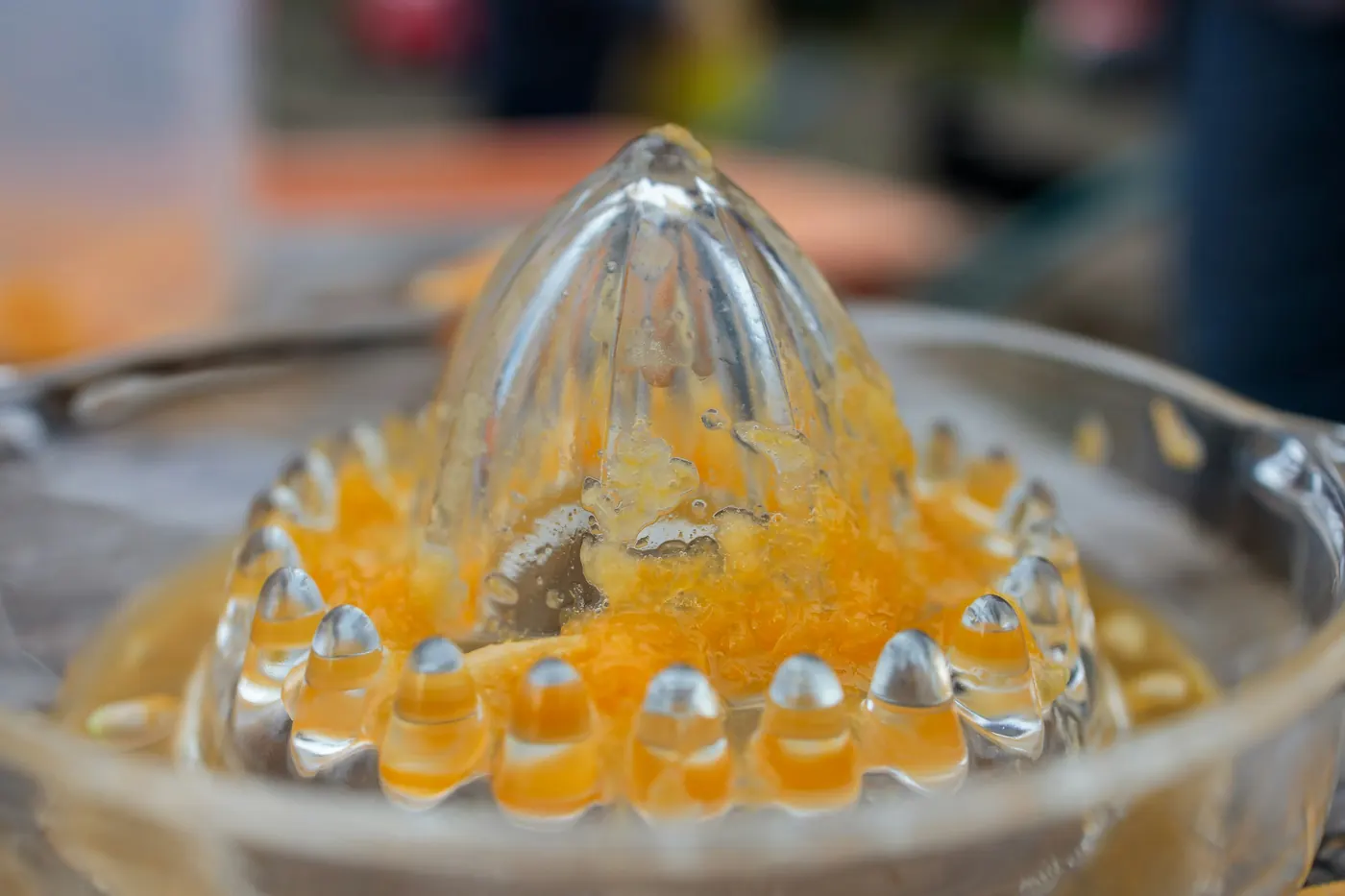
Baking recipes ask for lemon juice by the tablespoon, not by the lemon, and that is where this small OXO juicer earns its place. It is a reamer dish that sits securely on a 2.5-ounce cup with measurement markings, so you ream straight into the cup and read off how much you have. OXO says it is sized for measuring citrus juice for cooking and baking.
The reamer catches seeds before they reach the cup, a drip-free spout pours the juice into a bowl, and the juicer comes apart for cleaning. For a lemon bar, a lemon glaze or a vinaigrette, it saves a measuring spoon and a strainer.
A reamer gives a slightly different juice from a press. America’s Test Kitchen found that presses squeeze the rind and release some of its aromatic oils, while reamers only touch the flesh. For baking that is rarely a problem, since many recipes call for zest as well. The OXO listing does not state the cup’s material or whether it is dishwasher safe.
Why we like it
- 2.5-oz cup with measurement markings
- Reamer dish locks onto the cup
- Drip-free pour spout
- Comes apart for cleaning
Key specifications
| Model | 11155800 |
|---|---|
| Type | Reamer on a measuring cup |
| Material | Not stated |
| Cup size | 2.5 oz, with markings |
| Seed/pulp control | Reamer dish holds back seeds |
| Dishwasher safe | Not stated |
| Made in | Not stated |
| Care | Disassembles for cleaning |
Why we recommend it
Choose it if you bake with lemon or follow recipes that give the juice in ounces or tablespoons. Juicing and measuring in one step is faster and wastes less.
Skip it if you need more than a couple of lemons’ worth at a time. The cup holds 2.5 ounces, so a pitcher of lemonade means emptying it again and again.
Pros and cons
Pros
- Built-in measuring
- Stable on the counter
- Easy to pour
Cons
- Small capacity
- Reamer juice is less aromatic than pressed, per ATK
- Material and dishwasher care not stated
6. Fox Run Glass Citrus Juicer – Heavy Glass With a Pour Spout

The glass reamer is the old-fashioned way to juice a lemon: press and twist the half on a ridged cone, and the juice runs into a moat around it. Fox Run’s version is made of heavyweight glass, which the maker says resists damage from citric acid, and it has a handle and a spout for pouring. Fox Run gives its size as 7 by 5 by 2.75 inches, with a 4-ounce capacity.
A pointed reamer in the center gets into the segments, and high walls hold the juice. Fox Run describes it as ideal for small to medium lemons and limes, and it also handles oranges. It is dishwasher safe, and glass never stains or holds a smell.
Like every reamer, it takes a few twists per half, and seeds collect in the moat with the juice, so pour through a small strainer if you are making lemonade or a clear syrup.
Why we like it
- Heavy glass resists citric acid, per Fox Run
- Handle and spout for pouring
- Holds about 4 oz of juice
- Dishwasher safe
Key specifications
| Model | 5845 |
|---|---|
| Type | Countertop glass reamer |
| Material | Heavyweight glass |
| Cup size | 4 oz; 7 x 5 x 2.75 in overall |
| Seed/pulp control | None stated; strain if needed |
| Dishwasher safe | Yes (Fox Run) |
| Made in | Not stated |
| Care | Dishwasher or hand wash |
Why we recommend it
Choose it if you like a tool with no moving parts and want to juice a few lemons straight into something you can pour from. It suits a lemonade made a glass at a time.
Skip it if seeds are your main complaint. A reamer does not separate them, and it is slower than a press.
Pros and cons
Pros
- No hinges or gears to wear
- Pours cleanly
- Glass does not stain
Cons
- Seeds stay in the juice
- Glass can break if dropped
- Slower than a press
7. Joseph Joseph Citrus Reamer – A Seed Catcher Under the Head

A handheld reamer is the smallest citrus tool there is, and Joseph Joseph’s version solves its usual problem. A soft rubber cup sits under the reaming head and catches pips and other debris while letting the juice drain through, so you can ream a lemon straight over a pan or a bowl without fishing out seeds afterward.
Joseph Joseph says the rounded handle is more comfortable than a horizontal hand juicer, and the reamer is dishwasher safe. It takes up hardly any drawer space.
There is one oddity in the listing: the text describes the reamer as green, while the product is sold as yellow. Check the photos for the color you are getting. As with any reamer, expect a few twists per half and juice a little less aromatic than a press gives, according to America’s Test Kitchen’s findings.
Why we like it
- Rubber cup catches pips as you ream
- Juice goes straight into the dish
- Rounded, comfortable handle
- Dishwasher safe
Key specifications
| Model | 20028 |
|---|---|
| Type | Handheld reamer with seed catcher |
| Material | Not stated (soft rubber seed cup) |
| Cup size | Not stated |
| Seed/pulp control | Rubber cup catches pips |
| Dishwasher safe | Yes (Joseph Joseph) |
| Made in | Not stated |
| Care | Dishwasher |
Why we recommend it
Choose it if you mostly add a lemon’s juice straight to whatever is cooking, a pan sauce, a pot of beans, a bowl of salsa, and want the seeds left behind without a separate strainer.
Skip it if you juice lemons in quantity. A handheld reamer is slow and tiring for more than a couple of fruits.
Pros and cons
Pros
- Catches seeds as you go
- Very compact
- Dishwasher safe
Cons
- Slow for big batches
- Listing is unclear about color
8. Fox Run Stainless Steel Lemon Wedge Squeezer – Seed-Free Wedges at the Table

Not every lemon is juiced in the kitchen. A wedge squeezed over fish, a bowl of soup or a glass of iced tea tends to shoot seeds and juice in every direction. Fox Run’s small squeezer takes a lemon or lime wedge, and a squeeze of its hinged stainless steel body gives pit-free juice, according to the maker.
It measures 1.25 by 5 by 2.75 inches and is shaped like a fish, which Fox Run pitches for serving seafood or tea. It is the one tool here that belongs on the table rather than the counter.
Fox Run does not say whether it is dishwasher safe. Rinse it after use so pulp does not dry in the hinge.
Why we like it
- Holds a wedge, keeps the seeds in
- Stainless steel construction
- Small enough to set out with the plates
Key specifications
| Model | 5113 |
|---|---|
| Type | Hinged wedge squeezer |
| Material | Stainless steel |
| Cup size | Holds a wedge; 1.25 x 5 x 2.75 in overall |
| Seed/pulp control | Pit-free juice, per Fox Run |
| Dishwasher safe | Not stated |
| Made in | Not stated |
| Care | Rinse after use |
Why we recommend it
Choose it if you serve lemon wedges with fish, tacos de pescado, tea or soup and want guests to get the juice without the seeds.
Skip it if you need more than a squeeze. It holds a single wedge, not a half.
Pros and cons
Pros
- No seeds on the plate
- Tiny and table-friendly
Cons
- Wedges only
- Novelty fish shape
- Dishwasher care not stated
How to choose a lemon squeezer
Lemons ask slightly different things of a squeezer than limes do. These five points decide whether a tool suits the way you use them.
1. A bowl wide enough for a lemon half
This is the one that matters most. America’s Test Kitchen found that press bowls at least 3 inches across worked best, and that the smallest bowls could not fit large lemons, which lowered yield. A lime squeezer with a small cup will crush the middle of a lemon half and leave the edges full of juice. If a listing does not give the bowl size, compare it with a lemon you have on hand.
2. Press or reamer
In ATK’s review, presses were more effective than reamers overall, faster, and released some of the peel’s aromatic oils, which made their juice noticeably more fragrant. Reamers only touch the flesh. That makes a press the better everyday choice and a reamer a good, simple second tool, especially for small amounts.

3. Seed control
Many supermarket lemons have only a few seeds, and some none: UC Riverside’s citrus variety collection describes Eureka-type lemons as having seed content that is “variable but usually few to none.” A few is still enough to spoil a smooth curd or crunch in lemonade. Look for a perforated cup, a pip catcher or a seed cup, and for a reamer, plan on a strainer.
4. Material and care
Lemon juice is acidic. Painted aluminum looks traditional and is light, but the coating is what protects the metal, so hand washing is the safer habit unless the maker says otherwise. Stainless steel, glass and the nylon of the Chef’n press can go in the dishwasher where the maker says so.
5. How much you juice
The juice of one lemon weighs about 48 grams, according to USDA FoodData Central, roughly 1.6 fluid ounces or a little over 3 tablespoons, so a cup of juice takes about five lemons. A handheld press handles that comfortably. If you squeeze dozens at a time, look at the lever presses and electric juicers in our guide to the best citrus juicer.
How we picked these eight lemon squeezers
We started from America’s Test Kitchen’s review of manual citrus juicers, which measured each tool’s bowl and its yield from lemons and limes, and from Reviewed’s roundup of citrus juicers. We then looked for lemon-sized tools from identifiable makers, sold on Amazon in the United States and in stock when we checked, and covered each kind of tool a home kitchen might want: hinged presses, a side press, a glass reamer, a measuring juicer, a handheld reamer and a wedge squeezer. Specifications come from each brand’s own Amazon listing unless the review is named; where a listing leaves something out, the table says “Not stated.” We left out tools ATK did not recommend, including the KitchenAid and OXO hinged squeezers whose bowls it found too small for a regular lemon, listings from sellers with no identifiable maker, and tools showing low stock. We also left out glazed or enameled picks whose makers give no lead-free statement. We did not use the tools ourselves; where a review measured something, we name the review.
Lemon squeezer questions, answered
What lemon squeezer does America’s Test Kitchen recommend?
In its review of manual citrus juicers, America’s Test Kitchen rated the Chef’n FreshForce Citrus Juicer, model 102-159-017, highly recommended as its winning handheld press, along with a countertop lever press. It rated the Dreamfarm Lemon Fluicer, the OXO Good Grips Wooden Reamer and the Vintage Kitchen press as recommended, and did not recommend squeezers whose bowls were too small for lemons.
What is the best lemon squeezer brand?
There is no single brand that wins at everything. Chef’n and Dreamfarm make the two handheld presses with the strongest independent review results for lemons. IMUSA makes the classic painted aluminum squeezer seen in restaurant and Latin American kitchens. OXO and Joseph Joseph make well-designed reamers.
Can I use a lime squeezer for lemons?
For small lemons, often yes. For larger ones, a lime-sized cup is usually too small and leaves juice behind. Our comparison of lime and lemon squeezers explains when one tool can do both.
How do I get the most juice from a lemon?
Juice lemons at room temperature, roll them firmly on the counter first, and cut them across the middle rather than end to end. In a hinged press, put the half cut side down, facing the holes, so the press turns it inside out. Zest the lemon before you cut it if the recipe needs zest; it is much harder afterward.
Is a cheap lemon squeezer worth it?
A basic painted aluminum squeezer such as the IMUSA does the job for occasional use. Spend more if you juice daily, need dishwasher-safe parts or want a bowl size that a published review has measured. Our guide to the best cheap citrus juicer covers more low-cost options.

Our lemon squeezer for most kitchens
More specific guides: the best citrus squeezers for limes to oranges and the best citrus juicer machines.
Buy the Chef’n FreshForce Lemon Squeezer if you want one tool for lemons that an independent review backs: its 3-inch bowl fits the fruit, its gears spare your hands and it goes in the dishwasher. Add the Dreamfarm Lemon Fluicer for lemonade-sized batches, or the OXO small juicer if you bake. For limes, start with the best lime squeezer, and for drinks made with fresh juice, see our guide to aguas frescas and the home margarita bar. If you would rather someone else did the squeezing, see the drinks at Julia’s or call to order.