
A hand squeezer is fine for the two limes in a margarita. It stops being fine when you need a quart of orange juice for a brunch, a pitcher of limeade, or lime juice for a dozen drinks before guests arrive. That is the point where a citrus juicer machine pays for its counter space: a motor turns the reamer, and your job shrinks to holding the fruit or pulling a lever.
This guide covers only machines: motorized lever presses, press-down electric reamers and a stand mixer attachment. If you are still deciding between a machine and a manual press, our main guide to the best citrus juicer compares both, and two of its picks reappear here because no electric machine has better review results.
Julia’s earns a commission on purchases made through links on this page, at no cost to you. Recommendations are based on what a restaurant kitchen looks for in a citrus juicer, the makers’ own specifications and published equipment reviews, which we name.
Quick verdict: which citrus juicer machine to buy
The best citrus juicer machine for most homes is the Breville Citrus Press: America’s Test Kitchen named it the winner of its electric citrus juicer review because it pressed fruit of every size smoothly and extracted almost all the juice. If you want the most solid build, the die-cast Breville Citrus Press Pro was rated highly recommended in the same review. On a tighter budget, the Dash Dual Citrus Juicer was ATK’s Best Buy.
Five citrus juicer machines compared
Our five standout machines side by side, one for each kind of kitchen. All seven machines are reviewed in full below.
| Machine | Best for | Type | Power | Buy on Amazon |
|---|---|---|---|---|
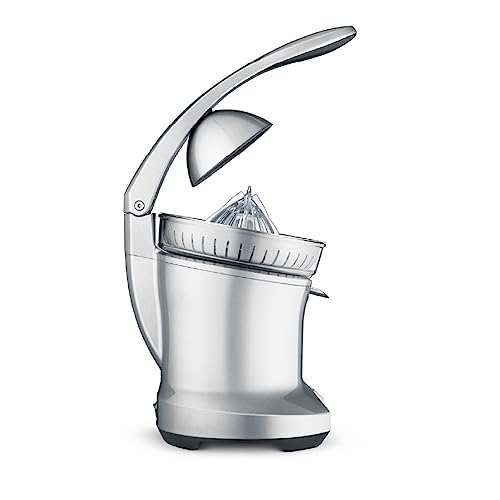
Breville Citrus PressBest overall
|
Every size of citrus, daily juice | Motorized lever press | 110 W | View on Amazon |
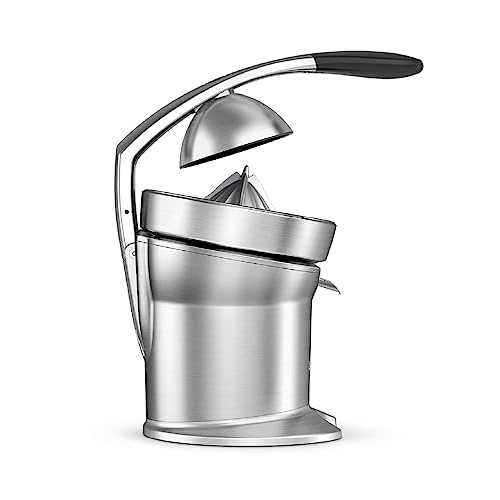
Breville Citrus Press ProBest built
|
A machine meant to last | Die-cast lever press | 110 W | View on Amazon |

Dash Dual Citrus JuicerBest value
|
Small kitchens, occasional batches | Press-down reamer, two cones | Not stated | View on Amazon |

KitchenAid Citrus Juicer AttachmentFor stand mixer owners
|
No new appliance on the counter | Mixer-driven reamer | From the mixer | View on Amazon |

SMEG Retro Citrus JuicerBest design
|
Kitchens with matching retro appliances | Press-down reamer | Not stated | View on Amazon |
Product images from Amazon. Power is as stated on each listing or by a named supplier. Check the listing before you buy.
Our picks for the best citrus juicer machine
These seven machines cover the ways a motor can do the squeezing: two lever presses from Breville, a die-cast lever press from Eurolux, three press-down reamers at different sizes and budgets, and a stand mixer attachment. Each pick says who it suits and one honest reason to skip it.
1. Breville Citrus Press – Top Review Results on Every Fruit Size
America’s Test Kitchen named this machine, model BCP600SILUSC, the winner of its electric citrus juicer review. Reviewers wrote that it “pressed citrus of all sizes smoothly and effortlessly” while “consistently extracting almost all the juice.” That matters more with a machine than with a hand tool: ATK found the best electric juicers pulled about 36 to 38 percent of a lemon’s weight as juice, against about 23 percent for the best manual press.
You cut the fruit, set it on the cone and lower the arm. Breville says one finned cone and a fruit dome handle everything from the smallest lime to the largest grapefruit, so there are no cones to swap. A safety switch keeps the cone from spinning until the arm is down and pressing, which is the controlled start ATK looks for, and a drip-stop spout holds the juice back between glasses.
The cone, juice collector, filter and fruit dome go in the dishwasher. It is the same machine our main citrus juicer guide recommends; we include it here because no electric model has better review results.
Why we like it
- Winner of ATK’s electric citrus juicer review
- One cone fits limes to grapefruit, per Breville
- Cone spins only when the arm presses down
- Four main parts are dishwasher safe
Key specifications
| Model | BCP600SILUSC |
|---|---|
| Type | Motorized press with assisted lever arm |
| Power | 110 W |
| Cones | One finned cone with fruit dome |
| Juice capacity | Not stated |
| Pulp control | Juice filter |
| Dishwasher-safe parts | Cone, collector, filter, fruit dome |
| Warranty | 1-year limited |
Why we recommend it
It suits anyone who juices several times a week, from limes for a margarita to oranges for breakfast, and wants the machine with the strongest independent results behind it.
Skip it if counter space is tight. Lever machines are taller and harder to store than press-down reamers, and ATK noted lever designs add parts to clean.
Pros and cons
Pros
- Best review results of any electric juicer here
- No cone swapping between fruits
- Drip-stop spout
Cons
- Tall footprint
- Juice capacity not stated
- Premium price tier
2. Breville Citrus Press Pro – Die-Cast Body and a Smooth Lever
The Citrus Press Pro, model 800CPXL, is the machine for a buyer whose question is quality. Breville builds its body from die-cast metal and its Quadra-Fin cone from die-cast stainless steel, and says both resist corrosive citric acid. A triple-hinged, power-assisted arm keeps pressure on the fruit through the whole press, and the title lists adjustable pulp control.
America’s Test Kitchen rated it highly recommended and called it “very pleasant to use” and “as powerful as” its winner. It was a little slower and yielded a bit less juice than the cheaper Citrus Press above, and ATK did not think the extra expense was necessary for most people. Choose it for the build, not for more juice.
Like its sibling, it has a dual safety switch and a drip-stop spout, draws 110 watts, and the cone, collector, filter and dome go in the dishwasher.
Why we like it
- Die-cast body and stainless cone, per Breville
- Highly recommended by ATK
- Adjustable pulp control
- Same safety switch and drip-stop spout as the Citrus Press
Key specifications
| Model | 800CPXL |
|---|---|
| Type | Motorized press with triple-hinged lever |
| Power | 110 W |
| Cones | Quadra-Fin die-cast stainless cone |
| Juice capacity | Not stated |
| Pulp control | Adjustable |
| Dishwasher-safe parts | Cone, collector, filter, fruit dome |
| Warranty | 1-year limited |
Why we recommend it
Choose it if you want a heavier, metal-bodied machine that can stay on the counter for years, and you like to set the pulp level.
Skip it if you only want the most juice per fruit. ATK found the less expensive Citrus Press slightly ahead on yield and speed.
Pros and cons
Pros
- Most solid build on this list for home use
- Smooth lever action, per ATK
- Pulp is adjustable
Cons
- Slightly slower than the Citrus Press, per ATK
- Highest price tier here

3. Dash Dual Citrus Juicer – Two Cones in a Small Footprint
The Dash, model JB065AQ, is a press-down reamer: you push the fruit half onto the cone and the motor spins it, reversing direction as it goes. It comes with two interchangeable cones, a small one for limes and lemons and a large one for oranges and grapefruit, an adjustable pulp screen and a 20-ounce container with a spout.
America’s Test Kitchen made it the Best Buy of its electric juicer review, saying it “did an excellent job juicing all sizes of citrus fruit” and gave “an impressive amount of juice.” The cost was time: it took at least about two minutes longer than the top machines, and pulp buildup blocked the juice passage. Empty the screen between big batches.
Dash says the cones, container and lid come apart for hand washing, and the machine is small enough to keep in a cabinet.
Why we like it
- ATK’s Best Buy among electric juicers
- Small and large cones included
- Adjustable pulp screen
- Compact enough for a cabinet
Key specifications
| Model | JB065AQ |
|---|---|
| Type | Press-down auto-reversing reamer |
| Power | Not stated |
| Cones | Two (small and large) |
| Juice capacity | 20 oz |
| Pulp control | Adjustable pulp screen |
| Dishwasher-safe parts | Not stated (listing says hand wash) |
| Warranty | Not stated |
Why we recommend it
It suits a small kitchen that juices a few limes or oranges at a time and wants a machine with independent backing at a low price.
Skip it if you juice by the pitcher. It is slower than the lever machines and the screen clogs with pulp on long runs.
Pros and cons
Pros
- Strong yield for its size, per ATK
- Two cone sizes
- Stores easily
Cons
- Slower than lever presses
- Pulp can block the passage
- Hand wash per the listing
4. Eurolux Die-Cast Electric Citrus Juicer – A Lever Press With Suction Feet

If you like the idea of the Breville Pro but want another option, Eurolux’s die-cast model, part number ELCJ-1800, takes the same approach: a stainless steel, die-cast body and a one-hand pressing arm over a motorized cone. Eurolux rates the motor at 300 watts, includes two stainless steel filters for different pulp levels, and fits suction cups to the base and a no-drip lock to the spout.
No independent review we could find covers this exact model. America’s Test Kitchen reviewed a different Eurolux machine, the Power Pro ELCJ-3000, and recommended it with reservations: it worked quickly and contained the pulp and seeds, but its reamer started spinning abruptly as soon as fruit touched it, and ATK noted that excess pressure on the pith can make juice taste a bit bitter. With any lever machine, press gently and stop when the rind is hollow.
The listing does not state a cone size, juice capacity, warranty or which parts are dishwasher safe, so read the manual before the first wash.
Why we like it
- Die-cast stainless body, per Eurolux
- Lever arm for one-hand pressing
- Two stainless pulp filters
- Suction feet and a no-drip spout lock
Key specifications
| Model | ELCJ-1800 |
|---|---|
| Type | Motorized lever press |
| Power | 300 W |
| Cones | Not stated |
| Juice capacity | Not stated |
| Pulp control | Two stainless steel filter sizes |
| Dishwasher-safe parts | Not stated |
| Warranty | Not stated |
Why we recommend it
Choose it if you want a metal lever machine with a strong motor and a base that stays put on the counter.
Skip it if you want independent results for the exact model you buy. This one has none we could find.
Pros and cons
Pros
- Metal body and lever
- Choice of two pulp filters
- Suction feet steady it
Cons
- No independent review of this model
- Care and warranty not stated
5. SMEG Retro Citrus Juicer – Die-Cast Housing With a Flip-Up Spout
SMEG’s CJF11 is the citrus juicer for a kitchen that already has the matching kettle and toaster. Underneath the 1950s styling is a die-cast aluminum housing, a stainless steel reamer and strainer, a BPA-free Tritan bowl and a stainless spout that flips up to stop drips. Press the fruit down and the motor starts; there is no switch. A dome lid covers the reamer between uses, and SMEG gives the size as 7 by 8 by 11 inches.
America’s Test Kitchen reviewed the blue version, CJF11BLUS, and recommended it with reservations. Its reamer spun smoothly and gave reasonable amounts of juice, but reviewers had to exert a lot of pressure, and limes kept rolling off the reamer’s dull tip. Lemons and oranges suit it better than small limes.
The removable parts go in the dishwasher, according to SMEG. The listing does not give the motor’s wattage or the bowl’s capacity.
Why we like it
- Die-cast aluminum housing
- Stainless reamer, strainer and spout
- Smooth reamer action, per ATK
- Dome lid keeps dust off
Key specifications
| Model | CJF11CRUS (cream) |
|---|---|
| Type | Press-activated reamer |
| Power | Not stated |
| Cones | One universal stainless reamer |
| Juice capacity | Not stated (Tritan bowl) |
| Pulp control | Stainless strainer |
| Dishwasher-safe parts | Removable parts (SMEG) |
| Warranty | Not stated |
Why we recommend it
Choose it if the juicer will live on the counter in plain sight and you mostly juice oranges and lemons.
Skip it if limes are your main fruit. ATK found small limes hard to hold on its reamer.
Pros and cons
Pros
- Sturdy metal housing
- Drip-stopping spout
- Matches SMEG’s other appliances
Cons
- Needs firm pressure, per ATK
- Limes roll off the tip
- Capacity and wattage not stated

6. KitchenAid Citrus Juicer Attachment – Runs on Your Stand Mixer
If a KitchenAid stand mixer already sits on your counter, you may not need another motor. The model JE attachment connects to the power hub on the front of any household KitchenAid stand mixer, according to KitchenAid, and uses the mixer’s motor to turn a reamer. You hold the fruit half against it and the juice drops through a strainer basket that catches seeds and pulp.
KitchenAid says it handles small limes, oranges and grapefruit. Set the mixer bowl underneath, or a measuring cup, and you have a juicer with nothing new to store except the attachment itself. It is the only machine on this list that adds no appliance to the kitchen.
The listing gives a one-year warranty but does not say whether the attachment can go in the dishwasher. We have not found an independent review of it. Our guide to the best stand mixer covers the mixers it fits.
Why we like it
- Uses the stand mixer’s motor
- Fits any household KitchenAid stand mixer
- Strainer basket catches seeds and pulp
- Small to store
Key specifications
| Model | JE |
|---|---|
| Type | Stand mixer attachment with reamer |
| Power | From the stand mixer |
| Cones | One reamer |
| Juice capacity | Juices into your own bowl |
| Pulp control | Strainer basket |
| Dishwasher-safe parts | Not stated |
| Warranty | 1 year |
Why we recommend it
Choose it if you own a KitchenAid stand mixer and want machine juicing without another appliance.
Skip it if you do not own the mixer. The attachment does nothing on its own.
Pros and cons
Pros
- No new motor to buy
- Seed and pulp basket
- Stores in a drawer
Cons
- Requires a KitchenAid stand mixer
- No independent review found
- Dishwasher care not stated
7. Elite Gourmet 24 oz Electric Citrus Juicer – Compact and Easy to Store

Elite Gourmet’s ETS623 is a small press-down reamer for apartments and small kitchens. Elite Gourmet rates the motor at 40 watts, which it says is stronger than the 25-watt motors common in this class, and the reamer reverses direction to pull more juice. The juice runs through a pulp and seed strainer into a 24-ounce container, about three cups, with a pour spout.
It is ETL listed and made with BPA-free materials, according to the maker. The removable parts are top-rack dishwasher safe, though Elite Gourmet recommends hand washing for the longest life.
No independent review we found covers this model, so weigh it as a simple, compact machine rather than a proven performer. For three cups of juice at a time, which covers a pitcher of limeade or a few glasses of orange juice, it is enough.
Why we like it
- 24-oz container with a pour spout
- Auto-reversing reamer
- ETL listed, per Elite Gourmet
- Top-rack dishwasher-safe parts
Key specifications
| Model | ETS623 |
|---|---|
| Type | Press-down auto-reversing reamer |
| Power | 40 W |
| Cones | One reamer |
| Juice capacity | 24 oz |
| Pulp control | Pulp and seed strainer |
| Dishwasher-safe parts | Removable parts, top rack |
| Warranty | Not stated |
Why we recommend it
It suits a small household that wants an electric juicer to keep in a cabinet and pull out for weekend juice or a batch of drinks.
Skip it if you want a reviewed machine or a metal one. This is a small plastic-bodied reamer with no independent results.
Pros and cons
Pros
- Small footprint
- Three-cup container
- Dishwasher-safe parts
Cons
- No independent review
- Single reamer size
- Warranty not stated
How to choose a citrus juicer machine
A citrus juicer machine is only worth the space if it suits the fruit you juice and how much of it. These five points come from America’s Test Kitchen’s electric juicer findings and from what a kitchen that squeezes limes all day looks for.
1. Lever press or press-down reamer
Lever machines, like the two Brevilles and the Eurolux, press the fruit for you, which spares your wrist and gave the best results in ATK’s review. Press-down reamers, like the Dash and Elite Gourmet, are smaller and cheaper but need you to lean on the fruit. ATK noted that lever designs add parts to clean and are harder to store.
2. A reamer that suits limes
Limes are the small fruit that trips machines up. ATK found that wide, tall reamers with sharp ridges hollowed fruit out best, and that a dull tip let limes roll off. If limes are your main fruit, look for a small cone or a one-size cone a review has proved on limes.
3. A controlled start
The best machines start spinning only when you press. ATK found reamers that started abruptly as soon as fruit touched them were startling and messy, and that heavy pressure can push bitterness from the pith into the juice. Press gently and stop when the rind is empty.
4. Strainer, catcher and spout
Raised strainer walls hold back pulp and seeds from big oranges. A catcher angled toward the spout drains fully, and a spout that closes stops drips on the counter. All three matter more than wattage, since ATK found reverse rotation made no meaningful difference to yield.
5. How much you juice, and how you clean
Count your parts. Fewer nooks and an easy-to-reach spout mean faster cleanup, and that is what decides whether a machine gets used. For a few drinks a week, a compact reamer is enough; for pitchers every weekend, a lever press.
How we chose these seven machines
We started from America’s Test Kitchen’s review of electric citrus juicers, which compared lever and press-down machines on yield, speed and cleanup, and from the makers’ own specifications on their Amazon listings. We left out machines ATK did not recommend, including the KitchenAid Go cordless juicer, the Vinci hands-free juicer and Zulay’s electric juicer, as well as a Proctor Silex model that Reviewed told readers to avoid. We also checked the U.S. Consumer Product Safety Commission’s recall database and found no recall for any citrus juicer on this list. Every machine was in stock on Amazon when we checked. We did not use these machines ourselves; where a review measured something, we name the review.
Citrus juicer machine questions, answered
What is the best quality citrus juicer machine?
For build quality, the Breville Citrus Press Pro: a die-cast body, a die-cast stainless cone and a lever America’s Test Kitchen found smooth and powerful. For results, ATK’s winner was the less expensive Breville Citrus Press.
Do electric citrus juicers get more juice than hand squeezers?
In ATK’s reviews, yes. Its top electric juicers extracted about 36 to 38 percent of a lemon’s weight as juice, while its best manual press managed about 23 percent, at a similar speed. A good hand press is still the better tool for one or two limes; see our guide to the best citrus squeezer.
Is a citrus juicer machine the same as a juicer?
No. A citrus juicer reams halved citrus fruit. A centrifugal or slow juicer grinds whole fruit and vegetables, and is a much larger machine. If you want carrot or green juice too, see the best juicer.
Can I make margaritas for a party with a citrus juicer machine?
That is one of the best reasons to own one. A lever press gets through a bag of limes quickly, so you can juice before guests arrive, keep the juice covered and cold, and shake drinks to order. Pour standard measures, offer alcohol-free drinks such as aguas frescas alongside, and never drink and drive.
What is the best citrus juicer machine for oranges?
Any of the lever presses here handles oranges and grapefruit well. Our guide to the best citrus juicer for orange juice goes into pitcher size and pulp for breakfast juice.
Our citrus juicer machine for most kitchens
Buy the Breville Citrus Press if you want the machine with the best independent results, or the Citrus Press Pro if a die-cast build matters more than a little extra juice. The Dash Dual is the value pick, the KitchenAid attachment suits stand mixer owners, and the SMEG suits a retro kitchen. For hand tools, start with the best lemon squeezer; for cheaper machines, see the best cheap citrus juicer. To put the juice to work, see our guide to aguas frescas and the home margarita bar, or let us squeeze the limes: see the drinks at Julia’s and call to order.