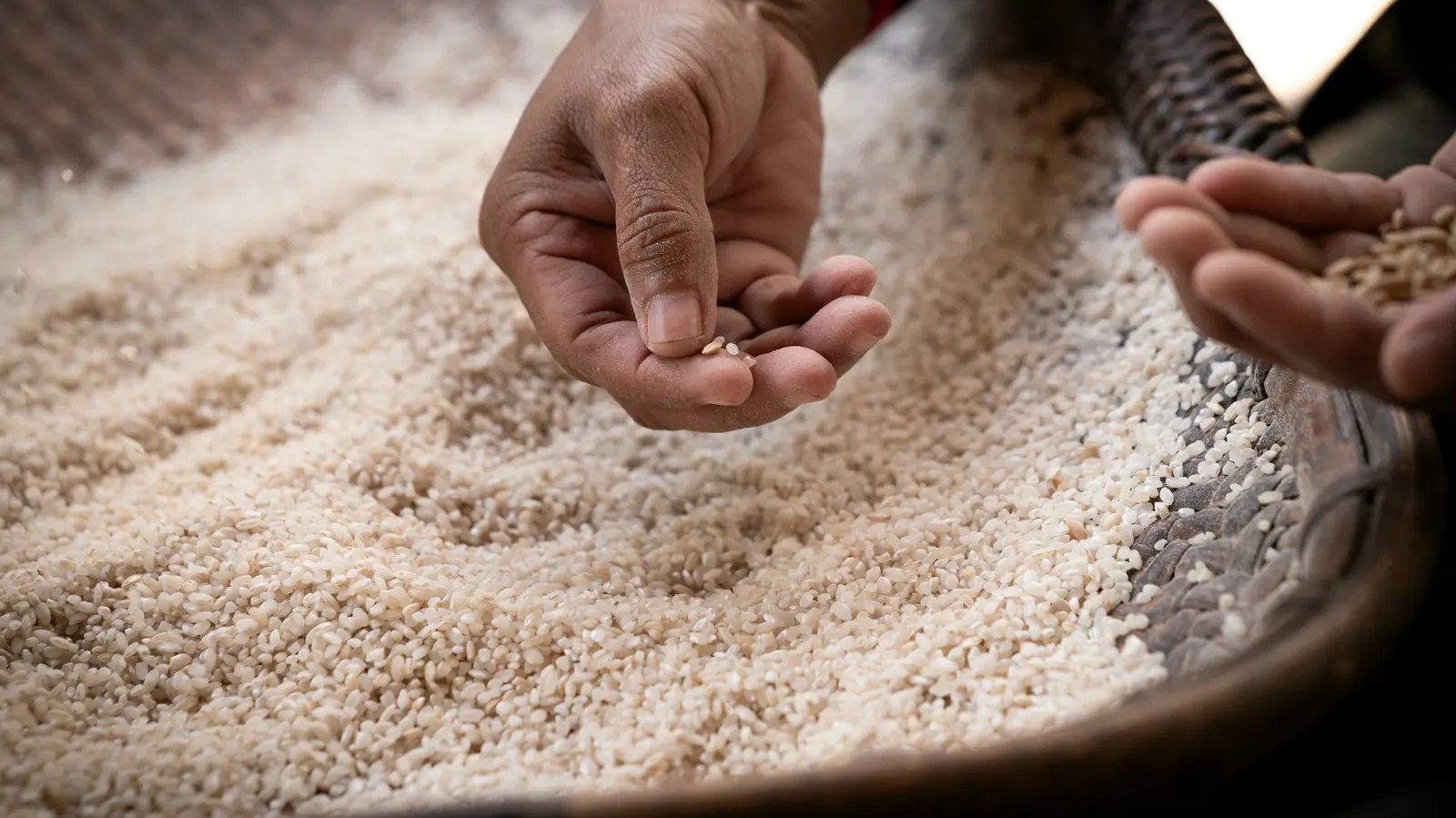
A pasta colander is the wrong tool for rice. Its holes are sized for spaghetti, so a cup of rinsed long-grain rice slips straight through into the sink, and short-grain rice sticks in the holes. Rice needs either a fine mesh, very small perforations, or a bowl built for the job: the Japanese rice washing bowl, which drains starchy water away while keeping every grain.
This guide is about those rice-specific tools: washing bowls with side and bottom drains, stainless bowls for soaking and rinsing, a fine-mesh strainer set and a small micro-perforated colander. If you want an everyday colander for pasta and vegetables, our main colander guide covers that, and its micro-perforated pick is worth a look too.
Julia’s earns a commission on purchases made through links on this page, at no cost to you. Recommendations are based on what a restaurant kitchen looks for, product specifications and verified buyer reports.
Quick verdict: which rice colander to buy
For most kitchens, the best rice colander is the Inomata 2.5-Quart Rice Washing Bowl: bottom drains let cloudy water run out under the tap, a side drain carries off floating husks, and the grains stay in the bowl. For bigger batches in steel, choose the Helen’s Asian Kitchen 3-Quart Stainless Rice Washing Bowl. If you would rather have a tool that does more than rice, the OXO Good Grips 3-Piece Strainer Set gives you fine mesh in three sizes.
Before you rinse, check the bag: enriched white rice is the one kind USA Rice says not to rinse. The rest of this page covers when rinsing helps, and which tool suits how much rice you cook.
Five rice colanders at a glance
Our five standout picks side by side, one for each kind of kitchen, with the specifications each maker or listing states. All seven are reviewed in full below.
| Rice colander | Best for | Material & capacity | How it drains | Buy on Amazon |
|---|---|---|---|---|

Inomata 2.5-Quart Rice Washing BowlBest overall
|
Everyday rinsing of 1 to 3 cups | BPA-free plastic, 2.5 quarts | Bottom drains plus a side drain | View on Amazon |

Helen’s Asian Kitchen 3-Quart Stainless Rice Washing BowlBest for big batches
|
Family-size pots of rice | Stainless steel, 3 quarts | Perforated side drainer | View on Amazon |

Pearl Metal 3-Way Stainless Rice Washing BowlBest made in Japan
|
A steel bowl that lasts | 18-8 stainless, 8.3-inch inner diameter | Drainer built into the bowl | View on Amazon |

OXO Good Grips 3-Piece Strainer SetBest fine mesh
|
Quinoa, small grains, draining | Stainless mesh, 3, 6 and 8 in | Fine mesh basket | View on Amazon |

Kotobuki Japanese Rice Washer with Dual DrainMost compact
|
Small batches, small sinks | Clear plastic, capacity not stated | Bottom and side strainers | View on Amazon |
Product images from Amazon. Capacities, materials and drain designs are as stated by each maker or listing; check the listing before you buy.
Our picks for the best rice colander
These seven cover the main ways people rinse rice: plastic and stainless washing bowls made for the job, a Japanese-made steel bowl, a fine-mesh strainer set and a small micro-perforated colander. None repeats a pick from our main colander guide or our fine-mesh strainer guide. Each one explains who it suits, the specifications that matter, and one honest reason to skip it.
1. Inomata 2.5-Quart Rice Washing Bowl – Side and Bottom Drains for Rice
Inomata is a Japanese housewares maker, and this is the kind of bowl a lot of Japanese home kitchens use for the daily rice wash. It is a clear plastic bowl with two sets of drain openings: small drains in the bottom and a slotted drain on one side. The listing describes the routine as measuring the rice in, holding the bowl under running tap water and swishing the grains with your fingers until the water runs clear.
According to the listing, loose starch and fine particles rinse out through the bottom drains, while husks and light debris float up and leave through the side drain. Because the rice sits in a bowl rather than a wide mesh basket, grains do not scatter across the sink, and you can see the water clear through the plastic.
Capacity is 2.5 quarts, and the bowl is made in Japan from BPA-free, food-grade plastic that goes on the top rack of the dishwasher, per the listing. The same maker sells a solid-bottom 2-quart version for soaking and a set of both bowls, so you can add a soaking bowl later if you cook short-grain or brown rice often.
Why we like it
- Bottom drains for starch plus a side drain for floating husks (Inomata listing).
- Clear plastic shows when the rinse water runs clear (Inomata listing).
- Made in Japan from BPA-free, food-grade plastic (Inomata listing).
- Top-rack dishwasher safe (Inomata listing).
Key specifications
| Model | 80800 |
|---|---|
| Material | BPA-free, food-grade plastic |
| Capacity | 2.5 quarts |
| Size | Not stated |
| Drain design | Bottom drains and side drain |
| Made in | Japan |
| Dishwasher safe | Top rack |
Why we recommend it
It suits anyone who rinses rice several times a week and wants a dedicated bowl that drains fast without losing grains down the sink.
Skip it if you want a metal tool that also drains pasta and vegetables; the stainless bowls below are more versatile.
Pros and cons
Pros
- Built only for washing rice
- Two drain types for starch and husks
- Light and dishwasher safe
Cons
- Plastic, so it will scratch with time
- Dimensions not stated in the listing
2. Helen’s Asian Kitchen 3-Quart Stainless Rice Washing Bowl – Bigger Batches in Steel
Helen’s Asian Kitchen makes this stainless steel take on the Japanese rice washing bowl. It is a deep bowl with a flat solid base and a perforated drainer along one side, so you fill it, swish, and tilt the bowl to pour off the cloudy water while the grains stay behind the perforations.
The listing gives the size as 9 by 9 by 6 inches and the capacity as 3 quarts, the largest on this list. That is room for a family-size batch of long-grain rice for a pot of Mexican rice, or several cups of jasmine or basmati for a rice cooker. The solid base also means the bowl doubles as a soaking bowl, which plastic speed bowls with bottom drains cannot do.
Helen’s lists it for quinoa, barley, dried beans, lentils and produce as well as rice. It is dishwasher safe.
Why we like it
- Largest capacity here, 3 quarts (Helen’s Asian Kitchen listing).
- Solid base lets you soak as well as rinse (Helen’s Asian Kitchen listing).
- Stainless steel will not stain or hold odors the way plastic can.
- Dishwasher safe (Helen’s Asian Kitchen listing).
Key specifications
| Model | 97123 |
|---|---|
| Material | Stainless steel (grade not stated) |
| Capacity | 3 quarts |
| Size | 9 x 9 x 6 inches |
| Drain design | Perforated side drainer, solid base |
| Made in | Not stated |
| Dishwasher safe | Yes |
Why we recommend it
It suits families who cook rice in quantity and want one steel bowl for soaking, rinsing and draining.
Skip it if you rinse under a running tap and want water to drain through the bottom as you go; this bowl drains only from the side when you tilt it.
Pros and cons
Pros
- Biggest bowl in the group
- Soaks and rinses in one piece
- Steel construction
Cons
- Drains only when tilted
- Steel grade and origin not stated
3. Pearl Metal 3-Way Stainless Rice Washing Bowl – Made in Tsubame, Japan
Pearl Metal is a Japanese housewares company, and this bowl is made by Fujii Wakeso in Tsubame, Niigata, a city known for metalwork, according to the listing. The Amazon title translates the Japanese name a little awkwardly as a “rice sharpener” bowl; in Japanese kitchens rice is said to be polished or scrubbed when it is washed, and this is a rice washing bowl, colander and drainer in one.
It is made of 18-8 stainless steel. The listing gives an outer diameter of about 9.1 inches, an inner diameter of 8.3 inches and a depth of about 4.7 inches. The listing does not state a capacity in cups or quarts, or the size of the drain holes, so check the photos on the listing to see the drainer before you buy.
It is dishwasher safe, per the listing. If you like tools that last for decades and want to avoid plastic at the sink, this is the one to look at.
Why we like it
- 18-8 stainless steel (Pearl Metal listing).
- Made in Tsubame, Niigata, Japan (Pearl Metal listing).
- One piece works as washing bowl, colander and drainer (Pearl Metal listing).
- Dishwasher safe (Pearl Metal listing).
Key specifications
| Model | HB-6765 |
|---|---|
| Material | 18-8 stainless steel |
| Capacity | Not stated |
| Size | About 9.1 in outer diameter, 4.7 in deep |
| Drain design | Built-in drainer (hole size not stated) |
| Made in | Japan |
| Dishwasher safe | Yes |
Why we recommend it
It suits cooks who want a Japanese-made steel rice bowl that will outlast plastic speed bowls.
Skip it if you want clear capacity markings or a stated hole size; the listing gives neither.
Pros and cons
Pros
- Japanese-made 18-8 steel
- Three jobs in one bowl
- Dishwasher safe
Cons
- Capacity not stated
- Listing title is a rough translation
- Weight figures in the listing do not agree
4. Joyce Chen 9.5-Inch Stainless Rice Washer Bowl – Bumps That Scrub Off Starch

Joyce Chen is a long-running brand of Asian cookware and kitchen tools, including woks and kitchen scissors. Its rice washer is a stainless steel bowl 9.5 inches wide and 5 inches deep, with an angled bottom that lets it tip forward to drain, according to the listing.
The detail that sets it apart is a set of raised agitator bumps on the bottom. Joyce Chen says they help remove starch from rice, and grit from fruit and vegetables, as you swish. Drain holes let the water out while the rice stays in the basin, and a hang hole lets you store it on a hook.
The maker also suggests it for draining pasta and noodles, so it can stand in for a small colander. The listing does not say whether it is dishwasher safe, so hand washing is the safe assumption.
Why we like it
- Raised bumps on the bottom help loosen surface starch (Joyce Chen listing).
- Angled bottom tips forward to pour off water (Joyce Chen listing).
- Wide 9.5-inch basin, 5 inches deep (Joyce Chen listing).
- Hang hole for storage on a hook (Joyce Chen listing).
Key specifications
| Model | J31-0095 |
|---|---|
| Material | Rust-resistant stainless steel |
| Capacity | Not stated |
| Size | 9.5 in wide, 5 in deep |
| Drain design | Drain holes, angled bottom |
| Made in | Not stated |
| Dishwasher safe | Not stated |
Why we recommend it
It suits people who cook sticky or short-grain rice and want something that helps the scrubbing along.
Skip it if you want a dishwasher-safe tool by the maker’s word; the listing does not say.
Pros and cons
Pros
- Agitator bumps for scrubbing
- Wide, deep basin
- Steel, hangs on a hook
Cons
- Capacity not stated
- Dishwasher use not stated
5. Kotobuki Japanese Rice Washer with Dual Drain – Small, Footed and Simple
Kotobuki is the house brand of M.V. Trading, an importer of Japanese tableware, and this rice washer is made in Japan, per the listing. Like the Inomata bowl, it has strainers in the bottom and on the side, so starchy water drains out underneath while light debris pours off the side.
It has a footed bottom, so it sits up off the sink floor and drains even when you set it down. The listing describes it as easy to clean and suggests it for fruit and vegetables too.
The listing is short. It gives no capacity, dimensions or plastic type, and no dishwasher statement, which is why it sits below the Inomata bowl. It is here as the simplest small option from a named importer.
Why we like it
- Strainers on the bottom and side (Kotobuki listing).
- Footed base lifts it off the sink floor (Kotobuki listing).
- Made in Japan (Kotobuki listing).
Key specifications
| Model | 460-250 |
|---|---|
| Material | Clear plastic (type not stated) |
| Capacity | Not stated |
| Size | Not stated |
| Drain design | Bottom and side strainers |
| Made in | Japan |
| Dishwasher safe | Not stated |
Why we recommend it
It suits small households that rinse a cup or two of rice at a time and want a footed bowl that drains in the sink.
Skip it if you want stated dimensions and care instructions before buying; the listing has neither.
Pros and cons
Pros
- Two drain points
- Footed so it drains when set down
- Made in Japan
Cons
- Capacity and size not stated
- Plastic type not stated
- No dishwasher statement
6. OXO Good Grips 3-Piece Strainer Set – Fine Mesh in Three Sizes
Not everyone wants a dedicated rice bowl. A fine-mesh strainer holds rice and quinoa, drains fast under the tap, and then goes on to strain stock, sift flour and rinse berries. OXO’s set gives you three: 3, 6 and 8 inches across.
The 8-inch strainer is the one for rice; it holds a couple of cups of dry grains comfortably for rinsing under the tap. The 6-inch suits a single cup of quinoa or lentils, and the 3-inch is for straining citrus juice or tea. Wide plastic rims keep each strainer steady across a pot or bowl, the handles have holes for hanging, and the grips stay put when wet, according to OXO.
This is a different product from the OXO double-rod strainer in our fine-mesh strainer guide: a set of three with plastic rims rather than one heavy-duty strainer. OXO does not publish the mesh count. The set is dishwasher safe, per the listing.
Why we like it
- Three sizes, 3, 6 and 8 inches (OXO listing).
- Wide rims rest steadily on pots and bowls (OXO listing).
- Non-slip handles with hanging holes (OXO listing).
- Dishwasher safe, with OXO’s repair-or-replace guarantee (OXO listing).
Key specifications
| Model | 11344300 |
|---|---|
| Material | Stainless steel mesh, plastic rims and handles |
| Capacity | Not stated |
| Size | 3, 6 and 8 in diameter |
| Drain design | Fine mesh basket (mesh count not stated) |
| Made in | Not stated |
| Dishwasher safe | Yes |
Why we recommend it
It suits cooks who rinse rice now and then but want strainers that earn their drawer space every day.
Skip it if you wash several cups of rice at a time; an 8-inch mesh basket is smaller than a 2.5- or 3-quart washing bowl.
Pros and cons
Pros
- Three useful sizes
- Fine mesh holds quinoa and rice
- Steady on a pot
Cons
- Mesh count not stated
- Small for big batches
- Plastic rims
7. Chef Craft Select 2.5-Quart Micro-Perforated Colander – Small Holes, Steady Feet

If you want an ordinary colander that happens to hold rice, look for micro-perforated stainless: a bowl punched with many tiny holes instead of a few large ones. Kitchen-tools brand Chef Craft makes this 2.5-quart one.
It stands on a footed base, so it drains on the counter or in the sink without being held, and it is stainless steel throughout and dishwasher safe, per the listing. Chef Craft suggests it for vegetables, pasta and canned goods; small holes are what make it work for rice as well.
The listing does not give a hole size or dimensions, so if you rinse tiny grains such as amaranth, a fine-mesh strainer is the safer bet. For rinsing rice before a pot of Mexican rice, then draining beans or vegetables later in the week, it is a sensible all-rounder that is smaller and lighter than a full pasta colander.
Why we like it
- Micro-perforated stainless bowl (Chef Craft listing).
- Footed base frees your hands (Chef Craft listing).
- 2.5-quart size suits a few cups of rice (Chef Craft listing).
- Dishwasher safe (Chef Craft listing).
Key specifications
| Model | 21947 |
|---|---|
| Material | Stainless steel |
| Capacity | 2.5 quarts |
| Size | Not stated |
| Drain design | Micro-perforated bowl, footed |
| Made in | Not stated |
| Dishwasher safe | Yes |
Why we recommend it
It suits kitchens that want one small colander for rice, beans and vegetables rather than a single-purpose rice bowl.
Skip it if you need a stated hole size for very small grains; the listing gives none.
Pros and cons
Pros
- Doubles as an everyday colander
- Stands on its own
- Stainless and dishwasher safe
Cons
- Hole size not stated
- No side drain or soaking option
How to choose a rice colander
Rice is small, slippery and starchy. Those three facts decide which tool works.
Holes small enough to hold the grain
Long-grain rice is thin enough to slip through ordinary colander holes, and quinoa is smaller still. Fine stainless mesh, micro-perforated steel or the slotted drains of a rice washing bowl all hold rice. Few makers state a hole size; if one does, compare it with the grain you cook most. For quinoa and other very small grains, fine mesh is the safest choice.
Bowl or basket
A washing bowl lets you swish rice in a pool of water, which loosens surface starch better than a trickle through a basket, and then pour the water off through the drain. A mesh basket drains faster and does more jobs, but you rinse under a running tap rather than in standing water. Bowls with a solid base, like the Helen’s, also let you soak rice before cooking.
Size for your usual batch
Rice swells a great deal as it cooks, so 2 or 3 cups of dry rice is plenty for a family meal. A 2.5- or 3-quart bowl leaves room to swish that much without splashing over the rim. An 8-inch mesh strainer is fine for a cup or two.
Plastic or stainless steel
Plastic washing bowls are light, clear and inexpensive, and the clear sides let you see when the water runs clear. Stainless steel lasts longer, does not stain and will not scratch. The plastic bowls here are stated by their makers to be BPA-free or food-grade where the listing says so; we have not added claims the makers do not make.
Care
Starch dries into a film, so rinse any rice tool straight after use. Most picks here are dishwasher safe by the maker’s word; the Joyce Chen and Kotobuki listings do not say, so wash those by hand.
Should you rinse rice? What USA Rice and the FDA say
Rinsing is mostly about texture. Washing off loose surface starch helps grains cook up separate rather than gummy, which is why rinsing is standard for Japanese short-grain rice and common for jasmine and basmati. Many Mexican rice recipes also rinse long-grain rice and dry it before it is toasted in oil; if you are curious how that dish differs from Spanish rice, our guide to Mexican rice vs Spanish rice explains it.
Enriched rice is the exception. Most white rice sold in the United States is enriched with a thin coating of thiamine, niacin, iron and folic acid, and USA Rice says it is important to avoid rinsing enriched rice to prevent the loss of those water-soluble nutrients. If the package says enriched and gives no washing step, follow the package.
Arsenic is the other reason people ask. The FDA monitors arsenic in rice and rice products and publishes its sampling results and research. The FDA’s list of research on arsenic in rice includes a 2015 study by its scientists titled “Cooking rice in excess water reduces both arsenic and enriched vitamins in the cooked grain”, which describes the trade-off: boiling rice in plenty of water and draining it, pasta style, lowers arsenic, but it also washes out the added vitamins. USA Rice notes that the FDA has said there is no reason for most people to change how much rice they eat. A rice colander is useful for that pasta-style method as well as for rinsing, but if arsenic is your concern, the cooking water does more than the rinse.
How we picked these seven rice colanders
We did not handle these products. We started from what a kitchen needs to wash rice well: openings small enough to hold the grain, a shape that lets you swish and drain, and a size that suits a normal batch. We then checked each product’s Amazon listing through Amazon’s product data, the makers’ own descriptions where published, and guidance from USA Rice and the FDA on rinsing and arsenic.
Every pick was in stock on Amazon when we checked and comes from a named maker or importer. OXO’s dedicated Rice and Grains Washing Colander was showing low stock, so it is not a pick, and we passed over several unbranded rice washers sold only on Amazon. We left out the picks on our best colander and best fine-mesh strainer pages so this guide adds something new, and we did not include any Matfer Bourgeat products. We searched the U.S. Consumer Product Safety Commission recall database for each brand here and found no recall of these products. We do not state prices, ratings or review counts because they change.
Rice colander questions, answered
What is the best colander for rice?
For most kitchens, the Inomata 2.5-Quart Rice Washing Bowl, which is built to drain starchy water and keep the grains. For a stainless option with room for big batches, the Helen’s Asian Kitchen 3-quart bowl; for an all-purpose tool, a fine-mesh strainer like the OXO set.
Can I rinse rice in a regular colander?
Only if its holes are small enough. Standard pasta colanders let long-grain rice and quinoa slip through. Micro-perforated or fine-mesh colanders work; a rice washing bowl works best.
How many times should I rinse rice?
Most rice washing bowl makers, including Inomata and Helen’s, say to swish and drain until the water is no longer cloudy. Usually that takes a few changes of water. Skip rinsing for enriched rice unless the package says to wash it.
Does rinsing rice remove arsenic?
Rinsing helps less than the cooking method. Research listed by the FDA found that cooking rice in excess water and draining it reduces arsenic, along with the added vitamins in enriched rice. Varying your grains is the other simple step.
Is a rice washing bowl worth it if I have a rice cooker?
A separate bowl keeps the scrubbing and the cloudy water away from the cooker’s inner pot, and it drains the rice more thoroughly than tipping water off by hand. Our best rice cooker guide covers the cookers themselves.
Our last word on rice colanders
For most people, a rice washing bowl like the Inomata is the rice colander to buy, with the Helen’s Asian Kitchen bowl for big batches in steel and the OXO strainer set if you want a tool that does much more than rice. Check whether your rice is enriched before you rinse, and drain it well before it goes into the pot. For draining pasta and vegetables, see our best colander guide, and if you cook rice on the stove, our guide to the best saucepan for rice will help. When you would rather someone else made the rice and beans, call to order from Julia’s at (346) 546-8283.