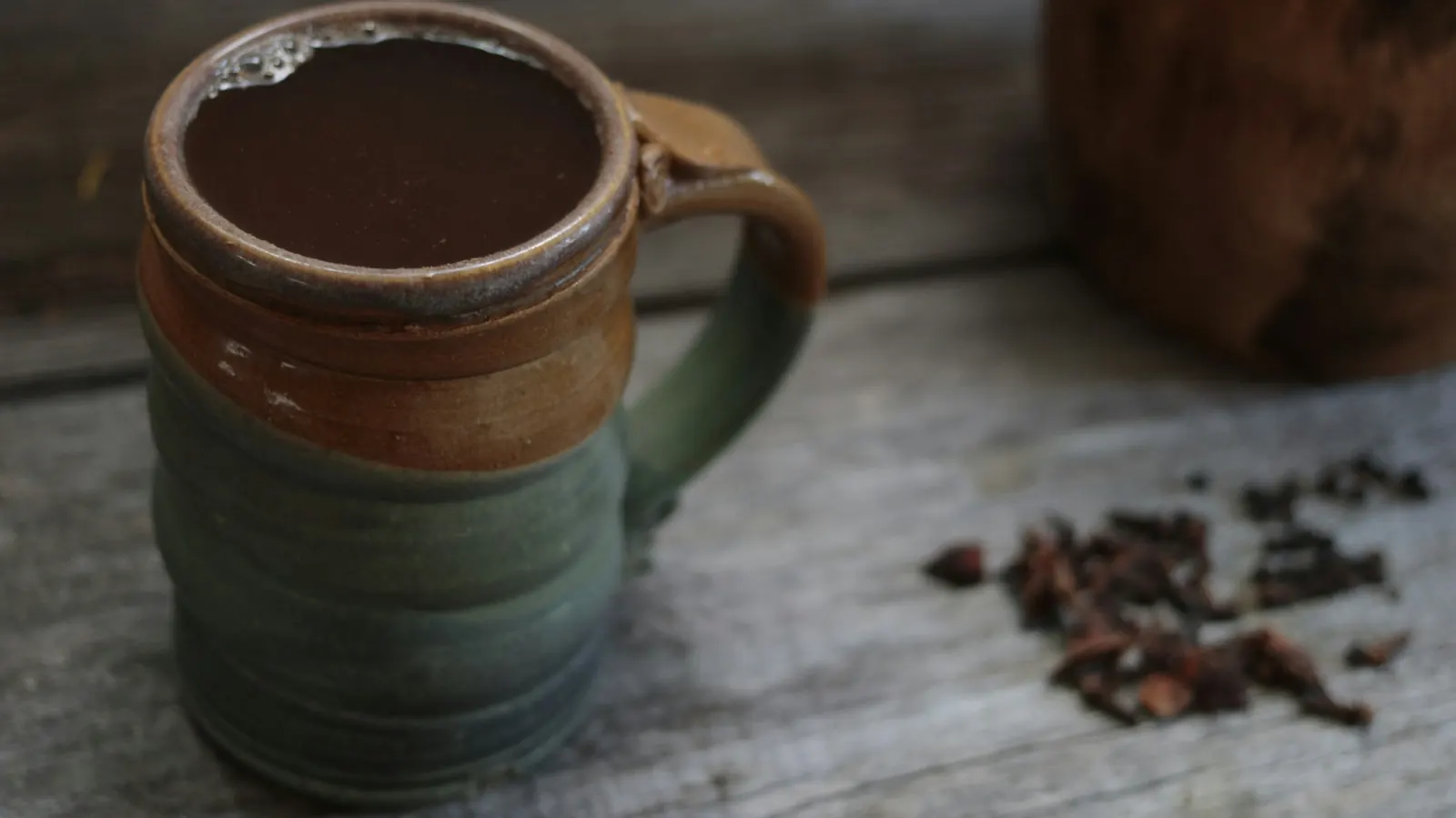
Champurrado is hot chocolate that has been turned into something closer to a meal. It belongs to the atole family, the warm corn drinks of Mexico, and what makes it champurrado rather than a cup of cocoa is masa: a few spoonfuls of corn dough or masa harina whisked into water or milk with Mexican chocolate, piloncillo and cinnamon, then simmered until it is thick and silky. It is the drink of cold mornings, Christmas posadas and Day of the Dead, usually with tamales or pan dulce alongside.
The masa does two jobs. It thickens the drink, and it gives it a gentle toasted-corn flavor under the chocolate. That means the bag you choose matters, but not in the way it does for tortillas or tamales: you need a smooth, properly nixtamalized flour that dissolves without grit, and you only need a few tablespoons per pot. This guide explains what to look for and names the bags worth buying.
Julia’s earns a commission on purchases made through links on this page, at no cost to you. Recommendations are based on what a working Mexican kitchen looks for in masa harina, the makers’ own specifications and the sources we cite.
Quick verdict: which masa harina to buy for champurrado
The best masa harina for champurrado for most kitchens is Bob’s Red Mill Organic Masa Harina: Bob’s Red Mill describes it as finely ground, lists only organic corn and hydrated lime, and the 24-ounce bag is a sensible size for a drink that uses a few tablespoons at a time. For the most corn flavor, choose Masienda Heirloom Yellow Corn Masa Harina. If your family recipe says Maseca, the Maseca Instant Yellow Corn Masa Flour is the Maseca bag reliably in stock on Amazon.
Below: the five standout bags side by side, then all seven picks in full and a method that keeps the pot free of lumps.
Five masa harinas for champurrado, compared
Our five standout picks, one for each kind of champurrado maker, with the details each maker, listing or the retailer named states. All seven picks are reviewed in full below.
| Masa harina | Best for | Grind & size | Ingredients (as stated) | Buy on Amazon |
|---|---|---|---|---|

Bob’s Red Mill Organic Masa Harina, 24 ozBest overall
|
Smooth, everyday champurrado | Fine grind; 24 oz | Organic corn, hydrated lime | View on Amazon |

Masienda Heirloom Yellow Corn Masa Harina, 2.2 lbBest heirloom
|
The most corn flavor | Fine grind; one 2.2 lb bag | Non-GMO heirloom corn, trace of lime | View on Amazon |
| Recipes that name Maseca | Tortilla flour; two bags (size stated two ways) | Corn treated with hydrated lime (retailers) | View on Amazon | |

Chef Mex Organic Corn Masa Flour, 2.2 lbCertified gluten-free
|
Gluten-free households | Grind not stated; 2.2 lb | Organic white corn, water, lime, folic acid | View on Amazon |

Minsa Instant Corn Masa Flour, 3 x 4 lbAtole named on the listing
|
Posadas and big pots | Grind not stated; three 4 lb bags | Not listed on Amazon; check the bag | View on Amazon |
Product images from Amazon. Ingredients and claims are as stated by each maker, listing or the retailer named; recipes change, so read the bag before you cook.
What masa harina does in champurrado
Masa harina is corn that has been nixtamalized, cooked and soaked with lime, then dried and ground to a flour. Add liquid and it becomes masa again. In a tortilla, that masa is the whole dough; in champurrado, a small amount of it is stirred into a large pot of liquid and cooked until the starch thickens everything around it. Our guide to nixtamalization explains why that treated corn behaves so differently from plain cornmeal.
That is also why there is no real substitute. King Arthur Baking, in its champurrado recipe by Arturo Enciso, notes that because of the corn’s special treatment, neither cornmeal nor corn flour is a good substitute for masa harina. Cornmeal stays gritty; plain corn flour lacks the flavor that lime-treated corn gives the drink.
The quantity is small. King Arthur’s recipe thickens about 3½ cups of liquid with 6 tablespoons (36 grams) of masa harina, for a generous 3 cups of champurrado. The Mexican Food Journal makes a larger pot, 8 cups of water and two tablets of Mexican chocolate, thickened with 1⅓ cups of fresh masa, or ¾ cup of corn flour if you have no fresh masa. Either way, a single 24-ounce bag of masa harina is enough for well over a dozen pots.
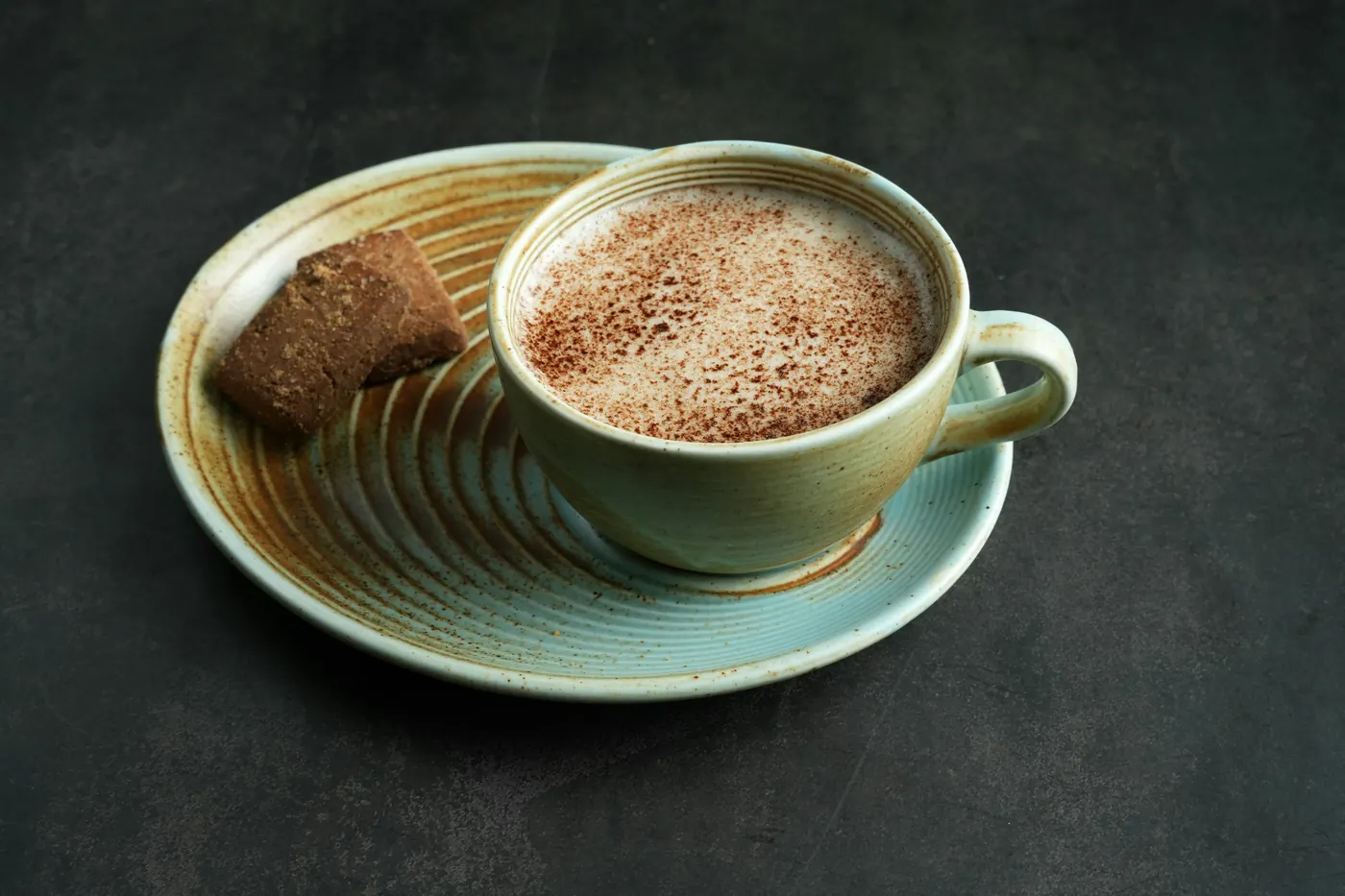
Atole grind vs tortilla grind: does it matter?
No maker we found sells a masa harina labeled specifically for champurrado or atole in the United States. What makers do sell is all-purpose masa harina, which is milled fine for tortillas, and tamal masa harina, which is milled coarser. Rick Bayless notes that Maseca makes a coarser flour for tamales, and grocery retailers describe Maseca Tamal as a coarse grind.
For a drink, fine is what you want: it disperses evenly and cooks to a silky texture, where a coarse tamal grind can leave the champurrado slightly sandy. Home cook and blogger Confessions of a Foodie gives the same advice for Maseca, saying to make sure the package says it is for tortillas, not tamales. Bob’s Red Mill and Masienda both describe their masa harinas as fine-ground, and Minsa’s listing names atole among the uses of its ordinary instant corn flour, alongside tortillas and tamales.
If you have fresh masa from a tortillería, it works too, and many traditional recipes use it; the Mexican Food Journal calls for fresh masa first and masa harina as the alternative. Fresh masa needs more by volume and should be dissolved completely in warm water before it goes into the pot.
Our picks for the best masa harina for champurrado
Seven bags: two fine-ground flours from makers who say so, the Maseca you can find on Amazon, a certified gluten-free option, a bulk flour that names atole on its listing, a small bag of organic white corn flour and a blue corn flour for blue corn atole. Each pick says what is in the bag and one honest reason to skip it.
1. Bob’s Red Mill Organic Masa Harina, 24 oz – Fine Grind, Two Ingredients
For a drink that needs a smooth, fine flour and only a few spoonfuls per pot, this is the easiest bag to recommend. Bob’s Red Mill describes it as corn that has been cooked, soaked in limewater and finely ground, and gives two ingredients on its product page: organic corn and hydrated lime. It is USDA certified organic and Non-GMO Project Approved.
The corn is golden, so it gives champurrado a faint yellow warmth under the chocolate rather than any visible color; the chocolate decides the color. Because there is nothing in the bag but corn and lime, you control the sweetness, the salt and the spice.
A 24-ounce bag is about 680 grams. At King Arthur’s 36 grams per pot, that is more than a dozen batches of champurrado, with plenty left for a round of tortillas. Bob’s Red Mill does not describe this flour as gluten-free on its product page, so if that matters, see Chef Mex below.
Why we like it
- Finely ground, per Bob’s Red Mill
- Two ingredients: organic corn and hydrated lime
- USDA organic and Non-GMO Project Approved
- Sold in many supermarkets as well as online
Key specifications
| Size | 24 oz |
|---|---|
| Count | 1 bag |
| Corn type | Organic golden (yellow) corn |
| Grind | Fine (listing) |
| Main ingredients | Organic corn, hydrated lime (Bob’s Red Mill) |
| Allergens/diet | USDA organic, Non-GMO Project Approved; gluten-free not stated |
| Shelf storage | Not stated |
| Made in | Not stated |
Why we recommend it
Choose it if you want a fine, plain, organic masa harina that dissolves smoothly and keeps well enough between pots.
Skip it if you need a certified gluten-free flour; Bob’s Red Mill does not claim that for this bag.
Pros and cons
Pros
- Fine grind for a smooth drink
- Only corn and lime
- Right-sized bag
Cons
- Gluten-free not stated
- Not heirloom corn
- Small for a posada crowd
2. Masienda Heirloom Yellow Corn Masa Harina, 2.2 lb – The Most Corn Flavor
Masienda sells heirloom corn grown by farmers in Mexico, and its yellow masa harina is made of nothing but that corn and a trace of lime. The listing describes it as deeply flavorful, with corn flavor that lingers, and calls it gluten-free, non-GMO and preservative-free. Masienda describes its masa harina as a fine grind.
In champurrado, that flavor shows up as a toasty corn note underneath the chocolate and cinnamon, which is the point of thickening with masa rather than cornstarch. America’s Test Kitchen, comparing masa harinas, described Masienda’s as very corny and sweet and toasty, against the very subtle corn flavor of Maseca.
A 2.2-pound bag is a lot of flour for champurrado alone, so this pick makes most sense if you also make tortillas or tamales; the listing says each bag makes 84 six-inch tortillas. Store it in a cool, dry place, as the listing advises.
Why we like it
- Heirloom corn from Mexico with only a trace of lime
- Fine grind, per Masienda
- Gluten-free, non-GMO, preservative-free, as stated
- Pronounced corn flavor, per America’s Test Kitchen
Key specifications
| Size | 2.2 lb (35.2 oz) |
|---|---|
| Count | 1 bag |
| Corn type | Heirloom yellow corn from Mexico |
| Grind | Fine (Masienda) |
| Main ingredients | Non-GMO heirloom corn, trace of lime |
| Allergens/diet | Gluten-free, non-GMO, preservative-free (listing) |
| Shelf storage | Cool, dry place (listing) |
| Made in | Corn from Mexico; packing location not stated |
Why we recommend it
Choose it if you want the corn to taste like corn in your champurrado, and you will use the rest for tortillas or tamales.
Skip it if champurrado is the only thing you make with masa harina; a 2.2-pound bag is a lot to keep fresh.
Pros and cons
Pros
- Most flavorful corn on this list
- Only corn and lime
- Fine grind
Cons
- Costs more than commercial flours
- Large quantity for drinks alone
- Not certified organic
3. Maseca Instant Yellow Corn Masa Flour, 2-pack – The Brand Recipes Name

Many champurrado recipes simply say “masa harina, such as Maseca”; the Mexican Food Journal names Maseca as its favorite brand. The classic white Maseca was not reliably in stock on Amazon when we checked, so this is the yellow corn version of the same instant tortilla flour. Grocery retailers list one ingredient, corn treated with hydrated lime, and describe it as gluten-free and kosher.
It is Maseca’s tortilla flour, not its tamal flour, which is what you want for a smooth drink. Rick Bayless notes that most cooks consider Maseca’s taste and texture the best of the commercial brands, and America’s Test Kitchen describes Maseca’s texture as soft and fine. Yellow corn gives a slightly warmer color and a little more corn flavor than white, both of which disappear into chocolate easily.
One thing to check: the listing’s title says two 2.2-pound bags, while its size field says 17.6 ounces per bag, and it appears to be sold by a reseller. Confirm the pack size on the listing before you order.
Why we like it
- The brand many champurrado recipes are written for
- Tortilla flour, not the coarser tamal grind
- One ingredient: corn treated with hydrated lime (retailers)
- Gluten-free and kosher, per retailers
Key specifications
| Size | 2.2 lb per bag in the title; 17.6 oz in the size field |
|---|---|
| Count | 2 bags |
| Corn type | Yellow corn |
| Grind | Not stated (instant tortilla flour) |
| Main ingredients | Corn treated with hydrated lime (retailers) |
| Allergens/diet | Not stated on the listing; gluten-free and kosher per retailers |
| Shelf storage | Not stated |
| Made in | Not stated |
Why we recommend it
Choose it if your family’s champurrado has always been made with Maseca and you want the result to taste the way you remember.
Skip it if you want a listing that states its own ingredients and pack size clearly; this one does neither.
Pros and cons
Pros
- Familiar flavor and texture
- Single-ingredient flour
- Also good for tortillas
Cons
- Pack size stated two ways
- Thin reseller listing
- Subtle corn flavor
4. Chef Mex Organic Corn Masa Flour, 2.2 lb – Certified Gluten-Free
Corn contains no gluten, but a mill that also handles wheat can leave traces. If someone at your table must avoid gluten, this is the bag on our list sold as certified gluten-free. Chef Mex also states that it is USDA organic and Non-GMO Project Verified, and gives four ingredients: organic white corn, water, lime and folic acid.
The US Food and Drug Administration has allowed manufacturers to add folic acid to corn masa flour, on a voluntary basis, since 2016. Chef Mex says the trace amount does not change flavor or texture, and in a pot of chocolate you would not notice it.
The listing does not state the grind, and Chef Mex is a small brand that publishes little about itself beyond the listing. Whisk it into the liquid gradually, as with any masa harina, and taste for texture once it has simmered. Remember that the rest of the pot matters too: check that your chocolate is labeled gluten-free if that is the reason you are buying this bag.
Why we like it
- Certified gluten-free, per the listing
- USDA organic and Non-GMO Project Verified
- Short ingredient list, stated on the listing
- About 33 servings per bag, as stated
Key specifications
| Size | 2.2 lb (35.2 oz) |
|---|---|
| Count | 1 bag |
| Corn type | Organic white corn |
| Grind | Not stated |
| Main ingredients | Organic white corn, water, lime, folic acid |
| Allergens/diet | Certified gluten-free; USDA organic; Non-GMO Project Verified (listing) |
| Shelf storage | Not stated |
| Made in | Not stated |
Why we recommend it
Choose it if you need certified gluten-free masa harina for champurrado and the tamales that go with it.
Skip it if you prefer a brand with a long track record; Chef Mex publishes little about itself.
Pros and cons
Pros
- Certified gluten-free
- Organic and non-GMO
- Ingredients on the listing
Cons
- Little-known brand
- Grind not stated
5. Minsa Instant Corn Masa Flour, 3 x 4 lb – Atole on the Label, Pounds to Spare
Minsa is the one brand here whose Amazon listing names atole directly: it describes its instant corn flour, harina de maíz nixtamalizado, as great for tortillas, tamales, pupusas, gorditas and atole. This pack is three 4-pound bags, which makes sense if you make champurrado for a posada, a church event or a big family, and use the rest for tortillas and tamales.
The listing says the flour has no preservatives, 0% trans fat and no cholesterol, and is enriched with folic acid. It does not give a full ingredient list. A reseller’s copy of the bag lists vegetable oil, salt and gums with the corn and lime, which we could not confirm against Minsa’s own information. Salt in the flour would not hurt champurrado, which many cooks season with a pinch anyway, but read the bag and taste before you add more.
Minsa is a long-established commercial miller; its US mills in Red Oak, Iowa, and Muleshoe, Texas, were bought by Bunge in 2018, according to the trade paper Feedstuffs. Keep opened bags sealed and use the oldest first.
Why we like it
- Atole named among its uses on the listing
- Twelve pounds in three 4 lb bags
- No preservatives, as stated
- From a long-established masa flour miller
Key specifications
| Size | 4 lb per bag |
|---|---|
| Count | 3 bags |
| Corn type | Not stated |
| Grind | Not stated |
| Main ingredients | Not listed on Amazon; check the bag |
| Allergens/diet | Not stated (no preservatives, 0% trans fat, per listing) |
| Shelf storage | Not stated |
| Made in | Not stated |
Why we recommend it
Choose it if you make champurrado by the stockpot and want one order to cover the tamales and tortillas too.
Skip it if you want a flour of only corn and lime confirmed before you buy; the listing does not say.
Pros and cons
Pros
- Sold with atole in mind
- Bulk quantity
- No preservatives, as stated
Cons
- Full ingredients not listed
- May contain oil, salt and gums
- A lot to store
6. Just About Foods Organic Heirloom White Corn Masa Harina, 1 lb – A Small Bag for a Few Pots
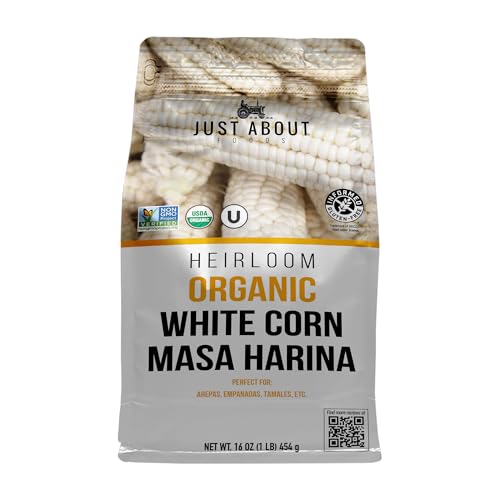
Champurrado is seasonal in many homes: a few pots between Day of the Dead and the end of the posadas, then nothing until next autumn. If that is your rhythm, a big bag is hard to finish, and this is the smallest on our list at one pound.
It is a stone-ground organic heirloom white corn masa harina, according to the listing, which calls it USDA Organic, gluten-free, kosher and non-GMO. Just About Foods suggests it for tortillas, tamales, sopes and gorditas, which is a handy way to use up what is left after the pot.
Just About Foods is a small brand, and the listing does not mention champurrado or atole, how fine the grind is, or a shelf life. White corn gives the pot no yellow warmth, but the chocolate decides the color anyway.
Why we like it
- One-pound bag for occasional pots
- USDA Organic, gluten-free and kosher, per the listing
- Stone-ground heirloom white corn
- Useful for tortillas and tamales too
Key specifications
| Size | 1 lb (16 oz) |
|---|---|
| Count | 1 bag |
| Corn type | Organic heirloom white corn |
| Grind | Stone-ground; fineness not stated |
| Main ingredients | Organic heirloom white corn; full list not stated |
| Allergens/diet | Gluten-free, kosher, non-GMO (listing) |
| Shelf storage | Not stated |
| Made in | Not stated |
Why we recommend it
Choose it if you make champurrado once or twice a season and do not want a big bag left over.
Skip it if you make it often; a larger bag is the better buy, and the Bob’s Red Mill Organic gives you a stated fine grind.
Pros and cons
Pros
- Small bag
- Organic heirloom corn
- Stated gluten-free
Cons
- Fineness of grind not stated
- Small brand, short listing
- Only one pound
7. Maseca Blue Corn Instant Masa Flour, 2.2 lb – For Blue Corn Atole

Atole is made from more than one color of corn, and blue corn atole has its own following. If you want to try a blue corn champurrado, or make a plain blue corn atole alongside it, this is the blue masa harina reliably in stock on Amazon. Blue corn masa is often described as nuttier and earthier than white.
The Amazon listing gives only the name and size. H-E-B lists it as blue corn masa flour and gluten-free, and WebstaurantStore says it has no preservatives, but we could not find a full ingredient panel; Maseca’s white flour lists corn treated with hydrated lime and folic acid, and this is likely similar, but check the bag.
In a chocolate drink the blue color turns a deep, dusky brown rather than blue, so choose it for the flavor rather than the look.
Why we like it
- Blue corn masa harina in an easy 2.2 lb bag
- Gluten-free, per H-E-B
- No preservatives, per WebstaurantStore
- Also makes blue corn tortillas
Key specifications
| Size | 2.2 lb |
|---|---|
| Count | 1 bag |
| Corn type | Blue corn |
| Grind | Not stated (instant tortilla flour) |
| Main ingredients | Not listed on Amazon; check the bag |
| Allergens/diet | Not stated on the listing; gluten-free per H-E-B |
| Shelf storage | Not stated |
| Made in | Not stated |
Why we recommend it
Choose it if you want to make blue corn atole or a blue corn champurrado with an earthier corn flavor.
Skip it if you want to read the full ingredient list before you buy; the listing does not give one.
Pros and cons
Pros
- Distinct blue corn flavor
- Gluten-free, per a retailer
- Manageable bag size
Cons
- Ingredients not on the listing
- Color does not show in chocolate
- Grind not stated
How to choose masa harina for champurrado
Four checks on the bag cover almost everything.
1. Is it nixtamalized?
Look for lime or calcium hydroxide in the ingredients, or the words “masa harina”, “nixtamalizado” or “instant corn masa flour”. Cornmeal and pre-cooked arepa flour are not nixtamalized and will not give the right flavor or texture. Our guide to the best masa harina for tortillas goes through the labels in more detail, and our masa harina vs Maseca comparison explains how Maseca relates to the rest.
2. Tortilla grind, not tamal grind
Choose an all-purpose or tortilla masa harina. Tamal flours are milled coarser on purpose; they are right for tamales and less right for a smooth drink. If you are making tamales for the same night, our guide to the best masa harina for tamales covers that bag.
3. What else is in it?
The simplest flours are corn and lime. Some add folic acid, which the FDA permits; at least one reseller’s copy of a bag lists oil, salt and gums. None of these spoil champurrado, but know what you have, especially if anyone at the table avoids gluten or additives.
4. How much will you really use?
A pot of champurrado takes a few tablespoons to about ¾ cup of masa harina. Unless you also make tortillas or tamales, a single bag of 2 pounds or less will last a season. Choose bulk only if you cook masa often.
How to keep champurrado smooth
Lumps are the only real way to go wrong. Masa harina clumps when it meets hot liquid all at once, so add it gradually, one of two ways.
- Slurry first. The Mexican Food Journal dissolves the masa in 2 cups of warm water before it goes into the pot, whisking by hand for about 10 minutes or blending for about 30 seconds, until the liquid is smooth rather than grainy.
- Whisk it straight in. King Arthur’s recipe lowers the heat and whisks the masa harina into the chocolate base a little at a time, stirring constantly until smooth. Confessions of a Foodie adds it one tablespoon at a time and works out the lumps before each addition.
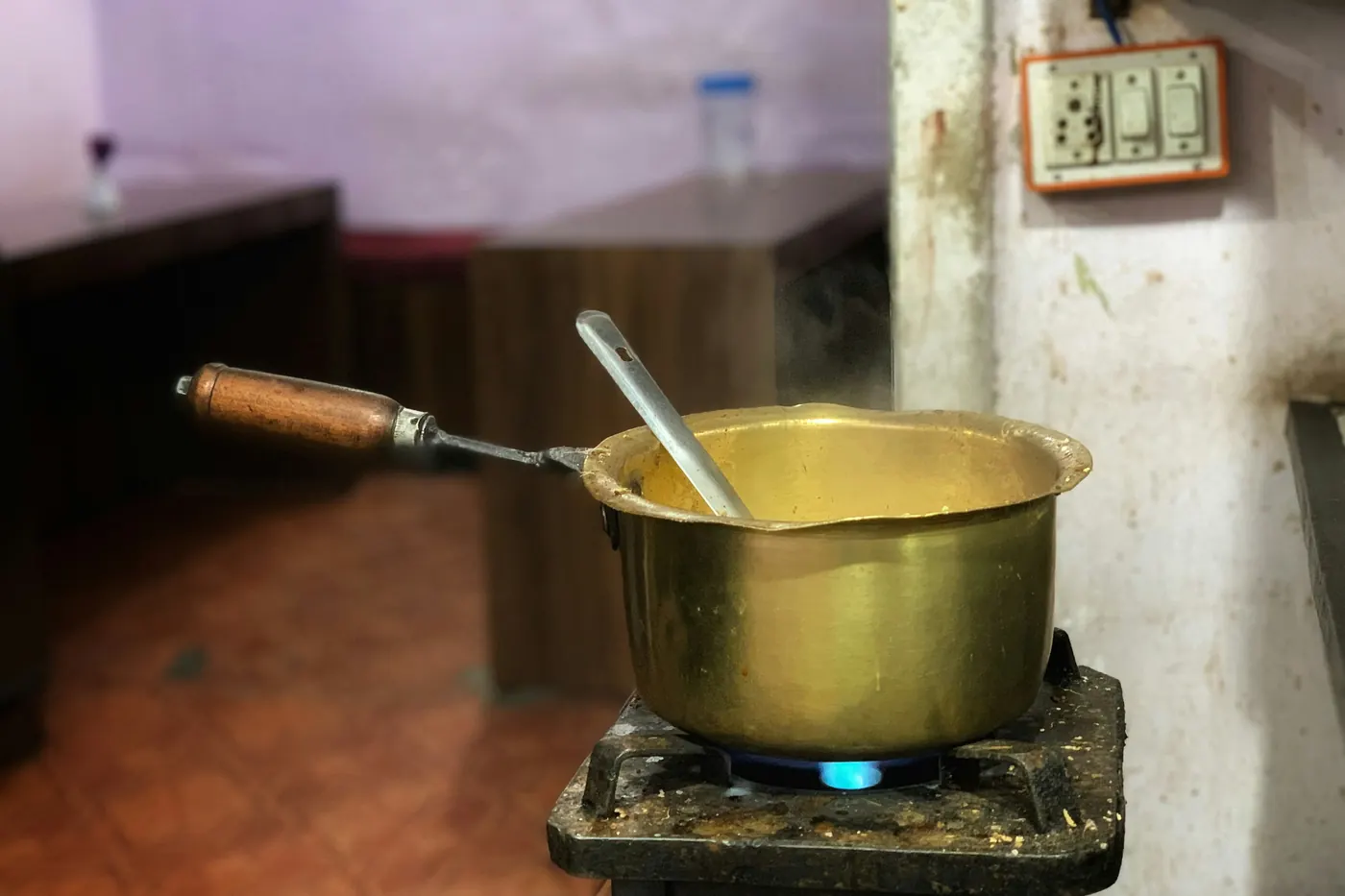
Then give it time. King Arthur keeps the pot over low heat, whisking regularly, for 12 to 15 minutes, until the champurrado is silky and thickened. The masa needs that time to reach full thickness. The Mexican Food Journal warns that the drink thickens as it cools, and suggests adding more masa mixture if you like it thicker. King Arthur keeps leftovers up to three days in the refrigerator and loosens them with a splash of water or milk when reheating.
For the rest of the pot, King Arthur uses one 1.35-ounce disk of stone-ground Mexican chocolate, about 60 grams of piloncillo and a stick of Ceylon cinnamon to 3½ cups of liquid, and suggests dark brown sugar if you cannot find piloncillo. Our guides to the best Mexican hot chocolate and the best piloncillo brand cover both, and molinillo vs whisk explains the traditional wooden frother.
How we chose these flours
We started with what champurrado asks of masa harina: properly nixtamalized corn, a fine enough grind to dissolve smoothly, a plain ingredient list and a bag size that suits a drink made a few tablespoons at a time. We narrowed the field to masa harinas sold on Amazon in the United States and in stock when we checked, and took ingredients, grind and claims from each maker or listing; where a listing was thin, we used grocery retailers’ published panels and say so. For technique we relied on King Arthur Baking’s champurrado recipe, the Mexican Food Journal’s chocolate atole, Confessions of a Foodie’s champurrado, Rick Bayless’s masa harina notes and America’s Test Kitchen’s masa harina comparison; for folic acid, the US Food and Drug Administration. We left out ready-made champurrado mixes and Mexican chocolate tablets whose Amazon listings give no ingredient list, because chocolate products commonly contain milk and soy; Maseca Tamal, because a coarse grind suits tamales better than a drink; and Maseca’s white flour, which was not reliably in stock. We have not made champurrado with every flour listed here; where we describe how a flour behaves, we say whose description that is.
Champurrado questions, answered
What is the difference between atole and champurrado?
Atole is the family of hot drinks thickened with corn masa. Champurrado is atole made with chocolate, usually sweetened with piloncillo and spiced with cinnamon.
Can I use cornstarch instead of masa harina?
It will thicken the drink, but it will not taste like champurrado. The corn flavor comes from nixtamalized masa, and King Arthur Baking notes that neither cornmeal nor corn flour is a good substitute.
Can I use tamal masa harina?
You can, but a tortilla or all-purpose masa harina is the better choice; tamal flour is milled coarser and can leave the drink slightly sandy.
How much masa harina do I need for champurrado?
About 6 tablespoons (36 grams) for 3½ cups of liquid, in King Arthur Baking’s recipe. Add more for a thicker drink, a little at a time.
Why is my champurrado lumpy?
The masa harina went in too fast or into liquid that was too hot. Make a smooth slurry in warm water first, or whisk it in a spoonful at a time over low heat. A quick pass through a blender or sieve rescues a lumpy pot.
Is champurrado gluten-free?
Masa harina is made from corn, but only some bags are certified gluten-free, and Mexican chocolate varies. Check every label if it matters.
The bag for your next pot of champurrado
Buy Bob’s Red Mill Organic for a fine, plain flour in a sensible size, Masienda when the corn should taste like corn, Maseca yellow if your recipe was written for Maseca, Chef Mex for a gluten-free table, Minsa for a crowd, Just About Foods if you only want a small bag, and Maseca Blue for blue corn atole. Whichever you choose, add it slowly, give it a full simmer, and remember that it thickens as it cools.
Champurrado is a holiday drink in much of Mexico; our guides to Mexican Christmas food and Day of the Dead food cover what goes on the table with it. For other ways to use the same bag, see our guides to the best masa harina for pupusas and the best corn for masa harina if you want to start from whole kernels.
And when you would rather someone else did the cooking, see the menu or call to order.