A tortilla press does not need to be expensive to do its job. Two flat plates, a hinge and a lever are all it is, and a press from the lower end of the market can turn out corn tortillas every bit as thin as one costing several times more. What separates good value from false economy is what you get for the money: enough weight to press evenly, plates wide enough for the tortillas you make, a hinge that stays true, and a material that will still be working in ten years.
This guide looks at tortilla presses through that lens. Prices on Amazon change week to week, so we do not quote them; instead we sort the presses into rough tiers (entry-level and mid-range, as we found them when we checked) and explain what each tier buys you. If you want the full picture across every material and budget, start with our main guide to the best tortilla press; this page is for cooks who want the most press for the least money.
Julia’s earns a commission on purchases made through links on this page, at no cost to you. Recommendations are based on what a working Mexican kitchen looks for in a tortilla press, the makers’ own specifications and published equipment reviews, which we cite.
Quick verdict: which press gives the most for the money
The best value tortilla press for most kitchens is the Victoria 8-inch Traditional Cast Iron Tortilla Press. It sits in the mid-range tier, yet it has the weight that makes pressing easy, a flaxseed-oil seasoning, a limited lifetime warranty on its listing, and America’s Test Kitchen named Victoria’s 8-inch press its best buy. On a tighter budget, the Chef’s Secret 8-inch Cast Iron Tortilla Press gives you six pounds of cast iron at an entry-level price, and if you want large tortillas without paying large-press prices, the VEVOR 10-inch Cast Iron Tortilla Press offers a 10-inch plate in the same tier as many 8-inch presses.
Below, five presses side by side, then all eight picks in full.
Five value presses side by side
Our five standout picks, one for each kind of budget-minded cook, with what each maker or listing states. Price tiers are as we found them when we checked; confirm the current price on Amazon.
| Press | Best for | Material & plate | Price tier (when checked) | Buy on Amazon |
|---|---|---|---|---|

Victoria 8-inch Traditional Cast Iron Tortilla PressBest value overall
|
Weekly corn tortillas for years | Cast iron, 8-inch | Mid-range | View on Amazon |

Chef’s Secret 8-inch Cast Iron Tortilla PressBest budget cast iron
|
Cast iron weight on a small budget | Cast iron, 8-inch, 6 lb | Entry-level | View on Amazon |

VEVOR 10-inch Cast Iron Tortilla PressMost plate for the money
|
Large tortillas without a large-press price | Cast iron, 10-inch | Mid-range | View on Amazon |

IMUSA 8-inch Cast Aluminum Tortilla PressLowest-cost metal press
|
Trying homemade tortillas cheaply | Bare cast aluminum, 8-inch | Entry-level | View on Amazon |
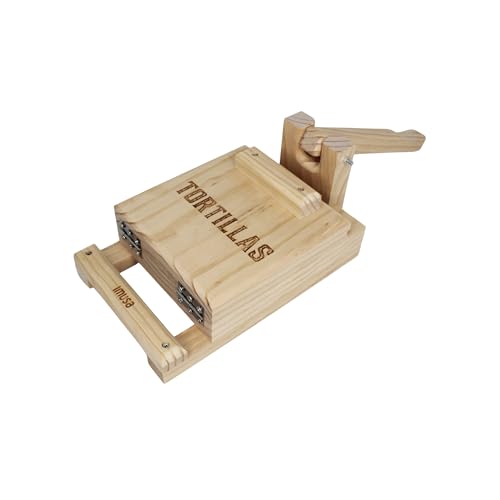
IMUSA 7.5-inch Wood Tortilla PressBudget wooden press
|
The traditional wooden style, no rust | Pine, 12 x 7.5-inch surface | Entry-level to mid-range | View on Amazon |
Product images from Amazon. Price tiers are relative to the presses on this page on the day we checked; prices change, so check the current price before you buy.
Our picks for the best value tortilla press
These eight presses cover the realistic budget options: cast iron at entry-level and mid-range prices, light cast aluminum, a nonstick press that needs no seasoning, a wooden press and a small press for street-taco rounds. For each one we explain what the money buys, where the maker saved, and who should skip it.
1. Victoria 8-inch Traditional Cast Iron Tortilla Press – Mid-Range Price, Long-Haul Build
Value is not the same as cheap, and this press shows the difference. It costs more than the entry-level presses on this page, but it gives you the things that make a press last and work well: heavy cast iron, flat plates and a warranty. America’s Test Kitchen named Victoria’s 8-inch press its best buy in its tortilla press review, noting that the wide plates kept dough from squeezing out the sides.
Weight is what you are paying for. Breadtopia, a retailer, lists this press at about 8 pounds, and that heft does most of the pressing for you. ATK found that heavier presses produced the evenly thin tortillas it wanted, while lighter ones tended to leave smaller, thicker rounds. With a press this heavy you lower the handle and lean gently; you do not wrestle it.
Victoria makes its cookware in its own factories in Colombia and seasons this press with non-GMO, kosher-certified flaxseed oil. The listing says it is made without PTFE or PFAS and has no synthetic coatings or paints, and describes the plates as engineered flat to prevent pinching. It also lists a limited lifetime warranty, which matters when you are judging cost over years of use rather than on the day you buy.
The trade-off for bare cast iron is care. Victoria says the press should never be air-dried or put in the dishwasher; wipe it, dry it straight away and keep it out of steam. ATK’s one complaint was that pressing too hard on the handle occasionally gave uneven thickness, so let the weight work.
Why we like it
- America’s Test Kitchen’s best buy among tortilla presses
- About 8 lb of cast iron, according to Breadtopia
- Flaxseed-oil seasoning; no PTFE, PFAS, coatings or paints, per the listing
- Limited lifetime warranty stated on the listing
- Made in Victoria’s own factories in Colombia
Key specifications
| Model | TOR-003 |
|---|---|
| Material | Cast iron |
| Plate size | 8-inch |
| Weight | About 8 lb (Breadtopia, a retailer) |
| Finish | Non-GMO flaxseed oil seasoning |
| In the box | Press and care instructions |
| Warranty | Limited lifetime (listing) |
| Care | Hand dry immediately; no dishwasher, no air-drying |
Why we recommend it
If you plan to make corn tortillas every week, this is where the money goes furthest. A heavy press makes better tortillas with less effort, cast iron does not wear out, and the warranty covers the hinge and handle that are the usual weak points. Spread over years of taco nights, it is one of the cheapest tools in the kitchen.
Skip it if you only want to try homemade tortillas once or twice, or if lifting eight pounds is a problem: the IMUSA aluminum press below costs less and weighs far less.
Pros and cons
Pros
- Heavy enough to press evenly with little effort
- Recognized best buy from ATK
- Lifetime warranty on the listing
- No synthetic coatings
Cons
- Costs more than entry-level presses
- Needs drying straight after cleaning
- Pressing too hard can give uneven thickness
2. Chef’s Secret 8-inch Cast Iron Tortilla Press – Six Pounds at an Entry-Level Price
When we sorted the in-stock cast iron presses by price, this one sat in the entry-level tier alongside light aluminum presses, yet its listing gives a weight of six pounds. That is the single most useful number on a tortilla press, and it is why this is the press we would point a budget-minded cook toward if the Victoria is a stretch.
The design is plain and traditional: a flat, round 8-inch top plate that levers down onto the base with a solid, easy-grip handle, according to Chef’s Secret. Eight inches is the plate size ATK recommends as a minimum, wide enough for standard corn tortillas of five to six inches with room around the edge so masa does not squeeze out.
Chef’s Secret says less about the press than Victoria does. The listing does not state a seasoning, a country of manufacture or a warranty, so you are buying the iron and the weight rather than the paperwork. Its care advice is practical, though: wash with mild soap, then set the press on the stovetop to evaporate the remaining water so it does not rust. Follow that with a thin wipe of oil, as you would for any bare cast iron.
At six pounds it is a little lighter than the Victoria, which some cooks will see as a plus. You may need a slightly firmer push on the handle, but it is still far heavier than the aluminum presses in this price tier.
Why we like it
- Stated weight of 6 lb in an entry-level price tier
- Flat, round 8-inch top plate
- Solid, easy-grip handle, per the listing
- Clear anti-rust care advice: dry it on the stovetop
Key specifications
| Model | 8 Cast Iron Tortilla Press |
|---|---|
| Material | Cast iron |
| Plate size | 8-inch |
| Weight | 6 lb (listing) |
| Finish | Not stated |
| In the box | Press only (no extras stated) |
| Warranty | Not stated |
| Care | Mild soap, then dry on the stovetop |
Why we recommend it
It is the cheapest way we found to get a cast iron press with a stated, useful weight. For a cook who wants even corn tortillas without paying mid-range prices, the iron does the work that a light press cannot.
Skip it if you want a stated seasoning, origin or warranty. Chef’s Secret publishes none of these on the listing, so if those details matter to you, the Victoria is the safer spend.
Pros and cons
Pros
- Cast iron weight at an entry-level price
- Standard 8-inch plate
- Simple design with few parts
Cons
- Seasoning and origin not stated
- No warranty stated
- Bare iron needs drying to avoid rust
3. VEVOR 10-inch Cast Iron Tortilla Press – A Big Plate Without the Big Price
Large presses usually cost noticeably more than 8-inch ones. When we checked, this 10-inch cast iron press sat in the same mid-range tier as several 8-inch presses, which makes it the best value on this page if you want room for bigger tortillas, quesadilla rounds or flatbreads.
VEVOR says the press is made entirely from heavy-duty, rust-resistant cast iron and seasoned with non-GMO flaxseed oil, with a stone-look surface treatment it describes as easy to clean. The handle is extra-thick, there is nothing to assemble, and the box includes 100 sheets of silicone paper for lining the plates.
The listing is candid about size: smaller presses suit corn tortillas better and larger ones suit flour tortillas. That matches ATK’s preference for wide plates and Masienda’s point that a small press lets masa squeeze out the sides. A 10-inch plate gives corn masa plenty of room; just press a ball no larger than you would use in an 8-inch press if you want standard taco-size rounds.
What VEVOR does not say is just as important for value. The listing gives no weight and no country of manufacture, and VEVOR is a general equipment brand rather than a cookware specialist. Treat it as bare cast iron: dry it fully after cleaning and oil it lightly.
Why we like it
- 10-inch cast iron plate at a mid-range price when we checked
- Seasoned with non-GMO flaxseed oil, per VEVOR
- Extra-thick handle and no assembly needed
- 100 sheets of silicone paper included
Key specifications
| Model | HES250 |
|---|---|
| Material | Cast iron |
| Plate size | 10-inch |
| Weight | Not stated |
| Finish | Flaxseed oil seasoning, stone-look surface |
| In the box | Press, 100 silicone paper sheets |
| Warranty | Not stated |
| Care | Dry fully, oil lightly (bare cast iron) |
Why we recommend it
Choose it if you make flour tortillas, gorditas or larger flatbreads as well as corn tortillas, or simply want one press that covers every size. Per inch of plate, it is the most press for the money we found.
Skip it if storage space is tight or you only make small corn tortillas: a 10-inch cast iron press is bulky, and the listing does not say how heavy it is.
Pros and cons
Pros
- Large plate at a mid-range price
- Flaxseed oil seasoning
- Liners included
- Handles corn and flour sizes
Cons
- Weight and origin not stated
- Bulky to store
- General equipment brand, few maker details
4. IMUSA 8-inch Cast Aluminum Tortilla Press – The Cheapest Way to Start
This is the press many people buy first, and it was in the lowest price tier of any metal press on this page when we checked. IMUSA makes it from cast aluminum with a bare gray finish and describes it as lighter than traditional cast iron, with an easy lever and easy cleaning and storage. Retailer listings put it at roughly two pounds.
Light weight cuts both ways. It is easy to lift, hang or tuck into a drawer, and aluminum contains no iron, so it cannot rust and needs no seasoning. But ATK found this press “simply too light to press dough evenly”, with dough sliding off-center and squeezing out the sides. The fix is technique rather than money: press, turn the tortilla in its liner, and press again, using your weight on the handle. ATK did like that the handle lies flat for storage.
The value question is how often you will use it. For a cook who wants to find out whether homemade tortillas are worth the effort, the lowest outlay makes sense, and you can always move up to cast iron later. For a weekly tortilla habit, the extra effort every batch adds up, and a heavier press is the better buy.
A caution for anyone shopping at this end of the market: some listings call an aluminum press “cast iron” in the title and aluminum in the description. This IMUSA listing is honest about being aluminum. Our IMUSA tortilla press review covers it in more depth.
Why we like it
- Lowest price tier of the metal presses we checked
- Cast aluminum cannot rust and needs no seasoning
- Light and easy to store; handle lies flat (ATK)
- Honestly labelled as aluminum
Key specifications
| Model | MEXI-86008 |
|---|---|
| Material | Cast aluminum |
| Plate size | 8-inch |
| Weight | About 2 lb (retailer listings; not stated by IMUSA) |
| Finish | Bare aluminum, gray |
| In the box | Press only (no extras stated) |
| Warranty | Not stated |
| Care | Wipe clean; no seasoning needed |
Why we recommend it
It is the lowest-risk way to try pressing your own tortillas, and it suits cooks who cannot lift a heavy press or want something light enough to bring to a family taco night.
Skip it if you plan to press tortillas every week. ATK found it too light to press evenly, so you will spend that saving in extra effort on every batch.
Pros and cons
Pros
- Lowest cost of the metal presses
- Rust-free, no seasoning
- Light and easy to store
Cons
- Too light to press evenly, per ATK
- Needs a second press for thin rounds
- Weight and warranty not stated by IMUSA
5. Uno Casa 8-inch Cast Iron Tortilla Press with Warmer – Press, Warm and Serve

Some value comes in the box. Uno Casa’s 8-inch press arrives pre-seasoned in this set with an 8.5-inch tortilla warmer, 100 sheets of parchment paper and a recipe e-book. The warmer is the most useful of those: the listing says it reheats a stack in the microwave, holds a batch warm through dinner and goes in the dishwasher.
The press itself is cast iron that Uno Casa says flattens dough in one squeeze, and the set costs more than the press alone, so it only makes sense if you need a warmer too. The listing does not give a weight.
The reason it is not higher on this list is ATK’s review of Uno Casa’s 8-inch press. Testers found the surface rough and reported that the handle got stuck on the top plate’s ridge. That is a usability niggle rather than a failure, but the Victoria comes with a stronger recommendation.
A note on the included parchment: Masienda, which sells tortilla presses and masa, says parchment is too heavy for well-hydrated masa and recommends thin plastic cut from a grocery or bread bag. Free liners from your recycling bin are the cheapest upgrade any press can have.
Why we like it
- 8.5-inch tortilla warmer included
- Pre-seasoned and ready to use
- 100 parchment sheets and a recipe e-book
- Warmer is microwave and dishwasher safe, per the listing
Key specifications
| Model | 8720618065216 |
|---|---|
| Material | Cast iron |
| Plate size | 8-inch |
| Weight | Not stated |
| Finish | Pre-seasoned |
| In the box | Press, warmer, 100 parchment sheets, e-book |
| Warranty | Not stated |
| Care | Dry fully, oil lightly (bare cast iron) |
Why we recommend it
Choose it if you want a cast iron press and a way to keep the tortillas warm in one purchase.
Skip it if a smooth pressing action matters most: ATK found the surface rough and the handle catching on the plate’s ridge, and the Victoria has the stronger review.
Pros and cons
Pros
- Warmer included
- Pre-seasoned
- Liners and recipes included
Cons
- Rough surface, per ATK
- Handle caught on the plate ridge in ATK’s review
- Costs more than the press alone
6. Kundita 8-inch Nonstick Cast Aluminum Tortilla Press – No Seasoning, No Rust

For some cooks, value means the least upkeep. Kundita’s 8-inch press is cast aluminum with a nonstick coating, so there is no seasoning to maintain and nothing to rust. It sits in the mid-range price tier and comes with 50 parchment sheets and a dough scraper.
Kundita describes the aluminum as high-density and says it resists deformation and delivers even pressure across the 8-inch plate, with an ergonomic handle designed for smooth, consistent pressure. It is lighter than cast iron, which helps with storage and lifting, though like any aluminum press it relies more on your arm than on its own weight.
The listing gives a useful tip for wheat dough: let it rest about ten minutes, press, then rotate the tortilla 180 degrees and press again for a thinner, more even round. The same press-turn-press habit works for corn masa in any lighter press.
What Kundita does not say is what the nonstick coating is made of. If you prefer to avoid coatings you cannot identify, choose bare cast iron or bare aluminum instead. Use liners regardless, and avoid scraping the plates with metal.
Why we like it
- No seasoning and no rust
- Nonstick-coated plates wipe clean
- 50 parchment sheets and a dough scraper included
- Clear tip for pressing wheat dough
Key specifications
| Model | KTP-8S |
|---|---|
| Material | Cast aluminum with nonstick coating |
| Plate size | 8-inch |
| Weight | Not stated (lighter than cast iron) |
| Finish | Nonstick coating (type not stated) |
| In the box | Press, 50 parchment sheets, dough scraper |
| Warranty | Not stated |
| Care | Wipe or rinse; no seasoning |
Why we recommend it
Choose it if you want a press you can rinse and put away without thinking about rust or oil, and you are happy to press twice for thin rounds.
Skip it if you want to know exactly what touches your food: the coating type is not stated, and at a similar price the bare cast iron Victoria has no coating at all.
Pros and cons
Pros
- Lowest maintenance on this page
- Useful extras in the box
- Light and easy to store
Cons
- Coating type not stated
- Lighter press needs more effort
- Weight and warranty not stated
7. IMUSA 7.5-inch Wood Tortilla Press – Traditional Style on a Budget
Wooden presses are traditional in parts of Mexico, and handmade ones from small workshops can cost a good deal. IMUSA’s pine press brings the style down to between the entry-level and mid-range tiers. The listing describes a large 12 by 7.5-inch pressing surface, a natural wood finish and manual operation that lets you control the thickness of the dough.
A wooden press works differently from a cast iron one. It is lighter, so you supply more of the force through the long handle, but ATK found the wooden presses in its review “were always even”. Wood will not rust, and it needs no seasoning.
IMUSA does not publish care instructions for this press. The usual advice for wood applies: keep it dry, wipe it with a damp cloth rather than soaking it, and use liners so masa does not sit against the grain. Pine is a softwood, so expect it to mark with use; that is cosmetic rather than a fault.
Why we like it
- Wooden press at an entry-level to mid-range price
- Large 12 x 7.5-inch pressing surface, per IMUSA
- Manual thickness control
- Light, no rust, no seasoning
Key specifications
| Model | MEXI-86004 |
|---|---|
| Material | Pine wood |
| Plate size | 12 x 7.5-inch pressing surface |
| Weight | Not stated (described as lightweight) |
| Finish | Natural wood finish |
| In the box | Press only (no extras stated) |
| Warranty | Not stated |
| Care | Not stated by IMUSA; keep dry, wipe clean |
Why we recommend it
Choose it if you want the look and feel of a traditional wooden press without paying for a handmade one, and you do not mind using a little more arm.
Skip it if you want a press that will last for decades with no attention: softwood marks and can warp if it is left wet, and IMUSA publishes no care guidance.
Pros and cons
Pros
- Affordable wooden press
- Large pressing surface
- Even results from wood, per ATK
Cons
- Pine is soft and marks with use
- No care instructions published
- More effort than cast iron
8. Norpro 6-inch Cast Aluminum Tortilla Press – Small Rounds, Small Outlay

Not everyone needs an 8-inch press. If you mostly make small street-taco tortillas, Norpro’s 6-inch cast aluminum press is an entry-level option from a long-established kitchen-tool maker. Norpro describes it as a traditional press that is sturdy, durable and has excellent leverage, and it comes with a recipe.
The small plate is both its strength and its limit. It is compact enough to keep in a drawer, but a 6-inch plate leaves little room around a standard ball of masa. Masienda notes that a small press lets masa squeeze out the sides, and ATK found a different maker’s 6.5-inch press had small plates and was far too light. Use small balls of masa and you will get neat four- to five-inch rounds.
Care is as simple as it gets: Norpro says to wipe it with a damp or dry cloth. Aluminum does not rust, so there is no seasoning to keep up.
Why we like it
- Entry-level price from a known kitchen-tool maker
- Compact 6-inch plate for street-taco rounds
- Described by Norpro as sturdy with excellent leverage
- Wipe-clean care, no seasoning
Key specifications
| Model | 1063 (part NP1063) |
|---|---|
| Material | Cast aluminum |
| Plate size | 6-inch |
| Weight | Not stated |
| Finish | Bare cast aluminum |
| In the box | Press and recipe |
| Warranty | Not stated |
| Care | Wipe with a damp or dry cloth |
Why we recommend it
Choose it if you make small tacos, have little storage space and want the smallest outlay for a press that will last.
Skip it if you want standard-size or flour tortillas. ATK recommends plates of at least eight inches, and a 6-inch press cannot make anything larger.
Pros and cons
Pros
- Low cost, compact
- Rust-free aluminum
- Easy to clean
Cons
- Small plate limits tortilla size
- Light, so press firmly
- Weight not stated
How to judge value in a tortilla press
The sticker price is the least useful number on a tortilla press. These five things decide whether a cheap press is a bargain or a waste.
1. Weight per dollar
ATK called weight the most important factor in a tortilla press and found that heavier presses made of cast iron, steel or wood produced evenly thin tortillas, while light aluminum and plastic ones often made smaller, thicker rounds, some as small as three inches. When two presses cost about the same, the heavier one is almost always the better buy. A stated weight is a good sign in itself: the Chef’s Secret listing gives six pounds, while several budget listings give none.
2. Plate size for what you cook
Eight inches is the sensible minimum for corn tortillas, and ATK found that wider is better. Go to ten inches if you also make flour tortillas or larger flatbreads, and to six only if you only want small taco rounds. Paying a little more for a bigger plate you will use is good value; paying for twelve inches you will not use is not. For flour dough specifically, see our guide to the best tortilla press for flour tortillas.
3. The hinge and handle
The hinge is where cheap presses fail first. A loose pin lets the top plate tilt, so one side of every tortilla comes out thicker. Look for presses that include spare hardware (the Victoria HD models do) or that carry a warranty, and put a drop of oil on the pin now and then. ATK also recommends a handle at least ten inches long for leverage.
4. What the material costs you later
Cast iron lasts the longest but needs drying and a thin coat of oil to prevent rust. Aluminum cannot rust and needs no care beyond a wipe, but it is light. Wood will not rust either, but it can warp or crack if it is left wet. Nonstick coatings save effort until they wear. Our comparison of aluminum vs cast iron tortilla presses goes through these trade-offs in depth.
5. Read the listing twice
The cheapest presses are where mislabelled listings cluster. Some call an aluminum press “cast iron” in the title and aluminum in the bullet points; others borrow a better-known brand’s name in the title. If a press is suspiciously light for cast iron, or the listing contradicts itself, move on. Our cast iron tortilla press guide lists the warning signs.
How we chose these eight value presses
We started with every tortilla press we could find on Amazon in the United States, checked stock with Amazon’s product data on the day of writing, and noted where each one sat in price relative to the others. We then asked what each press gives for its price: stated weight, plate size, material, finish, hinge hardware, extras and warranty. Specifications come from each brand’s Amazon listing, which we name; one weight comes from Breadtopia, a retailer, and the IMUSA aluminum press’s weight from retailer listings. For how presses perform, we relied on America’s Test Kitchen’s tortilla press review and Masienda’s guidance on presses and liners. We left out listings that contradict themselves about material, presses down to their last few units, and near-identical presses from sellers that publish no details. We have not pressed tortillas with every press listed here; where we describe how a press behaves, we say whose findings those are. We do not print prices, because they change; the tiers above describe where each press sat when we checked.
The Alpha Living 8-inch cast iron press was also in the entry-level tier and is a fair alternative to the Chef’s Secret, but its listing gives no weight, so we could not judge its value the same way.
Spending less on the extras
The press is not the only cost. A few habits keep the rest of the kit cheap:
- Liners: cut two circles from a thin grocery or bread bag, as Masienda recommends. They release fresh masa better than parchment and cost nothing. Wipe them and reuse them until they tear.
- Masa: a bag of masa harina makes many dozens of tortillas. Our guide to the best masa harina for tortillas compares the common brands.
- Cooking surface: any heavy skillet works, but a flat comal is easier for flipping. See the best comal for tortillas.
- Care: a few drops of cooking oil on cast iron after drying is the cheapest insurance against rust.
Budget tortilla press questions, answered
What is the best budget tortilla press?
The Chef’s Secret 8-inch cast iron press is the best budget tortilla press we found, because its listing states a weight of six pounds at an entry-level price, and weight is what makes a press work well. If you want the lightest possible outlay and do not mind pressing twice, the IMUSA 8-inch aluminum press costs less still.
What is the best inexpensive tortilla press for corn tortillas?
For corn tortillas, an 8-inch cast iron press. The Victoria 8-inch Traditional is the best inexpensive tortilla press if you can stretch to the mid-range tier: ATK named Victoria’s 8-inch its best buy. Corn masa needs a heavy, flat press more than a big one; read about the masa itself in corn vs flour tortillas.
Is a cheap aluminum tortilla press worth it?
For occasional use, yes. It cannot rust, it is light, and it costs the least. ATK found the IMUSA aluminum press too light to press dough evenly, so expect to press, turn and press again. If you will make tortillas weekly, a cast iron press is worth the extra.
Does an expensive tortilla press make better tortillas?
Not necessarily. ATK’s top pick was a heavy rolled-steel press, but its best buy was Victoria’s 8-inch cast iron press. Above the mid-range, you mostly pay for size, finish and craftsmanship rather than thinner tortillas.
How long does a budget tortilla press last?
Cast iron and aluminum plates do not wear out in normal use. What fails is the hinge, the handle or, on cast iron, the finish if it is left wet. Keep the pin oiled, dry iron straight away and a budget press can last for many years.
Our final pick for value
Buy the Victoria 8-inch Traditional if you will make tortillas regularly: it costs more than the cheapest presses, but its weight, flat plates and warranty make it the best value tortilla press over time. Choose the Chef’s Secret if your budget is tight and you still want cast iron, the VEVOR if you want a 10-inch plate, and the IMUSA aluminum press if you just want to try making tortillas at home. Whichever you buy, cut your liners from a bread bag and let the press’s weight do the work.
For every material and price, see our main guide to the best tortilla press, and for the rest of the kit, tortilla making tools. And if you would rather someone else made the tortillas tonight, see the menu or call to order.