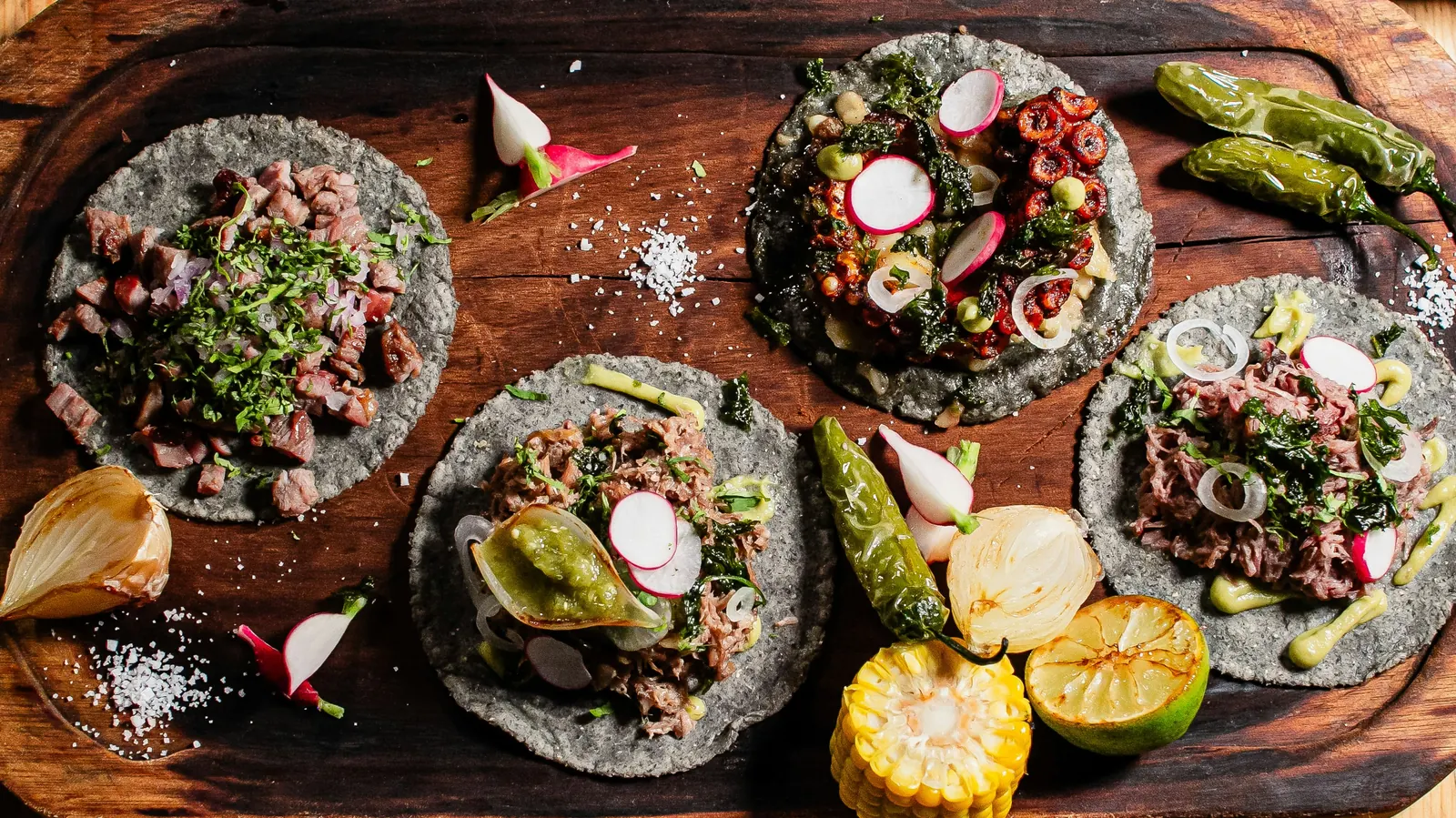
Every corn tortilla starts with masa, a dough of corn that has been cooked with lime and ground. Few home kitchens in the United States have a tortillería around the corner selling it fresh, so most home cooks make tortillas from masa harina: the same masa, dried and ground into flour. Add warm water, and twenty minutes later you can be pressing tortillas.
The bags on the shelf are not all alike, though. Some are a single heirloom corn from one region of Mexico; others are blended commercial flours with added vitamins, and a few carry gums and oil that make them closer to a tortilla mix. White, yellow and blue corn each taste different. This guide explains what to look for, names the masa harinas worth buying, and shows how to turn a bag into a stack of soft tortillas.
Julia’s earns a commission on purchases made through links on this page, at no cost to you. Recommendations are based on what a working Mexican kitchen looks for in masa harina, the makers’ own specifications and the sources we cite.
Quick verdict: which masa harina to buy
For most kitchens, the best masa harina for tortillas is Bob’s Red Mill Organic Masa Harina: it is a two-ingredient organic flour you can find in most supermarkets. For more corn flavor, choose Masienda Heirloom Yellow Corn Masa Harina: it is made from heirloom corn grown in Mexico and nixtamalized with nothing but a trace of lime, and Masienda says each bag makes 84 six-inch tortillas. For the classic grocery-store flour many cooks grew up with, Maseca is the familiar name, and its blue corn version makes striking, earthy tortillas.
The rest of this page explains why, and which bag suits the way you cook.
Five masa harinas at a glance
Our five standout picks side by side, one for each kind of cook, with the details each maker or listing states. All seven masa harinas are reviewed in full below.
| Masa harina | Best for | Corn & size | Ingredients (as stated) | Buy on Amazon |
|---|---|---|---|---|

Bob’s Red Mill Organic Masa Harina, 24 ozBest overall
|
Organic, easy to find | Organic golden corn; 24 oz | Organic corn, hydrated lime | View on Amazon |

Masienda Heirloom Yellow Corn Masa Harina, 2.2 lbBest heirloom
|
Flavor, sturdy tortillas | Heirloom yellow corn from Mexico; one 2.2 lb bag | Non-GMO heirloom corn, trace of lime | View on Amazon |

Maseca Blue Corn Instant Masa Flour, 2.2 lbBest blue corn
|
Earthy, deep-colored tortillas | Blue corn; 2.2 lb | Not listed on Amazon; check the bag | View on Amazon |

Maseca Instant Yellow Corn Masa Flour, 2-packBest yellow corn
|
Sturdy tortillas, tostadas, frying | Yellow corn; two bags | Corn treated with hydrated lime (retailers) | View on Amazon |

Minsa Instant Corn Masa Flour, 3 x 4 lbBest for big batches
|
Tortillas by the hundred, tamales | White corn; three 4 lb bags | Not listed on Amazon; check the bag | View on Amazon |
Product images from Amazon. Ingredients and claims are as stated by each maker, listing or the retailer named; recipes change, so check the bag before you buy.
Masa harina, cornmeal and masa preparada: not the same thing
Three corn products sit side by side on many shelves, and only one makes tortillas.
- Masa harina is masa that has been dried and ground again into flour, as America’s Test Kitchen defines it. The corn has already been cooked and soaked in limewater, which is why it forms a dough with nothing but water.
- Cornmeal and corn flour are ground from uncooked dried corn that has not been treated with lime. They will not hold together as a tortilla dough, however much water you add.
- Masarepa, sold by brands such as P.A.N. and Goya for arepas, is precooked corn flour that has not been nixtamalized, according to America’s Test Kitchen. It is not a substitute for masa harina.
- Masa preparada is fresh masa that a tortillería or Mexican market has already mixed for tamales, usually with fat and salt. It is perishable and meant for tamales, not tortillas.
The process that makes masa harina different is nixtamalization: dried corn is cooked in an alkaline solution of water and lime (calcium hydroxide, not citrus), steeped, washed and ground. Our guide to nixtamalization explains it step by step, including why it changed the nutrition of corn and how it has been done for about three thousand years. If a bag says “masa harina”, “instant corn masa flour” or “harina de maíz nixtamalizado”, it is the right product. If it says “cornmeal”, “corn flour” or “pre-cooked”, it is not.
Our picks for the best masa harina for tortillas
These seven bags cover the masa harinas a home cook in the United States can buy online today: two heirloom flours, one from Bob’s Red Mill, two familiar Maseca flours in blue and yellow, a bulk pack from Minsa and an organic flour certified gluten-free. Each pick explains what is in the bag, what it suits, and one honest reason to skip it.
1. Bob’s Red Mill Organic Masa Harina, 24 oz – Organic and Easy to Find
Bob’s Red Mill is the masa harina you are most likely to find in an ordinary American supermarket, and the organic version is a good one. Bob’s Red Mill gives the ingredients as organic corn and hydrated lime, and describes the flour as made from certified organic corn that has been cooked, treated with limewater and ground into a fine flour. The listing adds that it is USDA certified organic, Non-GMO Project Approved and whole grain.
Retailers sell this flour as organic golden corn masa harina, so it makes a yellow-tinged tortilla with a mild corn flavor. Bob’s Red Mill says it gives the traditional flavor and springy texture tortillas need, and its directions are simple: mix the masa harina with water and a little salt into a smooth, springy dough, divide it into two-inch balls, press them and cook them on a hot griddle.
The 24-ounce bag is a sensible size for a household that makes tortillas now and then rather than every day. It is also useful beyond tortillas: Bob’s Red Mill suggests tamales, pupusas and sopes, and a spoonful stirred into chili or a pot of beans thickens it with a gentle corn flavor. Bob’s Red Mill does not state on its product page that this flour is gluten-free, so if that matters to you, look for a certified gluten-free bag instead.
Why we like it
- Just two ingredients: organic corn and hydrated lime
- USDA organic and Non-GMO Project Approved
- Whole grain, per the listing
- Sold in many supermarkets as well as online
Key specifications
| Corn type | Organic golden (yellow) corn |
|---|---|
| Size | 24 oz |
| Ingredients | Organic corn, hydrated lime |
| Organic / Non-GMO | USDA organic; Non-GMO Project Approved |
| Gluten-free (as stated) | Not stated |
| Best for | Tortillas, tamales, pupusas, sopes |
| Storage | Not stated |
| Made in | Not stated |
Why we recommend it
Choose it if you want an organic masa harina with nothing but corn and lime, from a maker you can find again easily. It is a reliable everyday flour and forgiving for a first batch.
Skip it if you want the depth of a single heirloom corn, or you need a flour labeled gluten-free.
Pros and cons
Pros
- Certified organic, two ingredients
- Easy to find in stores
- Good bag size for occasional use
Cons
- Gluten-free not stated
- Milder flavor than heirloom corn
- Small bag for frequent cooks
2. Masienda Heirloom Yellow Corn Masa Harina, 2.2 lb – Heirloom Corn, Stronger Flavor
Masienda built its business on heirloom corn from Mexican farmers, and this is its yellow flour. The listing describes it as nixtamalized masa harina made from high-quality heirloom corn from Mexico, gluten-free, non-GMO and preservative-free, and Masienda gives the ingredients for its masa harina as non-GMO heirloom corn with a trace of lime. Nothing else: no gums, no oil, no added vitamins.
Masienda’s white flour was out of stock on Amazon when we rechecked, so this is the yellow flour from the same range. Yellow corn tastes more strongly of corn and makes a sturdier tortilla than white, as the guide below explains, so it suits tacos, tostadas and chilaquiles.
The 2.2-pound bag makes about 84 six-inch tortillas, according to the listing. For mixing, a Masienda staff reply on its own tortilla recipe suggests about 150 grams of masa harina to 257 grams of warm water for around ten tortillas, and Masienda recommends water at about 100°F. Heirloom flours often take more water than commercial ones, so add the last of it slowly and go by feel. Store it in a cool, dry place; Masienda says up to a year for its bulk bags.
Why we like it
- Heirloom corn from Mexico, nixtamalized with only a trace of lime
- About 84 six-inch tortillas per 2.2 lb bag, per the listing
- Gluten-free, non-GMO and preservative-free, as stated
- Yellow corn for a sturdier tortilla
Key specifications
| Corn type | Heirloom yellow corn from Mexico |
|---|---|
| Size | One 2.2 lb (35.2 oz) bag |
| Ingredients | Non-GMO heirloom corn, trace of lime |
| Organic / Non-GMO | Non-GMO; organic not stated |
| Gluten-free (as stated) | Yes |
| Best for | Tortillas, tostadas, tamales, pupusas |
| Storage | Cool, dry place |
| Made in | Corn from Mexico; packing location not stated |
Why we recommend it
If you want tortillas that taste of corn rather than of flour, start here. An heirloom corn with nothing added is the closest a bag gets to fresh masa from a molino, and the yield makes the cost per tortilla reasonable.
Skip it if you want the cheapest bag or need it for tomorrow from the corner store. It is a specialty flour, and it was low in stock from a third-party seller on Amazon when we checked, so confirm the seller before you buy.
Pros and cons
Pros
- Only corn and a trace of lime
- Heirloom corn from Mexico
- Generous yield per bag
- Gluten-free and non-GMO, as stated
Cons
- Costs more than commercial flours
- Usually needs more water; mix by feel
- Not certified organic
3. Maseca Blue Corn Instant Masa Flour, 2.2 lb – Earthy, Deep-Colored Tortillas
Maseca is the name most cooks in Mexico and the United States know for masa harina; America’s Test Kitchen lists it as a common brand, sold as “Instant Corn Masa Flour”. Its blue corn version is the easiest way to try blue corn tortillas, which come out a dusky gray-blue and taste nuttier and earthier than white corn, as cooks who work with heirloom blue corn describe it.
The Amazon listing for this bag gives almost nothing beyond the name and size: a single 2.2-pound bag of blue corn instant masa flour. Retailers describe it as made from blue corn and gluten-free, and one restaurant supplier says it contains no preservatives. We could not confirm a full ingredient list for the blue corn bag; Maseca’s white flour lists corn treated with hydrated lime and folic acid, so check the bag if you want to know whether folic acid is added to this one too.
Blue corn masa handles like white masa, so the same water, press and comal work. Blue tortillas are lovely with simple fillings where their color shows: beans and cheese, squash blossoms, a quick salsa. They also make handsome tostadas and sopes. If you want an heirloom blue corn, Masienda makes one, but it was out of stock on Amazon when we checked.
Why we like it
- The most widely sold blue corn masa harina
- Instant masa flour: mixes with water alone
- Gluten-free, as stated by retailers
- Striking color and earthier flavor than white corn
Key specifications
| Corn type | Blue corn |
|---|---|
| Size | 2.2 lb |
| Ingredients | Not listed on Amazon; check the bag |
| Organic / Non-GMO | Not stated |
| Gluten-free (as stated) | Yes, per retailers |
| Best for | Blue corn tortillas, tostadas, sopes |
| Storage | Not stated |
| Made in | Not stated |
Why we recommend it
Choose it if you want blue corn tortillas without hunting for a specialty flour. Maseca’s instant flours are consistent and easy to work, which matters when you are learning.
Skip it if you want full ingredient details before you buy; the Amazon listing does not give them.
Pros and cons
Pros
- Easy route to blue corn tortillas
- Familiar, consistent brand
- Gluten-free per retailers
Cons
- Thin Amazon listing
- Ingredient list not confirmed
- Not heirloom or organic
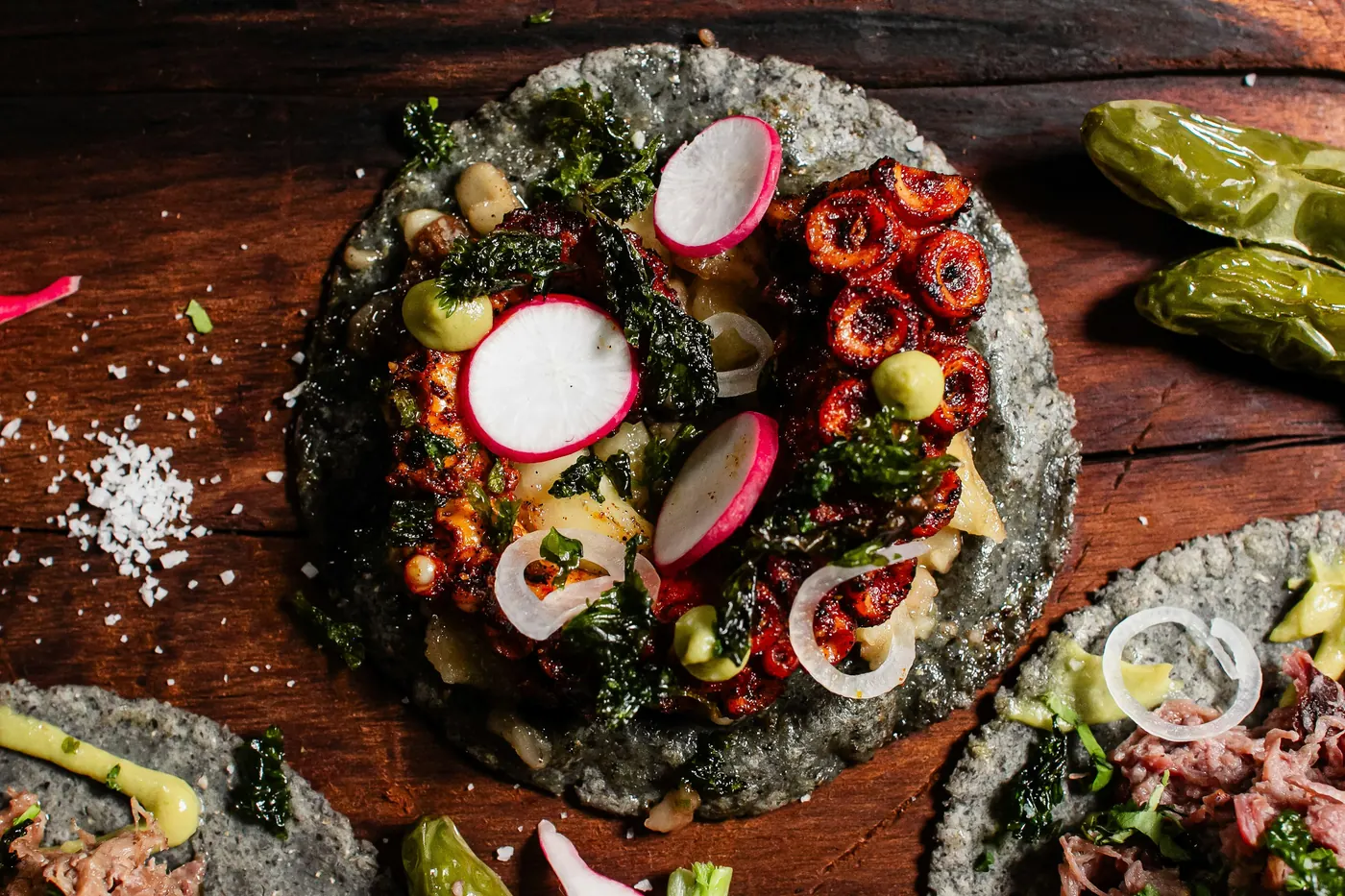
4. Maseca Instant Yellow Corn Masa Flour, 2-pack – Sturdy Tortillas for Frying
Yellow corn masa gives a deeper golden tortilla with a stronger corn taste, and it holds together well enough to fry, which makes it a favorite for tostadas, chilaquiles and crisp taco shells. Maseca’s yellow flour is the widely sold version. Grocery retailers including Food Lion and H-E-B list a single ingredient, corn treated with hydrated lime, and Walmart’s listing for the same flour describes it as gluten-free, kosher and certified whole grain.
Like all of Maseca’s instant flours, it is meant to be mixed with warm water and used straight away. It is a commercial, finely ground flour, so it hydrates quickly and evenly and makes smooth, uniform dough that is easy to press, which is why many cooks keep a bag in the pantry for weeknight tortillas.
One caution about this particular listing: it is a two-bag pack sold through a reseller, and the listing contradicts itself on bag size, giving 2.2 pounds in the title and 17.6 ounces per bag in the product details. Check what you are getting before you order, or buy it at a Mexican grocery, where Maseca’s yellow flour is a staple.
Why we like it
- One ingredient: corn treated with hydrated lime (retailers)
- Gluten-free, kosher and whole grain, per Walmart’s listing
- Yellow corn makes sturdy tortillas for frying
- Smooth, easy-to-press dough
Key specifications
| Corn type | Yellow corn |
|---|---|
| Size | Two bags (listing gives 2.2 lb and 17.6 oz; check) |
| Ingredients | Corn treated with hydrated lime (retailers) |
| Organic / Non-GMO | Not stated |
| Gluten-free (as stated) | Yes, per retailers |
| Best for | Tostadas, chilaquiles, fried tortillas |
| Storage | Not stated |
| Made in | Not stated |
Why we recommend it
Choose it if you want yellow corn tortillas or fry a lot of what you make. It is the dependable grocery-store choice, and the dough is easy to work.
Skip it if the conflicting bag size on this listing bothers you; a local store will usually have the same flour with a clear weight on the shelf.
Pros and cons
Pros
- Single-ingredient flour
- Good for frying and tostadas
- Easy, consistent dough
Cons
- Listing gives conflicting bag sizes
- Sold through a reseller
- Not heirloom or organic
5. Minsa Instant Corn Masa Flour, 3 x 4 lb – Twelve Pounds for Big Batches
Minsa is the other big commercial name in masa flour. Its US mills in Red Oak, Iowa, and Muleshoe, Texas, were bought by Bunge in 2018, according to the trade paper Feedstuffs. This pack gives you three 4-pound bags of instant corn flour, harina de maíz nixtamalizado, which is enough for tortillas every week for months or a full tamalada.
The listing sells it for tortillas, tamales, pupusas, gorditas and atole, and says it has 0% trans fat, no preservatives and no cholesterol, and is enriched with folic acid. It does not give a full ingredient list. One reseller’s copy of the Minsa bag lists vegetable oil, salt and guar and xanthan gums alongside the corn and lime, which would make it closer to a ready tortilla mix than a plain masa harina, but we could not confirm that against Minsa’s own information. Read the bag when it arrives; if it contains salt, leave the salt out of your dough.
For a family that makes corn tortillas several times a week, or for anyone making tamales for a holiday, the bulk pack saves trips to the store. Keep the opened bags sealed in a cool, dry place, and use the oldest first.
Why we like it
- Twelve pounds in three 4 lb bags
- Nixtamalized corn flour for tortillas, tamales, pupusas and atole
- No preservatives, as stated; enriched with folic acid
- From a long-established masa flour miller
Key specifications
| Corn type | Not stated (white instant corn flour) |
|---|---|
| Size | Three 4 lb bags |
| Ingredients | Not listed on Amazon; check the bag |
| Organic / Non-GMO | Not stated |
| Gluten-free (as stated) | Not stated |
| Best for | Large batches of tortillas, tamales, pupusas, atole |
| Storage | Not stated |
| Made in | Not stated |
Why we recommend it
Choose it if you go through masa harina quickly and want a well-known commercial flour in bulk. It is the practical pantry pick for big families and tamale season.
Skip it if you want a flour of only corn and lime, or you need to know every ingredient before ordering; the listing does not say.
Pros and cons
Pros
- Twelve pounds in one order
- Suits tortillas and tamales
- No preservatives, as stated
Cons
- Full ingredients not listed
- May contain oil, salt and gums
- A lot to store
6. La Mazorca de Oro Heirloom White Corn Masa Flour, 3 lb – A White Corn Tortilla Flour

Most of the bags on this list are yellow or blue corn, so this one fills a gap: a nixtamalized heirloom white corn flour in a 3-pound bag. The listing says the corn is grown in the USA, and it names corn tortillas first among its uses, along with tamales, tostadas, pupusas and arepas.
The maker describes the flavor as a soft corn flavor, which suits a tortilla that goes under a mild filling. It lists the flour as gluten-free and non-GMO. It says to store the bag in a cool, dry place.
La Mazorca de Oro is a small brand, and its listing is short. It does not print an ingredient list or a shelf life beyond naming nixtamalized heirloom corn, so check the bag if you need more than that.
Why we like it
- Heirloom white corn, nixtamalized
- Gluten-free and non-GMO, per the listing
- 3-pound bag for regular tortilla making
- Corn grown in the USA, per the listing
Key specifications
| Corn type | Heirloom white corn |
|---|---|
| Size | 3 lb (48 oz) |
| Ingredients | Nixtamalized heirloom corn; full list not stated |
| Organic / Non-GMO | Organic not stated; non-GMO (listing) |
| Gluten-free (as stated) | Yes, per the listing |
| Best for | Everyday white corn tortillas, tamales, pupusas |
| Storage | Cool, dry place |
| Made in | Corn grown in the USA; milling location not stated |
Why we recommend it
Choose it if you want white corn tortillas and a bag big enough to make them regularly.
Skip it if you want a well-known brand or a full ingredient list on the listing; Masienda or Maseca say more.
Pros and cons
Pros
- White heirloom corn
- Stated gluten-free
- Useful bag size
Cons
- Small brand, short listing
- No ingredient list on the listing
- Certifier for gluten-free not named
7. Chef Mex Organic Corn Masa Flour, 2.2 lb – Certified Gluten-Free

Corn has no gluten, but a flour can pick up traces of wheat in a mill that handles both. If that matters in your house, this is the one bag on our list that the listing describes as certified gluten-free. Chef Mex also states that it is USDA organic and Non-GMO Project Verified, and gives four ingredients: organic white corn, water, lime and folic acid.
The folic acid is worth a word. The US Food and Drug Administration has allowed manufacturers to add folic acid to corn masa flour, voluntarily, since 2016, at up to 0.7 milligrams per pound, to help address birth-defect disparities among people who eat masa as a staple. Chef Mex explains that it adds folic acid for that reason, and says the trace amount does not change flavor or texture. USDA rules allow added vitamins in organic foods.
The listing describes the flour as whole grain and made in small batches, with about 33 servings in a 2.2-pound bag. Chef Mex is a much smaller brand than Maseca or Bob’s Red Mill, and we found little about the company beyond its listing and a trademark filing for organic corn masa flour, so treat this as a newer name to try rather than a long-established one.
Why we like it
- Certified gluten-free, per the listing
- USDA organic and Non-GMO Project Verified
- Organic white corn nixtamalized with lime
- Folic acid added, as the FDA permits for masa flour
Key specifications
| Corn type | Organic white corn |
|---|---|
| Size | 2.2 lb (35.2 oz) |
| Ingredients | Organic white corn, water, lime, folic acid |
| Organic / Non-GMO | USDA organic; Non-GMO Project Verified |
| Gluten-free (as stated) | Yes, certified |
| Best for | Tortillas, tamales, pupusas, sopes |
| Storage | Not stated |
| Made in | Not stated |
Why we recommend it
Choose it if you need certified gluten-free masa harina, or want an organic white corn flour with folic acid added.
Skip it if you prefer a brand with a long track record; Chef Mex publishes little about itself beyond the listing.
Pros and cons
Pros
- Certified gluten-free
- Organic and non-GMO
- Short ingredient list
Cons
- Little-known brand
- Few maker details published
- Single bag only
How to choose a masa harina for tortillas
Five things decide which bag suits you. The color on the front matters less than what is listed on the back.
1. Check that it is nixtamalized
Look for “masa harina”, “instant corn masa flour” or “nixtamalizado”, and for lime (or calcium hydroxide) in the ingredients. Cornmeal, corn flour and pre-cooked arepa flour will not make tortillas.
2. White, yellow or blue corn
Masienda’s view is that any color works for any masa recipe, with subtle differences in flavor and texture. White corn makes the softest, most delicate tortillas, the everyday table tortilla in much of central Mexico. Yellow corn tastes more strongly of corn and makes a sturdier tortilla that holds up to frying, which is why many cooks use it for tostadas and chilaquiles. Blue corn is the most distinctive: nuttier, earthier and darker. Start with white if you are unsure.
3. Heirloom or commercial
Heirloom masa harina, such as Masienda’s, is made from a named, open-pollinated corn variety grown by small farmers, and it tastes of that corn. Commercial flours such as Maseca and Minsa are blended for consistency, ground very fine and easy to work, and cost less. Heirloom flours usually need a little more water and a little more patience; commercial flours forgive more.
4. What else is in the bag
The simplest masa harina is corn and lime. Some commercial flours add folic acid, which the FDA allows, and some add more: one reseller’s copy of a Minsa bag lists oil, salt and gums, which help the dough hold together but change the taste and texture. Neither is wrong, but read the ingredients so you know whether to add salt yourself.
5. Organic, non-GMO and gluten-free claims
If these matter to you, buy a bag that states them. Bob’s Red Mill and Chef Mex are certified organic; Masienda states non-GMO; Chef Mex is the one bag here sold as certified gluten-free. Corn itself contains no gluten, but only the maker can tell you about cross-contact in the mill.
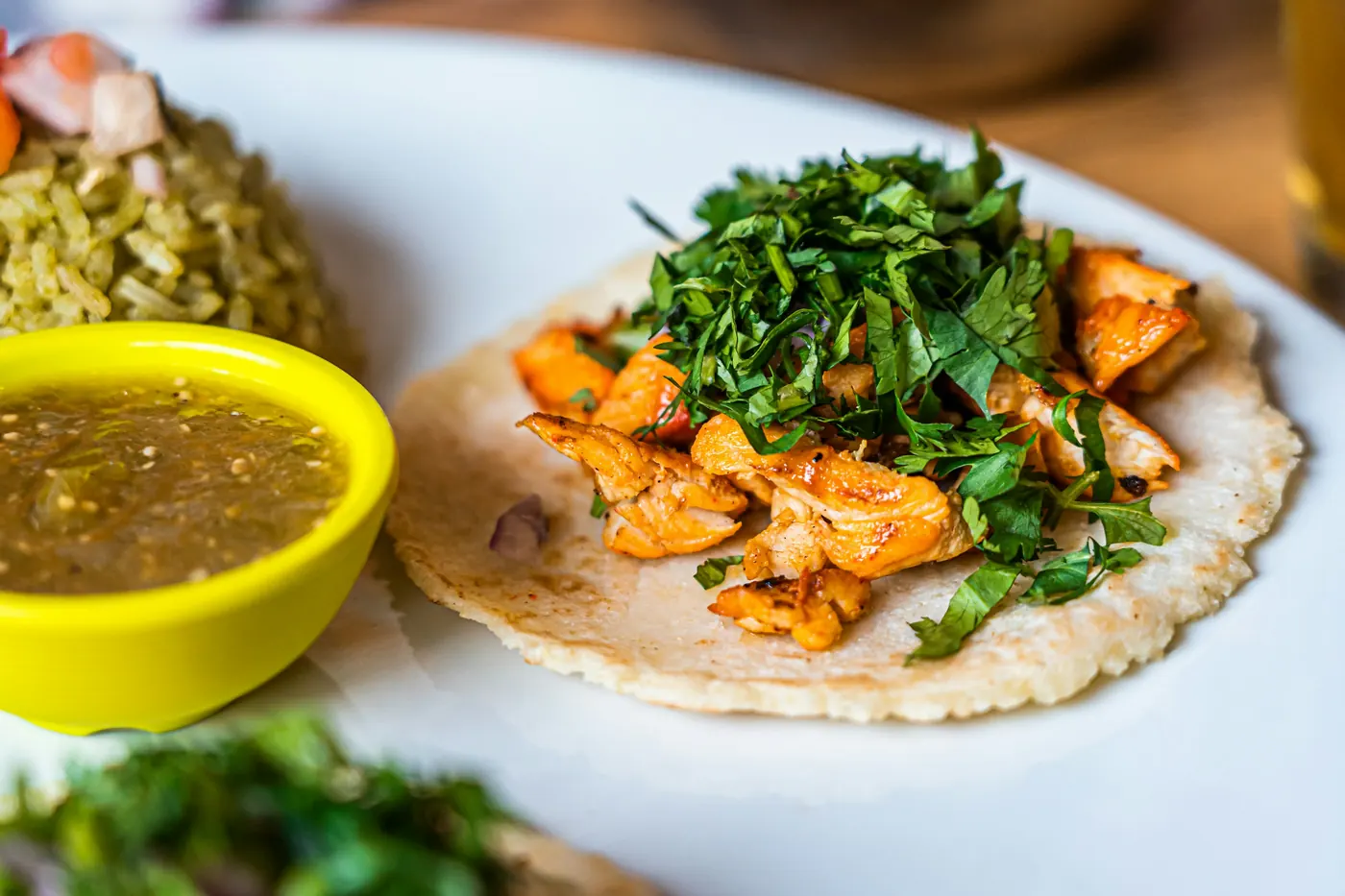
From bag to tortilla: mixing masa harina
The method is the same for every bag; only the amount of water changes.
- Weigh the masa harina. Two cups is a good first batch for a family. A kitchen scale makes the next batch easier to repeat.
- Add warm water a little at a time. Masienda recommends water at about 100°F. Its staff suggest roughly 150 grams of its masa harina to 257 grams of water; commercial flours often need less. Mix with your hand until there are no dry spots.
- Knead until it feels like soft clay. The dough should be moist, smooth and not sticky. Cover it with a damp cloth and let it rest for 15 to 20 minutes so the flour finishes absorbing the water.
- Test one tortilla. Rick Bayless’s rule is to look at the edges of the first pressed tortilla: if they are rough and cracked, the dough needs more water. Work in a spoonful and press again.
- Press and cook. Masienda suggests balls of about 32 grams for a standard tortilla. Press between two plastic liners, then cook on a hot, dry comal for 20 to 30 seconds a side, turning once more so it puffs.
- Stack and cover. Move each tortilla straight into a cloth or warmer so the stack stays soft.
The tools for every step are in our guide to tortilla making tools. A cast iron or carbon steel pan does the cooking best; see the best comal for tortillas. If you would rather not press and flip by hand, an electric tortilla maker is another route, though most are designed for flour tortillas.
How we picked these seven masa harinas
We started from what a Mexican kitchen asks of masa harina: properly nixtamalized corn, good corn flavor, a dough that presses cleanly and puffs on the comal, and an ingredient list you can trust. We then narrowed the field to bags sold on Amazon in the United States and in stock when we checked, from makers we could identify, and confirmed each one’s ingredients and claims from the maker or the brand’s Amazon listing. Where the listing was thin, we used grocery retailers’ published ingredient panels and say so; where we could not confirm a detail, the review says “Not stated” or “check the bag”. For definitions we relied on America’s Test Kitchen, for folic acid on the US Food and Drug Administration, and for mixing on Masienda’s and Rick Bayless’s published instructions. Several good flours are missing because they were out of stock or nearly so on Amazon when we checked, including Masienda’s white, blue and organic flours and its Masa Taquera, and Maseca’s classic white flour. We left out a listing that copied another maker’s product text, and arepa flours, which are not nixtamalized. We have not cooked with every flour listed here; where we describe how a flour behaves, we say whose description that is.
Masa harina questions, answered
What is the best masa harina for corn tortillas?
For flavor, an heirloom flour made only from corn and lime, such as Masienda’s yellow masa harina. For an easy, consistent everyday flour, Bob’s Red Mill or Maseca. Our guide to corn versus flour tortillas explains why corn tortillas need masa rather than wheat flour.
Can I use cornmeal instead of masa harina?
No. Cornmeal is ground from corn that has not been nixtamalized, so it will not form a dough that holds together when pressed. Pre-cooked arepa flour is not a substitute either.
Is masa harina gluten-free?
Corn contains no gluten, and many masa harinas are sold as gluten-free, including Masienda’s and Maseca’s. If you must avoid gluten, buy a bag the maker states is gluten-free or certified, such as Chef Mex, because mills can handle wheat too.
How much water do I add to masa harina?
Follow the bag, then adjust by feel. Commercial flours usually take a little more than their weight in water; heirloom flours often take more. Masienda’s staff suggest about 150 grams of its masa harina to 257 grams of warm water. The dough is right when it feels like soft clay and the edges of a pressed tortilla do not crack.
Can I make tamales with the same masa harina?
Yes. Every flour here suits tamales as well as tortillas. For tamales, the masa is beaten with fat and broth until light, and coarser “tamal” flours from the same brands are also sold for that purpose.
How long does masa harina keep?
Bob’s Red Mill gives its golden masa harina a 24-month shelf life, and Masienda and La Mazorca de Oro say to store their masa harina in a cool, dry place. Once opened, keep the bag tightly sealed; if it smells stale or musty, replace it.
The bag we would reach for
Buy Bob’s Red Mill Organic for an easy-to-find, two-ingredient organic flour. Choose Masienda’s heirloom yellow masa harina if you want tortillas that taste of corn, from nothing but corn and lime, Maseca blue or yellow for color and frying, Minsa in bulk if you cook for a crowd, and Chef Mex if you need a certified gluten-free bag. Whichever you choose, add the water slowly, rest the dough, and let the first tortilla tell you if it needs more.
Masa harina is where a tortilla starts; our guide to tortilla making tools covers the press, the comal and the warmer that finish the job, and the best tortilla warmer keeps the stack soft at the table.
And if you would rather someone else made the tortillas tonight, see the menu or call to order.