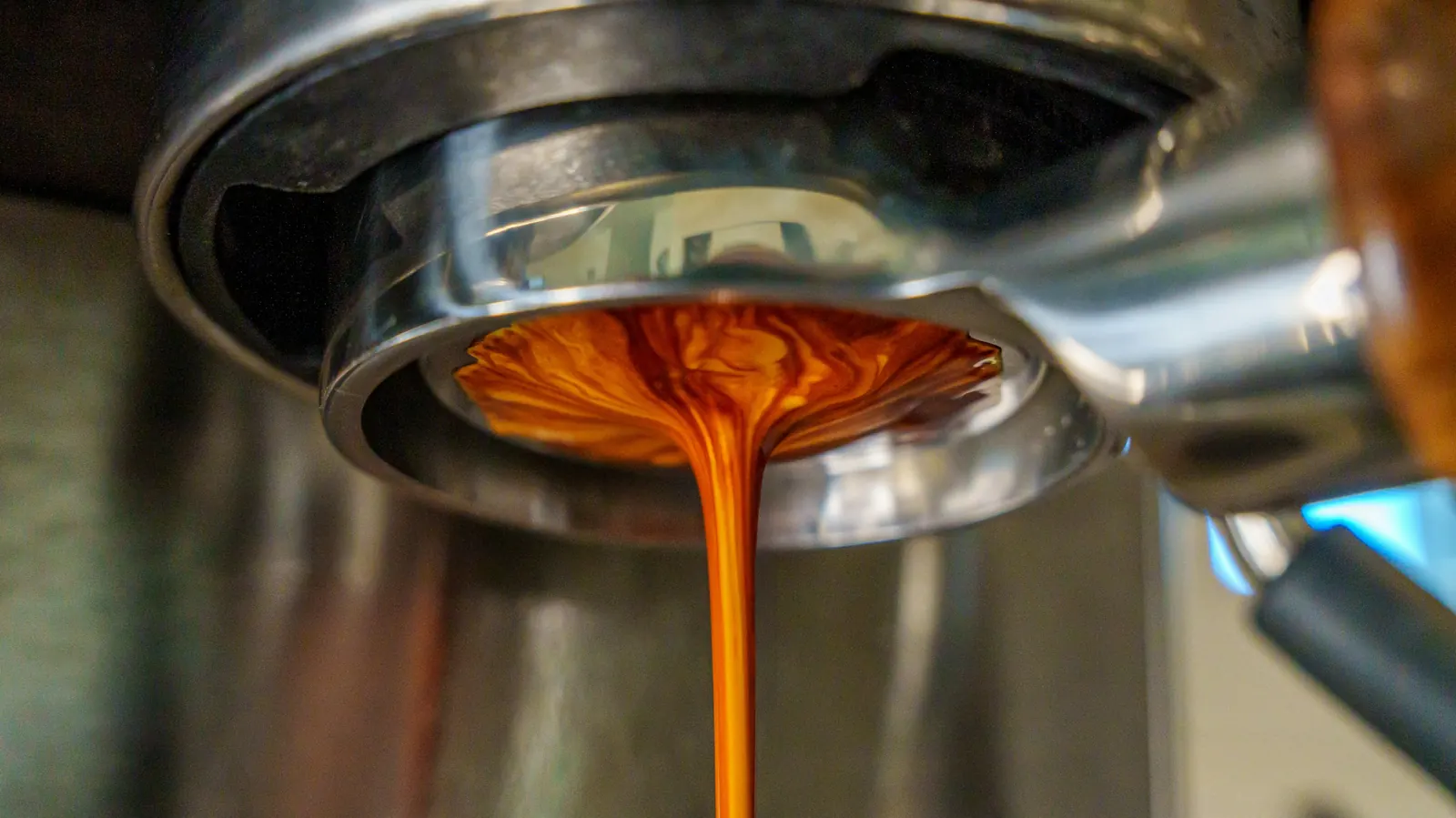
A Nespresso machine and a home espresso machine both promise a small, strong coffee with crema, and both sit on the counter. They are not the same thing. One pushes water through a sealed capsule at the touch of a button; the other asks you to grind, dose and tamp fresh coffee, then rewards you with a shot you control.
This guide sets the two side by side: how each brews, what ends up in the cup, how much skill and time each takes, what you pay over time, and how each handles milk drinks. It ends with one Nespresso pick and two espresso machines, so you can buy whichever side suits your mornings.
Julia’s earns a commission on purchases made through links on this page, at no cost to you. Recommendations are based on what a restaurant kitchen looks for, product specifications and verified buyer reports.
Quick verdict: espresso machine or Nespresso?
If you care most about how the espresso tastes, buy a real espresso machine and a burr grinder. America’s Test Kitchen found the Nespresso Pixie the fastest, easiest machine it tested but called its espresso “subpar” and “very underextracted”. If you want a quick, consistent coffee with no learning curve and little cleanup, a Nespresso Original machine is the better buy, and it is the right choice for most people who drink one or two small coffees a day and never want to think about grind size. For a middle path, a machine with a built-in grinder and guided tamping, such as the Breville Barista Touch Impress, shortens the learning curve.
Espresso machine vs Nespresso, side by side
| Espresso machine | Nespresso | |
|---|---|---|
| How it brews | Hot water forced through fresh, finely ground coffee at about 9 bar (ATK) | Original: 19-bar pump through a capsule; Vertuo: spinning “Centrifusion” (Nespresso) |
| Coffee | Any beans you like, ground fresh | Nespresso capsules for that system; Original and Vertuo capsules are not interchangeable |
| Control | Grind, dose, tamp and shot length | Capsule choice and cup size |
| Extra gear | Burr grinder unless built in (ATK, NCA) | None; milk frother for lattes on most models |
| Skill | Moderate to high | Low |
| Daily cleanup | Knock out the puck, rinse the portafilter, purge the steam wand | Empty the used-capsule bin and drip tray |
| Cost class | Higher up front, especially with a grinder; beans cost less per cup | Lower up front; you buy capsules for every cup |
How each one brews
The National Coffee Association describes espresso as a method that uses high pressure to force nearly boiling water through finely ground coffee in about 20 to 30 seconds, with the grind “like table salt” (National Coffee Association). America’s Test Kitchen adds that “the standard for an espresso machine is roughly nine bars of pressure” (America’s Test Kitchen). On a semi-automatic machine you grind the coffee, pack it into the portafilter, lock it in and decide when the shot is done.
Nespresso makes two systems, and they brew differently. Nespresso says its Original machines “use a 19-bar high-pressure extraction system” and focus on espresso and lungo sizes, while Vertuo “uses Centrifusion technology”, reading a barcode on each capsule to adjust temperature, flow, rotation speed and water contact time, and offers cup sizes from espresso to carafe (Nespresso). The two capsule types do not fit each other’s machines.
The 19-bar figure is the pump’s rating, and it does not make the shot better than a 9-bar machine. What matters for the cup is how the water passes through the coffee, which brings us to taste.
What ends up in the cup
America’s Test Kitchen tested the Nespresso Pixie alongside semi-automatic and automatic espresso machines in 2025. Its capsule holds about 5 grams of ground coffee, and the testers measured its shots as “very underextracted”; it was the only machine in ATK’s lineup that could not be adjusted to a proper TDS level, the measure of how much coffee dissolves into the cup. ATK’s target for quality espresso is 8 to 12 percent TDS. Its verdict on the Pixie: there is “no easier or faster way” to make espresso, but “the quality of the espresso itself was subpar” (America’s Test Kitchen).
An espresso machine can do much better, but only with the right grind. ATK calls the grinder “a key part of making great espresso” and says grind size “can make an outsize difference to the flavor and body”. That is the honest trade: a real machine has a higher ceiling and a lower floor. A badly dialed shot from a good machine can taste worse than a Nespresso capsule.
Skill, time and routine
Nespresso wins here without contest. You fill the tank, drop in a capsule and press a button. ATK timed the Pixie at 34 seconds from cold to ready.
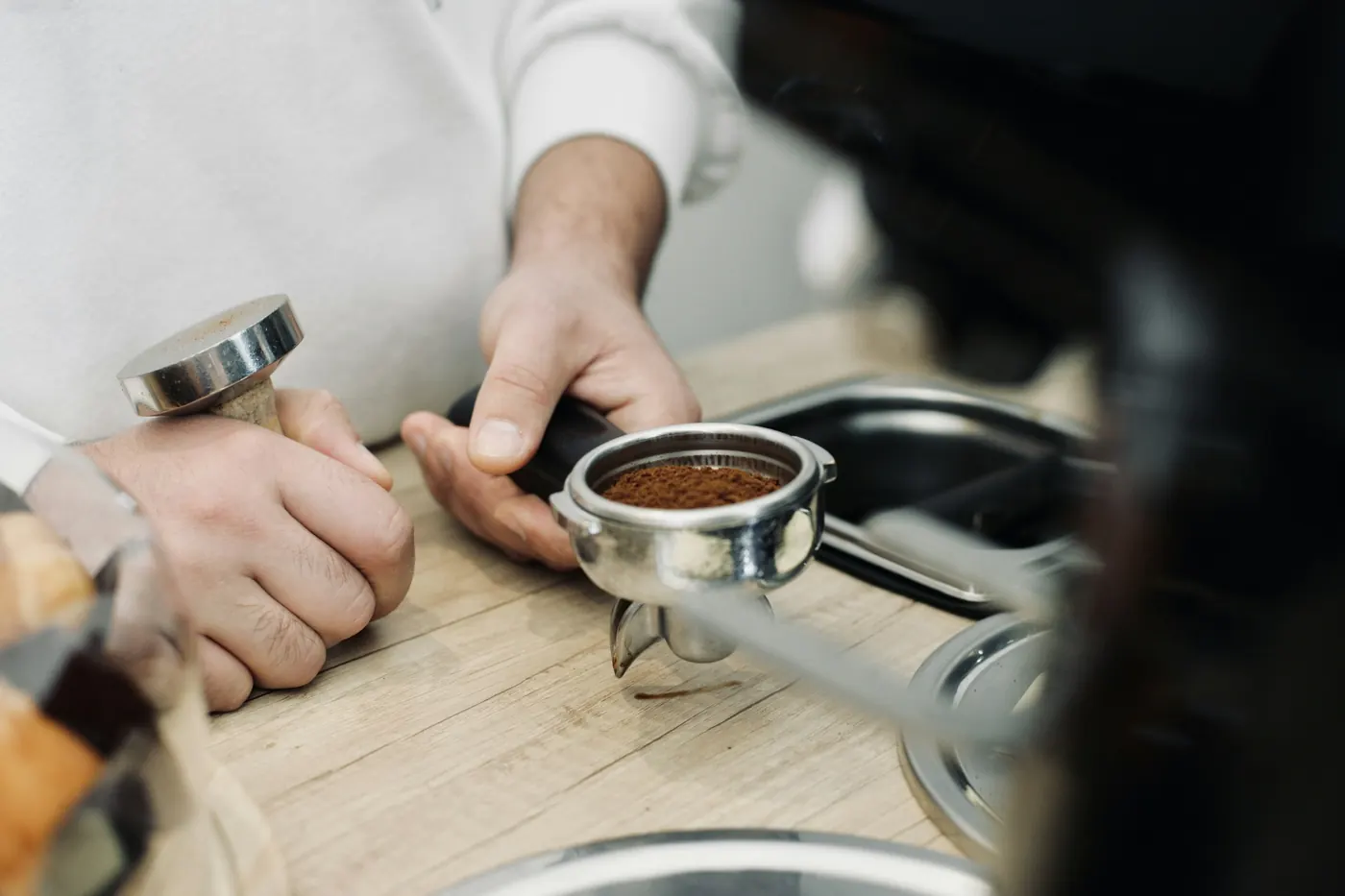
An espresso machine asks more. You grind and weigh the coffee, tamp it, pull the shot, then clean up. Heat-up times vary widely: ATK’s lineup ran from machines that were ready almost instantly to models that took more than 3½ minutes, and it notes that with single-boiler machines “you must wait for up to a few minutes between pulling a shot and steaming milk”. Several of the machines it tested came with skimpy manuals and no instructional videos, so expect to teach yourself.
Milk drinks
Both can make a latte, in different ways. ATK points out that the Pixie needs a separate milk frother for milk-based drinks; some Nespresso models have a frother or milk system built in. Most espresso machines have a steam wand, which takes practice but lets you texture milk for cappuccinos and latte art. Some, like the Breville Barista Touch Impress, steam milk automatically to a temperature and texture you choose.
Cost class and capsules
We do not list prices because they change, but the shape of the cost is clear. A Nespresso machine costs less up front than a good espresso machine, and much less than an espresso machine plus a burr grinder. After that, every Nespresso cup needs a capsule from that system, while an espresso machine runs on any beans you buy. If you drink several shots a day, the capsule cost adds up; if you drink one, the cheaper machine may stay cheaper for years.
On waste, Nespresso runs a capsule return program in the US: it says you can add a free pre-labelled UPS bag to orders and drop used capsules at one of more than 88,000 collection points (Nespresso). An espresso machine leaves a spent puck of grounds that can go in the compost.
Choose an espresso machine if… / Choose Nespresso if…
Choose an espresso machine if…
- Taste is the point, and you want to choose your own beans.
- You will buy a burr grinder too, or a machine with one built in.
- You enjoy the routine of dialing in a shot, or are willing to learn it.
- You make milk drinks often and want a proper steam wand.
Choose Nespresso if…
- You want coffee in under a minute with no learning curve.
- You drink one or two small coffees a day.
- You want little cleanup and no grinder on the counter.
- You are happy to buy capsules from one system.
Our picks on each side of the espresso machine vs Nespresso choice
One Nespresso Original machine and two espresso machines: a traditional semi-automatic and one with a built-in grinder and guided tamping. All three were in stock and sold by Amazon.com when we checked. Two are listings of models that appear on our other guides, and we say why in each section.
1. Nespresso Original Pixie by De’Longhi – The Fastest Small Coffee

The Pixie is Nespresso’s compact Original-line machine, here in the De’Longhi-made version, model EN127BL. The listing gives it a 19-bar pump, fast heat-up, two coffee sizes (espresso and lungo) and automatic shut-off after 2 minutes of inactivity, with hammered metal sides.
We chose it for this comparison because America’s Test Kitchen tested the Pixie (a Breville-made version) directly against espresso machines, so its strengths and limits are on record: the quickest and easiest route to a shot, ready in 34 seconds, with espresso that tested underextracted. It is also on our small-space coffee maker guide in another color, because it is narrow.
As an Original-line machine, it takes Original capsules only. It has no milk frother, so add one if you want lattes.
Why we like it
- 19-bar pump and fast heat-up, per the listing.
- ATK: “no easier or faster way” to make espresso.
- Switches off after 2 minutes of inactivity.
- Compact, with metal sides.
Key specifications
| Model | EN127BL |
|---|---|
| Type | Capsule machine, Nespresso Original |
| Pressure | 19-bar pump |
| Grinder | None (capsules) |
| Milk | No frother |
| Drinks | Espresso and lungo |
| Made by | De’Longhi for Nespresso |
| Warranty | Not stated in the listing |
Why we recommend it
Choose it if you want a small, quick coffee every morning with nothing to learn and almost nothing to clean.
Skip it if espresso flavor is your priority; ATK found its shots underextracted and could not adjust them.
Pros and cons
Pros
- Fastest route to a coffee of any pick.
- Small footprint.
- Sold by Amazon.com at the time of writing.
Cons
- Espresso tested underextracted (ATK).
- Original capsules only.
- No milk frother.
2. Gaggia Classic Pro – A Traditional Italian Semi-Automatic

The Gaggia Classic Pro is the traditional route: a semi-automatic machine with no grinder, no screen and a commercial-style portafilter. This Cherry Red listing, model RI9380/47, states a solid steel housing made in Italy, 9-bar espresso extractions, a stainless steel 58mm commercial portafilter, a commercial three-way solenoid valve and a commercial steam wand.
America’s Test Kitchen tested the Classic Pro in its E24 version and rated it “Recommended”, calling it “compact and simple to operate”, with an easy-pour ramp for filling the tank, a boiler that is “fairly quick to heat up” and a steam wand that is “nicely powerful”. This listing does not say whether it is the E24 version, but it states the same housing, pressure, portafilter, valve and steam wand as Gaggia’s E24 listing. ATK measured it ready in 1 minute 19 seconds. It also found faults: the silicone grip on the steam wand is small, so the testers scorched their hands, and the portafilter often stuck until the machine cooled.
You will need a burr grinder; ATK notes it has none. The Classic Pro also appears on our best espresso machine guide in another listing; we include it because it is the machine ATK tested against the Pixie.
Why we like it
- 9-bar extraction and a 58mm commercial portafilter, per the listing.
- Made in Italy with a steel housing.
- ATK: compact, simple, quick to heat, powerful steam wand.
Key specifications
| Model | RI9380/47 (Cherry Red) |
|---|---|
| Type | Semi-automatic espresso machine |
| Pressure | 9-bar extraction |
| Grinder | None; buy separately |
| Milk | Commercial steam wand |
| Drinks | Espresso; milk drinks with the wand |
| Made by | Gaggia, made in Italy |
| Warranty | Not stated in the listing |
Why we recommend it
Choose it if you want to learn espresso properly on a simple, sturdy machine and already own or will buy a good grinder.
Skip it if you want guidance on the screen; ATK found the manual skimpy, with no instructional videos.
Pros and cons
Pros
- Full control over every shot.
- Powerful steam wand (ATK).
- Sold by Amazon.com at the time of writing.
Cons
- No grinder.
- Small steam-wand grip and a sticking portafilter (ATK).
- A real learning curve.
3. Breville Barista Touch Impress – Fresh Espresso With a Guide

If the Gaggia sounds like too much work but Nespresso sounds like too little coffee, the Barista Touch Impress sits between them. It is a semi-automatic machine with a built-in grinder, and much of the hard part is guided. The listing describes integrated conical burrs from Baratza with 30 grind settings, intelligent dosing, assisted 22-pound tamping that corrects the next dose, and step-by-step barista guidance on a touchscreen.
For milk, its Auto MilQ wand steams to a temperature and texture you choose, with settings for alternative milks. The listing gives a ThermoJet heating system that reaches extraction temperature in 3 seconds, 13 preset drinks plus up to 6 custom ones, a cold brew function and a 2-year limited warranty.
The details above come from Breville’s listing; we did not read an independent review of this exact model. It is a large machine with a screen and a grinder, so measure your counter.
Why we like it
- Built-in burr grinder with 30 settings.
- Assisted tamping and on-screen guidance.
- Automatic milk texturing, including alternative milks.
- 2-year limited warranty.
Key specifications
| Model | BES881BSS |
|---|---|
| Type | Semi-automatic with grinder |
| Pressure | Not stated in the listing |
| Grinder | Conical burr, 30 settings |
| Milk | Automatic steam wand (Auto MilQ) |
| Drinks | 13 presets, 6 custom, cold brew |
| Made by | Breville |
| Warranty | 2-year limited |
Why we recommend it
Choose it if you want fresh-ground espresso and milk drinks without learning everything by trial and error.
Skip it if you want a small machine or the lowest cost class; it is the biggest and most involved pick here.
Pros and cons
Pros
- Grinder, tamping help and milk steaming in one machine.
- Fast heat-up, per the listing.
- Sold by Amazon.com at the time of writing.
Cons
- Large footprint.
- Highest cost class of the three.
- Details rest on the maker’s listing.
Espresso and Nespresso questions, answered
Is Nespresso real espresso?
Nespresso Original machines push water through a capsule under pump pressure and make a short, concentrated coffee with crema, so they make an espresso-style drink. America’s Test Kitchen measured the Pixie’s shots as underextracted compared with espresso machines, so it is not the same as a well-made shot from fresh-ground coffee.
Is a 19-bar Nespresso stronger than a 9-bar espresso machine?
No. The 19-bar figure is the pump’s rating. ATK gives about nine bars as the standard for espresso, and what you taste depends on the grind, dose and extraction, not the pump number.
Do I need a grinder for an espresso machine?
Yes, unless the machine has one built in. The National Coffee Association calls a grinder “optional, but preferred” and recommends burr grinders, and ATK calls the grinder a key part of great espresso. Our guide to the best burr espresso grinder covers the options.
Can I use any capsule in a Nespresso machine?
Only capsules made for that system. Original and Vertuo capsules are different and not interchangeable. If you are choosing between the two systems, our best Nespresso machine guide explains Original vs Vertuo.
Which is cheaper over time?
It depends on how much you drink. A Nespresso machine costs less to buy, but every cup needs a capsule. An espresso machine and grinder cost more up front and then run on beans. The more cups you make a day, the more the capsule cost counts.
Which one belongs by your coffee mugs
If you want the best-tasting espresso and are happy to learn, buy an espresso machine and a grinder: the Gaggia Classic Pro if you like doing it by hand, or the Breville Barista Touch Impress if you want help. If speed and ease matter more than the last bit of flavor, a Nespresso Original machine such as the Pixie is a sensible, low-effort choice.
Still weighing pod machines? Our Keurig vs Nespresso comparison covers the other big capsule brand, and moka pot vs espresso machine covers the stovetop route. For more Nespresso models, start with our guide to the best Nespresso machine.
And if you would rather someone else made the coffee and the food, see the menu or call to order.