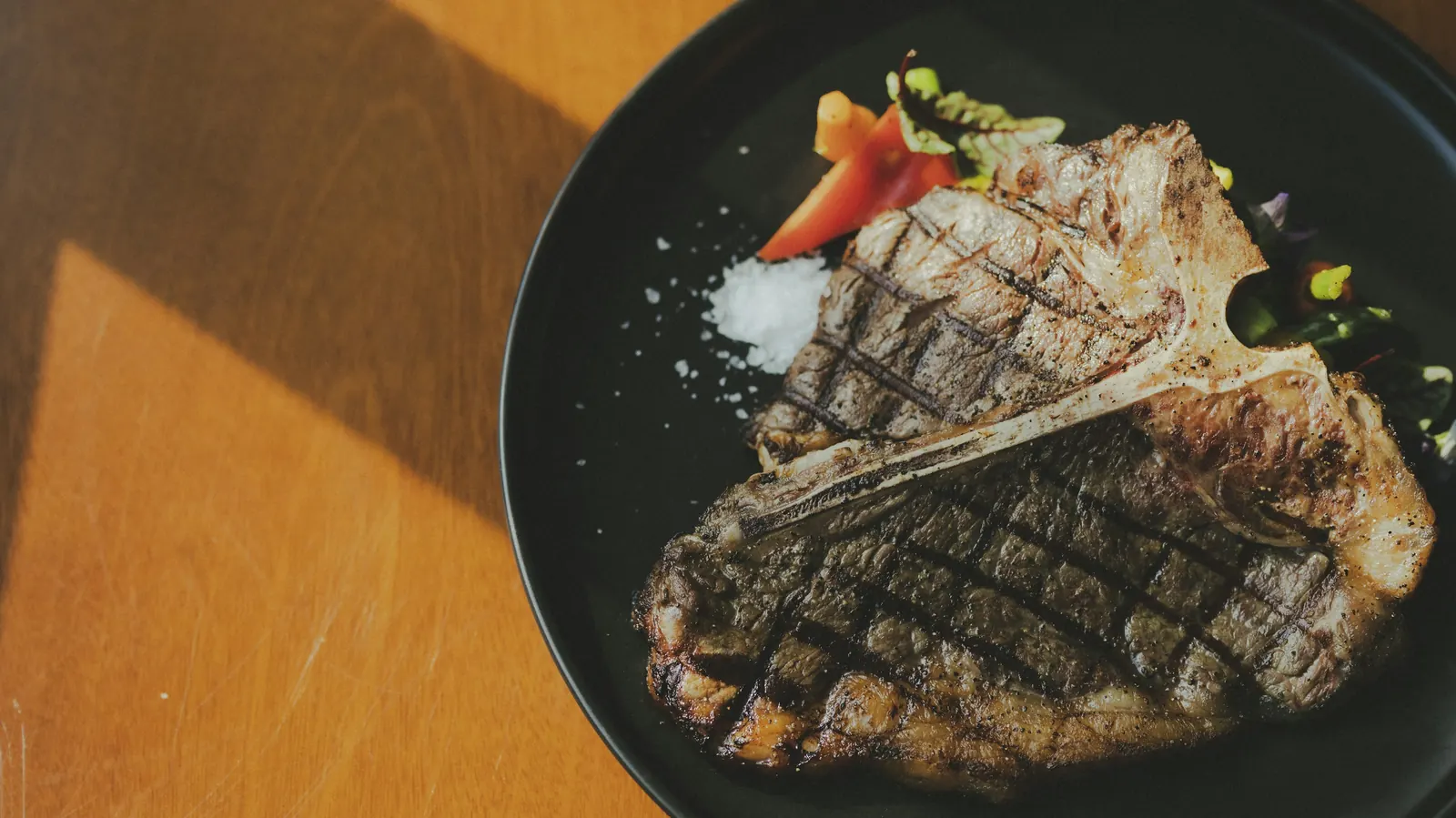
A griddle and a grill pan often come from the same foundry, in the same cast iron and the same square shape. Lay them side by side and the only obvious difference is the floor: one is flat, the other is ribbed with raised ridges. That one difference decides almost everything they are good at. The flat griddle puts the whole face of a tortilla, a pancake or a smash burger on hot metal. The ridged grill pan lifts steak, chicken and vegetables above their own fat and brands them with stripes. In a Mexican kitchen, the griddle is the comal’s square cousin; the grill pan is what you reach for when the carne asada can’t go outside.
This guide compares the two by what happens to the food: contact and browning, fat, what each one cooks well, heat, cleanup and storage. It ends with which to buy first and one good example of each.
Julia’s earns a commission on purchases made through links on this page, at no cost to you. Recommendations are based on what a restaurant kitchen looks for, product specifications, maker information and published equipment reviews, which we name.
Quick verdict: griddle or grill pan first?
Buy a griddle first if you cook tortillas, quesadillas, pancakes, eggs, burgers or fajita vegetables: its flat floor browns everything edge to edge and handles far more kinds of food. Buy a grill pan first only if most of what you cook on the stove is steak, chicken, burgers and sliced vegetables and you want grill marks and drained fat without lighting a grill. If you already own a flat skillet, the grill pan becomes the more useful second piece.
The table sums up the differences; the sections after it explain each one.
Griddle vs grill pan, side by side
| Griddle | Grill pan | |
|---|---|---|
| Cooking surface | Flat plate, low lip or none | Raised ridges with channels between |
| Contact with food | Whole surface | Stripes along the ridges |
| Result on meat | Even, full crust | Grill marks, paler between them |
| Fat | Spreads across the plate, can run to the edge | Runs into the channels, away from the food |
| Batter, eggs, tortillas | Excellent | Poor: batter and egg sink into the grooves |
| Common shapes | Round or square, 10 to 11 inches; two-burner rectangles | Square or round, 10 to 12 inches; two-burner rectangles |
| Cleanup | One flat surface to scrape and wipe | Grooves need scraping or a brush |
| Best jobs | Tortillas, quesadillas, pancakes, eggs, smash burgers, fajita vegetables | Steak, chicken, burgers, nopales, zucchini, green onions |
Contact and browning: a full face or stripes
Browning happens where food touches hot metal. On a griddle, that is the entire underside of whatever you put down, so a tortilla toasts evenly with its little brown blisters, a quesadilla crisps across the whole face and a smash burger gets the wide, lacy crust that is the whole point of smashing it. Food that is liquid when it goes down, such as pancake batter or a cracked egg, simply spreads and sets.
On a grill pan, only the tops of the ridges touch the food. You get dark stripes with paler meat between them: the look of an outdoor grill, without the smoke flavor. America’s Test Kitchen’s grill pan review notes that “the taller the ridges, the more deeply they mark food,” and it preferred ridges at least a fingertip-width apart. The trade is less total browning, and browning is where much of the flavor comes from. A steak cooked on a griddle will usually taste a little richer; the same steak on a grill pan will look more like it came off a grill.
Fat and moisture: spread out or drained away
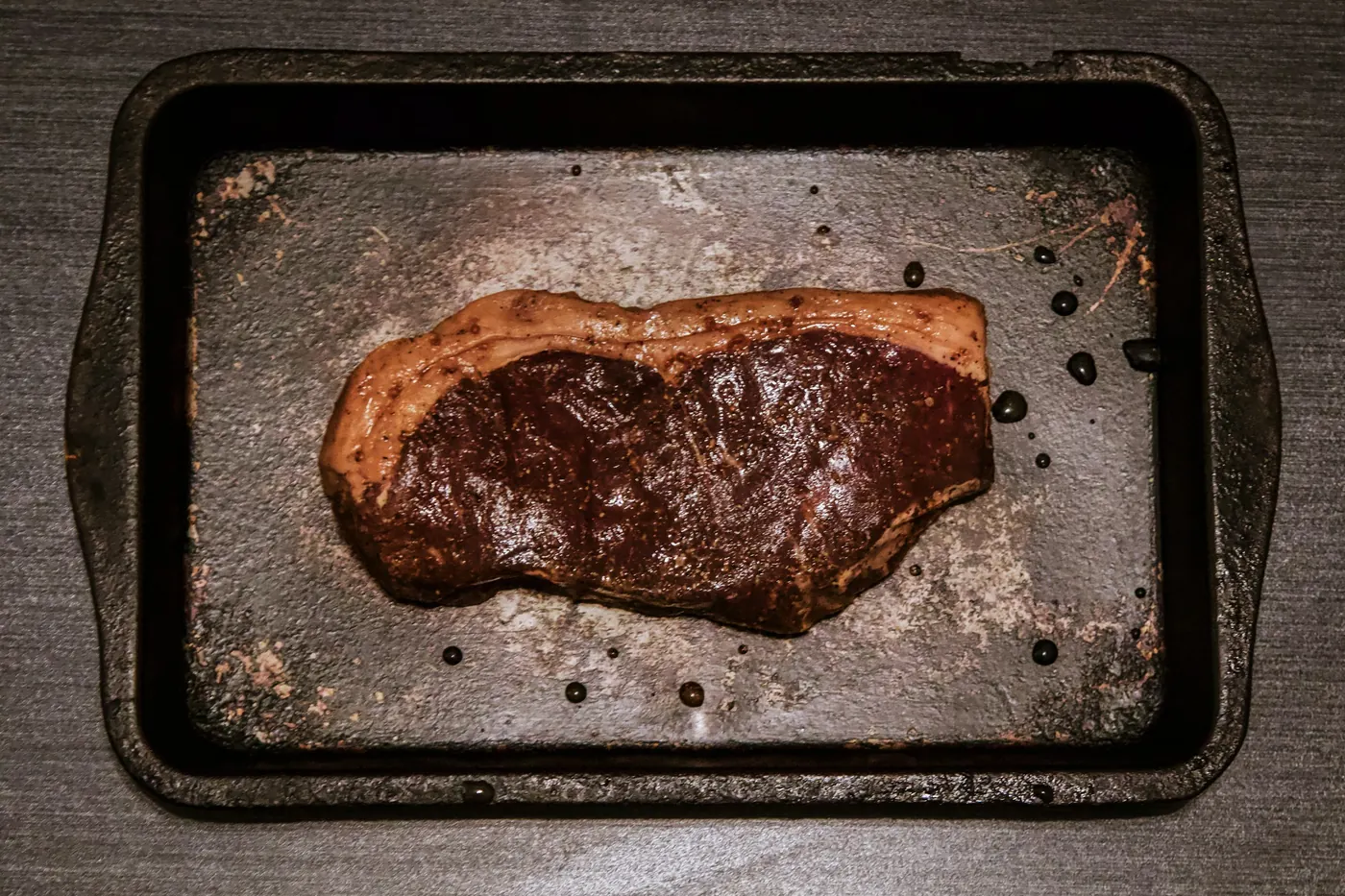
The channels in a grill pan exist to carry fat away from the food. That is why grill pans suit burgers, chicken thighs with the skin on, bacon-wrapped jalapeños and fatty cuts of steak: the meat sits above what renders out of it instead of frying in it. The fat still has to go somewhere, though, so it collects in the grooves, where it can smoke if the pan runs too hot. Tip the pan and pour it off, or blot it with a folded paper towel held in tongs.
A griddle keeps the fat where the food is, spread in a thin film across the plate. That is exactly what you want for eggs, chorizo, crisp-edged potatoes and fajita onions, which brown in the fat that renders around them. It is less welcome with a batch of fatty burgers, because a flat plate with a low lip has nowhere to hold more than a few spoonfuls. Moisture follows the same pattern. On a griddle, juices from vegetables spread and evaporate; on a grill pan, they run into the grooves and scorch, so vegetables for the grill pan should be patted dry and lightly oiled.
What each one cooks well
The griddle is the more versatile of the two. Anything flat or flattened cooks well on it: corn and flour tortillas, quesadillas, sopes, pancakes, French toast, fried eggs, grilled cheese, smash burgers, sliced peppers and onions for fajitas, and thin steak for tacos. It is effectively a square comal with more mass. If you want to know how a griddle compares with a regular frying pan, our griddle vs pan guide covers that question.
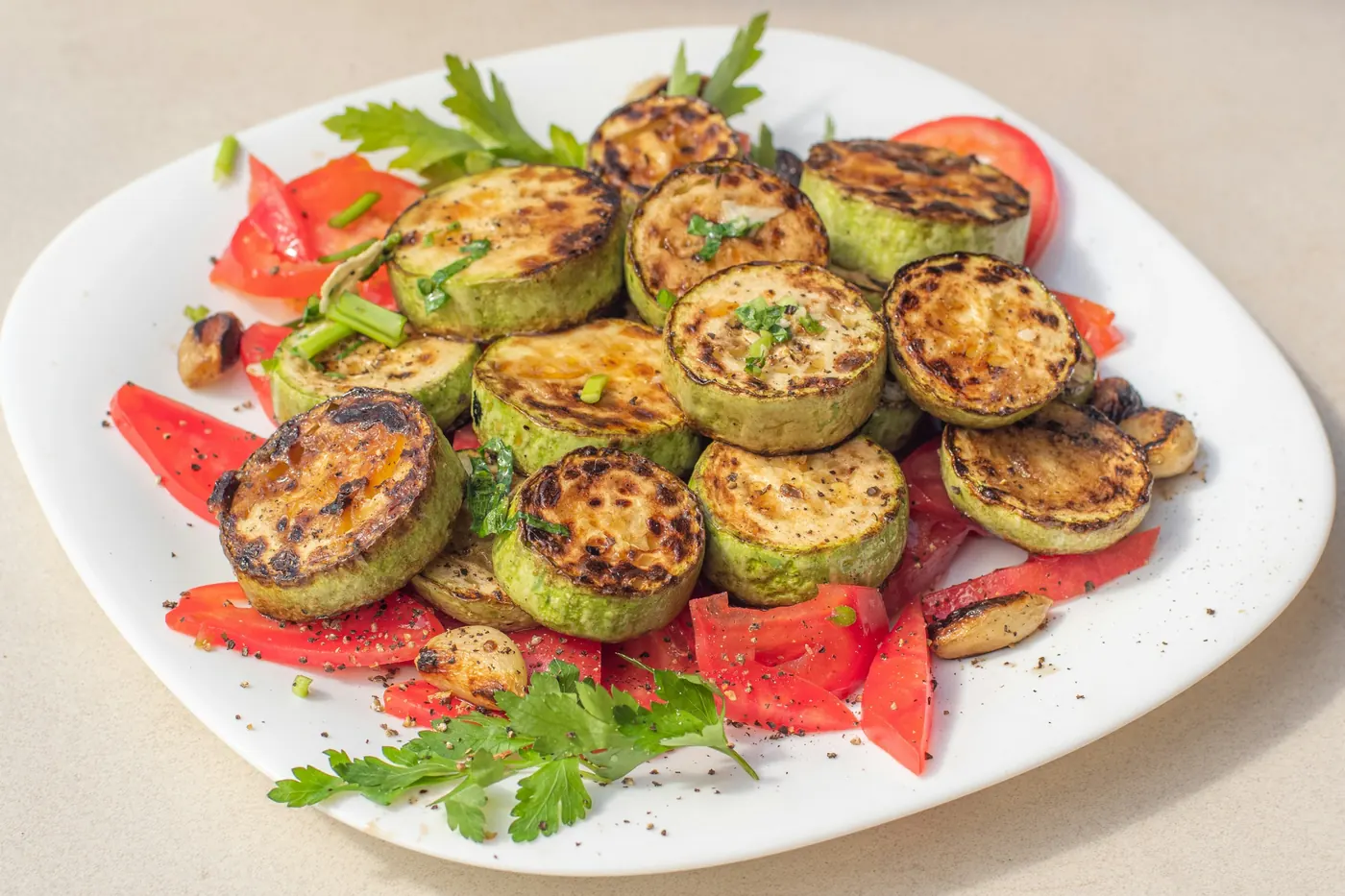
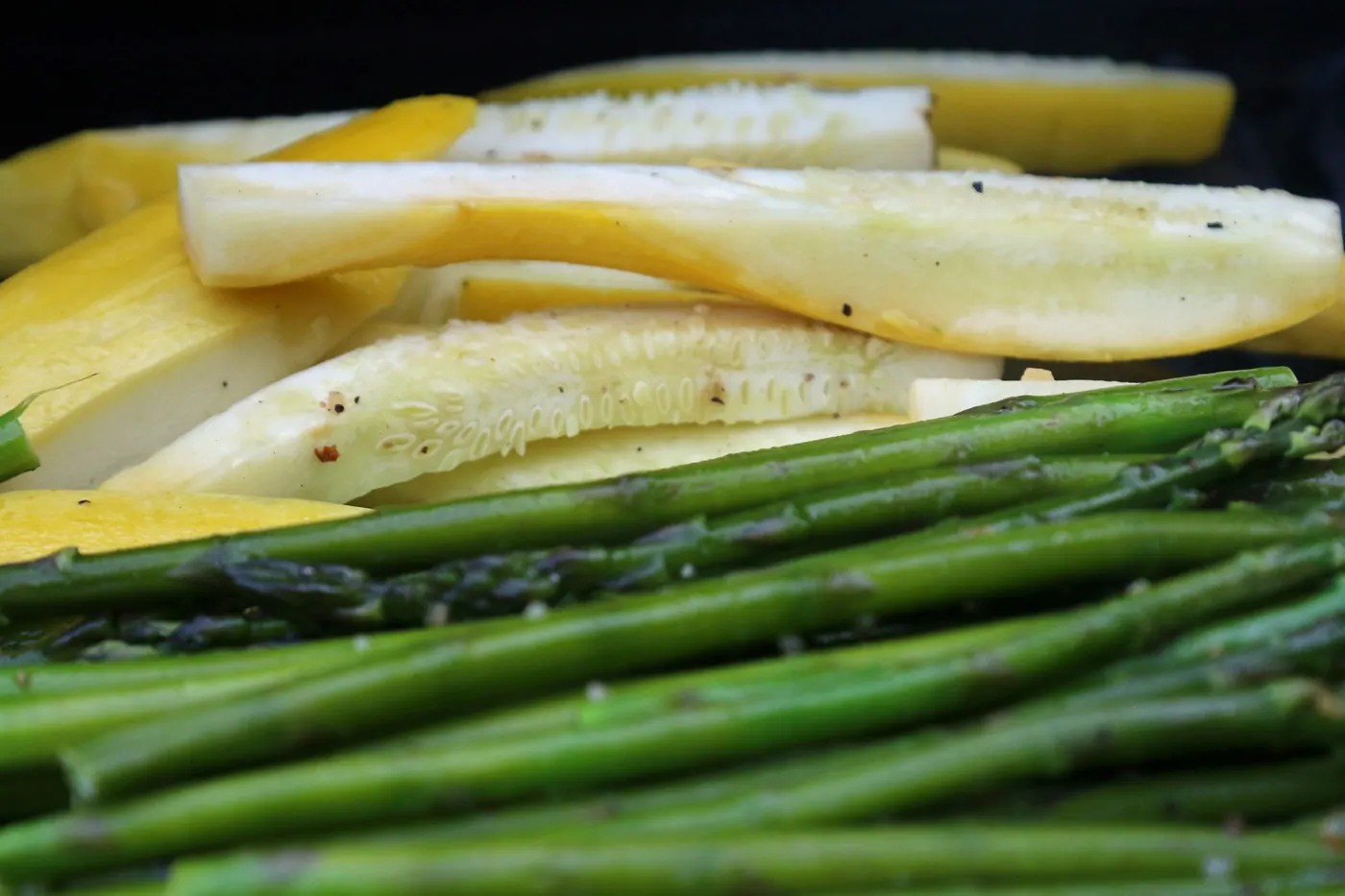
The grill pan has a narrower menu but does it well: steak, chicken breasts and thighs, pork chops, burgers, sausages, nopales paddles, thick slices of zucchini and onion, halved peppers, green onions and whole jalapeños to serve beside carne asada. What it can’t do is anything runny or anything that needs full contact. A tortilla on a grill pan comes out striped and only partly toasted, and an egg is a mess.
Heat: why both want weight and patience
Both work best heavy and fully preheated. A cold piece of meat or a cold tortilla pulls heat out of whatever it lands on, and a thick cast iron plate has more heat in reserve, so the browning or the marks keep forming instead of the food steaming. Lodge’s care advice applies to both shapes: let cast iron preheat, start at medium-low and work up, and don’t assume you need the highest flame; Lodge calls cooking at too high a temperature a common mistake.
How the heat reaches the food differs. On a griddle it conducts straight in across the whole floor. On a grill pan the ridges carry heat to the food in lines, and the hot air in the channels does a little of the rest. That is why a grill pan that is hot all the way through marks food far better than a cold one turned to high, which mostly makes smoke. If you cook on glass or ceramic, our guide to the best grill pan for a glass top stove covers flat bases and weight.
Cleanup, smoke and storage
A griddle has one flat surface: scrape it with a flat spatula while it is warm, wipe it, and it is done. A grill pan has grooves that catch fat and stuck marinade, and they need a stiff brush or a plastic scraper shaped to the ridges, ideally while the pan is still warm. ATK favored widely spaced ridges partly because they are easier to scrub. Fat sitting in hot channels also smokes more than fat spread thin, so a grill pan wants the hood fan on.
Care follows the material, not the shape. Bare cast iron, either kind, takes Lodge’s routine: let it cool, hand wash with warm, soapy water, dry it promptly and wipe on a thin coat of oil. Square pans of the same size stack in the same cabinet space, and a griddle with low walls slides into narrow spaces more easily than a grill pan with taller ridges and sides.
Griddle vs grill pan for Mexican cooking
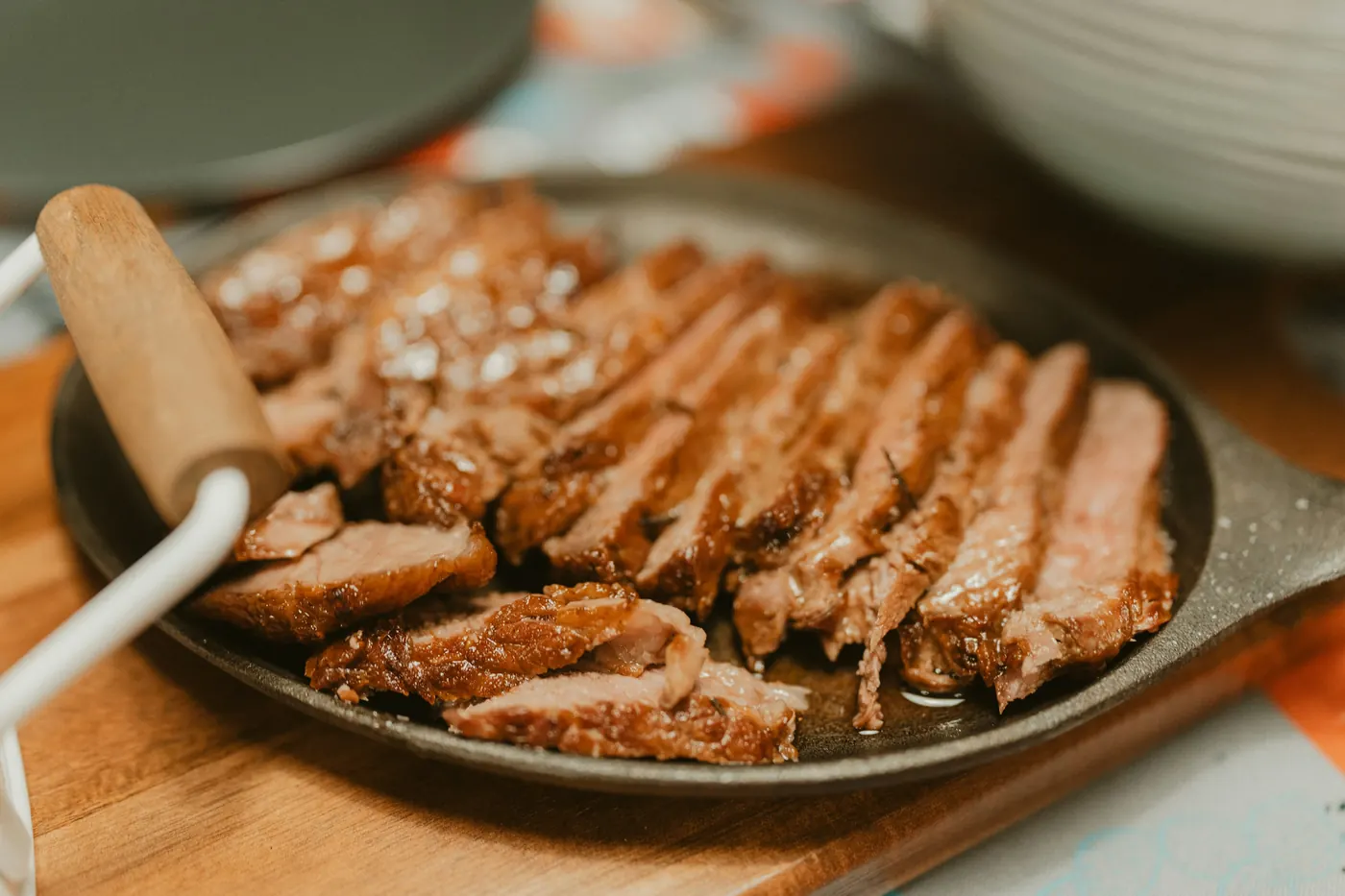
For most Mexican home cooking, the griddle does more. It warms and toasts tortillas, browns quesadillas and sopes, sears thin steak and chicken for tacos, and chars peppers and onions for fajitas. Our guide to how to eat fajitas covers how those pieces come together at the table. If you cook outside or on a camp stove, the best camping griddle pan guide covers models that travel.
The grill pan is the indoor stand-in for the backyard grill: thick steaks and chicken with stripes, nopales brushed with oil and salt, green onions and jalapeños charred whole for a carne asada plate, and zucchini or corn slices with grill marks. It earns its place when you want those flavors on a rainy week or a hot Houston afternoon when nobody wants to stand over coals.
Choose a griddle if… / Choose a grill pan if…
Choose a griddle if…
- You warm tortillas or make quesadillas several times a week.
- You cook breakfast: pancakes, eggs, chorizo, potatoes.
- You want the fullest, most even crust on burgers and thin steak.
- You are buying one flat-bottomed square pan to cover the most meals.
Choose a grill pan if…
- You already own a griddle, comal or flat skillet.
- You cook steak, chicken, burgers or vegetables often and want grill marks.
- You want fat to drain away from fattier cuts as they cook.
- You have no outdoor grill, or can’t use it much of the year.
Our pick on each side of the griddle vs grill pan choice
Both picks are bare cast iron in a square shape with two loop handles, which keeps the comparison fair: same material and layout, different surface. Both were in stock when we checked.
1. Lodge Chef Collection 11-inch Square Griddle – A Flat Square Comal in Heavy Iron

Lodge’s Chef Collection griddle is a flat, 11-inch square of pre-seasoned cast iron with a handle at each end; the listing gives its overall size as 14.5 by 11 by 1.4 inches. That square floor fits four corn tortillas, two quesadillas folded in half or a full breakfast of eggs and chorizo at once, and the low edge lets a spatula come in flat from any side.
The listing says it goes in the oven, on the stove, on a grill or over a fire up to 550°F, and that it is made in South Pittsburg, Tennessee. Lodge says its cast iron works on any heat source, including glass-top stoves and induction. The two short handles make it easier to lift and to carry to the table than a single long handle would.
Its trade-offs are the griddle’s: a low edge that holds only a thin film of fat, and no ridges for grill marks.
Why we like it
- Flat edge to edge for tortillas
- Dual handles for lifting
- Works on induction (Lodge)
- Made in Tennessee
Key specifications
| Model | LC11SGR |
|---|---|
| Type | Flat square griddle |
| Size | 11-inch square; 14.5 x 11 x 1.4 in overall |
| Weight | 5.81 lb (Lodge) |
| Material | Pre-seasoned cast iron |
| Heat limit | 550°F, per the listing |
| Made in | USA |
| Care | Hand wash, dry, oil |
Why we recommend it
It suits a cook who warms tortillas, makes quesadillas or cooks breakfast on the stove and wants one heavy flat pan for all of it.
Skip it if what you mainly want is grill marks on steak and chicken; the grill pan below does that.
Pros and cons
Pros
- Full, even browning
- Handles batter, eggs and tortillas
- Easy to scrape clean
Cons
- Low edge holds little fat
- No grill marks
- Short handles get hot
2. Victoria 10-inch Square Cast Iron Grill Pan with Double Loop Handles – Ridges Without the Long Handle

Victoria’s square grill pan is the ridged counterpart: 10-inch square cast iron with a loop handle on each side instead of one long handle. The listing describes the loop handles as larger for stability when you are wearing oven mitts, which matters on a pan that comes off the stove hot and carrying fat in its channels. The square floor fits two steaks, four burgers or a layer of nopales across the ridges.
Per the listing, it is seasoned with non-GMO, kosher-certified flaxseed oil, works on induction, gas, ceramic and electric stovetops as well as in the oven, on a grill or over a campfire, and is made in Victoria’s own factories in Colombia, where the company says it has made cast iron since 1939.
The trade-offs are the ones every grill pan has: stripes rather than a full crust, grooves that need scraping, and no use for batter, eggs or tortillas.
Why we like it
- Ridges drain fat from meat
- Two loop handles, oven-mitt friendly
- Induction-compatible, per the listing
- Made in Colombia by the maker
Key specifications
| Model | SKL-201 |
|---|---|
| Type | Ridged square grill pan |
| Size | 10-inch square |
| Weight | Not stated |
| Material | Cast iron, seasoned with flaxseed oil |
| Induction | Yes, per the listing |
| Made in | Colombia |
| Care | Hand wash, dry, oil |
Why we recommend it
It suits a cook who already has a flat griddle or skillet and wants grill marks on steak, chicken and vegetables indoors.
Skip it if it would be your only square pan; the griddle above covers far more cooking.
Pros and cons
Pros
- Grill marks and drained fat
- Compact two-handle shape
- Goes from stove to oven
Cons
- Grooves take scraping
- No batter, eggs or tortillas
- Smaller than an 11-inch griddle
Griddle and grill pan questions, answered
Is a griddle the same as a grill pan?
No. A griddle has a flat cooking surface; a grill pan has raised ridges. They are often sold in the same sizes and shapes, and some reversible cast iron plates have a griddle on one side and grill ridges on the other.
Which is better for steak, a griddle or a grill pan?
For crust and flavor, the griddle: the whole surface browns. For grill marks and drained fat, the grill pan. If you already own a heavy flat skillet, it does the griddle’s job for steak.
Can you cook tortillas on a grill pan?
You can warm them, but only the ridges toast the tortilla, so it comes out striped and soft in between. A flat griddle or comal toasts the whole tortilla evenly.
Do I need both a griddle and a grill pan?
Not to start. Most kitchens get more use from a griddle or flat skillet. Add a grill pan when you find yourself wanting grill marks on chicken, steak or vegetables more than once a week.
Do cast iron griddles and grill pans work on induction?
Bare cast iron is magnetic, and Lodge says its cast iron works on any heat source, including induction and glass tops. Victoria’s listing says the same of its grill pan. Lift heavy iron rather than sliding it on a glass surface.
Which square pan earns the stovetop
For most kitchens, the griddle comes first: it toasts tortillas, cooks breakfast, browns quesadillas and sears thin steak for tacos. The grill pan comes second, and once you own one, it quickly becomes the pan for steak, chicken and vegetables whenever the weather keeps you indoors.
If the grill pan wins, our guide to the best grill pan compares cast iron, enameled and nonstick models, and grill pan vs skillet compares ridges with a regular flat pan. For more flat options, see the best cast iron griddle. And when you would rather someone else did the grilling, see the menu or call to order.