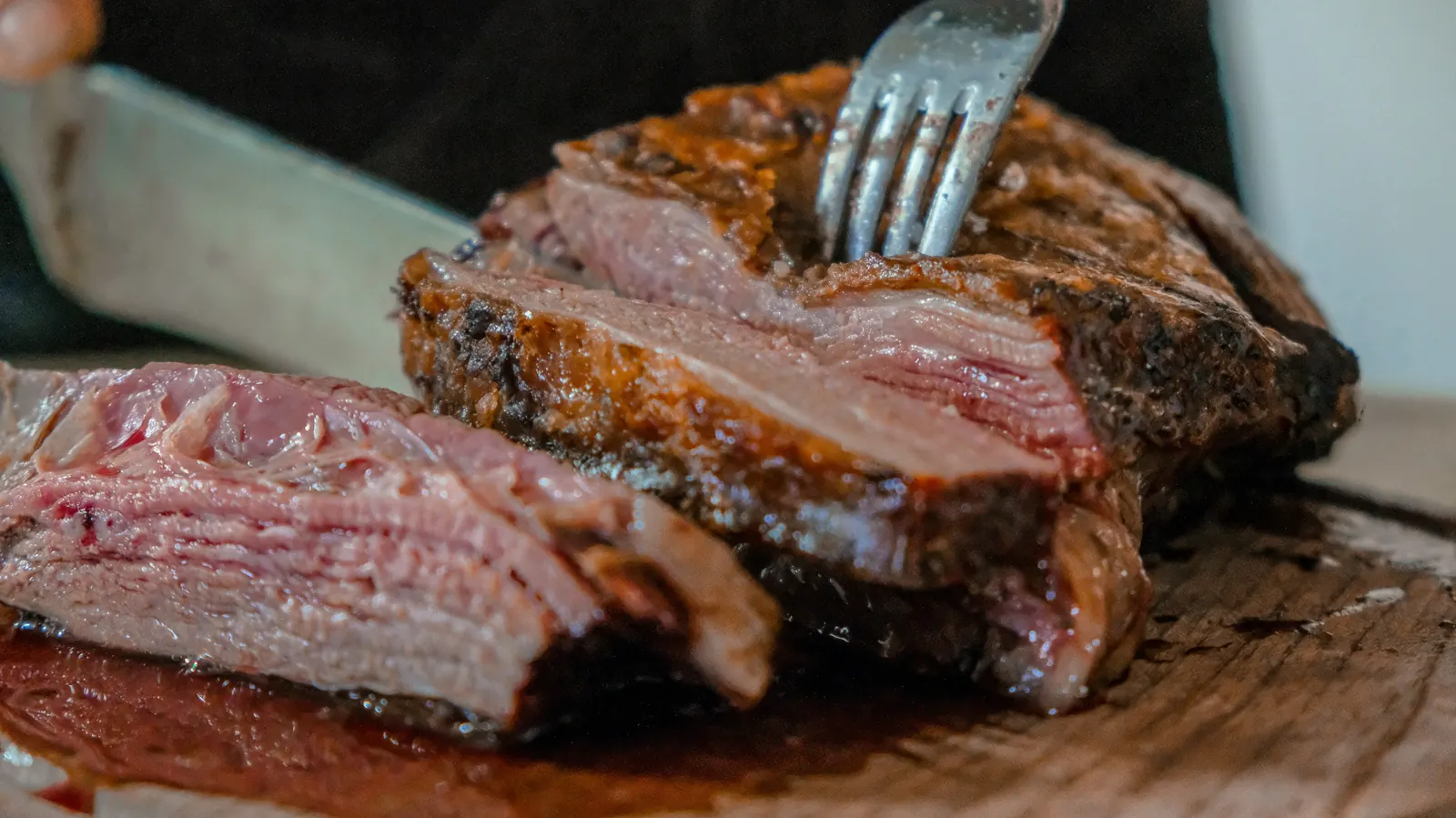
A smoker does one job a grill does badly: it holds meat in low, steady heat and wood smoke for hours, long enough for a tough cut like brisket, beef cheek or pork shoulder to turn tender. In a Texas Mexican kitchen that means smoked brisket for tacos, beef cheek that shreds for a Sunday platter, and the same wood-smoke flavor that makes a chipotle taste the way it does.
The hard part is choosing the type. Charcoal, electric, propane, kamado and gravity-fed smokers all make good barbecue, but they ask very different things of the cook. This guide explains the differences in plain terms, names the smokers worth buying in each style, and says honestly who should skip each one.
Julia’s earns a commission on purchases made through links on this page, at no cost to you. Recommendations are based on what a restaurant kitchen looks for, product specifications and verified buyer reports.
Quick verdict: which smoker to buy
For most people learning to smoke meat over charcoal and wood, the Weber Smokey Mountain Cooker is the best smoker to start with: a simple vertical water smoker with two grates, a water pan and dampers on the bowl and lid. If you would rather set a temperature and walk away, the Masterbuilt Gravity Series 1050 burns real charcoal under a digital fan controller. For the easiest cook of all, the Masterbuilt 30-inch Digital Electric Smoker plugs in and holds its setting, up to 275°F.
Below, the five standout picks side by side, then all eight smokers in full, and the buying points that matter most.
Five standout smokers side by side
One smoker for each kind of cook, with the specifications each maker or listing states. All eight smokers are reviewed in full below.
| Smoker | Best for | Type & fuel | Cooking area | Buy on Amazon |
|---|---|---|---|---|
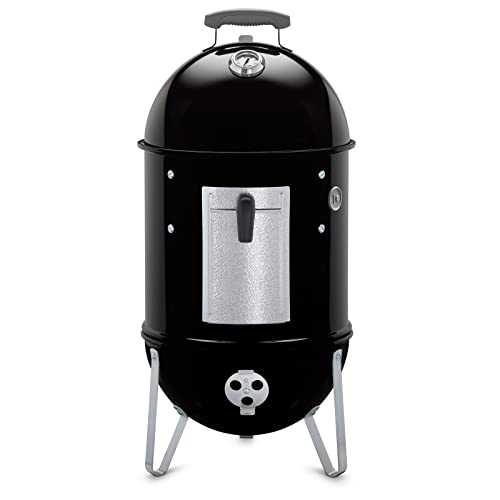
Weber Smokey Mountain Cooker, 14-inchBest overall
|
Learning charcoal smoking | Vertical water smoker, charcoal | 286 sq in, two grates | View on Amazon |

Masterbuilt Gravity Series 1050 Smoker GrillBest digital charcoal
|
Charcoal flavor, set-and-hold control | Gravity-fed, lump or briquettes | 1,050 sq in | View on Amazon |
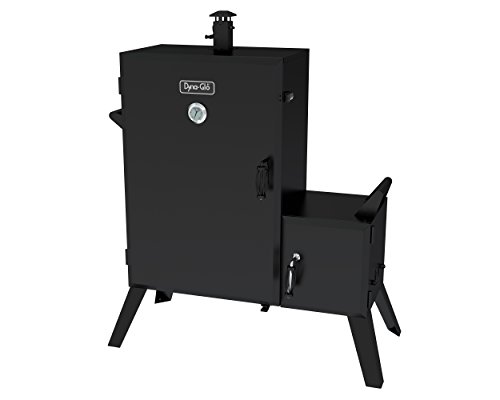
Dyna-Glo Wide Body Vertical Offset Charcoal SmokerBest for big batches
|
Feeding a crowd | Vertical offset, charcoal and wood | 1,890 sq in, six grates | View on Amazon |

Masterbuilt 30-inch Digital Electric SmokerBest electric
|
Easiest steady temperature | Electric cabinet, wood chips | 710 sq in, four racks | View on Amazon |

Char-Griller AKORN 20-inch KamadoBest kamado
|
Smoking and searing in one | Insulated steel kamado, charcoal | 445 sq in total | View on Amazon |
Product images from Amazon. Cooking areas are as stated by each maker or listing; check the listing before you buy.
Our picks for the best smoker, by type
These eight smokers cover the five common styles: a vertical water smoker, two offsets, a gravity-fed charcoal cooker, a kamado, two electric cabinets and a propane cabinet. Each review explains how the smoker holds heat, how much food it takes, what the maker states about it, and one honest reason to skip it.
1. Weber Smokey Mountain Cooker, 14-inch – Simple Charcoal Smoking Done Right
The Smokey Mountain Cooker is a bullet-shaped vertical smoker: charcoal and wood chunks burn in the bowl at the bottom, a water pan sits above the fire, and two cooking grates stack above that under a domed lid. That layout is the reason it is so forgiving. The water pan sits between the fire and the meat, and Weber says it helps regulate the temperature inside the smoker and adds moisture to the heat.
This 14-inch model has 286 square inches of cooking area across its two grates, according to Weber, and stands 31.4 inches tall with the lid closed. That is room for a couple of racks of ribs, a pork shoulder or a small brisket flat, which suits a household rather than a block party. Weber also makes the Smokey Mountain in 18-inch and larger sizes; the 18-inch was listed as low in stock when we checked, so the 14-inch is the one we can recommend today.
Control is old-fashioned but effective. You open or close the dampers on the bowl and lid to raise or lower the heat, read the lid thermometer, and add fuel or wood through a removable fuel door without lifting the lid off the meat. The lid, bowl and center section are porcelain-enameled steel, which the listing says retains heat and will not rust or peel.
For a Mexican kitchen it is a natural fit for smoked beef cheek or chuck for tacos, a pork shoulder for tortas, or a tray of jalapeños smoked alongside the meat. Weber’s warranty for the Smokey Mountain line covers the bowl, lid and center section for ten years against rust-through and burn-through, with shorter terms on other parts; check the owner’s guide for your model.
Why we like it
- Water pan between fire and food steadies the heat, per Weber
- Two cooking grates, 286 sq in in total
- Dampers on the bowl and lid, plus a lid thermometer
- Removable fuel door for adding charcoal and wood mid-cook
- Porcelain-enameled lid, bowl and center section
Key specifications
| Model | 711001 |
|---|---|
| Type | Vertical water smoker (bullet) |
| Fuel | Charcoal, with wood chunks for smoke |
| Cooking area | 286 sq in on two grates (Weber) |
| Temp control | Bowl and lid dampers; lid thermometer |
| Water pan | Yes, included |
| Weight | Not stated |
| Warranty | Limited; Weber lists 10 years on bowl, lid and center section (rust-through/burn-through) |
Why we recommend it
It teaches the basics of fire and airflow without much that can go wrong, it uses real charcoal and wood, and it takes up little patio space. If you want to learn barbecue rather than outsource it to a controller, this is the place to start.
Skip it if you regularly cook for more than six or eight people. At 14 inches across, a whole packer brisket will not lie flat, and you will want the 18-inch model or one of the larger smokers below.
Pros and cons
Pros
- Water pan makes steady heat easier
- Real charcoal and wood flavor
- Small footprint
- Long warranty on the main body
Cons
- Too small for a whole brisket
- Manual damper control takes practice
- Weight not stated by Weber
2. Masterbuilt Gravity Series 1050 Smoker Grill – Charcoal Flavor, Digital Control
The Gravity Series takes the hardest part of charcoal smoking, holding a temperature for hours, and hands it to a fan. You load lump charcoal or briquettes into a tall hopper on the side; gravity feeds the fuel down to the fire, and a digital fan blows in just enough air to hold the temperature you set on the control panel or in the Masterbuilt app.
The numbers are big. Masterbuilt lists 1,050 square inches of cooking space and a range of 225 to 700°F, and the listing says it reaches 225°F in about 8 minutes or 700°F in about 15. The hopper holds up to 10 pounds of lump charcoal or 16 pounds of briquettes, which the listing puts at up to 8 hours of use before you refill. Reversible cast iron grates give you a searing side and a smoking side, and a meat probe reports to the panel and the app.
In practice it is two cookers in one. Smoke a beef chuck low and slow for shredded tacos in the afternoon, then turn the dial up and sear fajita skirt steak over the same charcoal for dinner. The smoke comes from the burning charcoal itself; for a stronger wood flavor, follow the owner’s manual on where wood chunks can go.
It is a large, plug-in machine: the fan and controller need power, and Masterbuilt lists it at about 60.6 inches wide and 52.2 inches tall. The warranty is one year.
Why we like it
- Digital fan holds the temperature you set
- 225 to 700°F range, from low and slow to searing
- Hopper holds 10 lb lump or 16 lb briquettes
- 1,050 sq in of cooking space, plus two warming racks
- Meat probe and app control included
Key specifications
| Model | MB20041220 |
|---|---|
| Type | Gravity-fed charcoal smoker and grill |
| Fuel | Lump charcoal or briquettes, plus wood chunks; needs power for the fan |
| Cooking area | 1,050 sq in (Masterbuilt) |
| Temp control | Digital fan and control panel, app; 225–700°F |
| Water pan | Not stated |
| Weight | Not stated |
| Warranty | 1 year |
Why we recommend it
Choose it if you want charcoal flavor without babysitting a fire, or if you need one cooker that smokes and sears. It is the most capable all-rounder here for a family that cooks outdoors often.
Skip it if you have no outdoor power outlet or little patio space. It is large, the fan and controller are electronics that live outside, and the warranty is one year.
Pros and cons
Pros
- Set-and-hold charcoal smoking
- Sears as well as smokes
- Up to 8 hours per hopper load (listing)
- Large cooking area
Cons
- Needs a power outlet
- Large footprint
- One-year warranty
3. Dyna-Glo Wide Body Vertical Offset Charcoal Smoker – Six Grates for a Crowd
An offset smoker keeps the fire in a separate firebox to the side, so the meat cooks in smoke and indirect heat rather than over the coals. Dyna-Glo stands that idea on end: the firebox sits low at the side, and the cooking chamber rises above it like a cabinet, so heat and smoke climb naturally through the food before leaving by the stack.
The capacity is the headline. The listing gives 1,890 square inches of total cooking space on six height-adjustable grates, each rated for 25 pounds. That is enough for several pork shoulders, a few racks of ribs and a tray of smoked chiles at the same time, the kind of load you plan for a graduation party or a church fundraiser.
The charcoal chamber is porcelain-enameled steel and is designed to keep briquettes stacked tightly for a longer, more efficient burn, and a sliding, removable ash pan handles the ash. You control the heat with the firebox air intake and an adjustable flue on the smoke stack, and a built-in stainless steel thermometer marks a “Smoke Zone” on the dial. The listing gives the overall size as 21 by 43.3 by 50.2 inches.
Like every offset, it rewards attention: you add charcoal and wood chunks to the firebox through the cook and adjust the air as the fire changes.
Why we like it
- 1,890 sq in on six adjustable grates
- Each grate rated for 25 lb
- Offset firebox keeps direct heat off the food
- Adjustable flue and a thermometer with a Smoke Zone
- Removable, sliding ash pan
Key specifications
| Model | DGO1890BDC-D |
|---|---|
| Type | Vertical offset smoker |
| Fuel | Charcoal, with wood chunks or splits for smoke |
| Cooking area | 1,890 sq in on six grates |
| Temp control | Firebox air intake, adjustable flue; built-in thermometer |
| Water pan | Not stated in the listing |
| Weight | Not stated in the listing |
| Warranty | Not stated in the listing |
Why we recommend it
Choose it if you cook for big groups and want real fire and smoke at that scale. The vertical layout gives you far more grate space for its footprint than a horizontal offset of similar size.
Skip it if you want to set a temperature and leave. An offset needs regular fuel and airflow adjustments, and the listing does not state the weight or warranty, so check those before you order.
Pros and cons
Pros
- Huge capacity for its footprint
- Fire kept away from the food
- Easy ash removal
- Adjustable grate heights
Cons
- Needs regular fire tending
- Weight and warranty not stated
- No water pan listed
4. Royal Gourmet CC1830SC Charcoal Grill and Offset Smoker – The Classic Barrel Shape
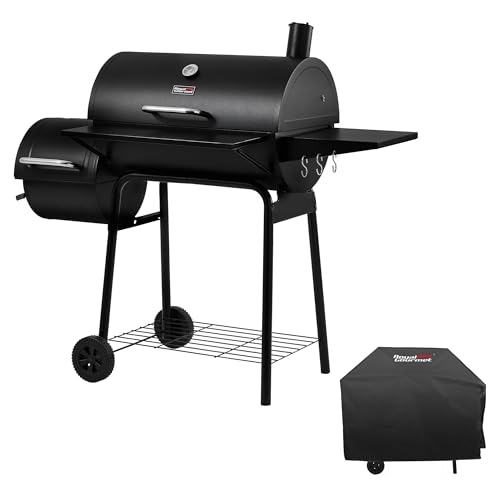
This is the shape most people picture when they hear “Texas smoker”: a long barrel cooking chamber with a smaller firebox bolted to one end. Heat and smoke travel from the firebox across the meat, so the end nearest the fire cooks hotter than the far end, which an experienced cook uses to their advantage.
Royal Gourmet lists 824 square inches in total: 475.3 square inches of porcelain-enameled steel wire grates in the barrel, a 151-square-inch warming rack and 197.3 square inches in the offset smoker box. The barrel works as a charcoal grill too, with a charcoal pan that adjusts to two heights and holds up to 4.4 pounds of coal, so you can smoke a pork shoulder low and slow, then grill onions and chiles for the side.
The offset box is firmly attached to the grill, per the listing, with a side door for adding charcoal and removing ash and an air vent to stoke the fire. A lid-mounted thermometer shows the temperature, front and side tables give you workspace, and the bottom shelf holds up to 20 pounds. This listing includes a heavy-duty fabric cover, and the warranty is one year.
The trade-off with an entry-level offset is generally the steel. Thinner steel tends to lose heat faster on a windy day and lets smoke escape around the doors, so expect to manage the fire more often than you would on a heavier pit or an insulated cooker.
Why we like it
- Traditional horizontal offset layout
- 824 sq in in total, including the offset box
- Smokes and grills, with a two-height charcoal pan
- Cover included
Key specifications
| Model | CC1830SC |
|---|---|
| Type | Barrel charcoal grill with offset smoker |
| Fuel | Charcoal and wood |
| Cooking area | 475.3 sq in grates; 151 sq in warming rack; 197.3 sq in offset smoker |
| Temp control | Air vent, adjustable charcoal pan, lid thermometer |
| Water pan | Not stated in the listing |
| Weight | Not stated in the listing |
| Warranty | 1 year |
Why we recommend it
Choose it if you want to learn the stick-burner style of barbecue on a smaller scale, and like having a charcoal grill in the same barrel. It is the traditional pit shape at an entry level.
Skip it if you want a smoker that holds heat on its own. Thin-walled offsets need frequent fuel and air adjustments, and the listing does not give the weight.
Pros and cons
Pros
- Classic offset smoking
- Grills as well as smokes
- Cover and storage shelf included
Cons
- Lighter steel needs more fire tending
- Hot and cool ends to manage
- Weight not stated
5. Char-Griller AKORN 20-inch Kamado – Insulated Steel for Smoking and Searing
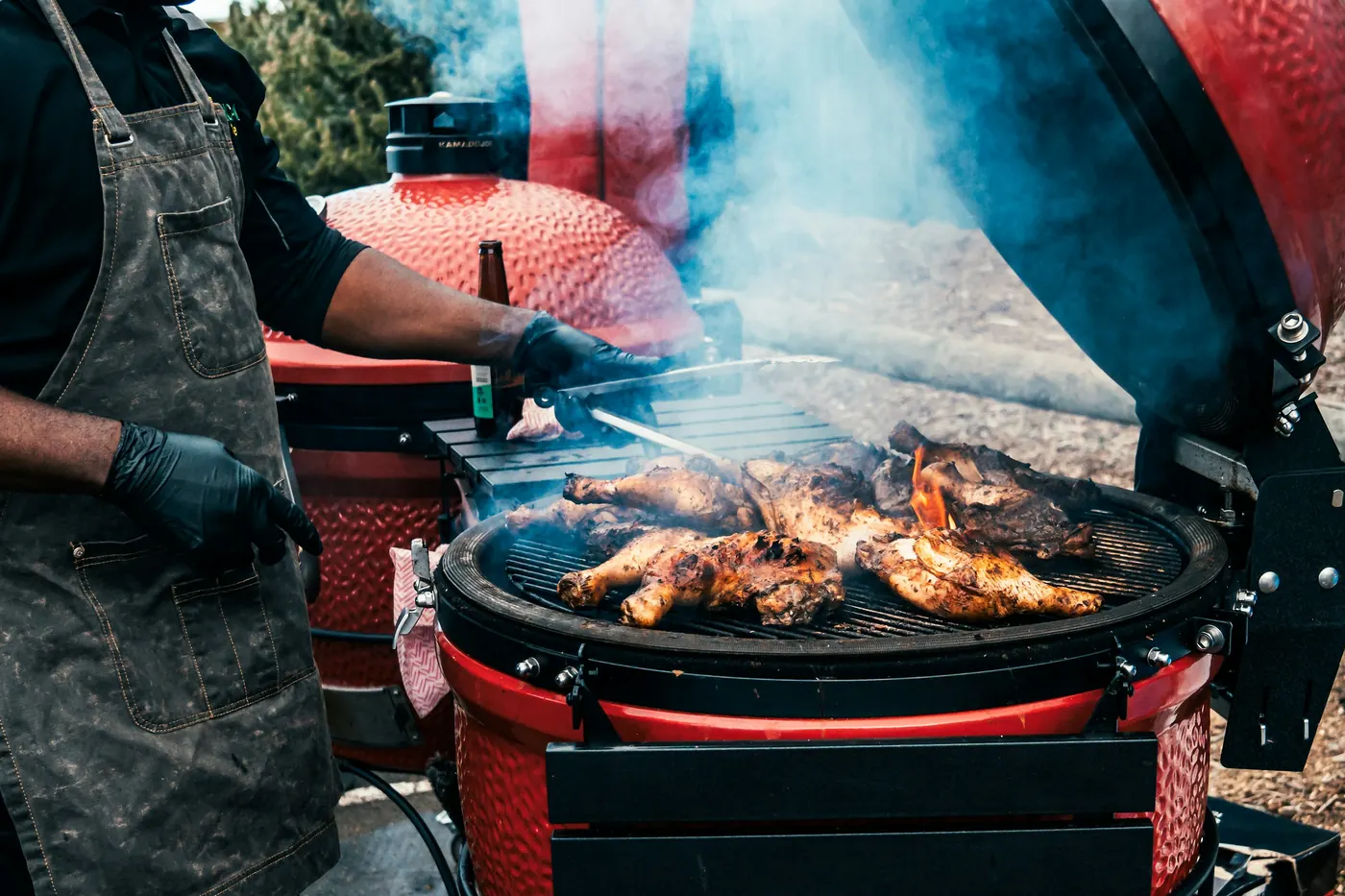
A kamado is an egg-shaped charcoal cooker with thick, insulated walls and a tight lid. Because so little heat escapes, it burns very little charcoal and holds a low temperature for a long time once the vents are set, and with the vents open it gets hot enough to sear steak. Most kamados are ceramic and heavy; the AKORN is triple-wall insulated steel, which makes it lighter and less fragile.
Char-Griller lists 445 square inches of total cooking space (325 square inches on the main grate), a 20-inch cooking diameter and a range of 200 to 700°F. The grates are cast iron, a removable stainless steel warming rack adds space, and indexed top and bottom dampers let you return to a setting that worked last time. An EasyDump ash pan, a grate lifter, 8-inch locking casters and folding side shelves round it out.
That range covers a lot of Mexican cooking: a low smoke for pork shoulder or chicken, then high heat for carne asada or the skirt steak behind sizzling fajitas. For long smokes you set up indirect heat with a deflector, which kamado cooks generally buy separately; check what your package includes.
Char-Griller gives the grill weight as 88.2 pounds. The Amazon listing describes a one-year repair-or-replace warranty, while the maker’s page shows a five-year badge, so confirm the terms when you register it.
Why we like it
- Triple-wall insulated steel holds heat efficiently
- 200 to 700°F range, per Char-Griller
- 445 sq in total with cast iron grates
- Indexed dual dampers and a built-in gauge
- EasyDump ash pan and locking casters
Key specifications
| Model | E16620 |
|---|---|
| Type | Kamado (insulated steel) |
| Fuel | Charcoal, with wood chunks for smoke |
| Cooking area | 445 sq in total; 325 sq in primary |
| Temp control | Indexed top and bottom dampers; built-in gauge; 200–700°F |
| Water pan | No (not part of a kamado setup) |
| Weight | 88.2 lb (Char-Griller) |
| Warranty | 1-year repair or replace (Amazon listing); maker’s page shows 5 years |
Why we recommend it
Choose it if you want one charcoal cooker that does slow smoking on Saturday and steaks on Tuesday, without the weight and fragility of ceramic. It is the most fuel-efficient charcoal option on this list.
Skip it if you need room for a whole brisket or several shoulders. A 20-inch grate fills up fast, and the steel shell will not last as long outdoors as ceramic if it is left uncovered.
Pros and cons
Pros
- Smokes low and sears hot
- Efficient on charcoal
- Lighter than ceramic kamados
- Easy ash cleanup
Cons
- Limited room for big cuts
- Heat deflector may be extra
- Warranty terms differ between sources
6. Masterbuilt 30-inch Digital Electric Smoker – Set It and Let It Run
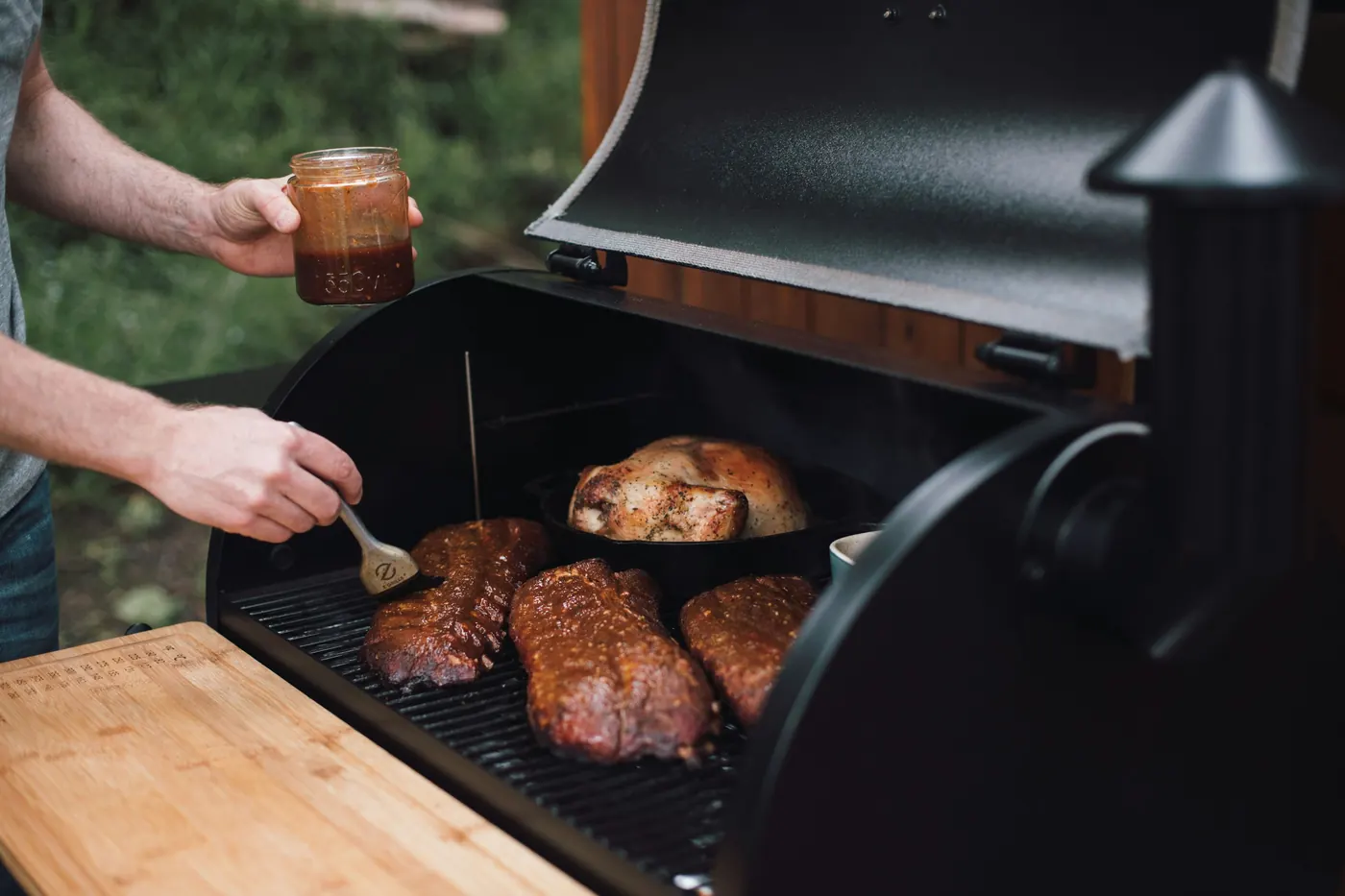
An electric smoker is an insulated cabinet with a heating element at the bottom, a tray of wood chips above it and racks for the food. You set a time and a temperature on the panel, and the element holds it. There is no fire to manage, which is why electric smokers are where many home cooks start.
This Masterbuilt has 710 square inches of cooking space on four chrome-coated racks, and Masterbuilt says this 30-inch size fits up to 7 chickens, 2 turkeys, 4 pork butts or 4 racks of ribs. Masterbuilt gives the temperature range as 100 to 275°F, so it is built for low and slow work rather than searing. The patented side wood chip loader lets you add chips without opening the door, which keeps heat and smoke in the cabinet.
A removable water bowl adds moisture and catches drippings, a rear grease tray slides out for cleaning, and an adjustable air damper on top controls the smoke. The listing for this version, the MB20071117, does not mention a leg kit or a viewing window, so plan on a sturdy stand and confirm those details if they matter. It confirms the digital panel, insulated body, side chip loader, chrome racks and 710 square inches, and it states a one-year warranty; the other details here come from Masterbuilt’s 30-inch digital line.
Electric smokers make a milder, cleaner smoke than charcoal or wood fires, which suits fish, chicken, cheese and chiles. If you want deep bark on brisket, expect a softer result than from a live fire.
Why we like it
- Digital time and temperature control, 100–275°F
- 710 sq in on four racks
- Side wood chip loader keeps the door shut
- Removable water bowl and rear grease tray
Key specifications
| Model | MB20071117 |
|---|---|
| Type | Vertical electric cabinet smoker |
| Fuel | Electric heat; wood chips for smoke |
| Cooking area | 710 sq in on four racks (Masterbuilt) |
| Temp control | Digital panel; 100–275°F; top air damper |
| Water pan | Yes, removable water bowl |
| Weight | Not stated by Masterbuilt |
| Warranty | 1 year (Masterbuilt) |
Why we recommend it
Choose it if you want the simplest path to smoked food: plug it in, set it, load chips now and then. It suits beginners, busy weekends and cooks who mostly smoke poultry, fish, sausages and peppers.
Skip it if you want high-heat cooking or a heavy bark. It tops out at 275°F, and electric smoke is lighter than a live wood or charcoal fire.
Pros and cons
Pros
- Easiest temperature control here
- Add chips without opening the door
- Generous four-rack capacity
- One-year warranty stated
Cons
- Maximum 275°F, no searing
- Milder smoke than a live fire
- Needs an outdoor outlet
7. Bradley Digital 4-Rack Smoker – Automatic Wood Feed for Long Smokes

Bradley’s cabinet solves the one chore an ordinary electric smoker still leaves you: feeding wood. Instead of loose chips, it burns Bradley’s compressed wood bisquettes, which a generator pushes onto a small burner one at a time. The listing says you load the bisquettes and smoke for up to 9 hours without topping up.
The cabinet takes four racks, each 11 by 13 inches, for 572 square inches of rack area by the listing’s own figures, and the interior is stainless steel, which Bradley says will not rust. The smoker measures 19 by 22 by 35 inches and has digital controls. It is a natural-draft design, so smoke drifts up through the food and out of a top vent rather than being pushed by a fan.
Because the smoke comes in steady, small doses, cabinets like this are popular for fish, jerky, sausages and cheese as well as poultry and pork. For a Mexican kitchen, think smoked jalapeños and serranos, smoked salt, or a pork loin for tacos.
The key thing to know before you buy is the fuel. The automatic feed works with Bradley’s own bisquettes rather than generic chips or chunks, so you are committing to the brand’s wood for as long as you own it.
Why we like it
- Automatic bisquette feed, up to 9 hours of smoke per load
- Stainless steel interior, per the listing
- Four racks, 572 sq in of rack area
- Digital controls in a compact cabinet
Key specifications
| Model | BTDS76P |
|---|---|
| Type | Vertical electric cabinet with automatic wood feeder |
| Fuel | Electric heat; Bradley wood bisquettes for smoke |
| Cooking area | Four 11 x 13-inch racks (572 sq in rack area) |
| Temp control | Digital controls |
| Water pan | Not stated in the listing |
| Weight | Not stated in the listing |
| Warranty | See manufacturer (listing) |
Why we recommend it
Choose it if you want long, steady, hands-off smoke for fish, sausages, cheese and chiles, and you do not mind buying bisquettes. It is the most automatic smoker on this list.
Skip it if you want to use whatever wood you like or need room for big cuts. The feeder takes only Bradley bisquettes, and four racks of 11 by 13 inches will not hold a brisket.
Pros and cons
Pros
- Smoke feeds itself for hours
- Stainless interior
- Steady, light smoke for delicate foods
Cons
- Uses only Bradley bisquettes
- Small racks for big cuts
- Weight and warranty not stated in the listing
8. Dyna-Glo 36-inch Vertical Propane Smoker – Steady Heat Without an Outlet
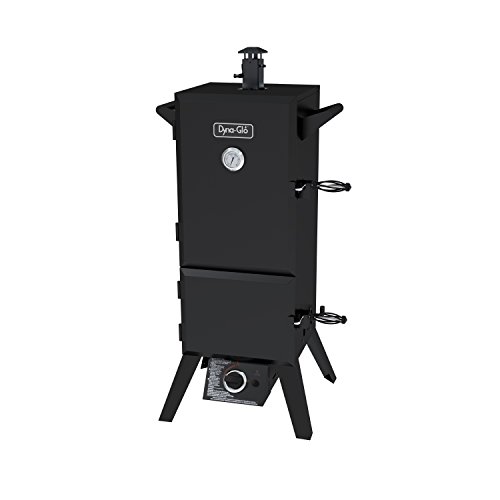
A propane smoker works like an electric cabinet, but a gas burner supplies the heat, so it runs anywhere you can safely set a tank: a back corner of the yard, a ranch, a campsite. That makes it a good choice where there is no outdoor outlet.
Dyna-Glo lists 784 square inches of cooking space on four adjustable steel wire racks, heated by a 15,000 BTU cast iron burner with push-button electronic ignition and a large control dial. A porcelain-enameled steel wood chip box with a lid sits over the burner, with a porcelain-enameled water bowl above it.
The double-door design is the thoughtful part: you can open the lower door to add chips or water without letting the heat out of the upper chamber where the food is. Sliding dampers on the top and sides fine-tune the smoke and heat, and a gauge on the door shows the temperature. The listing gives the assembled size as 27 by 19.2 by 46.46 inches and the weight as 54 pounds, and the smoker is CSA certified with a one-year limited warranty.
Before the first cook and at the start of every season, check the hose and connections for leaks. NFPA’s grilling tip sheet describes the soap-and-water test: brush a light soap solution on the hose, and bubbles mean a leak.
Why we like it
- 15,000 BTU burner with push-button ignition
- 784 sq in on four adjustable racks
- Separate lower door for chips and water
- Porcelain-enameled chip box and water bowl
- CSA certified; 54 lb
Key specifications
| Model | DGY784BDP |
|---|---|
| Type | Vertical propane cabinet smoker |
| Fuel | Propane (LP); wood chips for smoke |
| Cooking area | 784 sq in on four racks |
| Temp control | Burner control dial; top and side dampers; door gauge |
| Water pan | Yes, porcelain-enameled water bowl |
| Weight | 54 lb |
| Warranty | 1 year limited |
Why we recommend it
Choose it if you want cabinet-style convenience without an outlet, or a smoker whose lower door lets you add chips without opening the food chamber. It suits cooks without an outdoor outlet and anyone who already keeps propane for a grill.
Skip it if you want precise digital control. You set the heat with a dial and dampers, so you still watch the gauge, and wind can affect the flame.
Pros and cons
Pros
- No power outlet needed
- Double doors keep heat in
- Water bowl and chip box included
- Weight and warranty clearly stated
Cons
- Manual dial, no digital control
- Tank to buy and refill
- Gauge is described as decorative
How to choose a smoker for home cooking
Six things decide which smoker suits you. Brand matters less than you might think; the fuel and how much attention you want to give the fire matter more.
1. Fuel and flavor
Charcoal and wood give the deepest smoke and the darkest bark, because the food sits in the smoke of a live fire. Electric and propane smokers make heat cleanly and add smoke from a small tray of chips, so the flavor is lighter. Neither is wrong: light smoke suits fish, chicken, cheese and chiles, and heavy smoke suits brisket and beef cheek. If you love the taste of a chipotle, which is a ripe jalapeño dried in wood smoke as our guide to what a chipotle pepper is explains, a live fire gets you closest to that flavor.
2. How much tending you want to do
Rank the styles by effort and it runs from offsets (most work, most flavor control), through water smokers and kamados (moderate), to gravity-fed charcoal, propane and electric (least). Be honest about your Saturdays. A smoker that needs a fuel check every 45 minutes will make great food for someone who enjoys that and frustrate someone who does not.
3. Capacity
Count what you cook most. A whole packer brisket needs a long, flat grate; ribs and shoulders fit almost anywhere. Cabinet smokers stack food vertically, so they hold a lot for their footprint, while a kamado or a 14-inch water smoker suits a family meal. Look at the grate dimensions as well as the square inches: several small racks add up to a big number but will not take one large cut.
4. Temperature range
Most low-and-slow smoking happens somewhere around 225 to 275°F. Every smoker here reaches that range, but only the kamado and the Gravity Series go hot enough to sear. If you want one cooker for both smoked meats and grilled steak, that narrows the choice.
5. Space, power and fuel supply
Electric smokers and the Gravity Series need an outdoor outlet. Propane needs a tank and a place to store it. Charcoal smokers need somewhere to keep bags of fuel dry and a metal can for cold ash. Measure the spot you have in mind, and remember to allow clearance around it, as the safety notes below explain.
6. Water pan or no water pan
A water pan between the fire and the food steadies the temperature and adds moisture, which is why water smokers and cabinet smokers are forgiving. Offsets and kamados manage heat with airflow and mass instead. Neither approach is better for flavor; the water pan simply makes steady heat easier to hold.
Where pellet grills fit
Pellet grills feed compressed wood pellets into a small fire pot with an auger and a fan, and a controller holds the temperature, much like the Gravity Series does with charcoal. They are a sixth style worth considering if you want wood flavor with digital control. We cover the fuel in our guide to the best smoker pellets.
How we chose these eight smokers
We started from what a Mexican restaurant kitchen asks of a smoker: steady low heat for long cooks, real smoke flavor, enough room for the cuts you actually cook, and controls a home cook can learn. We then looked at every common style and chose the clearest example of each that was in stock on Amazon in the United States when we checked, confirming specifications on the maker’s own website or, where a maker publishes few details, on the brand’s own Amazon listing (each review says which). We left out smokers that were low in stock or on back order when we checked, including the Oklahoma Joe’s offsets, the 18-inch Weber Smokey Mountain and the Kamado Joe ceramic kamados, and listings from sellers with no identifiable maker. We have not cooked on every model here; where we describe how a style behaves, we say so in general terms, and specifications come from the makers and listings.
Smoker safety basics
Every smoker here is an outdoor appliance. The U.S. Fire Administration says to use propane, charcoal and wood pellet grills outside only, because indoor use can cause a fire or carbon monoxide poisoning, and to place the grill well away from siding and deck railings and out from under eaves and overhanging branches. The Consumer Product Safety Commission is blunt about charcoal: never use it to cook or provide heat inside enclosed areas such as homes, garages, tents, campers or vehicles, because the carbon monoxide can kill you.
NFPA’s grilling tip sheet adds a few rules that apply to smokers just as much: keep children and pets at least three feet away, never leave a lit cooker unattended, clean out grease and fat buildup, and let coals cool completely before you dispose of them in a metal container. If you use starter fluid, use only charcoal starter fluid and never add it to a fire that is already lit; a chimney starter avoids fluid altogether.
Smoked meat for tacos, the safe way
Smoke flavors meat, but it is the internal temperature that makes it safe, so use a food thermometer. The USDA Food Safety and Inspection Service lists 145°F with a rest of at least 3 minutes for whole cuts of beef and pork, 160°F for ground meats and 165°F for all poultry. Tough barbecue cuts like brisket, chuck and pork shoulder are cooked well past those minimums, because it takes far more time and heat for their connective tissue to soften enough to slice or shred.
That is where a smoker earns its place in a Mexican kitchen. Smoked beef cheek or chuck, pulled into strands, makes a smoky cousin of barbacoa, although true barbacoa is steamed in a covered pit rather than smoked, as our guide to what barbacoa is explains. Smoked brisket chopped for tacos wants only warm corn tortillas, onion, cilantro and a salsa; a spoonful of chipotle in adobo stirred into the salsa doubles down on the smoke, and our pick of the best chipotle peppers in adobo sauce will point you to a good can.
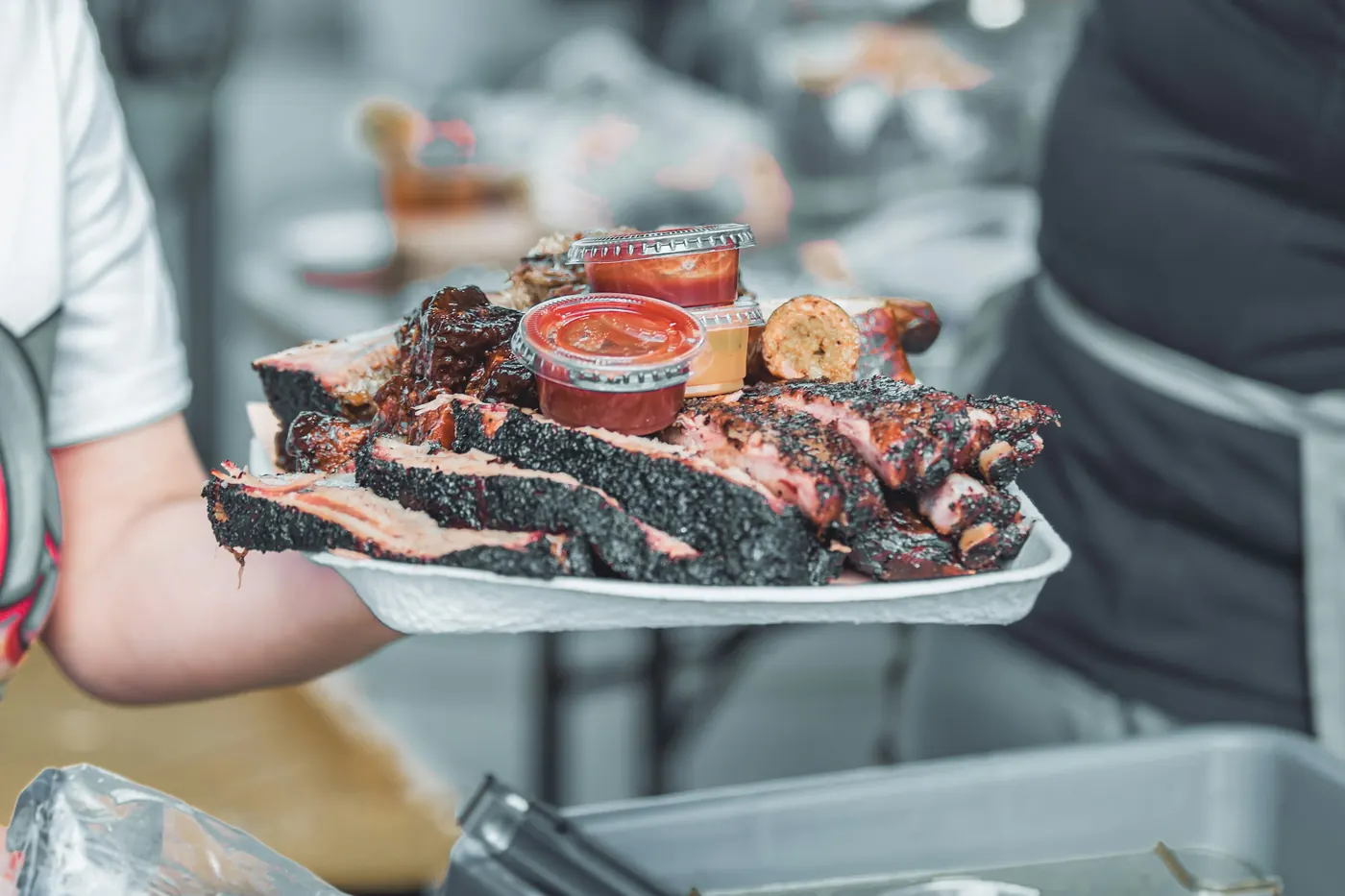
Smoker questions, answered
What is the best smoker for home use?
For most people learning barbecue, a vertical water smoker such as the Weber Smokey Mountain: it is simple, steady and uses real charcoal and wood. If you want the least effort, an electric smoker like the Masterbuilt 30-inch Digital does the temperature work for you.
What is the best smoker for the money?
The one that matches how you cook. A smoker you will use every weekend is better value than a bigger one that stays covered. Water smokers and electric cabinets give you the most smoked food for the least fuss; offsets and gravity-fed cookers make sense once you are smoking often and for bigger groups.
Which smoker brands are worth looking at?
Weber, Masterbuilt, Dyna-Glo, Royal Gourmet, Char-Griller and Bradley all publish specifications for the smokers above, and Oklahoma Joe’s, Kamado Joe and Camp Chef are well known too, though their smokers were low in stock when we checked. Choose the style first, then the brand.
Is an electric smoker as good as charcoal?
It is easier, not the same. Electric smokers hold temperature better and need less attention, but the smoke is lighter and the bark is softer than from a live fire. For fish, poultry, cheese and chiles that is often an advantage; for brisket, many cooks prefer charcoal and wood.
Do you need a water pan in a smoker?
Not always. Water smokers and cabinet smokers are designed around one, and it helps them hold steady heat. Offsets and kamados manage heat with airflow and mass instead, and work without one.
Our final word on smokers
Buy the Weber Smokey Mountain if you want to learn charcoal smoking on a simple, forgiving cooker. Choose the Masterbuilt Gravity Series for charcoal flavor with digital control, the Dyna-Glo vertical offset for crowds, and the Masterbuilt 30-inch Digital Electric if you want to set a temperature and get on with your day. Whichever you choose, keep it outdoors, use a thermometer in the meat, and give tough cuts the time they need.
If you would rather grill than smoke low and slow, compare our guides to the best pellet grill and the best charcoal grill.
New to smoking? See our guide to the best smokers for beginners.
Adding smoke to a gas grill? See the best smoker boxes and the best smoker wood chips.
Related guide: Best meat injector.
Related guide: Best butcher paper for smoking.
Related guide: Best smoking meat cookbook.
Related guide: Best electric smoker.
Related guide: Best smoker cover.
Smoke runs all through Mexican cooking, from chipotles to the cooking methods behind regional dishes. And if you would rather someone else did the cooking tonight, see the menu or call to order.