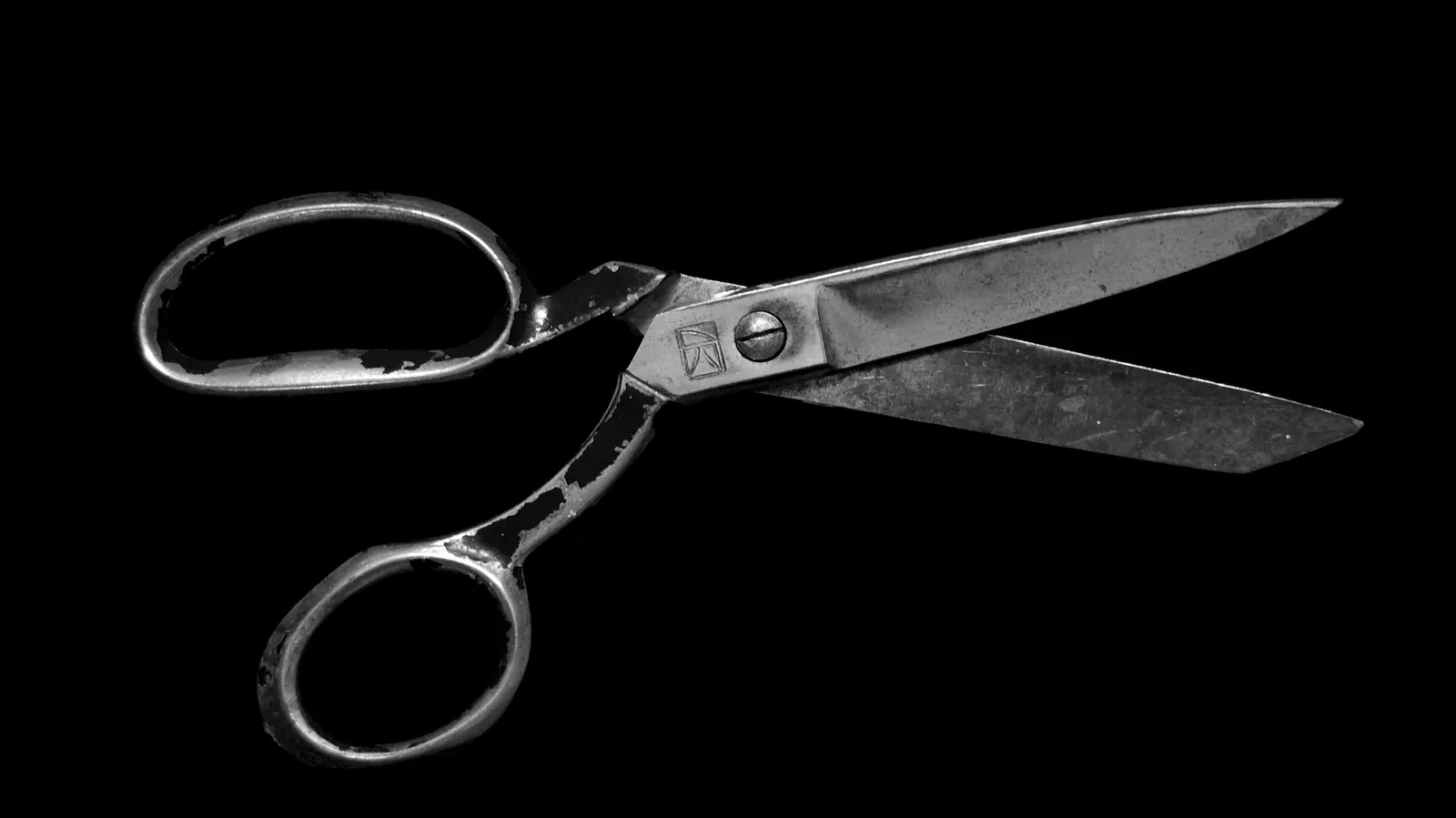
Most kitchens have a pair of scissors somewhere in a drawer, and many cooks wonder whether they also need kitchen shears. The words get used loosely. Amazon sells the same kind of tool as “kitchen scissors” and as “kitchen shears,” and the makers are not consistent either. But there is a real difference between a pair of desk scissors and a pair of shears built for food, and it shows the first time you try to cut along a chicken’s backbone or snip a stiff, dried chile stem.
This guide explains what actually differs: the blades and their edges, the handles, the pivot and whether the blades come apart, and the notches and tools that kitchen shears add. Then it sets out when each one wins, and names a pick for each side. Every pick also appears in our full roundup of the best kitchen shears.
Julia’s earns a commission on purchases made through links on this page, at no cost to you. Recommendations are based on what a restaurant kitchen looks for, product specifications and verified buyer reports.
Quick verdict: kitchen shears or scissors?
Buy kitchen shears if you cut raw chicken, meat or anything tough: their thicker, serrated blades grip, their handles give more leverage, and good ones come apart so you can wash the pivot. Keep ordinary scissors for paper, tape and string, and choose small kitchen scissors for herbs, chile stems and fine trimming. If you buy one tool for the kitchen, make it a pair of take-apart kitchen shears.
The table sets out the kitchen shears vs scissors differences; the sections after it explain each one.
Kitchen shears vs scissors, side by side
| Kitchen shears | Regular scissors | |
|---|---|---|
| Blades | Thicker; one blade often serrated or micro-serrated | Thinner; usually two plain edges |
| Handles | Larger, often cushioned; built for a strong grip when wet | Sized for paper and light cutting |
| Pivot | Many come apart for washing | Usually a fixed screw or rivet |
| Extras | Bone notch, bottle opener, nutcracker, herb stripper | Usually none |
| Best jobs | Chicken, meat, chiles, herbs, packaging | Paper, tape, string, crafts |
| Cleaning | Many are dishwasher safe; check the maker | Check the maker; a fixed pivot is harder to clean |
The words themselves: why the names overlap
The difference between scissors and shears is fuzzier than it sounds. Ernest Wright, a Sheffield scissor maker, gives the industry’s usual answer in its workshop notes: scissors are smaller and used in one hand, while shears are larger and sometimes need two, often with one handle loop, or bow, bigger than the other so it fits several fingers. Then it adds that this is incomplete: “The difference between scissors and shears in English is rooted in etymology and class, not just size.” “Scissors” came into English from French, and “shears” is the older Germanic word.
In the kitchen aisle, that means a product name tells you little. Henckels’ take-apart model is sold as “Come Apart Kitchen Scissors” and reviewed by America’s Test Kitchen as “Take-Apart Kitchen Shears.” So the useful question is not what a tool is called but how it is built. When this guide says “kitchen shears,” it means a tool designed for food: heavy blades, a serrated grip, and handles made for force.
Blades and edges
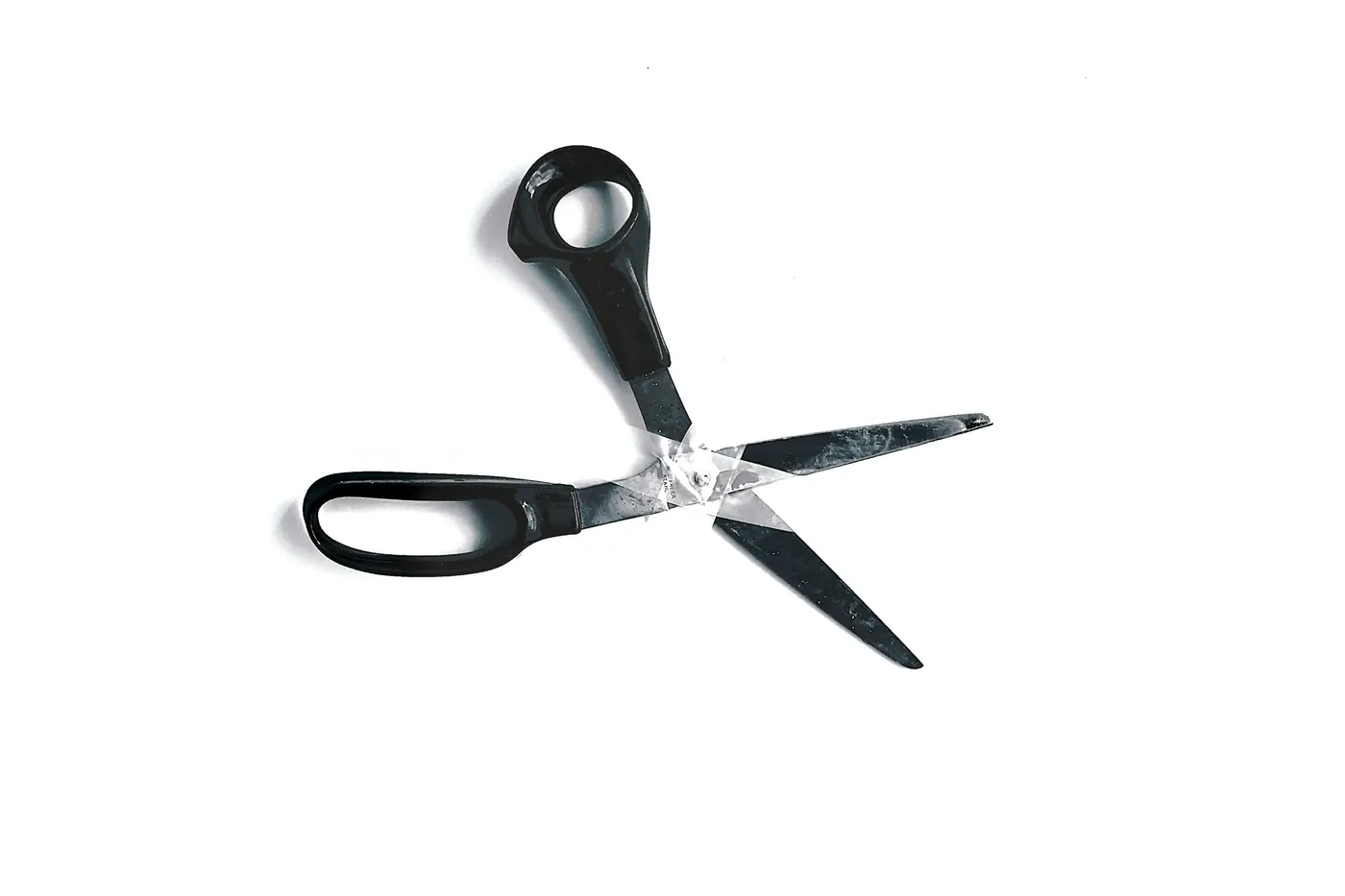
The biggest working difference is on the blades. Desk scissors have two thin, plain edges that meet cleanly, which is perfect for paper. On a raw chicken thigh, those edges slide on the wet skin and push the food away instead of cutting it.
Kitchen shears deal with that in two ways. First, one blade is usually serrated or micro-serrated. America’s Test Kitchen found in its kitchen shears review that “the deeper and sharper the serrations, the more securely they held the food.” The serrated blade holds the chicken skin or the green onion still while the other, sharp blade cuts. Second, the cutting blade is sharpened more like a knife: ATK found that the narrower the angle on the cutting blade, the sharper it was, and that very wide angles tended to wedge into food.
Kitchen shears blades are also thicker and longer. ATK preferred blades of at least 3.5 inches, and its winning Shun Multi-Purpose Shears had the longest it measured, 4.38 inches. Longer, stiffer blades take fewer strokes along a backbone and do not flex when they meet cartilage.
Handles and leverage
Scissors handles are sized for paper. Kitchen shears handles are larger and usually coated, because they are used with wet, greasy hands and with real force. ATK found plastic-covered bows “easier to hold and operate, especially when wet,” and preferred moderately sized bows that suit both large and small hands. It also favored identically sized bows on both sides, so left- and right-handed cooks can share one pair.
Poultry shears take leverage further. Spring-loaded models such as OXO’s open by themselves after each cut, and OXO says the spring gives extra leverage while reducing hand strain. That is why a pair of poultry shears can cut through rib bones that would stop a pair of scissors.
The pivot: why take-apart matters
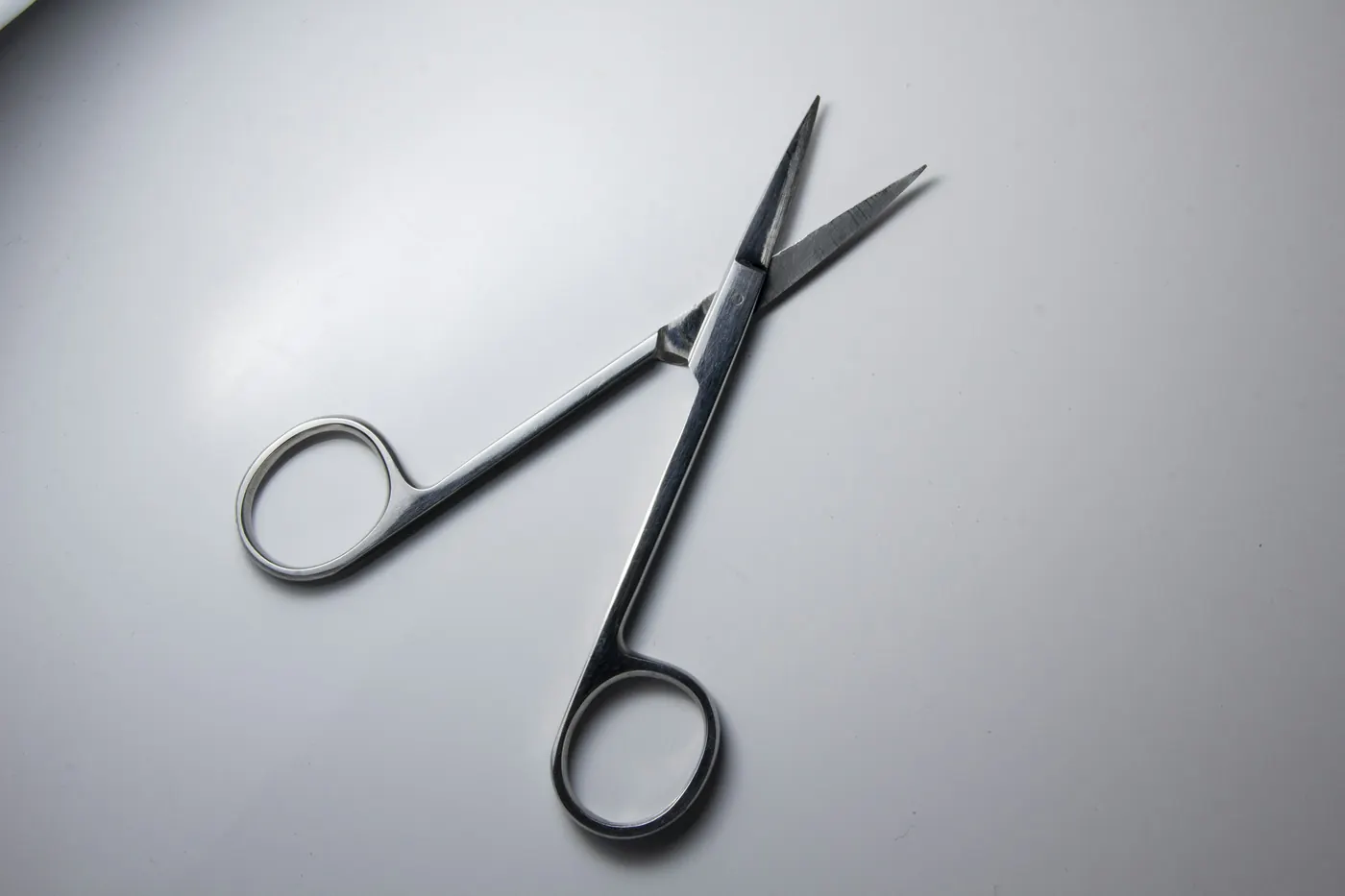
A pair of desk scissors usually has a fixed screw or rivet at the pivot. That is fine for paper, but in a kitchen the pivot is where food and raw chicken juice collect. The CDC’s food safety advice is to wash utensils, cutting boards and countertops with hot, soapy water after preparing each food item, and that is hard to do well around a closed joint.
Many kitchen shears solve this by coming apart. ATK “strongly preferred shears that could be easily separated for easy cleaning,” and both its winner and its Best Buy come apart. You open the blades past a set point, slide them apart, wash and dry each half, and slide them back together. Some, like the Henckels take-apart model, are also dishwasher safe according to the maker; others, like Wüsthof’s come-apart shears, are not. Always check the maker’s care instructions.
Notches, openers and other tools
Kitchen shears often carry small extras that scissors do not. The most useful is a bone notch: a curved cutout near the pivot that holds a small bone or a stem still while you cut. Shun’s Multi-Purpose Shears add a bottle opener, a nutcracker and tips that work as a screwdriver or jar opener. OXO’s Multi-Purpose shears have a herb stripper in the handle for pulling leaves off thyme or oregano stems.
None of these extras makes a pair of shears cut better. They are useful if they suit how you cook, and they are a reason to pick one pair over another once the blades and handles pass.
Where small kitchen scissors still win
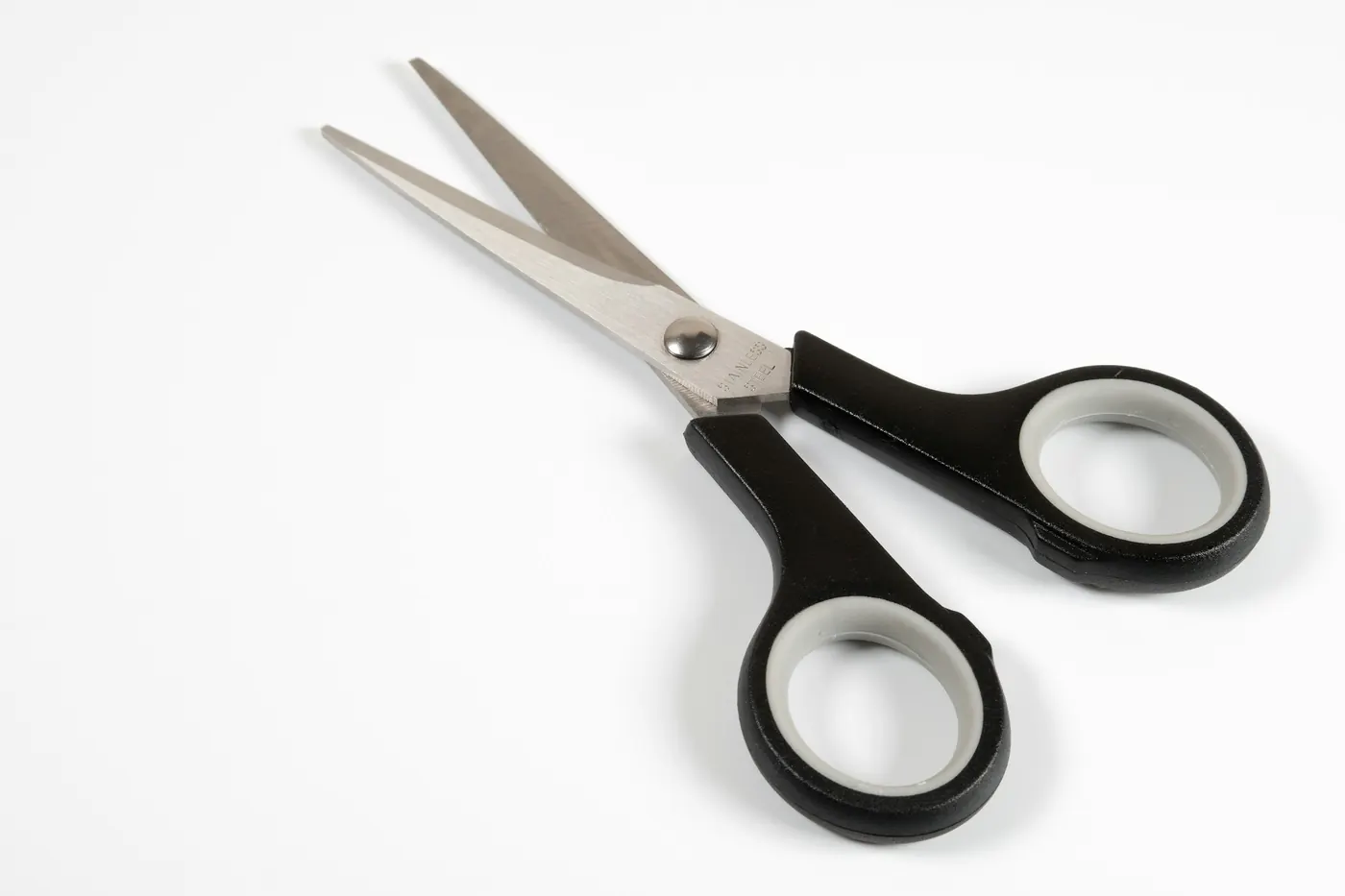
Bigger is not always better. A small pair of kitchen scissors, like the Joyce Chen Unlimited, puts the cutting point close to your hand. That makes it more precise for snipping the stem off a dried guajillo, cutting chives over a bowl of beans, trimming the ends off green beans or cutting a stack of tortillas into strips. Joyce Chen’s listing says its short blades still cut through chicken bones, but for a whole bird a larger pair is easier on the hand.
Ordinary scissors win for everything that is not food: paper, tape, string and packaging. Keeping a separate pair for those jobs also keeps your kitchen shears out of the craft drawer and away from glue and dirt.
Choose kitchen shears if… / Choose scissors if…
Choose kitchen shears if…
- You spatchcock chickens for pollo asado or cut up whole birds.
- You trim fat and skin from raw meat, or cut bacon straight into the pan.
- You want a tool you can take apart and wash after raw meat.
- You cook with wet hands and need a grip that will not slip.
Choose regular or small kitchen scissors if…
- You mostly snip herbs, chiles and green onions.
- You want precision more than power.
- You need a pair for paper, string and packaging, kept apart from food.
- You have small hands and find large shears awkward.
Our picks for kitchen shears vs scissors
All three picks also appear in our best kitchen shears roundup, where the Shun is the top pick. We repeat them here on purpose, as the clearest example of each side. All three were in stock on Amazon when we checked.
1. Shun Multi-Purpose Shears – Kitchen Shears at Their Best
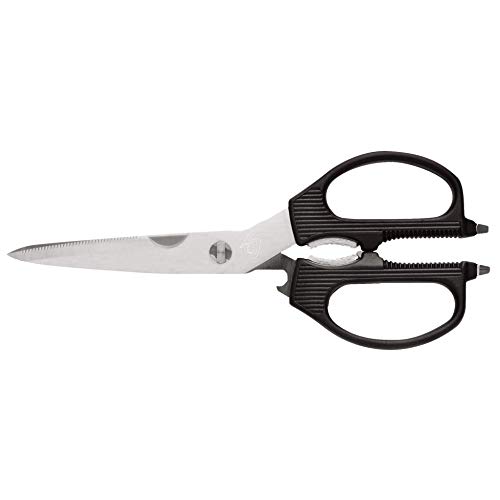
These are the shears that won America’s Test Kitchen’s kitchen shears review, and they show every feature this guide describes. ATK wrote that “the shears’ razor-sharp cutter blade sliced through every kind of food with equal ease,” and credited deep serrations on the other blade for holding slippery food.
ATK measured 4.38 inches of blade, the longest it tested, and found the symmetrical handles comfortable for left- and right-handed cooks. Shun’s listing describes 420J2 stainless steel blades that come apart for cleaning, plus a bone notch, a bottle opener, a nutcracker and tips that work as a screwdriver or jar opener. Retailers that carry the model say to wash it by hand.
Why we like it
- Winner of ATK’s kitchen shears review
- Long, sharp blade with deep serrations
- Comes apart for cleaning
Key specifications
| Model | DM7300 |
|---|---|
| Type | All-purpose kitchen shears |
| Blade length | 3.5 in (listing); 4.38 in measured by ATK |
| Steel | 420J2 stainless; one serrated blade |
| Comes apart | Yes |
| Dishwasher-safe (maker) | Not stated by Shun; retailers say hand wash |
| Handedness | Ambidextrous (ATK) |
| Warranty | Limited lifetime |
Why we recommend it
It suits a cook who cuts raw chicken regularly and wants one pair that also handles herbs and chiles.
Skip it if you want a dishwasher-safe pair at a low price; the Henckels below is the cheaper take-apart choice.
Pros and cons
Pros
- Top-rated by ATK
- Strong on chicken
- Built-in tools
Cons
- Hand wash
- Highest price of the three
2. Henckels Take-Apart Kitchen Shears – Budget Shears That Come Apart

ATK named these its Best Buy, describing them as “a touch less sharp and powerful than our favorite.” Its testers praised nimble cuts, micro-serrations that grip slippery food and comfortable plastic bows, though the light weight and loose tension made some feel they had less power.
The listing (model 11517-100) describes corrosion-resistant stainless steel with a micro-serrated edge, break-resistant handles and a serrated section that opens bottles and cracks nuts. The blades come apart, and Henckels says they are dishwasher safe, though it recommends hand washing.
Why we like it
- ATK’s Best Buy
- Comes apart; dishwasher safe
- Micro-serrations grip food
Key specifications
| Model | 11517-100 |
|---|---|
| Type | All-purpose kitchen shears |
| Blade length | 3.5 in (ATK) |
| Steel | Corrosion-resistant stainless; micro-serrated |
| Comes apart | Yes |
| Dishwasher-safe (maker) | Yes; hand washing recommended |
| Handedness | Ambidextrous (ATK) |
| Warranty | Not stated in listing |
Why we recommend it
It suits a cook moving up from desk scissors who wants proper take-apart kitchen shears without a big outlay.
Skip it if you cut through chicken joints every week; ATK found it less powerful than the Shun.
Pros and cons
Pros
- Low price
- Light and nimble
- Dishwasher safe
Cons
- Loose tension (ATK)
- Less keen than the winner
3. Joyce Chen Original Unlimited Kitchen Scissors – Small and Precise

For the scissors side, the Joyce Chen Unlimited is a short pair with big, soft loop handles. Joyce Chen’s listing describes chrome-molybdenum stainless steel blades, handles for left- or right-hand use and a dishwasher-safe build, and says the design lets the scissors cut through chicken bones.
The short blades are what make them useful: the cutting point sits close to your hand, so they are precise for chile stems, herbs and green onions. The pivot is fixed, so the blades do not come apart; wash them promptly after raw meat and dry them open.
Why we like it
- Precise for small jobs
- Left- or right-hand use
- Dishwasher safe, per the listing
Key specifications
| Model | J51-0220 |
|---|---|
| Type | Compact kitchen scissors |
| Blade length | Not stated; 6 in model (Joyce Chen listing) |
| Steel | Chrome-molybdenum stainless |
| Comes apart | No |
| Dishwasher-safe (maker) | Yes |
| Handedness | Left or right hand |
| Warranty | 60 days, defects (Honey-Can-Do) |
Why we recommend it
It suits a cook who wants a small pair by the stove for herbs, chiles and vegetables, alongside a larger pair of shears.
Skip it if it will be your only pair for raw chicken; the blades do not come apart for cleaning.
Pros and cons
Pros
- Precise and light
- Comfortable loop handles
- Dishwasher safe
Cons
- Fixed pivot
- Short warranty
Kitchen scissors vs shears questions, answered
Is there a real difference between kitchen shears and kitchen scissors?
In product names, not much: makers use both words for the same kind of tool. In construction, yes. A tool built for food has thicker, often serrated blades, coated handles for a wet grip, and often a pivot that comes apart. Judge by those features, not the name.
Can I use regular scissors on food?
For a quick snip of herbs, a clean pair will do. For raw meat they are a poor choice: thin, plain blades slip on wet skin, and a fixed pivot is hard to clean. Keep a separate pair for food.
What is the difference between kitchen shears and poultry shears?
Poultry shears are kitchen shears built for bones: curved blades, a notch to hold the bone, and usually a spring that opens the handles and adds leverage. All-purpose kitchen shears handle a chicken backbone too, and they are better at everything else.
Should kitchen shears come apart?
It helps. America’s Test Kitchen strongly preferred shears that separate for cleaning, because food collects around the pivot. If yours do not come apart, wash them right after cutting raw meat and let them dry open.
Can I put kitchen shears in the dishwasher?
Some, yes; check the maker. Henckels and OXO say certain models are dishwasher safe, while Wüsthof says its come-apart shears are not, and many makers recommend hand washing either way.
Which to keep in your kitchen drawer
For most kitchens, the answer is a pair of take-apart kitchen shears for food and a separate pair of plain scissors for paper and packaging. Add a small pair of kitchen scissors if you snip a lot of herbs and chiles. Our best kitchen shears guide compares nine pairs in full, and our best chef knife and best cutting board guides cover the tools that work alongside them.
For the herbs that end up under those scissors, see Mexican herbs explained. Or leave the prep to us: see the menu or call to order.