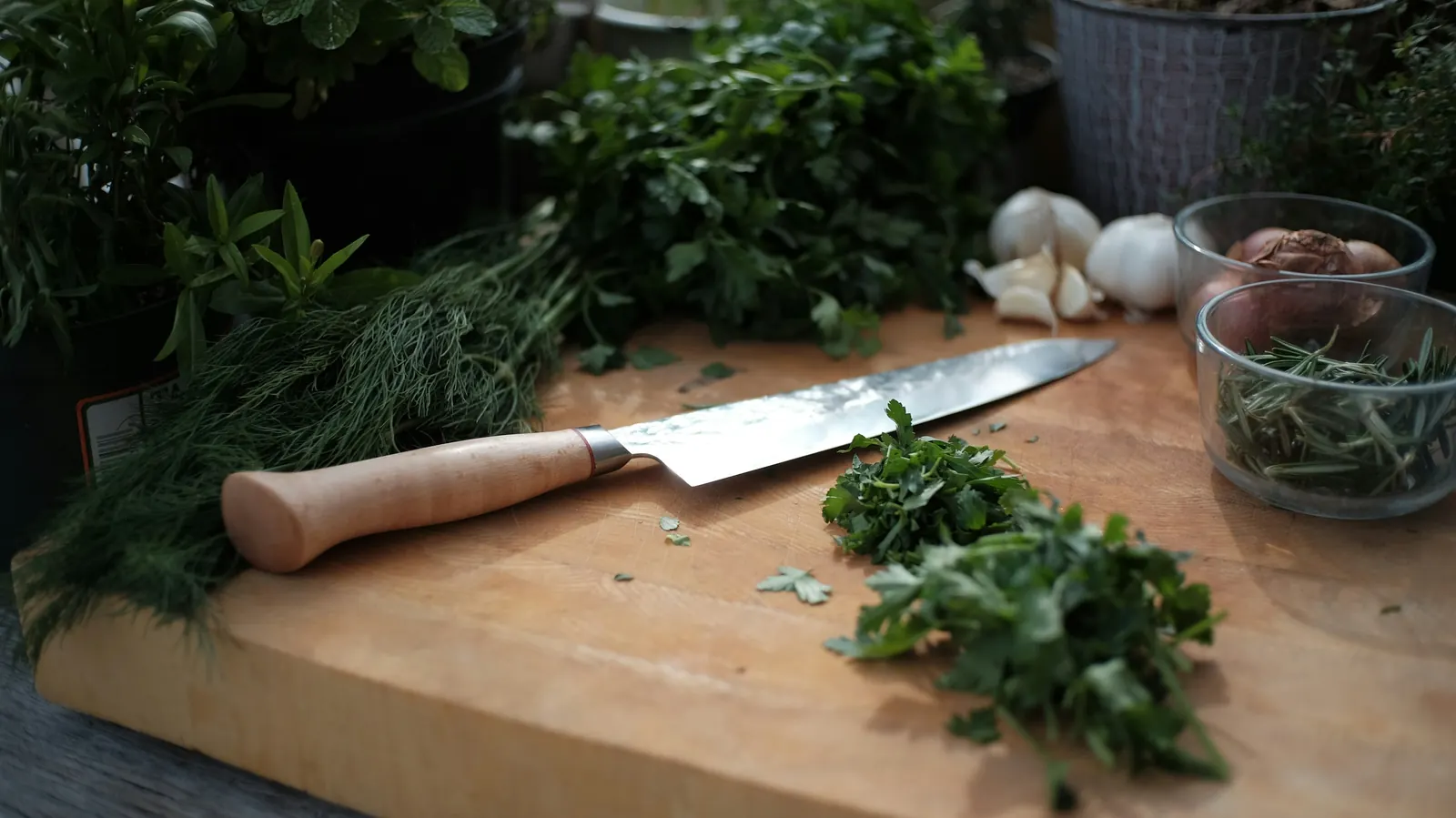
Mexican cooking uses a short list of herbs and uses them hard. Four or five do almost all the work.
Two of them are not interchangeable with anything else, which is why some dishes cannot be made properly outside Mexico.
The short answer
Cilantro is the everyday one, used raw and added at the end. Mexican oregano is a different plant from Mediterranean oregano and tastes of citrus and anise rather than pine. Epazote is a pungent herb cooked into beans and soups. Hoja santa is a large anise-scented leaf used as a wrapper. None of them substitute cleanly for each other.
Cilantro
The one everyone has met, and the only one that shows up raw.
Na’atik Language and Culture Institute, in its guide to the Mexican-Maya pantry, calls cilantro an almost ever-present ingredient in Mexican cuisine, used both as a flavoring and as a bright garnish. That double role is the point.
It is added at the end rather than cooked, because heat destroys it. Cilantro simmered into a sauce for twenty minutes contributes almost nothing.
The soap thing is real and genetic. A minority of people carry a variant that makes the aldehydes in cilantro read as soapy. It is not fussiness, and there is no fixing it — which is worth knowing before you assume everyone at the table wants it.
The stems are not a throwaway. They carry more flavor than the leaves and are commonly blended into salsas whole.
Mexican oregano
The most consequential mislabeling in the spice aisle.
Na’atik is direct about it: Mexican oregano differs from the Mediterranean version popular in much of the world, and if you cannot get Mexican oregano the guide advises against substituting Mediterranean, recommending marjoram as a closer match.
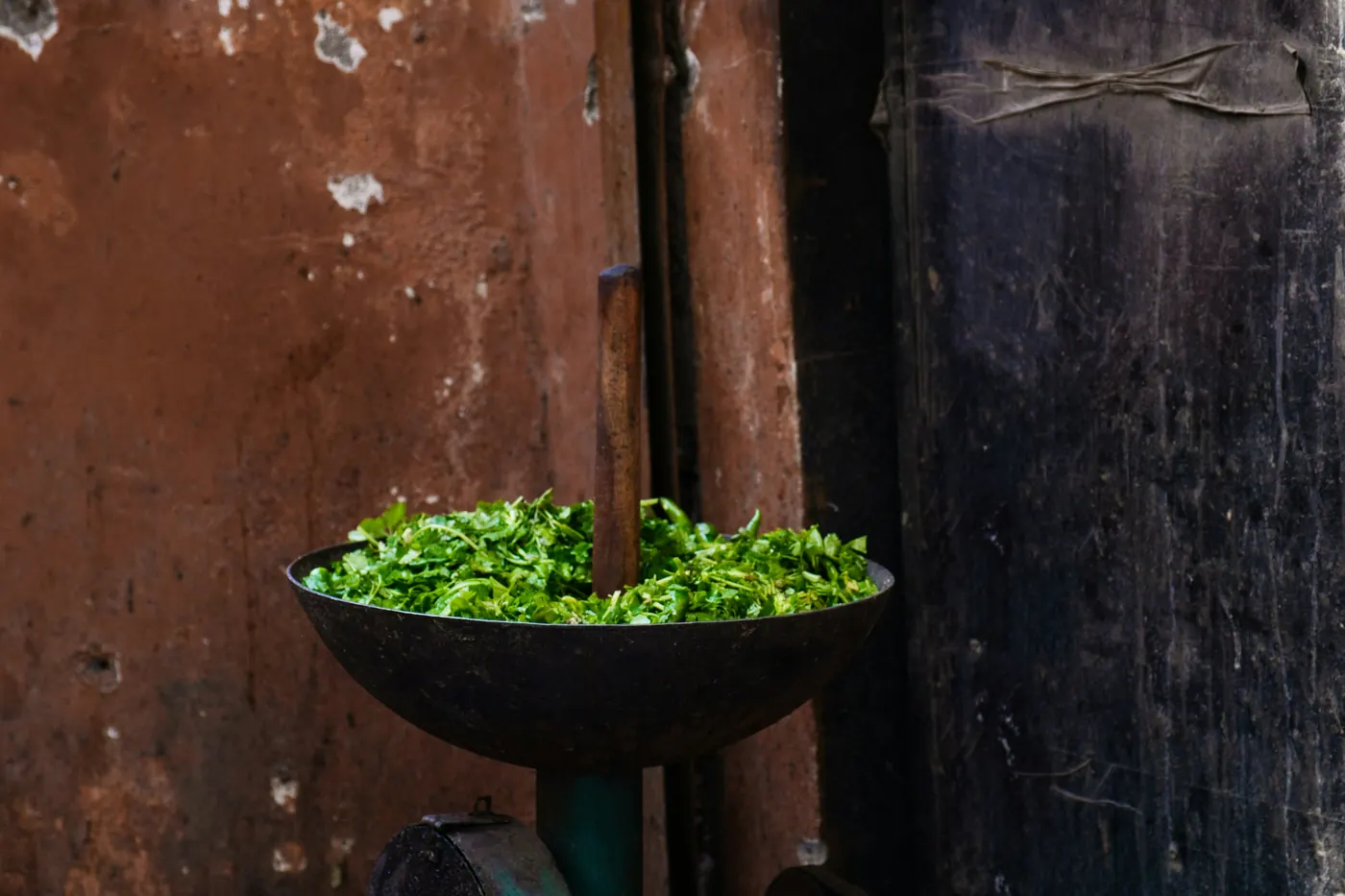
They are not related. Mediterranean oregano is in the mint family. Mexican oregano is in the verbena family, and it tastes of citrus and anise where the Mediterranean one tastes resinous and piney.
Practically: it goes into adobo, into pozole, into birria, into bean pots. Almost always dried rather than fresh, and almost always crumbled between the fingers on the way in.
Epazote
The one nobody outside Mexico has a substitute for.
Na’atik describes epazote as another essential ingredient in Mexican-Maya cooking, valued for its digestive properties — a natural remedy for intestinal discomfort, with its use in bean dishes said to alleviate the less desirable effects of eating beans.
The flavor is hard to describe and impossible to miss: medicinal and pungent, with notes of mint, anise, camphor and eucalyptus. In small amounts it reads as savory depth. In large amounts it takes over completely.
It goes into black beans, into soups, into quesadillas in central Mexico. The same source suggests fennel, cilantro or flat-leaf parsley if you cannot find it, while noting plainly that these will change the dish and will not have the same effect.
Hoja santa
A leaf the size of a hand, and the least likely of the four to appear on an American menu.
The name means sacred leaf. Na’atik describes it as a large heart-shaped leaf with a complex flavor profile reminiscent of anise, mint and black pepper.
It is used as a wrapper more than as a seasoning — fish, tamales, cheese — where it perfumes what it encloses during cooking. It is also blended into green moles.
It does not dry or ship well, which is the practical reason it stays regional. Fresh is the only useful form.
The four, compared
| Herb | Used | Tastes like | Goes in |
|---|---|---|---|
| Cilantro | Fresh, added last | Bright, citrusy, grassy | Salsa, ceviche, tacos |
| Mexican oregano | Dried, cooked in | Citrus, anise, floral | Adobo, pozole, birria |
| Epazote | Fresh or dried, cooked in | Medicinal, mint, camphor | Beans, soups, menudo |
| Hoja santa | Fresh, as a wrapper | Anise, mint, black pepper | Fish, tamales, green mole |
| Bay | Dried, cooked in | Savory, faintly bitter | Adobo, braises, stocks |
Notice the Used column. Only cilantro goes on at the end. The others are all cooked into something, which is why you taste them without seeing them.
What this means when you are ordering
Two practical consequences.
Cilantro is removable, the others are not. If you are one of the people who tastes soap, ask for it left off — it is a garnish, and kitchens do this constantly. Epazote and oregano are cooked in and cannot be taken out.
An unfamiliar savory note is usually epazote. If a bean dish or a soup tastes of something you cannot place — slightly medicinal, faintly minty — that is almost certainly what it is, and it is meant to be there.
Neither of these is about heat. None of these herbs are hot, which our guide to mild dishes covers separately.
On Julia’s menu
Two of the four appear by name on Julia’s menu, which is about typical for a restaurant in Texas.
Cilantro is in the ceviche — lemon-lime cured gulf shrimp with avocado, tomato, serrano, onion and cilantro — and on the street tacos, which are beef fajita with diced onion and cilantro. That second one is the classic taquería configuration, where cilantro and raw onion are the only garnish.
It also appears on the brunch barbacoa, served with charros, onions and cilantro.
Epazote is in the menudo: chili pepper broth, tripe, onion, garlic, epazote and corn tortillas. That is the traditional use, and our pozole and menudo guide covers the dish itself.
Mexican oregano and hoja santa are not named, which does not mean the oregano is absent — it is standard in adobo and birria bases and rarely gets listed. Hoja santa genuinely would be unusual to find.
Frequently asked questions
What herbs are used in Mexican cooking?
Cilantro above all, then Mexican oregano, epazote, hoja santa and bay. Cilantro is used fresh; the rest are cooked into dishes.
Is Mexican oregano the same as regular oregano?
No. Different botanical family and a different flavor — citrus and anise rather than pine. Marjoram is a closer substitute than Mediterranean oregano.
What does epazote taste like?
Pungent and slightly medicinal, with mint, anise and camphor notes. Used sparingly it adds savory depth; used heavily it dominates.
Why does cilantro taste like soap to some people?
A genetic variant affects how some people perceive the aldehyde compounds in it. It is a real difference in perception, not a preference.
What is hoja santa?
A large heart-shaped leaf tasting of anise, mint and black pepper, used mainly as a wrapper for fish and tamales and in green moles.
The short version
Cilantro fresh at the end, Mexican oregano dried into the base, epazote cooked into beans, hoja santa wrapped around fish. Four herbs, four jobs, and no clean substitutes.
Julia’s names cilantro in three dishes and epazote in the menudo on the menu.