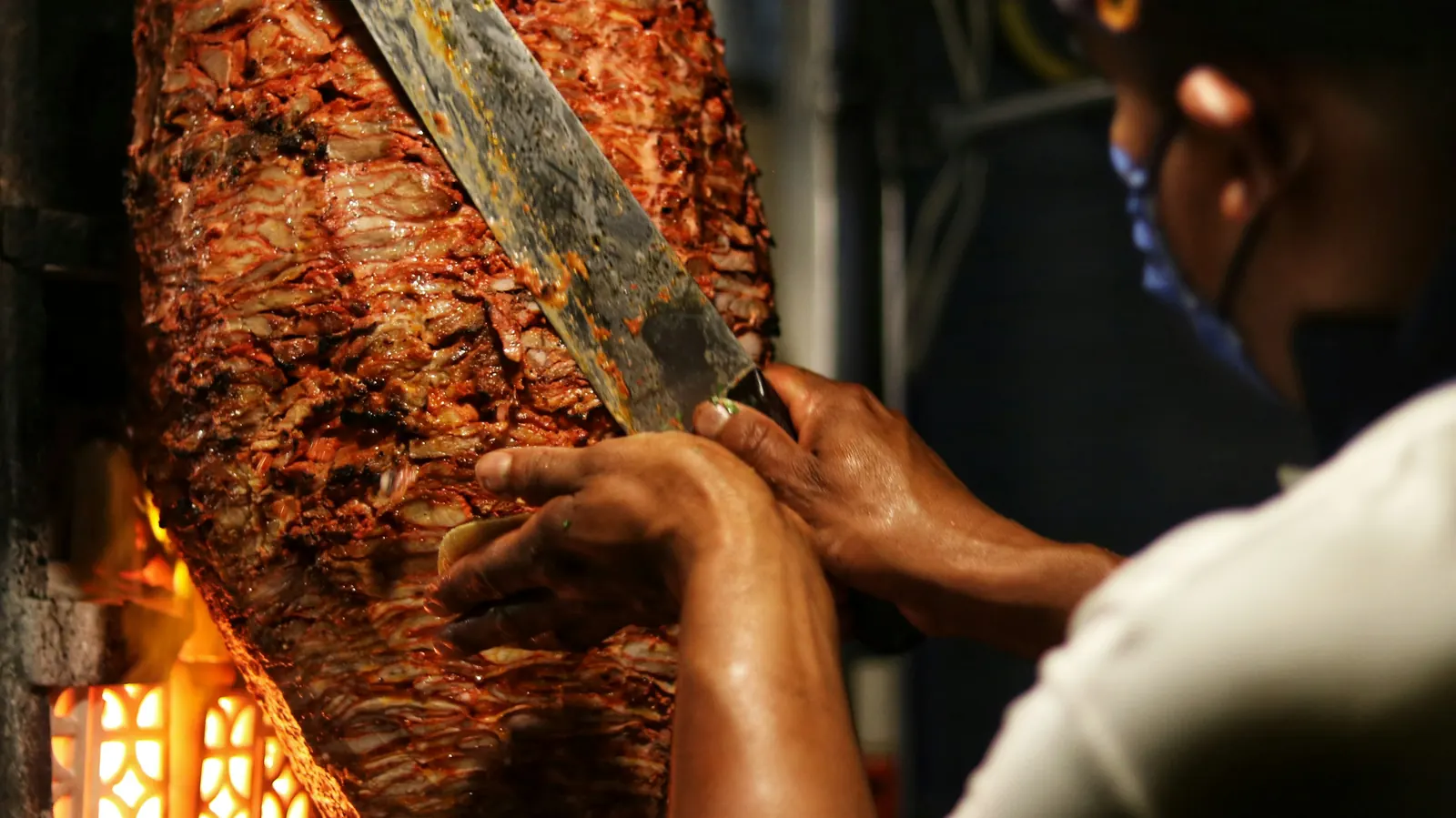
Tacos al pastor are the most Mexican thing on most taquería menus, and the technique behind them arrived from Lebanon.
That is not a debunking. It is the whole reason the dish exists, and it is a better story than the one people assume.
The short answer
Al pastor is pork marinated in dried chiles and achiote, stacked on a vertical spit called a trompo, and roasted slowly while it turns. Thin slices are shaved off to order into small corn tortillas, with onion, cilantro and a piece of pineapple. The vertical-spit method came to Mexico with Lebanese immigrants in the early twentieth century.
Where it came from
Lebanese migration to Mexico began in the late nineteenth century and continued through the collapse of the Ottoman Empire. The arrivals brought shawarma with them: lamb, seasoned and stacked on a vertical spit, shaved into flatbread.
HistoricalMX, in its account of tacos al pastor as a Mexican dish, traces the transformation through Puebla, where Lebanese families settled in numbers and where their Mexican-born children adapted the family trade to local ingredients.
What changed: lamb became pork, the Middle Eastern spicing became a marinade of dried chiles and achiote, and the flatbread became a small corn tortilla. What stayed: the spit.
The name itself records the origin obliquely. Al pastor means “shepherd style” — a nod to the lamb that is no longer in it.
The trompo
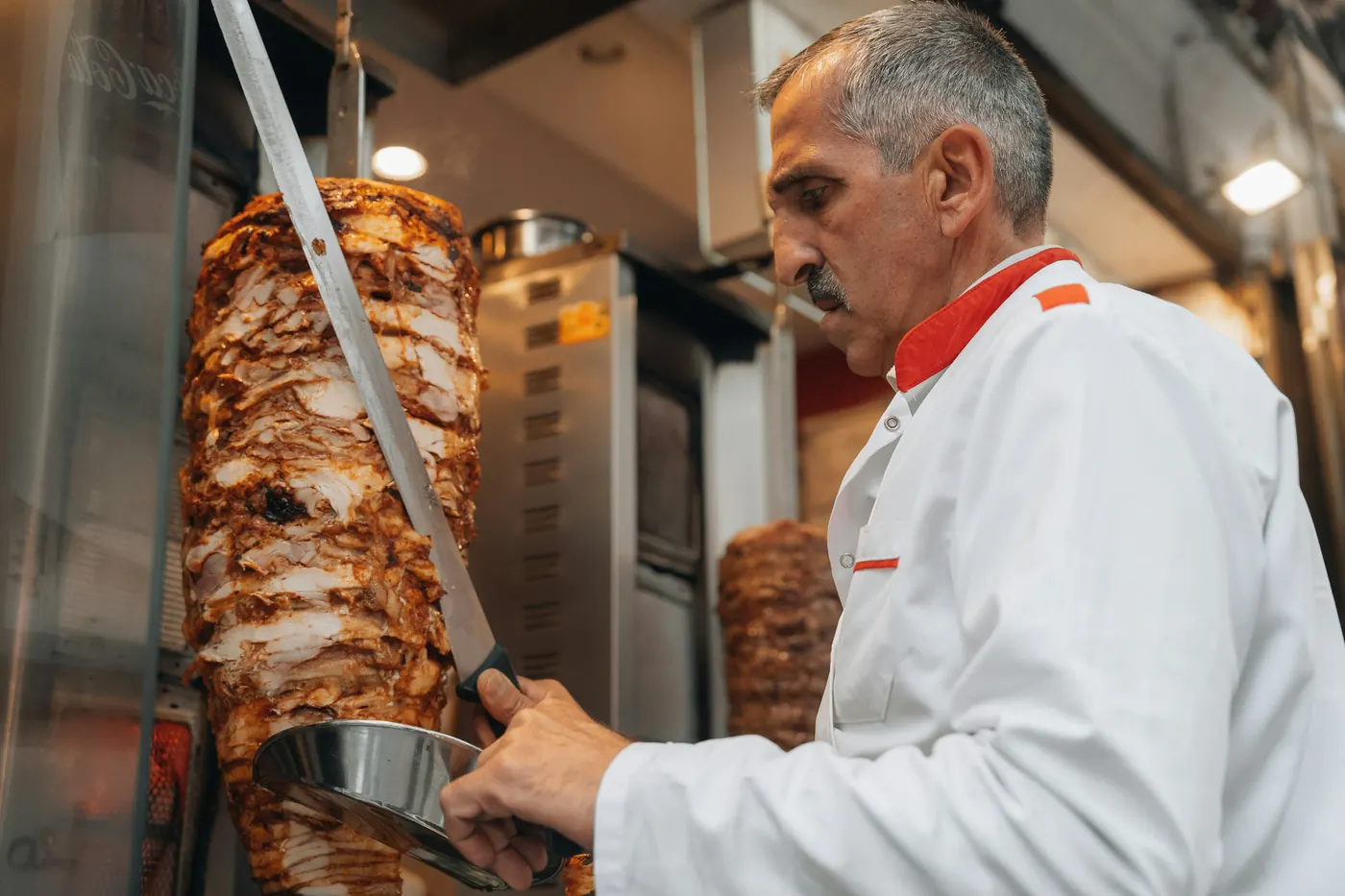
The vertical spit is called a trompo, meaning spinning top, and it is doing something a grill cannot.
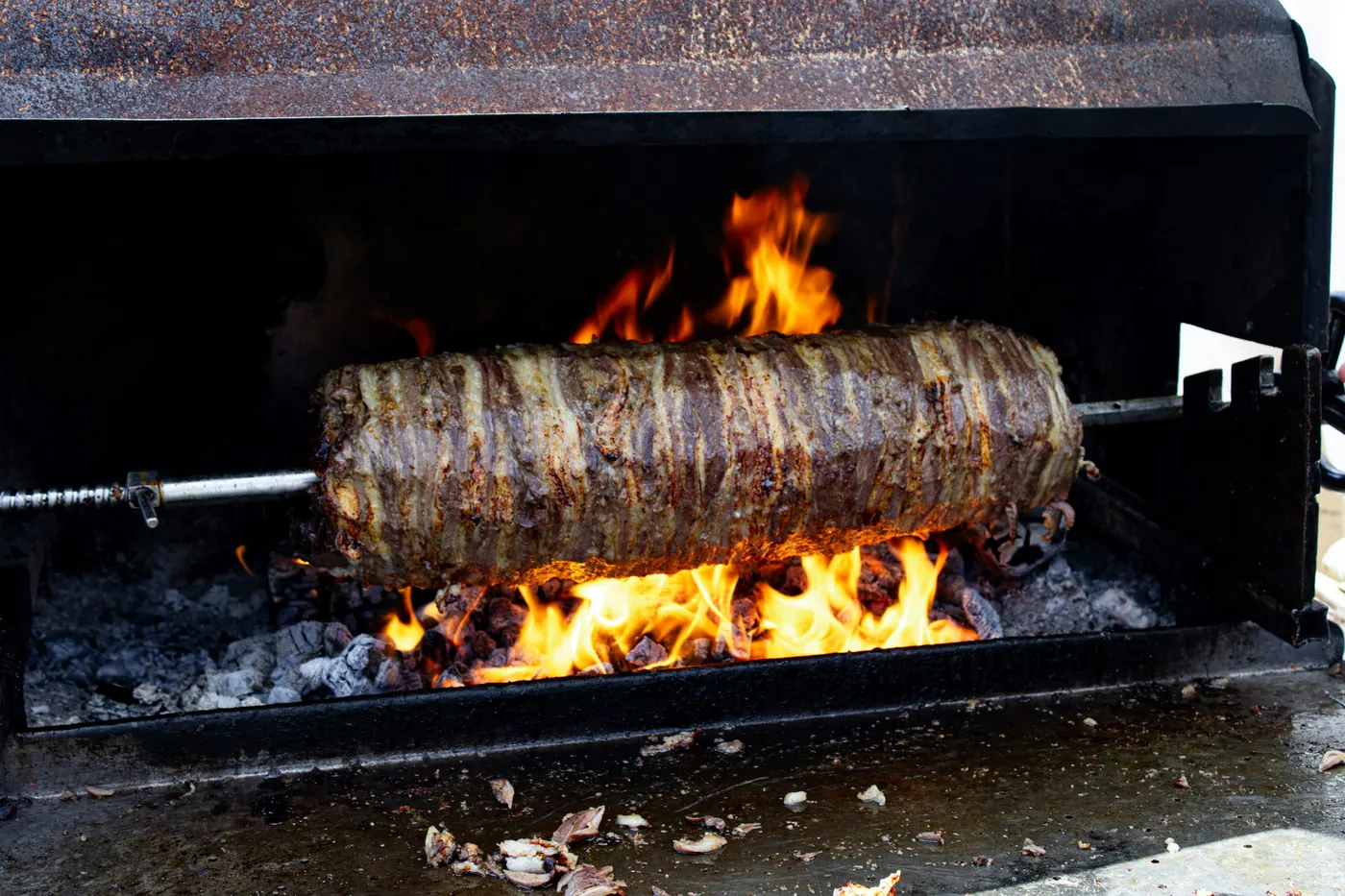
Thin slices of marinated pork are stacked onto a vertical rod, hundreds of them, tapering toward the top. The whole column turns slowly in front of a vertical heat source — gas or charcoal, radiating from the side rather than from below.
The outer layer cooks and crisps while everything behind it stays raw and cool. The cook shaves off the finished exterior, and the next layer begins cooking. It is effectively a self-basting continuous grill, and it means every taco is cut from meat that finished cooking seconds earlier.
That is the actual advantage, and it is why the method survived the journey.
The marinade
What makes it Mexican rather than Middle Eastern.
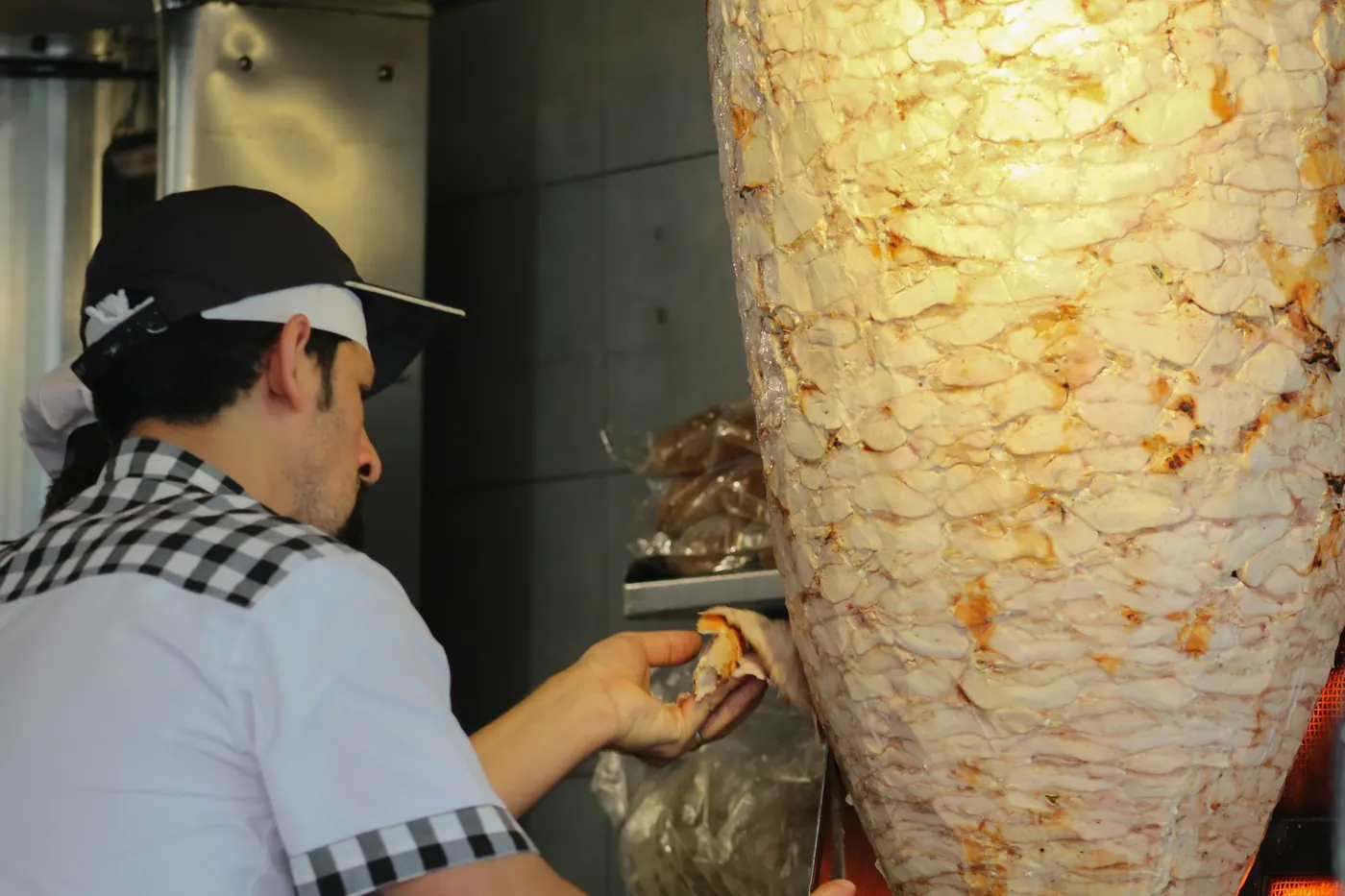
The base is an adobo — guajillo and ancho typically, rehydrated and blended with garlic, vinegar, oregano, cumin and achiote. The achiote is what produces the deep red-orange color, the same seed that colors Yucatecan cochinita pibil.
Pineapple juice often goes into the marinade too, where it does real work: pineapple contains bromelain, an enzyme that breaks down protein, so it tenderizes the pork as it sits.
None of this is subtle seasoning. The marinade is assertive because it has to survive hours on a spit.
The pineapple question
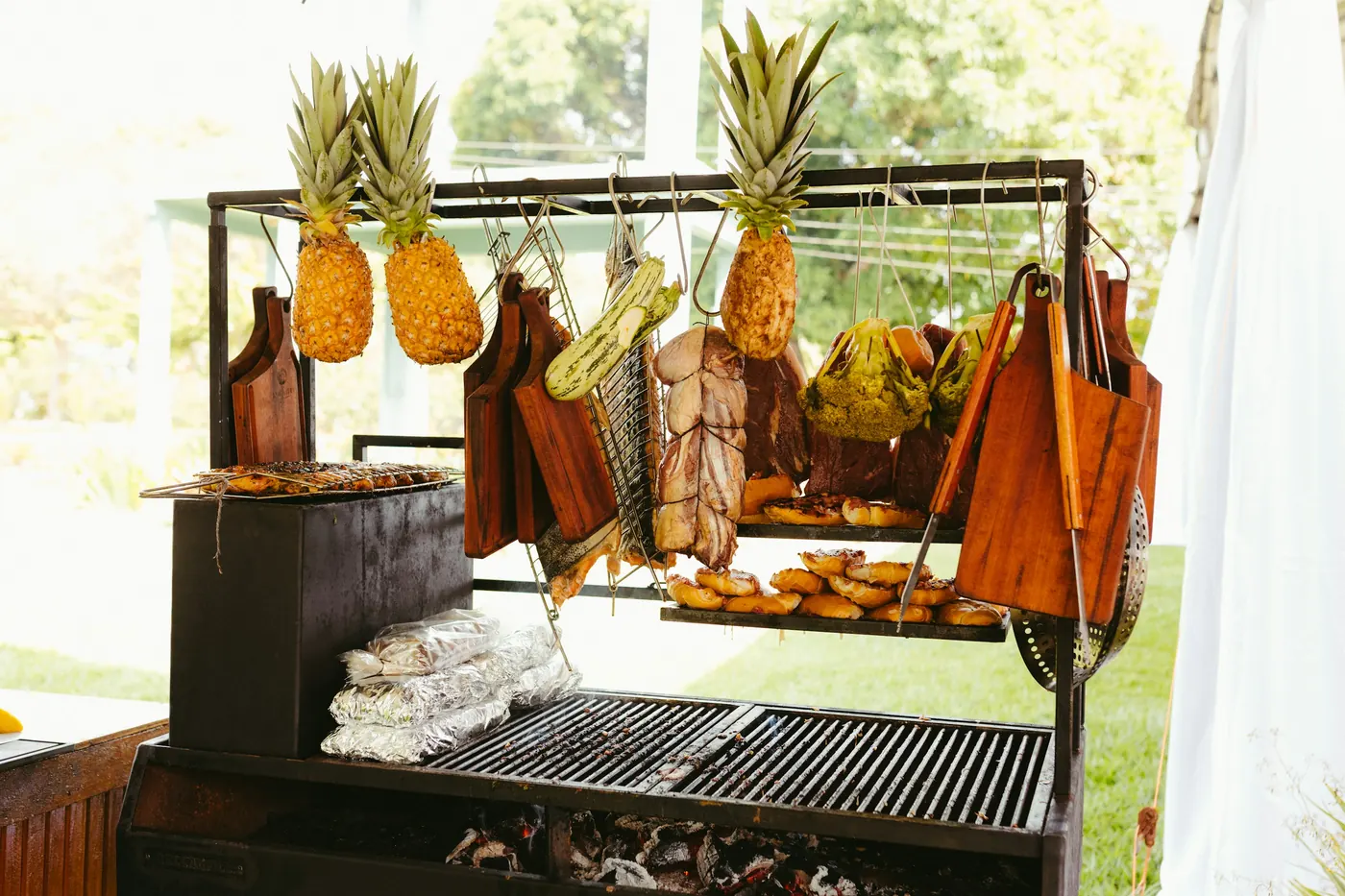
A whole pineapple sits on top of the trompo, and nobody entirely agrees why.
The practical theories: it drips juice down the meat as it cooks, adding acidity and continuing to tenderize; it is simply a convenient place to keep it; or it is a visual signal that the stand serves al pastor.
What is clear is that it has no Lebanese precedent. Shawarma has no pineapple. It was added somewhere in the Mexican adaptation and became standard, and its origin is genuinely unresolved.
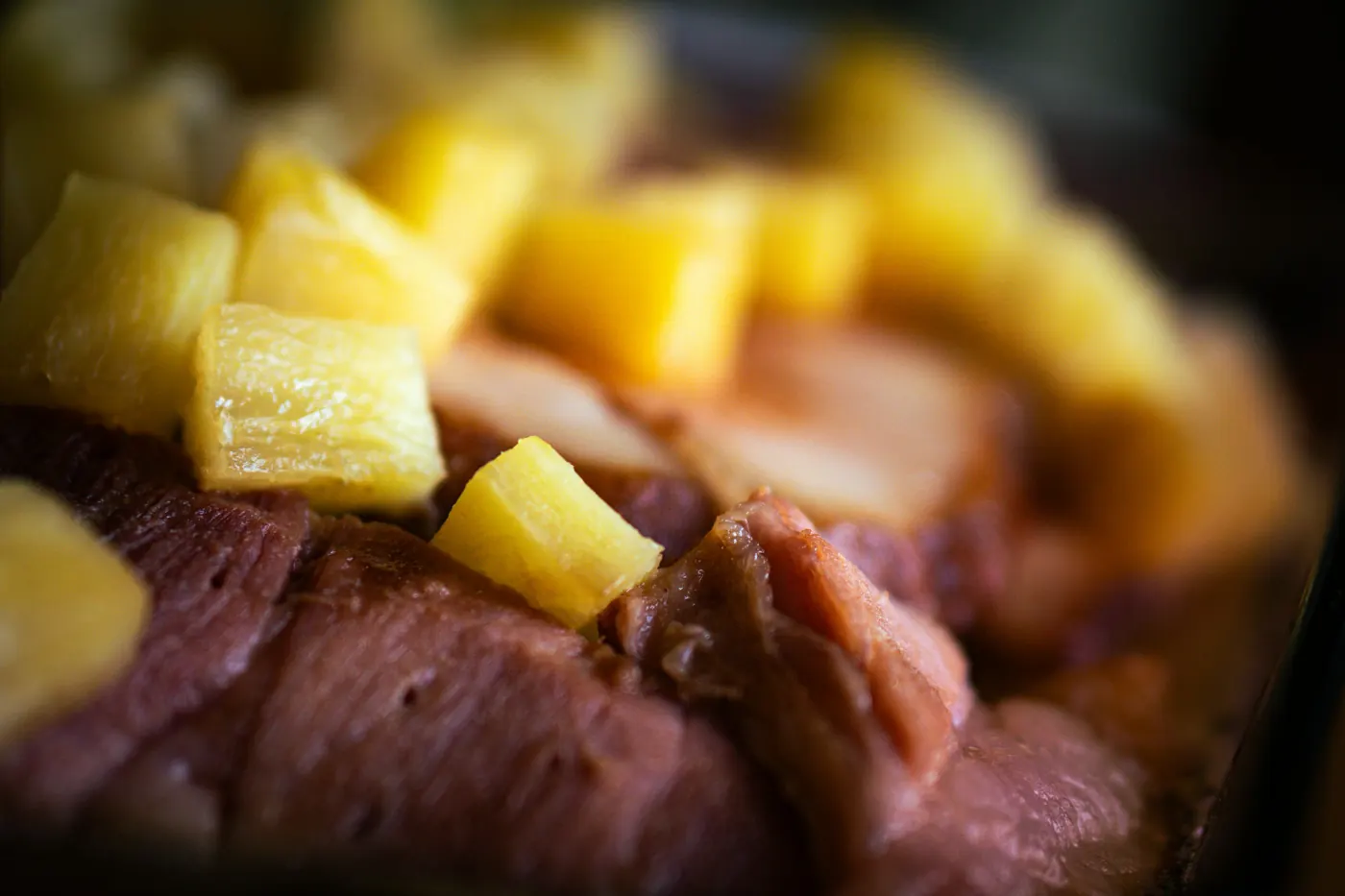
On the taco itself, the pineapple appears as one small cube. It is a punctuation mark against fatty pork, not a tropical theme.
How it is served
| Element | What it is | Why |
|---|---|---|
| Tortilla | Small corn, often doubled | The meat is wet and the tortilla is thin |
| Meat | Shaved thin, chopped | Cut to order off the spit |
| Onion | Raw white, finely diced | Sharpness against fat |
| Cilantro | Chopped | The standard finish |
| Pineapple | A single small cube | Acid, in a controlled dose |
| Salsa | Added by you | The meat itself is not hot |
The doubled tortilla is standard here for the same reason it is standard on other street tacos — our guide to that covers the mechanics.
Why it is rare in restaurants
A trompo is a dedicated piece of equipment that needs to run continuously to be worth having.
It has to be stacked by hand, hours before service, and once it is lit it has to keep selling or the meat is wasted. That volume works at a taquería doing one thing all night; it does not work in a kitchen sending out fifty different dishes.
This is the same constraint that keeps elote on carts and churros in churrerías — specialization buys equipment that generalization cannot justify. Our taquería guide covers the trade.
What Julia’s has instead
Julia’s does not run a trompo, and no full-service Mexican restaurant of this kind would. There is no al pastor on the menu.
What is there is the achiote lineage. The cochinita pibil among the house specialties is the other great Mexican achiote dish — Yucatecan pork, marinated in achiote and citrus, slow-cooked rather than spit-roasted. Same seed, same deep red-orange, completely different method.
The street tacos on the appetizer list are the beef version: beef fajita, diced onion and cilantro, in the same minimal street build. And the brisket birria style covers the slow-braised end of the spectrum, as our birria guide explains.
If al pastor specifically is what you want, that is a reason to find a place with a trompo. It is not something a broad menu can fake.
Tacos arabes, the missing link
Puebla still serves the intermediate form, and eating one makes the lineage obvious.
Tacos árabes are pork from a vertical spit, but served in pan árabe — a thin flatbread closer to pita than to a tortilla — with a chipotle-based sauce rather than a chile-achiote marinade. They sit exactly between shawarma and al pastor, and they never disappeared.
The northern relative is tacos de trompo, common in Monterrey: same spit, lighter marinade, no pineapple, flour tortillas as often as corn.
How to tell a good one
The spit tells you most of it before you order.
A well-run trompo has a visibly crisped exterior and a cook shaving continuously rather than cutting from a cold stack. If the meat is being reheated on a griddle after shaving, the whole advantage of the method has been given away.
On the plate, the meat should have both crisp edges and soft interior in the same taco, which only happens when it is cut thin off a hot column.
Frequently asked questions
What is al pastor made of?
Pork, marinated in dried chiles, achiote, vinegar and spices, stacked on a vertical spit and roasted slowly while turning.
Why is al pastor Lebanese?
The vertical-spit technique came to Mexico with Lebanese immigrants who brought shawarma. Mexican cooks replaced lamb with pork and the spicing with chiles and achiote.
Why is there pineapple on top of the spit?
Theories include dripping juice for acidity and tenderizing, convenience, and signaling. There is no Lebanese precedent and no settled explanation.
Is al pastor spicy?
Usually not. The marinade is built on mild dried chiles for color and depth. Heat comes from the salsa you add.
What does “al pastor” mean?
“Shepherd style” — a reference to the lamb used in the original shawarma, even though the dish is now made with pork.
The short version
Lebanese technique, Mexican ingredients, a vertical spit and a pineapple nobody can fully explain. Shaved to order into two small corn tortillas with onion, cilantro and lime.
It needs a trompo, which is why you find it at taquerías rather than on a full restaurant menu — though the achiote lineage runs through cochinita pibil.