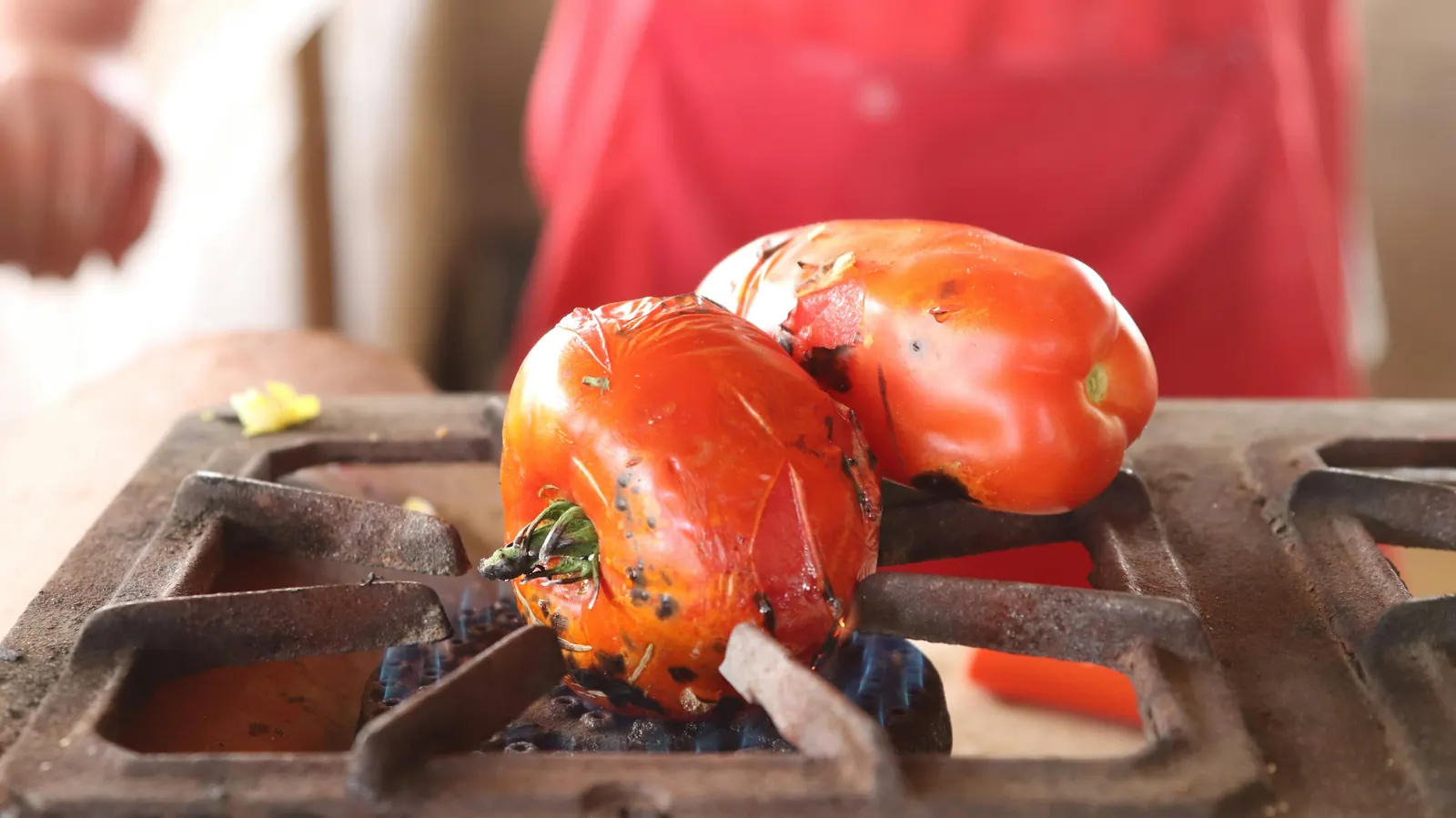
Most Mexican salsas can be made two ways: crushed by hand in a molcajete, the three-legged volcanic stone bowl, or whizzed in a blender. Both are traditional. The molcajete is centuries old, and Rick Bayless points out that today the blender is the most common appliance in Mexican kitchens. They do not make the same salsa, though, and they do not fit the same kind of cook.
This guide sets a basalt molcajete, the one we recommend in our guide to the best molcajete, against a well-known high-powered blender, the Vitamix 5200, and goes through what actually differs: texture, what sources say about flavor, speed, batch size, cleanup, and which salsas suit each. Where a claim about flavor appears, we say who made it.
Julia’s earns a commission on purchases made through links on this page, at no cost to you. Recommendations are based on what a Mexican kitchen looks for in salsa tools, the makers’ own specifications and published guidance and reviews, which we name.
Quick verdict: molcajete or blender?
Buy a molcajete such as the Cuitáxi 8-inch if you make salsa or guacamole for a few people and want the coarse, uneven texture the stone is known for, served in the bowl you made it in; it takes a few extra minutes, an afternoon of curing once, and no soap ever. Buy a blender such as the Vitamix 5200 if you want a smooth salsa in seconds, make big batches, cook dried-chile salsas and sauces, or want one machine that does far more than salsa. Many Mexican home kitchens own both.
The rest of this page explains the differences one at a time.
Molcajete vs blender: the differences side by side
Figures come from Cuitáxi’s Amazon listing and from Vitamix’s listing and website. Handmade stone varies from piece to piece, so treat the molcajete’s size as approximate.
| Molcajete (Cuitáxi 8-inch) | Blender (Vitamix 5200) | |
|---|---|---|
| How it works | Crushing and grinding against rough stone | Stainless steel blades at variable speed |
| Typical texture | Coarse and uneven, part paste, part pieces | Anything from chunky to completely smooth |
| Time per batch | Several minutes of grinding | Seconds; Vitamix’s salsa method blends for 3 to 5 |
| Batch size | Capacity not stated; 8 inches across | 64-ounce container |
| Power | Your arm | 2-horsepower motor, 120 V |
| Before first use | Full cure with rice and salt | Nothing stated beyond the manual |
| Cleaning | Water and a brush; no soap, no dishwasher | Self-cleans with warm water and a drop of dish soap |
| Serving | Goes to the table as the serving bowl | Pour into a bowl |
| Weight | 7 to 8.8 lb | 10 lb 9 oz |
| Other jobs | Guacamole, spice and garlic pastes | Sauces, soups, smoothies, frozen drinks |
Texture: crushed against cut
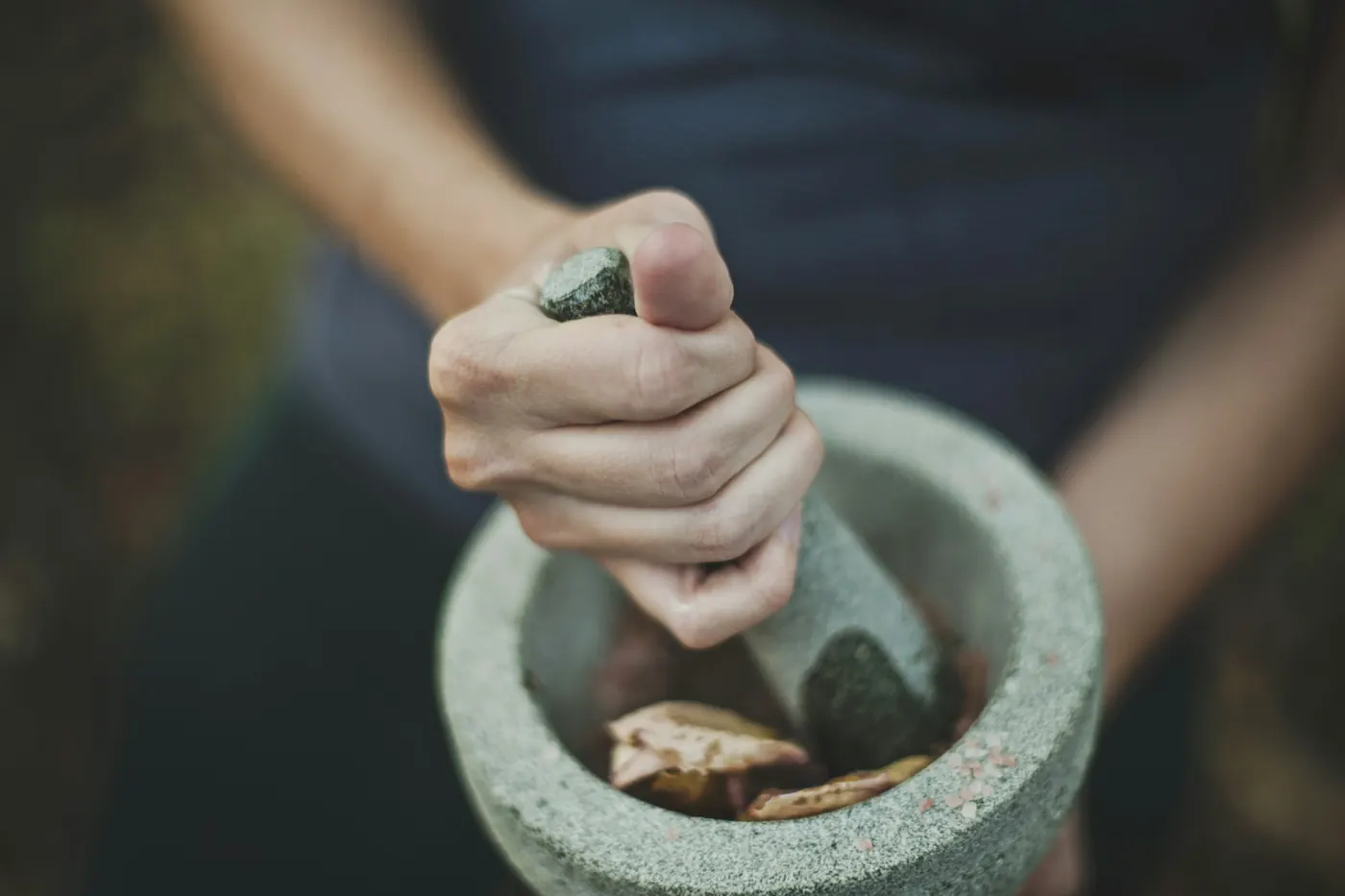
This is the difference most cooks notice first. A molcajete works by friction. You crush garlic, salt and chiles into a paste against the rough basalt, then work in roasted tomatoes or tomatillos so that some break down into the paste and some stay in pieces. The result is uneven on purpose: thick, coarse and a little rustic. America’s Test Kitchen quotes chef Bricia Lopez saying of molcajete salsa that “you can only achieve that special texture with a molcajete”.
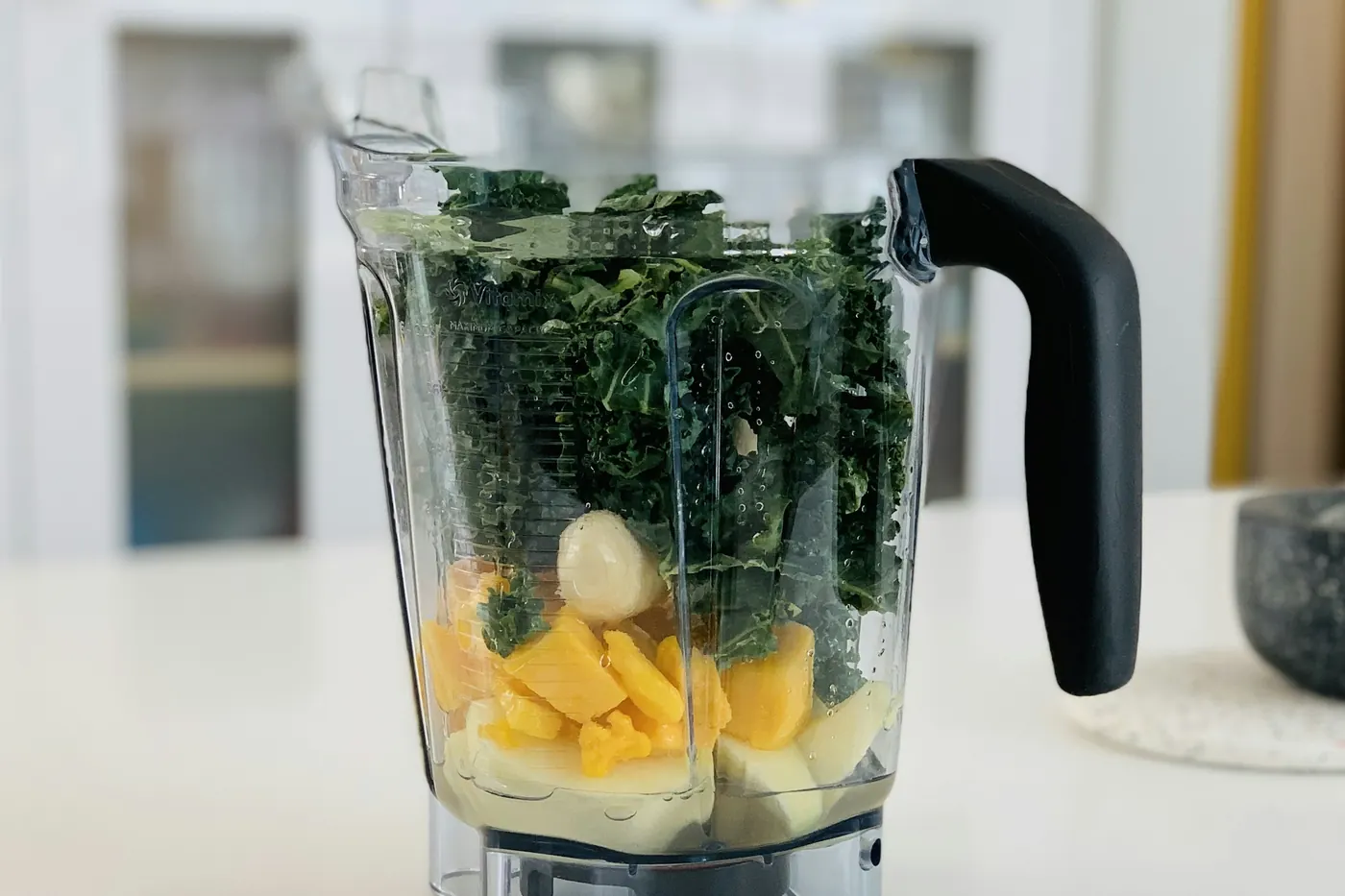
A blender cuts. Its blades spin fast enough to turn the same ingredients into an even purée, and on a variable-speed machine you can stop anywhere along the way. Vitamix’s own salsa method, published by Sur La Table, starts on the lowest speed, ramps quickly to 4 or 5, and blends for only 3 to 5 seconds with the tamper, with the warning “Do not over mix”. That gives a chunky salsa, but the pieces are cut, not crushed, and the liquid separates from them more easily.
Consumer Reports writer Jodhaira Rodriguez made the same roasted salsa both ways in 2024 and found that the blender version “became a smooth, watery salsa”, while the molcajete salsa was “significantly less watery”. That matches what you would expect from crushing against cutting.
Air, froth and the speed setting
A blender can add something a molcajete never does: air. Chef and cookbook author Rick Martinez, quoted by Tasting Table, says, “Never blend a salsa in a blender above medium-low speed,” because the higher the speed, the more air the vortex pulls into the salsa, which can leave it frothy and pale, more like a smoothie than a sauce. The fix is simple: low speed, short bursts, and stop as soon as it looks right. The variable speed dial on a machine like the Vitamix 5200 is what makes that easy.
Onion is the other trap. Rick Bayless, interviewed by The Takeout, warns that “blended onion can release unpleasant flavors that can overwhelm a salsa”, and suggests chopping the onion by hand, rinsing it and stirring it in after blending. In a molcajete, onion is usually added chopped at the end anyway.
Flavor: what the sources actually say
This is where the strongest claims are made, so here is who makes them. Made In, which publishes a molcajete care guide, credits the stone’s rough surface with releasing oils from ingredients as you grind. Sellers go further: FESTMEX, which sells molcajetes, says a cured stone brings out richer flavor, which is a seller’s claim, not a measurement. In the Consumer Reports comparison, the writer found the blender salsa “refreshing and spicy” and the molcajete version hotter, with charred bits that added flavor; that is one person’s tasting of one recipe.
What can be said plainly is that the two tools treat the ingredients differently, and that changes how the salsa comes across in the mouth. We have not made salsa with either tool for this guide, so we leave the verdict on taste to you. If you have both, make the same roasted salsa in each and decide.
Speed and effort
A blender wins on time. Once the tomatoes and chiles are roasted, it takes seconds to blend and a minute to pour. A molcajete takes several minutes of steady grinding, and longer if you start with whole spices or dried chiles. Bayless puts it bluntly: “A molcajete is classic, but it’s a lot of work.” Consumer Reports found the molcajete salsa took only “a few minutes longer” than the blender version, because both started with the same roasting.
Effort also depends on the ingredients. Soft roasted tomatoes and tomatillos give way quickly in stone. Dried chiles, which need to be rehydrated and ground fine for a smooth, dark salsa, are much harder by hand, which is why those salsas are usually blended. Our guide to salsa roja and salsa verde explains the main styles.
Batch size: a family bowl or a party batch
An 8-inch molcajete is the size most home cooks want, enough for guacamole for four to six people or a bowl of salsa for a taco night. America’s Test Kitchen recommends a capacity of 1.5 to 4 cups for mortars used for salsa and pastes. Cuitáxi does not state a capacity; it gives the bowl as 8 inches across and 5 inches tall. Go much bigger, and you are grinding for a long time.
The Vitamix 5200’s container holds 64 ounces, and Vitamix says it handles small- to large-capacity blends. That is a quart or more of salsa in one go, which suits a party, a week of salsa in the fridge, or a batch of enchilada sauce at the same time. If you make salsa for a crowd every weekend, the blender is the realistic tool.
Cleanup and care
The molcajete has strict rules. Made In and Masienda both say no soap, because the scent and flavor get trapped in the porous stone and pass into the next thing you make, and never the dishwasher. Rinse it with warm water, scrub food from the pores with a stiff brush, blot it and let it air dry upside down. Before first use, a new basalt molcajete has to be cured by grinding raw rice and coarse salt until the powder no longer comes out gray, a one-time job that Made In compares to seasoning carbon steel. Mexico News Daily adds that a smooth, poreless “molcajete” is usually cement, which is not safe for cooking.
The blender is easier. Vitamix says the 5200 cleans itself in 30 to 60 seconds with warm water and a drop of dish soap, with no disassembly. Neither Vitamix’s listing nor its product page says the container is dishwasher safe, so stick with the self-clean cycle and a rinse.
Which salsas suit each tool
Best in a molcajete
- Roasted tomato salsas (salsa roja asada) with garlic and fresh chiles.
- Roasted tomatillo salsas where you want some texture.
- Guacamole, mashed rather than puréed.
- Garlic, cumin and chile pastes for marinades.
Best in a blender
- Dried-chile salsas made from guajillo, ancho or árbol.
- Smooth taquería-style salsa verde and creamy avocado salsas.
- Enchilada sauces, moles and adobos.
- Big batches for a party or for the week.
Raw pico de gallo belongs in neither: Bayless says it should be chopped by hand.
Choose a molcajete if… / Choose a blender if…
Choose a molcajete if…
- You want the coarse, uneven texture of traditional salsa and guacamole.
- You usually make salsa for two to six people.
- You like to make it and serve it in the same bowl.
- You are happy to cure it once and wash it with water only.
- You already have a blender for everything else.
Choose a blender if…
- You want salsa in seconds, not minutes.
- You make smooth salsas, dried-chile salsas and sauces.
- You cook for a crowd or make salsa for the week.
- You want one machine for soups, smoothies and frozen drinks too.
- You would rather not grind by hand.
Our pick on each side of molcajete vs blender
These are the two we recommend once you have decided. Our guide to the best molcajete reviews more stone bowls, and our comparison of a molcajete and a mortar and pestle explains how basalt differs from granite.
1. Cuitáxi 8-inch Lava Rock Molcajete – Traceable Volcanic Stone

Our top pick among molcajetes, and the one to buy if you want the traditional tool. Cuitáxi says it is carved from lava rock from the area of the Popocatépetl volcano in Puebla, by Mexican artisans, and made in Mexico, and the listing title adds “Not Concrete”, which addresses the most common worry about molcajetes sold online.
The listing gives the bowl as 8 inches across and 5 inches tall, and the weight as 7 to 8.8 pounds, noting that measurements vary because each piece is handmade. That weight keeps it from walking across the counter while you grind. Eight inches is enough room for guacamole for four to six people or a bowl of salsa for a taco night. A pestle (tejolote) and a cloth tortilla warmer come with it, and the title mentions a brush for cleaning the pores.
Like any real basalt, it needs curing before first use. Cuitáxi emails buyers a step-by-step guide; the rice-and-salt method from Made In and Masienda described above works too. After that, it is water and a brush only, never soap.
Why we like it
- Stone source named: lava rock from the Popocatépetl area
- Made in Mexico by artisans, according to the listing
- 8 inches across, 5 inches tall, 7 to 8.8 lb
- Pestle, tortilla warmer and brush included
- Seller sends a curing guide by email
Key specifications
| Model | Molcajete Bowl (8-inch) |
|---|---|
| Material | Lava rock from the Popocatépetl volcano area |
| Capacity | Not stated |
| Size | 8 x 5 inches (handmade, varies) |
| Weight | 7 to 8.8 lb |
| Before first use | Curing needed; guide emailed by the seller |
| Cleaning | Water and a brush; no soap or dishwasher |
| Included | Pestle, tortilla warmer, brush (per title) |
Why we recommend it
Of the volcanic-stone listings we checked, this one says most clearly where the stone comes from, who made it, how big it is and how much it weighs. It is the right size for a family, heavy enough to grind without sliding, and it goes from counter to table with the salsa in it.
Skip it if you want salsa in a hurry or for a crowd: the grinding takes time, and at up to nearly nine pounds it is not a bowl you will want to lift often.
Pros and cons
Pros
- Rough basalt for traditional salsa texture
- Stone source and maker named
- Make and serve in one bowl
- Extras included
Cons
- Needs a full cure first
- No soap, ever
- Slower than a blender
2. Vitamix 5200 Blender, 64 oz – Fine Speed Control for Salsa
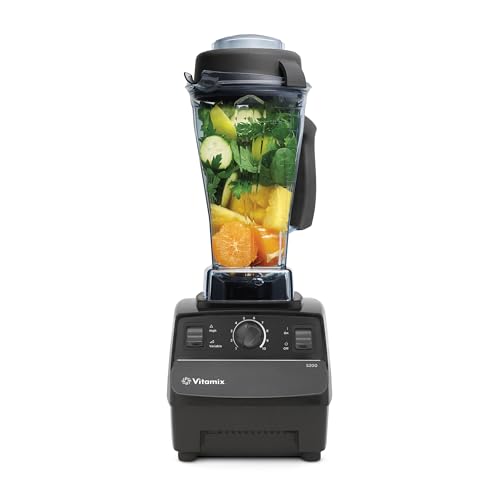
The 5200 is Vitamix’s long-running classic model and our pick on this side, chiefly for one feature: a dial with 10 variable speeds plus a High switch. For salsa, that dial matters more than raw power. You can start at the lowest speed, nudge it to 4 or 5 for a few seconds, and stop while the salsa still has texture, which is exactly the low-and-short approach Rick Martinez recommends to keep air out.
The listing gives it a 2-horsepower motor and laser-cut stainless steel blades, and Vitamix’s site lists 11.5 amps at 120 volts. The 64-ounce BPA-free container comes with a tamper for pushing thick mixtures into the blades, useful for chunky salsas and for dried-chile pastes that would otherwise stall. Vitamix says the container handles small to large batches.
Vitamix gives the size as 20.5 by 8.75 by 7.25 inches and the weight as 10 pounds 9 ounces, so check the height under your wall cabinets. It cleans itself in 30 to 60 seconds with warm water and a drop of dish soap, and it carries a 7-year limited warranty. It has no preset programs and no pulse button; the speed dial does that job.
Why we like it
- 10 variable speeds plus High, for chunky or smooth
- 64-ounce container for party batches
- Tamper keeps thick salsas moving
- Self-cleans in 30 to 60 seconds, per Vitamix
- 7-year limited warranty
Key specifications
| Model | 5200 (001372) |
|---|---|
| Material | BPA-free container; stainless steel blades |
| Capacity | 64 ounces |
| Size | 20.5 x 8.75 x 7.25 inches |
| Weight | 10 lb 9 oz |
| Before first use | Not stated |
| Cleaning | Self-cleaning with warm water and dish soap |
| Included | Motor base, 64-oz container, tamper |
Why we recommend it
Choose it if you make salsa often, in quantity, or in styles a stone bowl struggles with: dried-chile salsas, smooth salsa verde, enchilada sauce and mole. The speed dial gives you control over texture, and it earns its counter space with soups, smoothies and frozen drinks.
Skip it if you only make salsa now and then for two: it is a large, heavy machine and a big purchase for that job alone.
Pros and cons
Pros
- Fine speed control for texture
- Large 64-ounce batches
- Quick self-cleaning
- Long warranty
Cons
- Tall at 20.5 inches
- No pulse button or presets
- Easy to over-blend at high speed
How we compared the two tools
We compared them on what a kitchen asks of any salsa tool: texture, speed, batch size, cleanup and the salsas each one handles well. Product details come from Cuitáxi’s and Vitamix’s Amazon listings, checked for stock on the day we wrote this, and from Vitamix’s website. For technique and texture we relied on Vitamix’s published salsa method, Rick Martinez via Tasting Table, Rick Bayless via The Takeout, America’s Test Kitchen, Made In, Masienda and a side-by-side salsa comparison by Consumer Reports. We have not used either tool for this guide, and we say whose finding each observation is.
Salsa tool questions, answered
Does salsa taste better in a molcajete?
Many cooks say so. Chef Bricia Lopez, quoted by America’s Test Kitchen, says the texture can only be achieved in a molcajete, and Made In credits the stone with releasing oils as you grind. Those are opinions and descriptions, not measurements; the clearest difference is texture.
Why is my blender salsa foamy?
The blender was too fast or ran too long. Rick Martinez advises never going above medium-low speed, because higher speeds pull air into the salsa. Blend in short bursts and stop as soon as it looks right.
Can I make guacamole in a blender?
You can, but it turns into a smooth purée closer to an avocado salsa. For chunky guacamole, mash it in a molcajete or a bowl with a fork.
Is a food processor better than a blender for salsa?
Rick Bayless prefers a blender for smooth salsas because its blades spin faster and give a more consistent texture. For pico de gallo, he chops by hand.
Do I need to cure a molcajete before making salsa?
Yes, if it is real basalt. Grind raw rice and coarse salt in it until the powder no longer comes out gray, then rinse. It is a one-time job.
Our last word on stone and blades
If you make salsa for a few people and love the coarse, rustic texture, buy a molcajete and give it an afternoon of curing. If you want speed, big batches and smooth or dried-chile salsas, buy a good variable-speed blender and keep it on low. If you cook Mexican food often, you will probably end up with both. Our guide to Mexican cooking tools covers the rest of the kit, from the comal to the tortilla press.
And if you would rather let someone else grind the salsa tonight, see our menu or call to order.