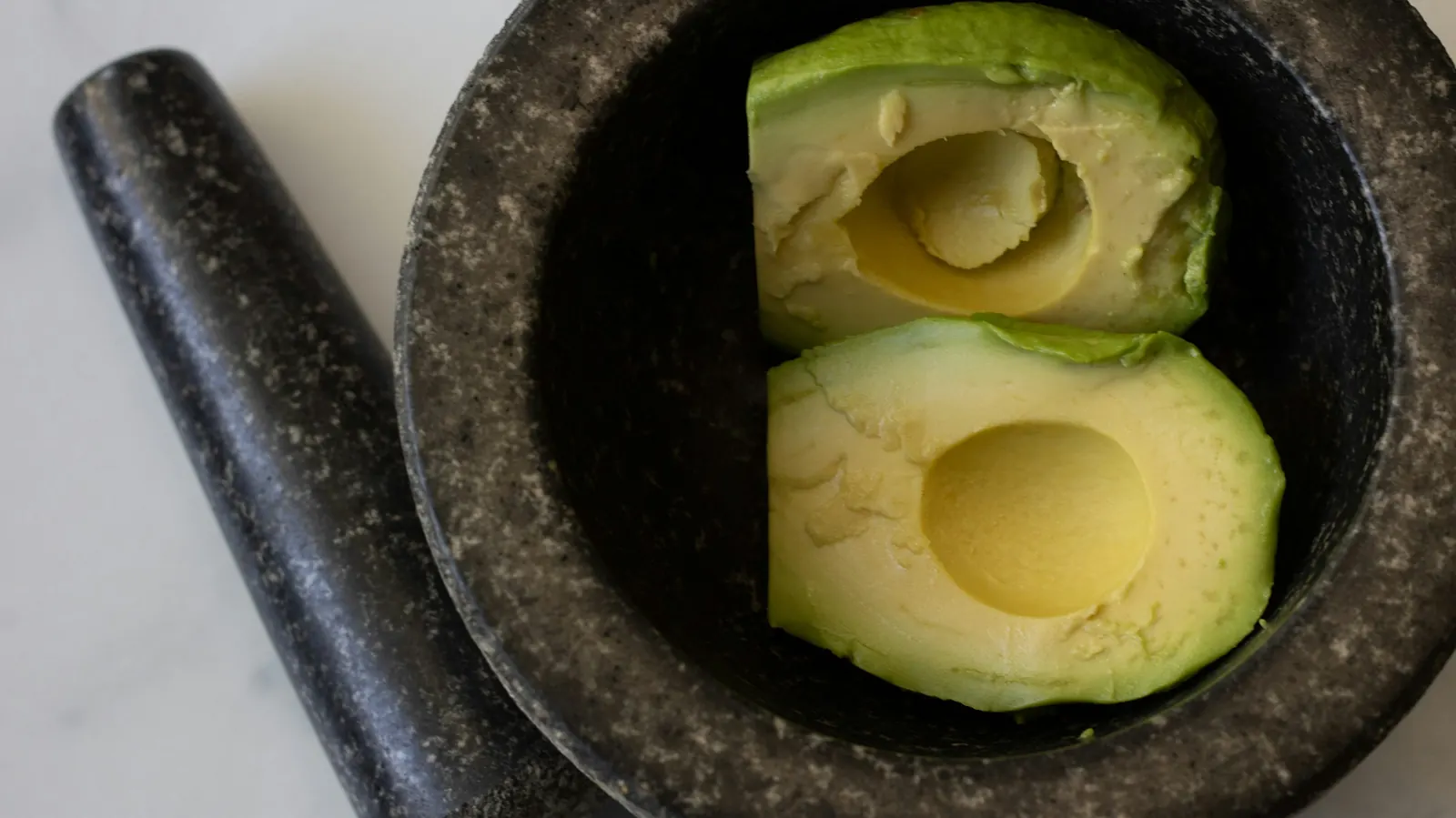
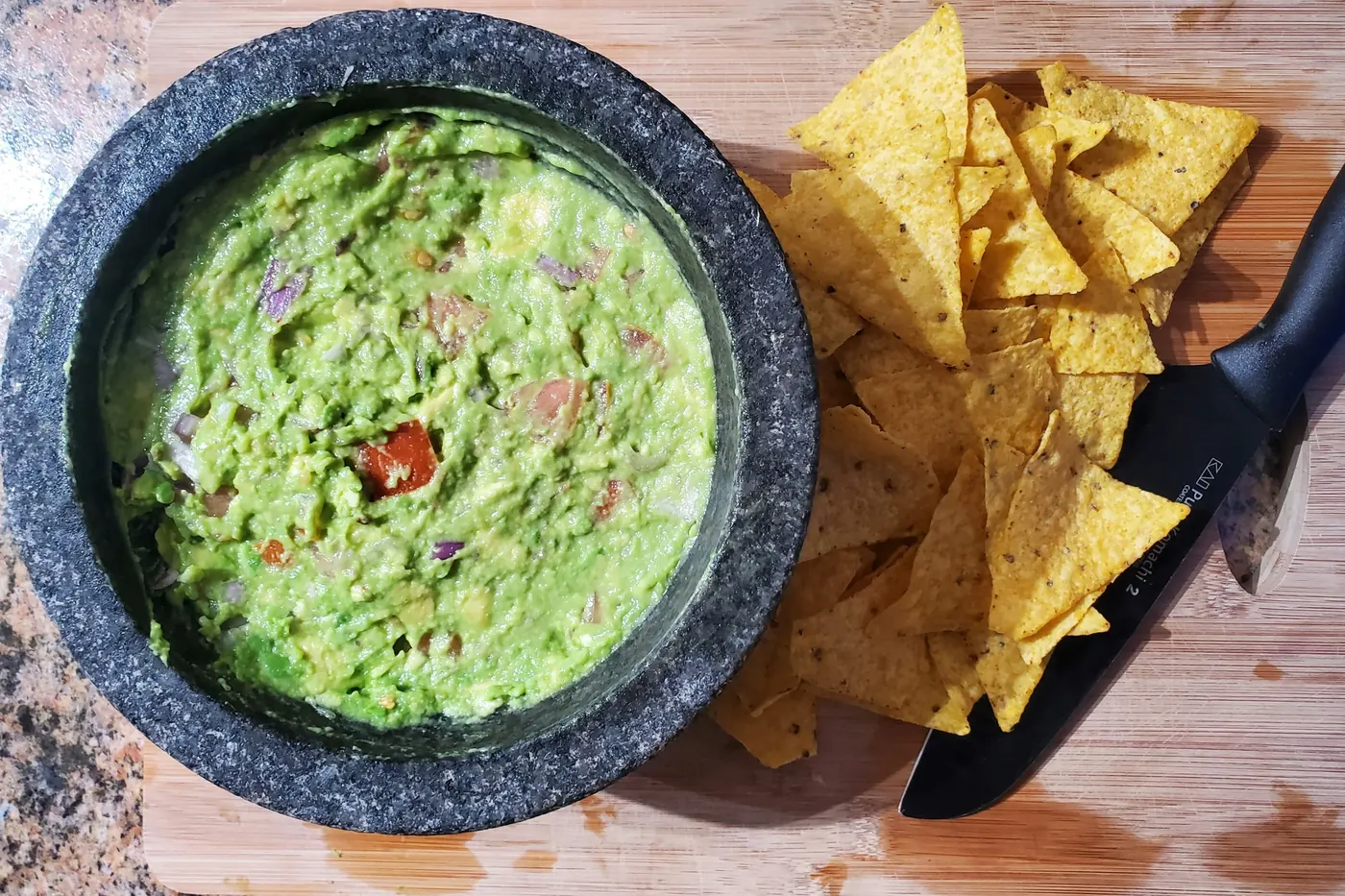
A molcajete is a three-legged stone bowl and a stone pestle, and it has been grinding salsa in Mexican kitchens since long before blenders. Ground by hand, chiles, garlic and tomatoes break into a sauce with texture, some pieces crushed to a paste and others left in small bits, and the bowl goes straight to the table. For guacamole and salsas such as those in our guide to salsa roja and salsa verde, nothing else gives quite the same result.
Buying one is harder than it should be. Listings use “volcanic stone”, “lava rock”, “basalt” and “granite” loosely, imitations are cast from cement, and every real one needs curing before the first salsa. This guide explains how to tell real basalt from the rest, names the molcajetes worth buying, and walks you through the cure.
Julia’s earns a commission on purchases made through links on this page, at no cost to you. Recommendations are based on what a Mexican kitchen looks for in a molcajete, the makers’ own listings and published guidance, which we cite.
Quick verdict: which molcajete to buy
For most home kitchens, the best molcajete is the Cuitáxi 8-inch lava rock molcajete: the listing names the stone’s source (the Popocatépetl volcano area in Puebla), gives a real size and weight, and says it is made by Mexican artisans in Mexico. Feeding a crowd, choose the Cuitáxi 10-inch. If you want a mortar that needs no curing and cleans more easily, the IMUSA 8-inch granite molcajete is the honest alternative, but it is granite, not volcanic stone.
The rest of this page explains why, and how to make sure the stone you buy is the real thing.
Five molcajetes side by side
Our five standout picks, one for each kind of cook, with the stone and size each listing states. All eight molcajetes are reviewed in full below.
| Molcajete | Best for | Stone & size (per listing) | Curing | Buy on Amazon |
|---|---|---|---|---|

Cuitáxi 8-inch Lava Rock MolcajeteBest overall
|
Salsa and guacamole for a family | Lava rock from Puebla, 8-inch | Needed; seller emails a guide | View on Amazon |
| Buyers who want basalt named outright | Basalt from Puebla, about 8.5-inch | Needed; card included | View on Amazon | |

Cuitáxi 10-inch Lava Rock MolcajeteBest for parties
|
Taco nights and big batches | Volcanic rock, 10-inch | Needed; seller emails a guide | View on Amazon |

SMP 7-inch Basalt MolcajeteBest compact
|
One or two people, small kitchens | Volcanic basalt, 7-inch | Needed; method on the listing | View on Amazon |

IMUSA 8-inch Granite MolcajeteBest granite alternative
|
Easy cleaning, no long cure | Granite, 8-inch | Not mentioned by the listing | View on Amazon |
Product images from Amazon. Stone type, size and origin are as each seller states them; handmade molcajetes vary from piece to piece.
Our picks for the best molcajete
Six of these eight are sold as volcanic stone carved in Mexico, the traditional material; two are granite, which we include because many buyers want a smoother mortar that is ready sooner. For each one we say exactly what the listing claims about the stone, so you can see where a seller names basalt, where it says only “volcanic stone”, and where it is granite.
1. Cuitáxi 8-inch Lava Rock Molcajete – Traceable Stone, Family Size
The one to buy if you want a traditional molcajete and only plan to buy one.
Cuitáxi says this molcajete is carved from lava rock from the area of the Popocatépetl volcano in Puebla, by Mexican artisans, and made in Mexico. The listing title adds “Not Concrete”, which is the right worry to address up front. It gives the bowl as 8 inches across and 5 inches tall, and the weight as 7 to 8.8 pounds, noting that measurements vary because each piece is handmade. That weight is what you want in a molcajete: a heavy bowl stays put while you grind.
Eight inches is the size most home cooks reach for. It holds enough guacamole for four to six people, or a full batch of salsa for a taco night, and still fits on a shelf. The listing includes a pestle (tejolote) and a cloth tortilla warmer, and the title mentions a brush, which is handy for cleaning the pores after use.
Like every real basalt molcajete, it needs curing before you cook in it. Cuitáxi says it emails buyers a step-by-step guide to curing it the traditional way, so check your inbox after you order. The method below, from Made In and Masienda, works too: grind raw rice and coarse salt until the powder stops coming out gray.
Why we like it
- Stone source named: lava rock from the Popocatépetl area, Puebla
- Made in Mexico by artisans, according to the listing
- Listed as 8 inches across, 5 inches tall, 7 to 8.8 lb
- Pestle and a tortilla warmer included
- Seller sends a curing guide by email
Key specifications
| Model | Molcajete Bowl (8-inch) |
|---|---|
| Stone (per listing) | Lava rock from the Popocatépetl volcano area |
| Diameter | 8 inches (handmade, varies) |
| Height | 5 inches |
| Weight | 7 to 8.8 lb |
| Made in | Mexico (Puebla stone) |
| Curing | Needed; guide emailed by the seller |
| Included | Pestle, tortilla warmer, brush (per title) |
Why we recommend it
Of the volcanic-stone listings we checked, this one gives the clearest account of what you are getting: where the stone comes from, who made it, how big it is and how much it weighs. It is the right size for a family and heavy enough to grind without sliding.
Skip it if you want to make salsa the day it arrives. Real basalt needs an hour or so of curing first, and at up to nearly nine pounds it is not something to lift one-handed.
Pros and cons
Pros
- Stone source and maker named
- Heavy, stable 8-inch bowl
- Extras included
- Made in Mexico
Cons
- Needs curing before first use
- Up to 8.8 lb to lift
- Size varies piece to piece
2. FESTMEX 8.5-inch Volcanic Stone Molcajete – Basalt Named Outright

FESTMEX is one of the few sellers that uses the word basalt. Its listing describes the molcajete as hand-carved in Mexico from natural volcanic rock from the Popocatépetl volcano in Puebla, “crafted from genuine basalt stone sourced from Mexico”. That is a specific claim, and it matches what Made In and Masienda describe as the traditional material.
The listing gives the mortar as about 8½ inches across and 5 inches tall, a touch wider than our top pick, and describes the tejolote as about 4 inches long with a grinding end about 2½ inches wide. A wide pestle head covers more of the bowl with each turn, which speeds up a salsa. The weight is not stated.
A card with curing instructions comes with the mortar. FESTMEX says the textured stone brings out richer flavor once cured, and pitches it for salsa and guacamole as well as nuts, seeds, ginger, garlic, pesto and dressings. Treat those as uses rather than promises: any stone mortar will crush garlic, but basalt’s rough, porous surface is what Made In credits for releasing oils as you grind.
Why we like it
- Listing names the stone as basalt from the Popocatépetl area
- About 8½ inches across, 5 inches tall
- Pestle with a wide, 2½-inch grinding end
- Curing card included
- Hand-carved in Mexico, per the listing
Key specifications
| Model | MOL-0 (8-inch) |
|---|---|
| Stone (per listing) | Basalt (volcanic rock) from the Popocatépetl volcano |
| Diameter | About 8½ inches (handmade, varies) |
| Height | About 5 inches |
| Weight | Not stated |
| Made in | Mexico |
| Curing | Needed; instruction card included |
| Included | Pestle, about 4 inches long |
Why we recommend it
Choose it if seeing “basalt” in writing matters to you, or if you want a slightly wider bowl than the standard 8-inch. It is a straightforward, traditional molcajete with the pestle measurements spelled out.
Skip it if you need to know the weight before you buy. FESTMEX does not list it, and a solid stone bowl this size will be heavy.
Pros and cons
Pros
- Basalt named in the listing
- Wide pestle head
- Curing card in the box
Cons
- Weight not stated
- Needs curing first
- No extras beyond the pestle
3. Cuitáxi 10-inch Lava Rock Molcajete – Room for a Party Batch
The bigger sibling of our top pick, for cooks who make guacamole by the bowlful.
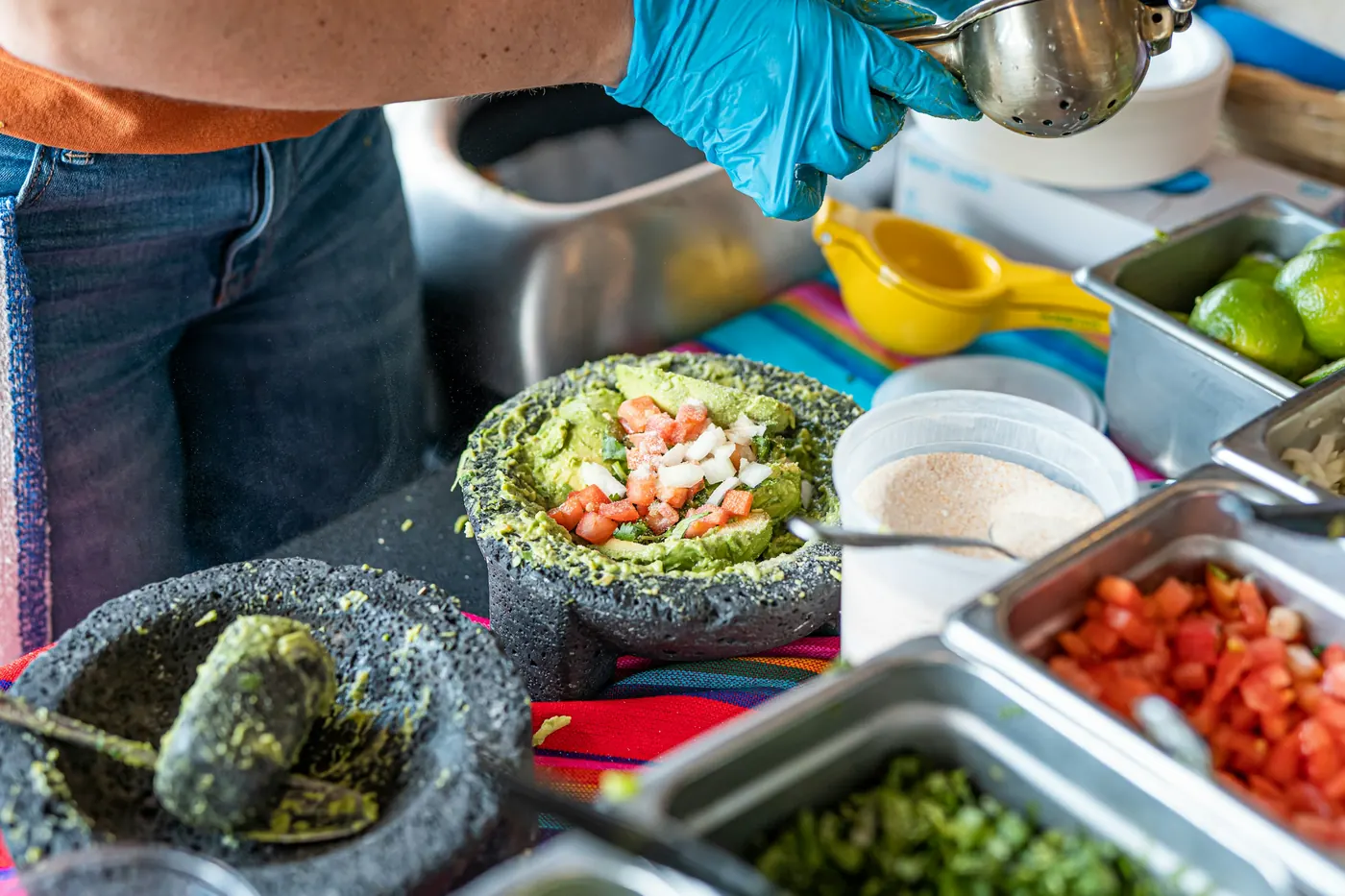
Cuitáxi describes it as hand-carved in Mexico from solid volcanic rock, unglazed, with the same “Not Concrete” promise in the title. At 10 inches across, the seller says it holds enough guacamole, pico de gallo or salsa macha to feed a crowd, where an 8-inch bowl serves a family. The wider interior also gives the pestle more room to work, so ingredients are less likely to jump over the rim.
The listing does not give the height or weight, but expect it to be noticeably heavier than the 8-inch, which Cuitáxi lists at 7 to 8.8 pounds. Find it a permanent spot on the counter or a low shelf rather than a high cupboard. The seller makes some bold claims, such as stone “rated harder than granite”, which we could not verify, so we have left them out of the specs.
Curing is the same as for any basalt molcajete, only with more surface to work: plan on extra rice. Cuitáxi emails a curing guide after purchase.
Why we like it
- 10-inch bowl for party-size batches
- Hand-carved volcanic rock, unglazed, per the listing
- Made in Mexico by artisans
- Seller sends a curing guide by email
Key specifications
| Model | Molcajete 10 inch |
|---|---|
| Stone (per listing) | Solid volcanic rock (lava stone), unglazed |
| Diameter | 10 inches |
| Height | Not stated |
| Weight | Not stated |
| Made in | Mexico |
| Curing | Needed; guide emailed by the seller |
| Included | Pestle (temolote) |
Why we recommend it
If you host taco nights or make guacamole for a dozen people, an 8-inch bowl means grinding in rounds. This one lets you make and serve a full batch in one vessel, the way it is often brought to the table.
Skip it if you cook for one or two, or if lifting a very heavy stone bowl is a problem. The weight is not listed, and it will be more than the 8-inch.
Pros and cons
Pros
- Largest bowl on this list
- Make and serve in one
- Made in Mexico
Cons
- Height and weight not stated
- Very heavy to move
- Longer to cure
4. SMP 7-inch Basalt Molcajete – Small Bowl, Traditional Stone
A smaller molcajete for salsa for two, a quick guacamole, or grinding spices.
SMP (Sociedad Mexicana de Parrilleros) describes this as a handcrafted molcajete and tejolote in durable volcanic basalt with a rustic finish. At 7 inches it takes up less counter space than an 8-inch bowl, but the seller says its weight still keeps it steady while you grind chiles, garlic, peppercorns, cumin and herbs. That is the job a small molcajete does best: toasting and grinding whole spices for an adobo or a rub.
The listing is one of the few that spells out a curing method: grind dry rice to remove grit, repeat with salt and garlic, rinse and dry, and use no soap. That matches the rice-and-salt method Made In publishes. SMP also suggests using it as a warm or chilled serving bowl, which suits a stone that holds its temperature.
The trade-off is capacity. A 7-inch molcajete makes a small bowl of salsa for the table, not guacamole for a party, and the listing does not give height or weight.
Why we like it
- Listing names the stone as volcanic basalt
- Compact 7-inch size for small batches and spices
- Curing method given on the listing
- Tejolote included
Key specifications
| Model | Molcajete 7″ |
|---|---|
| Stone (per listing) | Volcanic basalt, rustic finish |
| Diameter | 7 inches |
| Height | Not stated |
| Weight | Not stated (described as heavy) |
| Made in | Not stated (sold as Mexican volcanic stone) |
| Curing | Needed; rice, then salt and garlic |
| Included | Tejolote (pestle) |
Why we recommend it
Choose it if you cook for one or two, have a small kitchen, or want a second molcajete for spices so the big one stays for salsa. It is real basalt, according to the seller, at a size that is easier to lift and store.
Skip it if you make guacamole for more than three or four people. You will be grinding in rounds.
Pros and cons
Pros
- Basalt named in the listing
- Easy to store and lift
- Clear curing steps
Cons
- Small batches only
- Height, weight and origin not stated
- Needs curing first
5. YO PIDO 8-inch Volcanic Stone Molcajete with Wood Stand – Steady on the Counter

An 8-inch volcanic stone molcajete that comes with a wooden stand, so the bowl sits off the counter.
YO PIDO says the molcajete is handmade in Mexico from original volcanic stone, and its listing is honest about what that means in use. It explains that the holes on the surface are the natural pores of the stone and help grind ingredients, and it states plainly that the molcajete must be cured before first use by grinding raw rice to remove loose stone residue. Those are both signs of a seller describing real volcanic rock rather than a cast bowl.
The wood stand is the reason to choose it. Three stone legs can scratch a stone or wood counter, and the stand gives the bowl a stable base and makes it look at home on a buffet. YO PIDO also notes that volcanic stone holds heat, which is why molcajetes are often warmed and used to serve sizzling dishes.
The listing does not give the height or weight, and it does not name the region the stone comes from. For salsa and guacamole for four to six, the 8-inch size is right.
Why we like it
- Wooden stand included
- Handmade in Mexico from volcanic stone, per the listing
- Listing explains the natural pores and the rice cure
- Standard 8-inch size, pestle included
Key specifications
| Model | YP-MOL8INWS-01 |
|---|---|
| Stone (per listing) | Volcanic stone (basalt not named) |
| Diameter | 8 inches |
| Height | Not stated |
| Weight | Not stated |
| Made in | Mexico |
| Curing | Needed; grind raw rice |
| Included | Pestle and wood stand |
Why we recommend it
Choose it if you will serve from the molcajete often, or want to protect your counter from stone legs. The stand turns it into a serving piece as much as a tool.
Skip it if you want the stone named precisely: the listing says volcanic stone but not basalt, and gives no weight.
Pros and cons
Pros
- Stand protects counters
- Handmade in Mexico
- Honest curing instructions
Cons
- Basalt not named
- Weight and height not stated
- Stand is one more thing to keep dry
6. FESTMEX 8.5-inch Pig Molcajete – The Classic Pig-Head Shape

The pig-head molcajete is a familiar sight on Mexican tables, and this is FESTMEX’s version of it.
FESTMEX describes it as handcrafted from natural volcanic rock from the Popocatépetl volcano into the traditional pig molcajete design. The listing gives the same measurements as its round molcajete: about 8½ inches across and 5 inches tall, with a tejolote about 4 inches long and a 2½-inch grinding end. The carved head and three legs make it more of a centerpiece than a plain bowl, and it works the same way for grinding.
It comes with a card of curing instructions. The usual rice-and-salt cure applies, and the carved head is one more place for grit to hide, so give the outside a good scrub with a stiff brush too.
The listing for this design does not repeat the word basalt that appears on the round FESTMEX molcajete, though it names the same volcano. Weight is not stated.
Why we like it
- Traditional pig-head shape for serving
- Volcanic rock from the Popocatépetl area, per the listing
- About 8½ inches across, 5 inches tall
- Curing card included
Key specifications
| Model | FMEX-MPIG-8 |
|---|---|
| Stone (per listing) | Natural volcanic rock (basalt not named on this listing) |
| Diameter | About 8½ inches (handmade, varies) |
| Height | About 5 inches |
| Weight | Not stated |
| Made in | Mexico |
| Curing | Needed; instruction card included |
| Included | Pestle, about 4 inches long |
Why we recommend it
Choose it if the molcajete will spend as much time on the table as on the counter. It grinds like any 8-inch bowl and looks the part when guacamole goes out with chips.
Skip it if you want the simplest shape to clean. The carving adds surfaces that collect food and need brushing.
Pros and cons
Pros
- Distinctive serving piece
- Stone source named
- Curing card included
Cons
- Carving is harder to clean
- Weight not stated
- Needs curing first
7. IMUSA 8-inch Granite Molcajete – Smooth Stone, Easy Cleaning
Not volcanic stone, and IMUSA says so plainly: this is an 8-inch granite mortar with a natural finish.
IMUSA’s listing calls it super heavy and long lasting, says it is easy to clean, and describes a pestle with a curved base for comfortable grinding. It sells it for guacamole, mole and salsa, as well as for crushing garlic, ginger, pepper and spices. The model number is MEXI-2011M, and IMUSA gives a 90-day manufacturer warranty.
The difference from basalt is the surface. Granite is dense and much less porous, so it does not shed grit the way new basalt does, and food does not lodge in pores. Made In credits basalt’s rough surface for releasing oils as you grind; a smoother granite bowl crushes and mashes, but expect a salsa to take a little longer to break down. IMUSA’s listing does not mention curing. A rinse and one round of rice is a sensible start with any new stone mortar.
IMUSA also makes a 6-inch version (MEXI-2013) if you want the same thing smaller.
Why we like it
- Clearly sold as granite, with no volcanic claims
- 8-inch bowl, described as super heavy
- Curved-base pestle for comfortable grinding
- Easy to clean, per IMUSA
- 90-day manufacturer warranty
Key specifications
| Model | MEXI-2011M |
|---|---|
| Stone (per listing) | Granite, natural finish |
| Diameter | 8 inches |
| Height | Not stated |
| Weight | Not stated (described as super heavy) |
| Made in | Not stated |
| Curing | Not mentioned by the listing |
| Included | Pestle with curved base |
Why we recommend it
Choose it if you want a molcajete-shaped mortar you can use almost straight away and clean quickly, or if you mostly grind spices and garlic. It is an honest product from a familiar Latin kitchenware brand.
Skip it if you want a traditional volcanic-stone molcajete. Granite grinds well, but it is not the material Mexican cooks have used for centuries, and it will not develop the same rough grinding surface.
Pros and cons
Pros
- Honestly labeled granite
- No long cure
- Easy to clean
- Warranty
Cons
- Not volcanic stone
- Smoother surface grinds more slowly
- Weight and origin not stated
8. ChefSofi 6-inch Unpolished Granite Mortar – Small and Rough Inside

A 6-inch granite mortar and pestle with an unpolished interior, for spices, garlic and small batches of salsa.
ChefSofi sells it as unpolished heavy natural granite with a capacity of about 2 cups (500 ml). The unpolished inside is the point: ChefSofi says it gives the bowl natural friction, so ingredients grip the surface rather than sliding around. That gets granite a step closer to the texture of basalt, though it is still a much less porous stone.
It is a general mortar and pestle rather than a Mexican molcajete; it has a flat base rather than three legs. ChefSofi notes that granite is heavy enough to stay still on the counter. Two cups is enough for a small salsa or guacamole for two, and ample for grinding cumin, peppercorns or dried chiles.
The listing does not mention curing, weight or where it is made. ChefSofi offers returns if you are not satisfied.
Why we like it
- Unpolished granite interior for better grip
- About 2 cups (500 ml) capacity
- Compact 6-inch size
- Seller offers returns
Key specifications
| Model | MP-G-001-UP (gray, 2 cups) |
|---|---|
| Stone (per listing) | Unpolished natural granite |
| Diameter | 6 inches |
| Height | Not stated |
| Weight | Not stated (described as heavy) |
| Made in | Not stated |
| Curing | Not mentioned by the listing |
| Included | Pestle |
Why we recommend it
Choose it as a spice grinder, or as a small, easy-care mortar for salsa for one or two. The rough interior makes it more useful than a polished granite bowl.
Skip it if you want a molcajete for the table. It is a plain mortar, too small for guacamole for a group, and not volcanic stone.
Pros and cons
Pros
- Rough, unpolished interior
- Small and easy to store
- No long cure
Cons
- Not a traditional molcajete
- Small capacity
- Weight and origin not stated
Real basalt, cement or granite: how to tell
A traditional molcajete is carved from volcanic basalt. Made In, which publishes a care guide for molcajetes, describes them as pre-Hispanic mortars and pestles “carved from volcanic basalt”. The U.S. Geological Survey describes vesicular basalt as lava rock filled with gas bubbles that formed while the rock was still molten. Those bubbles are the pores you see in a real molcajete, and they are what give it a rough grinding surface.
Imitations are cast from cement or concrete, sometimes with stone grit mixed in and dyed dark. Mexico News Daily’s food writer Sandra Gancz Kahan advises avoiding cement molcajetes because, she writes, they are not safe for cooking. Here is how she and others suggest telling them apart.
1. Look at the pores
Real volcanic stone has irregular pores and imperfections across the whole surface, inside and out. According to Mexico News Daily, “a very smooth surface without pores is usually an indicator of a cement piece.” A molcajete cast in a mold also tends to look too regular, with identical legs and a perfectly even rim.
2. Try the water test
Pour a little water into the bowl. Mexico News Daily says a cement molcajete absorbs the water and becomes evenly soaked, while volcanic stone holds water without absorbing it.
3. Watch what comes out during the cure
Curing is the most telling test. A new basalt molcajete releases fine gray grit when you grind rice in it, which is why the first batches of rice powder come out gray. Mexico News Daily calls this “the ultimate test”: volcanic stone will immediately release sediment. If the rice stays white from the start, be suspicious.
4. Expect variation, not perfection
Color varies in real basalt, from charcoal to lighter gray, and so does porosity. Masienda, which sells hand-carved molcajetes, notes that natural variation in color and porosity is expected, and that light mineral inclusions, which artisans call “corazón de piedra”, are prized rather than flaws. Do not reject a bowl for being uneven.
5. Read the listing carefully
On Amazon, look for a listing that names the stone (basalt, volcanic or lava rock), says where it was made, and tells you the molcajete needs curing. A seller that admits the stone sheds grit at first is describing real basalt. Granite mortars sold as “molcajetes” are honest products when they say granite, as IMUSA and ChefSofi do, but they are a different stone: smoother, denser and far less porous.
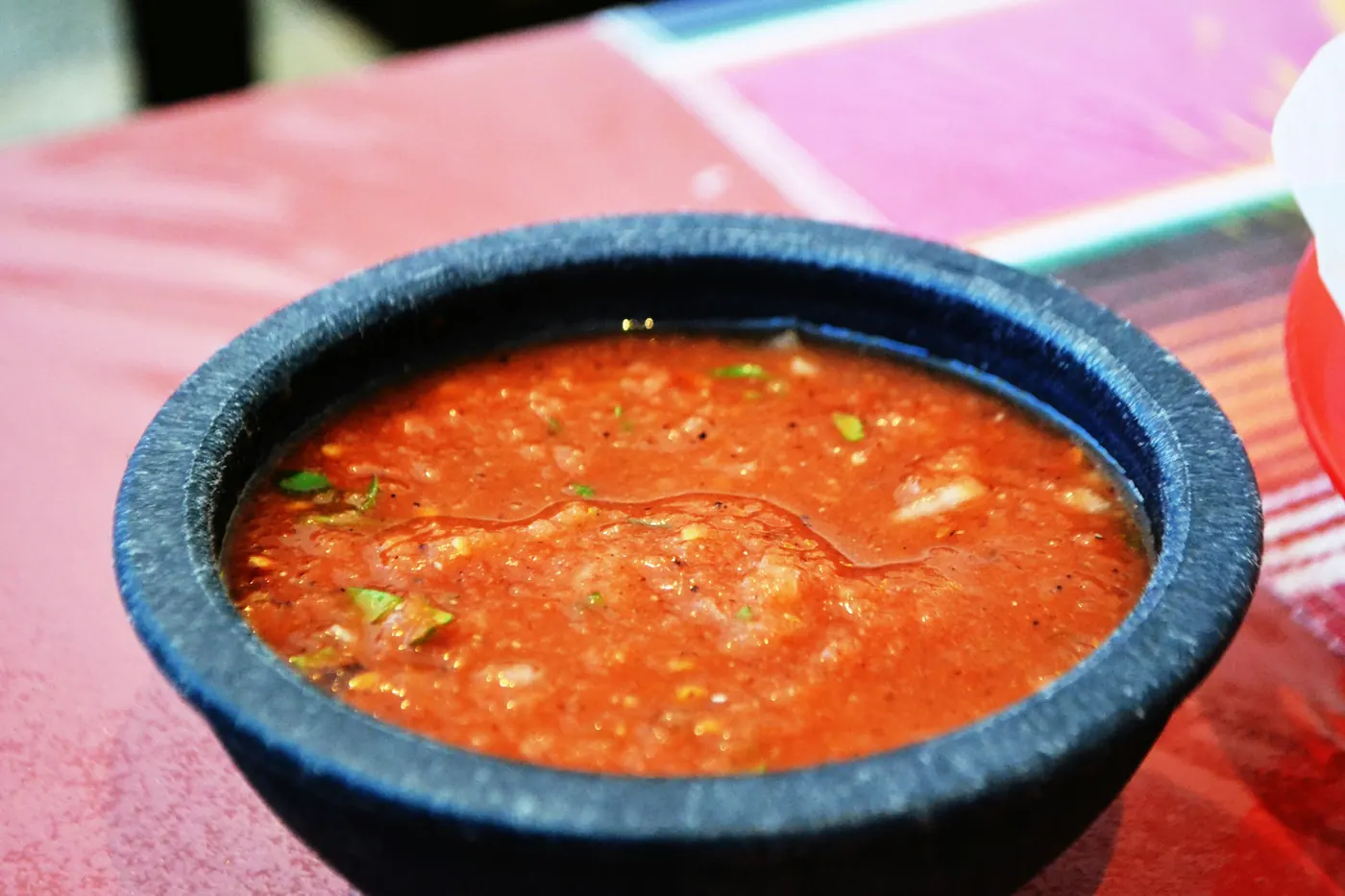
How to cure a new molcajete
Curing, sometimes called seasoning, removes loose grit from a new basalt molcajete and smooths the high points of the surface. Made In compares it to seasoning carbon steel, and stresses that you only do it once. Its method, which matches Masienda’s and the sellers’ instructions above, goes like this:
- Scrub. Scrub the bowl and pestle with a stiff brush and plain water, then let them dry.
- Grind rice. Grind about half a cup of raw white rice in circles with the pestle until it is a powder. It will come out gray with stone dust. Brush it out.
- Grind salt. Grind about a third of a cup of coarse kosher salt around the whole bowl for about five minutes, then brush it out.
- Grind rice again. Repeat with fresh rice. Keep going, rinsing and brushing between rounds, until the rice powder no longer looks gray.
- Rinse and dry. Rinse with water, scrub, and let the molcajete dry completely, upside down.
Some cooks, and SMP’s listing, add a round of garlic with the salt, and many make a first throwaway salsa before the real one. Expect the whole cure to take a while; the number of rice rounds depends on the stone. Granite mortars do not shed grit the same way, so a rinse and a single round of rice is usually enough.
Everyday care
Made In and Masienda agree on the rules. Do not use soap: Made In says its scent and flavor get trapped in the stone and passed into the next thing you make. Never put a molcajete in the dishwasher. Rinse it with warm water, scrub food from the pores with a brush, blot it dry, and let it air dry upside down before storing. Masienda suggests a towel under the bowl to protect counters from the legs.
How to choose a molcajete
1. Stone
Volcanic basalt is the traditional choice and the one we recommend for salsa and guacamole. Granite is fine for spices and easier to care for, but buy it knowing it is granite. Avoid anything that hides what it is made of.
2. Size
An 8-inch molcajete suits most households: salsa for a family dinner or guacamole for four to six. A 10-inch bowl is for parties. A 6- or 7-inch bowl is for one or two people, or for spices.
3. Weight
Heavy is good. A heavy bowl does not walk across the counter as you grind. Cuitáxi lists its 8-inch bowl at 7 to 8.8 pounds, which gives you a sense of what solid basalt weighs at that size. Think about where it will live; it is not something to lift down from a high shelf every week.
4. The pestle
Look for a tejolote with a broad, flat-ish grinding end that fits your hand. FESTMEX lists its pestle at about 4 inches long with a 2½-inch grinding end, which covers a good share of an 8-inch bowl with each turn.
5. Shape and legs
Three short legs are traditional and help the bowl sit steady on an uneven surface. Carved designs, such as the pig head, make a good serving piece but take longer to clean. A stand, like YO PIDO’s, protects the counter.
How we picked these eight molcajetes
We started from what a Mexican kitchen asks of a molcajete: a rough volcanic stone that grinds well, a bowl heavy enough to stay put, and a size that suits the salsa you make. We searched Amazon US for molcajetes and stone mortars, then checked each candidate’s listing with Amazon’s product data for stock, the stone named, size, origin and curing advice. Every pick was in stock when we checked. We favored listings that name the stone and its source, give measurements, and are upfront that basalt needs curing; we included two granite mortars, clearly labeled, for cooks who want less upkeep. We left out listings that were low on stock, sellers with no identifiable brand, and one volcanic-stone listing whose oven-temperature and nutrition claims we could not support. For how to identify basalt and cure it, we relied on Made In, Masienda, Mexico News Daily and the USGS, cited above. We have not ground salsa in every molcajete listed here, and a handmade stone varies from one piece to the next.
Molcajete questions, answered
What is the best type of molcajete?
Volcanic basalt, carved in Mexico. Its porous, rough surface is what makes a molcajete grind the way it does. Granite is a good, easier-care alternative for spices, but it is a different stone.
How can you tell if a molcajete is authentic?
Look for irregular pores all over, a weight that feels like solid stone, and gray grit when you first grind rice in it. Mexico News Daily notes that a cement piece soaks up water evenly, while volcanic stone holds it. A perfectly smooth, pore-free surface is a warning sign.
What makes a quality molcajete?
Dense, evenly porous basalt without cracks, a stable base or legs, a pestle that fits your hand, and a seller who tells you the stone, the size and how to cure it. The best-documented listings on this page do all of that.
Do granite molcajetes need curing?
Not in the same way. Granite does not shed grit like new basalt, and IMUSA and ChefSofi do not mention curing. Wash it before first use and grind a handful of rice if you want to be sure the surface is clean.
Can you wash a molcajete with soap?
No. Made In and Masienda both say to skip soap, because residue gets trapped in the pores. Rinse with water, scrub with a brush, and let it dry fully.
What can you make in a molcajete?
Salsas, guacamole, spice pastes and adobos, and ground spices for rubs. It also goes to the table as a serving bowl. Our guide to Mexican chiles covers the chiles most often ground in one.
Our final pick for a molcajete
Buy the Cuitáxi 8-inch lava rock molcajete if you want one traditional molcajete for salsa and guacamole: the stone, size and origin are spelled out, and it is the size most kitchens need. Go up to the 10-inch for parties, down to SMP’s 7-inch for small batches, and choose IMUSA’s granite bowl if easy cleaning matters more than tradition. Whatever you buy, cure it before the first salsa, and keep soap away from it.
A molcajete is one part of a Mexican kitchen. Our guide to Mexican cooking tools covers the comal, tortilla press and the rest of the kit, and taco bar supplies shows where a molcajete of guacamole fits on the table. For the tortillas that go with it, see tortilla making tools.
Related guide: Best guacamole bowl.
Related guide: Best gifts for mexican food lovers.
And if you would rather someone else made the salsa tonight, see the menu or call to order.