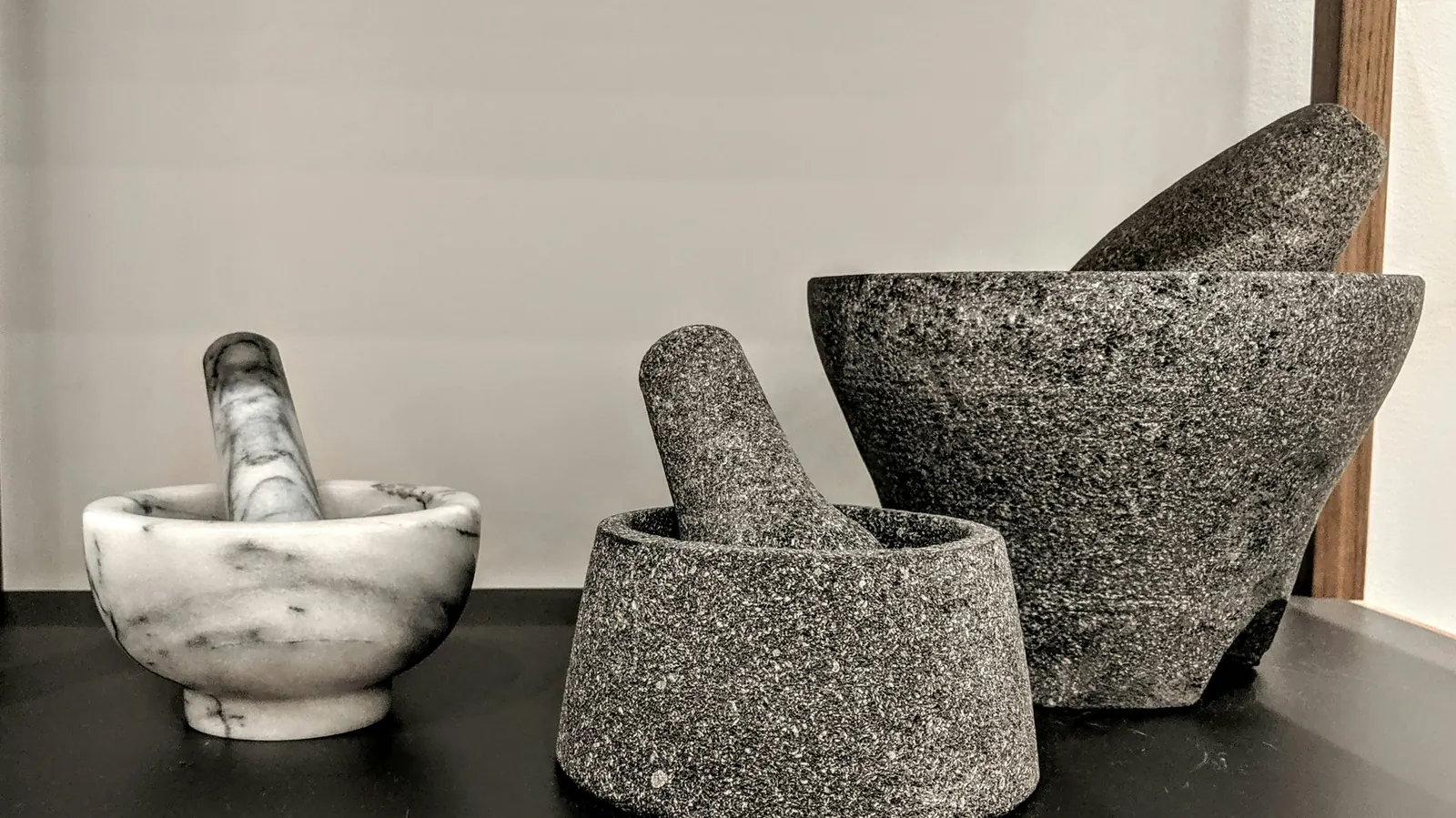
A molcajete is a mortar and pestle, so the question sounds odd at first. But the three-legged volcanic stone bowl of the Mexican kitchen and the smooth granite or marble mortar on a European or American counter are built from different stone, shaped differently and looked after differently, and those differences show up in the salsa. One has a rough, porous surface that needs curing before first use. The other is denser and smoother and is ready almost straight away.
This guide puts a basalt molcajete, the one we recommend in our guide to the best molcajete, next to a well-known granite mortar and pestle from Cole & Mason, and goes through what actually differs: texture, porosity, curing, weight, capacity and cleaning. Where a claim about flavor or texture appears, we say who made it.
Julia’s earns a commission on purchases made through links on this page, at no cost to you. Recommendations are based on what a Mexican kitchen looks for in a grinding stone, the sellers’ own listings and published guidance and equipment reviews, which we name.
Quick verdict: molcajete or mortar and pestle?
Buy a basalt molcajete such as the Cuitáxi 8-inch if you make salsa and guacamole often and want to serve them in the bowl you made them in: its rough volcanic stone grinds chiles, garlic and tomatoes into a coarse, textured sauce, but it must be cured first and kept away from soap. Buy a granite mortar and pestle such as the Cole & Mason 5.5-inch if you mostly grind spices, garlic and small batches and want something smoother, quicker to clean and easier to get ready.
The rest of this page explains why, difference by difference.
Molcajete vs mortar and pestle: the differences side by side
Figures come from each seller’s Amazon listing. Handmade stone varies from piece to piece, so treat sizes as approximate.
| Molcajete (Cuitáxi 8-inch) | Mortar and pestle (Cole & Mason 5.5-inch) | |
|---|---|---|
| Stone | Lava rock (volcanic basalt) from the Popocatépetl area, Puebla | Granite, unpolished inside |
| Surface | Rough and porous | Dense, with an unpolished grinding surface |
| Shape | Wide bowl on three legs | Thick-walled bowl on a flat base |
| Size | 8 inches across, 5 inches tall | 5.5 inches across; height not stated |
| Capacity | Not stated | 3 cups (20 ounces) |
| Weight | 7 to 8.8 lb | 8 lb (per listing title) |
| Before first use | Full cure with rice and salt | Season with rice, garlic, cumin, salt and pepper |
| Soap | No | Not stated on the listing |
| Serve at the table | Yes, traditionally | Possible, but not its usual role |
Stone and texture: basalt against granite
A traditional molcajete is carved from volcanic basalt. Made In, which publishes a care guide for molcajetes, describes them as pre-Hispanic mortars “carved from volcanic basalt”, and the U.S. Geological Survey describes vesicular basalt as lava rock filled with gas bubbles that formed while the rock was still molten. Those bubbles are the pores you see across a real molcajete, inside and out, and they give the bowl its rough grinding surface.
Granite forms differently. The USGS lists it among the intrusive igneous rocks, which cool very slowly below the surface into a coarse-grained stone without the gas bubbles of vesicular lava. It is dense and much less porous. A polished granite bowl is smooth enough that ingredients slide around in it, which is why the better granite mortars, including Cole & Mason’s, leave the inside of the bowl and the tip of the pestle unpolished.
Texture matters because a mortar works by friction. In its equipment review of mortars and pestles, America’s Test Kitchen found that coarse-textured mortars grip food and that smooth metal and stoneware mortars “provide no traction”, so spices slid around rather than breaking down. It described the volcanic rock of the molcajete it recommended as “quite coarse-textured and porous”. Both stones on this page have a rough grinding surface; the molcajete’s is rougher.
Porosity, curing and the first use
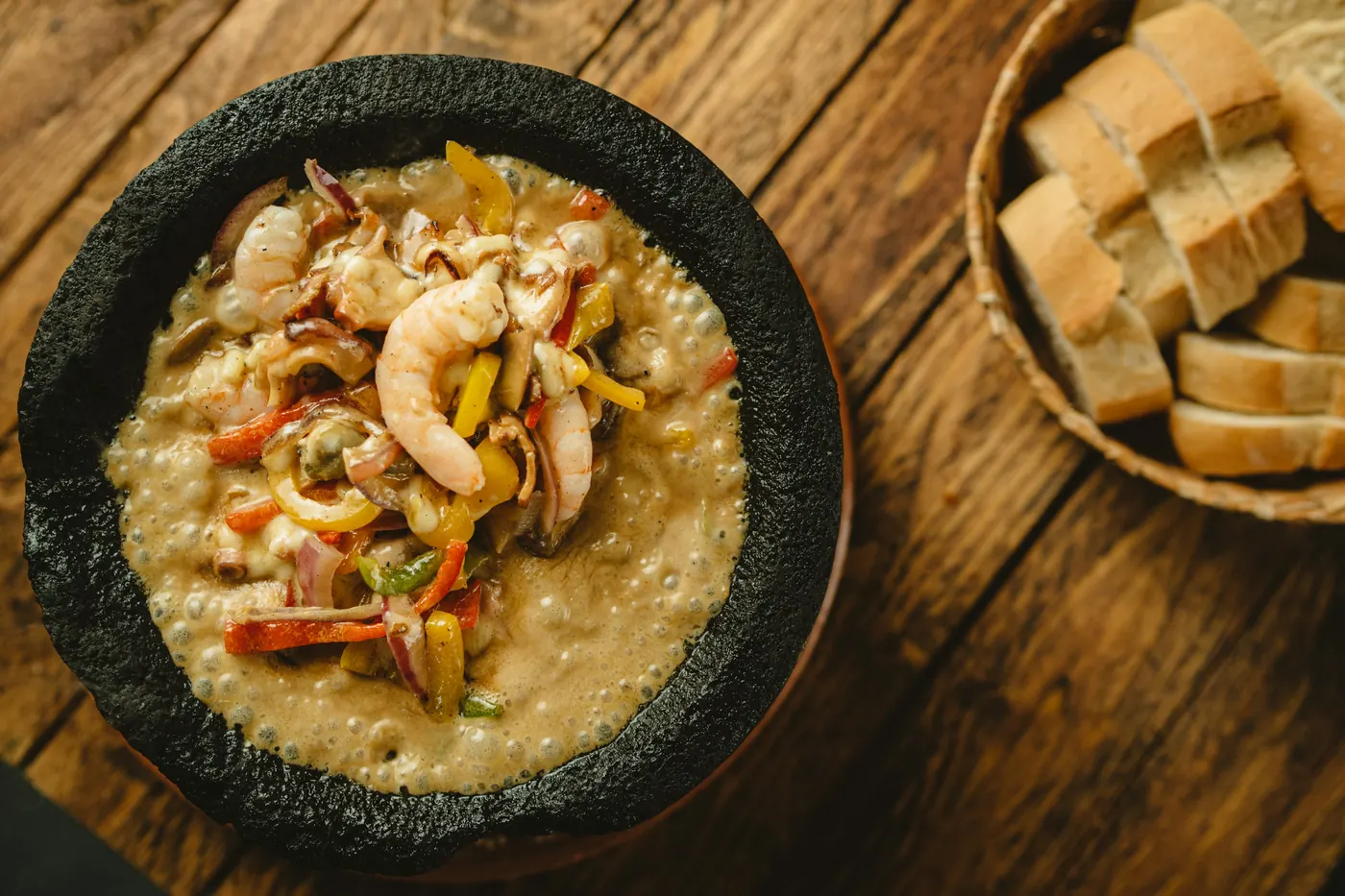
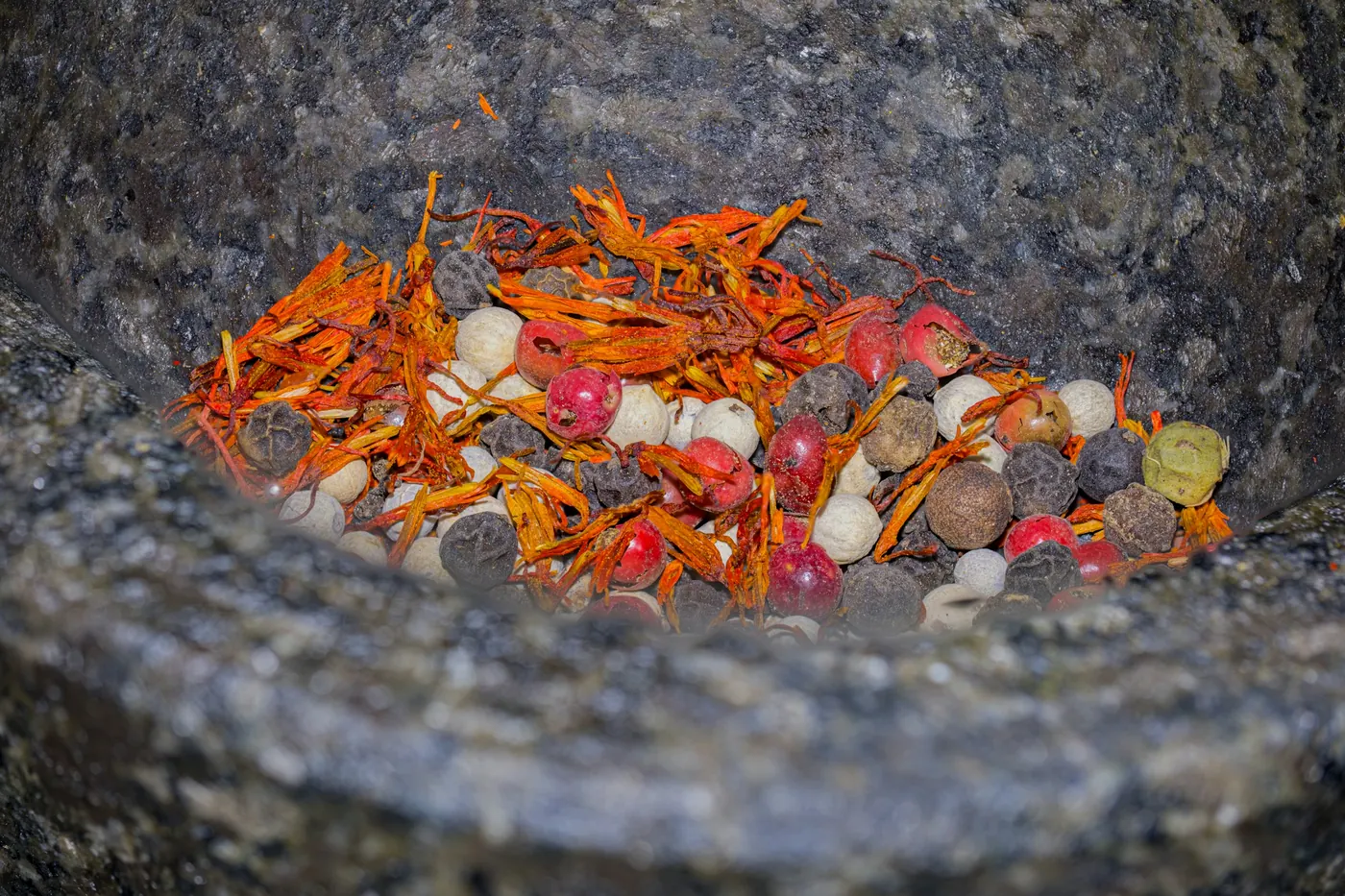
Pores are the molcajete’s strength and its chore. A new basalt bowl sheds fine stone grit, and it has to be cured before you make food in it. The method Made In and Masienda both publish is to scrub the bowl with water, then grind raw white rice into powder, brush it out, grind coarse salt around the whole bowl, and repeat the rice until the powder no longer comes out gray. Made In compares it to seasoning carbon steel and stresses that you only do it once. Cuitáxi says it emails buyers a curing guide after purchase.
Granite does not shed grit the same way, so getting it ready is quicker. Cole & Mason’s listing asks you to season its mortar before first use by grinding white rice, garlic, cumin, salt and pepper in it, which cleans the surface and gives it a first coat of flavor. America’s Test Kitchen notes that coarse mortars in general need seasoning to get rid of gritty particles, so expect a short ritual with either stone; it is just much longer with basalt.
Porosity also changes cleaning, covered below. The same pores that grip a garlic clove will hold onto soap, so a molcajete is washed with water only.
What the stone does to salsa and guacamole
This is where people expect a big claim, so here is what the sources actually say. Made In credits the molcajete’s rough surface for releasing oils from ingredients as you grind. Chef Bricia Lopez, quoted by America’s Test Kitchen, says of molcajete salsa that “you can only achieve that special texture with a molcajete”. FESTMEX, which sells molcajetes, says the cured stone brings out richer flavor; that is a seller’s claim, not a measurement.
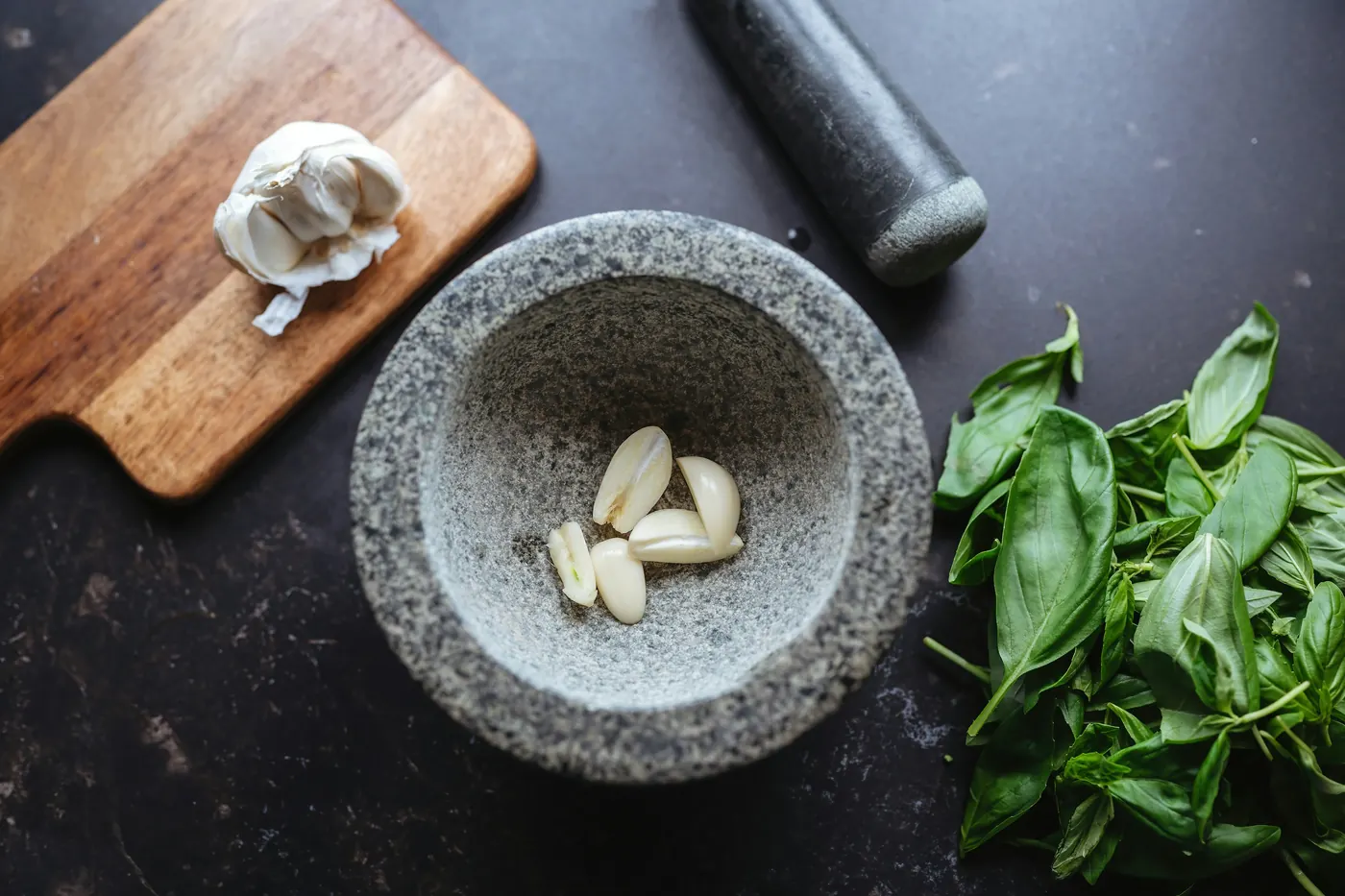
What is easy to explain is the texture. A wide, shallow molcajete lets you crush garlic and chiles to a paste in the center and then work tomatoes in so that some break down and some stay in pieces. That uneven, part-chunky, part-smooth sauce is what a molcajete is known for, and it is different from the even purée of a blender. Our guide to salsa roja and salsa verde explains the two salsas most often made this way.
A granite mortar can make salsa and guacamole too. America’s Test Kitchen’s top mortar, a large granite one, handled spice mixes, guacamole and curry paste well in its review. The deeper, narrower bowl suits pounding and grinding small, hard ingredients such as peppercorns, cumin and dried chiles, and it keeps them from jumping out. For a full bowl of guacamole, the wider molcajete gives you more room to work.
Weight and size: how much stone you need
Heavy is good in both. America’s Test Kitchen liked mortars that weighed at least 5 pounds, because lighter ones had to be held down while in use, and recommended a capacity of 1.5 to 4 cups for salsa, pesto, curry paste and spice blends. Both picks clear that bar. Cuitáxi lists its 8-inch molcajete at 7 to 8.8 pounds; Cole & Mason’s listing title gives 8 pounds for its granite mortar and a capacity of 3 cups.
The shapes use that weight differently. The molcajete spreads it over a wide, shallow bowl on three short legs, which sit steady on an uneven surface and look the part on a table. The Cole & Mason concentrates it into a compact, thick-walled bowl only 5.5 inches across, so it takes up less room on the counter and in the cupboard. Neither is something you will want to lift down from a high shelf every day.
Cleaning and everyday care
A molcajete has strict rules. Made In and Masienda both say no soap, because its scent and flavor get trapped in the stone and pass into the next thing you make, and never the dishwasher. Rinse with warm water, scrub food out of the pores with a stiff brush, blot it dry and let it air dry upside down. Masienda suggests a towel under the bowl to protect your counter from the legs.
Granite is easier, because there are far fewer pores for food to hide in. Cole & Mason’s Amazon listing does not give washing instructions, so follow the general rule for stone: rinse with warm water, scrub with a brush, keep it out of the dishwasher, and dry it fully before storing. America’s Test Kitchen did note that a marble mortar stained slightly after making pesto, a reminder that lighter, softer stones show their history.
What about marble, porcelain and wood mortars?
They exist, and they are fine for some jobs, but they are a step further from a molcajete than granite is. In America’s Test Kitchen’s review, a lightweight marble mortar was too light to stay put without being held, a smooth stoneware mortar gave “no abrasive power or traction”, and a wooden pestle meant more effort because it was so light. Small, smooth mortars like these suit crushing a few herbs or a pinch of seeds. For salsa and guacamole, choose rough, heavy stone: basalt first, unpolished granite second.
Choose a molcajete if… / Choose a mortar and pestle if…
Choose a molcajete if…
- You make salsa or guacamole every week and want the traditional texture.
- You want to make it and serve it in the same bowl.
- You are happy to spend an afternoon curing it once.
- You will wash it with water and a brush, never soap.
- You have counter space for a wide, heavy bowl.
Choose a mortar and pestle if…
- You mostly grind whole spices, garlic, ginger or small batches of paste.
- You want something ready to use after a short seasoning.
- You want quicker cleaning and fewer pores to scrub.
- You have a small kitchen and want a compact bowl.
- You cook across many cuisines, not mainly Mexican.
Our pick on each side
These are the two we recommend once you have decided. Our guide to the best molcajete reviews more options, from a 10-inch party bowl to two granite molcajete-shaped mortars, and explains how to tell real basalt from cement.
1. Cuitáxi 8-inch Lava Rock Molcajete – Traceable Volcanic Stone

Our top pick among molcajetes, and the one to buy if you want the traditional tool. Cuitáxi says it is carved from lava rock from the area of the Popocatépetl volcano in Puebla, by Mexican artisans, and made in Mexico, and the listing title adds “Not Concrete”, which addresses the most common worry about molcajetes sold online.
The listing gives the bowl as 8 inches across and 5 inches tall, and the weight as 7 to 8.8 pounds, noting that measurements vary because each piece is handmade. That weight keeps it from walking across the counter while you grind. Eight inches is the size most home cooks want: enough room for guacamole for four to six people or a full batch of salsa for a taco night. A pestle (tejolote) and a cloth tortilla warmer come with it, and the title mentions a brush for cleaning the pores.
Like any real basalt, it needs curing before first use. Cuitáxi emails buyers a step-by-step guide; the rice-and-salt method from Made In and Masienda described above works too. After that, it is water and a brush only, never soap.
Why we like it
- Stone source named: lava rock from the Popocatépetl area
- Made in Mexico by artisans, according to the listing
- 8 inches across, 5 inches tall, 7 to 8.8 lb
- Pestle, tortilla warmer and brush included
- Seller sends a curing guide by email
Key specifications
| Model | Molcajete Bowl (8-inch) |
|---|---|
| Stone (per listing) | Lava rock from the Popocatépetl volcano area |
| Diameter | 8 inches (handmade, varies) |
| Capacity | Not stated |
| Weight | 7 to 8.8 lb |
| Made in | Mexico (Puebla stone) |
| Before first use | Curing needed; guide emailed by the seller |
| Included | Pestle, tortilla warmer, brush (per title) |
Why we recommend it
Of the volcanic-stone listings we checked, this one says most clearly where the stone comes from, who made it, how big it is and how much it weighs. It is the right size for a family and heavy enough to grind without sliding, and it goes from counter to table with the salsa in it.
Skip it if you want to use it the day it arrives or need to lift it often: the cure takes time, and at up to nearly nine pounds it is not a one-handed bowl.
Pros and cons
Pros
- Rough basalt for traditional salsa texture
- Stone source and maker named
- Make and serve in one bowl
- Extras included
Cons
- Needs a full cure first
- No soap, ever
- Up to 8.8 lb; size varies piece to piece
2. Cole & Mason 5.5-inch Granite Mortar and Pestle – Heavy, Compact, Rough Inside

Cole & Mason is a London seasoning brand that traces its roots to 1919 and is best known for its salt and pepper mills; this is its 5.5-inch granite mortar. The listing describes a black granite bowl with thick walls, an unpolished interior and an unpolished pestle tip for grinding, and gives the capacity as 3 cups (20 ounces). The listing title gives the weight as 8 pounds, which clears the 5-pound mark America’s Test Kitchen sets for a mortar that stays put.
At 5.5 inches across it is far more compact than a molcajete, which suits a small kitchen and the jobs a mortar does most: cracking peppercorns, grinding cumin and coriander, pounding garlic and ginger to a paste, and crushing toasted dried chiles for a rub. Cole & Mason also sells it for avocado, and 3 cups is enough for a small guacamole for two or three people.
Before first use, the listing asks you to season it by grinding white rice, garlic, cumin, salt and pepper. That is far quicker than curing basalt. The model number is H100279USA and the listing gives a 2-year warranty. It does not state the height, where the stone is from, or how to wash it.
Why we like it
- Unpolished granite interior and pestle tip for grip
- Heavy, at 8 lb per the listing title
- 3-cup (20-ounce) capacity
- Quick seasoning before first use
- 2-year warranty, per the listing
Key specifications
| Model | H100279USA |
|---|---|
| Stone (per listing) | Granite; unpolished interior and pestle tip |
| Diameter | 5.5 inches |
| Capacity | 3 cups (20 ounces) |
| Weight | 8 lb (listing title) |
| Made in | Not stated |
| Before first use | Season with white rice, garlic, cumin, salt and pepper |
| Included | Pestle |
Why we recommend it
Choose it if you grind spices and garlic more often than you make salsa, or want one mortar for every cuisine you cook. It is heavy enough to stay still, rough enough inside to grip, and needs only a short seasoning before use.
Skip it if you want a traditional molcajete for big batches of guacamole or a bowl to serve from: it is compact and plain, and granite is not the volcanic stone Mexican cooks have used for centuries.
Pros and cons
Pros
- Ready after a quick seasoning
- Fewer pores, quicker to clean
- Compact on the counter
- Warranty
Cons
- Small for party-size guacamole
- Not volcanic stone
- Height, origin and care not stated
How we compared the two stones
We compared a molcajete and a mortar and pestle on what a Mexican kitchen asks of a grinding stone: the texture of the surface, how porous it is, what it takes to get ready, how heavy and how large it is, and how it is cleaned. Product details come from each seller’s Amazon listing, checked with Amazon’s product data for stock. For how basalt forms we used the U.S. Geological Survey; for curing and care, Made In and Masienda; and for how mortars of different materials perform, America’s Test Kitchen’s published equipment review. We have not ground salsa in either of these two pieces ourselves, and where a flavor or texture claim appears, we name whose it is.
Mortar and pestle vs molcajete: your questions
Is a molcajete better than a mortar and pestle?
For salsa and guacamole, a basalt molcajete is the traditional and, for many cooks, the better tool: its rough, porous stone and wide bowl give the part-chunky texture the dishes are known for. For spices and small pastes, a heavy granite mortar is just as good and easier to care for.
Can I use a mortar and pestle instead of a molcajete?
Yes. A heavy, rough-surfaced granite mortar makes good salsa and guacamole in smaller batches. Avoid small, smooth or light mortars, which America’s Test Kitchen found let food slide around.
Does a molcajete change the flavor?
Made In credits basalt’s rough surface for releasing oils as you grind, and chef Bricia Lopez, quoted by America’s Test Kitchen, says only a molcajete gives salsa its particular texture. A cured molcajete should not add any taste of its own; soap would, which is why it is never used.
Do granite mortars need curing?
Not the long cure basalt needs. Cole & Mason asks for a short seasoning with rice, garlic, cumin, salt and pepper before first use.
How can you tell a real molcajete from a fake?
Look for irregular pores all over and gray grit when you first grind rice in it. Mexico News Daily warns that cement imitations are not safe for cooking and that a smooth, pore-free surface usually means cement. Our molcajete guide walks through the checks.
Our final word on molcajete vs mortar and pestle
If salsa and guacamole are what you grind most, buy a basalt molcajete such as the Cuitáxi 8-inch, cure it once, and serve straight from it. If you mostly grind spices and garlic, or want a stone that is ready sooner and simpler to clean, buy a heavy granite mortar and pestle such as the Cole & Mason. Many cooks keep both: the molcajete for the table, the mortar for the spice shelf.
A molcajete is one part of a Mexican kitchen. Our guide to Mexican cooking tools covers the comal, tortilla press and the rest of the kit, and our guide to Mexican chiles explains the chiles most often ground in one.
And if you would rather someone else made the salsa tonight, see the menu or call to order.