Two things on a Mexican menu are described as melted cheese, and they are not interchangeable. Order one expecting the other and you will be disappointed — not because it is bad, but because it is a different dish entirely.
Here is how to tell them apart before the plate arrives.
The short answer
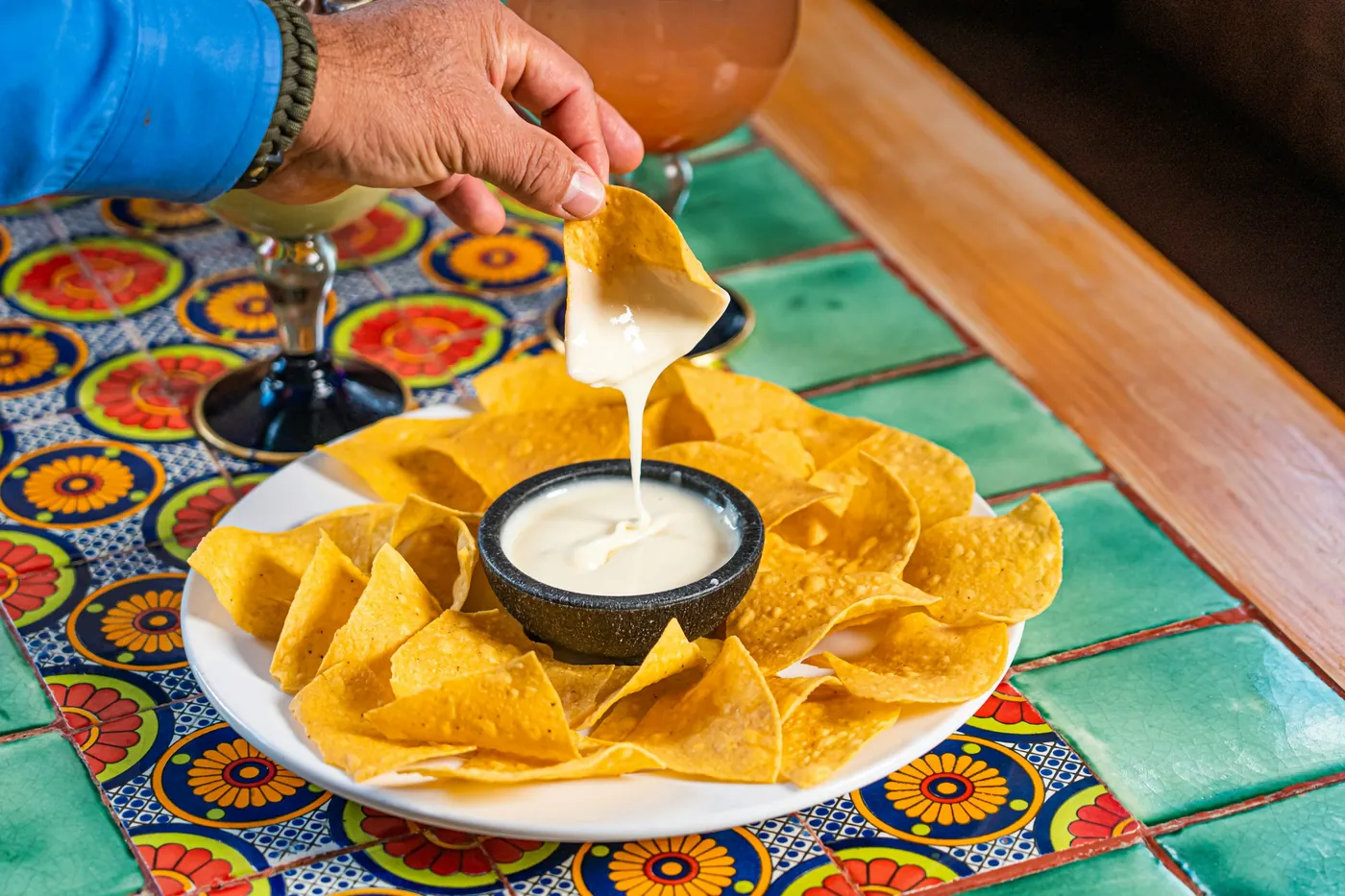
Queso is a smooth, pourable cheese dip you scoop with chips. Queso fundido is a pan of melted cheese served in the dish it was cooked in, usually with something stirred through it, and eaten by folding it into a tortilla. Queso is a dip; fundido is a small hot dish.
What queso actually is
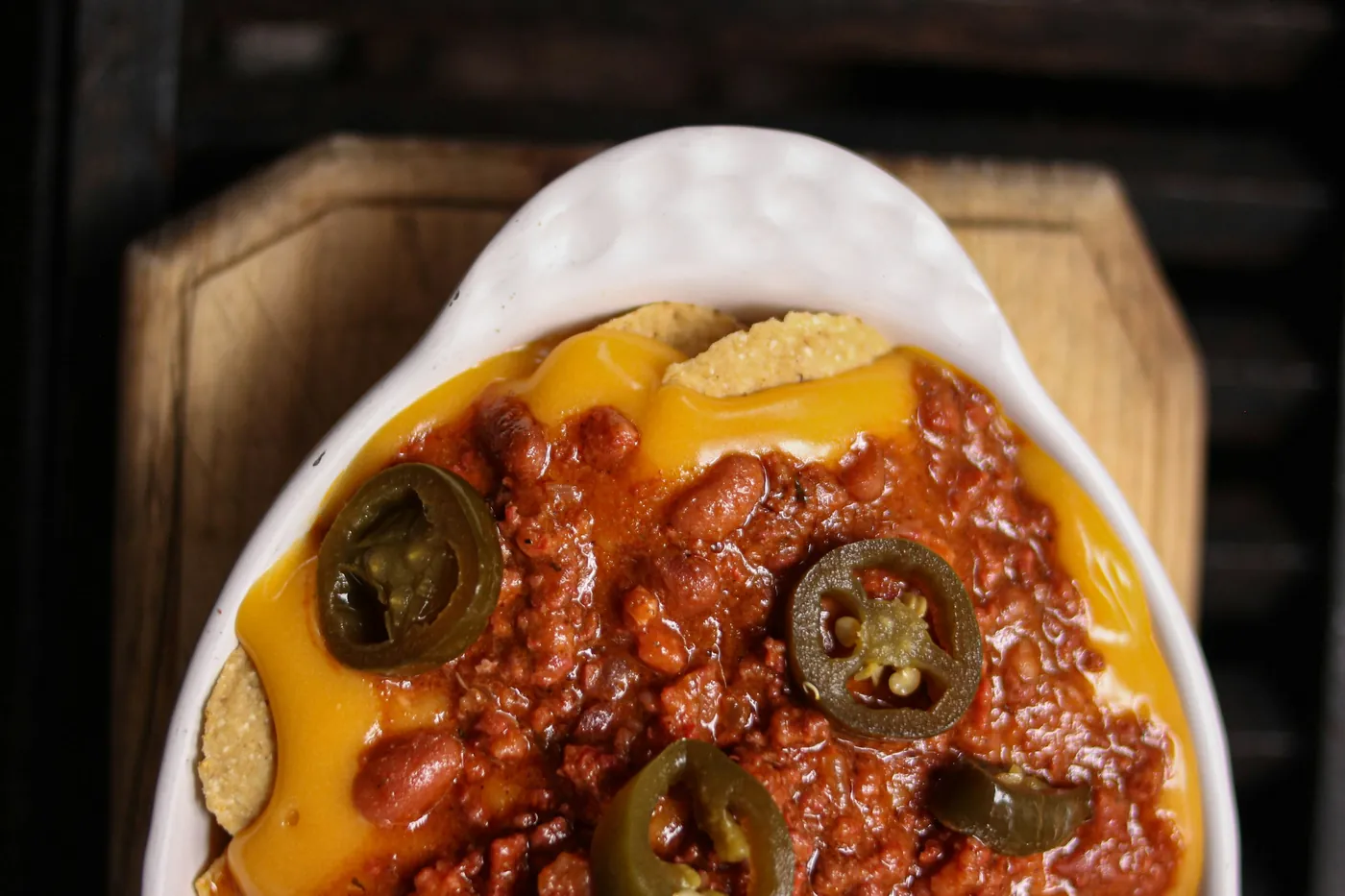
The full name on most menus is chile con queso — chile with cheese. It is a smooth, loose sauce, typically made by melting cheese with milk or cream and adding chiles, so it stays pourable as it sits.
That consistency is engineered. A dip has to cling to a tortilla chip without snapping it, and it has to survive twenty minutes on a table without seizing into a solid block. Milk-based sauces do that; straight melted cheese does not.
Despite the Spanish name, chile con queso is not a Mexican dish. The Handbook of Texas places it firmly within Tex-Mex cooking — the blend of Native American and Spanish traditions that developed on the Texas side of the border rather than in interior Mexico.
What queso fundido actually is
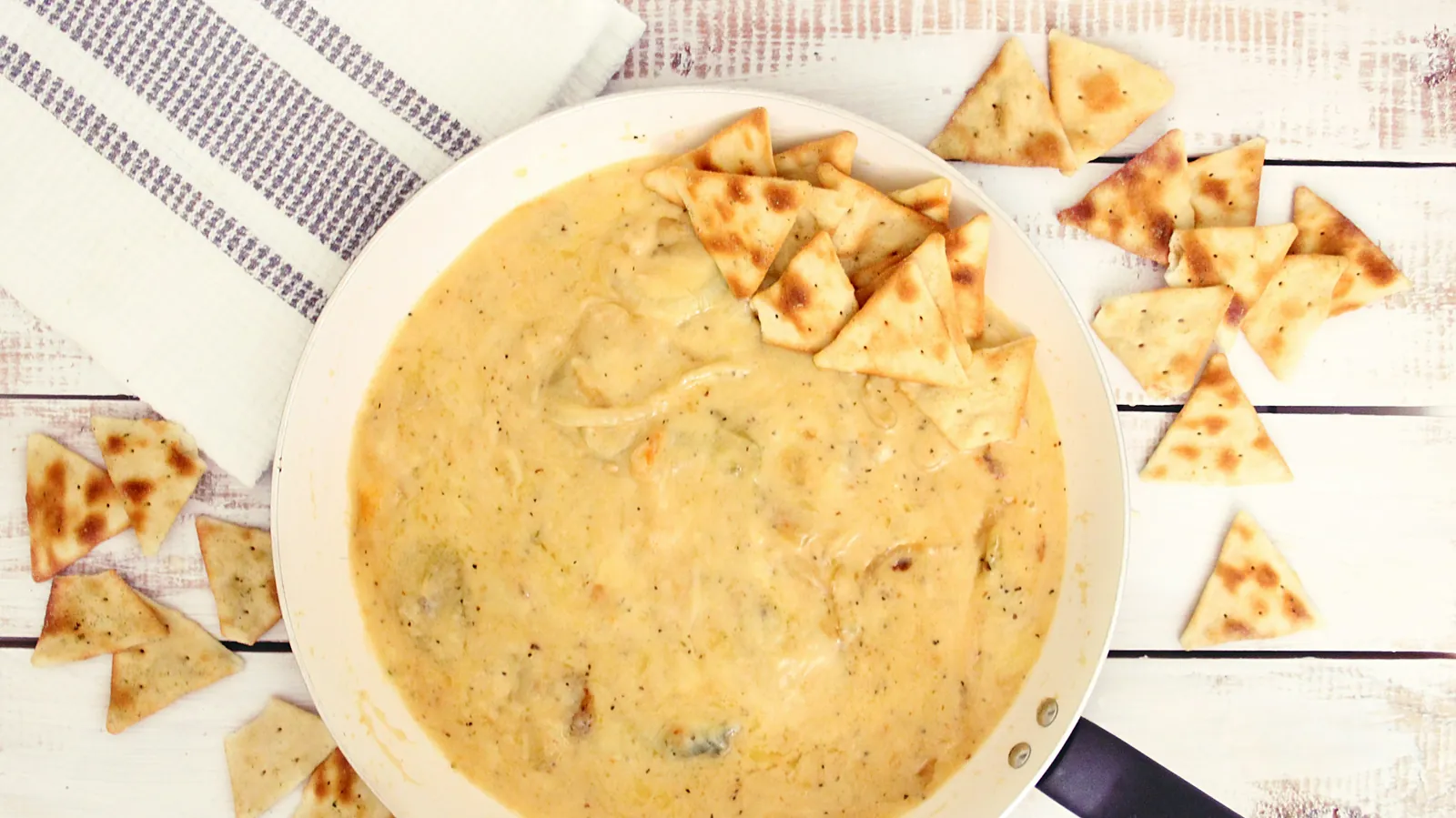
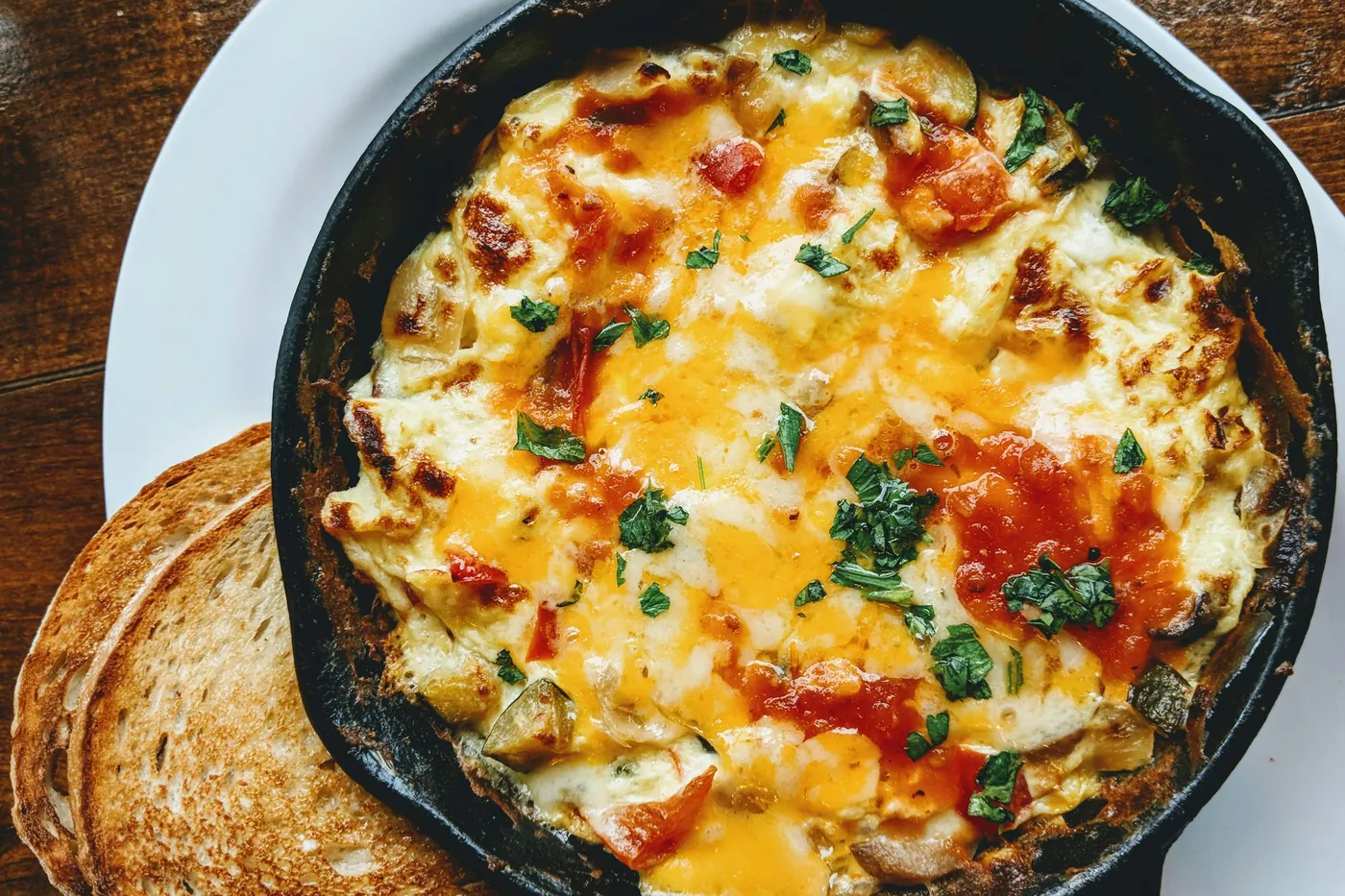
Fundido means melted. The dish is close to its name: cheese melted in a shallow pan and brought to the table still in it.
There is no milk thinning it out, so it behaves like melted cheese rather than sauce. It stretches, it pulls into strands, and it firms up as it cools — which is why it arrives hot and why you are expected to eat it fairly quickly.
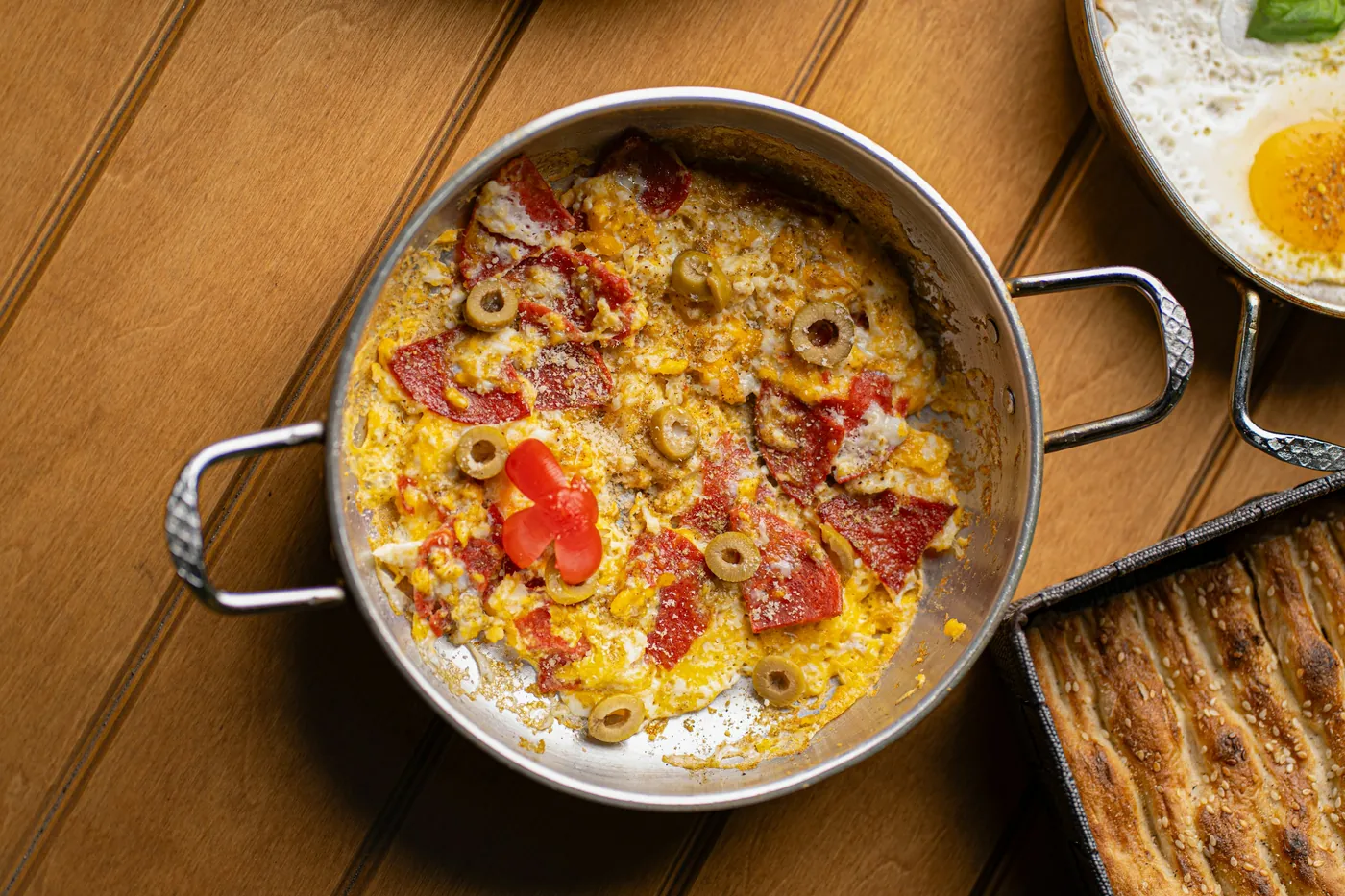
It is almost never plain. Chorizo is the classic addition; mushrooms, roasted poblano, onions and garlic are all common. Those additions are stirred through the cheese rather than sprinkled on top.
The cheese is the real difference
The two dishes use different cheeses because they need different behaviour.
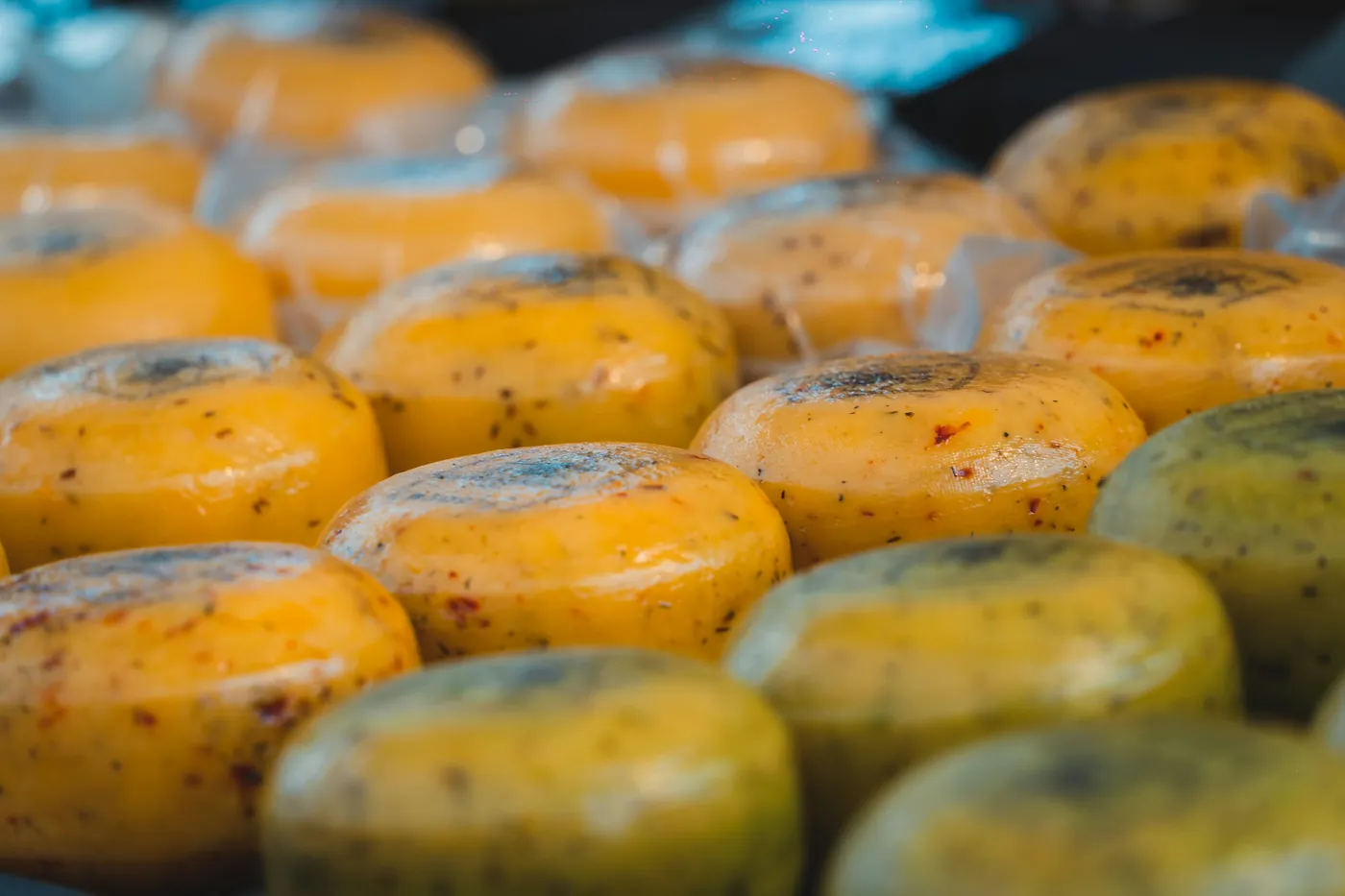
Fundido depends on cheeses that melt into strands rather than into liquid — Oaxaca, asadero and Chihuahua are the usual choices. Oaxaca is made by stretching and winding the curd into a ball, which is why it pulls apart like mozzarella when heated.
Queso dip does the opposite. It needs cheese that melts smooth and stays emulsified in a milk base, which is why it tends towards processed or milder melting cheeses. Neither approach is a shortcut; they are solving different problems.
Side by side
| Chile con queso | Queso fundido | |
|---|---|---|
| Texture | Smooth and pourable | Thick, stretchy, holds its shape |
| Served in | A bowl or cup | The pan it was melted in |
| Eaten with | Tortilla chips | Warm tortillas, folded |
| Cheese used | Mild melting cheese with milk | Oaxaca, asadero, Chihuahua |
| Usual additions | Chiles, rajas, sometimes meat | Chorizo, mushrooms, poblano |
| Origin | Tex-Mex | Mexican |
| Holds up on the table | Well — stays loose | Poorly — firms as it cools |
| Best for | Grazing while you decide | A proper shared starter |
Which should you order?
Order queso if
- You want something to pick at while the table reads the menu.
- There are chips on the table already and you want a reason to keep eating them.
- You want the mildest possible starter.
- Your group is going to take a while to order.
Order fundido if
- You want an appetizer that eats like a small dish rather than a dip.
- You like chorizo, mushrooms or roasted peppers.
- Everyone is at the table and ready to eat it while it is hot.
- You want the more distinctly Mexican of the two.
One practical warning
Fundido waits for nobody. It is at its best in the first few minutes and noticeably worse after fifteen, when the cheese has tightened and started to separate.
If half your group is still parking, order the queso and save the fundido for when everyone is seated. This is the single most common way the dish gets a bad reputation, and it is entirely avoidable.
How the two appear on Julia’s menu
Julia’s carries both, listed separately in the appetizer section, which makes the contrast easy to see.
The chile con queso is described as a blend of creamy cheeses with rajas and onions, and it comes in a cup or a bowl — sizing that only makes sense for something pourable. Picadillo can be added.
The queso fundido is a different proposition: pan-sautéed mushrooms, poblano pepper, onions and fresh garlic in olive oil, mixed with a roasted tomato-habanero sauce and smothered in Oaxaca cheese. Note the Oaxaca, and note that it is one size only. That is a dish, not a dip.
What “rajas” means on the menu
You will often see chile con queso described as containing rajas, and the word is rarely translated.
Rajas are strips of roasted, peeled chile — usually poblano. Roasting takes most of the raw edge off the pepper and brings out a mild, slightly sweet flavor, so rajas add body and a gentle warmth rather than heat.
If a queso lists rajas, expect something a little more interesting than plain melted cheese, and expect it to still be mild.

How much to order
Queso is normally sold in two sizes, and the smaller one goes further than people expect.
A cup is enough for two people who are also ordering mains. A bowl suits four, or two who intend to make a meal of chips. Because it stays pourable, leftover queso is easy to keep eating; leftover fundido is not.
Fundido comes in one size for a reason. It is portioned to be finished hot, in one sitting, by two to four people. Ordering two pans for a large table works better than hoping one will stretch.
Frequently asked questions
Is queso fundido spicy?
Not usually from the cheese, but it depends on what is stirred through it. Chorizo adds warmth; a poblano is mild; anything built on habanero will not be. Ask what is in it rather than assuming from the name.
Why does my queso fundido go hard?
Because there is no milk or cream holding it in suspension. Straight melted cheese firms up as it loses heat, which is normal and is why it comes to the table in a hot pan. Eat it early.
Do you eat queso fundido with chips or tortillas?
Tortillas, ideally. The cheese is thick and stretchy enough to snap a chip, and folding it into a warm tortilla is how the dish is meant to be eaten. Most kitchens will bring tortillas if you ask.
Is chile con queso really not Mexican?
Correct — it is Tex-Mex. It developed north of the border and is far more common on Texan menus than on menus in Mexico. Queso fundido, by contrast, is Mexican.
Which is better for a big group?
Queso, for logistics rather than taste. It stays edible for as long as people keep arriving. Fundido is better food but demands that everyone is already seated.
The short version
Queso is a dip and forgives a slow table. Fundido is a dish and does not. If you can only order one and everyone is present, order the fundido.
Both are listed on the full food menu. If you are building a full order around them, our guide to reading a Mexican menu covers what to put after the starters, and the family packs and group options are worth a look if you are feeding a crowd.