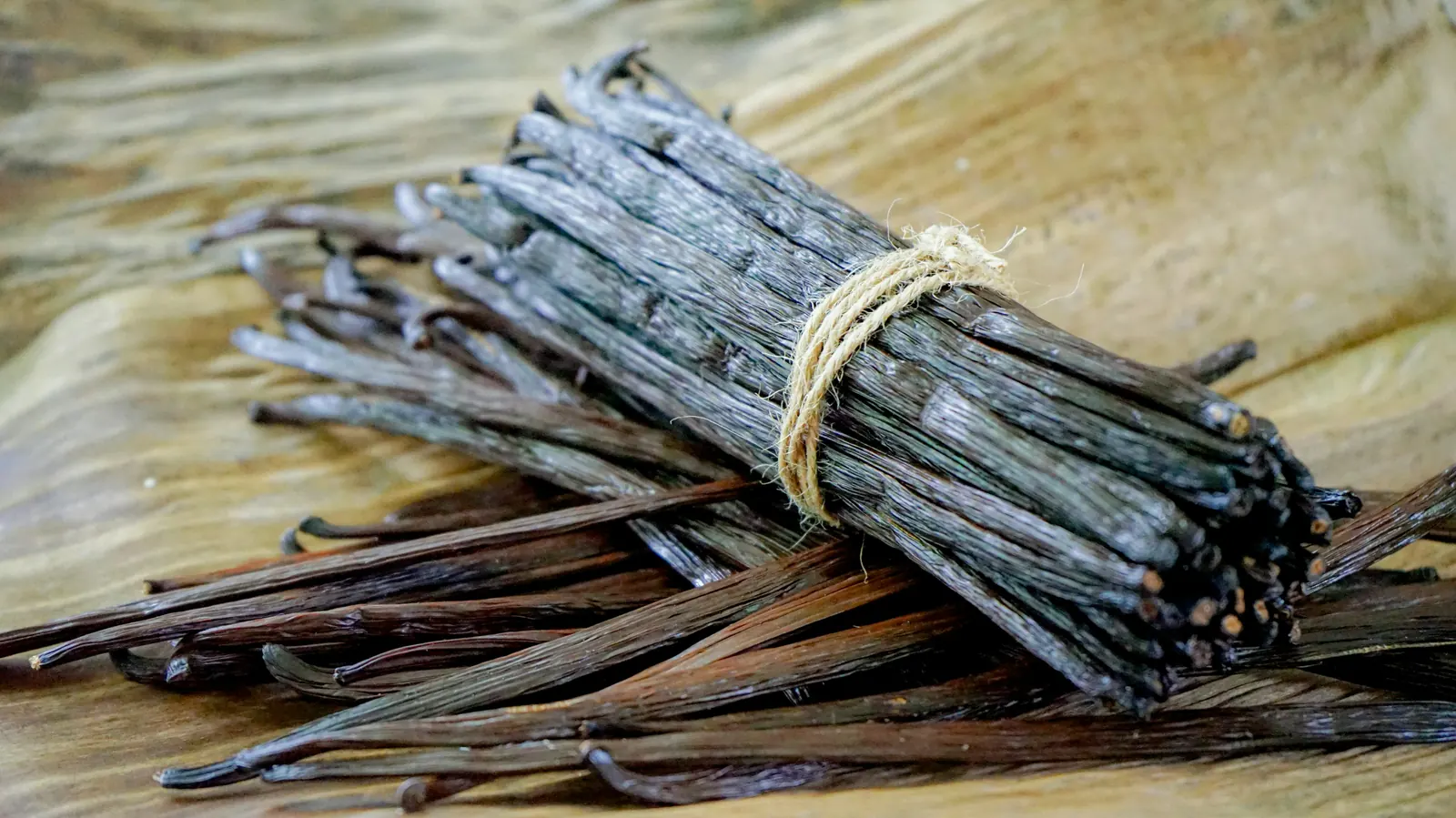
Vanilla is Mexican. Not vanilla-flavored things — the plant itself, the orchid it grows on, and the process that makes the pods taste of anything at all.
Almost none of the world’s vanilla comes from Mexico now, and the reason is a bee.
The short answer
Vanilla is the cured seed pod of a climbing orchid native to Mexico, cultivated first by the Totonac people around Papantla in Veracruz. Mexico was the only place it could be grown for three centuries because its natural pollinator lived nowhere else. Hand pollination broke that monopoly in 1841. Mexican vanilla is now a small share of world production and tastes distinctly spicier than the Madagascar kind.
The orchid
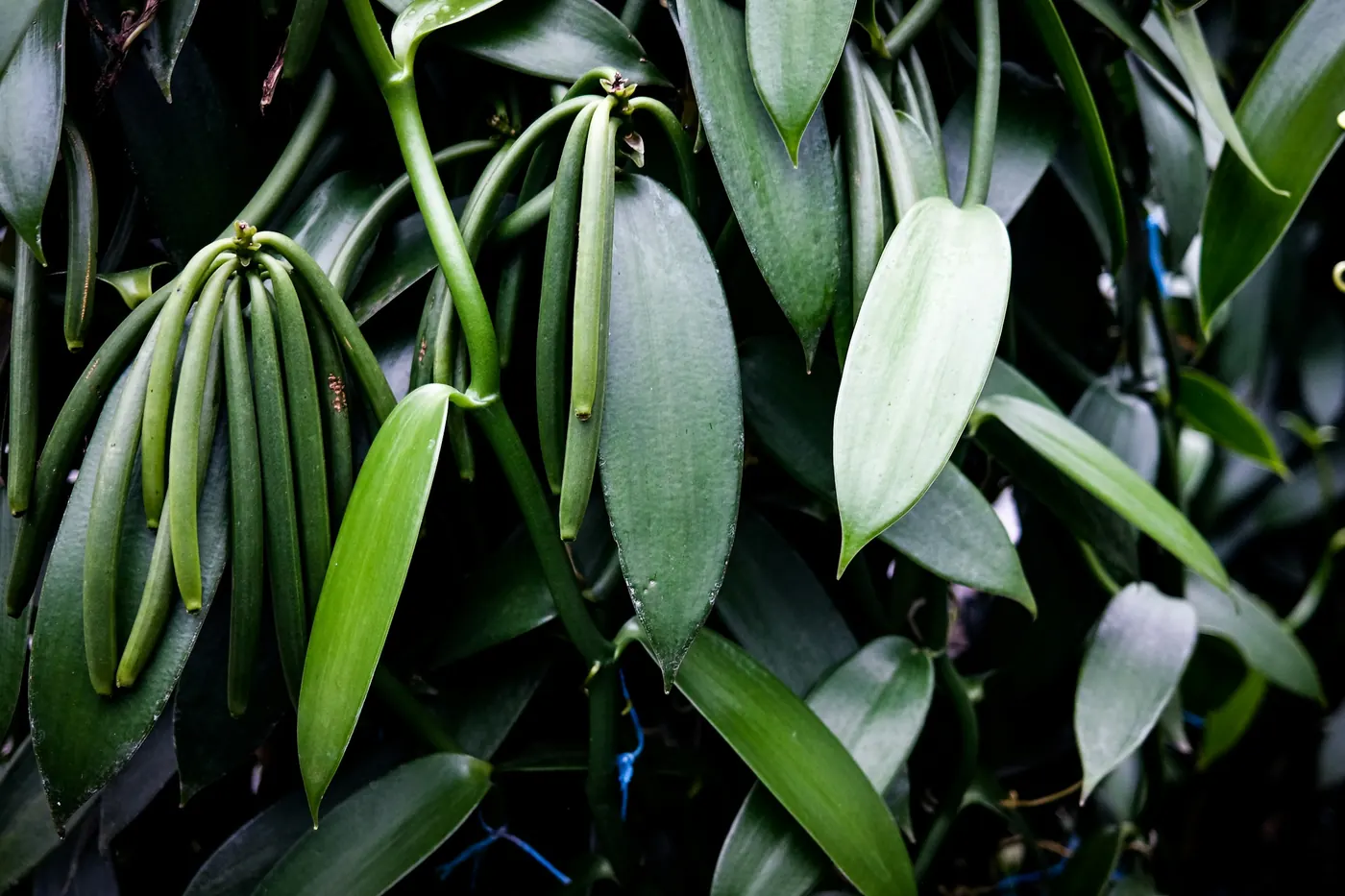
Vanilla planifolia is a vine. It climbs host trees, it can run tens of meters, and it takes about three years before it flowers at all.
Each flower opens for less than a day. If it is not pollinated in that window it drops off the vine, and no pod forms. This is the constraint that governs the entire industry.
Nielsen-Massey, in its account of where vanilla comes from, records that the orchid originated in Mexico and was for centuries the exclusive knowledge of the Totonac people, who were later conquered by the Aztecs.
The bee that held the monopoly
This is the part of the story that explains everything else.
The same source states it directly: Mexico remained the sole growing region for vanilla beans for another 300 years because of the symbiotic relationship between the vanilla orchid and a tiny indigenous bee called the Melipona. Without it, flowers were only occasionally pollinated by other local insects.
Europeans took vanilla vines all over the tropics after the conquest. The vines grew. They flowered. They set almost no fruit, because the pollinator had stayed behind.
That ended in 1841, when Edmond Albius on Réunion worked out an efficient method of fertilizing the flowers by hand. Every vanilla plantation in the world now depends on that technique, performed flower by flower, by hand, within hours of opening.
It is the reason vanilla is the second most expensive spice on earth after saffron.
Curing is where the flavor comes from
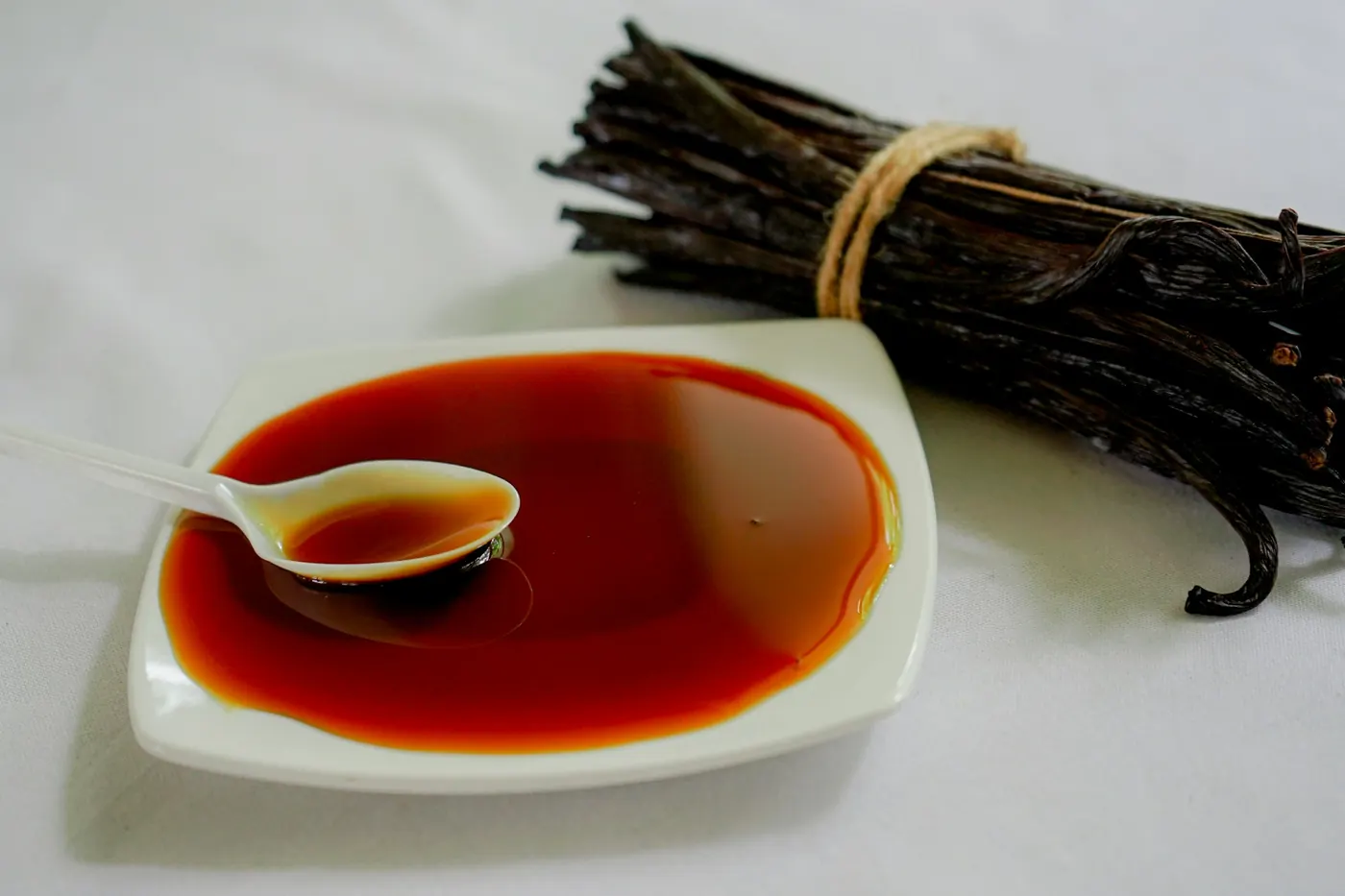
A freshly picked vanilla pod smells of nothing. Green, grassy, faintly vegetal — and that is all.
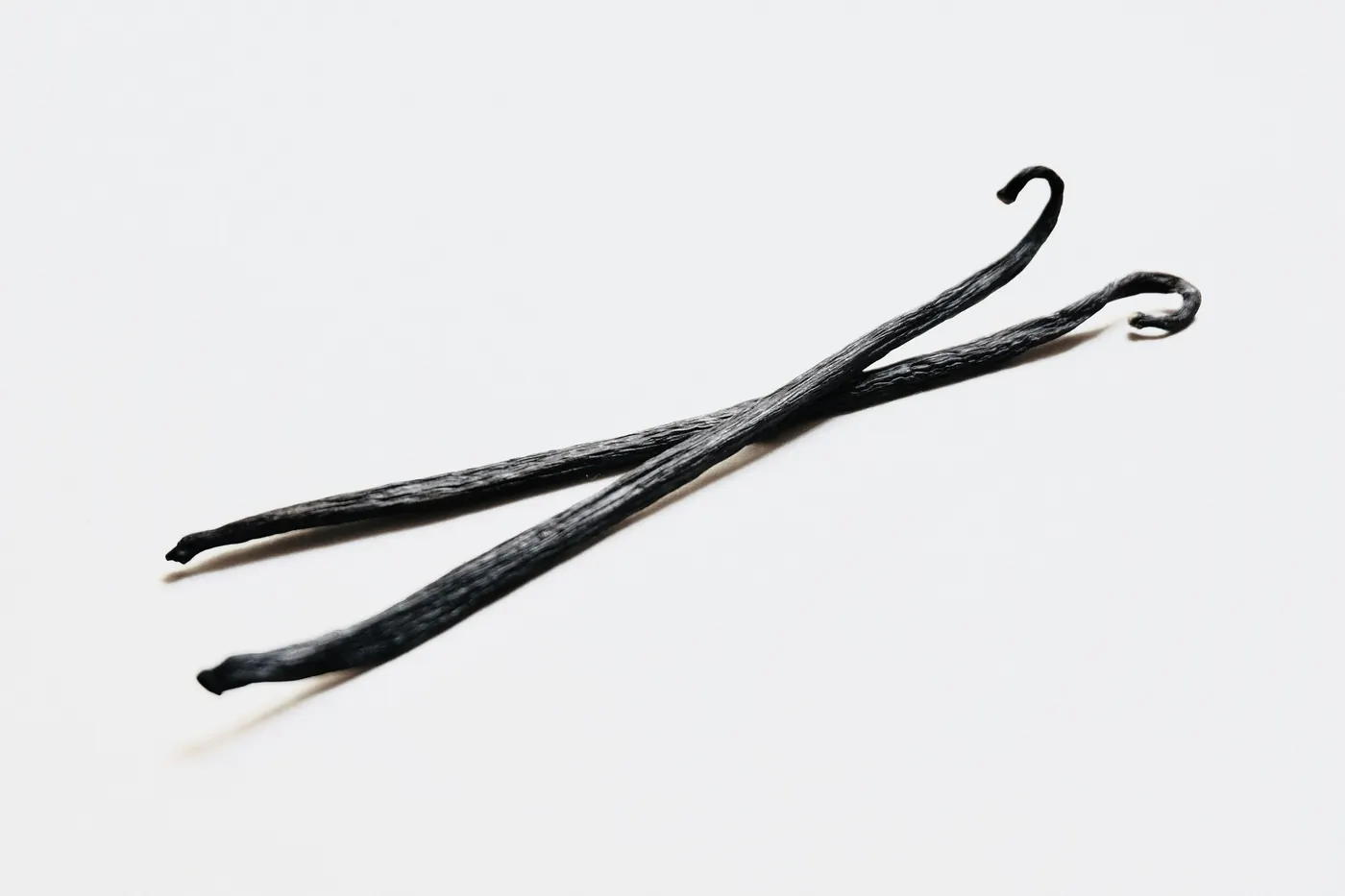
The aroma is created by curing, which takes months. Pods are killed with heat, then sweated, then dried slowly in sun and shade, then conditioned in closed boxes for weeks while enzymes break down glucovanillin into vanillin and several hundred other aromatic compounds.
Nielsen-Massey notes that cured beans are stored on racks and in conditioning boxes to further develop and mellow the flavor. That final stage is not idle time; it is the flavor being built.
Roughly five to six kilograms of green pods yield one kilogram of cured vanilla. Between the hand pollination and the curing, that is where the price comes from.
How the origins differ
| Origin | Share of world supply | Tastes like |
|---|---|---|
| Madagascar | The large majority | Rich, creamy, sweet, familiar |
| Mexico | A small fraction | Spicier, darker, faintly smoky |
| Tahiti | Small | Floral, fruity, cherry-like |
| Uganda | Small | Bold, chocolatey |
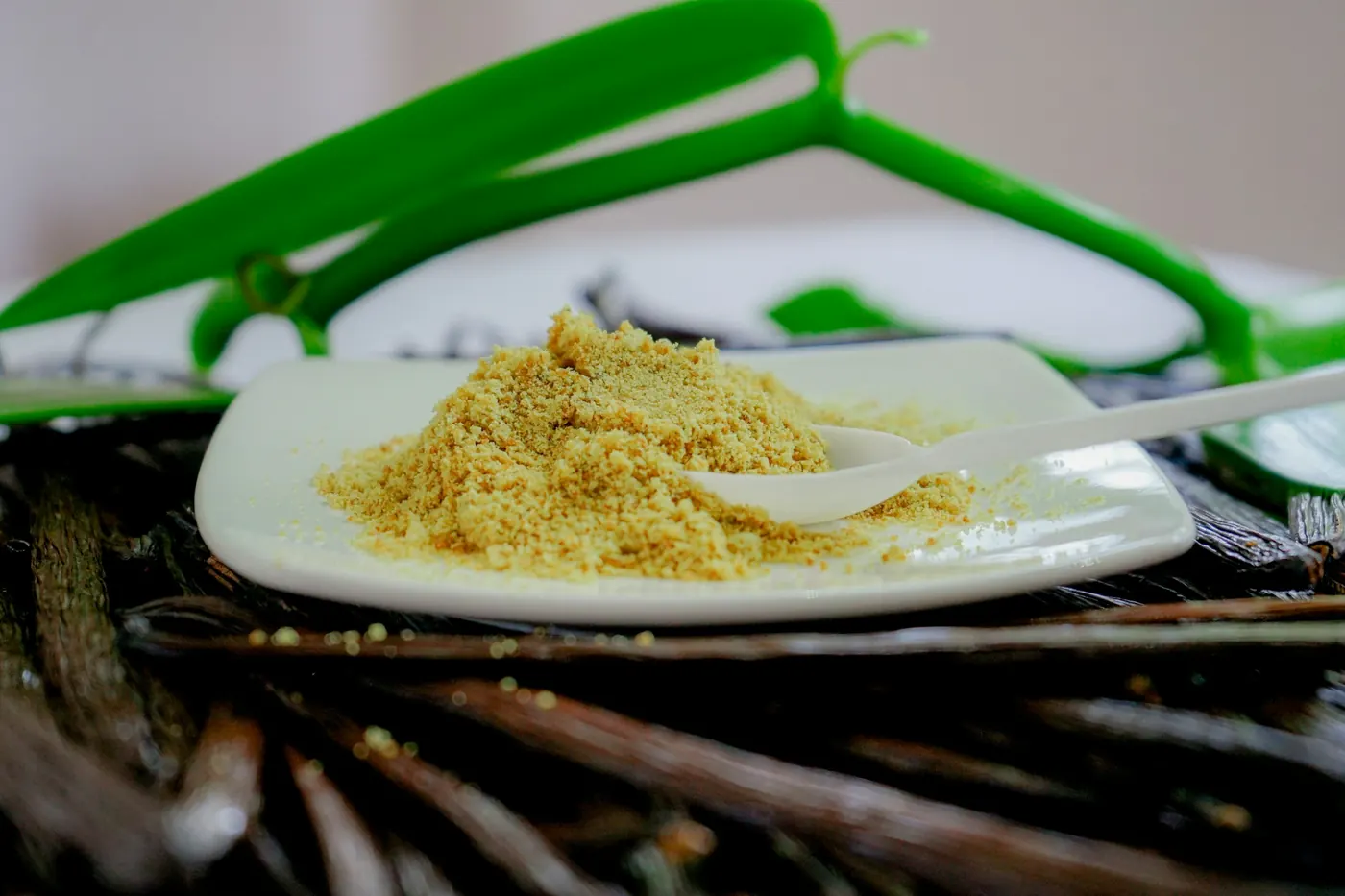
Mexican vanilla is the one people describe as spiced. There is a clove and woodsmoke edge to it that Madagascar vanilla does not have, and it holds up better against strong flavors — chocolate, cinnamon, chile.
Which is convenient, because those are the flavors it grew up beside.
The adulteration problem
Worth knowing if you ever buy vanilla in Mexico, because it is a real and long-running issue.
Cheap “Mexican vanilla” sold to tourists has historically been flavored with coumarin, extracted from the tonka bean. It smells convincingly of vanilla and is banned as a food additive in the United States.
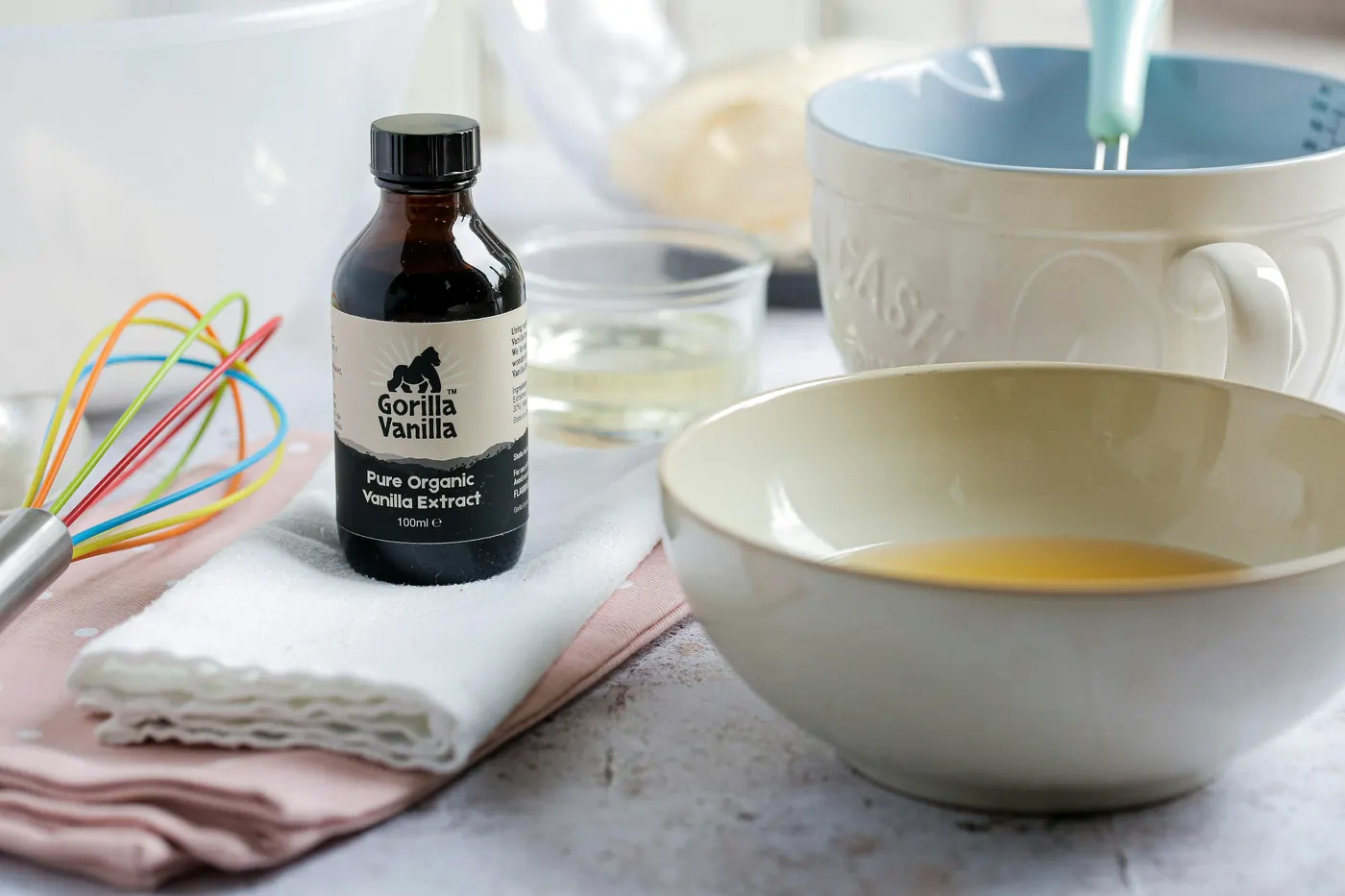
The tells are price and volume: a liter bottle for a few dollars is not vanilla extract. Real extract is pods steeped in alcohol and water, and it is expensive because the pods are.
Reputable Mexican vanilla exists and is excellent. It costs what vanilla costs.
Where you actually taste it
Vanilla is in more of a Mexican menu than it looks, and it is rarely announced.
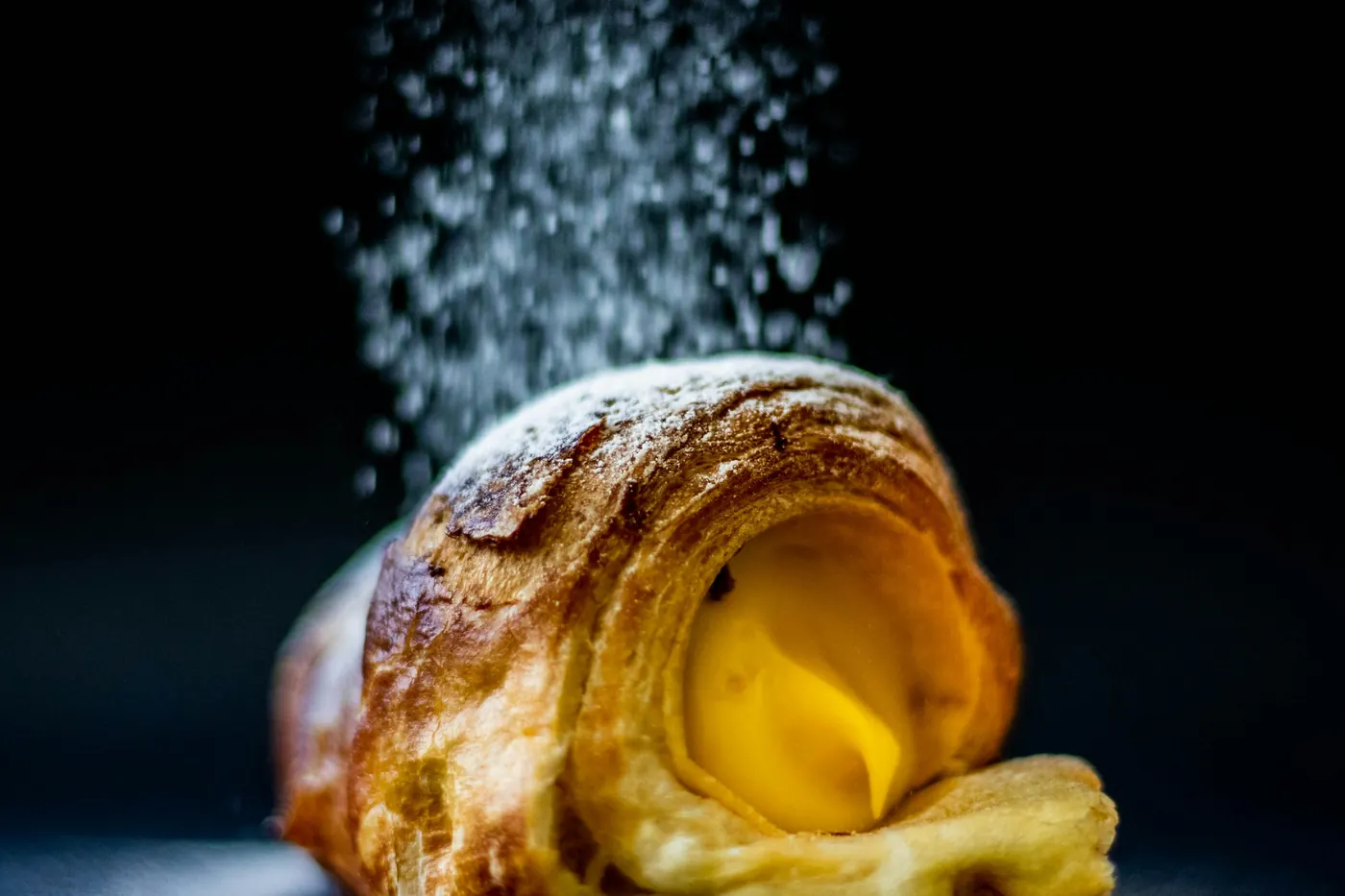
Custards are where it is least replaceable — there is nothing else in a flan to hide behind. It is standard in horchata, alongside the cinnamon, as our aguas frescas guide describes. It goes into tres leches, into pan dulce, into Mexican hot chocolate.
It also turns up in savory cooking in Veracruz, in small quantities, in sauces for fish. That is unusual anywhere else.
On Julia’s menu
Vanilla is named once on Julia’s menu, in the dessert list: the flan is a Mexican vanilla custard served with cajeta sauce.
Naming the vanilla is a deliberate choice. Most menus write “flan” and stop. Specifying Mexican vanilla is a statement about which of the four origins above is in the custard, and it is the one that suits the dish — spicier vanilla against the goat-milk tang of cajeta rather than a sweeter one compounding it.
It is almost certainly also in the house-made horchata on the aguas frescas line, though the menu does not itemize that.
The other dessert, tres leches, is covered against flan in our comparison.
Extract, paste, or the pod
Four forms are sold, and they are not interchangeable in the way the shelf implies.
Whole pods are the most flavorful and the most expensive. Split lengthwise, the seeds scraped into whatever is being made, and the empty pod dropped into sugar or milk rather than thrown out.
Extract is pods steeped in alcohol and water. Real extract is legally defined in the United States by how much vanilla bean it contains, which is why the price floor is high.
Paste is extract thickened, with seeds suspended in it. It gives the visible black flecks without the work of scraping a pod.
Vanillin is the single dominant aroma compound, synthesized from wood pulp or petrochemicals. It smells like vanilla and tastes flat, because real vanilla carries several hundred compounds and this is one of them.
Frequently asked questions
Where does vanilla come from?
The cured seed pod of a climbing orchid native to Mexico, first cultivated by the Totonac people in what is now Veracruz.
Why was Mexico the only source for so long?
Its natural pollinator, the Melipona bee, lived only there. Vines transplanted elsewhere flowered but set almost no fruit until hand pollination was developed in 1841.
What is different about Mexican vanilla?
It tastes spicier and darker than Madagascar vanilla, with a clove and smoke edge, and it stands up better to chocolate and chile.
Why is vanilla so expensive?
Every flower is pollinated by hand within hours of opening, and the pods then need months of curing. It is second only to saffron.
Is cheap Mexican vanilla safe?
Not always. Very cheap bottles have historically been flavored with coumarin from tonka bean, which is banned as a food additive in the United States. Price is the tell.
The short version
An orchid from Veracruz, pollinated by one bee, held as a Mexican monopoly for three centuries, and now grown mostly elsewhere. Spicier than the vanilla you are used to.
Julia’s names it in the flan on the menu, which is more than most kitchens bother to do.