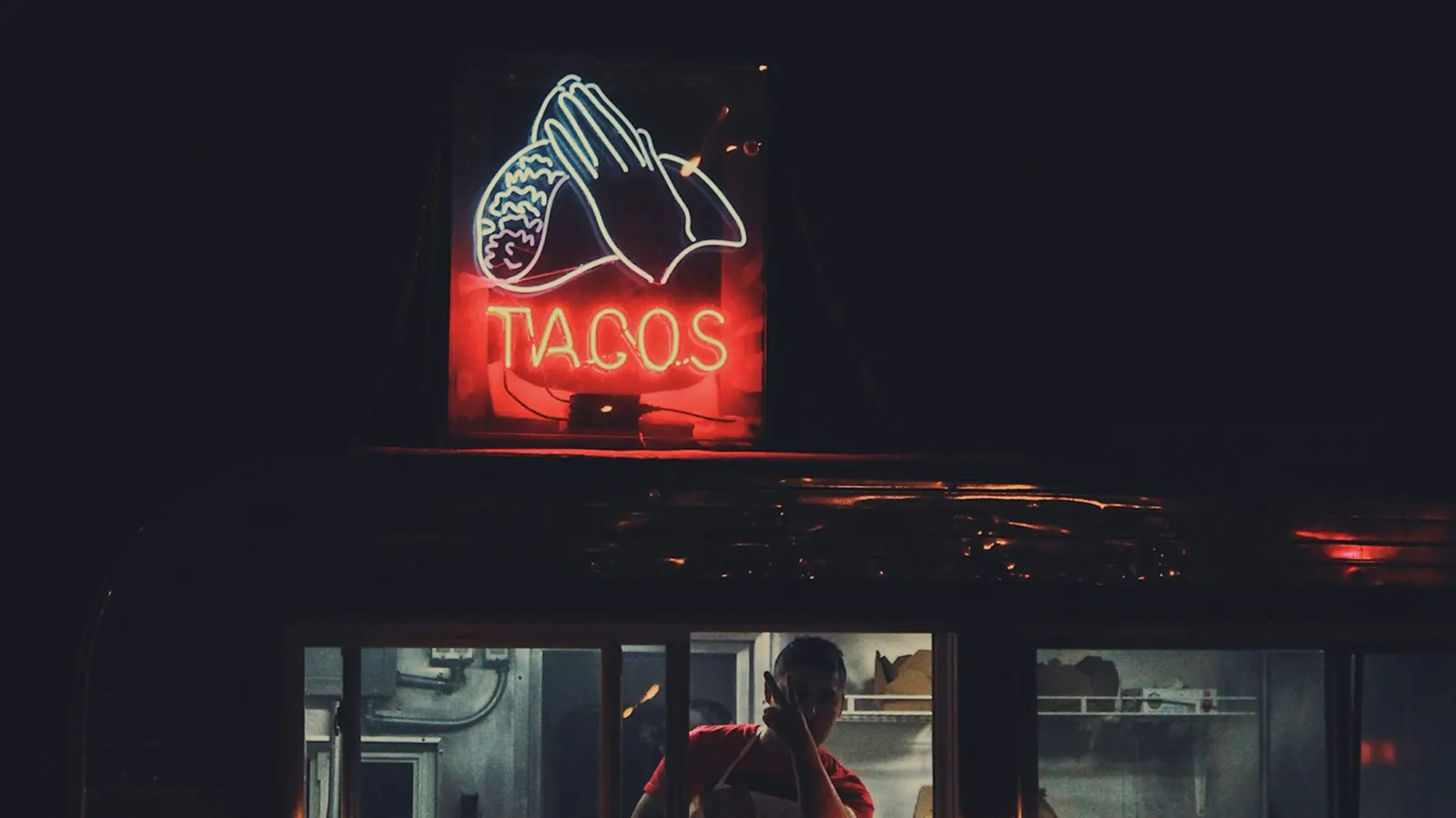
In Houston you can eat Mexican food at a window on a parking lot or at a table with a server, and both are entirely legitimate. They are also different propositions, and choosing badly is how you end up eating tacos off a paper plate when you wanted a two-hour dinner.
The distinction is worth knowing before you pick.
The short answer
A taquería is built around tacos: a short menu, counter service, fast turnaround, and often no table service at all. A full-service Mexican restaurant has a broad menu across appetizers, entrées, sides and drinks, with servers, a bar and usually brunch. Neither is more authentic than the other. They are answers to different questions.
What a taquería actually is
The word means, straightforwardly, a place that makes tacos. In Mexico it originally described street vendors, and it has broadened since to cover small fixed premises doing the same thing.
The defining features are structural rather than culinary:
- A short menu. Often a single list of meats, applied to tacos and maybe two or three other formats.
- Counter service. Order, pay, wait, collect.
- Speed. The meat is already cooked and holding; assembly takes under a minute.
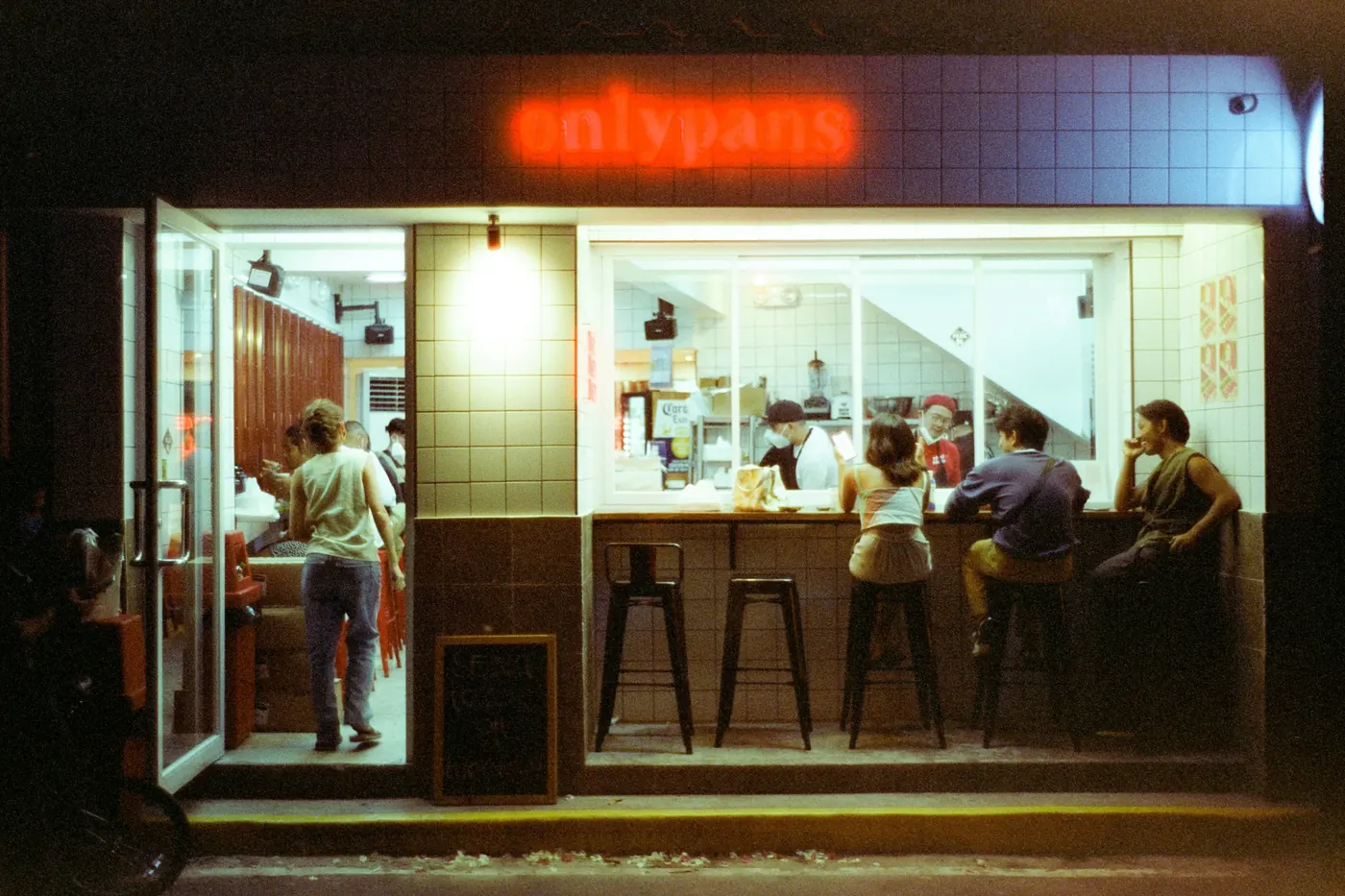
- Minimal seating. Sometimes a few stools, sometimes nothing.
- Salsas on a bar rather than brought to you.
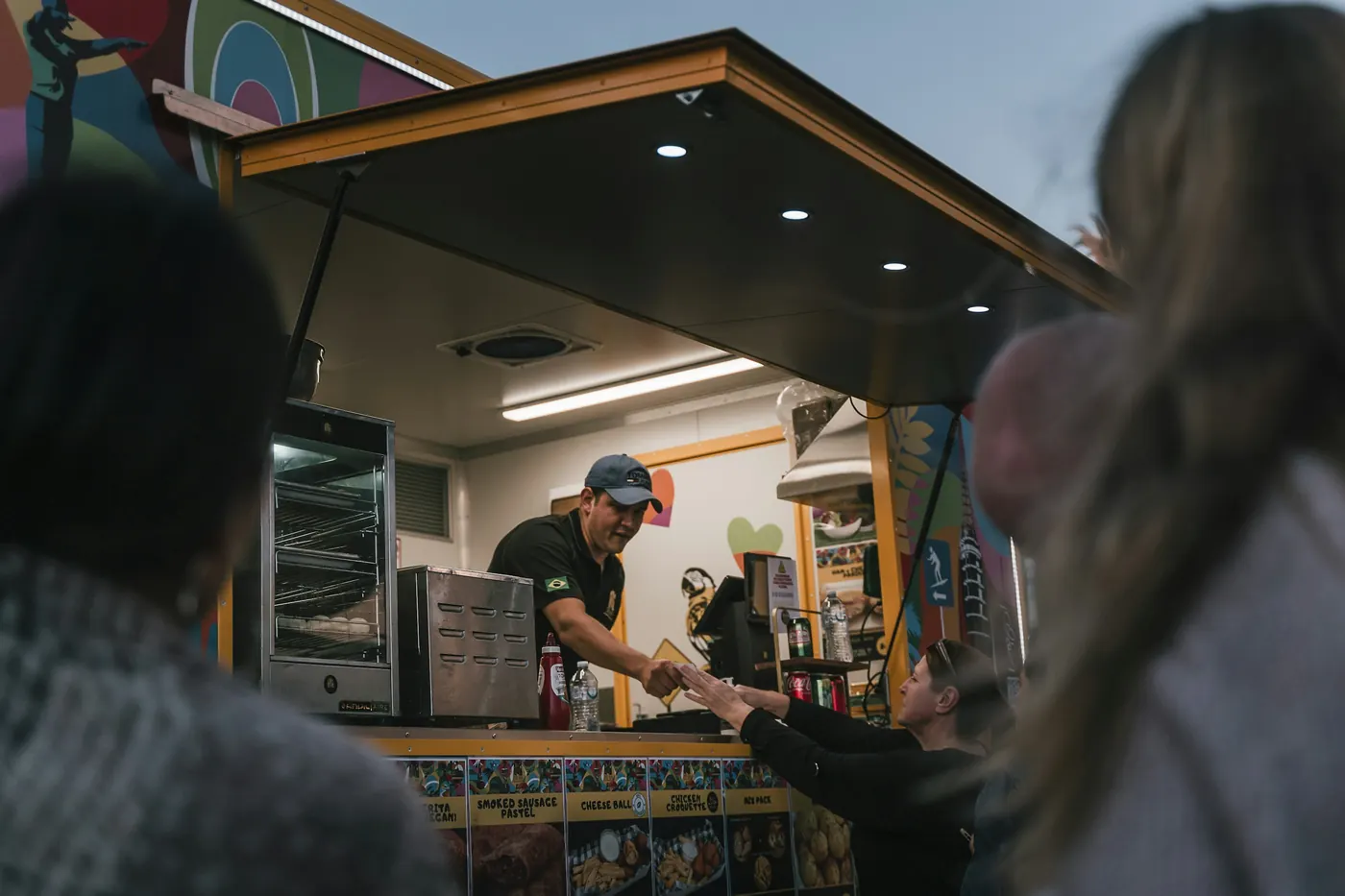
A taco truck is the same business on wheels. The menu logic is identical.
Why Houston has so many
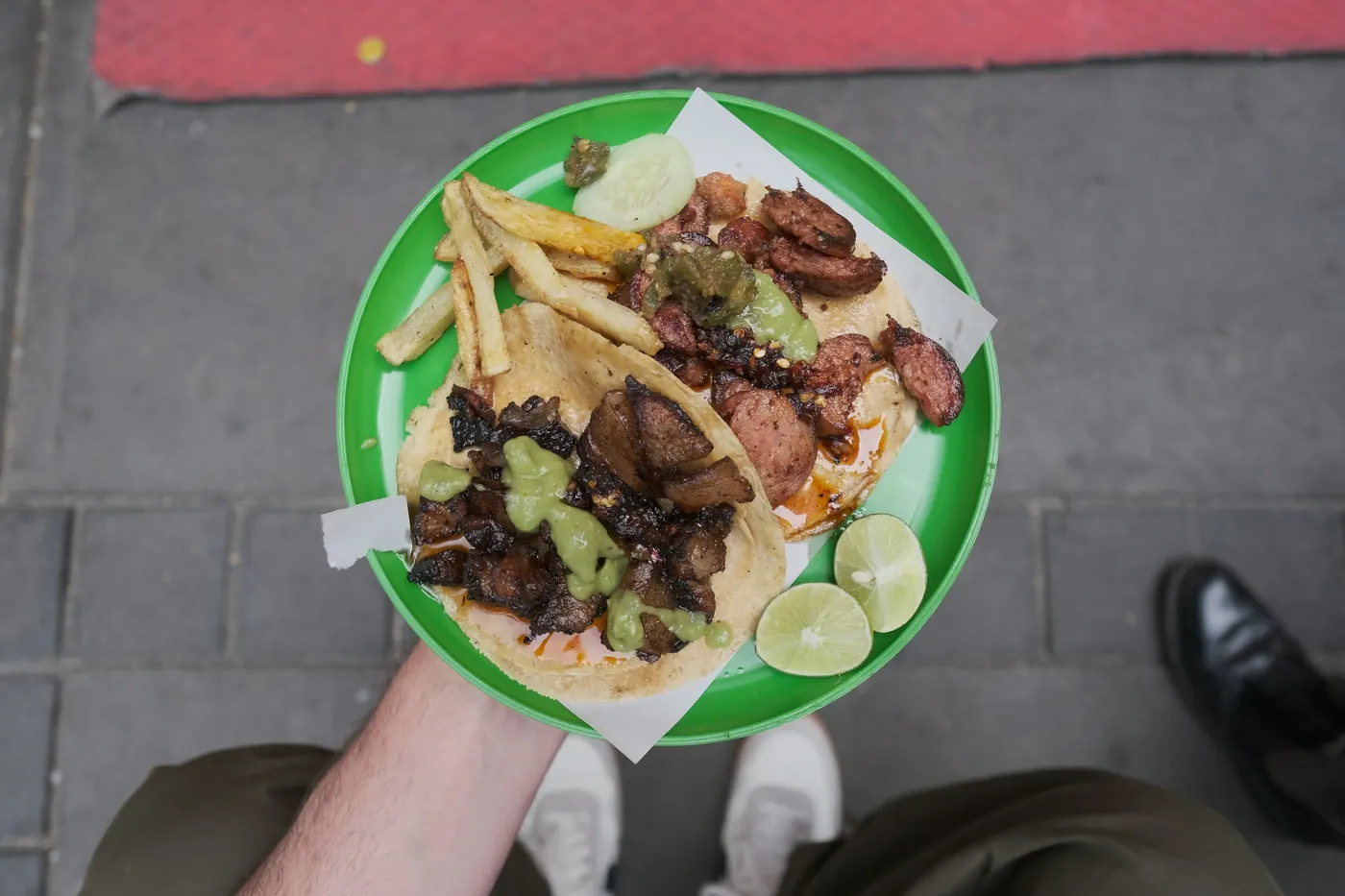
Texas is the center of gravity for this, and the taco has been reinvented here repeatedly.
Texas Monthly’s account of moments in taco history traces how the dish moved through the state and kept changing form — a lineage that runs from home kitchens through street vendors to trucks and storefronts.
Houston’s density of taquerías and taco trucks is a function of that history plus the city’s size and diversity. It is also why “there’s a good taquería near me” is true almost anywhere in the city, and why the standard is high.
What a full-service restaurant does differently
The difference is not quality. It is scope, and the kitchen setup that scope requires.
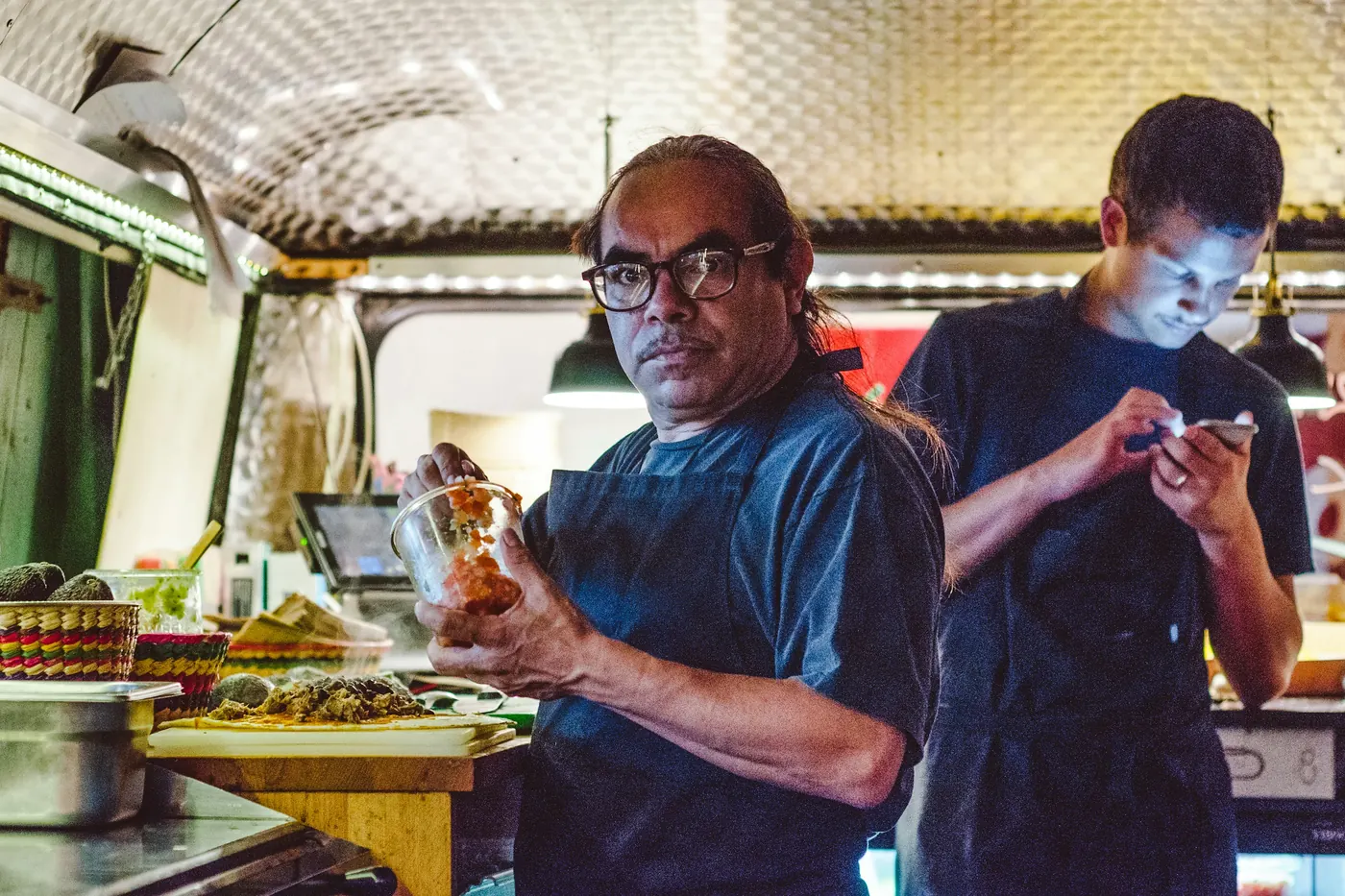
A sit-down Mexican restaurant is running multiple cooking methods at once: a grill for fajitas and steaks, a fryer, a sauté line, pots of long-braised meat, a sauce station, plus a bar. That range is what lets a menu carry enchiladas under four different sauces, a soup section, seafood, brunch and desserts.
It also means courses, refills, sides you did not have to order separately, and the option of sitting for two hours. A taquería is not trying to do any of that, which is why it can be faster and cheaper.
Side by side
| Taquería | Full-service restaurant | |
|---|---|---|
| Menu | Short, taco-centered | Broad, multiple sections |
| Service | Counter, self-serve salsas | Table service |
| Speed | Minutes | A full sitting |
| Sides | Usually extra, if any | Included with plates |
| Drinks | Bottled, aguas frescas | Full bar, wine, cocktails |
| Groups | Awkward past four | Built for tables |
| Best for | Lunch, late night, one dish done well | Dinner, groups, variety |
Neither is the authentic one
This is the part worth saying directly, because the assumption runs the other way.
Street tacos are not more Mexican than a sit-down restaurant. Mexico has both, and always has. A comida corrida served at a table with a soup course, a rice course and a main is as traditional as anything eaten standing up.
What a short menu buys is specialization. What a long menu buys is range — including the slow regional dishes that no taquería is going to cook, because a mole that takes a day does not suit a business built on speed. Our comparison of Tex-Mex and Mexican cooking makes the same argument about the other false hierarchy.
Which to choose
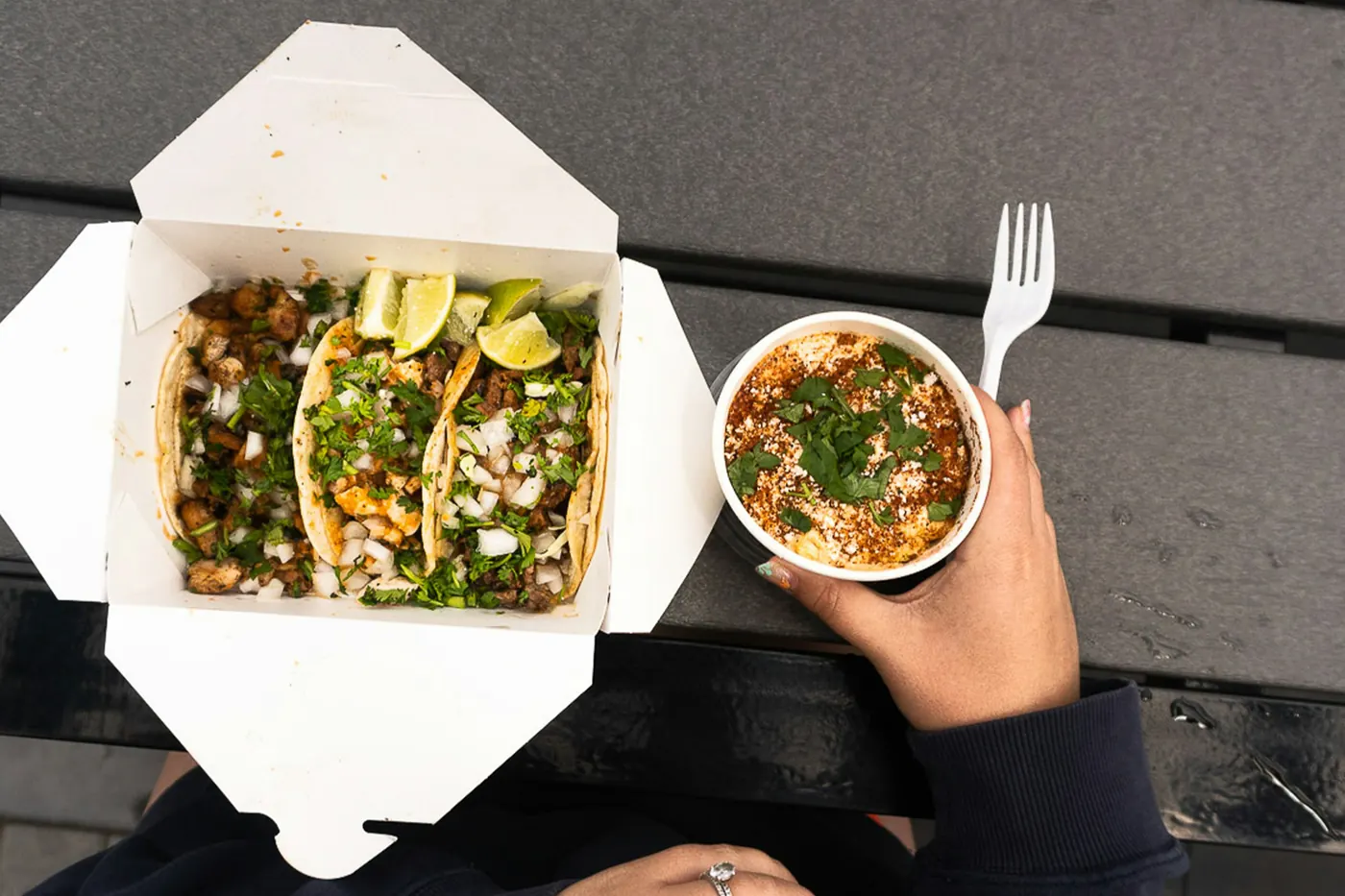
Go to a taquería when you want lunch in twenty minutes, when it is late, when you want one thing done extremely well, or when you are eating alone.
Go to a full-service restaurant when there are more than four of you, when people want different things, when you want a drink with dinner, when you want brunch, or when you want a dish that takes a day to make.
A useful test: if you already know exactly what you want, a taquería is faster. If you want to look at a menu and decide, you need the menu.
Where Julia’s sits
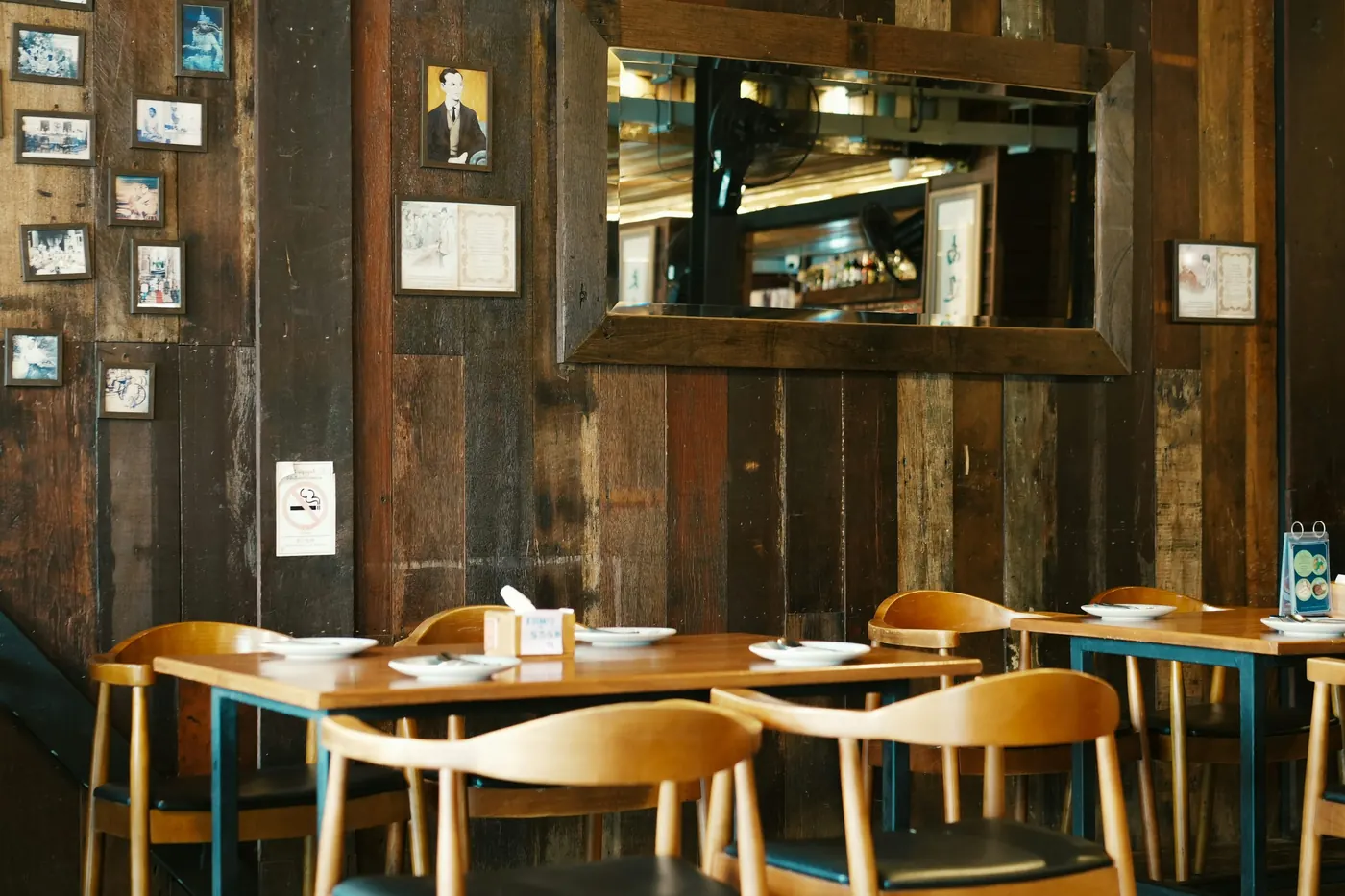
Julia’s is the second kind, and the menu shows what that format is for.
It runs appetizers, soups and salads, house specialties, entrées, a carnes section, five kinds of enchiladas and desserts — plus a bar with margaritas, sangria and wine, and a separate brunch menu with barbacoa, menudo and chilaquiles. That spread is only possible with a full kitchen behind it.
It also carries the slow dishes specifically: pollo en mole, cochinita pibil, brisket birria style, carne guisada, tamales made in house. Those are the things a short-menu operation cannot run.
The tacos are there too — street tacos on the appetizer list — but they are one item among many rather than the point of the business. If tacos are what you actually want, that is genuinely a reason to go somewhere built around them. Our guide to reading a full Mexican menu is for the other case.
The other words you will see
Two more turn up on signs, and both narrow things further.
A cantina is a drinking establishment that serves food, historically a bar rather than a restaurant. The balance is the opposite of a taquería: the kitchen supports the bar rather than the other way round.
A fonda is a small, usually family-run place serving a set midday meal — the comida corrida, with a soup course, a rice course and a main for one price. Fondas are common in Mexico and rare in Texas.
Both are worth recognizing, because a sign that says one of them is telling you what the place is organized around.
Frequently asked questions
What is a taquería?
A small establishment built around tacos, usually with counter service, a short menu and limited seating. Taco trucks operate on the same model.
Is a taquería more authentic than a Mexican restaurant?
No. Mexico has both formats and always has. A taquería specializes; a full-service restaurant covers range, including slow regional dishes.
What is the difference between a taquería and a cantina?
A cantina is a bar first and a kitchen second. A taquería is a kitchen with no bar. A full-service restaurant does both.
Why are taquería tacos smaller?
Because they are built on small corn tortillas, often doubled, and sold by the piece. Three or four is a normal order.
Which is better for a group?
A full-service restaurant, in almost every case. Groups want different things, want to sit together, and want the check handled once.
The short version
Taquería means tacos, fast, at a counter. A restaurant means a menu, a table and a kitchen doing several things at once. Pick by what you want from the next hour, not by which one sounds more authentic.
Julia’s is the sit-down kind, with brunch and a bar, and the full menu is where the range shows.