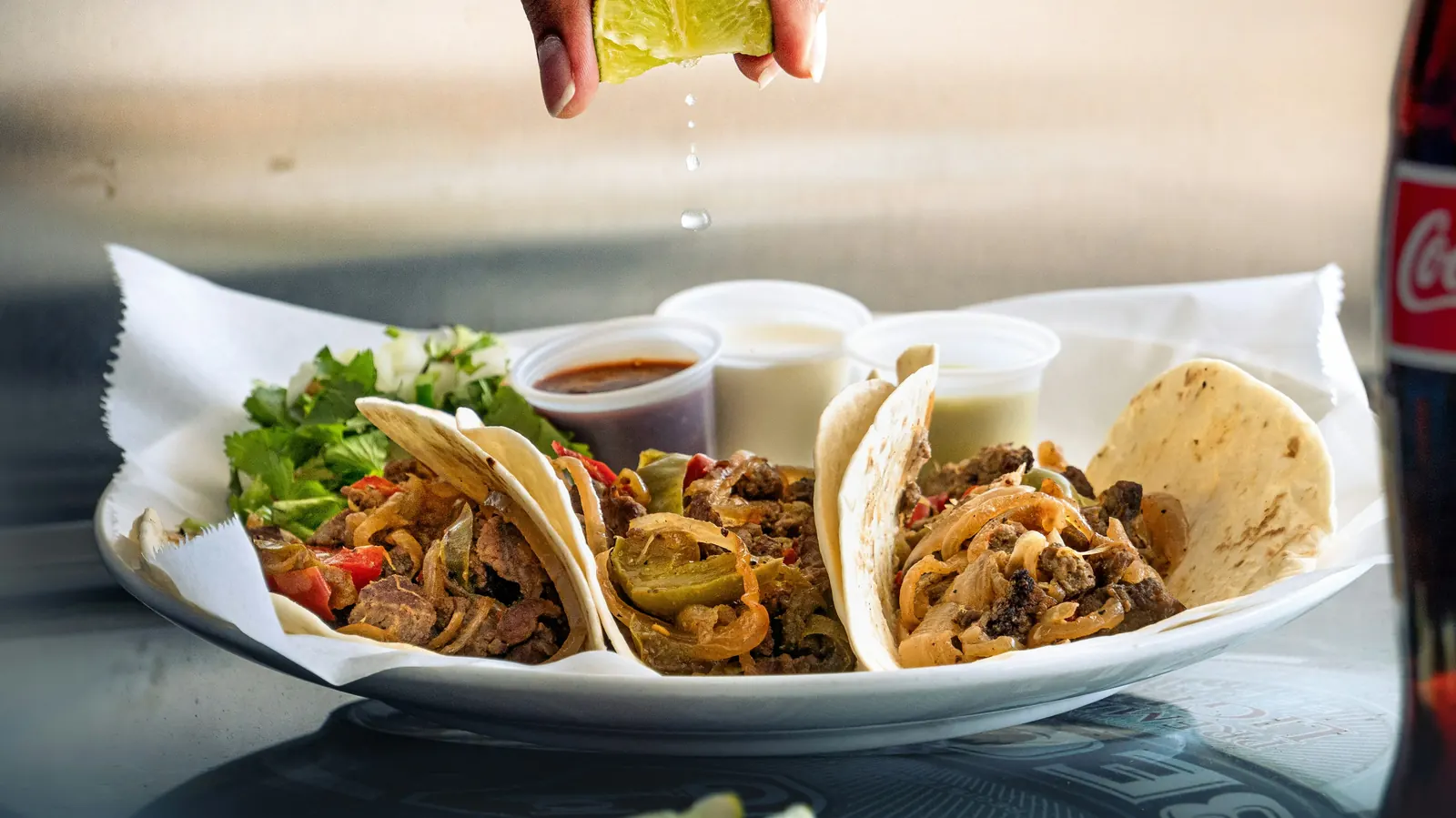
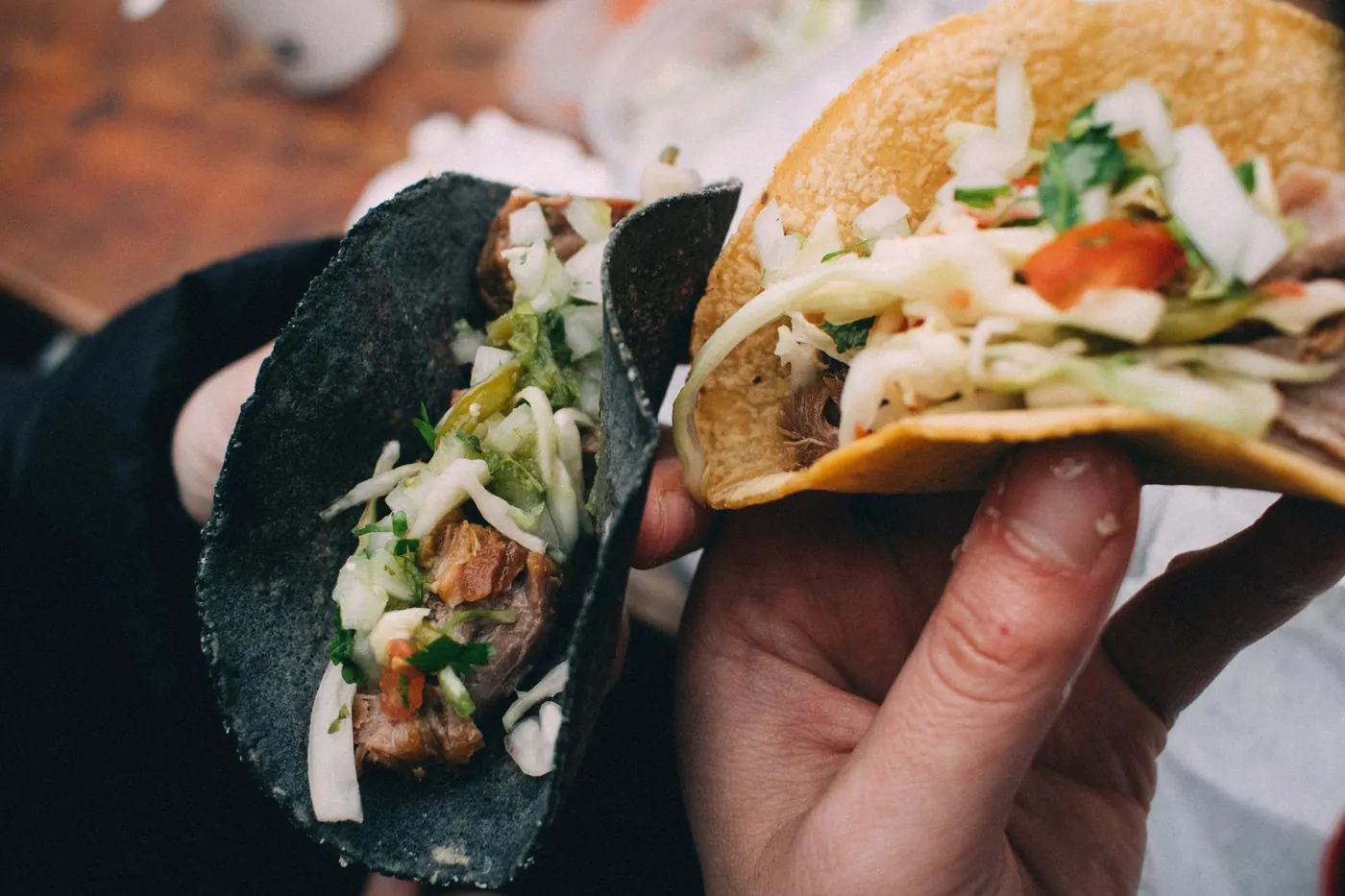
Order street tacos and each one arrives on two tortillas stacked together. People assume it is generosity, or a way of making the portion look bigger.
It is neither. It is a structural fix for a problem that thin corn tortillas have had for as long as anyone has been putting wet meat on them.
The short answer
Two thin corn tortillas hold together where one tears. The inner tortilla absorbs juice and grease from the filling and goes soft; the outer one stays dry and keeps the taco intact. It is cheaper to use a second tortilla than to lose the filling, and the spare gives you the option of building a second small taco from what is left.
What actually goes wrong with one tortilla
A corn tortilla is masa: nixtamalized corn, water and lime, with no gluten holding it together. Its structure comes from starch, and starch has a specific weakness.
Put hot, fatty, acidic filling on it and the moisture starts breaking down that starch almost immediately. Within a minute or two the center goes translucent, then slack, then it tears — usually at the fold, usually while you are holding it over your shirt.
A flour tortilla does not do this, because gluten gives it elasticity and a fat content that resists moisture. That difference is covered in our corn and flour guide, and it is the whole reason this problem belongs to corn.
How the second tortilla fixes it
The two tortillas do different jobs, which is the part people miss.
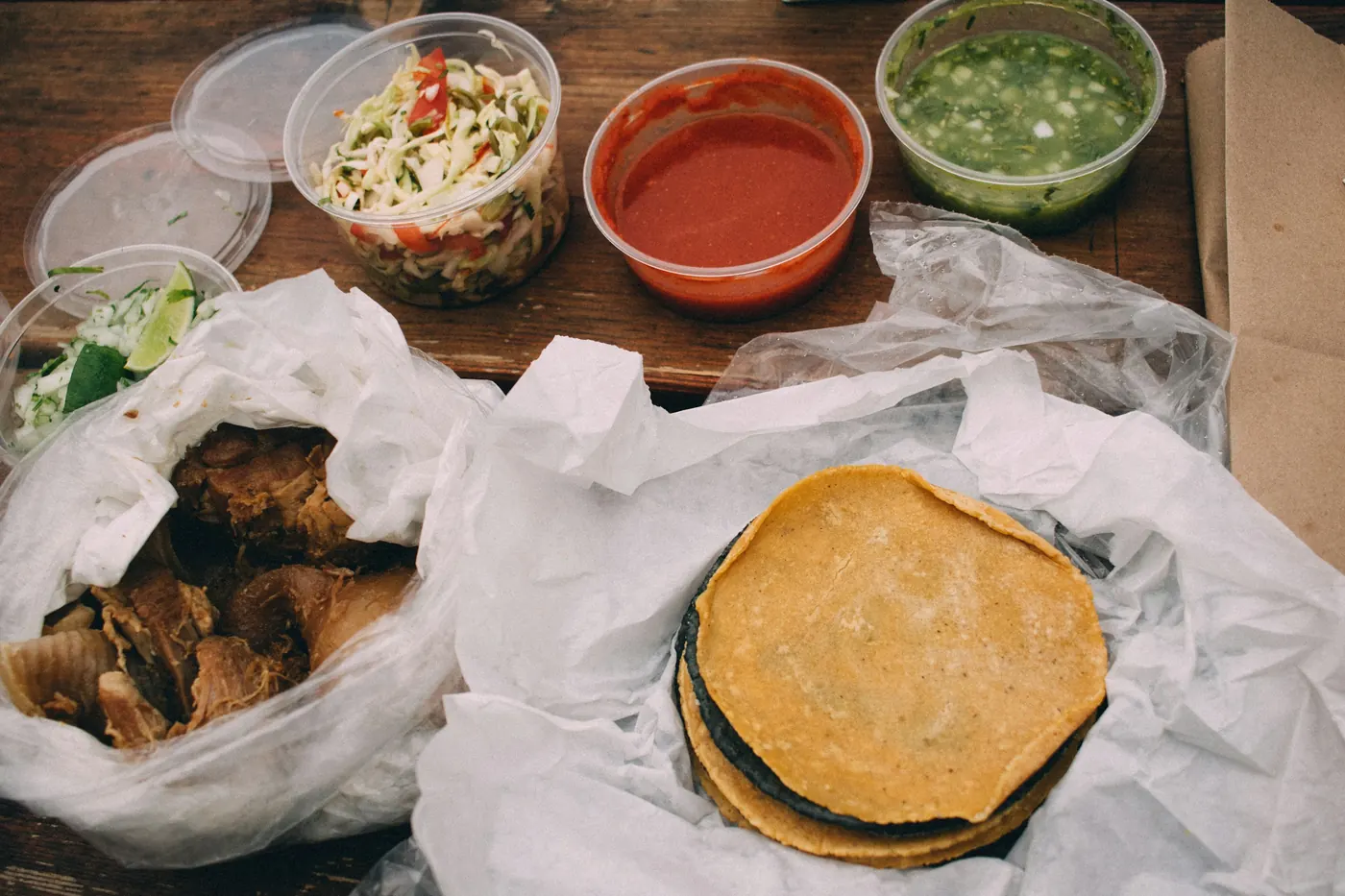
The inner tortilla is sacrificial. It takes the juice, the fat and the salsa, and it goes soft. That is fine, because it is not load-bearing.
The outer tortilla stays dry, because the inner one absorbed everything before it got there. It provides all the structure, and it is what your fingers are actually holding.
Two thin tortillas also flex better than one thick one. A single thick tortilla is stiffer, cracks at the fold, and eats more like bread than like a wrapper.
The economics of it
There is a practical reason too, and it is not about generosity.
Street tortillas are small and thin, and they are the cheapest component of the taco by a wide margin. The filling — the meat — is the expensive part. A torn tortilla drops the expensive part on the ground.
Gustavo Arellano, answering this exact question in his “Dear Mexican” column, treats the doubling as the practical taquero solution it is rather than as a tradition with deep symbolism attached.
So the second tortilla is insurance that costs almost nothing, on a product where the failure mode is losing the filling entirely.
What to do with the spare
Three legitimate options, and the second is the one worth knowing.
- Eat it as it comes. Both tortillas, one taco. Most people do this and it is not wrong.
- Split them. Peel the outer tortilla off, move half the filling onto it, and you have two smaller tacos. This is a real practice, not a hack invented online — it is why some people order two tacos and eat four.
- Discard the inner one. If it has gone genuinely soggy, peel it away and eat the rest on the dry tortilla.
None of these will offend anybody. A taquero doubling tortillas is solving a problem, not setting a rule.
When you get one tortilla instead
| Situation | Tortillas | Why |
|---|---|---|
| Street tacos, corn | Two | Thin, wet filling, eaten standing up |
| Flour tortilla tacos | One | Gluten and fat resist moisture |
| Restaurant plated tacos | Usually one | A fork and a plate are available |
| Hard shell | One | Fried rigid; it fails differently |
| Fajitas | One, larger | You build it yourself and eat it at once |
The pattern is consistent. Doubling appears where the tortilla is thin, the filling is wet, and there is no plate underneath. Remove any one of those and the second tortilla stops being necessary.
Holding one properly
Since the structure is now doing real work, it is worth not fighting it.
Support it from underneath with your fingers rather than gripping the sides — squeezing forces filling out the back, which is the second most common failure after the tear. Keep it tilted slightly upward so liquid runs toward the fold rather than the open end.
And eat it promptly. The two-tortilla design buys you a few minutes, not an hour. A taco that sits while you take a photograph is working against its own engineering.
Why street tacos are small in the first place
The size is not an accident either, and it is related.
A small tortilla has less unsupported area in the middle, so there is less of it to sag. It also means the ratio of filling to structure stays manageable, and it makes the whole thing a two- or three-bite object — which suits food eaten standing at a counter.
The exception worth knowing is al pastor, which is doubled for the same reasons. Larger tacos exist, and they generally come with a plate and a fork, which is the same trade being made in the other direction. Our guide to taquerías versus restaurants covers where each format belongs.
On Julia’s menu
Julia’s lists street tacos among the appetizers, ordered in twos or fours: beef fajita, diced onion and cilantro.
That filling is the traditional street configuration rather than the loaded American one — meat, onion, cilantro, nothing else. No lettuce, no shredded cheese, no sour cream. The restraint is not minimalism for its own sake; a small corn tortilla cannot carry much more than that without the problem this article is about.
Ordering four gives most people a light meal. If you want the fuller build-your-own version instead, that is what the fajitas are, on larger tortillas with everything separate.
Frequently asked questions
Why do street tacos come with two tortillas?
Because one thin corn tortilla tears once wet filling breaks down its starch. The inner tortilla absorbs the liquid, the outer one stays dry and holds the taco together.
Should I eat both tortillas?
Either way is fine. Many people peel off the second one and split the filling into two smaller tacos, which is a normal thing to do.
Why do flour tacos only get one tortilla?
Flour tortillas contain gluten and fat, which make them elastic and moisture-resistant. They do not go slack the way corn does.
Is doubling the tortilla a tradition or a practical thing?
Practical. It became customary because it works, not the other way round. The tortilla is the cheapest part of the taco and the filling is the expensive part.
Why are street tacos so small?
Smaller tortillas sag less, hold their filling better, and suit food eaten standing up in two or three bites.
The short version
One tortilla absorbs, one holds. It is insurance on the expensive part of the taco, and the spare is yours to use as a second taco if you want it.
Julia’s serves street tacos in twos and fours on the appetizer menu, built the traditional way: meat, onion, cilantro.