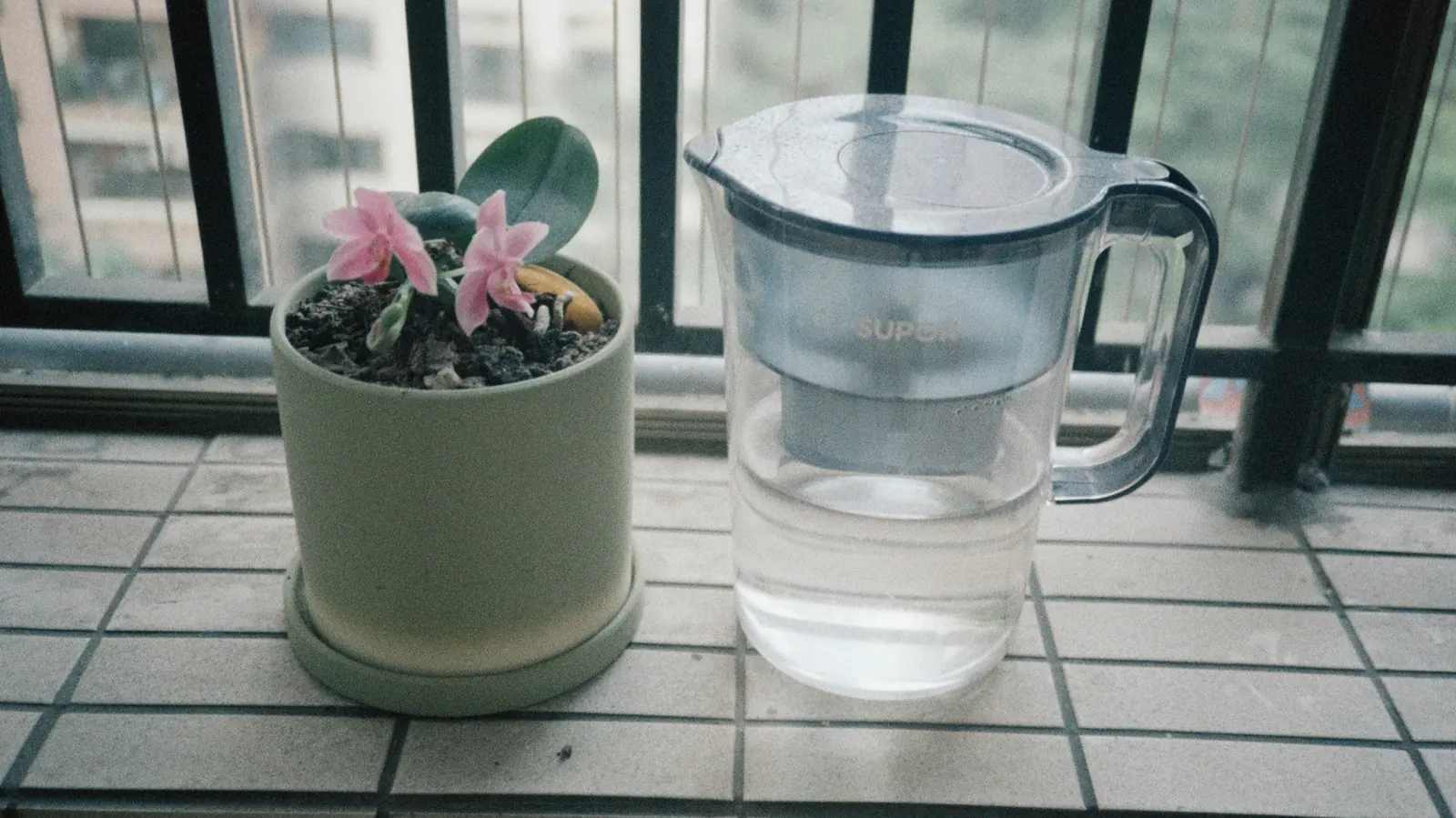
Water is an ingredient. It goes into the pot for beans, the blender for horchata and agua de jamaica, the kettle for café de olla, and the ice tray. If your tap water tastes of chlorine, a filter pitcher is the cheapest fix there is, and you do not need the top model of any range to get that.
This guide covers the entry tier: the basic pitcher each identifiable maker sells, and what you give up compared with the picks in our main filter pitcher guide. We name no prices, because they change constantly. Instead we explain how to judge value where it really lives, in the filter: what it is certified to reduce, how many gallons it lasts and whether replacements are easy to find.
Julia’s earns a commission on purchases made through links on this page, at no cost to you. Recommendations are based on what a restaurant kitchen looks for, product specifications and verified buyer reports.
Quick verdict: the filter pitcher that gives the most for less
For most kitchens, the best affordable water filter pitcher is the Brita Small 6-Cup Pitcher with a Standard filter: Brita’s performance data sheet says the Standard filter is certified by WQA against NSF/ANSI 42 and 53 for chlorine taste and odor, zinc, copper, cadmium and mercury, the filters are sold almost everywhere, and the pitcher also takes Brita’s longer-lasting Elite filter if you want to upgrade later. If lead is your concern, the Culligan ZeroWater 7-Cup Pitcher is the budget model here whose filter is certified for lead reduction. If you hate changing filters, the Waterdrop 7-Cup Pitcher lists a 200-gallon filter life.
Below, five standouts side by side, then all seven pitchers in full.
Five budget filter pitchers side by side
Five standout entry-level pitchers, one for each kind of kitchen, with the certifications and filter life each maker or listing states. All seven are reviewed in full below.
| Pitcher | Best for | Certification (as stated) | Filter life (per maker) | Buy on Amazon |
|---|---|---|---|---|
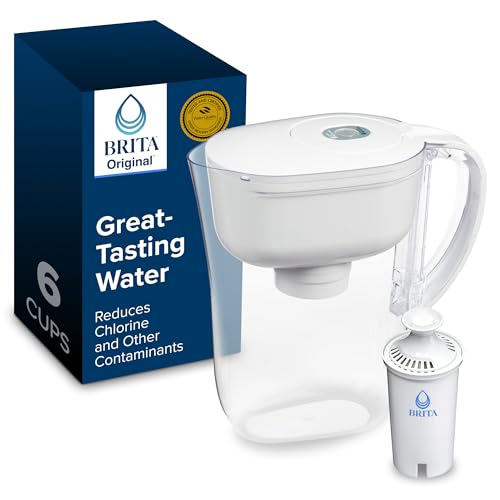
Brita Small 6-Cup Pitcher, Standard FilterBest overall value
|
Better-tasting tap water, easy filters | WQA, NSF/ANSI 42 and 53 | 40 gallons, about 2 months | View on Amazon |

PUR Slim 8-Cup PitcherBest for small fridges
|
Mini fridges and narrow shelves | NSF/ANSI 42, 53 and 401 (listed claims) | 40 gallons, about 2 months | View on Amazon |

Culligan ZeroWater 7-Cup PitcherBudget pick for lead
|
Lead certification on a budget | IAPMO, per the listing | Not stated; TDS meter | View on Amazon |

Waterdrop 7-Cup PitcherFewest filter changes
|
Chlorine taste, long filter life | NSF International, NSF/ANSI 42 and 372 (per listing) | 200 gallons, about 3 months | View on Amazon |

Amazon Basics 10-Cup PitcherTakes Brita filters
|
A full-size pitcher, flexible filters | WQA, NSF/ANSI 42, 53, 401 and 372 (per listing) | 40 gallons | View on Amazon |
Product images from Amazon. Certifications and filter life are as stated by each maker or listing; check the current performance data sheet for the exact contaminants before you buy.
Our picks for the best affordable water filter pitcher
Seven pitchers, each the basic model in its maker’s range. The Brita is a smaller version of a pitcher in our other filter guides, and the ZeroWater is the newer Culligan-branded 7-cup; we kept them because a smaller pitcher is the honest budget answer for those brands. Read the certification line in each review carefully: a filter only reduces what it is certified for, and the cheapest filters usually cover less than the premium ones.
1. Brita Small 6-Cup Pitcher, Standard Filter – Easy Filters, Room to Upgrade
Brita’s small Metro pitcher holds 6 cups and, per the listing, fits most mini-fridges. It comes with one Standard filter, the basic Brita cartridge you can find in most supermarkets and pharmacies, which matters for value: a pitcher is only cheap if its filters are easy to get.
Brita’s performance data sheet says the Standard filter is certified by WQA against NSF/ANSI 42 and 53. Under Standard 42 that covers chlorine taste and odor and zinc; under Standard 53, cadmium, copper and mercury. It is not certified for lead. Brita rates it for 40 gallons, about two months for most households, and the pitcher has an electronic SmartLight indicator that tells you when to change it.
Here is what you give up compared with the Brita Elite pitchers in our main guide: the Elite filter lasts about six months and adds certified lead reduction. The good news is that this pitcher takes Elite filters too, per the listing, so you can start with the cheaper Standard filter and switch later without buying a new pitcher. Brita offers a 30-day money-back guarantee on its pitchers.
Why we like it
- Standard filter certified by WQA against NSF/ANSI 42 and 53 for the listed contaminants
- Filters sold almost everywhere
- Also takes the longer-lasting Elite filter
- SmartLight change indicator
Key specifications
| Model | OB11 pitcher, OB03 Standard filter |
|---|---|
| Capacity | 6 cups |
| Filter certification | WQA, NSF/ANSI 42 and 53 (chlorine, zinc, cadmium, copper, mercury) |
| Lead | Not certified (Standard filter) |
| Filter life | 40 gallons, about 2 months |
| Change indicator | Electronic SmartLight |
| Other filters it takes | Brita Elite |
| Warranty | 30-day money-back guarantee |
Why we recommend it
It suits a small household or a dorm that wants water that tastes better than the tap, with filters it can buy anywhere and an upgrade path if needs change.
Skip it if you need lead reduction from day one. Buy Elite filters for it, or choose the ZeroWater below.
Pros and cons
Pros
- Widely available filters
- Upgradable to Elite filters
- Fits a mini-fridge
Cons
- Standard filter not certified for lead
- Only 6 cups
- Filter change about every two months
2. PUR Slim 8-Cup Pitcher – A Narrow Body for Small Fridges
PUR’s Slim pitcher holds 8 cups in a narrow body, about 8.3 by 3.6 by 10.1 inches per the listing, which PUR says holds a third more than standard small pitchers while still fitting mini-fridges. The lid stays on while you pour, so you can pour while the top reservoir is still filtering, and the components are dishwasher safe.
PUR’s product page says the pitcher ships with one basic PUR filter (PPF900Z). PUR’s performance data sheet lists the Slim (model PPT650) and says these systems are tested and certified by NSF International and by WQA against NSF/ANSI 42, 53 and 401 for the claims on the sheet. For the basic filter those claims include chlorine taste and odor and zinc; cadmium, copper, mercury, benzene, methoxychlor, tetrachloroethylene and toluene; and two Standard 401 compounds. The same sheet marks lead as not certified for the basic filter. Filter life is 40 gallons.
The trade-off against the PUR Plus pitchers in our main guide is the same as with Brita: the PUR Plus filter adds certified lead reduction. PUR says this pitcher works with all PUR pitcher filters, so you can buy PUR Plus replacements for it if lead matters in your area.
Why we like it
- 8 cups in a slim body that fits mini-fridges, per PUR
- Basic filter certified for chlorine, zinc, copper, cadmium, mercury and more, per PUR’s data sheet
- Pour while it filters, with a stay-tight lid
- Takes PUR Plus filters for lead
Key specifications
| Model | PPT650W pitcher, PPF900Z filter |
|---|---|
| Capacity | 8 cups |
| Filter certification | NSF and WQA, NSF/ANSI 42, 53 and 401 (claims listed for PPF900Z) |
| Lead | Not certified (basic filter) |
| Filter life | 40 gallons, about 2 months |
| Change indicator | Not stated on the listing |
| Other filters it takes | All PUR pitcher filters, including PUR Plus |
| Warranty | Not stated on the listing |
Why we recommend it
It suits an apartment or office kitchen where fridge space is tight and you want a little more water than a 6-cup pitcher holds.
Skip it if you need lead reduction without buying different filters. The basic filter in the box is not certified for it.
Pros and cons
Pros
- Slim, fridge-friendly shape
- Broad certified claims for a basic filter
- Upgradable to PUR Plus
Cons
- Basic filter not certified for lead
- Two-month filter life
- Indicator and warranty not stated on the listing
3. Culligan ZeroWater 7-Cup Pitcher – Lead Certified, With a TDS Meter
This is the newer Culligan-branded version of ZeroWater’s 7-cup pitcher, and the smallest pitcher in the range. It uses a five-stage filter that the listing says removes 99.9% of dissolved solids, and it comes with a TDS meter that reads the total dissolved solids in your water so you can see when the filter is spent.
The listing says the filter is certified by IAPMO for Total PFAS, lead, chlorine, mercury and other contaminants, and its title also names fluoride. It does not name the NSF/ANSI standards, so check the current data sheet if you need them. That makes it the budget pick here if lead is your concern.
The catch is filter life. The listing gives no gallon rating, and the real number depends on how many dissolved solids your tap water carries, because the meter calls for a new filter once dissolved solids break through. A filter that removes dissolved solids takes out minerals as well as contaminants. This pitcher takes only the new Culligan with ZeroWater Technology filters, not the older ZeroWater ones, per the listing.
Why we like it
- IAPMO certification for lead, PFAS and mercury, per the listing
- TDS meter in the box shows when to change the filter
- Small 7-cup body
- BPA-free plastic, per the listing
Key specifications
| Model | ZEROP07 |
|---|---|
| Capacity | 7 cups |
| Filter certification | IAPMO, per the listing |
| Lead | Certified, per the listing |
| Filter life | Not stated; varies with tap water |
| Change indicator | TDS meter included |
| Other filters it takes | Culligan ZeroWater only, not older ZeroWater |
| Warranty | Not stated on the listing |
Why we recommend it
It suits a small household that wants certified lead reduction in a basic pitcher and does not mind changing filters often.
Skip it if your tap water is hard or mineral-heavy. The more dissolved solids in your water, the sooner the TDS meter will tell you the filter is spent.
Pros and cons
Pros
- Certified for lead and PFAS, per the listing
- TDS meter included
- Compact size
Cons
- No rated filter life on the listing
- Removes minerals as well
- Takes only Culligan ZeroWater filters
4. Waterdrop 7-Cup Pitcher – A 200-Gallon Filter
Waterdrop’s PT-05 is a 7-cup pitcher that the listing itself pitches as the brand’s budget-friendly option. It is a different, simpler model from the Waterdrop PT-07 in our main guide, though it takes the same PF-01A replacement filter. The listing describes a food-grade, BPA-free plastic body with an ergonomic handle, and the pitcher comes in several colors.
The listing states the filter is certified by NSF International against NSF/ANSI 42, for chlorine taste and odor, and NSF/ANSI 372, for lead-free materials. Other reductions on the listing come from outside testing rather than certification, so we leave them out. Filter life is up to 200 gallons or about three months, tracked by a mechanical counter, and the filter does not lower TDS.
The value case is filter life. A basic Brita or PUR filter is rated for 40 gallons; Waterdrop rates this one for up to 200, so you change it a few times a year rather than six. That keeps the running cost down, as long as chlorine taste is what you want to fix, since that is all its certification covers.
Why we like it
- Filter rated for up to 200 gallons
- NSF/ANSI 42 and 372 certification by NSF International, per the listing
- Compact 7-cup body
- Uses the same PF-01A filter as Waterdrop’s other plastic pitchers
Key specifications
| Model | WD-PT-05B-L, PF-01A filter |
|---|---|
| Capacity | 7 cups |
| Filter certification | NSF International, NSF/ANSI 42 and 372 (per listing) |
| Lead | Not certified for reduction |
| Filter life | Up to 200 gallons, about 3 months |
| Change indicator | Mechanical life recorder |
| Other filters it takes | Waterdrop PF-01A |
| Warranty | Not stated on the listing |
Why we recommend it
It suits one or two people who mainly want to lose the chlorine taste and change filters as rarely as possible.
Skip it if you want certified reduction of anything beyond chlorine. Its certification is for taste and odor, and Waterdrop says plainly that it does not lower TDS.
Pros and cons
Pros
- Long filter life in a small pitcher
- Filters fit other Waterdrop pitchers
- Named certifier on the listing
Cons
- Certified for chlorine only
- Filters sold mainly online
- No warranty stated
5. Amazon Basics 10-Cup Pitcher – Full Size, Takes Brita Filters
Amazon’s own brand sells a plain 10-cup pitcher that the listing says fits refrigerator shelves and holds enough to fill three 24-ounce bottles. Its main selling point is flexibility: it ships with one Amazon Basics filter and is compatible with Brita’s standard pitcher filters, so you can buy whichever replacement is easiest to find.
The listing states that the Amazon Basics filters are WQA certified against NSF/ANSI 42, 53, 401 and 372 to reduce nine contaminants: chlorine taste and odor, zinc, copper, cadmium, mercury, benzene, atenolol, linuron and trimethoprim. Lead is not on that list. Each filter lasts up to 40 gallons. If you put a Brita filter in instead, the certifications are Brita’s for that filter, not Amazon’s.
The lid is designed not to leak while you pour. The listing does not mention a change indicator or a warranty, so mark the date you install each filter.
Why we like it
- Full 10-cup size
- Takes Amazon Basics or Brita standard filters
- Filter WQA certified for nine named contaminants, per the listing
- Leak-resistant lid
Key specifications
| Model | 1038354 |
|---|---|
| Capacity | 10 cups |
| Filter certification | WQA, NSF/ANSI 42, 53, 401 and 372 (per listing) |
| Lead | Not among the listed contaminants |
| Filter life | 40 gallons |
| Change indicator | Not stated on the listing |
| Other filters it takes | Brita standard pitcher filters |
| Warranty | Not stated on the listing |
Why we recommend it
It suits a family that wants a full-size pitcher and the freedom to buy whichever compatible filter is on the shelf.
Skip it if you want a filter-change reminder or a warranty in writing; the listing mentions neither.
Pros and cons
Pros
- 10-cup capacity
- Two filter brands to choose from
- Certified filter claims stated on the listing
Cons
- No lead claim
- No change indicator stated
- No warranty stated
6. LifeStraw Home 7-Cup Pitcher – Two-Stage Filter, Made in the US

LifeStraw is best known for camping filters, and its Home pitcher is the household version. This is the BPA-free plastic 7-cup model in Pebble, the entry point to the range; LifeStraw also sells a 10-cup plastic pitcher and a glass 7-cup pitcher.
The filter has two parts. A membrane microfilter, which LifeStraw says lasts 264 gallons or about a year, targets bacteria, parasites and microplastics; an activated carbon and ion exchange filter, which lasts 40 gallons or about two months, handles chlorine, metals and chemicals. LifeStraw says the system meets NSF/ANSI 42 for chlorine, NSF/ANSI 53 for lead, mercury, chromium III, cadmium and copper, and NSF/ANSI 401, with further NSF protocols for PFOA/PFOS and microbes. That is the maker’s wording: it says the filters meet these standards, and in what we read it does not name a third-party certifier, so treat these as LifeStraw’s claims.
The listing says the pitcher is made in the United States; it mentions a manufacturer warranty without giving a term. Two filters means two replacement schedules to track, and the reviewer Water Filter Guru reports that fluoride stayed above its guideline level in its own testing.
Why we like it
- Membrane stage for bacteria, parasites and microplastics, per LifeStraw
- LifeStraw says it meets NSF/ANSI 53 for lead
- Made in the US, per the listing
- Compact 7-cup size
Key specifications
| Model | LSH7PLPB41 |
|---|---|
| Capacity | 7 cups |
| Filter certification | Maker says it meets NSF/ANSI 42, 53 and 401; certifier not named |
| Lead | Meets NSF/ANSI 53, per LifeStraw |
| Filter life | Membrane 264 gallons (1 year); carbon 40 gallons (2 months) |
| Change indicator | Not stated on the listing |
| Other filters it takes | LifeStraw Home filters only |
| Warranty | Manufacturer warranty; term not stated |
Why we recommend it
It suits anyone who wants the membrane stage LifeStraw describes for bacteria and parasites, which carbon-only pitchers do not claim, and anyone who prefers a US-made product.
Skip it if you want third-party certification you can look up. For that, the Brita, PUR and ZeroWater filters name their certifiers.
Pros and cons
Pros
- Microfilter stage that carbon-only pitchers lack
- Broad maker claims, including lead
- Made in the US
Cons
- Certifier not named in what we read
- Two filters on two schedules
- Proprietary filters only
7. Soma 10-Cup Pitcher – Plant-Based Filter, Bamboo Handle

Soma, a line from the New York company Full Circle, makes a pitcher you would not mind putting on the dinner table. The 10-cup body is BPA-free, shatter-resistant plastic with a bamboo handle, and it holds 80 ounces. The filter lid has a trap door that opens as you fill it, so you do not need to lift the lid to top it up.
Soma’s filter uses activated carbon made from coconut shells, and the listing says the whole filter is 60 percent plant-based, renewable material. One filter lasts about two months. The listing says the pitcher filters for improved taste and odor, with reduced cadmium, chlorine, mercury, copper and zinc. It does not name a certification standard or a certifier for those claims, and we could not find a Soma performance data sheet to confirm them, so we report them as the maker’s claims only.
That makes this the pick for looks and materials rather than for documented filtration. If certification you can check matters most, the Brita and PUR pitchers above publish theirs.
Why we like it
- Bamboo handle and a shape that goes from fridge to table
- Coconut-shell carbon filter, 60 percent plant-based per the listing
- Trap-door lid fills without lifting
- Full 10-cup, 80-ounce capacity
Key specifications
| Model | 0102-10-01 |
|---|---|
| Capacity | 10 cups (80 oz) |
| Filter certification | Not stated on the listing |
| Lead | Not stated on the listing |
| Filter life | About 2 months |
| Change indicator | Not stated on the listing |
| Other filters it takes | Soma filters |
| Warranty | Not stated on the listing |
Why we recommend it
It suits someone who keeps the pitcher on the table, cares about plant-based materials and mainly wants water that tastes better.
Skip it if you need certified contaminant reduction. The listing names no standard or certifier.
Pros and cons
Pros
- Attractive enough to serve from
- Plant-based filter materials
- Easy-fill trap-door lid
Cons
- No certification stated
- Two-month filter life
- Proprietary filters
How to judge value in a budget filter pitcher
The pitcher is the cheap part. Over a year you will spend more on filters than on the jug, so judge value from the filter outward.
1. What the filter is certified to reduce
Look for the maker’s performance data sheet and three things on it: the standard (NSF/ANSI 42 covers taste and odor such as chlorine; 53 covers health-related contaminants such as lead; 401 covers trace “emerging” compounds), the certifier (NSF, WQA or IAPMO) and the exact contaminants. Basic filters often cover less than premium ones. Brita’s Standard and PUR’s basic filter are certified for chlorine and several metals but not lead; their premium filters add lead. “Tested to” a standard is not the same as “certified to” it.
2. Filter life, not just pitcher size
Filter ratings on this page run from 40 gallons (Brita, PUR, Amazon Basics, LifeStraw’s carbon stage) to 200 gallons (Waterdrop), and the ZeroWater listing gives no gallon figure, relying on its TDS meter. A filter that lasts five times longer can make a pricier pitcher the cheaper one to own. Compare the cost per gallon of replacement filters, not the price of the box.
3. What you give up against the premium picks
Compared with our main water filter pitcher guide, entry pitchers usually give up certified lead reduction, a longer filter life or both. If you only want better-tasting water, that is no loss. If lead is a concern, either choose the ZeroWater here or put a lead-certified filter in a Brita or PUR pitcher, and see our guide to the best pitcher water filter for lead removal.
4. Where you can buy filters
Brita and PUR filters are in most supermarkets; Waterdrop, ZeroWater, LifeStraw and Soma filters are easier to find online. A pitcher whose filters you cannot easily get ends up unfiltered.
5. Fridge fit and size
Measure the shelf or door before you buy. A 6- to 8-cup pitcher suits one or two people; a household that drinks a lot of water or makes aguas frescas will want 10 cups so the pitcher is not always empty.
How we chose these seven budget pitchers
We started from the makers we could identify and, for each, chose the basic pitcher in its range that was in stock on Amazon in the United States when we checked it through Amazon’s product data. We took certification claims only from each maker’s performance data sheet or the product listing, and we repeat them exactly as stated, naming the standard and, where given, the certifier. Claims based only on in-house or outside testing are left out, and where a maker states reductions without naming a certifier, as LifeStraw and Soma do, we say so in the review. We left out pitchers already reviewed in our other filter guides, except two smaller models from the Brita and ZeroWater ranges, kept as the budget way into those brands. We limited this page to two brands that sell mainly online, left out sellers with no identifiable maker and checked the U.S. Consumer Product Safety Commission’s recall database for every brand here; we found no recall of a water filter pitcher. We have not used these pitchers in our kitchen; where we describe how a filter performs, we say whose figures those are.
Budget filter pitcher questions, answered
What is the best water filter pitcher on a budget?
For most people, the Brita Small 6-Cup Pitcher with a Standard filter: its filter is certified for chlorine and several metals, replacements are sold everywhere and it also takes Brita’s longer-lasting Elite filters.
Do cheap water filter pitchers remove lead?
Some do, but many basic filters do not. On this page, ZeroWater’s filter is certified for lead by IAPMO, and LifeStraw says its filter meets NSF/ANSI 53 for lead. Brita’s Standard filter and PUR’s basic filter are not certified for lead, though both pitchers take their maker’s lead-certified filters.
Which affordable water filter pitcher has the longest filter life?
The Waterdrop 7-Cup, whose PF-01A filter is rated for up to 200 gallons, or about three months. Most basic filters are rated for 40 gallons.
What is the best value water filter pitcher for a big family?
A 10-cup pitcher: the Amazon Basics or Soma. If you go through more than a pitcher a day, a larger dispenser from our countertop water filter guide may suit you better.
Is filtered water better for cooking beans and making aguas frescas?
If your tap water tastes of chlorine, removing it improves the taste of anything made with lots of water, and NSF/ANSI 42 certification covers exactly that. Filtering does not change how beans cook; that depends more on the beans and the hardness of your water.
Our final pick for filtered water on a budget
Start with the Brita Small 6-Cup and switch to Elite filters if you ever need lead reduction; choose the ZeroWater 7-Cup if lead is the concern from the start, or the Waterdrop if you want to change filters only a few times a year. For the full range, see our best water filter pitcher guide, and put the water to use with our guide to aguas frescas. If you would rather someone else made the horchata, Julia’s menu has it covered: call to order.