Not every kitchen can put a filter under the sink. Renters, small apartments and anyone who would rather not touch the plumbing need something that sits on the counter: a plug-in reverse osmosis unit, a gravity tank, a fridge dispenser or a filter that connects to the faucet by a hose. All of them give you filtered water for coffee, ice and a jar of agua de jamaica.
This guide compares seven countertop water filters across those types. For each one we say which NSF/ANSI standards it is certified to, and by whom, as the maker or listing states it, and we flag claims that are only laboratory tests.
Julia’s earns a commission on purchases made through links on this page, at no cost to you. Recommendations are based on what a restaurant kitchen looks for, product specifications and verified buyer reports.
Quick verdict: which countertop water filter to buy
The best countertop water filter for most kitchens is the Philips Countertop Reverse Osmosis Dispenser: RO water with no installation and a readout of dissolved solids in and out, though its listing names only a materials standard. For no power at all, the Waterdrop King Tank gravity filter holds 2.25 gallons. If named certification for lead and PFOA/PFOS matters most, the ZeroWater 32-Cup Dispenser listing states IAPMO certification for both.
Five countertop filters at a glance
Our five standout picks, one for each kind of kitchen, with the type, capacity, certifications and power each maker or listing states. All seven are reviewed in full below.
| Countertop filter | Type | Capacity | Certifications | Power | Buy on Amazon |
|---|---|---|---|---|---|

Philips Countertop Reverse Osmosis DispenserBest overall
|
Countertop RO | 6 L tank, 1.8 L jug | NSF/ANSI 372 materials (listing) | Plug-in | View on Amazon |

Waterdrop King Tank Gravity Filter, 2.25 GallonBest gravity system
|
Gravity, carbon | 2.25 gal | NSF/ANSI 42, 372 (listing) | None | View on Amazon |
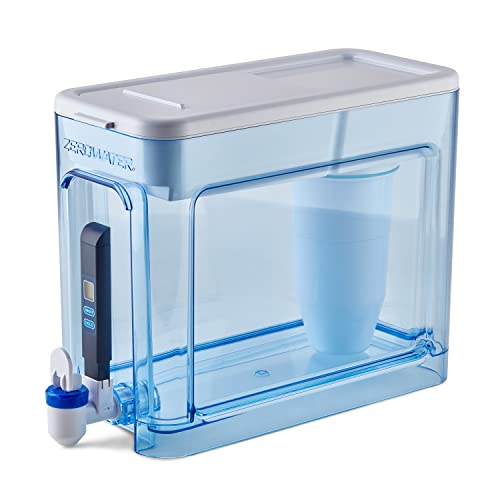
ZeroWater 32-Cup Filter DispenserBest certified dispenser
|
Gravity, ion exchange | 32 cups | IAPMO: lead, PFOA/PFOS (listing) | None | View on Amazon |

Waterdrop CTF-01 Stainless Countertop FilterBest faucet-connected
|
Faucet-connected carbon | On demand | NSF/ANSI 42 (listing) | None | View on Amazon |

Waterdrop C2SL Countertop Reverse Osmosis with Glass PitcherBest with a glass pitcher
|
Countertop RO | 108 oz tank, 40 oz pitcher | NSF/ANSI/CAN 372 (materials only) | Plug-in | View on Amazon |
Product images from Amazon. Specifications and certifications are as stated by each maker or listing; check the listing and the maker’s performance data sheet before you buy.
Our picks for the best countertop water filter
The first five cover the main types: plug-in RO, gravity, a certified fridge dispenser, a faucet-connected filter and an RO unit with a glass pitcher. The last two add a second RO option and a large fridge dispenser. Where a certification is stated without a certifier, or is really a laboratory test, we say so.
1. Philips Countertop Reverse Osmosis Dispenser – RO Without Plumbing
The Philips countertop dispenser (ADD6926WH) brings reverse osmosis to a kitchen that cannot drill or plumb. You fill a 6-liter tank with tap water, plug it in, and it filters into a 1.8-liter jug at about 200 ml per minute, according to the listing. A panel shows the dissolved solids (TDS) of the water going in and coming out.
On certification, read carefully. The listing says the unit is certified to NSF/ANSI/CAN 372, which covers the lead content of its materials, not what it removes, and that the filter core is “certified by SGS”, a testing laboratory, without naming a standard. The listing’s claims about what it filters out are the maker’s own. The last stage adds minerals back for taste, per Philips.
Philips gives the size as 9.1 by 16.5 by 12.8 inches and asks you to empty and refill the tap-water tank daily and run the self-clean cycle monthly. It dispenses room-temperature water only. The machine has a two-year warranty that does not cover the filter.
Why we like it
- Reverse osmosis with no installation (listing)
- TDS readout for water in and out
- Two-year machine warranty (listing)
- Remineralizing final stage
Key specifications
| System | Philips ADD6926WH/37 |
|---|---|
| Type | Countertop reverse osmosis, 6 stages |
| Capacity | 6 L tap tank; 1.8 L jug |
| Certifications | NSF/ANSI/CAN 372 (materials) per listing; certifier not named |
| Filter life | Not stated in listing |
| Power needed | Yes, plug-in |
| Lowers TDS | Yes (listing) |
| Warranty | 2 years, machine only |
Why we recommend it
It suits renters and anyone who wants RO water for coffee, ice and aguas frescas without touching the plumbing.
Skip it if you want certified contaminant reductions; the listing names only a materials standard.
Pros and cons
Pros
- No plumbing
- Shows TDS in and out
- Compact jug fits the fridge
Cons
- No certified reduction claims in the listing
- Daily refill of the tap tank
- Needs counter space and an outlet
2. Waterdrop King Tank Gravity Filter, 2.25 Gallon – Stainless, No Power
The Waterdrop King Tank (TK-A-S) is a stainless steel gravity filter: pour water into the top chamber and it drips through two carbon filters into the bottom one, ready at a metal spigot. It holds 2.25 gallons and needs no power or plumbing. It is the same idea as the Big Berkey, from a different maker.
The listing says the system has NSF/ANSI 372 certification for materials, and that the black carbon filter is certified against NSF/ANSI 42 for chlorine, taste and odor. It does not name the certifier. Other reductions it mentions, including heavy metals, are described as tested by a third-party laboratory, which is a test claim, not a certification. It does not lower TDS.
Waterdrop rates the two carbon filters for up to 6,000 gallons. A gravity filter is slow by nature, so fill it ahead of time if you are making a big batch of agua de horchata.
Why we like it
- No electricity or plumbing
- 304 stainless steel housing and metal spigot (listing)
- NSF/ANSI 42 named for the carbon filter (listing)
- Long rated filter life
Key specifications
| System | Waterdrop WD-TK-A-S |
|---|---|
| Type | Gravity, carbon |
| Capacity | 2.25 gallons |
| Certifications | NSF/ANSI 42 (filter) and 372 (system) per listing; certifier not named |
| Filter life | Up to 6,000 gallons (two filters) |
| Power needed | None |
| Lowers TDS | No |
| Warranty | 1 year (listing) |
Why we recommend it
It suits a kitchen that wants a large batch of filtered water on the counter without power, and a backup for storms.
Skip it if you want certified reductions beyond chlorine taste and odor.
Pros and cons
Pros
- Large capacity
- Works in a power cut
- Long filter life
Cons
- Slow to filter
- Certifier not named
- Tall; needs space under cabinets
3. ZeroWater 32-Cup Filter Dispenser – Five-Stage Filter, TDS Meter
The ZeroWater 32-cup dispenser is a gravity tank with a spigot that fits on a fridge shelf. Its five-stage filter uses ion exchange to take out nearly all dissolved solids, and it comes with a TDS meter: ZeroWater says to change the filter when the meter reads 006.
The listing says the filter is IAPMO certified to reduce PFOA/PFOS, lead, chromium and mercury. Culligan’s ZeroWater performance data sheet (for Culligan-branded ZeroWater models) says the filter was tested to NSF/ANSI 42, 53 and 401, with lead, mercury, chromium and total PFAS under Standard 53. We did not read an IAPMO listing for this specific model, so check the data sheet in the box.
Because it removes dissolved solids, filter life depends heavily on your tap water; hard water uses filters faster. Culligan’s data sheet rates its version of the filter at 20 gallons.
Why we like it
- IAPMO certification for lead and PFOA/PFOS stated in the listing
- TDS meter included
- Fits on a fridge shelf
- No power or plumbing
Key specifications
| System | ZeroWater ZD-032-RR |
|---|---|
| Type | Gravity dispenser, ion exchange |
| Capacity | 32 cups |
| Certifications | IAPMO for lead, PFOA/PFOS, chromium, mercury per listing |
| Filter life | Change when meter reads 006; 20 gal on Culligan’s sheet |
| Power needed | None |
| Lowers TDS | Yes |
| Warranty | Not stated |
Why we recommend it
It suits a kitchen that wants a fridge dispenser with named certified claims and a way to see when the filter is spent.
Skip it if your tap water is hard; you may change filters often.
Pros and cons
Pros
- Named certifier for health-related claims
- TDS meter
- Large fridge capacity
Cons
- Short filter life in hard water
- Slow to fill
- Certification read from the listing, not a directory
4. Waterdrop CTF-01 Stainless Countertop Filter – 8,000 Gallons, Fast Flow
The Waterdrop CTF-01 sits on the counter beside the sink and connects to the faucet with a hose and diverter, so filtered water flows on demand at up to 1.6 gallons per minute, according to the listing. It is rated for 8,000 gallons or 12 months.
The listing title says it is certified to NSF/ANSI 42, without naming the certifier. Its heavy-metal and fluoride claims are marked as tested by a third-party laboratory, which is a test claim, not a certification. It does not reduce TDS, and it adds calcium, magnesium and potassium, per Waterdrop.
Like faucet-mount filters, it does not fit pull-out, handheld, spray or sensor faucets. The housing is 304 stainless steel.
Why we like it
- Fast stated flow for a countertop filter
- 8,000-gallon rating
- Stainless housing
- No drilling (listing)
Key specifications
| System | Waterdrop WD-CTF-01 |
|---|---|
| Type | Countertop carbon, faucet-connected |
| Capacity | Flows on demand |
| Certifications | NSF/ANSI 42 per listing; certifier not named |
| Filter life | 8,000 gallons or 12 months |
| Power needed | None |
| Lowers TDS | No |
| Warranty | Not stated |
Why we recommend it
It suits a cook who fills pots with filtered water and wants more flow than a faucet-mount filter gives.
Skip it if you have a pull-down faucet or want certified health-related claims.
Pros and cons
Pros
- Fast flow
- Long filter life
- Metal housing
Cons
- Takes counter space by the sink
- Certifier not named
- Not for pull-out faucets
5. Waterdrop C2SL Countertop Reverse Osmosis with Glass Pitcher – Seven Stages, Mineral Stage
The Waterdrop C2SL is a countertop RO system that fills a detachable 40-ounce Maxblue glass pitcher automatically from a 108-ounce feed tank, with no plumbing or faucet connection. Waterdrop describes seven stages, including a 0.0001-micron membrane and a mineral stage that adds potassium, calcium, sodium and magnesium back. A display and voice alerts tell you when the tank is low or the filter needs changing.
The listing names NSF/ANSI/CAN 372, which covers lead-free materials only, not what the filter removes, and it does not name the certifier. The contaminant reductions it lists come from SGS laboratory tests, by Waterdrop’s account, rather than a certification. Waterdrop rates the filter for up to 528 gallons or 12 months and says the system is designed for one or two people.
The listing gives a 3:1 pure-to-drain ratio. Power draw is not stated in the listing we read, and the pitcher holds 40 ounces, so a household that drinks a lot will be waiting on refills.
Why we like it
- Glass pitcher instead of plastic
- Smart alerts for refill and filter change
- Mineral stage for taste (listing)
- Filter rated for up to 12 months (listing)
Key specifications
| System | Waterdrop WD-C2SL |
|---|---|
| Type | Countertop reverse osmosis, 7 stages |
| Capacity | 108 oz feed tank; 40 oz glass pitcher |
| Certifications | NSF/ANSI/CAN 372 (materials); certifier not named |
| Filter life | Up to 528 gallons or 12 months (listing) |
| Power needed | Yes, plug-in |
| Lowers TDS | Yes (listing) |
| Warranty | Not stated |
Why we recommend it
It suits a cook who wants RO water served from glass, for coffee and drinks on the table.
Skip it if you want certified reduction claims; the listing gives laboratory test results and a materials standard only.
Pros and cons
Pros
- Glass pitcher
- Alerts
- Mineral stage
Cons
- No reduction certification stated
- Small 40 oz pitcher
- Needs an outlet
6. DREO Countertop Reverse Osmosis Filter – Autofill, Self-Cleaning

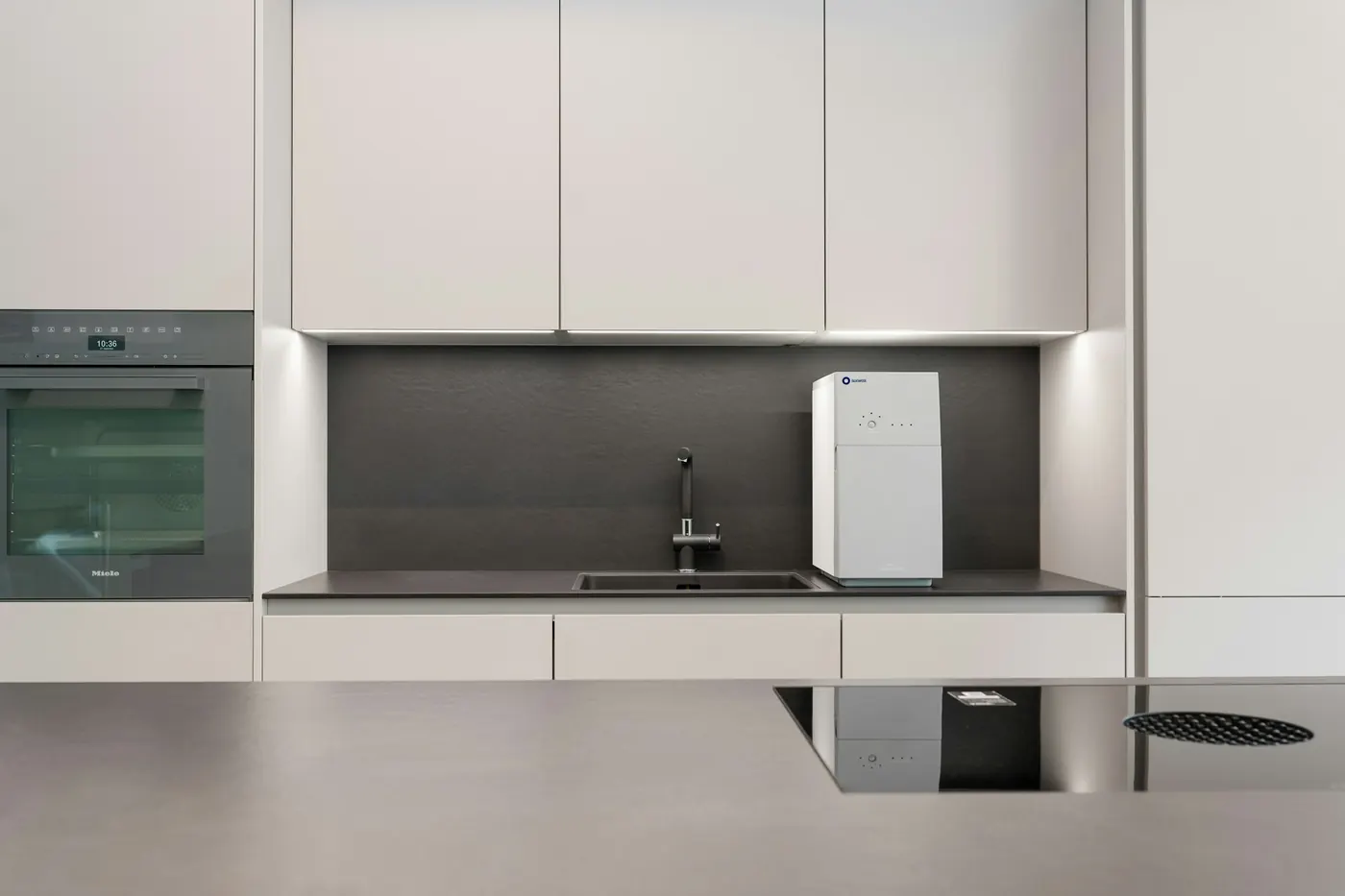
DREO’s countertop RO system comes with two autofill pitchers, so one can chill in the fridge while the other fills. The listing gives a 3:1 pure-to-drain ratio, a 5-liter size, a TDS display and a filter-life readout, plus a self-cleaning cycle.
DREO says the system was tested by SGS to meet NSF/ANSI 58. That is a test claim, not a certification by NSF, WQA or IAPMO, and we report it only as DREO’s statement. The same goes for its claims about PFOA, PFOS and fluoride.
This is a newer model; the listing shows a release date this year. Filter life and warranty are not stated in the listing.
Why we like it
- Two autofill pitchers
- 3:1 pure-to-drain ratio (listing)
- TDS and filter-life display
- Self-cleaning cycle
Key specifications
| System | DREO DR-KWF003 |
|---|---|
| Type | Countertop reverse osmosis |
| Capacity | 5 L |
| Certifications | Maker states SGS testing to NSF/ANSI 58; not a certification |
| Filter life | Not stated |
| Power needed | Yes, plug-in |
| Lowers TDS | Yes (listing) |
| Warranty | Not stated |
Why we recommend it
It suits a household that goes through a lot of chilled water and wants two pitchers in rotation.
Skip it if you want third-party certification rather than a test claim.
Pros and cons
Pros
- Two pitchers
- Good stated waste ratio
- Displays
Cons
- test claim only
- Filter life not stated
- New model with a short track record
7. Waterdrop 35-Cup Filter Dispenser – 200-Gallon Filter

The Waterdrop WFD-40L is a slim fridge dispenser that holds 35 cups (19 in the body), with a spigot, a carry handle and a sliding lid, according to the listing. Its carbon-fiber filter is rated for 200 gallons or two months, with a filter-change indicator.
The listing says the filter has NSF/ANSI 42 and 372 certification, without naming the certifier. Its chlorine figures and other reductions are described as results from a third-party testing laboratory, which are test claims, not certifications. It does not lower TDS.
Waterdrop gives the size as 14.37 by 5.55 by 9.95 inches; measure your fridge shelf first.
Why we like it
- 35-cup capacity (listing)
- 200-gallon filter rating
- Filter-change indicator
- Slim shape for a fridge
Key specifications
| System | Waterdrop WD-WFD-40L |
|---|---|
| Type | Gravity dispenser, carbon fiber |
| Capacity | 35 cups |
| Certifications | NSF/ANSI 42 and 372 per listing; certifier not named |
| Filter life | 200 gallons or 2 months |
| Power needed | None |
| Lowers TDS | No |
| Warranty | Not stated |
Why we recommend it
It suits a family that wants a lot of cold filtered water on hand for aguas frescas and lunches.
Skip it if you want certified reductions beyond taste and odor.
Pros and cons
Pros
- Large capacity
- Long gallon rating for a dispenser
- Indicator
Cons
- Certifier not named
- Two-month life
- Needs a deep fridge shelf
RO, gravity, dispenser or faucet-connected?
Countertop reverse osmosis (Philips, Waterdrop C2SL, DREO) plugs in, filters tap water you pour into a tank, and takes out most dissolved solids. It is the only countertop type that lowers TDS a lot, apart from ZeroWater’s ion-exchange filter. Expect to refill a tank and empty or flush wastewater as each maker describes.
Gravity filters (Waterdrop King Tank) need no power and hold a lot, but they are slow. We left out the Big Berkey because only replacement elements, not the system itself, came up in stock on Amazon, and AquaTru because the only listing we found bundled it with an air purifier.
Fridge dispensers (ZeroWater, Waterdrop 35-cup) are big pitchers with a spigot. If a pitcher is enough for you, our water filter pitcher guide covers those, including larger dispensers from Brita and PUR.
Faucet-connected countertop filters (Waterdrop CTF-01) give filtered water on demand, faster than a faucet water filter, but need a standard faucet.
How to choose a countertop water filter
1. Certification, with a certifier
Look on the performance data sheet for the NSF/ANSI standard and the certifier: 42 for chlorine, taste and odor; 53 for health-related contaminants such as lead; 58 for reverse osmosis; 401 for trace compounds. NSF/ANSI 372 covers the lead content of materials only. “Tested by SGS” or “tested by a third-party laboratory” is a test claim, not a certification. Several countertop units here state only 372 or a laboratory test, so read their claims as the maker’s.
2. How much water you use
A family that drinks and cooks with filtered water needs more than a 1.8-liter jug. Gravity tanks and large dispensers hold more; RO units refill on demand from their tank.
3. Counter and fridge space
Measure. RO units take a corner of counter near an outlet; dispensers need a deep fridge shelf; gravity filters are tall.
4. Power and upkeep
RO units need an outlet and a daily or regular refill. Gravity filters and dispensers need nothing but water. ZeroWater filters run out faster in hard water.
5. Whether you want minerals
RO and ion exchange take most minerals out; carbon leaves them in. Some RO units, like the Philips and Waterdrop C2SL, add minerals back for taste.
Filtered water for the drinks and the ice
In a Mexican kitchen, water is an ingredient. It is most of every agua fresca, all of the ice, and most of the coffee. The same filtered water can go into a countertop ice maker and a coffee maker; check each appliance’s manual for the kind of water its maker recommends.
How we picked these seven countertop filters
We did not test these filters. We read each Amazon listing and, where we could get one, the maker’s performance data sheet, and we report certifications only as those documents state them, naming the standard and certifier. Where a listing gives a test claim or a certification without a certifier, we say so. We checked that every pick was in stock on Amazon when we wrote this, and left out listings that were bundles with unrelated products or that came up only as replacement parts. We make no health claims for any filter: what it reduces is what its certification covers.
Countertop water filter questions, answered
What is the best countertop water filter?
For RO without plumbing, the Philips dispenser; for no power, the Waterdrop King Tank; for named certification of lead and PFOA/PFOS, the ZeroWater 32-cup dispenser, according to its listing.
Is countertop reverse osmosis certified?
Some systems are certified to NSF/ANSI 58 by NSF, WQA or IAPMO R&T; check the data sheet. Of the RO units here, the listings name only materials certification (Philips, Waterdrop C2SL) or a laboratory test (DREO).
Are gravity filters like Berkey certified?
It depends on the filter element. The Waterdrop King Tank listing names NSF/ANSI 42 for its carbon filter, without naming a certifier. Check any gravity filter’s data sheet for the standard and the certifier.
Do countertop filters need electricity?
RO units do. Gravity filters, fridge dispensers and faucet-connected filters do not.
Do countertop filters waste water?
Only the RO units. DREO states 3:1 pure to drain; Philips and Waterdrop do not state a ratio in the listings we read.
Our pick for filtered water on the counter
Buy the Philips Countertop Reverse Osmosis Dispenser for RO water with no plumbing. Choose the Waterdrop King Tank for a big, power-free batch, the ZeroWater 32-cup if named certification is your priority, and the Waterdrop CTF-01 for filtered water on demand at the sink. For something smaller, see our water filter pitcher picks.
More water filter guides: under-sink water filters.
More specific guides: the best gravity water filters and the best emergency water filters.
For aguas frescas made by someone else, see our menu, or call to order.