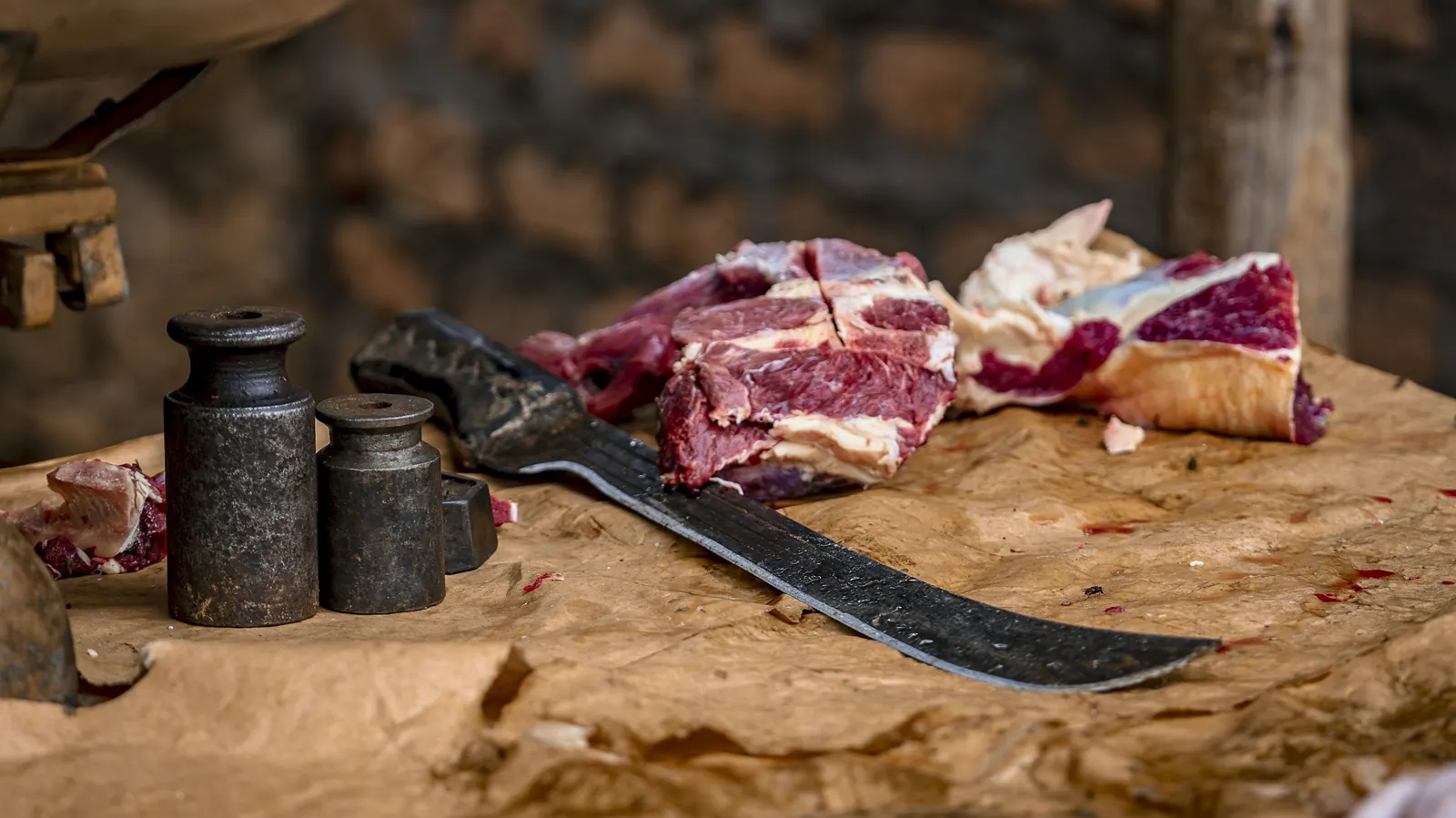
Processing your own deer saves a processor’s fee and lets you decide exactly how the meat is cut: which roasts stay whole, how thick the backstrap steaks are, how much goes to grind for chili and tacos. It also asks more of your knives than any kitchen job. You skin, open and quarter an animal outdoors, then spend hours at a table separating muscles, trimming fat and silver skin and cutting steaks.
This guide narrows our best boning knife guide to that one job: home deer and game processing. Its picks are kitchen boning knives; the knives and kits below are chosen for venison, from field skinners to butcher rolls, and none repeats a product from that guide or from our carving knife brands guide.
Julia’s earns a commission on purchases made through links on this page, at no cost to you. Recommendations are based on what a restaurant kitchen looks for, product specifications and verified buyer reports.
Quick verdict: which deer knife to buy
For most hunters, buy the Outdoor Edge WildPak: caping knife, gut-hook skinner, boning knife, saw, rib spreader, gloves and sharpener in one hard case, which covers a deer from field to freezer. If you do the butchering inside, add the Mercer Culinary BPX curved stiff boning knife, whose firm, curved blade suits heavy venison quarters. For a kitchen butcher set with a 10-inch cimeter for steaks, choose the Victorinox 7-Piece Field Dressing Kit.
Below, the five standouts side by side, all eight picks in detail, and the food safety basics from Penn State Extension and FoodSafety.gov.
Five deer processing knives compared
Our five standout picks, one for each kind of hunter, with blades and origin as each maker or listing states them. All eight are reviewed in full below.
| Knife or kit | Best for | Blade | Made in | Buy on Amazon |
|---|---|---|---|---|

Outdoor Edge WildPak 8-Piece Game Processing KitBest overall
|
Doing the whole deer yourself | Caping, gut-hook skinner, boning | Not stated | View on Amazon |
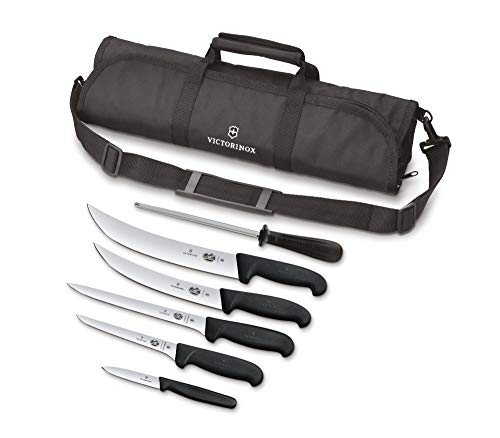
Victorinox 7-Piece Field Dressing KitBest kitchen butcher set
|
Breaking quarters into steaks | Paring to 10 in cimeter | Switzerland | View on Amazon |

Mercer Culinary BPX 5.9-inch Curved Stiff Boning KnifeBest boning knife for venison
|
Deboning hindquarters | 5.9 in curved, stiff | Not stated | View on Amazon |

Havalon Piranta-Original Replaceable-Blade KnifeBest replaceable blade
|
Skinning and caping | 2¾ in replaceable #60A | Not stated | View on Amazon |

Buck 103 SkinnerClassic skinner
|
Skinning with one fixed blade | 4 in 420HC skinner | USA | View on Amazon |
Product images from Amazon. Blade lengths, steels and origins are as given by each maker or listing; check the listing before you buy.
The best boning knife deer hunters can use, plus skinners and kits
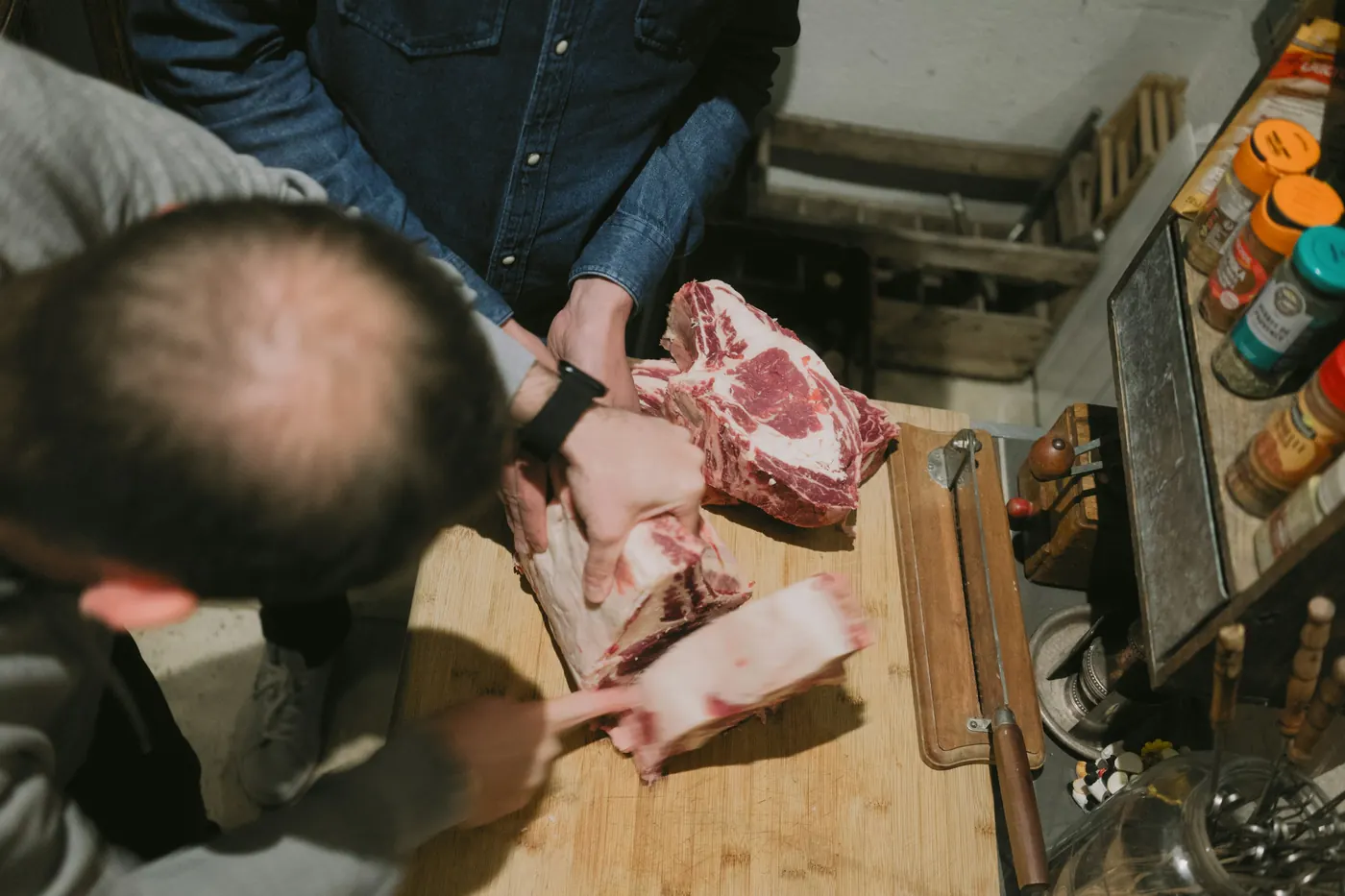
These eight come from established knife makers: two complete kits, two boning knives, three skinning knives and one budget field knife. Each pick explains who it suits, the specifications that matter and one honest reason to skip it. We have not used these knives ourselves; specifications come from the makers and the Amazon listings.
1. Outdoor Edge WildPak 8-Piece Game Processing Kit – Field to Freezer in One Case
Outdoor Edge is a hunting-knife company that builds much of its range around game processing, and the WildPak is the kit we would hand to someone processing their first deer at home. It covers every stage: a caping knife for the fine work around the head and legs, a gut-hook skinner for opening and skinning, a boning knife for taking the quarters apart, a wood and bone saw, a ribcage spreader, game cleaning gloves and a tungsten carbide sharpener, all snapped into a hard-side case.
The listing says each knife is full tang, with 420J2 stainless steel blades that are heat treated, taper ground and hand finished. 420J2 is a soft, very rust-resistant stainless; it will not hold an edge as long as harder steels, which is why the sharpener in the case matters. The handles are rubberized TPR in blaze orange, which the maker says grips well in slick conditions, and which is easy to spot if you set a knife down in leaves.
For the kitchen half of the job, the boning knife is the one you will use most: separating the hindquarter into its muscle groups, lifting the backstraps and trimming silver skin. Wash the knives by hand with hot, soapy water after each session and dry them before they go back in the case.
Why we like it
- Covers skinning, gutting, boning and sawing in one kit
- Full-tang 420J2 stainless blades, per the listing
- Carbide sharpener and gloves included
- Hard case keeps every piece in its own slot
Key specifications
| Model | WP-2 |
|---|---|
| Type | 8-piece processing kit |
| Blade length | Not stated on listing |
| Blade steel | 420J2 stainless |
| Handle | Blaze-orange TPR |
| Sheath or case | Hard-side carry case |
| Made in | Not stated |
| Warranty | Outdoor Edge “Service for Life” (per listing) |
Why we recommend it
It suits a hunter who wants to take a deer from the field to the freezer without buying tools one by one, and who would rather have a matched set in one case than a drawer of odd knives.
Skip it if you already own a good boning knife and only need a skinner; one of the single knives below costs less.
Pros and cons
Pros
- Everything for one deer in one case
- High-visibility, non-slip handles
- Includes saw and rib spreader
Cons
- 420J2 steel needs touching up often
- Blade lengths not given on the listing
- More tools than a kitchen-only cook needs
2. Victorinox 7-Piece Field Dressing Kit – Butcher Knives From a Kitchen Maker
Our best boning knife guide already recommends two single Victorinox boning knives. We include Victorinox again here for a different reason: this roll holds the larger butcher knives a deer calls for once the hide is off, and nothing in that guide does.
The listing names every piece: a 3¼-inch paring knife, a Fibrox boning knife (5.6413.15), a Fibrox filleting knife (5.3763.20), a Fibrox slaughter knife (5.7203.20), a Fibrox cimeter steak knife (5.7303.25), a 10-inch sharpening steel and a black nylon roll. The cimeter is the long, curved knife butchers use to cut steaks and roasts; Victorinox’s own listing for the same cimeter gives its length as 10 inches. With the boning knife for separating muscles and the cimeter for portioning backstrap and round into steaks, you have what a meat counter uses.
Victorinox says the knives are Swiss made, hand finished and dishwasher safe, with non-slip Fibrox handles and a lifetime guarantee against defects in material and workmanship. These are kitchen knives, not field knives: there is no gut hook and no sheath for each blade, so plan to skin and gut with something else and do the butchering at a table.
Why we like it
- Includes a 10-inch cimeter for cutting steaks
- Boning and fillet knives for trimming
- Swiss made with non-slip Fibrox handles
- Lifetime guarantee against defects, per the listing
Key specifications
| Model | 5.1003.73-X2 |
|---|---|
| Type | 7-piece butcher roll |
| Blade length | 3¼ in paring to 10 in cimeter |
| Blade steel | Stainless (grade not stated) |
| Handle | Fibrox (non-slip) |
| Sheath or case | Nylon knife roll |
| Made in | Switzerland |
| Warranty | Lifetime guarantee against defects |
Why we recommend it
It suits the cook who skins and quarters with a hunting knife, then brings the meat inside to break it down like a butcher, and who wants knives that also earn their place in the kitchen the rest of the year.
Skip it if you need field tools. There is no skinner, gut hook or saw in this roll.
Pros and cons
Pros
- Proper butcher shapes, including a cimeter
- Honing steel included
- Dishwasher safe, per Victorinox
Cons
- No field-dressing tools
- Knife roll offers less protection than a hard case
- Larger investment than a single knife
3. Mercer Culinary BPX 5.9-inch Curved Stiff Boning Knife – A Firm Curve for Venison Quarters
If you buy one kitchen knife for deer, make it a stiff, curved boning knife. A flexible blade bends around a fish skeleton or a chicken thigh; a deer’s hindquarter has thick, heavy muscle around a large ball joint, and a stiff blade pushes through the connective tissue and follows the bone without wandering. The curve lets the tip work into the joint while the belly of the blade does the long cuts.
Mercer Culinary’s BPX line is its butcher series, and the listing describes this knife as precision-forged from high-carbon German steel, ice hardened, with a mirror-finished blade and a textured, glass-reinforced nylon handle. Mercer says it is for separating meat from the bone and for trimming fat and sinew, which is most of what you do to a deer once it is quartered.
Our parent guide’s Mercer pick is a straight Millennia boning knife; this is a different line and a different shape. Mercer asks for hand washing with warm, soapy water and drying straight away, and says not to put it in the dishwasher or leave it soaking.
Why we like it
- Stiff, curved blade suits large muscles and joints
- Forged high-carbon German steel, per the listing
- Textured glass-reinforced nylon handle
- Limited lifetime warranty
Key specifications
| Model | M13703 |
|---|---|
| Type | Single boning knife |
| Blade length | 5.9 in |
| Blade steel | Forged high-carbon German steel |
| Handle | Glass-reinforced nylon |
| Sheath or case | Not included |
| Made in | Not stated |
| Warranty | Limited lifetime |
Why we recommend it
It suits anyone who processes deer at the kitchen table and wants a single, forged boning knife that is firm enough for venison and still useful for pork shoulders and briskets the rest of the year.
Skip it if you want a flexible blade for fish and poultry too; the Outdoor Edge boning knife below bends more.
Pros and cons
Pros
- Right blade shape for deer
- Forged steel at a moderate cost
- Doubles as a kitchen butcher knife
Cons
- Hand wash only
- No sheath for carrying
- Country of manufacture not stated
4. Outdoor Edge 5-inch Wild Game Boning Knife – A Flexible Processor’s Blade

This is the single boning knife from the same maker as the WildPak, sold on its own for hunters who already own a skinner. Outdoor Edge describes the 5-inch flexible boning and fillet blade as the most popular blade shape among professional meat processors for deboning game.
The listing says the blade is full-tang 420J2 stainless, taper ground and hand finished, and the handle is the same blaze-orange rubberized TPR as the kits. The shorter, flexible blade is good at the detail work on a deer: lifting the tenderloins from inside the cavity, cleaning the neck and shanks for grinding meat, and peeling silver skin off a backstrap.
Five inches is short for cutting steaks, and a flexible blade will flex on the heaviest cuts of the hindquarter, so pair it with a longer knife or a stiffer boning knife if you do a lot of deer. Like the kits, it is covered by Outdoor Edge’s “Service for Life”.
Why we like it
- Flexible 5-inch blade for trimming and tenderloins
- Full-tang 420J2 stainless
- High-visibility non-slip handle
- Outdoor Edge “Service for Life”
Key specifications
| Model | WGB-50C |
|---|---|
| Type | Single boning/fillet knife |
| Blade length | 5 in |
| Blade steel | 420J2 stainless |
| Handle | Blaze-orange TPR |
| Sheath or case | Not stated on listing |
| Made in | Not stated |
| Warranty | Outdoor Edge “Service for Life” |
Why we recommend it
It suits a hunter who has a skinning knife already and wants an inexpensive, easy-to-spot boning knife for trimming and deboning at the tailgate or the kitchen table.
Skip it if you want one knife to cut steaks as well; the blade is short and flexible.
Pros and cons
Pros
- Low cost for a dedicated game knife
- Grippy handle when wet
- Also fillets fish
Cons
- Soft steel dulls sooner
- Too short for steaks
- Sheath not mentioned on the listing
5. Havalon Piranta-Original Replaceable-Blade Knife – A Fresh Edge for Every Deer
Havalon’s Piranta knives use thin, scalpel-style replaceable blades. Instead of sharpening, you swap the blade when it dulls, which is why many hunters carry one for skinning and caping: the edge is very sharp from the first cut, and a new one goes on in the field.
The Piranta-Original comes with twelve additional 2¾-inch #60A stainless steel blades and a nylon holster. The listing describes a bead-blasted stainless steel handle with a G-10 inlay, gives the overall length as 6¾ inches and says the handle fits all Piranta blades. A steel handle is plain in color, so a strip of bright tape on it helps you find it in leaves.
Thin blades are a strength and a limit. They glide through hide and around a deer’s face and ears, but they are not for prying, cutting through joints or heavy boning, and they can snap if twisted. Use the stiffer knives above for the kitchen work, and change blades carefully, away from your fingers, the way the maker’s instructions describe.
Why we like it
- Replaceable blades: a sharp edge without sharpening
- Twelve spare #60A blades included
- Stainless steel handle with G-10 inlay
- Nylon holster
Key specifications
| Model | HV70215-BRK |
|---|---|
| Type | Replaceable-blade knife |
| Blade length | 2¾ in |
| Blade steel | Stainless (#60A blades) |
| Handle | Bead-blasted stainless steel, G-10 inlay |
| Sheath or case | Nylon holster |
| Made in | Not stated |
| Warranty | Manufacturer warranty; terms not stated |
Why we recommend it
It suits hunters who skin and cape their own deer and would rather swap a blade than sharpen in the field.
Skip it if you want one sturdy knife for everything. Thin blades can break if you pry or twist.
Pros and cons
Pros
- Extremely fine edge for skinning
- New edge without sharpening
- Compact, 6¾ inches overall
Cons
- Blades can snap under prying
- Ongoing cost of blades
- Not suited to boning or joints
6. Buck 103 Skinner – The Classic American Skinning Knife
Buck Knives has made hunting knives since 1902, and the 103 Skinner is one of its traditional fixed blades. The listing describes an extra-wide, 4-inch 420HC stainless steel blade with a narrow tip and a wide curved belly for long, smooth skinning strokes, and a downward-angled point that helps prevent accidental punctures, which matters when you are working close to the gut.
It is full tang, with a phenolic handle, an aluminium pommel and guard, and a genuine leather sheath with a snap and belt loop. Overall length is 8¼ inches and it weighs 4.3 ounces, per the listing. 420HC is a harder stainless than the 420J2 in most kits, so the edge lasts longer between sharpenings, and Buck backs the knife with its Forever Warranty.
A wide skinner is not a boning knife. Use it to open, skin and quarter the deer, then switch to a narrower boning knife for the cutting board. Dry the knife before putting it back in the leather sheath, since a damp sheath holds moisture against the blade.
Why we like it
- Wide curved belly made for skinning
- Downward-angled point helps avoid punctures
- Handcrafted in the USA, per Buck
- Buck Forever Warranty
Key specifications
| Model | 0103BKS |
|---|---|
| Type | Fixed-blade skinner |
| Blade length | 4 in |
| Blade steel | 420HC stainless |
| Handle | Phenolic, aluminium guard and pommel |
| Sheath or case | Leather sheath |
| Made in | USA |
| Warranty | Buck Forever Warranty |
Why we recommend it
It suits a hunter who wants one durable, traditional skinning knife that will last for decades, and who likes a leather sheath on the belt.
Skip it if you want a single knife for skinning and deboning. Its wide blade is awkward in the kitchen.
Pros and cons
Pros
- Proven skinning shape
- Made in the USA
- Lifetime warranty
Cons
- Leather sheath needs drying
- Too wide for boning
- Heavier than replaceable-blade knives
7. Kershaw Deschutes Skinner – D2 Steel for a Long-Lasting Edge

Kershaw’s Deschutes Skinner is a modern fixed blade with a 3.9-inch drop-point blade in D2, a high-carbon tool steel that the listing says was chosen for wear resistance, edge retention and strength. D2 holds an edge noticeably longer than common stainless steels, which helps on a long skinning job, but it is only semi-stainless, so it needs drying and a light wipe of oil after use.
The handle is textured polypropylene with a rubber overlay, a thumb ramp and a contoured grip, and the knife comes in a glass-filled nylon sheath with a drainage hole and a removable belt strap, according to the listing. It measures 8.65 inches overall and weighs 3.3 ounces.
The drop-point shape is a good general hunting shape: the belly skins, and the lowered point is controllable when opening the abdomen. Kershaw offers the same knife with a gut hook as a separate listing if you prefer one.
Why we like it
- D2 tool steel for edge retention
- Rubber-overlaid handle with thumb ramp
- Molded sheath with drainage hole
- Light at 3.3 ounces
Key specifications
| Model | 1883 |
|---|---|
| Type | Fixed-blade drop-point skinner |
| Blade length | 3.9 in |
| Blade steel | D2 high-carbon tool steel |
| Handle | Polypropylene with rubber overlay |
| Sheath or case | Glass-filled nylon sheath |
| Made in | Not stated |
| Warranty | Limited lifetime |
Why we recommend it
It suits hunters who want an edge that lasts through a whole deer and a plastic sheath that copes with blood and rain better than leather.
Skip it if you want a knife you can leave wet; D2 can rust if not dried.
Pros and cons
Pros
- Long-lasting edge
- Easy-to-clean sheath
- Light and compact
Cons
- Semi-stainless steel needs care
- Harder to resharpen than softer steels
- Not a boning knife
8. Morakniv Companion Stainless Knife, Hi-Vis Orange – A Swedish Field Knife on a Budget

Morakniv makes knives in Mora, Sweden, and the Companion is its everyday outdoor knife. It is not a dedicated skinner or boning knife, but it is a capable, very inexpensive field knife for opening and quartering a deer, and a sensible spare for the truck.
The listing gives a 4.1-inch blade of hardened Sandvik 12C27 stainless steel, 0.08 inch (2.0 mm) thick, a high-friction polymer handle with a finger guard, and a plastic sheath with a belt clip. Total length is 8.5 inches and it weighs 3.9 ounces with the sheath. The bright orange handle is easy to find in leaves or snow.
The straight, pointed blade is better at controlled cuts than wide skinning sweeps, so it works best alongside a skinner or a replaceable-blade knife. The plastic sheath rinses clean, which is useful after field dressing.
Why we like it
- Sandvik 12C27 stainless blade
- High-friction grip with finger guard
- Washable plastic sheath with belt clip
- Hi-vis orange handle
Key specifications
| Model | 11824 (M-12494) |
|---|---|
| Type | Fixed-blade outdoor knife |
| Blade length | 4.1 in |
| Blade steel | Sandvik 12C27 stainless |
| Handle | Polymer with friction grip |
| Sheath or case | Plastic sheath with belt clip |
| Made in | Sweden |
| Warranty | Limited lifetime (per listing) |
Why we recommend it
It suits a hunter on a tight budget, or anyone who wants a second knife in the pack in case the main one is dropped or dulled.
Skip it if you want a purpose-built skinning or boning knife; this is a general outdoor blade.
Pros and cons
Pros
- Very low cost
- Rust-resistant stainless
- Easy to spot and to clean
Cons
- Not shaped for skinning
- Basic sheath
- Thin blade is not for joints
Which knives a deer actually needs
A deer goes through three stages, and each favours a different blade. Knowing them stops you buying three knives that do the same job.
Field dressing and skinning. A short, wide blade with a curved belly, like the Buck 103 or the Kershaw Deschutes, or a replaceable-blade knife like the Havalon. A gut hook helps open the belly without cutting into the intestines.
Quartering and deboning. A 5 to 6-inch boning knife. Stiff and curved for heavy hindquarters and shoulders, as with the Mercer BPX; flexible for tenderloins, neck meat and trimming, as with the Outdoor Edge boning knife.
Steaks and roasts. A long cimeter or breaking knife cuts clean steaks from the backstrap and the round in one stroke. The Victorinox roll includes one; a long slicer from our carving knife brands guide also works for boneless roasts.
How to choose a knife for deer processing
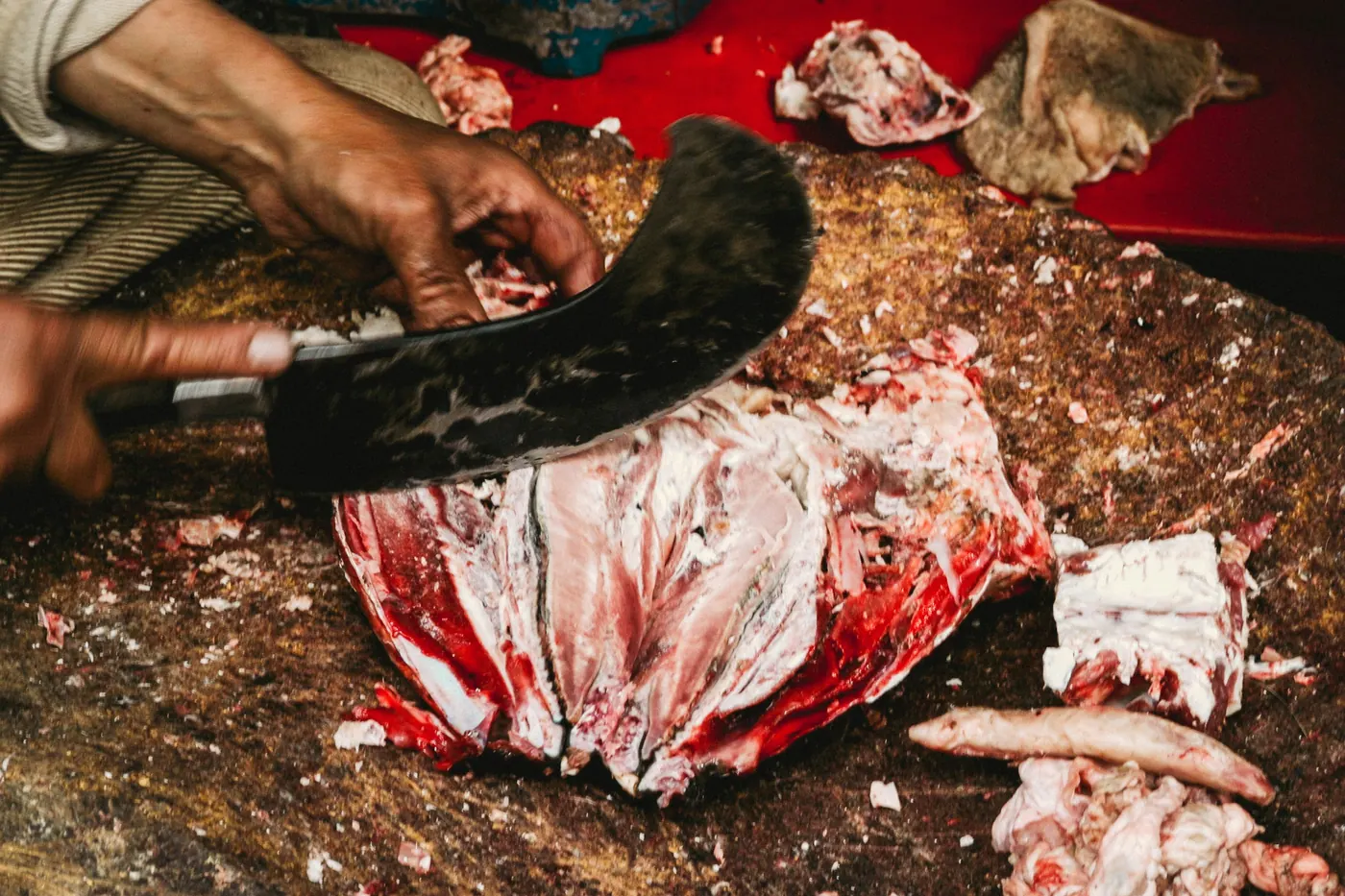
Choose the blade stiffness for the cut. Venison muscles are large and dense. A stiff blade is easier to control around the hip and shoulder joints; a flexible one is better for thin trimming. If you own only one, choose stiff or semi-stiff.
Pick a steel you will maintain. Soft stainless like 420J2 resists rust and is easy to sharpen but dulls quickly. 420HC and Sandvik 12C27 hold an edge longer. D2 holds it longest but can rust. Replaceable blades skip sharpening altogether. Whatever you choose, a knife sharpener or honing steel at the table keeps a long session going.
Insist on a grippy handle. Hands get wet with blood and fat. Rubberized TPR, Fibrox and textured nylon handles hold better than smooth wood or polished steel, and a finger guard keeps your hand off the edge.
Buy bright handles for field knives. Blaze orange is not just for show: a knife set down in leaves is easy to lose.
Plan the rest of the kit. A large board, like those in our guide to the best cutting board for meat, a vacuum sealer for the freezer and, if you grind, an electric meat grinder finish the job.
Handling venison safely at home
Deer meat is not inspected the way store-bought meat is, so the hunter’s handling decides how safe it is. Penn State Extension’s guide to field dressing and handling wild game and fish recommends wearing disposable gloves, field dressing as soon as possible after the kill, holding the knife with the blade facing upward to avoid puncturing the intestines, and cleaning the knife frequently between cuts with clean water, pre-moistened wipes or alcohol swabs.
Cooling comes next. Penn State says to remove body heat from the carcass as soon as possible, to put bags of ice in the cavity when the air is above 40°F, and to refrigerate below 40°F once home. For cooking, the FoodSafety.gov chart of safe minimum internal temperatures lists venison, wild or farm-raised, at 160°F, so a meat thermometer is worth having next to the stove. Your state wildlife agency may also have rules on carcass handling and transport in your area.
How we picked these eight deer knives
We started from what a working kitchen asks of any butcher knife, a blade shaped for the cut, steel you can keep sharp and a handle that holds when greasy, and then looked at the specific jobs a deer involves. We limited the list to established makers (Outdoor Edge, Victorinox, Mercer Culinary, Havalon, Buck, Kershaw and Morakniv) and left out the anonymous kits sold only on Amazon. Every pick was in stock when we wrote this, and none repeats a product from our boning knife or carving knife guides.
Specifications come from the Amazon listings and makers’ information, with retailer pages used to confirm details such as the Havalon’s blade size and Morakniv’s Swedish manufacture. We checked each brand against the U.S. Consumer Product Safety Commission’s recall list and found no knife recall for any product here. We have not used these knives ourselves.
Deer knife questions, answered
What is the best boning knife for deer?
A stiff or semi-stiff, curved boning knife of about 6 inches, such as the Mercer Culinary BPX 5.9-inch curved stiff boning knife. The firm blade controls well around the large joints and dense muscles of a deer. For a complete set with a boning knife, a skinner and a saw, the Outdoor Edge WildPak is the better buy.
Flexible or stiff: which boning knives for deer work best?
Stiff for the heavy work of separating hindquarters and shoulders; flexible for tenderloins, neck meat and removing silver skin. Many home processors own one of each, which is why kits like the WildPak include more than one blade.
Can I use a kitchen boning knife to process a deer?
Yes, for the butchering stage. Kitchen boning knives, including the ones in our best boning knife guide, debone venison well once the deer is skinned and quartered. For skinning and gutting in the field you will want a dedicated hunting knife or a replaceable-blade knife.
What size knife do I need to skin a deer?
A blade of about 3 to 4 inches with a curved belly, like the 4-inch Buck 103 or the 3.9-inch Kershaw Deschutes, gives control without the tip getting in the way. Replaceable-blade knives like the Havalon use an even shorter 2¾-inch blade.
How do I keep deer knives clean?
Wipe or rinse the blade often while you work, as Penn State Extension advises, then wash with hot, soapy water and dry completely before storing. Dry leather sheaths fully, and oil carbon or tool steels like D2 lightly to prevent rust.
Our pick for processing deer at home
Buy the Outdoor Edge WildPak if you want every tool for a deer in one case, and add the Mercer BPX curved stiff boning knife if you do the butchering at the kitchen table. Choose the Victorinox roll for steaks and roasts, the Havalon or Buck 103 for skinning, and the Morakniv Companion as a cheap spare. For kitchen boning knives beyond game, see our guide to the best boning knife, and for keeping all of them sharp, our best knife sharpener picks.
And if the deer is still hanging and dinner is not sorted, see the menu or call to order.