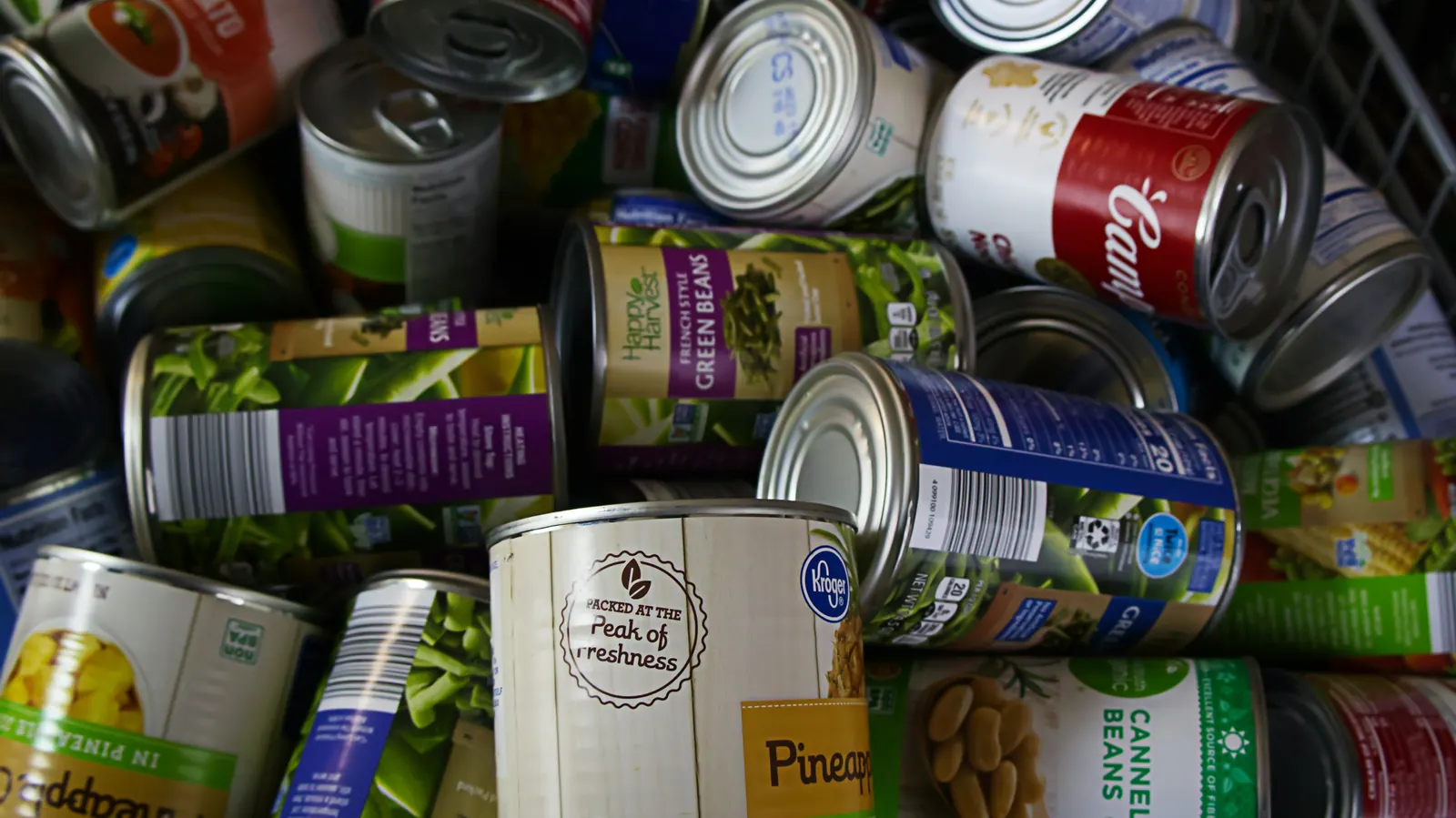
Most of a Mexican kitchen’s pantry comes in a can at some point: chipotles in adobo, whole tomatoes for salsa roja, tomatillos out of season, hominy for pozole, refried beans for a quick lunch. In a restaurant the cans are the gallon-size ones and the opener is bolted to the prep table. At home it is a handheld tool that lives in a drawer and gets blamed every time it slips off the rim.
This guide covers the openers worth buying: three traditional gear openers, two smooth-edge safety openers, a locking opener, the commercial table-mount opener restaurants use, and one electric pick. It explains the difference between top-cut and side-cut openers, which matters more than brand, and what reviewers and makers say about each.
Julia’s earns a commission on purchases made through links on this page, at no cost to you. Recommendations are based on what a restaurant kitchen looks for, product specifications and verified buyer reports.
Quick verdict: which can opener to buy
For most kitchens the best can opener is the OXO Good Grips Soft-Handled Can Opener: a fast, comfortable gear opener that America’s Test Kitchen rates as its favorite traditional model. If you want lids with no sharp edges, buy the Kuhn Rikon Auto Safety LidLifter. If your hands are sore or weak, the Hamilton Beach Smooth Touch electric opener does the turning for you.
Five can openers side by side
Our five standout picks, one for each kind of cook. All eight openers are reviewed in full below.
| Can opener | Best for | How it opens | Handle | Buy on Amazon |
|---|---|---|---|---|

OXO Good Grips Soft-Handled Can OpenerBest overall
|
Most kitchens | Gear-driven, top cut | Soft, non-slip grips | View on Amazon |

EZ-DUZ-IT Deluxe Can Opener with GripsMade in USA
|
A steel opener made in the USA | Gear-driven, top cut | Long crank, rubber grips | View on Amazon |

Kuhn Rikon Auto Safety LidLifter Can OpenerBest smooth-edge
|
No sharp edges | Side cut, lifts the lid | Long handle | View on Amazon |

Edlund #1 Old Reliable Manual Can OpenerBest for big cans
|
#10 restaurant cans | Table-mount, up to 11 in tall | Crank, screw-down base | View on Amazon |

Hamilton Beach Smooth Touch Electric Can OpenerBest electric
|
Weak or sore hands | Electric, side cut | Push-down lever | View on Amazon |
Product images from Amazon. Features are as the maker or its listing states them.
Our picks for the best can opener
The first three are traditional gear openers that cut down through the lid. Then come two side-cutting safety openers, a locking opener, a commercial opener for restaurant-size cans and an electric model. Each review gives the specifications from the maker or the listing, who it suits and one honest reason to skip it.
1. OXO Good Grips Soft-Handled Can Opener – Big Knob, Easy Grip
This is the classic handheld gear opener done well. You clamp the handles over the rim, turn the knob, and a stainless steel cutting wheel works its way around the lid while a toothed gear underneath walks the can along. OXO’s listing describes large cushioned handles that stay non-slip even when wet, an oversized knob that turns easily, and a built-in bottle opener on the end.
America’s Test Kitchen rates it Highly Recommended and names it the favorite traditional opener in its can opener review, saying it was easy to use and opened cans quickly and effortlessly. The same review is clear about the trade-off of any top-cutting opener: it left the lid and the can wall quite sharp.
For a home cook opening a few cans of tomatoes, chipotles in adobo or beans a week, this is the opener to keep in the drawer. Wet hands at the sink are where cheap openers slip, and the soft handles are the reason to pay a little more. OXO does not state on the listing whether it can go in the dishwasher, so wash it by hand and dry the gear so food does not build up in the teeth.
Why we like it
- America’s Test Kitchen’s top traditional opener
- Cushioned handles that grip when wet, per OXO
- Oversized turning knob
- Stainless steel cutting wheel and a bottle opener
Key specifications
| Model | 28081 |
|---|---|
| Type | Handheld, gear-driven |
| Cut (top/side) | Top (cuts into the lid) |
| Handle | Soft cushioned, non-slip |
| Dishwasher-safe (maker) | Not stated on listing |
| Left-hand friendly | Not stated |
| Warranty | OXO Better Guarantee (repair or replacement) |
Why we recommend it
It suits nearly every home kitchen: quick, comfortable and simple. If you only own one can opener, a well-made traditional model like this is the one most cooks reach for.
Skip it if you want lids with no sharp edges; a side-cutting safety opener such as the Kuhn Rikon below is the better choice.
Pros and cons
Pros
- Fast and easy, per America’s Test Kitchen
- Comfortable with wet hands
- Bottle opener built in
- Backed by OXO’s guarantee
Cons
- Leaves sharp lid and can edges
- Dishwasher use not stated
- Right-hand turning, like most openers
2. EZ-DUZ-IT Deluxe Can Opener with Grips – Long Crank, Steel Build
EZ-DUZ-IT openers are made in the USA (the brand is John J. Steuby Co.) in a shape most people will recognise: chromed steel arms, a long crank handle and a swing design. This Deluxe version adds thick rubberised grips over the arms. The listing gives heavy-gauge chromed steel, a carbon steel cutting blade and a gear-driven mechanism, and says to wash it by hand in warm soapy water.
America’s Test Kitchen rates an EZ-DUZ-IT opener Highly Recommended alongside the OXO, praising how intuitive it is, a driving handle that is one of the longest it tried, and arms that stayed comfortable when wet. A long crank means more leverage per turn, which you notice on the tall cans of whole tomatoes or hominy that a big pot of pozole calls for.
The carbon steel blade is the one thing to look after. Carbon steel cuts well but can rust if it is left wet, so dry the opener after washing rather than leaving it in the drying rack.
Why we like it
- Highly Recommended by America’s Test Kitchen
- Made in the USA, per the listing
- Long crank handle for leverage
- Heavy-gauge chromed steel with rubber grips
Key specifications
| Model | 3028 |
|---|---|
| Type | Handheld, gear-driven |
| Cut (top/side) | Top (cuts into the lid) |
| Handle | Rubberised grips, long crank |
| Dishwasher-safe (maker) | No, hand wash (maker) |
| Left-hand friendly | Not stated |
| Warranty | Not stated on listing |
Why we recommend it
It suits cooks who want a simple, all-steel opener with a long crank, and anyone who prefers to buy a tool made in the USA.
Skip it if you tend to leave tools wet in the sink; the carbon steel blade needs drying to stay rust-free.
Pros and cons
Pros
- Long handle makes turning easy
- Steel construction
- Made in the USA
- Comfortable grips
Cons
- Sharp lid and rim, like all top-cut openers
- Hand wash only
- Warranty not stated on the listing
3. Swing-A-Way Portable Can Opener – The Old Standby, Done Simply

The Swing-A-Way is the opener a lot of us grew up with, and it is still one of the least expensive good ones. The listing describes an all-steel opener 8.6 inches long, with soft cushioned grips, a high-carbon cutting wheel and a bottle opener in the handle. It is small enough to live in a drawer, a camping box or a picnic bag.
America’s Test Kitchen recommends it as easy and quick with comfortable grips, and notes that the edges it left were sharp and somewhat jagged. That is the price of a basic top-cutting opener: it does the job quickly and cheaply, but the lid needs handling with care.
Swing-A-Way’s care instructions are to hand wash in warm water with a mild detergent, rinse and dry immediately. The high-carbon wheel is why: like any carbon steel, it should not be left wet.
Why we like it
- Recommended by America’s Test Kitchen
- All-steel construction, per the listing
- Compact at 8.6 inches
- Five-year warranty listed
Key specifications
| Model | 407 |
|---|---|
| Type | Handheld, gear-driven |
| Cut (top/side) | Top (cuts into the lid) |
| Handle | Soft cushioned grips |
| Dishwasher-safe (maker) | No, hand wash and dry (maker) |
| Left-hand friendly | Not stated |
| Warranty | 5 years (listing) |
Why we recommend it
It is the budget opener to buy, and a sensible spare for the camping box or a second kitchen.
Skip it if you want smooth lid edges or extra-large handles for weak hands.
Pros and cons
Pros
- Inexpensive and widely sold
- Small enough for a drawer or bag
- Built-in bottle opener
- Long listed warranty
Cons
- Sharp, somewhat jagged edges, per America’s Test Kitchen
- Wheel must be dried after washing
- Smaller handles than the OXO
4. Kuhn Rikon Auto Safety LidLifter Can Opener – No Sharp Edges, Hands Off the Lid
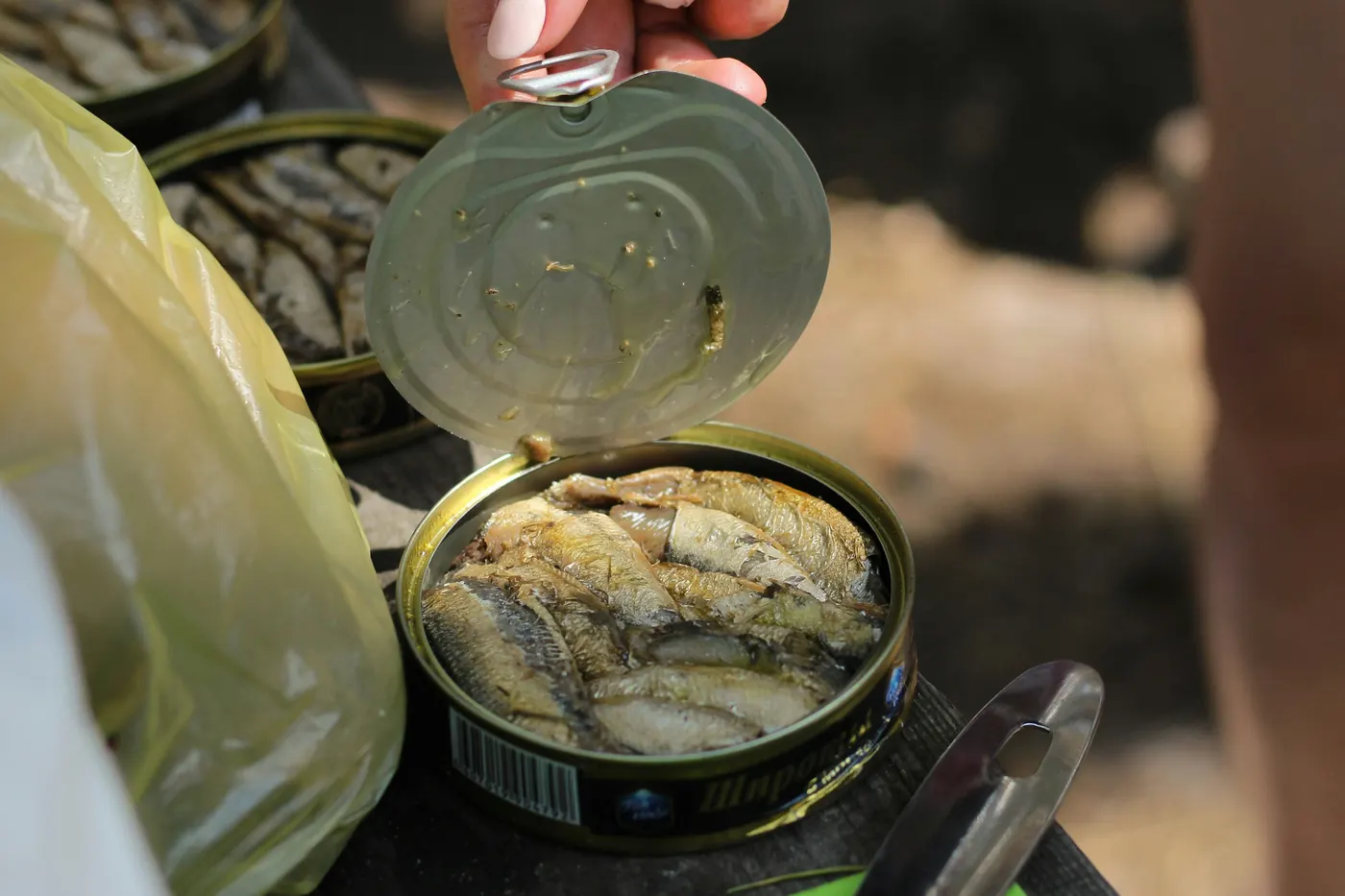
A smooth-edge or side-cut opener works differently from a traditional one. Instead of cutting down through the top of the lid, it sits on top of the can and cuts through the side of the rim, so the whole lid lifts off with its folded edge intact. Neither the lid nor the can is left with a raw edge, and the blade never touches the food.
Kuhn Rikon’s version is the one America’s Test Kitchen names Best Safety Can Opener: comfortable, no sharp edges and a long handle. Its drawbacks, in the same review, are that it is slower than most traditional openers and that testers were divided on the small “bird’s beak” pincer on the front, which is how the LidLifter grabs the lid so you can lift it off without touching it.
The listing gives a size of 8 by 2.5 by 2.75 inches, a built-in tool for lifting ring-pull tabs, and a one-year guarantee against defects. When you first use a side-cut opener the can can look unopened; it is, and the lid lifts off once the beak takes hold. Kuhn Rikon does not state on this listing whether it can go in the dishwasher.
Why we like it
- America’s Test Kitchen’s Best Safety Can Opener
- No sharp edges on lid or can
- Lid lifts off without being touched
- Ring-pull tool for pop-top cans
Key specifications
| Model | 22844 (Auto Safety LidLifter) |
|---|---|
| Type | Handheld, side-cut safety opener |
| Cut (top/side) | Side (smooth edges) |
| Handle | Long handle, easy-turn knob |
| Dishwasher-safe (maker) | Not stated on listing |
| Left-hand friendly | Not stated |
| Warranty | 1 year against defects (listing) |
Why we recommend it
It suits households with children, anyone who has cut a finger on a lid, and cooks who want to drop a lid back on a half-used can of chiles in the fridge.
Skip it if you want the fastest opener; side-cutters take more turns than a traditional opener.
Pros and cons
Pros
- Smooth edges on both lid and can
- Blade never touches the food
- Comfortable long handle
- Opens ring-pull lids too
Cons
- Slower than traditional openers
- The lid-grabbing beak takes getting used to
- Dishwasher use not stated

5. GoodCook Safe-Cut Can Opener – Smooth Lids for Less

GoodCook’s Safe-Cut is a less expensive side-cutting opener. According to the listing, it lifts the lid off and holds it until you pivot the handle to drop it in the trash, so you never have to touch it. The cutting wheel does not touch the food, and the cut lid has a clean edge that GoodCook describes as suitable for popping back on the can for short-term storage in the fridge.
The body is chrome-plated, with ergonomic handles and an easy-turn knob, and the listing gives a limited lifetime warranty. That warranty is the main reason to choose it over no-name smooth-edge openers that look almost the same.
It is not part of the America’s Test Kitchen review we read, so there is no independent test to point to; our case for it rests on the maker’s description and its warranty. Like other side-cutters, it will feel slower than a traditional opener, and the first few cans take some practice to line up.
Why we like it
- Side cut leaves no sharp edges, per the listing
- Holds the lid until you release it
- Wheel does not touch food
- Limited lifetime warranty
Key specifications
| Model | 11834 |
|---|---|
| Type | Handheld, side-cut safety opener |
| Cut (top/side) | Side (smooth edges) |
| Handle | Ergonomic handles, easy-turn knob |
| Dishwasher-safe (maker) | Not stated on listing |
| Left-hand friendly | Not stated |
| Warranty | Limited lifetime |
Why we recommend it
It suits cooks who want smooth-edge lids without paying for the Kuhn Rikon.
Skip it if you want an opener with a reputable independent review behind it; the Kuhn Rikon has one.
Pros and cons
Pros
- Lower cost safety opener
- Hands-free lid disposal
- Lid can go back on the can
- Lifetime warranty listed
Cons
- No independent review we could cite
- Slower than a traditional opener
- Dishwasher use not stated
6. Zyliss Lock & Lift Can Opener – Locks On, Then Lets Go
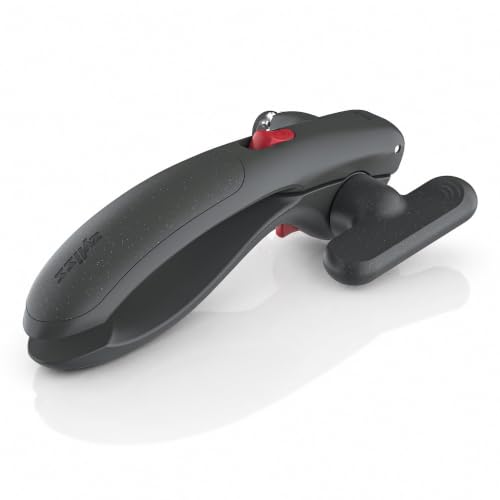
Zyliss’s opener adds a lock to the traditional design. Squeeze the handles and the mechanism holds the wheel on the can, so you can let go of the handles and just turn the knob; a release lever lets it go at the end. The listing describes a stainless steel cutting wheel, a knob that turns without straining the hands, and a built-in magnet that lifts the lid away so you can drop it in the trash.
America’s Test Kitchen recommends the Zyliss Lock ‘n Lift, calling it smooth and comfortable, with two reservations: testers had mixed feelings about the lock button, and the magnet was not effective at lifting lids. This listing is sold as the Lock & Lift; an older Lock N’ Lift listing was not shipping when we checked, and we could not confirm whether the two differ in anything but name.
A locking opener helps anyone who finds it tiring to keep squeezing the handles while turning, which is the part of using a traditional opener that weak or sore hands notice most. It is still a top-cutting opener, so the lid edge is sharp.
Why we like it
- Locks onto the can so you can stop squeezing
- Recommended by America’s Test Kitchen (Lock ‘n Lift)
- Stainless steel wheel
- Magnet and release lever for the lid
Key specifications
| Model | E930050 |
|---|---|
| Type | Handheld, gear-driven with lock |
| Cut (top/side) | Top (cuts into the lid) |
| Handle | Locking handles, large knob |
| Dishwasher-safe (maker) | Not stated on listing |
| Left-hand friendly | Not stated |
| Warranty | Not stated on listing |
Why we recommend it
It suits cooks who find squeezing the handles harder than turning the knob, and who still want a quick traditional cut.
Skip it if you were hoping the magnet would lift every lid; America’s Test Kitchen found it was not effective.
Pros and cons
Pros
- Less grip needed while turning
- Smooth, comfortable operation
- Release lever for the lid
- Compact
Cons
- Lock button divides opinion
- Weak magnet, per America’s Test Kitchen
- Sharp lid edge
7. Edlund #1 Old Reliable Manual Can Opener – The Restaurant-Kitchen Clamp Opener
Edlund describes its manual openers as a staple of professional kitchens, and this is the kind you see bolted to the end of a prep table. It is the opener for the gallon-size #10 cans that chipotles in adobo, tomatillos, refried beans and tomato sauce come in for food service. The #1 opens cans up to 11 inches tall, has a two-sided blade you can turn round when one edge dulls, and is rated by Edlund’s listing to open up to 5,000 cans before parts need replacing.
It is a fixed opener, not a handheld one. Retailer specification sheets (KaTom and WebstaurantStore) describe a plated steel base that screws down to a table or counter, a replaceable plastic insert in the base so the shaft slides out for cleaning, and a one-year limited warranty that excludes knives and gears, which are sold as replacement parts. They also list it as made in the USA.
For a home kitchen, it only makes sense if you buy restaurant-size cans, put up large batches, or run a food truck. Edlund also sells a newer Edvantage #1 with a four-sided blade and a reinforced gear, rated for 10,000 cans, if you are equipping a busier kitchen.
Why we like it
- Opens cans up to 11 inches tall
- Two-sided, reversible blade
- Rated for up to 5,000 cans before parts replacement
- Replaceable knife and gear
Key specifications
| Model | #1 (11100), plated steel base |
|---|---|
| Type | Commercial table-mount (screw-down base) |
| Cut (top/side) | Top (cuts into the lid) |
| Handle | Crank handle |
| Dishwasher-safe (maker) | Not stated; shaft lifts out for cleaning |
| Left-hand friendly | Not stated |
| Warranty | 1 year limited, excludes knives and gears (retailers) |
Why we recommend it
It suits anyone who regularly opens #10 cans: caterers, food trucks, big-batch cooks and home kitchens set up like a restaurant.
Skip it if you cannot screw a base into your counter or table, or you only open standard-size cans.
Pros and cons
Pros
- Built for high volume
- Handles very tall cans
- Parts can be replaced
- Made in the USA, per retailers
Cons
- Needs a screw-down mount
- Overkill for standard cans
- Blade and gear wear and need replacing
8. Hamilton Beach Smooth Touch Electric Can Opener – Side-Cut Lids at the Touch of a Lever
If turning a knob is painful or you simply open a lot of cans, an electric opener is worth the counter space. Hamilton Beach’s Smooth Touch cuts along the side of the can, like the Kuhn Rikon, leaving smooth lids that the listing says can be reused to cover leftovers in the fridge. It opens regular and pop-top cans, and the listing says it handles standard and extra-tall sizes.
America’s Test Kitchen names it the winner of its electric can opener review: durable, strong enough for heavy 28-ounce cans, and able to open dented and pull-top cans with smooth edges. One thing to know before buying: you hold the lever down while it cuts. A Cool Tools review by David King makes the same point, and America’s Test Kitchen notes that all the countertop models it tried need pressure on the lever to run.
The listing gives a one-year warranty. It is a plug-in countertop model; for cordless, battery and rechargeable options, see our full guide to the best can opener electric models.
Why we like it
- America’s Test Kitchen’s top electric opener
- Side cut leaves smooth lids
- Opens pop-top and regular cans
- One-hand lever
Key specifications
| Model | 76606AG |
|---|---|
| Type | Electric countertop (plug-in) |
| Cut (top/side) | Side (smooth edges) |
| Handle | Push-down lever |
| Dishwasher-safe (maker) | Not stated on listing |
| Left-hand friendly | Not stated |
| Warranty | 1 year (listing) |
Why we recommend it
It suits cooks with limited grip strength who can press a lever, and kitchens that open several cans a day.
Skip it if you want it to finish the can on its own; you hold the lever for the whole cut.
Pros and cons
Pros
- Smooth, reusable lids
- Handles heavy 28-ounce cans, per America’s Test Kitchen
- Opens pull-top cans
- No knob to turn
Cons
- Lever must be held down
- Takes counter space and an outlet
- Short one-year warranty
Top cut or side cut: the choice that matters most
Every handheld opener here uses the same parts: a cutting wheel that bites into the metal and a toothed gear that drives the can round. The difference is where the wheel cuts.
A top-cut opener (the OXO, EZ-DUZ-IT, Swing-A-Way and Zyliss) sits on the side of the can and cuts down through the lid just inside the rim. It is quick, easy to line up and works on almost any can, but it leaves a raw, sharp edge on the lid and on the inside of the can, and the lid tends to drop into the food. America’s Test Kitchen found sharp edges on every traditional opener it recommends.
A side-cut or smooth-edge opener (the Kuhn Rikon, GoodCook and Hamilton Beach Smooth Touch) sits on top of the can and cuts through the outside of the rolled seam. The lid comes off whole, with no sharp edge, and can go back on the can as a cover. The blade never touches the food. The trade-offs are speed and a short learning curve: the can looks unopened until you lift the lid, and they take more turns.
If you open a can or two a week and keep a towel handy, a top-cut opener is fine. If there are children in the kitchen, or you often store half a can of chipotles in the fridge, a side-cut opener earns its place. One practical note from a busy kitchen: chipotles in adobo stain, so move leftovers into a glass jar rather than leaving them in the can.
How to choose a can opener for your kitchen
1. The cut
Decide first between speed (top cut) and smooth edges (side cut). Everything else is a detail.
2. Handles and knob
Long, cushioned handles and a big knob make the difference with wet or tired hands. The OXO and EZ-DUZ-IT score well here in America’s Test Kitchen’s review; the Zyliss lock means you do not have to keep squeezing.
3. Blade material and care
Stainless wheels (OXO, Zyliss) tolerate a damp drawer better; carbon steel wheels (EZ-DUZ-IT, Swing-A-Way) cut well but must be dried. Very few makers say their openers are dishwasher safe, so plan on hand washing. Food left in the gear teeth is the usual reason an opener starts to skip.
4. Can size
Handheld openers manage everything from a small can of tomato paste to a 28-ounce can of tomatoes. If you buy #10 cans, a handheld opener will get there slowly; a table-mount Edlund is made for them.
5. Left-handed use
None of the makers of our eight picks states that its opener is designed for left-handed use. Most handheld openers are turned with the right hand; left-handed cooks often manage by holding the opener in the right hand anyway. If that is a problem, an electric opener removes the issue.
6. Manual or electric
Electric openers make sense for arthritis, weak grip or a high can count. They cost more, need an outlet or batteries, and some still need a hand on the lever. Our electric can opener guide compares plug-in, battery and rechargeable models.

How we chose these eight openers
We looked at handheld, smooth-edge, commercial and electric openers from OXO, EZ-DUZ-IT, Swing-A-Way, Kuhn Rikon, GoodCook, Zyliss, KitchenAid, Starfrit, Edlund and Hamilton Beach, and kept only those showing as in stock on Amazon when we checked. Specifications come from the Amazon listings and, for the Edlund, from food-service retailers’ specification sheets.
For performance we relied on one named review that we read in full: America’s Test Kitchen’s can opener review, which rates the OXO and EZ-DUZ-IT Highly Recommended, recommends the Swing-A-Way, Zyliss Lock ‘n Lift and Kuhn Rikon (its Best Safety Can Opener), and recommends the KitchenAid Classic Multifunction and Starfrit MightiCan only with reservations, which is why those two are not on our list. For the electric pick we also read America’s Test Kitchen’s electric can opener review and a Cool Tools review of the Smooth Touch. We have not used these openers for this guide, and we did not rely on Serious Eats, Wirecutter, Consumer Reports, Good Housekeeping or The New York Times.
Can opener questions, answered
What type of can opener is best?
For most homes, a traditional gear-driven opener with comfortable handles, like the OXO. Choose a side-cut safety opener if sharp edges worry you, and an electric one if turning a knob is hard.
Which can opener does America’s Test Kitchen recommend?
In the review we read, its favorite traditional opener is the OXO Good Grips Soft-Handled Can Opener, with the EZ-DUZ-IT also Highly Recommended, and its Best Safety Can Opener is the Kuhn Rikon Auto Safety Lid Lifter. Its electric winner is the Hamilton Beach Smooth Touch.
What is the best can opener brand?
There is no single best brand, but OXO, EZ-DUZ-IT, Swing-A-Way, Kuhn Rikon and Zyliss are well established for handheld openers, Edlund for commercial ones and Hamilton Beach for electric. Prefer a brand that states its materials and warranty over an unnamed seller.
How long does a can opener last?
That depends on the build and how it is cleaned. Steel openers with replaceable or sturdy parts (the EZ-DUZ-IT, Swing-A-Way, Edlund) are built for long service, and Edlund rates its #1 for up to 5,000 cans before parts replacement. Drying the wheel and gear after washing does more for any opener than the brand does.
Why does my can opener keep slipping?
Usually the gear teeth are clogged with dried food or worn, or the wheel has dulled. Scrub the gear with a brush and hot soapy water; if it still skips, it is time for a new opener (or, on an Edlund, a new knife and gear).
Are smooth-edge can openers safe to reuse the lid?
Makers say so for short-term storage: Hamilton Beach and GoodCook both describe putting the cut lid back on the can in the fridge. For anything longer than a day or two, move the food to a covered container.
Our pick for opening cans
Buy the OXO Good Grips Soft-Handled opener for everyday cans, add the Kuhn Rikon if you want smooth edges, and go electric with the Hamilton Beach Smooth Touch if your hands need the help. Only buy the Edlund if you open restaurant-size cans.
Kitchen shears are the other tool that gets you into packages and bags, and our best kitchen shears guide covers them. Once the cans are open, our guide to Mexican chiles explains chipotles and their cousins, and enchilada sauces explained puts those tomatoes to work. The rest of the basic kit is in Mexican cooking tools.
On a budget? See our guide to the best cheap can openers.
If grip strength is an issue, see our picks for the best can openers for arthritis.
Related guide: Best can opener for camping.
Related guide: Electric vs manual can opener.
And when you would rather not open anything, see the menu or call to order.