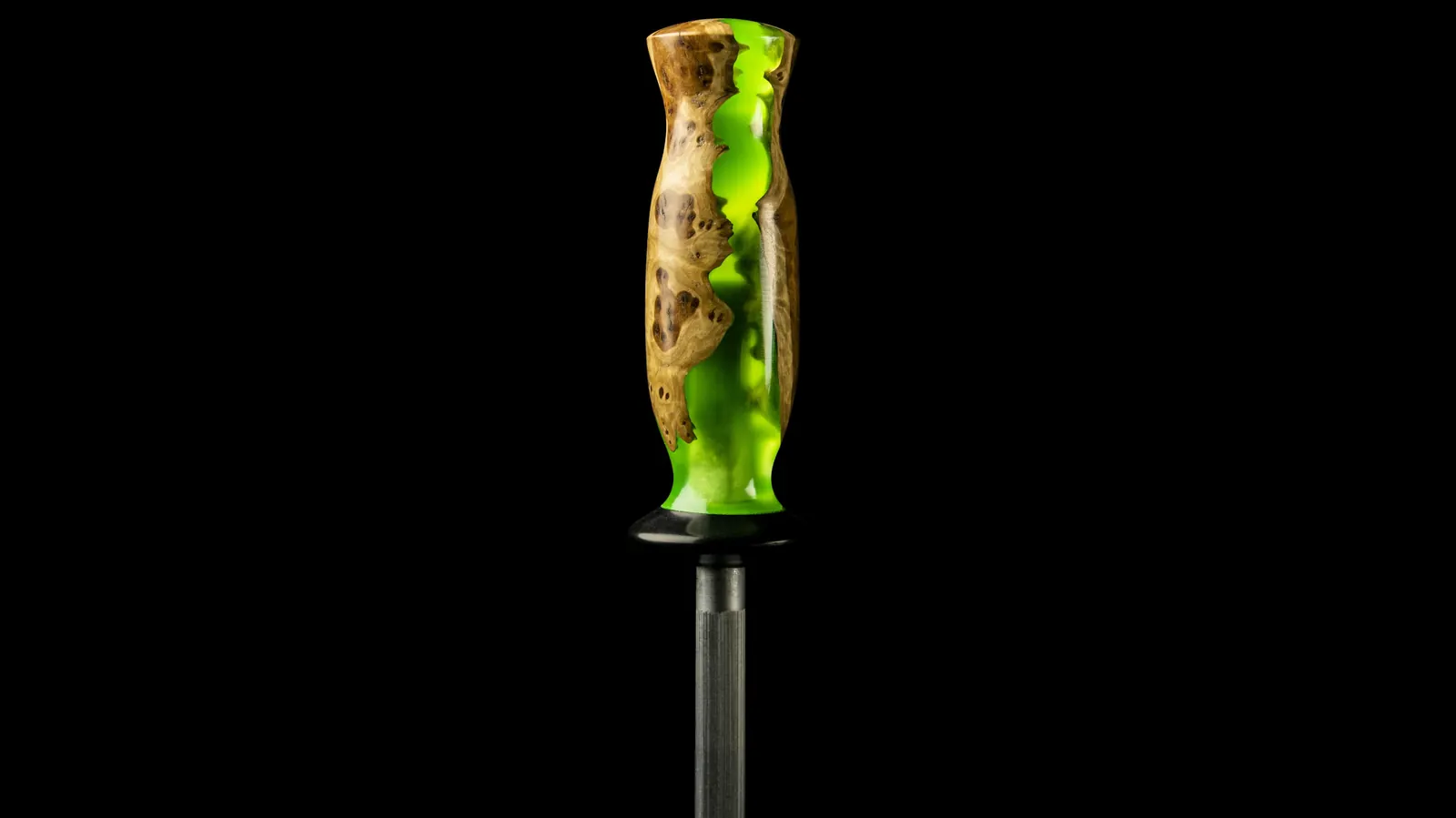
A honing steel is the least expensive tool that makes the biggest daily difference to a kitchen knife. On a taquería prep line, a knife that slid cleanly through onions at ten in the morning starts to skid on tomato skins by noon. The edge has not worn away; it has rolled slightly to one side. A few strokes on a rod push it back into line, and the knife cuts again.
You do not need an expensive rod to do that. This guide covers the entry level of each maker’s range, from Victorinox and Dexter-Russell to Kyocera, and explains how to judge value when you shop, rather than quoting prices that change by the day. It also explains the three rod surfaces you will see on budget listings, steel, ceramic and diamond, because choosing the wrong one costs more than a few dollars.
Julia’s earns a commission on purchases made through links on this page, at no cost to you. Recommendations are based on what a restaurant kitchen looks for, product specifications and verified buyer reports.
Quick verdict: which cheap honing steel to buy
For most home kitchens, the best cheap honing steel is the Victorinox 10-inch Kitchen Sharpening Steel: a plain round steel with a medium-fine cut from a maker of professional kitchen knives, at a length that suits an 8-inch chef’s knife. If your knives are hard Japanese steel, choose the Kyocera 9-inch Dual-Sided Ceramic Rod, made in Japan with a ribbed side and a smooth side. If you want a rod that also sharpens lightly, the Dexter-Russell 12-inch Diamond Sharpener is made in the USA for foodservice kitchens.
Below are a comparison table, the seven rods in full, and a section on how to tell a good budget rod from one that will cost you an edge.
Five budget honing rods side by side
Our five standout entry-level rods, one for each kind of cook, with the surface and length each maker or listing states. All seven are reviewed in full below.
| Honing rod | Best for | Surface | Length | Buy on Amazon |
|---|---|---|---|---|

Victorinox 10-inch Kitchen Sharpening SteelBest overall
|
Everyday honing of most knives | Steel, medium-fine cut | 25 cm (about 10 in) | View on Amazon |

Kyocera 9-inch Dual-Sided Ceramic RodBest ceramic
|
Hard Japanese steels | Ceramic, ribbed and smooth | 9 in rod | View on Amazon |

Dexter-Russell 12-inch Diamond SharpenerBest diamond
|
Touch-ups that remove a little metal | Diamond-coated, medium grit | 12 in | View on Amazon |
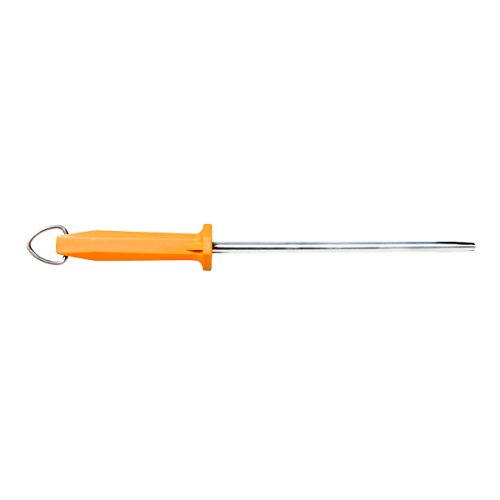
UltraSource 10-inch Smooth Honing SteelBest smooth steel
|
Gentle daily honing | Steel, smooth | 10 in | View on Amazon |

Victorinox 12-inch Fine Cut Butcher SteelBest for long knives
|
Slicers and 10-inch chef’s knives | Steel, fine cut | 30 cm (about 12 in) | View on Amazon |
Product images from Amazon. Surfaces and lengths are as stated by each maker or listing; check the listing before you buy.
Our picks for the best cheap honing steel
These seven rods are the entry tier of each maker’s range and cover all three surfaces. Steel rods straighten the edge without removing much metal. Ceramic rods are harder than any knife steel, so they straighten and lightly refine. Diamond rods remove metal, which makes them light sharpeners as much as hones. Each pick says who it suits, what the maker or listing states, and one honest reason to skip it.
1. Victorinox 10-inch Kitchen Sharpening Steel – A Plain Steel From a Knife Maker
Victorinox makes the Fibrox Pro kitchen knives, and this 7.8303 is the simplest steel in its range. The listing is brief: a round steel, 25 centimeters long, with a medium-fine cut. That is about 10 inches of rod, enough to hone an 8-inch chef’s knife from heel to tip in one stroke.
A medium-fine cut is the sensible middle ground for a single steel. A coarse, deeply grooved steel works fast but can be harsh on a thin edge; a smooth one is gentle but slow on a knife that has rolled badly. Retailers that sell this steel outside the United States describe it as having a polypropylene handle and suit it to the 20-degree edges on Victorinox’s own knives, which matches how most Western kitchen knives are sharpened.
The listing does not mention a hanging ring, a warranty or the country of manufacture, and retailers disagree on where it is made, so we leave those as not stated. Wipe the rod after use and store it where it will not knock against other tools.
Why we like it
- Medium-fine cut suits most kitchen knives
- 25 cm rod handles an 8-inch chef’s knife
- From a maker of professional kitchen knives
- Simple round shape is easy to learn on
Key specifications
| Model | 7.8303 |
|---|---|
| Material | Steel (grade not stated on listing) |
| Surface | Round, medium-fine cut |
| Length | 25 cm (about 10 in) |
| Handle | Black (polypropylene, per retailers) |
| Hang ring | Not stated |
| Made in | Not stated |
| Warranty | Not stated |
Why we recommend it
It suits a home cook with German-style or general kitchen knives who wants one dependable steel to use before every cooking session.
Skip it if your knives are very hard Japanese steel; a ceramic rod is the safer choice for those.
Pros and cons
Pros
- Balanced medium-fine cut
- Right length for most knives
- Established knife maker
Cons
- Very little detail on the listing
- Warranty and origin not stated
2. Kyocera 9-inch Dual-Sided Ceramic Rod – Ribbed and Smooth, Made in Japan
Kyocera is best known for ceramic knives, and it applies the same material to this rod for steel knives. According to Kyocera, one side of the rod is ribbed for sharpening and the other is smooth for honing and finishing the edge. That gives you two levels of bite on one rod: the ribbed side for a knife that has gone noticeably dull, the smooth side for a few strokes before you cook.
The listing gives a 9-inch ceramic rod and an overall length of 13.75 inches with a black handle, model CSW-18-BK, and a five-year limited warranty. Kyocera’s own store states that the rod is made in Japan and is for steel knives, scissors and other steel blades, not for ceramic knives.
Ceramic is harder than knife steel, which is why it suits the hard Japanese knives that a soft steel rod struggles to straighten. It is also brittle: a drop onto a tile floor can chip or snap it. The listing describes it as rust-proof, lightweight and easy to clean; a quick wipe with a damp cloth removes the grey metal streaks it collects.
Why we like it
- Ribbed side and smooth side on one rod
- Made in Japan, according to Kyocera
- Five-year limited warranty on the listing
- Rust-proof and lightweight
Key specifications
| Model | CSW-18-BK |
|---|---|
| Material | Ceramic |
| Surface | One ribbed side, one smooth side |
| Length | 9 in rod, 13.75 in overall |
| Handle | Black |
| Hang ring | Not stated |
| Made in | Japan |
| Warranty | Five-year limited |
Why we recommend it
It suits a cook with Japanese or other hard-steel knives who wants a rod that straightens and lightly refines without a big outlay.
Skip it if your rod will live in a crowded drawer or near a hard floor; ceramic breaks more easily than steel.
Pros and cons
Pros
- Two surfaces in one rod
- Suits hard steels
- Stated warranty
Cons
- Brittle if dropped
- Shorter 9-inch rod
- Not for ceramic knives
3. Dexter-Russell 12-inch Diamond Sharpener – Oval, Made in USA
Dexter-Russell is an American foodservice cutlery maker, and its Sani-Safe line is built for commercial kitchens. This DDS-12PCP is a 12-inch diamond-coated steel with a white Sani-Safe handle. The listing describes a medium grit, an oval shape that gives a broad surface for even contact with the edge, and use wet or dry, and states that it is made in the USA.
A diamond rod is a different tool from a plain steel. It removes a small amount of metal with every stroke, so it can bring back an edge that a steel can no longer straighten. That makes it useful for a busy kitchen or a cook who sharpens rarely, but it also means a light touch matters: use a few strokes per side, not a dozen, or you will wear the edge faster than you need to.
Foodservice distributors list it as NSF-rated with a limited lifetime warranty, and its OEM numbers as DDS-12PCP and 07633. A black-handled version is sold under a different part number. At 12 inches it handles long slicers and butcher’s knives as well as chef’s knives.
Why we like it
- Diamond coating restores a slightly dull edge
- Oval shape gives broad contact
- Made in the USA
- 12-inch length handles long blades
Key specifications
| Model | DDS-12PCP (07633) |
|---|---|
| Material | Diamond-coated steel |
| Surface | Oval, medium grit |
| Length | 12 in |
| Handle | White Sani-Safe polypropylene |
| Hang ring | Not stated |
| Made in | USA |
| Warranty | Limited lifetime (per distributors) |
Why we recommend it
It suits a cook who wants one inexpensive rod that both straightens and lightly sharpens, especially for long or heavily used knives.
Skip it if you want a rod for daily honing of a fine edge; diamond removes metal each time, and a smooth steel or ceramic is gentler.
Pros and cons
Pros
- Sharpens as well as hones
- Commercial-grade handle
- Made in the USA
Cons
- Removes metal with every use
- Too aggressive for daily honing
4. UltraSource 10-inch Smooth Honing Steel – Gentle Daily Realignment
UltraSource’s listing pitches this rod at butcher shops, processing facilities and commercial kitchens, and it is about as plain as honing gets: a 10-inch smooth steel with an orange handle. The listing describes the smooth surface as realigning and finishing established edges during routine maintenance without aggressive abrasion, and calls it a butcher steel with a useful working length for butcher and chef’s knives.
A smooth steel removes almost no metal, so it is the gentlest choice for a knife you hone every day. It works best when the edge is still in good shape; if the knife has gone properly dull, no smooth rod will bring it back, and you need a stone or a sharpener.
The details that matter in a working kitchen are here. The listing describes a textured polypropylene handle with a guard to help protect your fingers, and a metal hanging ring, so the rod can hang next to the cutting board rather than rattle around in a drawer.
Why we like it
- Smooth surface is gentle on edges
- Finger guard on the handle
- Metal hanging ring
- Bright handle is easy to spot
Key specifications
| Model | 449999 |
|---|---|
| Material | Steel (grade not stated) |
| Surface | Smooth |
| Length | 10 in |
| Handle | Orange textured polypropylene with guard |
| Hang ring | Yes, metal |
| Made in | Not stated |
| Warranty | Not stated |
Why we recommend it
It suits a cook who keeps knives sharp and wants a gentle rod for a few strokes before each session, with a guard and a ring for safe storage.
Skip it if your knives are already dull; a smooth steel only maintains an edge that is still there.
Pros and cons
Pros
- Gentlest of the steel surfaces
- Guard and hanging ring
- Made for commercial use
Cons
- Slow on a badly rolled edge
- Steel grade and warranty not stated
5. Victorinox 12-inch Fine Cut Butcher Steel – More Length for Long Blades
This is the longer, finer sibling of our top pick. The listing for the Victorinox 7.8513 gives a round steel 30 centimeters long, about 12 inches, with a fine cut. The extra length is the reason to choose it: a rod should be at least as long as the blade you hone, and preferably a little longer, so a 10-inch chef’s knife, a brisket slicer or a long carving knife is easier to hone on a 12-inch steel.
The fine cut is gentler than the medium-fine cut on the 10-inch Victorinox. It removes less and leaves a smoother edge, which suits slicing knives used on cooked meat, where you want a clean cut through a crust of carne asada or a roast rather than a toothy edge.
As with the shorter steel, the listing is spare: it does not state the handle material, a hanging ring, the warranty or where it is made. Victorinox calls it a butcher sharpening steel, which tells you who it was designed for.
Why we like it
- 30 cm rod for long blades
- Fine cut leaves a smooth edge
- From a maker of professional knives
- Round profile is easy to use
Key specifications
| Model | 7.8513 |
|---|---|
| Material | Steel (grade not stated on listing) |
| Surface | Round, fine cut |
| Length | 30 cm (about 12 in) |
| Handle | Black |
| Hang ring | Not stated |
| Made in | Not stated |
| Warranty | Not stated |
Why we recommend it
It suits a cook with a 10-inch chef’s knife or a long slicer who wants a gentle steel with room for a full stroke.
Skip it if you own only short knives; a 12-inch rod is more than you need for paring and utility knives.
Pros and cons
Pros
- Long enough for slicers
- Gentle fine cut
- Trusted knife maker
Cons
- Sparse listing details
- Long to store
6. Sharpal 10-inch Diamond Sharpening Steel – Fine Grit With Angle Guides
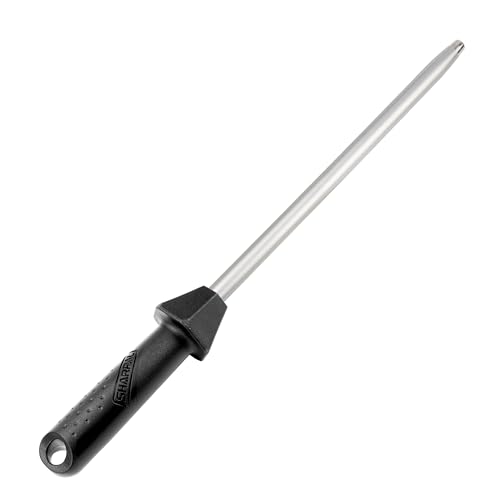
Sharpal is a sharpening company headquartered in California, according to its listing, and the 119N is its entry diamond rod. The listing describes a 10-inch round rod coated in very fine diamond particles, given as 1200 grit, with built-in angle guides and a protective ring on the handle.
The fine grit is the point. Many cheap diamond rods are coarse and chew through an edge; at 1200 grit, this one is closer to a light touch-up tool, which Sharpal positions for routine maintenance. The angle guides help a beginner hold the blade at a consistent angle to the rod, which is the skill that makes honing work. The listing also says diamond can sharpen materials too hard for other rods, including ceramics.
Sharpal states a three-year warranty against defects in material and workmanship, for non-commercial use only. Dry the rod after use and store it somewhere cool and dry, as the listing advises.
Why we like it
- Fine 1200-grit diamond surface
- Built-in angle guides
- Protective ring on the handle
- Three-year warranty for home use
Key specifications
| Model | 119N |
|---|---|
| Material | Diamond-coated rod |
| Surface | Round, 1200 grit |
| Length | 10 in |
| Handle | Ergonomic, with protective ring and angle guides |
| Hang ring | Not stated |
| Made in | Not stated |
| Warranty | Three years, non-commercial use |
Why we recommend it
It suits a home cook who wants a diamond rod gentle enough for regular touch-ups, with guides to learn the angle.
Skip it if you want a rod for a restaurant or other commercial kitchen; the warranty covers home use only.
Pros and cons
Pros
- Finer than most budget diamond rods
- Angle guides for beginners
- Stated warranty
Cons
- Still removes metal
- Warranty excludes commercial use
- Country of manufacture not stated
7. Kimura 10-inch Ceramic Honing Rod – Ceramic With a Hanging Loop

Kimura is a kitchen knife brand sold mainly on Amazon, and this is its ceramic honing rod. The listing describes a 10-inch rod made from a single piece of white ceramic smoothed to a 1200-grit finish, with a full tang bolstered to a non-slip polypropylene handle and a hanging loop for storage.
Compared with the Kyocera, it offers an extra inch of rod and a single fine surface rather than a ribbed and a smooth side. The listing suggests sliding the blade from heel to tip at 15 to 20 degrees, one to three strokes per side, which is sound advice for any rod: a few light strokes do more good than many heavy ones.
Kimura states a lifetime warranty, and the rod comes in a gift box. As with any ceramic rod, it can chip or break if dropped, and the listing does not say where it is made.
Why we like it
- 10-inch ceramic rod, 1200-grit finish
- Hanging loop for storage
- Lifetime warranty stated
- Clear angle and stroke guidance
Key specifications
| Model | Not stated |
|---|---|
| Material | White ceramic |
| Surface | 1200-grit finish |
| Length | 10 in |
| Handle | Non-slip polypropylene |
| Hang ring | Yes, loop |
| Made in | Not stated |
| Warranty | Lifetime |
Why we recommend it
It suits a cook who wants a full 10-inch ceramic rod with a hanging loop and a stated lifetime warranty, or a gift for someone who owns good knives.
Skip it if you prefer a rod from an established knife or ceramics maker; Kimura publishes less about how and where its rod is made.
Pros and cons
Pros
- Longer ceramic rod
- Hanging loop
- Lifetime warranty
Cons
- Brittle if dropped
- Origin not stated
- Amazon-first brand
How to judge value in a budget honing rod
Price tells you very little about a honing rod. A plain steel from a knife maker can outlast a decorated one with a wooden handle. These are the points we weigh instead.
Match the surface to your knives. Steel rods suit the softer stainless used in most German-style and everyday kitchen knives. Ceramic suits hard Japanese steels, because a rod must be harder than the blade to straighten it. Diamond is for occasional light sharpening, not daily use.
Length. Choose a rod at least as long as your longest blade. A 10-inch rod covers an 8-inch chef’s knife; a 12-inch rod suits 10-inch chef’s knives and slicers. A rod that is too short forces short, uneven strokes.
The cut on a steel rod. Smooth and fine cuts are gentle; medium-fine is a sound all-rounder; coarse or deeply grooved steels work fast but can roughen a thin edge. If a listing does not say, assume it is not fine.
Safety details. A guard between handle and rod protects your hand if the knife slips. A hanging ring keeps the rod in reach and stops ceramic from chipping in a drawer.
A named maker and a stated warranty. Rods from knife makers and foodservice suppliers tend to state their length, surface and warranty clearly. Treat vague grit claims and missing warranties as a cost, even when the price is low.
How we chose these seven budget rods
We started from what a kitchen that cuts onions, chiles, tomatoes, citrus and grilled meat every day needs from a rod: a surface matched to the knives, a sensible length, a safe handle and a maker that states what it sells. We then looked at the entry level of each maker’s range sold on Amazon in the United States, across steel, ceramic and diamond, and checked each rod’s stock with Amazon’s product data before writing. Several obvious budget names were unavailable or down to their last few units when we checked, including Winco’s steels, Mercer’s ceramic and diamond rods, most Dexter-Russell steels and Messermeister’s diamond rod, and we could not find Idahone rods in stock, so we left them out rather than send you to a listing that may not ship. We also left out rods already recommended in our other honing guides.
Specifications come from the makers and the Amazon listings; where neither states a figure, we write “not stated”. We searched the U.S. Consumer Product Safety Commission’s recall database for every brand on this page and found no recalls of their honing rods. We did not hone knives with these rods for this guide, and we do not quote prices, which change too often to be useful.
Budget honing steel questions, answered
What is the best budget honing steel for most kitchens?
A plain steel rod with a medium-fine cut, about 10 inches long, from a knife maker, such as the Victorinox 7.8303. It suits most kitchen knives and does not remove much metal.
What is the best value honing steel for Japanese knives?
A ceramic rod. The Kyocera dual-sided rod and the Kimura 10-inch rod are both ceramic; the Kyocera is made in Japan and has a smooth side for gentle honing.
Is a cheap honing steel worse than an expensive one?
Not necessarily. A honing rod is a simple tool, and the surface, length and handle matter more than the price. Expensive rods often add decorative handles or brand matching rather than better honing.
Do I need a diamond rod?
Only if you want a rod that sharpens lightly as well as hones. For daily use, a steel or ceramic rod is gentler, and you can use a stone or sharpener when the edge is truly dull.
How often should I use a budget honing rod?
Often and lightly: a few strokes per side before you cook, or whenever the knife starts to slide on a tomato skin. If honing no longer helps, the knife needs sharpening.
Our final pick for keeping knives in line
Buy the Victorinox 10-inch steel if you want one rod that keeps an everyday knife block cutting cleanly. Choose the Kyocera ceramic rod for hard Japanese knives, the Dexter-Russell diamond rod for quick restoration, the UltraSource smooth steel for the gentlest daily honing, and the Victorinox 12-inch fine steel for long blades.
For the full range, including premium rods, see the best honing steel, and for hard Japanese blades see the best honing steel for Japanese knives. When honing no longer brings the edge back, it is time to sharpen; see the best knife sharpener or the best whetstone.
A straight edge makes quick work of salsa and pico de gallo; if you would rather someone else did the chopping tonight, see the menu or call to order.