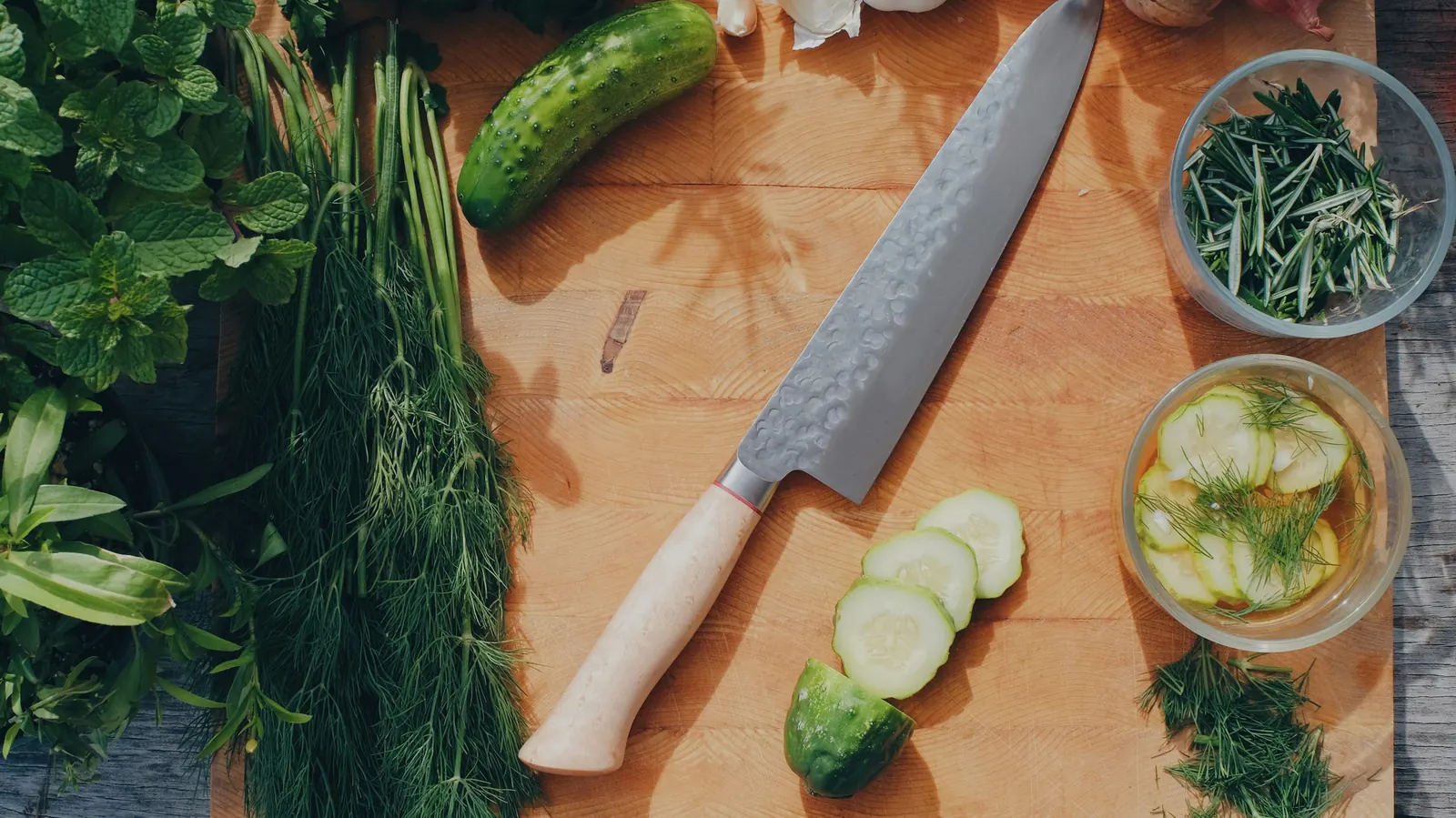
A busy taquería line goes through knife edges fast. Onions for every order of tacos, a crate of tomatoes for pico de gallo, bunches of cilantro, limes by the case and grilled steak sliced thin for fajitas all wear an edge down in a single service. A whetstone is the oldest and still the most controllable way to bring that edge back, and it is gentler on a good knife than most machines.
The trouble is the choice. There are water stones that need soaking and others that only want a splash, diamond plates that never wear hollow, oil stones in a rotating tray, and grit numbers that run from a few hundred to many thousands. This guide explains what those differences mean, what each maker says about soaking and flattening, and which stones are worth buying for a home kitchen.
Julia’s earns a commission on purchases made through links on this page, at no cost to you. Recommendations are based on what a restaurant kitchen looks for in a whetstone, the makers’ own specifications and the details on each Amazon listing.
Quick verdict: which whetstone to buy
For most home cooks, the best whetstone is the Zwilling Twin Pro 250/1000 combination water stone: a coarse side for dull or nicked knives, a 1000-grit side for the everyday edge, a base with non-slip rubber feet, and Zwilling says it needs no pre-soaking, only a few drops of water. If you prefer oil to water, the Norton IM313 Tri-Stone keeps three stones in an oil bath. If you would rather never flatten a stone, the DMT Dia-Sharp fine diamond bench stone sharpens dry or with water and stays flat.
The rest of this page explains how these stones differ, which grit you actually need, and how to keep a stone flat so it keeps giving a straight edge.
Five whetstones side by side
Our five standout stones, one for each kind of cook, with the grit and preparation each maker or listing states. All eight stones are reviewed in full below.
| Whetstone | Best for | Type and grit | Before use (stated) | Buy on Amazon |
|---|---|---|---|---|
| Repair and routine edges in one stone | Water stone, 250 and 1000 | No soak, a few drops of water | View on Amazon | |
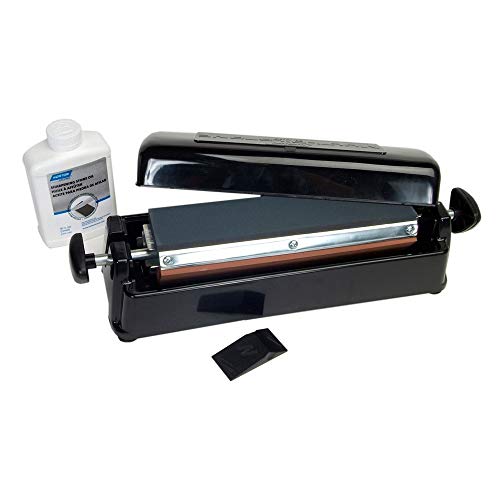
Norton IM313 Tri-Stone Oil Sharpening SystemBest oil stone
|
Three grits in an oil bath | Oil stones, coarse/medium/fine | Stones sit in oil, no water | View on Amazon |

KAI Seki Magoroku 1000 Whetstone With CaseBest with a storage case
|
A medium stone with its own case | Whetstone, 1000 | Not stated; follow the maker’s instructions | View on Amazon |
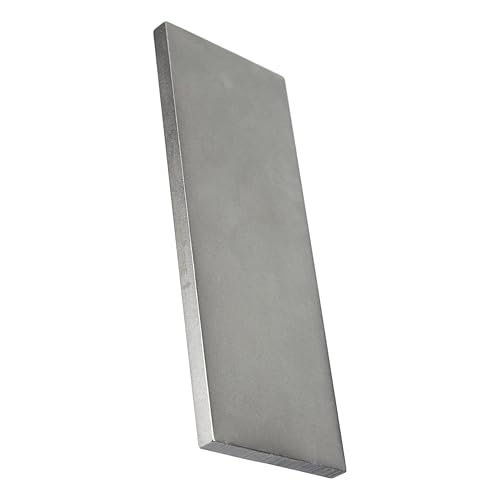
DMT Dia-Sharp 8-inch Fine Diamond Bench StoneBest diamond
|
No soaking, no flattening | Diamond, fine | Dry or with water, no oil | View on Amazon |

DMT DuoSharp 8-inch Coarse/Extra-CoarseBest for flattening
|
Keeping water stones flat | Diamond, coarse and extra-coarse | No soak needed | View on Amazon |
Product images from Amazon. Soaking and preparation are as stated by each maker or, where noted, by retailers that sell the stone; check the instructions that come with yours.
Our picks for the best whetstone
These nine stones cover every kind of sharpening surface a home cook is likely to want: combination water stones that handle repair and routine work in one block, single stones that need no soaking, a medium stone with its own case, a finishing stone for a polished edge, two diamond plates and an oil stone system. Each pick explains who it suits, what the maker says about preparation, and one honest reason to skip it.
1. Zwilling Twin Pro 250/1000 Combination Water Stone – Coarse and Medium Without Soaking

This is the stone to buy if you only want one. Zwilling pairs a coarse 250-grit side, which it describes as the side for dull blades and reshaping an edge, with a 1000-grit side for putting on a sharp edge. That covers both jobs a home kitchen meets: the knife that has been neglected for a year, and the knife that just needs its bite back before the weekend.
What sets it apart is the preparation. Zwilling’s own product page says no pre-soaking is required and no oil is needed; you put a few drops of water on the surface and start. Some retailers still tell buyers to soak it for a few minutes, but the maker’s instruction is the one we follow here. The stone sits on a base with non-slip rubber feet, so it stays put on a counter, and Zwilling lists Japan as the country of origin.
Zwilling’s page gives the stone as about 7.9 by 3.4 inches and about 1.65 inches tall, which is long enough for a standard chef’s knife. Rinse it after use and let it dry in the air. Like any water stone, it will wear unevenly over time, so plan to flatten it now and then.
Why we like it
- 250 and 1000 grit in one stone
- No pre-soaking, per Zwilling
- Base with non-slip rubber feet
- Made in Japan, per Zwilling
Key specifications
| Model | 32505-100 |
|---|---|
| Grit(s) | 250 / 1000 |
| Type | Water stone |
| Soak needed | No (a few drops of water, per Zwilling) |
| Size | About 7.9 x 3.4 x 1.65 in (with base) |
| Base/holder | Base with non-slip rubber feet |
| Flattening stone included | Not stated |
Why we recommend it
It suits a home cook who wants to learn on stones without buying a set: the coarse side rescues a dull knife and the 1000 side keeps it working. No soaking means you can sharpen on a whim instead of planning ahead.
Skip it if your knives are already sharp and you want a polished, mirror-like edge; you will need a finer stone too.
Pros and cons
Pros
- Covers repair and routine sharpening
- Ready with a few drops of water
- Stable on the counter
Cons
- No fine finishing grit
- Will need flattening in time
2. Wüsthof Whetstone J 1000/4000 with Holder – Two Grits on a Steady Base

Wüsthof’s 1000/4000 stone is a combination block aimed at owners of good kitchen knives who want both a sharpening grit and a refining grit. Wüsthof describes it as a gentle way of honing and sharpening, with the coarser side used to smooth off unevenness and the finer side to hone and sharpen the edge.
The pairing is a sensible one. A 1000 side does the real sharpening, and a 4000 side takes out the scratches the 1000 leaves, so the edge is smoother and slices tomatoes and herbs more cleanly. This version comes with a non-slip holder, which Wüsthof itself recommends for extra stability. The listing gives the size as 8 by 3 by 1 inches.
Wüsthof’s product page lists China as the country of origin, which is worth knowing for a brand most people associate with Solingen. Neither the page nor the listing says whether the stone needs soaking, so follow the printed instructions in the box.
Why we like it
- 1000 and 4000 grit in one block
- Non-slip holder included
- Coarse and fine roles explained by Wüsthof
- Full 8-inch length
Key specifications
| Model | 3069720101 |
|---|---|
| Grit(s) | 1000 / 4000 |
| Type | Combination whetstone (water or oil not stated) |
| Soak needed | Not stated |
| Size | 8 x 3 x 1 in |
| Base/holder | Non-slip holder included |
| Flattening stone included | Not stated |
Why we recommend it
It suits a cook with German or Japanese knives that are in decent shape and who wants a cleaner, more refined edge than a 1000 stone alone gives.
Skip it if your knives are chipped or very dull; there is no coarse side for heavy repair.
Pros and cons
Pros
- Sharpening and refining grits
- Holder in the box
- Well-known knife maker
Cons
- Soaking advice not published
- No coarse grit for repairs
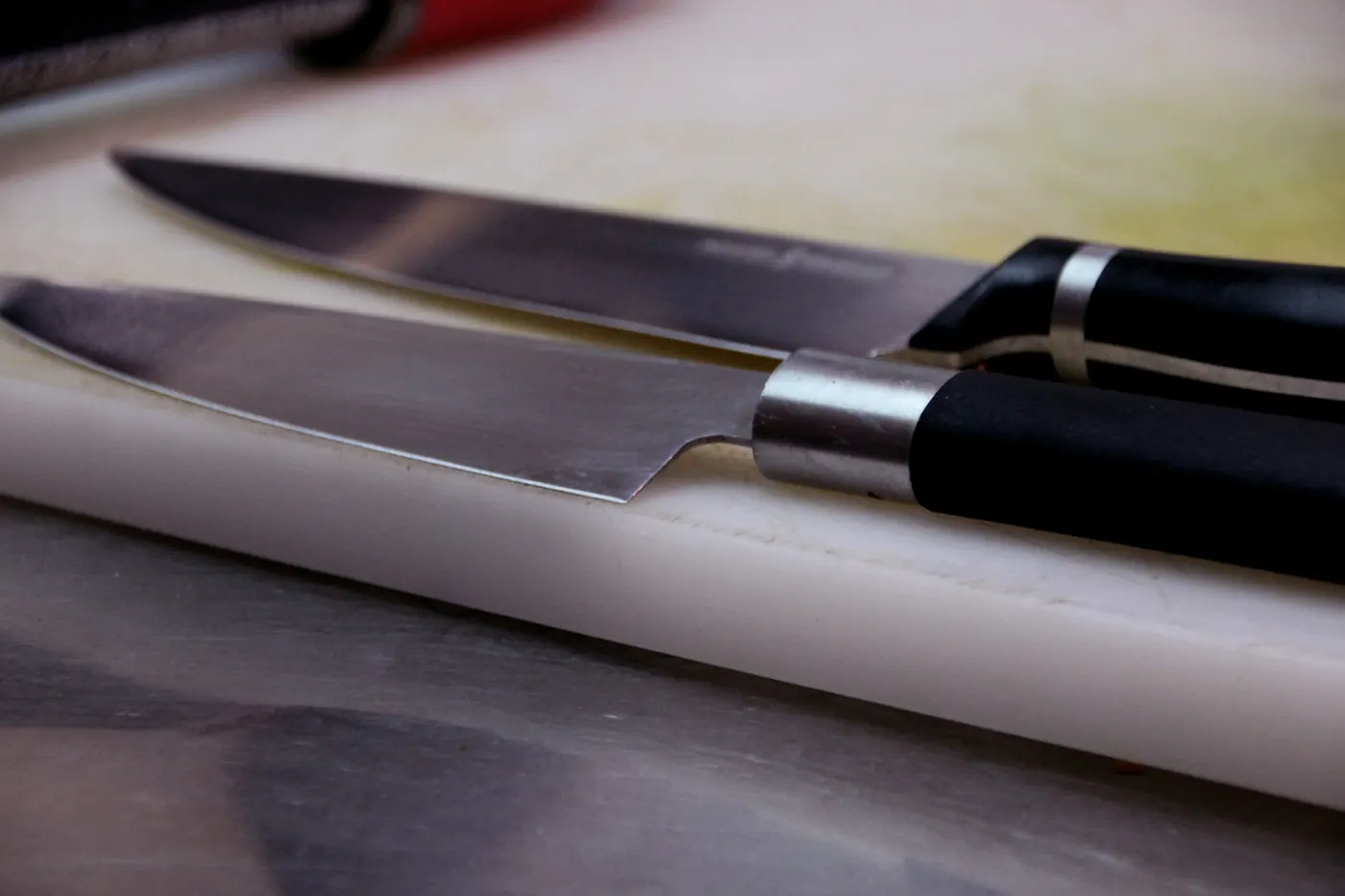
3. KAI Seki Magoroku 1000 Whetstone With Case – A Medium Stone, Case Included
The KAI Seki Magoroku AP0330 is a medium 1000-grit stone, made in Japan per the listing, and it comes with a storage case. The listing gives the stone’s material as white aluminum.
The listing gives no soak time, so follow the maker’s instructions that come with the stone. It also does not say how often the stone needs flattening, so check it for a hollow as you would any stone you use regularly.
The listing says the case has an ABS sharpening table and lid and thermoplastic anti-slip parts, both rated to 176°F, so keep hot water away from it. It gives the size as 9.4 by 3.7 by 2.0 inches.
Why we like it
- Made in Japan, per the listing
- 1000 grit for everyday sharpening
- Storage case included
- Anti-slip parts on the case, per the listing
Key specifications
| Model | AP0330 |
|---|---|
| Grit(s) | 1000 |
| Type | Whetstone; listed material white aluminum |
| Soak needed | Not stated; follow the maker’s instructions |
| Size | 9.4 x 3.7 x 2.0 in. (listing) |
| Base/holder | Storage case with sharpening table |
| Flattening stone included | Not stated |
Why we recommend it
It suits a cook who wants one medium stone and somewhere to keep it between sessions.
Skip it if you want clear preparation advice before you buy; this listing does not give any.
Pros and cons
Pros
- Everyday medium grit
- Case included
- Made in Japan, per the listing
Cons
- No soak time on the listing
- Case parts rated only to 176°F
- Flattening not mentioned on the listing
4. DMT Dia-Sharp 8-inch Fine Diamond Bench Stone – Stays Flat, Works Dry
A diamond bench stone is a steel plate coated with industrial diamond rather than a block of bonded abrasive. That changes two things that matter in a kitchen. It does not need soaking, and it does not wear into a hollow, so the surface stays flat. DMT’s listing says you can sharpen dry or with water and that no oil is needed, and it states that the design prevents hollowing or grooving.
This is the fine grade on a continuous surface. DMT’s own listing for its DuoSharp stones describes its fine diamond as 25 micron, or 600 mesh. Diamond cuts quickly, which makes it fast at bringing back a dull edge, and it works on harder Japanese steels as readily as softer German ones. Four non-skid rubber feet keep it from sliding.
The listing gives the size as 8 by 3 by 0.38 inches and says it is made in the USA. Diamond plates cut fast when new and settle down after a few sessions; use light pressure and let the diamonds do the work.
Why we like it
- Sharpen dry or with water
- Designed not to hollow or groove
- Non-skid rubber feet
- Made in the USA, per the listing
Key specifications
| Model | D8F |
|---|---|
| Grit(s) | Fine (DMT lists its fine diamond as 25 micron / 600 mesh) |
| Type | Diamond |
| Soak needed | No (dry or with water) |
| Size | 8 x 3 x 0.38 in |
| Base/holder | Four non-skid rubber feet |
| Flattening stone included | Not needed (stays flat, per DMT) |
Why we recommend it
It suits a cook who wants a sharpening surface that is always ready and never needs maintenance, and anyone with very hard knives that load up soft stones.
Skip it if you want a polished edge; a fine diamond leaves a toothier finish than a high-grit water stone.
Pros and cons
Pros
- No soaking or flattening
- Fast on hard steels
- Stable on the counter
Cons
- Single grit only
- Aggressive when new
5. Shun 300/1000 Combination Whetstone – Repairs Chips, Then Refines

Shun’s combination stone pairs a coarse 300-grit side with a 1000-grit side. The listing’s instructions are plain: start on the 300 side to remove metal quickly and set a new edge, then switch to the 1000 side to smooth and finish it. That order suits a knife with a small chip or an edge that has been rolled and neglected for months.
It is a soaking stone; Shun’s listing says to soak it in water before use. It comes with a rubber tray that holds the stone firmly while you sharpen, and the listing names a lifetime warranty. Shun also offers free sharpening for its own knives, according to its warranty page, which is useful if you would rather have a professional handle a bad chip.
The listing gives the size as 6 inches, shorter than the other stones here. That is fine for paring and utility knives and workable for a chef’s knife, but you will sharpen a long blade in sections. Shun says its double-bevel knives are sharpened at 16 degrees, a useful target if you own Shun or other Japanese knives.
Why we like it
- 300 grit for repairs, 1000 to finish
- Rubber tray included
- Lifetime warranty, per the listing
- Clear step-by-step use instructions
Key specifications
| Model | DM0708 |
|---|---|
| Grit(s) | 300 / 1000 |
| Type | Water stone |
| Soak needed | Yes (per Shun’s listing) |
| Size | 6 in (listing) |
| Base/holder | Rubber tray |
| Flattening stone included | Not stated |
Why we recommend it
It suits a cook whose knives have been through hard use, with nicks from bones or a rolled edge, and who wants one stone to bring them back.
Skip it if you mostly sharpen long chef’s knives and want a full-length stone.
Pros and cons
Pros
- Strong coarse side
- Tray holds the stone steady
- Lifetime warranty
Cons
- Short stone
- Needs soaking
6. Zwilling 3000/8000 Finishing Stone – Refines an Edge That Is Already Sharp

A finishing stone is not where you start. Zwilling says this one is designed for knives that still have a decent basic sharpness and only need fine honing. Its two sides are graded on the Japanese JIS scale at 3000 and 8000 grit: the 3000 side refines the edge left by a medium stone, and the 8000 side polishes it toward the scalpel-like, reflective edge the listing describes.
For a kitchen, that finer edge shows up on delicate work: paper-thin onion for curtido, clean slices through ripe tomatoes, raw fish for ceviche. It pairs naturally with the Zwilling 250/1000 stone above, giving a four-grit progression from one maker.
The listing gives the size as 20 by 8.5 by 4 centimeters. Zwilling’s English pages do not say whether to soak it; at least one retailer, Knives and Tools, says to submerge it for five to ten minutes before use. Check the instructions in the box before you wet it.
Why we like it
- 3000 and 8000 grit (JIS)
- Made for refining, as Zwilling states
- Pairs with the 250/1000 stone
- Full-size block
Key specifications
| Model | 32505-300 |
|---|---|
| Grit(s) | 3000 / 8000 (JIS) |
| Type | Water stone |
| Soak needed | Not stated by Zwilling (one retailer says 5–10 minutes) |
| Size | 20 x 8.5 x 4 cm |
| Base/holder | Not stated |
| Flattening stone included | Not stated |
Why we recommend it
It suits a cook who already sharpens on a medium stone and wants the next step: a smoother, longer-lasting edge for fine slicing.
Skip it if this would be your only stone; it cannot sharpen a dull knife on its own.
Pros and cons
Pros
- Two fine grits in one
- Polished edge for slicing
- Clear purpose from the maker
Cons
- Not a starting stone
- Soaking advice unclear
7. DMT DuoSharp 8-inch Coarse/Extra-Coarse – Flattens Water Stones and Repairs Edges
Every water stone on this page wears unevenly, and a dished stone puts a curve into a straight edge. A coarse diamond plate is the usual fix, and Woodcraft’s expert answer on the subject says a diamond stone will flatten water stones, though the diamonds wear faster doing it than when they only sharpen steel. DMT’s 8-inch DuoSharp has two coarse faces: extra-coarse (black) to repair damaged edges and coarse (blue) to bring a dull edge back, per the listing. Woodcraft gives them as 60 microns (220 mesh) and 45 microns (325 mesh).
The listing says the monocrystalline diamond surface cuts faster than conventional stones and works dry or with water, so there is no soaking. The recessed polka-dot pattern is meant to catch swarf, per the listing. This version comes with DMT’s adjustable universal base, which holds it steady and raises it off the counter.
To flatten, draw a grid of pencil lines on the wet water stone and rub it on the coarse side until the lines disappear. Keep pressure even, and rinse both surfaces afterward.
Why we like it
- Two coarse diamond grits on one plate
- Flattens water stones, per Woodcraft
- Works dry or with water
- Adjustable base included
Key specifications
| Model | W8CX-WB-2 (with universal base) |
|---|---|
| Grit(s) | Coarse 45 micron (325 mesh), extra-coarse 60 micron (220 mesh), per Woodcraft |
| Type | Diamond |
| Soak needed | No |
| Size | 8 in long |
| Base/holder | Adjustable universal base included |
| Flattening stone included | It is one (used to flatten other stones) |
Why we recommend it
It suits anyone who owns water stones and wants them to keep producing a straight edge, and anyone who needs a coarse plate for occasional repairs.
Skip it if you only own a diamond stone; diamond plates do not need flattening.
Pros and cons
Pros
- Keeps water stones true
- Doubles as a coarse repair stone
- Base included
Cons
- Too coarse for finishing
- Diamonds wear faster when flattening
8. Norton IM313 Tri-Stone Oil Sharpening System – Three Stones in an Oil Bath
Oil stones are the older Western tradition, and Norton’s IM313 is the classic kit. Three 11.5-inch stones sit on a rotating holder above a reservoir of oil. Norton describes them as coarse and medium Crystolon, a silicon carbide stone for dull edges, and a fine India stone, aluminum oxide, for the final edge. The listing gives grits of 100, 150 and 320 for the same set.
The reservoir keeps the two stones not in use submerged in oil, so they stay clean and ready, and turning the holder brings the next stone up. Norton’s page says the system comes with a pint of Norton oil, and the listing adds a plastic angle guide, a lid and rubber feet. The long stones suit big blades, including butcher knives and long slicers.
By the listing’s own grit figures, even the finest stone here is far coarser than a 1000 water stone, so this system gives a strong working edge rather than a polished one. It is messier than a water stone, because the oil has to be wiped off the knife afterwards before it touches food.
Why we like it
- Three stones, coarse to fine
- Oil reservoir keeps stones ready
- 11.5-inch stones for long blades
- Angle guide and oil included
Key specifications
| Model | IM313 (61463685960) |
|---|---|
| Grit(s) | Coarse and medium Crystolon, fine India (listing: 100 / 150 / 320) |
| Type | Oil stones |
| Soak needed | No water; stones sit in oil |
| Size | 11.5 x 2.5 x 0.5 in per stone (listing) |
| Base/holder | Rotating holder with oil reservoir, lid and rubber feet |
| Flattening stone included | No |
Why we recommend it
It suits a cook who sharpens big, heavy knives and cleavers and wants every grit set up and ready in one box.
Skip it if you want a fine, polished edge on a thin Japanese knife; the grits stop well short of that.
Pros and cons
Pros
- Complete coarse-to-fine set
- Long stones
- Always ready to use
Cons
- Oil is messy
- No fine finishing grit
- Bulky to store
Grit numbers, explained
The number on a whetstone tells you how coarse its abrasive is. Lower numbers remove metal fast; higher numbers remove very little and polish what is there. Japanese stones are usually graded on the JIS scale, which is what Zwilling cites for its finishing stone. Diamond plates are often described in microns or mesh instead, and Western oil stones by names such as coarse, medium and fine. The scales are not identical, so treat cross-comparisons as rough.
| Grit range | What it does | When a kitchen needs it |
|---|---|---|
| About 200–400 | Removes metal quickly; sets a new edge | Chips, a broken tip, a very dull knife; flattening other stones |
| About 800–1500 | Sharpens; leaves a keen working edge | Routine sharpening every few weeks or months |
| About 3000–6000 | Refines and smooths the 1000 edge | A cleaner slice through tomatoes, herbs and fish |
| 8000 and above | Polishes | Optional; a mirror-like edge on fine knives |
For most home cooks, a stone around 1000 is the one that matters. Add a coarse stone if your knives get chipped, and a finishing stone if you enjoy the process and want a smoother edge. Our knife sharpener vs whetstone comparison explains when a stone is worth the learning curve at all.
Soak, splash or oil: what the makers say
The single most confusing thing about whetstones is the preparation, and the honest answer is that it depends on the stone, so read the maker’s instructions. Here is what the makers and sellers of the stones on this page say:
- Soaking stones. Shun’s listing says to soak its 300/1000 stone before use. Korin warns that soaking finishing stones of about 3000 grit and finer can crack them.
- Splash-and-go stones. Zwilling says its Twin Pro 250/1000 needs no pre-soaking, just a few drops of water.
- Diamond plates. DMT’s listing says its stones work dry or with water, with no oil needed.
- Oil stones. Norton’s IM313 keeps its stones in an oil bath. Keep an oil stone to oil; a water stone is used with water.
Whichever type you use, keep the surface wet (or oiled) while you sharpen, rinse the stone afterwards, and let water stones dry slowly in the air before you put them away.
Keeping a stone flat
Water stones wear fastest where the blade passes most, usually the middle, so over time the surface dishes. A dished stone sharpens a slight curve into the edge, and the knife stops meeting the cutting board along its whole length. That shows up as onion slices that stay joined at the bottom.
The fix takes two minutes. Draw a pencil grid across the wet stone, rub it on a flattening plate such as the DMT DuoSharp coarse plate or another coarse diamond plate until the pencil marks are gone, then rinse. Soft soaking stones need this most often; harder splash-and-go stones less so; diamond plates never. Many cooks flatten every few sessions, before the dish becomes visible.
How to choose a whetstone for home use
Start with a stone around 1000 grit. It does most of the work. A combination stone with a coarse side, like the Zwilling 250/1000, also covers repairs.
Decide how much waiting you will tolerate. Soaking stones need a few minutes in water first; splash-and-go stones and diamond plates are ready at once. If you sharpen on impulse, choose a stone that does not need soaking.
Match the stone to your knives. Very hard Japanese steels sharpen well on fine stones and diamond plates; softer German knives sharpen quickly on almost anything. See our guides to the best Japanese knife and the best chef’s knife for the steels each maker uses, and check the maker’s recommended angle, such as the 16 degrees Shun gives for its double-bevel knives.
Choose a full-length stone. About 8 inches long and 2.5 to 3 inches wide is standard; a short stone works but makes long blades slower to sharpen.
Plan for a base and flattening. A stone that slides is dangerous. Choose one with a base or holder, or set it on a damp towel, and budget for a flattening plate if you buy water stones.
How we chose these eight stones
We began with what a kitchen that cuts onions, chiles, tomatoes, citrus and grilled beef every day needs from a stone: a dependable edge, sensible grits, a stable base and upkeep a home cook will actually do. We then looked for stones sold on Amazon in the United States from identifiable makers, across every main type, and checked each one’s stock with Amazon’s product data before writing. Grits, sizes and preparation come from the maker’s own pages where we could reach them and otherwise from the Amazon listing or named retailers; where none of them states a figure, we say “not stated”. We left out stones that were down to their last few units when we checked, including several Naniwa, Suehiro, King and Shapton stones, and unbranded kits whose listings promise more than they document. We did not sharpen knives with these stones for this guide, and we have not cited published equipment reviews, because we did not read them for this page.
Whetstone questions, answered
What is the best type of whetstone for a beginner?
A combination water stone with a 1000 side, ideally one that does not need soaking, such as the Zwilling Twin Pro 250/1000. It covers routine sharpening and the occasional repair, and it is ready with a few drops of water.
Which whetstone brands are worth trusting?
Shapton, King, Naniwa and Suehiro are long-standing Japanese stone makers. Knife makers such as Zwilling, Wüsthof and Shun sell stones designed around their own knives. DMT and Atoma are known for diamond plates, and Norton for oil stones. Be cautious with unbranded kits that bundle many accessories but publish few specifications.
Do I need to soak my whetstone?
Only if its maker says so. Some water stones must soak until the bubbles stop; others are splash-and-go; diamond plates never need it; and oil stones use oil, not water. Soaking a stone that is not meant to be soaked, especially a fine finishing stone, can crack it.
What grit whetstone do I need for kitchen knives?
A stone around 1000 grit handles most sharpening. Add something around 200 to 400 for chips and very dull blades, and 3000 or finer for a smoother finish.
Is a diamond plate better than a water stone?
Neither is better for everyone. A diamond plate is always flat and always ready, and it cuts hard steel fast. A water stone gives more feedback and a smoother edge at higher grits, but it needs flattening.
Should I still use a honing rod if I own a whetstone?
Yes. A rod realigns the edge between sharpenings, so you visit the stone less often and remove less metal over the life of the knife.
Our final pick for a sharp edge
Buy the Zwilling Twin Pro 250/1000 if you want one stone that rescues dull knives and keeps sharp ones working, with no soaking. Choose the Norton Tri-Stone if you prefer oil, the KAI Seki Magoroku 1000 if you want a medium stone with a storage case, and the DMT diamond stone if you never want to flatten anything. Add the DMT DuoSharp coarse plate the day you own more than one water stone.
If you would rather have a machine do the work, our best knife sharpener guide covers electric, pull-through and guided sharpeners. For the knives themselves, see the best knife set, and keep the edge longer on a good cutting board. The rest of the kit is in Mexican cooking tools.
A good stone pairs with regular honing between sharpenings; see the best honing steel and, for harder Japanese blades, the best honing steel for Japanese knives.
Starting from scratch? Our guide to the best whetstone kits covers sets with several grits, a base and a flattening stone.
On a budget? See our guide to the best cheap whetstones.
Related guide: Best whetstone for beginners.
And if you would rather someone else did the slicing tonight, see the menu or call to order.