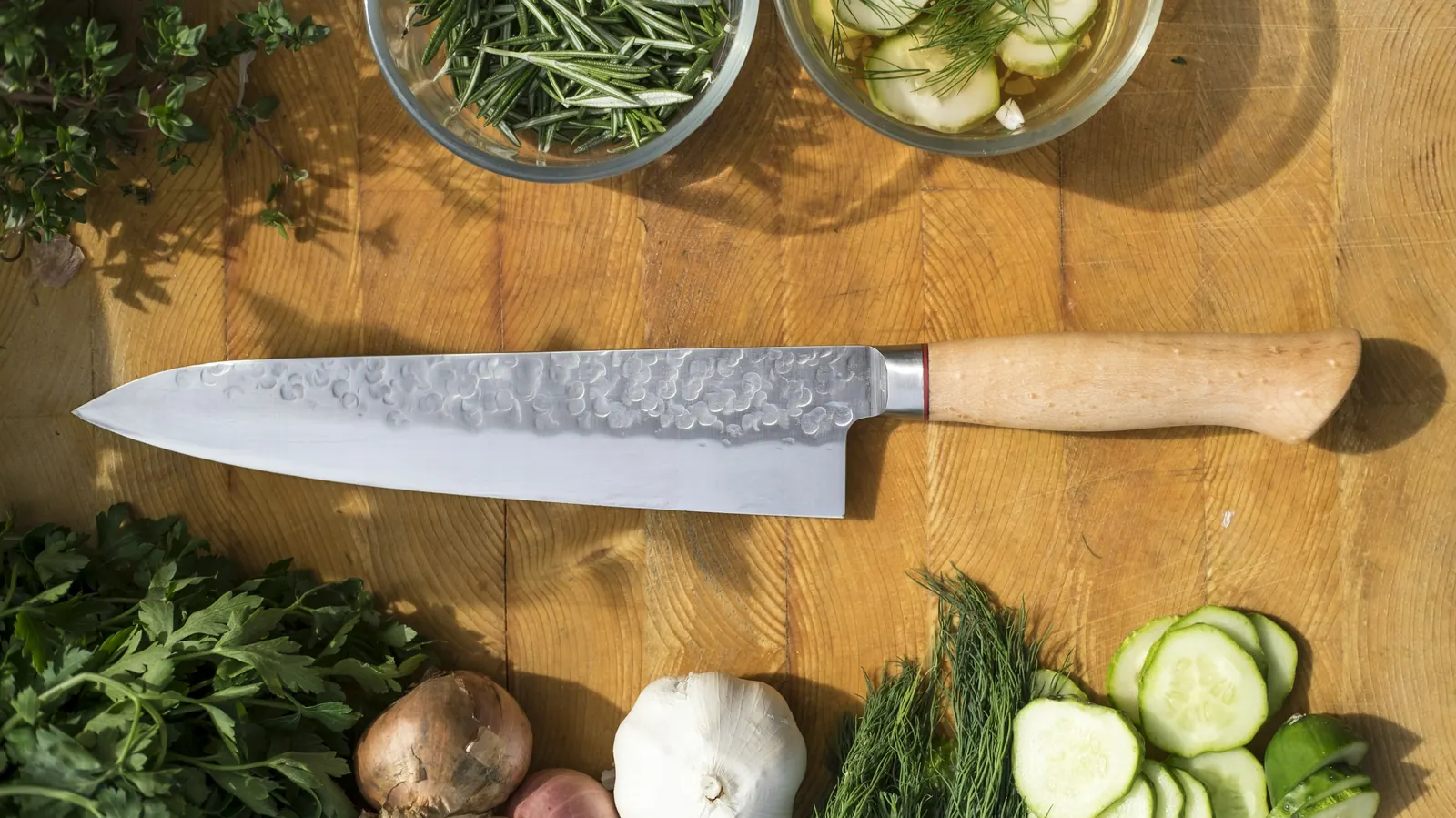
Japanese knives earn their place on a cutting board through thin, hard edges. A gyuto glides through a pile of white onion for salsa, a nakiri slices a jalapeño into clean rings, and a petty knife segments a lime without crushing it. The same hardness that makes those edges so keen also changes how you should maintain them. A coarse, grooved butcher’s steel built for softer German knives can chip or scratch a hard, thin Japanese edge instead of straightening it.
That is why the best honing rods for Japanese knives tend to be ceramic, which is harder than any knife steel, or smooth steel with an angle guide matched to the knife. This guide sets out what Japanese knife makers themselves say about honing, which rods suit harder steels, and how to use one so it helps rather than hurts.
Julia’s earns a commission on purchases made through links on this page, at no cost to you. Recommendations are based on what a restaurant kitchen looks for in a honing rod, the makers’ own specifications and the details on each Amazon listing.
Quick verdict: which rod to buy for Japanese knives
The best honing steel for Japanese knives, for most cooks, is the Mac 8.5-inch ceramic honing rod: made in Japan by a Japanese knife maker, ceramic with what Mac calls a much finer grit than steel, and, as its listing says plainly, it only hones and does not sharpen. If you own Shun knives, the Shun Premier 9-inch combination honing steel has a built-in 16-degree guide that matches Shun’s own edge angle. For very hard blades and long gyutos, the Steelport 12-inch oval ceramic rod is made for steels up to 65 HRC.
The rest of this page explains why Japanese edges need gentler honing, what the makers recommend, and how to choose between ceramic and smooth steel.
Five rods for Japanese knives side by side
Our five standout rods for Japanese knives, with the material, fineness and length each maker or listing states. All eight are reviewed in full below.
| Honing rod | Best for | Material and fineness | Length | Buy on Amazon |
|---|---|---|---|---|

Mac 8.5-inch Ceramic Honing RodBest overall
|
Most Japanese kitchen knives | Ceramic, fine | 8.5 in | View on Amazon |

Shun Premier 9-inch Combination Honing SteelBest with an angle guide
|
Shun and other 16-degree edges | Stainless steel, smooth and micro-ribbed | 9 in | View on Amazon |

Steelport 12-inch Oval Ceramic Honing RodBest for very hard steels
|
Long gyutos and steels up to 65 HRC | High-density ceramic, fine grit | 12 in | View on Amazon |

Sharpal 118H Ceramic Honing RodFinest stated grit
|
A polished edge with a guide | Ceramic, 3000 grit | Not stated | View on Amazon |

Kai 9-inch Combination Honing SteelBudget pick
|
A first rod for Japanese knives | Stainless steel, smooth and micro-ribbed | 9 in | View on Amazon |
Product images from Amazon. Materials, grit and lengths are as stated by each maker or listing; “not stated” means neither gives a figure.
Our picks for the best honing steel for Japanese knives
These eight rods fall into three groups: ceramic rods, which are harder than knife steel and suit the hardest blades; smooth or micro-ribbed steels from Japanese knife makers with angle guides matched to their edges; and one diamond steel from Global, included because Global makes it for its own knives. Each pick explains who it suits and one honest reason to skip it.
1. Mac 8.5-inch Ceramic Honing Rod – Hones Without Sharpening
Mac is a Japanese knife maker, and this rod is made for the kind of thin, hard edge its knives carry. The listing is unusually direct: the rod only hones and does not sharpen. It explains why Mac chose ceramic: it is a very hard material with a much finer grit than steel, which Mac says gets faster and better results and produces a fine edge.
That combination is exactly what a Japanese knife needs between sharpenings. A hard rod can straighten a hard edge that a softer steel would merely skate over, and a fine surface does it without leaving deep scratches. A few light strokes per side before a prep session are enough. Mac does not publish a grit number on the listing; retailers that sell the SR-85 describe it as roughly 1200 grit.
At 8.5 inches, the rod is sized for knives up to about 8 inches, the range most home gyutos and santokus fall into. Mac says to wash it by hand, not in the dishwasher, and the listing says it is made in Japan. Treat it gently; ceramic can chip or break if it is dropped onto a hard floor.
Why we like it
- Made in Japan by a Japanese knife maker
- Ceramic, harder and finer than steel, per Mac
- Hones only, so it does not wear the knife down
- Right size for home gyutos and santokus
Key specifications
| Model | SR-85 |
|---|---|
| Material | Ceramic |
| Surface | Fine |
| Length | 8.5 in |
| Handle | Not stated |
| Hang ring | Not stated |
| Warranty | Not stated |
| Grit/fineness (as stated) | “Much finer grit” than steel (Mac); about 1200 per retailers |
Why we recommend it
It suits anyone with Japanese knives up to 8 inches who wants a rod that keeps the edge straight without grinding it away.
Skip it if your main knife is a 9- or 10-inch gyuto; a longer rod will be easier to use.
Pros and cons
Pros
- Gentle on hard edges
- Japanese-made
- Clear maker guidance
Cons
- Short for long blades
- Brittle if dropped
- Few published specs
2. Shun Premier 9-inch Combination Honing Steel – A 16-Degree Guide in the Handle
Shun sharpens its double-bevel knives at 16 degrees, and its honing steels are built around that number. The Premier steel has an angle guide on the hand guard; Shun’s own honing instructions say to lay the flat of the blade against the 16-degree guide, then draw the knife down the steel from heel to tip with light pressure, keeping that angle the whole way.
The listing says the stainless steel rod has two faces: a smooth side for weekly honing and a micro-ribbed side for monthly honing. The smooth side does most of the work; the micro-ribbed side is a little more aggressive for an edge that has drifted further. Shun’s guide notes that some cooks hone once a week and some every day, depending on how much they use the knife.
The contoured Pakkawood handle matches Shun’s Premier knives and, the listing says, works for left- and right-handed cooks. Nine inches suits knives up to about 8 inches.
Why we like it
- Built-in 16-degree angle guide
- Smooth and micro-ribbed faces
- Clear technique from Shun
- Pakkawood handle, either hand
Key specifications
| Model | TDM0790 |
|---|---|
| Material | Stainless steel |
| Surface | Smooth side and micro-ribbed side |
| Length | 9 in |
| Handle | Contoured Pakkawood |
| Hang ring | Not stated |
| Warranty | Not stated on the listing |
| Grit/fineness (as stated) | Smooth; micro-ribbed |
Why we recommend it
It suits Shun owners, and anyone whose Japanese knives are sharpened near 16 degrees, who want a guide that takes the guesswork out of the angle.
Skip it if your knives are harder than Shun’s or very thin at the edge; a fine ceramic rod is gentler still.
Pros and cons
Pros
- Angle guide matches Shun edges
- Steel will not shatter
- Handsome handle
Cons
- Steel is softer than ceramic
- Guide fixed at 16 degrees
3. Steelport 12-inch Oval Ceramic Honing Rod – Made for Steels up to 65 HRC
Steelport is an American knife maker, and its own knives are hard; the listing cites its blades at 65 HRC. This rod was designed for that kind of steel. The listing says standard honing steels can be too soft for hard blades, and that this high-density ceramic rod suits carbon steel, stainless, Japanese, German and Damascus knives.
Two features set it apart. The rod is oval rather than round, which Steelport says puts more of the edge in contact with each stroke. And it is 12 inches long, enough to hone a 10-inch gyuto or a sujihiki slicer in full strokes. The listing describes the surface as fine-grit ceramic for fine edge maintenance and quick touch-ups.
A short internal steel core anchors the ceramic to an Oregon black walnut handle with an integrated safety guard, and a steel ring lets you hang it. Steelport says it is handmade at its Portland facility and backed by the Steelport warranty.
Why we like it
- Made for steels up to 65 HRC
- Oval profile for more contact
- 12-inch length for long blades
- Walnut handle, guard and hanging ring
Key specifications
| Model | HR12-1000 |
|---|---|
| Material | High-density ceramic, short steel core |
| Surface | Fine, oval profile |
| Length | 12 in |
| Handle | Oregon black walnut, safety guard |
| Hang ring | Yes, steel ring |
| Warranty | Steelport warranty (terms not stated on the listing) |
| Grit/fineness (as stated) | Fine-grit ceramic |
Why we recommend it
It suits a cook with long or very hard Japanese knives who wants one rod that covers every blade in the block.
Skip it if you have limited storage; a 12-inch rod with a walnut handle takes up room.
Pros and cons
Pros
- Built for hard steels
- Long enough for any kitchen knife
- Hangs on a ring
Cons
- Large to store
- Grit number not stated
4. Sharpal 118H Ceramic Honing Rod – 3000 Grit With Angle Guides
Sharpal is a California sharpening-tool maker, and the 118H is the finest-grit rod on this page by stated number. The listing gives the ceramic surface as 3000 grit and says it polishes and refines the edge. It also notes that ceramic is significantly harder than steel, making it suitable for knives too hard for regular steel sharpeners.
Built-in angle guides are set at 20 degrees, according to the listing. That is a common angle for Western knives and a little wider than many Japanese edges; if your knives are sharpened at 15 or 16 degrees, use the guide as a reference and hold the blade slightly flatter. A hexagonal hand guard keeps the rod from rolling on the counter, and a removable rubber cap protects the tip and helps prevent chips if it is dropped.
The listing states a three-year commitment from Sharpal. It does not give the rod’s length; one reviewer site gives an overall length near 16 inches, but we could not confirm that from Sharpal.
Why we like it
- 3000-grit ceramic, per the listing
- Angle guides on the handle
- Rubber cap protects against drops
- Three-year commitment from Sharpal
Key specifications
| Model | 118H |
|---|---|
| Material | Ceramic |
| Surface | Fine |
| Length | Not stated |
| Handle | Hexagonal guard, 20-degree angle guides |
| Hang ring | Not stated |
| Warranty | 3 years |
| Grit/fineness (as stated) | 3000 |
Why we recommend it
It suits a cook who wants the finest, gentlest ceramic surface for hard knives, with a guide as a starting point for the angle.
Skip it if you want the guide to match a 15- or 16-degree Japanese edge exactly; it is set at 20.
Pros and cons
Pros
- Very fine stated grit
- Drop-protection cap
- Stated warranty
Cons
- Guide angle wider than many Japanese edges
- Rod length not stated
5. Kai 9-inch Combination Honing Steel – Shun’s Guide at a Lower Price
Kai is the Japanese company behind Shun, and this steel shares the Shun design. The listing describes the same built-in angle guide set at 16 degrees, the same stainless steel rod with a smooth side for weekly honing and a micro-ribbed side for monthly honing, and a sure-grip TPE handle in place of Pakkawood.
For a cook with an entry-level Japanese santoku or gyuto, that makes it a sensible first rod: the guide teaches the angle, and the smooth face does the routine work. Kai’s listing says the steel is supported by free honing, and it names a manufacturer warranty without giving terms.
The TPE handle is practical in a wet kitchen, and the listing says it suits both left- and right-handed users. As with any steel rod, keep the pressure light and the strokes even; it is the steel’s job to straighten the edge, not grind it.
Why we like it
- 16-degree angle guide
- Smooth and micro-ribbed sides
- Grippy TPE handle
- From the maker of Shun
Key specifications
| Model | 9890 |
|---|---|
| Material | Stainless steel |
| Surface | Smooth side and micro-ribbed side |
| Length | 9 in |
| Handle | Sure-grip TPE |
| Hang ring | Not stated |
| Warranty | Manufacturer warranty (terms not stated) |
| Grit/fineness (as stated) | Smooth; micro-ribbed |
Why we recommend it
It suits a cook with a first Japanese knife who wants a guided steel without paying for a Pakkawood handle.
Skip it if your knives are very hard; a ceramic rod is the gentler choice.
Pros and cons
Pros
- Built-in angle guide
- Will not shatter
- Same design as Shun’s steels
Cons
- Steel softer than ceramic
- Warranty terms not given
6. Zwilling 9-inch Ceramic Sharpening Rod – Gentle Ceramic, Hangs on a Hook

Zwilling owns the Japanese knife brand Miyabi and makes both steel and ceramic rods. This plain ceramic rod is the simplest of them. The listing gives its length as 23 centimeters, about 9 inches, and says sharpening steels with a ceramic blade give soft and gentle sharpening.
That “gentle” is the point for Japanese knives. Ceramic is hard enough to straighten a hard edge, and a plain round ceramic rod has no grooves to bite into a thin bevel. The plastic handle has a suspension eye, so the rod can hang on a hook beside the board instead of rattling in a drawer, which is the best way to keep any ceramic rod from chipping.
The listing does not give a grit, a warranty or an angle. For Miyabi knives specifically, Zwilling’s own Miyabi steel is a tungsten carbide rod, which Zwilling describes as a simple way to maintain the sharpness of Miyabi and other knives and suggests using every time you use the knife; it was down to its last few units when we checked.
Why we like it
- Ceramic rod for gentle honing
- Suspension eye for hanging
- About 9 inches long
- From the owner of Miyabi
Key specifications
| Model | 32513-231 |
|---|---|
| Material | Ceramic |
| Surface | Not stated |
| Length | 23 cm (about 9 in) |
| Handle | Plastic |
| Hang ring | Yes, suspension eye |
| Warranty | Not stated |
| Grit/fineness (as stated) | Not stated (“soft and gentle”) |
Why we recommend it
It suits a cook with a mixed block of Zwilling, Miyabi or other knives who wants a plain ceramic rod that hangs within reach.
Skip it if you want published grit and warranty details; the listing gives very few.
Pros and cons
Pros
- Gentle on hard edges
- Hangs on a hook
- Established maker
Cons
- Sparse listing
- No angle guide
7. Dalstrong 10-inch Ceramic Honing Rod – Ceramic Over a Steel Core

Dalstrong’s rod is a hybrid: a high-carbon stainless steel core with a black ceramic coating. The listing says the coating is slightly abrasive and designed for steels of high Rockwell hardness, as is typical of Japanese cutlery, so it re-aligns the edge without compromising the blade. The steel core makes it less fragile than a solid ceramic rod.
At 10 inches, the listing says, it covers most knives without poking out of a knife bag or block. The handle is triple-riveted G10, a resin-and-fiberglass material that shrugs off heat, cold and moisture, with a bolster that protects your hand along the full length of the rod. A silicone tip anchors the rod on the board and protects the surface beneath it.
The listing does not give a grit number or warranty terms, though it mentions customer support. If you own Dalstrong’s own Japanese-style knives, it is designed with those in mind.
Why we like it
- Ceramic coating for high-hardness steels
- Steel core is less fragile than solid ceramic
- G10 handle and bolster
- Non-slip silicone tip
Key specifications
| Model | Not stated |
|---|---|
| Material | Ceramic coating over high-carbon stainless core |
| Surface | Slightly abrasive ceramic |
| Length | 10 in |
| Handle | Triple-riveted G10, bolster |
| Hang ring | Not stated |
| Warranty | Not stated |
| Grit/fineness (as stated) | Not stated |
Why we recommend it
It suits a cook who wants the hardness of ceramic but worries about a solid ceramic rod breaking on a tile floor.
Skip it if you want a stated grit; Dalstrong does not give one.
Pros and cons
Pros
- Tougher than solid ceramic
- Solid handle and guard
- Good length
Cons
- Coating can wear over time
- No stated grit or warranty
8. Global G-39 12-inch Diamond Sharpening Steel – Global’s Own Steel

Global makes all-steel Japanese knives with hollow handles and, according to this listing, an acute 15-degree edge. The G-39 is Global’s own diamond steel, 12 inches long with a powdered diamond coating. It is included here because it is what Global makes for its knives, not because diamond is the gentlest choice.
Global’s own wording is worth reading closely. The listing says the steel allows you to sharpen your knife using the Western method of sharpening, then adds: “Although we recommend using a whetstone or a pull through sharpener.” In other words, Global itself prefers stones. A diamond steel removes metal, so it is a light sharpener rather than a pure honing tool. Use it sparingly and with very light pressure.
The listing’s bullets mix knife and steel descriptions, mentioning CROMOVA 18 steel and sand-weighted hollow handles, so treat the handle details with care and check the photos. No warranty or grit is given.
Why we like it
- Made by Global for its knives
- Powdered diamond coating
- 12 inches long
- Honest maker advice to prefer stones
Key specifications
| Model | G-39 |
|---|---|
| Material | Steel with powdered diamond coating |
| Surface | Diamond |
| Length | 12 in (30 cm) |
| Handle | Stainless steel (listing is unclear) |
| Hang ring | Not stated |
| Warranty | Not stated |
| Grit/fineness (as stated) | Not stated |
Why we recommend it
It suits Global owners who want the maker’s own steel for occasional touch-ups between whetstone sessions.
Skip it if you want a daily honing rod; diamond removes metal, and Global itself recommends a whetstone.
Pros and cons
Pros
- Matches Global knives
- Fast on a dull edge
- Long rod
Cons
- Removes metal each use
- Confusing listing details
- Not a gentle daily hone
What Japanese knife makers say about honing
The makers do not all agree, which is itself useful to know. Here is what each one says on its own pages or listings:
- Shun. Honing realigns an edge that rolls gradually from contact with the cutting board; sharpening removes metal and honing does not. Use the 16-degree guide on the hand guard, draw the blade from heel to tip with light pressure, and hone as often as your use demands: some cooks weekly, some daily.
- Mac. Its ceramic rod only hones and does not sharpen, and Mac chose ceramic because it is very hard with a much finer grit than steel.
- Kai. The same 16-degree guided design as Shun, with free honing offered as support.
- Global. Its diamond steel lets you sharpen the Western way, but Global says it recommends a whetstone or a pull-through sharpener. A German retailer of Global knives, Butch, goes further and says Global advises against metal sharpening rods for its knives in favor of diamond or ceramic.
- Zwilling (Miyabi). Its Miyabi steel is tungsten carbide rather than ordinary steel, and Zwilling suggests using it every time you use the knife.
The common thread: keep pressure light, match the angle to the knife, and use a rod hard enough for the steel. When honing stops bringing the edge back, the knife needs a stone. Our knife sharpener vs whetstone comparison explains that step, and our best knife sharpener guide covers the tools.
Why hard Japanese steel needs a different rod
A honing rod works by being harder than the edge it straightens. Most Western kitchen knives are softer; Wüsthof, for example, tempers its forged steels to 58 HRC. Many Japanese knives are harder, and Steelport’s own knives are listed at 65 HRC. A soft or coarse grooved steel used on a harder edge can skate over it, or catch the thin bevel and chip it.
Japanese edges are also ground at narrower angles. Shun gives 16 degrees for its double-bevel knives, and Global’s listing gives 15. A narrower edge is keener but has less metal behind it, so heavy strokes on a coarse rod do more damage. Ceramic, which is harder than any knife steel and comes in fine grits, solves both problems. A smooth steel with an angle guide is the other safe choice. For more on the knives themselves, see our guide to the best Japanese knife.
How to choose a honing rod for Japanese knives
Material first. Ceramic for the hardest steels and the gentlest result; a smooth steel with a guide if you want something that will not break; diamond only for occasional sharpening.
Fineness. Finer is gentler. A stated 3000 grit, like the Sharpal, polishes; around 1000 to 1200 refines without much metal removal. Avoid coarse grooved butcher’s steels for thin Japanese edges.
Angle. Know the angle your knives were sharpened at. Built-in guides help only if they match: 16 degrees on Shun and Kai steels, 20 on the Sharpal.
Length. At least as long as your longest blade. Nine inches suits an 8-inch gyuto; choose 12 inches for a 10-inch gyuto or a slicer.
Storage. Ceramic chips if it is knocked or dropped. A hanging ring or eye, like those on the Steelport and Zwilling rods, keeps it safe and within reach.
How we chose these eight rods
We started from what a kitchen that cuts onions, chiles, tomatoes, citrus and grilled beef every day needs from a rod for hard knives: a surface hard and fine enough not to damage a thin edge, a sensible length and a maker that states what it sells. We read what Shun, Mac, Kai, Global and Zwilling say about honing on their own pages and listings, then looked for rods sold on Amazon in the United States from identifiable makers and checked each one’s stock with Amazon’s product data before writing. Materials, grits and lengths come from the maker’s pages or the Amazon listing; where neither states a figure, we say “not stated”. We left out rods that were down to their last few units or unavailable when we checked, including Global’s G-45 ceramic, Mac’s black and silver ceramic rods, Miyabi’s tungsten and birchwood steels and Zwilling’s Kramer ceramic rod; we could not find Idahone or Messermeister ceramic rods in stock. We did not hone knives with these rods for this guide, and we have not cited published equipment reviews, because we did not read them for this page.
Japanese knife honing questions, answered
Can you use a regular honing steel on Japanese knives?
A smooth steel used gently at the right angle can work, which is why Shun and Kai make steel rods with 16-degree guides. A coarse grooved steel is riskier on thin, hard edges. When in doubt, choose ceramic.
Is ceramic or steel better for Japanese knives?
Ceramic, for most. It is harder than the knife and comes in fine grits, so it straightens a hard edge without gouging it. Steel rods are tougher and will not shatter, which matters in a busy kitchen.
How often should I hone a Japanese knife?
Less often and more lightly than a German knife. Shun says some cooks hone weekly and others daily depending on use. A few gentle strokes per side are enough; if it takes more, the knife needs a stone.
What angle should I hold?
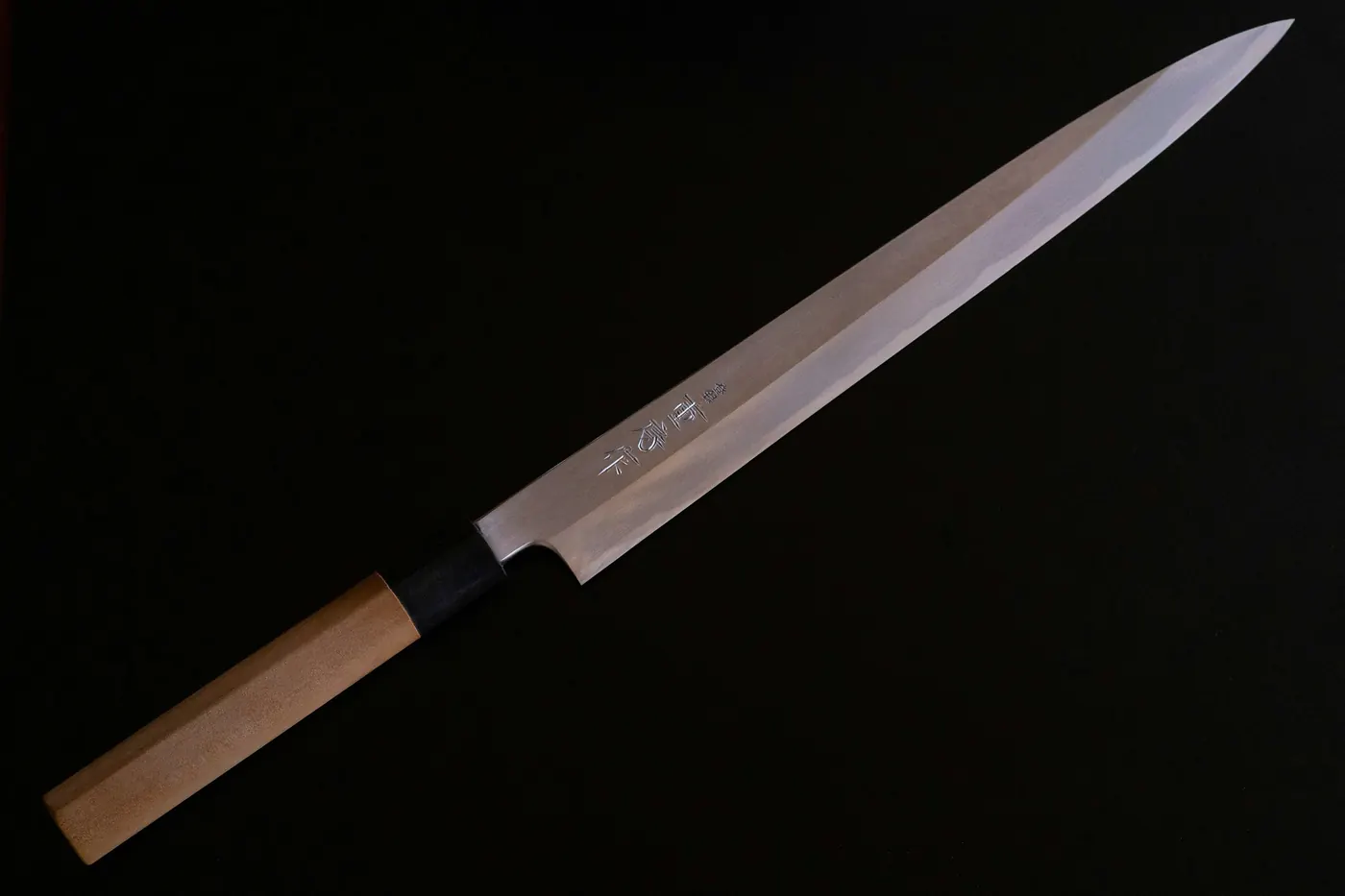
The angle the knife was sharpened at. Shun gives 16 degrees for its double-bevel knives and Global’s listing gives 15. Single-bevel knives, such as a yanagiba, are usually maintained on stones; check the maker’s advice before using any rod on them.
Do I still need a whetstone?
Yes. Honing keeps an edge straight; it cannot replace metal worn away. Global goes as far as recommending a whetstone over its own diamond steel.
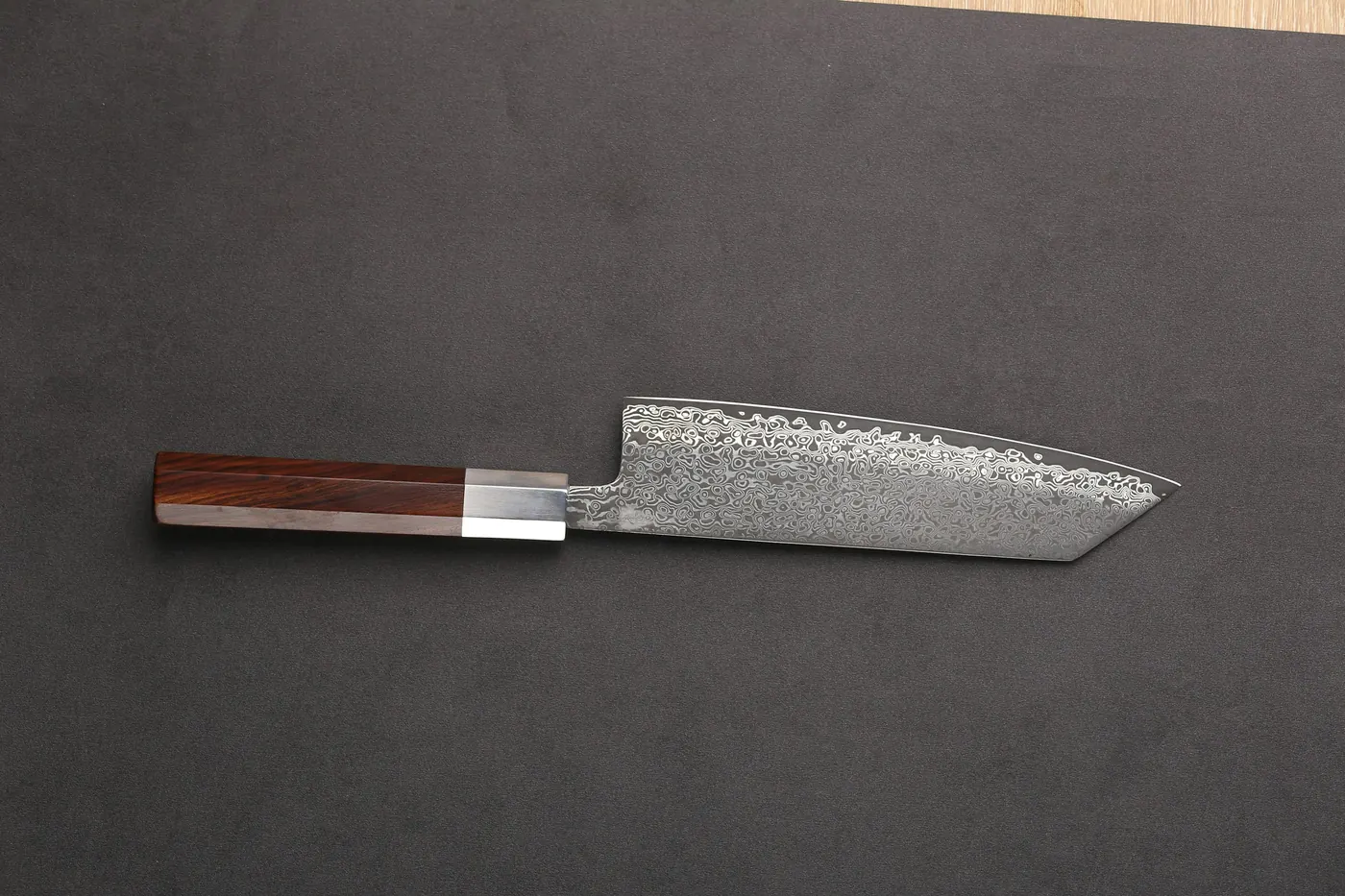
Our final pick for Japanese knives
Buy the Mac 8.5-inch ceramic rod if your Japanese knives are 8 inches or shorter and you want a rod that hones without grinding. Choose the Shun Premier steel to match Shun’s 16-degree edges, the Steelport oval ceramic for very hard or long blades, the Sharpal for the finest stated grit, and the Kai steel as a guided first rod. For rods suited to German and everyday knives, see our best honing steel guide.
A well-kept Japanese knife makes short work of prep. See the best chef’s knife for a Western alternative, keep the edge longer on a good cutting board, and find the rest of the kit in Mexican cooking tools.
And if you would rather someone else did the slicing tonight, see the menu or call to order.