A good margarita needs three ingredients and a little judgment. A cocktail book is really about the judgment: how much citrus, how long to shake, why one drink is stirred and another is not. In a kitchen, the same is true of a salsa. Once you understand the balance, the recipe becomes a starting point.
The shelf is wide, though, and “cocktail book” can mean a huge reference, a beginner’s guide, a history or a course in theory. This guide picks seven by named bartenders and writers, each with a published review we could read, and sets out what the listing and Publishers Weekly say about each one, so you can match a book to the way you drink at home.
Julia’s earns a commission on purchases made through links on this page, at no cost to you. Recommendations are based on what a restaurant kitchen looks for in a book, Amazon listing details and published reviews, which we cite.
Quick verdict: the best cocktail book to start with
For most home bars, start with Dale DeGroff’s The New Craft of the Cocktail: a broad reference that Publishers Weekly called authoritative and said home bartenders will be thrilled by. If you are brand new to mixing drinks, choose John deBary’s Drink What You Want. If your bar runs on tequila and mezcal, choose Ivy Mix’s Spirits of Latin America.
The other four cover drink theory, modern classics, professional bartending and tiki.
Five cocktail books side by side
Five of the seven, one for each kind of home bartender, with the details the listing or review gives. All seven are described in full below.
| Book | Best for | Organized by | Recipes | Buy on Amazon |
|---|---|---|---|---|

The New Craft of the Cocktail, Dale DeGroffBest overall
|
One reference for every drink | Alphabetical, with a spirit index | 500 (per the listing) | View on Amazon |

Drink What You Want, John deBaryBest for beginners
|
Cooks new to mixing drinks | Start familiar, then branch out | Not stated | View on Amazon |

Spirits of Latin America, Ivy MixBest for tequila and mezcal
|
Tequila and mezcal drinkers | Agave, sugarcane, grapes | 100 (per the listing) | View on Amazon |
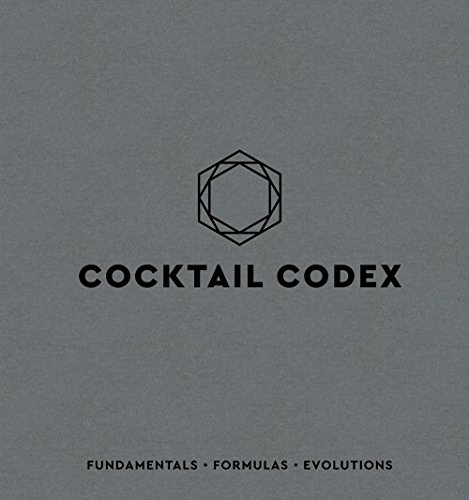
Cocktail Codex, Alex Day, Nick Fauchald and David KaplanBest for learning why drinks work
|
Understanding how drinks are built | Six root cocktails | Not stated | View on Amazon |

Modern Classic Cocktails, Robert SimonsonBest for cocktail history
|
Drinks from the craft revival | Alphabetical, with origin stories | 60+ (per the listing) | View on Amazon |
Cover images from Amazon. Recipe counts appear only where the Amazon listing gives one.
Our picks for the best cocktail book, one by one
These seven run from a friendly first book to a professional manual. For each, we say what the listing and published reviews report, who wrote it and who it suits. We have not mixed our way through these books; where we describe a book’s strengths, we say whose view that is. Please enjoy alcohol responsibly and only if you are of legal drinking age.
1. The New Craft of the Cocktail, Dale DeGroff – The Reference for a Home Bar
If you want one book to keep behind the bottles, make it this one. Dale DeGroff is a career bartender, and this title updates his earlier book, The Craft of the Cocktail, according to Publishers Weekly. Its listing promises 500 recipes, and the review describes a mix of classic and modern drinks.
The book opens with a short history of drinking, then explains the ingredients, tools and techniques before it reaches the recipes. Those run alphabetically, so unrelated drinks such as the michelada, the mimosa and the mojito sit near each other, and the index lets you look drinks up by spirit. That layout makes it a book you consult rather than read straight through, which is how a bar reference earns its place.
DeGroff also names the bottles he prefers for certain drinks, and sidebars tell stories from his years behind the bar, including his time at the Rainbow Room. Publishers Weekly closed its review with the line that matters for this page: “Home bartenders will be thrilled by this authoritative and satisfying reference.”
Why we like it
- Publishers Weekly calls it authoritative and aims its praise at home bartenders
- Listing promises 500 recipes, and the review says classic and modern
- Covers ingredients, tools and technique before the recipes
- Index lets you search by spirit
Key specifications
| Author | Dale DeGroff |
|---|---|
| Publisher | Clarkson Potter |
| Released | 2020 (per the listing) |
| Recipes | 500 (per the listing) |
| Organized by | Alphabetical, with an index by spirit |
| Focus | Classic and modern drinks, with bar history |
| Best for | Anyone who wants one book for the whole home bar |
Why we recommend it
It suits the home bartender who wants to look up nearly any drink a guest names, and who also wants the reasoning behind it.
Skip it if you want a guided course. An alphabetical reference does not walk you from easy drinks to hard ones.
Pros and cons
Pros
- Wide range under one cover
- Basics explained before the recipes
- Written from a long career behind the bar
Cons
- Alphabetical order puts unrelated drinks side by side
- Brand recommendations may point you toward bottles you do not own
2. Drink What You Want, John deBary – A Friendly First Cocktail Book
This is the book to give someone who owns a shaker and is a little afraid of it. Publishers Weekly describes it as a collection of classic and inventive cocktails for people new to mixing at home, and praises John deBary as “an enthusiastic host who refreshingly avoids judgment or condescension.”
According to that review, you can begin with drinks you already know, such as the daiquiri or the Manhattan, then move to something more adventurous, including a carbonated whiskey highball, a whiskey sour with peach preserves and a make-ahead batch of martinis. The same review says the instructions are clear and the ingredients are easy to find.
It also includes non-alcoholic drinks, which matters if you host a mixed crowd. A home bar is more welcoming when the person skipping alcohol gets a real drink, too.
Why we like it
- Publishers Weekly names beginners as its audience
- Clear instructions and accessible ingredients, per the same review
- Includes non-alcoholic drinks
- Make-ahead ideas help when you are hosting
Key specifications
| Author | John deBary |
|---|---|
| Publisher | Clarkson Potter |
| Released | 2020 (per the listing) |
| Recipes | Not stated |
| Organized by | Familiar drinks first, then more adventurous ones |
| Focus | Classic and inventive cocktails at home |
| Best for | New home bartenders |
Why we recommend it
It suits a cook who is comfortable in the kitchen but new to the bar, and who wants to learn by making drinks they already like. Publishers Weekly says experienced bartenders can enjoy it as well.
Skip it if you want an exhaustive reference. This is a friendly starting point, not an encyclopedia.
Pros and cons
Pros
- Relaxed, unintimidating tone
- Accessible ingredients
- Works for hosting, including guests who skip alcohol
Cons
- Not a complete reference
- Keen mixers may outgrow the basics
3. Spirits of Latin America, Ivy Mix – Agave, Cane and Grape in the Glass
For a Mexican kitchen, this is the most natural fit on the page. Publishers Weekly identifies Ivy Mix as the owner of Leyenda, a bar in Brooklyn, and her first book pairs Latin American liquors with their cultural history and cocktails. The listing’s title promises 100 recipes from Leyenda and beyond.
The review explains the structure: three sections, each built on where the spirit’s sugar comes from. Agave covers tequila and mezcal, including their history in Mexico and how they are made. Sugarcane covers rum and cachaça. Grapes covers Peruvian pisco and Bolivian singani.
The review names a traditional margarita among the recipes, alongside the Mia Tia, a mezcal take on the Mai Tai. It calls the book “a stirring first book” and praises its bright flavors and unique insight. If you want to know what is in the bottle as well as what to do with it, this one does both. Our explainer on tequila and mezcal makes good companion reading.
Why we like it
- Built around the spirits of Latin America, starting with agave
- Publishers Weekly lists a traditional margarita among the drinks
- Pairs recipes with history and production
- Written by a bar owner, according to the review
Key specifications
| Author | Ivy Mix |
|---|---|
| Publisher | Ten Speed Press |
| Released | 2020 (per the listing) |
| Recipes | 100 (per the listing) |
| Organized by | Source of sugar: agave, sugarcane, grapes |
| Focus | Latin American spirits, history and cocktails |
| Best for | Tequila, mezcal and rum drinkers |
Why we recommend it
It suits anyone whose home bar already leans toward tequila and limes, and who wants to go past the margarita without leaving the region. It is also the best pick here for readers who enjoy the story behind a bottle.
Skip it if you mostly drink whiskey and gin. The focus is Latin America, not the full classic canon.
Pros and cons
Pros
- Strong coverage of agave spirits
- Culture and history alongside recipes
- Organized in a way that is easy to follow
Cons
- Narrower than a general reference
- Publishers Weekly calls at least one drink complicated
4. Cocktail Codex, Alex Day, Nick Fauchald and David Kaplan – Six Templates Behind Every Drink
Most cocktail books hand you recipes. This one tries to teach you to write your own. Bartenders Alex Day and David Kaplan, with writer Nick Fauchald, argue that six root cocktails sit behind all the others: the old-fashioned, martini, daiquiri, sidecar, whisky highball and flip. Publishers Weekly called it an “excellent follow-up” to their 2014 book, Death & Co.
Each root gets its own chapter, which analyzes the classic version and then works through variations. The review describes the method as adjusting one ingredient at a time, like the sliders on a mixing board, and notes flowcharts along the way. The book looks at each element of a drink, from flavor balance to the temperature of the glass.
A margarita drinker will recognize the idea at once. Spirit, citrus and sweetener are the same bones as a daiquiri, and once you see that, changing one part stops feeling like guesswork. Publishers Weekly points the book at experienced cocktail makers who want to go deeper, so it works better as a second book than a first.
Why we like it
- Reduces cocktails to six root drinks
- Shows how swapping one ingredient changes a drink
- Publishers Weekly calls it wonderfully detailed
- From the bartenders behind Death & Co
Key specifications
| Author | Alex Day, Nick Fauchald and David Kaplan |
|---|---|
| Publisher | Ten Speed Press |
| Released | 2018 (per the listing) |
| Recipes | Not stated |
| Organized by | Six root cocktails, each with variations |
| Focus | Theory, balance and formulas |
| Best for | Experienced home bartenders |
Why we recommend it
It suits the person who has made plenty of drinks from recipes and now wants to invent, adjust and fix them. If you enjoy knowing why a salsa works, you will probably enjoy this.
Skip it if you just want a good drink tonight. It rewards study, and Publishers Weekly aims it at experienced makers.
Pros and cons
Pros
- Teaches a system, not just recipes
- Useful for creating your own drinks
- Goes deep on balance and detail
Cons
- More than a beginner needs
- Built for study, not quick lookups
5. Modern Classic Cocktails, Robert Simonson – Stories Behind Today’s Standards
Robert Simonson’s book asks a simple question: what makes a new drink a classic? Publishers Weekly says he sets criteria. The drink must have a life beyond the bar where it was created, inspire variations and, ideally, have been perfected during the craft cocktail boom of roughly 2007 to 2012.
Drinks run alphabetically, each recipe paired with its origin story, and the review names influential bars such as the Violet Hour, Milk & Honey and Pegu Club. Standards such as the cosmopolitan and the espresso martini are included. The listing’s title promises more than 60 stories and recipes.
This is a good one to read for pleasure, since every drink comes with a story. Publishers Weekly’s only reservation is a fair one: the classic Manhattan is left out, though many variations on it are included. That fits the logic of the book, which is about modern classics, not old ones.
Why we like it
- Clear criteria for what counts as a modern classic
- Each recipe comes with its origin story
- Covers well-known drinks such as the espresso martini
- Publishers Weekly’s review is largely positive
Key specifications
| Author | Robert Simonson |
|---|---|
| Publisher | Ten Speed Press |
| Released | 2022 (per the listing) |
| Recipes | 60+ (per the listing) |
| Organized by | Alphabetical |
| Focus | Modern classics and their history |
| Best for | Readers who enjoy the stories behind drinks |
Why we recommend it
It suits a reader who likes to know where a drink came from, and it makes a good gift for someone who already owns a general reference.
Skip it if you need the old classics. Publishers Weekly notes that the classic Manhattan itself is not included.
Pros and cons
Pros
- Enjoyable to read as well as use
- Tight, focused selection
- Gives context for drinks you see on bar menus
Cons
- Not a full reference
- Leaves out older classics by design
6. Meehan’s Bartender Manual, Jim Meehan – For Serious Students of the Bar

Jim Meehan opened PDT, a Manhattan speakeasy, in 2007, and this book is written for people who take the bar seriously. Publishers Weekly says it “gives away intel” that matters both to would-be bartenders and to anyone who dreams of running a place of their own.
The review describes a history of mixology that runs from 18th-century punch through tiki bars to the craft-cocktail movement, a chapter on tools and techniques such as shaking, straining and muddling, and a chapter on bar design with sample floor plans. Each recipe breaks into three parts: origin, logic and hacks.
That recipe format is the reason a home bartender might want it. Knowing why a drink is built a certain way, and what you can swap, teaches more than the measurements alone. The review was less taken with the short contributions from Meehan’s friends and colleagues, which it found lackluster.
Why we like it
- Each recipe covers origin, logic and hacks
- History of mixology included
- Chapter on tools and techniques
- Bar design and business advice
Key specifications
| Author | Jim Meehan |
|---|---|
| Publisher | Ten Speed Press |
| Released | 2017 (per the listing) |
| Recipes | Not stated |
| Organized by | History, tools and technique, plus recipes |
| Focus | Professional bartending and running a bar |
| Best for | Aspiring bartenders and committed hobbyists |
Why we recommend it
It suits someone thinking about working behind a bar, or a hobbyist who wants the professional view of the craft.
Skip it if you only want a home recipe collection. Floor plans and bar design will not help you with Friday night margaritas.
Pros and cons
Pros
- Professional depth
- Recipes explain the reasoning
- Covers history and technique
Cons
- Much of it goes beyond home needs
- Publishers Weekly found the guest contributions lackluster
7. Smuggler’s Cove, Martin and Rebecca Cate – Rum and the Tiki Tradition

Tiki is a tradition of its own, and Publishers Weekly identifies Martin and Rebecca Cate as the owners of Smuggler’s Cove, a well-known tiki bar in San Francisco. The review called their book “a terrifically fun and informative read, and the definitive resource on the topic.”
It opens with Don the Beachcomber and Trader Vic, the two bar owners who created tiki culture, then follows the style through its 1950s peak, its decline and its 1990s comeback. There are also notes on tiki’s look and music and on the history of the bar itself.
The recipes come with a real education in rum, including its history and varieties. Side notes get practical, down to coring a pineapple and finding cocktail umbrellas. Many tiki drinks lean on lime and fruit, so a kitchen that keeps limes around for margaritas already has a head start, though the rum shelf may need work.
Why we like it
- Publishers Weekly calls it the definitive resource on tiki
- Teaches rum history and varieties
- Covers the origins of tiki culture
- Practical side notes on prep and serving
Key specifications
| Author | Martin Cate and Rebecca Cate |
|---|---|
| Publisher | Ten Speed Press |
| Released | 2016 (per the listing) |
| Recipes | Not stated |
| Organized by | History first, with recipes and rum guidance |
| Focus | Tiki drinks, rum and tiki culture |
| Best for | Rum lovers and party hosts |
Why we recommend it
It suits a host who likes a drink with some theater, and a reader who wants the history as much as the recipes. The reviewer says even people who do not care about tiki mugs will enjoy the recipes.
Skip it if you want a general cocktail book. This one stays with tiki and rum.
Pros and cons
Pros
- Deep on one subject
- Fun to read
- Strong on rum
Cons
- Single-style focus
- May send you shopping for more rum
How to choose a cocktail recipe book for a home bar
Four questions narrow the field. Start with how much you already know, then look at what is on your shelf.

1. How much do you already know?
A beginner wants clear steps and familiar drinks, which is the case for Drink What You Want. Someone who has made a few hundred drinks gets more from Cocktail Codex, which explains the structure underneath. Buy the advanced book first and it may well end up as decoration.
2. Reference or read?
Some books are for looking things up, and some are for sitting down with. The New Craft of the Cocktail is built for looking up a drink by name or spirit. Modern Classic Cocktails, Smuggler’s Cove and Spirits of Latin America mix their recipes with stories and history. Think about where the book will live: behind the bar with a splash on the page, or next to your chair.
3. What is already in your cabinet?
Let your bottles guide you. A house with good tequila, a bag of limes and an orange liqueur should look at Spirits of Latin America before anything else; our guide to tequila types explains what is on that shelf. A rum house should look at Smuggler’s Cove. A book that calls for a dozen bottles you do not own will cost you more than the book.
4. What gear do you have?
Most cocktail recipes assume a shaker, a jigger and a strainer. If you are missing those, sort them out first. Our guides to the best cocktail shaker and the best cocktail tool set cover the basics, and our guide to the cocktail glasses to have covers what to serve in.
How we chose these seven cocktail books
We searched Amazon’s book listings, kept only titles shown as in stock when we checked, and required a named author, an established publisher and a published review we could read for ourselves. In practice that review was Publishers Weekly, the book trade’s magazine, which we cite throughout. This page rests on those reviews and the listings, not on our own use of the books, and we give no prices or ratings.
Stock ruled out several well-known titles. Liquid Intelligence by Dave Arnold and the current Difford’s Guide to Cocktails showed limited stock when we checked. We also left out The PDT Cocktail Book, The Joy of Mixology and The Bar Book, because we did not confirm a published review for them at the time of writing. That says nothing against those books; they simply did not clear the test we set for this page.

Cocktail book questions, answered
What is the best cocktail book for a complete beginner?
Drink What You Want by John deBary. Publishers Weekly describes it as aimed at people new to mixing at home, with clear instructions and accessible ingredients.
Which cocktail book is best for margaritas and tequila drinks?
Spirits of Latin America by Ivy Mix. It has a section on agave spirits, and Publishers Weekly names a traditional margarita among its drinks. For the frozen question, see our guide to frozen and on-the-rocks margaritas.
What makes a good cocktail recipe book for a home bar?
Clear measurements, drinks you can make with bottles you own or will actually buy, and some explanation of why each drink works. A book that teaches balance outlasts one that only lists recipes.
Is there a cocktail book with non-alcoholic drinks?
Yes. Publishers Weekly notes that Drink What You Want includes non-alcoholic drinks. If you are planning a table of food and drinks, our guide on what to drink with Mexican food has more ideas.
Should I buy a reference or a theory book first?
Reference first. Make drinks for a while from The New Craft of the Cocktail, then read Cocktail Codex when you start wanting to change them.
Our final pick for the home bar
Buy The New Craft of the Cocktail if you want one book that covers nearly anything a guest might ask for. Choose Drink What You Want if you are just starting, and Spirits of Latin America if tequila and mezcal are what you pour most. Once the book is on the shelf, our guide to margarita accessories covers the rest of the setup.
Related guide: Best mocktail book.
Related guide: Best tiki cocktail book.
And if you would rather someone else made the drinks tonight, see our drinks page or the food menu, or call to order.