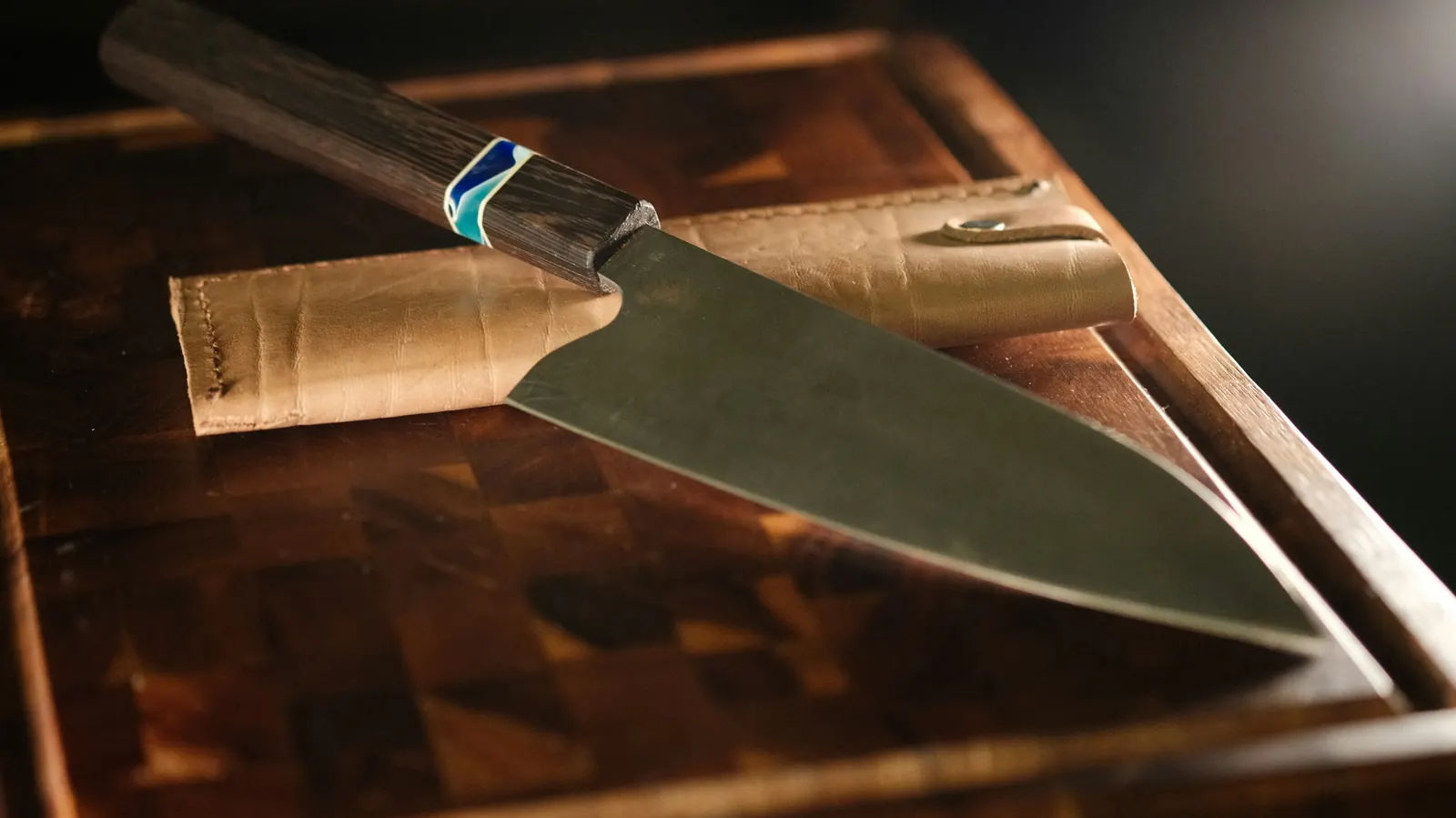
Dalstrong sells knives with a lot of drama: gift boxes, Damascus patterns, series names out of a video game and copy full of superlatives. Under all that are some ordinary knives and some interesting ones, and the names make it hard to tell which is which.
This guide is for buyers who are already drawn to the brand. It names eight different knives across four series, tells you which one suits which cook, and reports what independent reviewers found, including the parts that aren’t flattering.
Julia’s earns a commission on purchases made through links on this page, at no cost to you. Recommendations are based on what a restaurant kitchen looks for, product specifications, makers’ statements and the independent sources we name. We have not used these products ourselves.
Quick verdict: which Dalstrong knife to buy
Buy the Dalstrong Gladiator 8-inch Chef Knife. Its softer German steel and conventional shape are the most forgiving in the range. Choose the Dalstrong Shogun 7-inch Santoku if you want a thin, hard Japanese-style edge. But independent reviewers rate Dalstrong as good rather than great, and one prefers the Tojiro DP, so compare that before you buy a Shogun.
Five Dalstrong knives side by side
Five useful picks, one for each kind of buyer. All eight knives are reviewed below.
| Knife | Best for | Steel | Type | Buy on Amazon |
|---|---|---|---|---|

Dalstrong Gladiator 8-inch Chef KnifeBest overall
|
Most buyers | Forged German steel, 56+ HRC | 8-inch chef | View on Amazon |

Dalstrong Shogun 7-inch SantokuBest Japanese-style
|
Straight chopping, Damascus look | AUS-10V, 62+ HRC | 7-inch santoku | View on Amazon |

Dalstrong Shogun 6-inch NakiriBest for vegetables
|
Cabbage, onion and carrot prep | AUS-10V, 62+ HRC | 6-inch nakiri | View on Amazon |

Dalstrong Valhalla 8-inch Chef KnifeBest gift
|
A striking gift | 9CR18MOV, coated | 8-inch chef | View on Amazon |

Dalstrong Crixus 8-inch Chef and Cleaver HybridBest for meat prep
|
Boneless meat and chopping | Coated high-carbon steel | 8-inch hybrid | View on Amazon |
Product images from Amazon. Steel and hardness figures are the maker’s claims, as reported by the listings and Prudent Reviews.
Our picks for the best Dalstrong knives
Each pick is a real difference in steel or shape. We skipped licensed editions and color changes, and each entry says who should skip it.
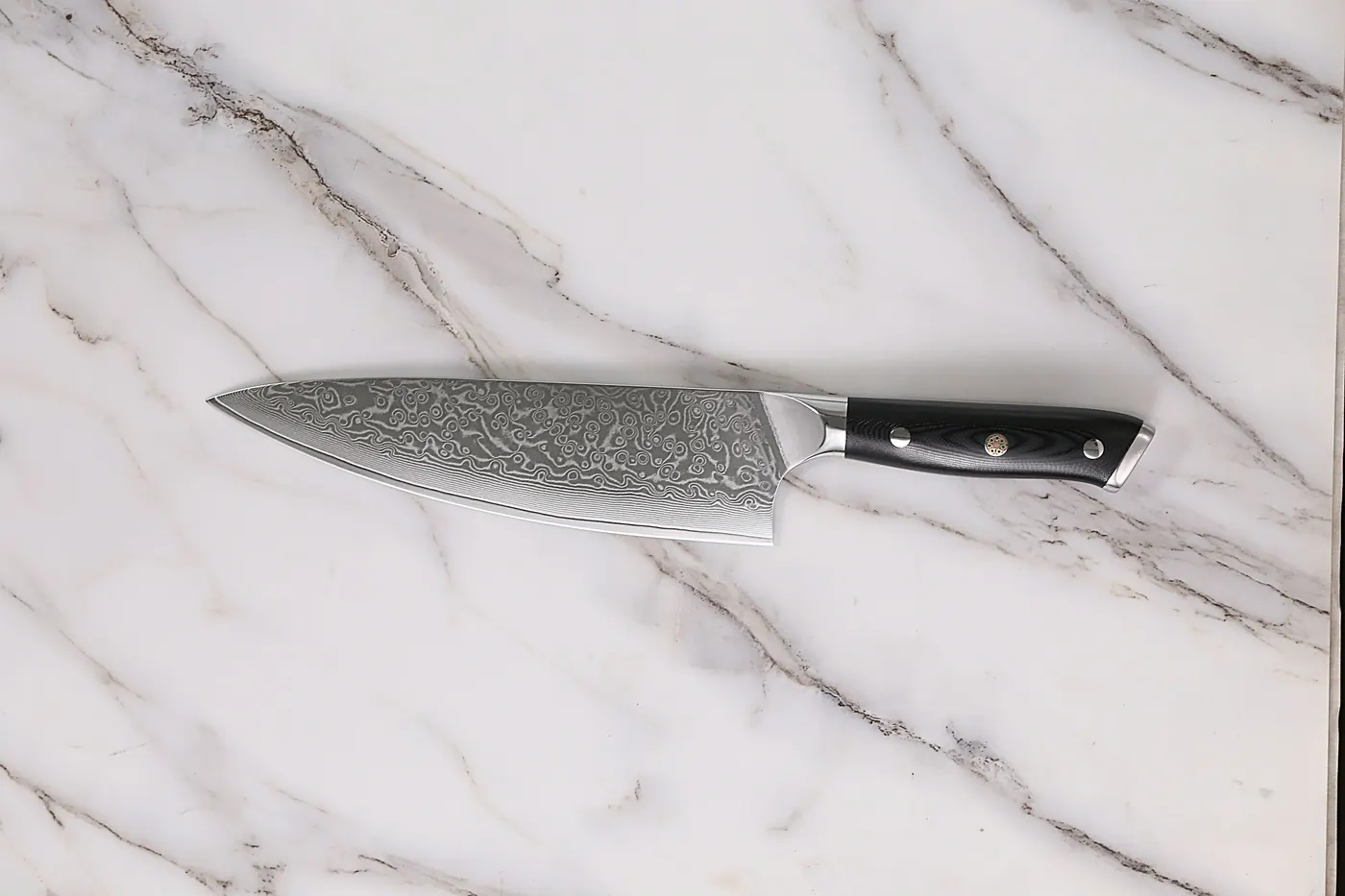
1. Dalstrong Gladiator 8-inch Chef Knife – The Plain, Western-Style Choice
Of all the Dalstrong series, the Gladiator asks you to believe the least. It is a conventional Western chef knife: full-tang forged German high-carbon stainless steel at a stated 56+ HRC, a 16 to 18 degree edge and a triple-riveted G10 handle. The listing also states NSF certification. A softer, tougher steel at a wider angle is the safer choice for a cook who is new to expensive knives.
Prudent Reviews lists the series as ThyssenKrupp German steel and, after several months with the brand, warns that the softer steel may dull quickly and that a full bolster on the series blocks a pinch grip and prevents sharpening the whole blade. The current listing describes a hybrid bolster intended for pinch grip, so hold it and check. Expect to hone it often.
Why we like it
- Forged German high-carbon stainless steel, per the listing
- 16 to 18 degree edge is forgiving to sharpen
- G10 handle, triple riveted
- NSF certification stated on the listing
Key specifications
| Model | GS-8inch-Chef |
|---|---|
| Series | Gladiator |
| Blade | 8-inch chef |
| Steel | Forged German high-carbon stainless |
| Hardness (maker) | 56+ HRC |
| Edge per side (maker) | 16-18 degrees |
| Handle | G10, triple riveted |
| Care | Hand wash and dry |
Why we recommend it
It suits a cook who wants the Dalstrong look and weight in the most ordinary shape, with the least risk of a chipped edge.
Skip it if you have been choosing between Dalstrong and Wüsthof on quality alone. Prudent Reviews says the balance does not match Wüsthof.
Pros and cons
Pros
- Familiar shape
- Tougher, softer steel
- NSF stated
Cons
- May dull quickly, per Prudent Reviews
- Heavy Western style
- Review and listing describe the bolster differently
2. Dalstrong Shogun 7-inch Santoku – Hard Steel, Hammered Finish
The Shogun series is the one most buyers mean when they say Dalstrong. This santoku has an AUS-10V core at a stated 62+ HRC, clad in Damascus layers with a hammered face. The flat profile suits a straight push cut through onions, cucumber and herbs.
Nothing But Knives reviewed the Shogun Series X chef knife and called its overall performance good but not great. The reviewer liked the fit and finish and said the hammering reduced food stick, but found the edge frail and the blade a little too thick behind the edge, and said the steel falls short of Dalstrong’s marketing. It recommended the Tojiro DP as better in almost every way and a little cheaper. That is a review of a different blade shape in the same series, but it is the fairest warning we can give you.
Why we like it
- AUS-10V core at a stated 62+ HRC
- Hammered face that one independent reviewer says reduces food stick
- Good fit and finish in the Nothing But Knives review
- Sheath and gift box included, per the listing
Key specifications
| Model | SS_Santoku |
|---|---|
| Series | Shogun ELITE |
| Blade | 7-inch santoku |
| Steel | AUS-10V core, 67-layer Damascus |
| Hardness (maker) | 62+ HRC |
| Edge per side (maker) | 8-12 degrees (series, per Prudent Reviews: 10) |
| Handle | G10, full tang |
| Care | Hand wash and dry |
Why we recommend it
It suits a cook who likes the look and wants a thin-edged, hard-steel santoku, and who understands that hard steel can chip.
Skip it if you are buying purely for cutting performance. Compare the Tojiro DP on our Japanese knife page first.
Pros and cons
Pros
- Hard stated steel
- Hammered face helps release
- Strong fit and finish
Cons
- Edge called frail in an independent review
- Thick behind the edge
- Chipping risk with hard steel
3. Dalstrong Shogun 6-inch Nakiri – Flat Edge for Vegetables Only
A nakiri has a flat, square blade made to cut straight down through vegetables without rocking. It is useful for a kitchen that cuts a lot of cabbage, onions, carrots and squash, and pointless on meat. The listing states a 6-inch edge, 10.7 ounces and an edge of 8 to 12 degrees.
The same warnings apply as for the Shogun santoku. Thin hard edges do not like bones, frozen food or twisting in a squash. The listing mentions 66 layers where the santoku says 67, a detail that will make no difference at the board. If you want a thin vegetable knife with a longer maker record, the Shun on our Japanese knife page is the one to compare.
Why we like it
- Flat 6-inch edge for straight push cuts
- AUS-10V core at a stated 62+ HRC
- Hammered face
- Sheath included, per the listing
Key specifications
| Model | SS-X-Nakiri |
|---|---|
| Series | Shogun ELITE |
| Blade | 6-inch nakiri |
| Steel | AUS-10V core, 66-layer Damascus |
| Hardness (maker) | 62+ HRC |
| Edge per side (maker) | 8-12 degrees |
| Handle | G10, full tang |
| Care | Hand wash and dry |
Why we recommend it
It suits a cook who prepares plenty of vegetables and already owns a general-purpose knife.
Skip it if you only want one knife. A nakiri cannot do meat or fine tip work.
Pros and cons
Pros
- Straight cuts with no rocking
- Weight stated
- Same series as the santoku
Cons
- Vegetables only
- Edge durability questions from the series review
4. Dalstrong Valhalla 8-inch Chef Knife – Showy Handle, Harder Steel
Valhalla is the showpiece. The Ravenstone version has a titanium-coated black blade and a cast resin and wood handle, and it comes with a leather sheath. Other Valhalla listings state 9CR18MOV steel at 60+ HRC and an 8 to 12 degree edge, and Prudent Reviews gives the series a 5-layer stainless blade at 60+ HRC.
Buy this one for what it looks like. We read no independent test of this series, so what we can report is the maker’s specification and one reviewer’s chart. It weighs about 1.8 pounds on the listing, which may include the packaging, so that figure is not a useful guide to how it will feel.
Why we like it
- Coated black blade and cast handle
- 9CR18MOV steel stated in the title
- Leather sheath, per the listing
- Each handle is cast individually, per the listing
Key specifications
| Model | Not stated |
|---|---|
| Series | Valhalla |
| Blade | 8-inch chef |
| Steel | 9CR18MOV high-carbon, titanium coated |
| Hardness (maker) | 60+ HRC (other Valhalla listings) |
| Edge per side (maker) | 8-12 degrees (other Valhalla listings) |
| Handle | Resin and wood |
| Care | Hand wash and dry |
Why we recommend it
It suits someone buying a gift for a person who enjoys striking kitchen tools.
Skip it if you want the most knife for your money. A plainer knife from the same price range will cut just as well.
Pros and cons
Pros
- Striking looks
- Harder stated steel than Gladiator
- Sheath included
Cons
- No independent review we could read
- Coating durability not covered by what we read
- Maker specs only
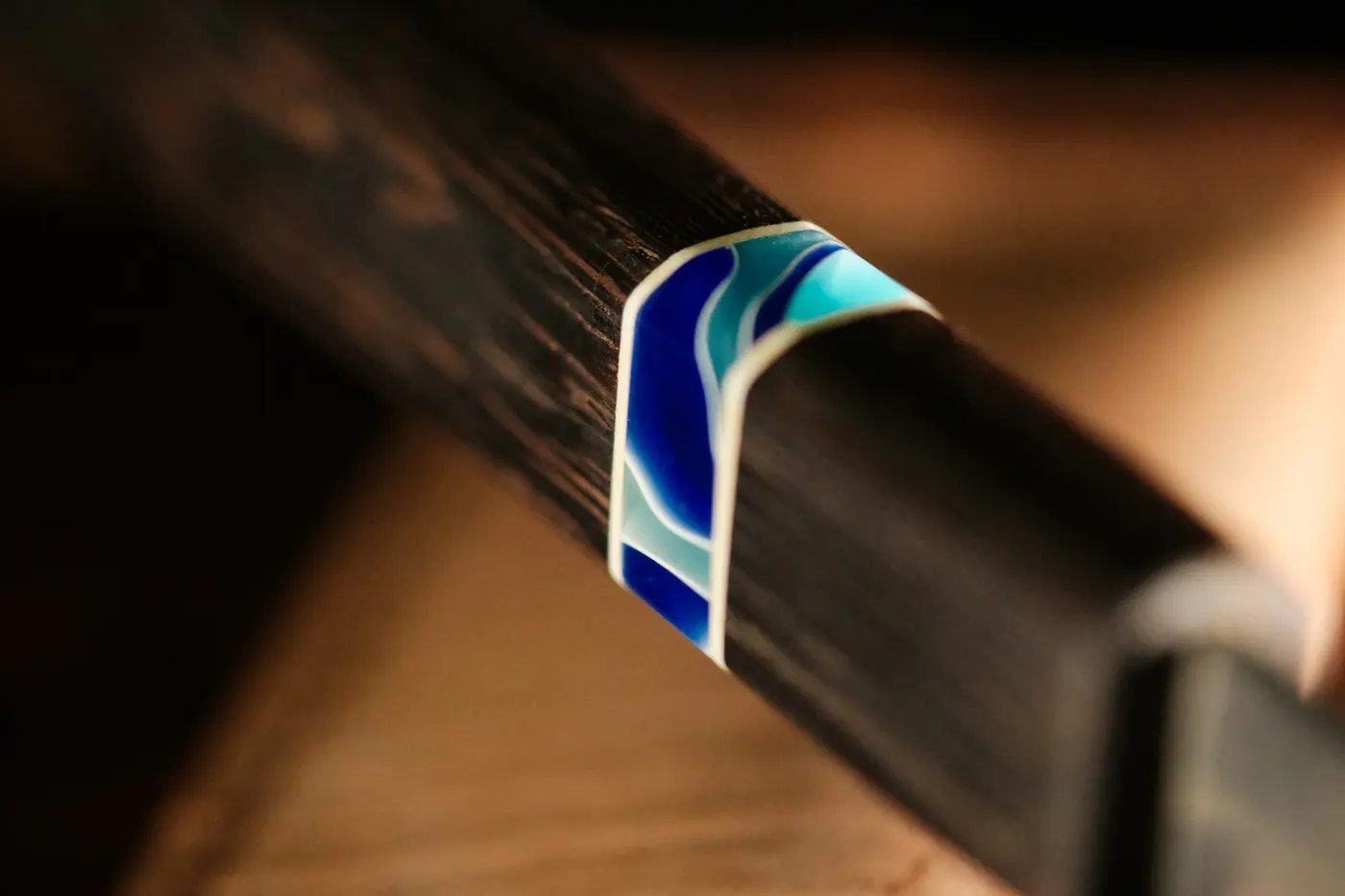
5. Dalstrong Shadow Black 8-inch Chef Knife – All Black, Mid-Hard Steel

Shadow Black is the entry into Dalstrong’s dark line, with a titanium nitride coated blade in vacuum-treated 7CR17MOV-X and a black G10 handle. Dalstrong itself calls it the starting point in the line and suggests stepping up if you want better steel, which is unusually frank for a listing.
Prudent Reviews lists the series at 58 HRC with a 16 to 18 degree edge, likes the look and finds the geometric, sharp-edged handle awkward. That handle is the main thing to judge. If you hold a knife with a pinch grip for long sessions, a faceted shape could rub. We read no test of how the coating holds up, so treat the black finish as looks rather than performance.
Why we like it
- Coated blade in vacuum-treated 7CR17MOV-X
- Full-tang G10 handle
- Sheath included, per the listing
- 70-day money-back policy stated on the listing
Key specifications
| Model | SBS-8inch-Chef |
|---|---|
| Series | Shadow Black |
| Blade | 8-inch chef |
| Steel | 7CR17MOV-X, titanium nitride coated |
| Hardness (maker) | 58 HRC (Prudent Reviews) |
| Edge per side (maker) | 16-18 degrees (Prudent Reviews) |
| Handle | G10, faceted |
| Care | Hand wash and dry |
Why we recommend it
It suits a cook who wants a black knife first and is comfortable with mid-range steel.
Skip it if you want a comfortable handle for long prep. Prudent Reviews found this one awkward.
Pros and cons
Pros
- Distinct look
- Mid-range hardness
- Money-back period stated
Cons
- Awkward handle, per Prudent Reviews
- Coating durability not covered by what we read
6. Dalstrong Crixus 8-inch Chef and Cleaver Hybrid – Weight Up Front for Meat Prep
The Crixus has a tall, weighted front that sits between a chef knife and a cleaver. The listing suggests onions, peppers and boneless meat preparation, with a pointed tip for detail work. It looks aggressive but it is meant for boneless cuts, so don’t use it to chop through ribs.
For fajita night, a blade with some weight up front moves through a pile of skirt steak and onions quickly. It is also the kind of odd shape that gets used for a month and then ignored, so buy it only if you know you prefer the feel of a cleaver. A true bone cleaver is covered on our cleaver page.
Why we like it
- Tall, weighted front section
- Pointed tip for detail work
- Sheath included, per the listing
- NSF certification stated in the title
Key specifications
| Model | Not stated |
|---|---|
| Series | Shadow Black |
| Blade | 8-inch chef and cleaver hybrid |
| Steel | Vacuum-treated high-carbon, titanium nitride coated |
| Hardness (maker) | 58 HRC (series, Prudent Reviews) |
| Edge per side (maker) | 16-18 degrees (series, Prudent Reviews) |
| Handle | G10, faceted |
| Care | Hand wash and dry |
Why we recommend it
It suits a cook who likes cleaver-style chopping for vegetables and boneless meat.
Skip it if you need to chop through bone. Use a real cleaver for that.
Pros and cons
Pros
- Good chopping weight
- Tip still usable
- NSF stated
Cons
- Unusual shape
- Same handle complaint as the series
- Not for bones
7. Dalstrong Gladiator 6-inch Utility Knife – Trimming and Sandwiches

The listing describes a slim blade about 0.9 inch tall, with a 2 mm spine and a gently curved belly, weighing about 4 ounces. Those measurements are useful because they show a small and nimble knife and not a cut-down chef knife.
It is forged from German X50CrMoV15 and suits trimming vegetables, slicing tomatoes, sandwiches, cheese and small cuts of meat. It shares the steel and care habits of the Gladiator chef knife, so hone it often.
Why we like it
- Listing gives real measurements
- Forged German X50CrMoV15
- G10 handle, triple riveted
- Sheath included, per the listing
Key specifications
| Model | GS-6inch-Utility |
|---|---|
| Series | Gladiator |
| Blade | 6-inch utility |
| Steel | Forged German X50CrMoV15 |
| Hardness (maker) | 56+ HRC (series, listing) |
| Edge per side (maker) | 16-18 degrees (series, listing) |
| Handle | G10, triple riveted |
| Care | Hand wash and dry |
Why we recommend it
It suits a cook who owns the chef knife and wants a slim partner for smaller jobs.
Skip it if you already have a paring knife and a chef knife you like. You may not reach for a third.
Pros and cons
Pros
- Slim and nimble
- Light at about 4 ounces
- Same line as the chef knife
Cons
- Limited reach
- Soft steel needs honing
8. Dalstrong Gladiator 3.5-inch Paring Knife – A Small Knife with a Sheath

For seeding chiles, peeling and small trimming jobs, this is the same recipe in a small size: full-tang high-carbon German steel at a stated 56+ HRC, a 16 to 18 degree edge and a G10 handle. The title says 3.5 inches while the part number says 3.75, so expect something between the two.
The sheath is useful, because paring knives often rattle loose in a drawer. Otherwise there is nothing unusual here, and that is why we include it. A paring knife is a cheap place to try the brand’s handle and see whether you like it before spending more.
Why we like it
- Full-tang high-carbon German steel
- G10 handle, triple riveted
- NSF certification stated on the listing
- Sheath included, per the title
Key specifications
| Model | GS-3.75inch-Paring |
|---|---|
| Series | Gladiator |
| Blade | 3.5-inch paring (listing part number says 3.75) |
| Steel | High-carbon German steel |
| Hardness (maker) | 56+ HRC |
| Edge per side (maker) | 16-18 degrees |
| Handle | G10, triple riveted |
| Care | Hand wash and dry |
Why we recommend it
It suits someone who wants to try Dalstrong’s handle and sharpness at low risk.
Skip it if you want a thin, light paring knife. This one is built heavier than most stamped small knives.
Pros and cons
Pros
- Low-risk way to try the brand
- Sheath included
- NSF stated
Cons
- Size unclear on the listing
- Heavier than a stamped paring knife
Dalstrong Gladiator vs Shogun: what actually changes
The two series are built on opposite ideas. Gladiator is a softer German steel with a wider edge, meant to take rougher handling. Shogun is a harder Japanese steel with a much thinner edge. Hard steel can stay sharp longer, but thin hard edges are more likely to chip, a risk Prudent Reviews raises directly for Shogun.
| Series | Steel | Hardness | Edge per side | Handle |
|---|---|---|---|---|
| Gladiator | German high-carbon stainless | 54-56 (Prudent Reviews); 56+ (listing) | 14-18 degrees | G10 |
| Shadow Black | 7CR17MOV-X | 58 | 16-18 degrees | G10 |
| Valhalla | 5-layer stainless, 9CR18MOV | 60+ | 8-12 degrees | Wood and resin |
| Shogun | AUS-10V, 67-layer Damascus | 62+ | 8-12 degrees | G10 (listing); ABS polymer (Prudent Reviews) |
Figures are the maker’s claims as reported by listings and Prudent Reviews. No one we read measured them independently.
Where Dalstrong falls short
This is the part most Dalstrong pages skip. Prudent Reviews, after several months with the knives, calls Dalstrong a relatively new and unproven brand. It says the balance is not there compared with Wüsthof and Shun, that the handles feel too light despite their looks, and that they lack the solid feel of top brands. It also says the knives are made in a factory in Yangjiang, China, and questions how they will hold up over the long term.
Nothing But Knives is blunter about the marketing. It says the Shogun X steel falls short of Dalstrong’s hyperbolic claims, and thinks the elaborate packaging adds to what you pay. That reviewer’s top recommendation over the Shogun X is the Tojiro DP, which it calls better in almost every way and a little cheaper. You can find a Tojiro DP on our best chef knife page and a smaller one on our best Japanese knife page.
So if you have not yet settled on Dalstrong, compare those first. If you like how Dalstrong knives look and accept the trade-off, the picks above are the sensible ways to buy in.
How to choose among the Dalstrong series
Steel and how you treat knives. If you sometimes hit bone, use a glass board or toss knives in a sink, buy Gladiator. Hard, thin Shogun edges are not built for that.
Handle. Handles are the most personal choice, and Prudent Reviews had complaints about several. Dalstrong is sold mostly online, so you can’t try them in a store. Check the return terms, and start with a small knife if you are unsure.
Marketing language. Words like super steel and military grade appear in a lot of listings. Look past them to the steel name, hardness and edge angle.
Sharpening. Harder steels need more patience on a stone. See our knife sharpener guide and match the angle to the knife.
How we chose these eight Dalstrong knives
We have not used these knives. We started with listing data, left out anything scarce or on a future date, and looked for different series and shapes rather than licensed editions and color changes. We read two independent reviews, from Nothing But Knives and Prudent Reviews, and they are critical, so we report them plainly. Neither review covers all of these exact models, and we say so where it matters. A search of the saferproducts.gov Recall API for Dalstrong returned no recalls.
Dalstrong knife questions, answered
Dalstrong Gladiator vs Shogun: which is better?
Neither is better for every cook. Gladiator is softer and tougher, and Shogun is harder and thinner. If you are new to better knives, Gladiator is the safer buy.
Are Dalstrong knives worth it?
It depends on what you value. The reviewers we read found them decent, with strong fit and finish in one case, but not as balanced as Wüsthof or Shun, and one found the Tojiro DP better for less. If looks and presentation matter to you, they can be worth it.
Where are Dalstrong knives made?
Prudent Reviews says all are made at a factory in Yangjiang, China. The steel names, such as German or Japanese, refer to the steel, not to where the knife is made.
Are Dalstrong knives dishwasher safe?
Listings that mention care say to hand wash and dry. We would treat all of them that way, especially the coated and Damascus blades.
Our final word on Dalstrong
If you have settled on the brand, buy the Gladiator 8-inch and hone it often. If you are still deciding, read our Japanese knife guide before you spend more on a Shogun. A sharp knife of any brand makes the Mexican kitchen basics easier, and that matters more than the box it comes in.