
Restaurant people tell stories at the end of a shift, and the good ones are never only about food. They are about who taught you, who you disappointed and what it cost to get there. The best food memoirs work the same way. You read them on the couch, not at the stove.
These are books to read, not cookbooks. Some are loud and some are very quiet, so the first question is what kind of company you want. This guide gives eight books from named authors and established publishers, and says which rest on a named review and which on the publisher’s details.
Julia’s earns a commission on purchases made through links on this page, at no cost to you. Recommendations are based on what people who work in a restaurant kitchen want to read about, the Amazon listing, publisher and author information and published reviews, which we name where we use them.
Quick verdict: the best food memoir to read first
To get a real sense of a restaurant kitchen, start with Anthony Bourdain’s Kitchen Confidential. For a warm, happy book, choose Julia Child’s My Life in France. For a chef’s whole life, from wartime France to American television, choose Jacques Pépin’s The Apprentice.
The other six cover a restaurant critic in disguise, two modern chefs’ stories, cooking school, an amateur on the line in Italy and a daughter’s grief.
Five food memoirs side by side
Five of the eight, one for each kind of reader. All eight are described in full below.
| Book | Best for | Setting | Length | Buy on Amazon |
|---|---|---|---|---|

Kitchen Confidential, Anthony BourdainBest overall
|
Restaurant curiosity | New York kitchens | 312 pages, paperback | View on Amazon |

My Life in France, Julia ChildBest for a happy read
|
A happy, warm read | Postwar France | 369 pages, paperback | View on Amazon |

The Apprentice, Jacques PépinBest chef’s life story
|
A full life story | France and America | 352 pages, paperback | View on Amazon |
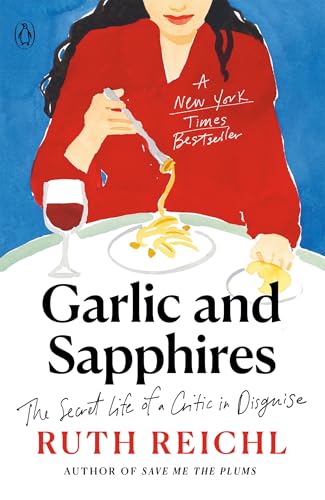
Garlic and Sapphires, Ruth ReichlBest for restaurant lovers
|
Eating out | New York dining rooms | 352 pages, paperback | View on Amazon |

Yes, Chef, Marcus SamuelssonBest modern story
|
A rise story | Sweden and New York | 352 pages, paperback | View on Amazon |
Cover images from Amazon. Page counts and formats are from the Amazon listings for the editions linked.
Our picks for the best food memoir, book by book
All eight were in stock, in paperback and new, and sold by Amazon, when we checked. Where we describe what is in a book, we are working from the publisher and any review we name. Where a Publishers Weekly review sits with an earlier hardcover, we say so.
1. Kitchen Confidential, Anthony Bourdain – The Book About Life on the Line
This is where a lot of people start. The publisher traces the book to Bourdain’s New Yorker article “Don’t Eat before You Read This,” and describes more than 25 years in the restaurant business told with candor and shock value. This edition is presented as updated and revised, with material not published before.
Be ready for it. The publisher’s own summary mentions drugs and sex alongside haute cuisine, so this is a book for adult readers. It quotes USA Today saying you will read it in one sitting and then annoy your coworkers by reading passages aloud, which is about right for a kitchen book.
We found no Publishers Weekly review at this ISBN, so this pick rests on the publisher’s and the author’s details. His cooking is covered elsewhere, because his Les Halles Cookbook sits on our French cookbook page.
Why we like it
- A New Yorker article grew into this book, per the publisher
- More than 25 years in restaurants
- This edition is updated, per the publisher
- Voice is the main attraction
Key specifications
| Author | Anthony Bourdain |
|---|---|
| Publisher | Ecco |
| Year | 2007 |
| Pages | 312 |
| Format | Paperback |
| Recipes included | Not stated |
| Setting | New York restaurant kitchens |
| Best for | Anyone curious about restaurants |
Why we recommend it
Read it if you have ever wondered what goes on behind the swinging door.
Skip it if you dislike rough language or stories about drug use. The publisher makes no secret of either.
Pros and cons
Pros
- Strong, distinctive voice
- Inside view of the trade
- Easy to read quickly
Cons
- Rough language and content
- No review at this ISBN that we could read
2. My Life in France, Julia Child – Paris, Markets and a Long Marriage
Child arrived in France in 1948 with her husband, Paul, speaking no French and knowing little about the country, says the publisher. Local markets and classes at the Cordon Bleu turned that into a passion for cooking and teaching. The book also covers her clashes with the school’s head and the publishers who rejected her cookbook.
Her great-nephew Alex Prud’homme is the co-author. Publishers Weekly reviewed the hardcover, calling it “a playful memoir” and “a valuable record of gorgeous meals in bygone Parisian restaurants.” That review sits with the earlier Knopf edition, so we read it as a review of the same text.
It is also a love story, about a marriage of nearly fifty years. The publisher gives that real weight in its description.
Why we like it
- Reviewed by Publishers Weekly, in hardcover
- Covers the Cordon Bleu years
- Shows the slow birth of a famous cookbook
- Written with a family member
Key specifications
| Author | Julia Child with Alex Prud’homme |
|---|---|
| Publisher | Anchor |
| Year | 2007 |
| Pages | 369 |
| Format | Paperback |
| Recipes included | Not stated |
| Setting | Postwar France |
| Best for | Readers who want warmth |
Why we recommend it
This is the one to give someone who loves France, cooking or just good company on the page.
Skip it if you want kitchen drama. This one is about learning and pleasure, and the tension is mostly with publishers and institutions.
Pros and cons
Pros
- Warm, cheerful tone
- Named review we could read
- A historic period
Cons
- Slower pace than the chef memoirs
- Review is of an earlier edition
3. The Apprentice, Jacques Pépin – From Wartime France to American TV
Pépin’s memoir starts in wartime France, with farm work and a father captured as a Resistance fighter, says the publisher. It moves through hard Parisian restaurant kitchens and time as personal chef to Charles de Gaulle, then to America, where he joined a circle of pioneering food writers and chefs.
It also covers a Columbia University graduate degree and a near-fatal car accident. The publisher adds forty recipes, and quotes Kirkus Reviews on prose “as joyful and rich as the author’s food” and Anthony Bourdain calling it “an instant classic.” We read those lines through the publisher.
We found no Publishers Weekly review at this ISBN. This pick rests on the publisher’s and the author’s details, which are hard to argue with. The publisher credits him with sixteen James Beard Awards and more than thirty cookbooks.
Why we like it
- Forty recipes, per the publisher
- Covers an entire career
- Sixteen Beard Awards, per the publisher
- A view of American food culture growing up
Key specifications
| Author | Jacques Pépin |
|---|---|
| Publisher | Harvest |
| Year | 2015 |
| Pages | 352 |
| Format | Paperback |
| Recipes included | Forty, per the publisher |
| Setting | France and America |
| Best for | Readers who love a full life story |
Why we recommend it
Read it for the whole arc of a cook’s life, from a wartime childhood to public fame, told by someone who also became a teacher.
Skip it if you want rage and scandal. Going by the publisher’s account, this is a more generous book than the two loud ones on this page.
Pros and cons
Pros
- Remarkable life
- Includes recipes
- Broad sweep of history
Cons
- Less inside-the-line detail than Bourdain
- No review at this ISBN that we could read
4. Garlic and Sapphires, Ruth Reichl – A Critic in Disguise
Reichl spent years as a New York restaurant critic, and this is the story of how she reviewed restaurants in disguise, adopting a series of personas so she wouldn’t be recognized. The publisher says it reflects on how appearance shapes the way you are treated, and it includes recipes and some of her reviews.
Publishers Weekly reviewed the hardcover, noting how she describes the job, and quotes her saying “Every restaurant is a theater.” That review sits with the earlier hardcover edition, so we read it as a review of the same text.
The publisher says she spent ten years as editor in chief of Gourmet and has won six James Beard Awards. We chose this over her first memoir, Tender at the Bone, because that one was low in stock when we checked.
Why we like it
- Reviewed by Publishers Weekly, in hardcover
- Includes her reviews and some recipes
- Funny premise that also asks serious questions
- Six Beard Awards, per the publisher
Key specifications
| Author | Ruth Reichl |
|---|---|
| Publisher | Penguin |
| Year | 2006 |
| Pages | 352 |
| Format | Paperback |
| Recipes included | Some, per the publisher |
| Setting | New York restaurants |
| Best for | People who love eating out |
Why we recommend it
If you enjoy restaurants as theater, this is the most entertaining book here about being on the customer’s side of the room.
Skip it if you want the view from the kitchen. Reichl writes from the dining room.
Pros and cons
Pros
- Great premise
- Named review we could read
- Comes with recipes
Cons
- Specific to one era of New York dining
- Not about cooking for a living

5. Yes, Chef, Marcus Samuelsson – Ethiopia, Sweden, Harlem
Samuelsson was born in Ethiopia and adopted in Sweden, and the book opens with his grandmother’s Saturday roast chicken, says the publisher. It follows him to New York, where he earned a three-star New York Times rating at Aquavit at 24, and on to setbacks, reality television and opening Red Rooster in Harlem.
The publisher quotes Ruth Reichl on “touching modesty and remarkable candor” and Dwight Garner of The New York Times calling it “one of the great culinary stories of our time.” We read those through the publisher.
We found no Publishers Weekly review at this ISBN, so this pick rests on the publisher’s and the author’s details. Few food books cover this much of the world.
Why we like it
- Three-star Times review at 24, per the publisher
- Covers three countries
- Includes setbacks as well as success
- Written with Veronica Chambers
Key specifications
| Author | Marcus Samuelsson with Veronica Chambers |
|---|---|
| Publisher | Random House |
| Year | 2013 |
| Pages | 352 |
| Format | Paperback |
| Recipes included | Not stated |
| Setting | Sweden and New York |
| Best for | Readers who like a rise story |
Why we recommend it
This is the one for a reader who likes a great rise story with real stakes, and it has a lot to say about belonging.
Skip it if you want practical kitchen lessons. It is a life story more than a manual, as the publisher tells it.
Pros and cons
Pros
- Unusual life
- Global sweep
- Praise from Reichl, per the publisher
Cons
- Less on daily line work
- No review at this ISBN that we could read
6. The Making of a Chef, Michael Ruhlman – A Journalist Goes to Culinary School

Ruhlman was a journalist when he enrolled at the Culinary Institute of America, which the publisher calls the country’s oldest and most influential cooking school. The book goes past knife skills to ask what it means to work as a professional cook and who chooses that career.
The publisher calls it the most vivid memoir of professional culinary training on record, which is the kind of thing a publisher says. It also quotes The New York Times on readers feeling as harried and as satisfied as a line cook. We read that through the publisher.
We found no Publishers Weekly review at this ISBN, so this pick rests on the publisher’s and the author’s details. He has also written cookbooks with well-known chefs, including The French Laundry Cookbook, per his publisher.
Why we like it
- Written from inside a cooking school
- Asks who chooses this career
- An experienced food author
- Good for readers considering the trade
Key specifications
| Author | Michael Ruhlman |
|---|---|
| Publisher | Holt Paperbacks |
| Year | 2009 |
| Pages | 336 |
| Format | Paperback |
| Recipes included | Not stated |
| Setting | Culinary Institute of America |
| Best for | People thinking about cooking school |
Why we recommend it
Read it before you spend money on culinary school, or if you just want to know how the discipline gets into a cook’s hands.
Skip it if you want a chef’s whole life. This book covers a narrower stretch, the training itself.
Pros and cons
Pros
- Rare look at training
- Clear reporting style
- Useful for anyone considering the trade
Cons
- Narrower in scope
- No review at this ISBN that we could read
7. Heat, Bill Buford – An Amateur in a Pro Kitchen

Buford was a New Yorker writer and editor who left his job to work in the kitchen at Babbo, a New York Italian restaurant, says the publisher. He struggles with basic tasks, then goes to Italy to learn pasta making and how to slaughter a pig, and mixes in the history of Italian cooking.
Publishers Weekly reviewed the hardcover and called it a “wonderfully detailed and highly amusing book.” That review sits with the earlier Knopf edition, so we read it as a review of the same text. The publisher also quotes The New York Times on its picture of life in a top restaurant kitchen.
The appeal is that he starts out as useless as the rest of us would be.
Why we like it
- Reviewed by Publishers Weekly, in hardcover
- Told from an amateur’s point of view
- Includes Italian food history
- Goes from restaurant to butcher shop
Key specifications
| Author | Bill Buford |
|---|---|
| Publisher | Vintage |
| Year | 2007 |
| Pages | 336 |
| Format | Paperback |
| Recipes included | Not stated |
| Setting | New York and Italy |
| Best for | Home cooks with big dreams |
Why we recommend it
If you cook at home and have wondered whether you could do it for a living, this is the book that shows you, with humor.
Skip it if you are squeamish. The publisher mentions learning to slaughter a pig, and it is part of the story.
Pros and cons
Pros
- Named review we could read
- Very funny, per PW and the publisher
- An outsider’s view
Cons
- Some butchery detail
- Mixes in a lot of history, per the publisher
8. Crying in H Mart, Michelle Zauner – Grief, Food and Korean Heritage

Zauner, known for the band Japanese Breakfast, grew up one of few Asian American kids in Eugene, Oregon, with a demanding mother, says the publisher. Her mother’s terminal cancer diagnosis, when Zauner was 25, leads her back to her Korean heritage through its food, language and history.
This is the least restaurant-minded book here. Food is how she holds on to her mother. Publishers Weekly reviewed the hardcover and called it “an earnest account,” adding honestly that “The prose is lyrical if at times overwrought.” That review sits with the earlier Knopf edition, so we read it as a review of the same text.
The publisher quotes NPR and New Yorker writer Rachel Syme on its sentences, read only through the publisher. Our Korean cookbook guide is the natural next stop if it leaves you hungry.
Why we like it
- Reviewed by Publishers Weekly, in hardcover
- Shows how food carries memory
- Mother and daughter at the center
- A well-known author from another field
Key specifications
| Author | Michelle Zauner |
|---|---|
| Publisher | Vintage |
| Year | 2023 |
| Pages | 288 |
| Format | Paperback |
| Recipes included | Not stated |
| Setting | Oregon and Seoul |
| Best for | Readers who want a moving book |
Why we recommend it
Read it if you have lost someone, or if you know how a smell or a grocery aisle can bring a person back.
Skip it if you are looking for a light read or anything about professional cooking. The book’s subject is grief.
Pros and cons
Pros
- Named review we could read
- Moving subject
- Connects food and identity
Cons
- Very sad in places
- PW finds the prose overwrought at times
How to choose a food memoir you will finish
Four questions will narrow this list quickly.
- Kitchen or dining room? Bourdain and Buford put you on the line. Reichl keeps you at the table. Child is at the market and the cooking class.
- How much darkness do you want? Child and Pépin are warmer. Bourdain is rougher. Zauner is sad in a different way, and you should know that going in.
- Do you want recipes? Most of these are for reading, though Pépin and Reichl include some, according to their publishers or a review. For actual instruction, go to a cookbook. Our Mexican cookbooks guide is where we would start.
- Are you thinking about working in food? Read Ruhlman and Bourdain back to back. One shows you the training and the other shows you the floor.

How we chose these food memoirs
We searched Amazon’s book listings first and kept print editions from named authors at established publishers, plain in stock with a new lead offer sold by Amazon. We checked every other book page on this site so nothing repeats. Author, year, format and page count come from the Amazon listing. Descriptions come from the publisher’s copy, as carried by booksellers.
Here is what stands behind each pick. My Life in France, Garlic and Sapphires, Heat and Crying in H Mart have Publishers Weekly reviews we read ourselves, all attached to their earlier hardcover editions. The other four rest on the publisher’s and the author’s details. Any other praise is quoted only as the publisher carries it, and we found no PW review at those four ISBNs, which does not mean none exists.
Stock ruled out two books we would have considered. Ruth Reichl’s Tender at the Bone and Gabrielle Hamilton’s Blood, Bones & Butter were low in stock when we checked. Stanley Tucci’s Taste was in stock and is the next one we would add. Books about the science of food are on another page.
Books about cooking and chefs, answered
What is the best book about chefs to read first?
Kitchen Confidential for the kitchen, or The Apprentice for a whole career. Yes, Chef is the one for a modern rise story.
Are these books cookbooks?
No. A few include recipes, but they are meant to be read. The Apprentice has the most we can name, with forty per the publisher.
Which food memoir is good for a gift?
My Life in France is the safest. It has a warm tone and a famous subject. Kitchen Confidential suits someone who won’t mind rough language.
Is Kitchen Confidential suitable for younger readers?
The publisher’s own description mentions drugs and sex, so we treat it as a book for adults.
Is Crying in H Mart really a food book?
It is a memoir about grief first, and food is how it gets there. The publisher describes a daughter reconnecting with her Korean heritage through food, language and history.
Which food memoir should you read first?
Start with Kitchen Confidential if you want the restaurant, and with My Life in France if you want good company. Then read The Apprentice for the long view. If these books leave you curious about why food does what it does, our best food science book page is a good next step.
And if all this reading has made you hungry, see the menu or call to order.