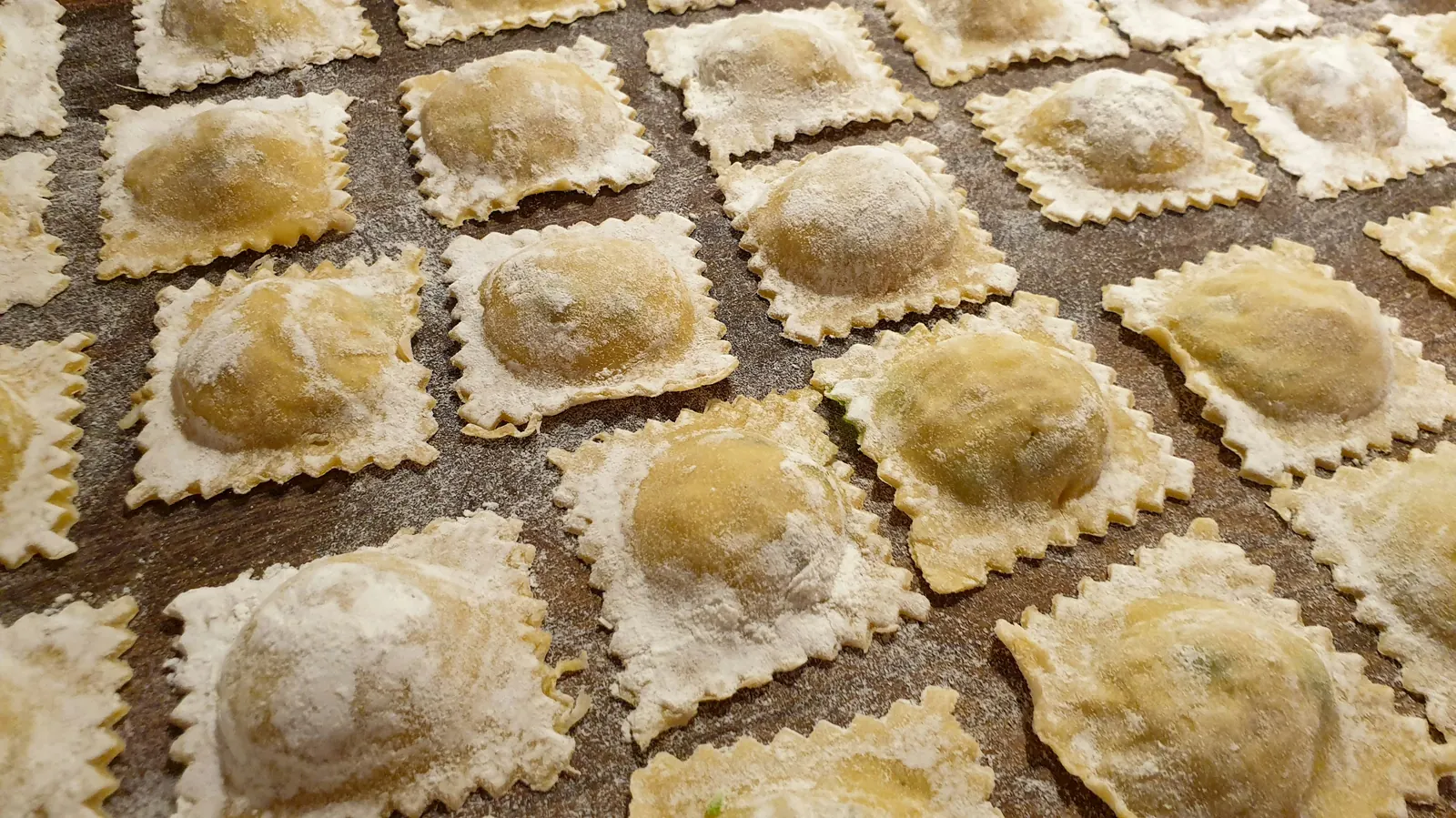
A ravioli mold does the fussy part of filled pasta for you. Lay down a sheet of dough, fill the wells, cover it and roll a pin across the top, and a whole tray of sealed ravioli comes away at once. What used to mean crimping every edge with a fork becomes a single job, once you have the dough ready.
The hard part is that most trays look alike. What really separates them is the size of each ravioli, the number per pass and how much the maker tells you about the materials. This guide sets those out for seven molds from named makers, and it says plainly where the information runs out.
Julia’s earns a commission on purchases made through links on this page, at no cost to you. Recommendations are based on what a working kitchen looks for in a tool and on the makers’ specifications and listing information. We have not used these products ourselves.
Quick verdict: which ravioli mold to buy
The best ravioli mold for most home cooks is the Fante’s 12-Ravioli Maker: its 2-inch squares suit a main course, rubber feet hold it steady, and the maker states what it is made of. If you want solid metal and a pin in the box, choose the Marcato 12 Large Round Ravioli Mold. For the freezer, the Eppicotispai 24-Hole Square Ravioli Mold makes two dozen at a pass.
One caution before you read on: we could not find an independent test kitchen review of any ravioli mold on this page, so the picks rest on the makers’ stated details and on what suits each kind of cook.
Five ravioli molds side by side
Five standout picks, one for each kind of cook, with details as each listing states them. All seven molds are reviewed in full below.
| Ravioli mold | Best for | Makes | Material | Buy on Amazon |
|---|---|---|---|---|

Fante’s 12-Ravioli MakerBest overall
|
Dinner-size ravioli | 12 at 2 inches, square | Aluminum and BPA-free plastic | View on Amazon |

Marcato 12 Large Round Ravioli MoldBest metal mold
|
A metal mold with a pin | 12 at 2.2 inches, round | Die-cast aluminum | View on Amazon |

Eppicotispai 24-Hole Square Ravioli MoldBest for big batches
|
Big batches | 24 at 1-3/4 inches, square | Aluminum | View on Amazon |

CucinaPro XL Ravioli MoldBest jumbo
|
Jumbo ravioli | 10 at 2.5 inches, square | Not stated | View on Amazon |

Imperia Raviolamp 44 Raviolini MoldBest for soup
|
Tiny ravioli for soup | 44 at 5/8 inch | Not stated | View on Amazon |
Product images from Amazon. Specifications are as stated by each maker or listing; check the listing before you buy.
Our picks for the best ravioli mold
Every pick here is a mold or tray that shapes several ravioli at once. Single stamps, cutter wheels, ravioli rolling pins and pasta machine attachments are different tools, so they are left out. All seven come from makers with a recognizable name in pasta or housewares.
1. Fante’s 12-Ravioli Maker – A Dinner-Size Square
This is the mold we would send most home cooks to first, mainly because of its size. Each ravioli is a 2-inch fluted square, large enough to hold a proper spoonful of filling and small enough that a dozen of them make a sensible serving. Fante’s calls this one Grandpa Dante’s Ravioli Maker, and the listing ties the shop’s name to the Italian Market in 1906.
The base is aluminum with a food-safe, BPA-free plastic part, and it measures 12 by 4.5 by 0.75 inches, which is narrow enough to fit in a drawer. Rubber feet stop it from sliding, a small detail that matters when you lean on a rolling pin to cut through two layers of dough.
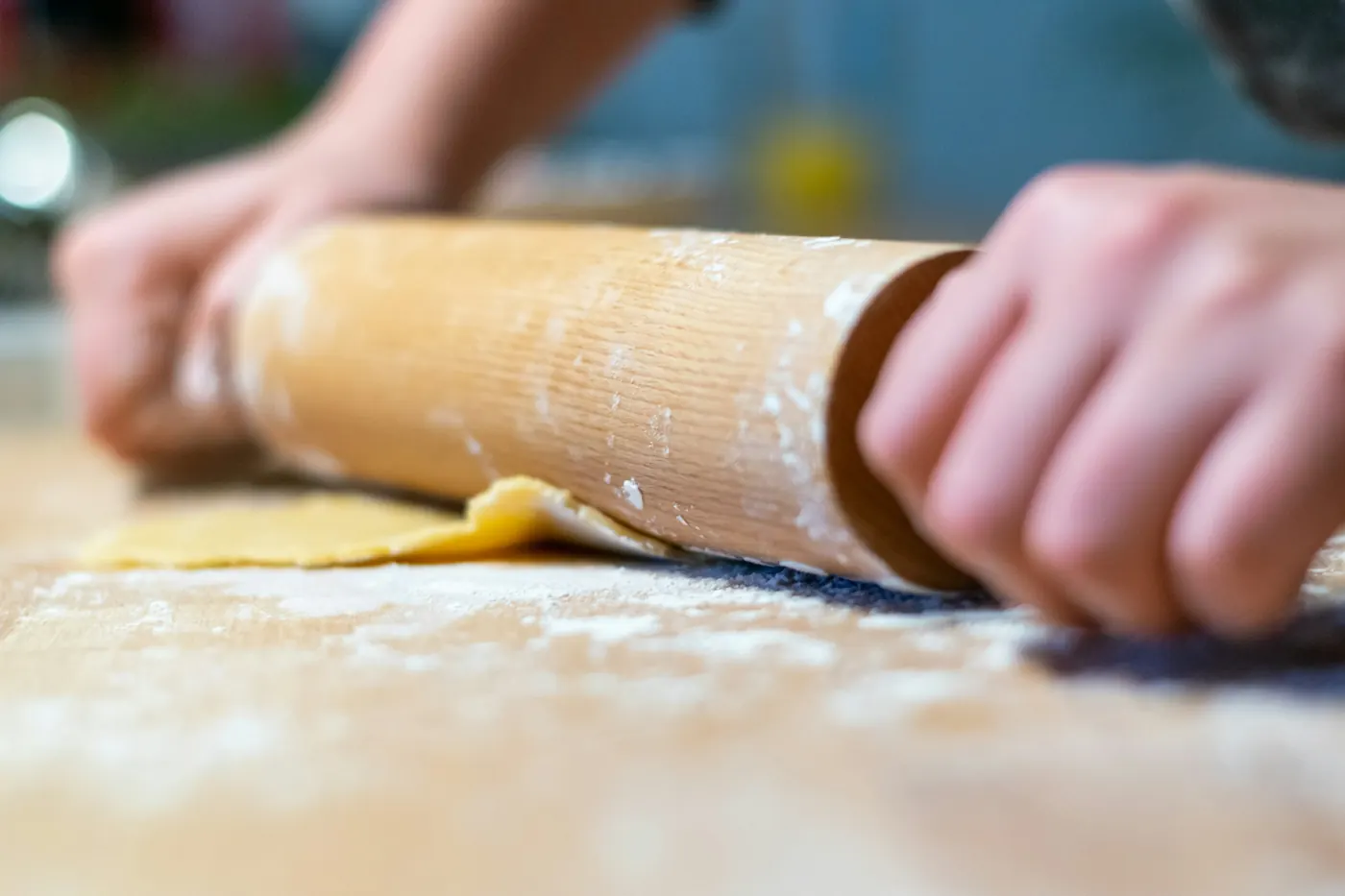
The method is the one nearly every tray uses. Drape a sheet of dough over the base, form the wells, spoon in the filling, lay a second sheet on top, then roll across the top with a pin until the edges seal and cut. You supply the pin. Hand wash it in warm, soapy water.
No test kitchen has reviewed it that we could find, so our case rests on what the maker states. Those statements are fuller than on most trays here, with materials, measurements and care all spelled out.
Why we like it
- 2-inch fluted squares, a good size for a main course
- Non-skid rubber feet hold it still under the pin
- Materials and exact dimensions stated on the listing
- Instructions and Fante’s family recipes included
Key specifications
| Model | 43216 |
|---|---|
| Ravioli per batch | 12 |
| Ravioli size | 2 inches |
| Shape | Fluted square |
| Material | Aluminum and BPA-free plastic |
| Rolling pin included | Not stated; instructions call for a rolling pin |
| Made in | Not stated |
| Care | Hand wash in warm, soapy water |
Why we recommend it
It suits anyone making ravioli for dinner rather than for soup, particularly a first-timer who wants instructions and recipes in the box. The size leaves room for ricotta, squash or braised meat without crowding the seal.
Skip it if you want an all-metal mold with a pin in the box. The Marcato below offers both.
Pros and cons
Pros
- Useful main-course size
- Stays put on the counter
- Clear maker information
Cons
- Rolling pin not listed as included
- Plastic part in the design
- No independent review found
2. Marcato 12 Large Round Ravioli Mold – Die-Cast and Made in Italy
Marcato is the Italian maker behind the Atlas 150, the winner of America’s Test Kitchen’s manual pasta machine review, which is covered in our best pasta maker guide. That review was about the machine and not this mold, but it does show that the name has a real record in pasta.
This is the most solid design on the page. The body is die-cast aluminum, which Marcato describes as a solid food-safe material that gives a clean cut through the pasta sheet, and the listing says it is fully made and assembled in Italy. A solid wood rolling pin comes with it, so there is nothing else to buy.
It makes 12 round ravioli, each 2.2 by 2.2 inches. The title uses the word agnolotti as well as ravioli, and the listing says this mold is one of six styles. Round shapes leave more scrap between the cutouts than squares, so keep the trimmings covered and re-roll them while they are still soft.
Cleaning is different from the other trays. Marcato says to let the pasta residue dry and then remove it with a dry brush, so do not reach for the sink first. Keep a small dry brush with the mold.
Why we like it
- Die-cast aluminum body
- Solid wood rolling pin included
- Made and assembled in Italy
- Large 2.2-inch rounds
Key specifications
| Model | RA-T55X12-CLS |
|---|---|
| Ravioli per batch | 12 |
| Ravioli size | 2.2 by 2.2 inches |
| Shape | Round |
| Material | Die-cast aluminum; solid wood pin |
| Rolling pin included | Yes |
| Made in | Italy |
| Care | Let residue dry, then clean with a dry brush |
Why we recommend it
It suits a cook who makes filled pasta often and wants one heavy metal piece with no plastic parts in the description. It is also an obvious companion to a Marcato pasta machine.
Skip it if you want square ravioli, or you would rather wash a tool than brush it clean. We found no independent review of this mold either.
Pros and cons
Pros
- No separate press listed
- Pin included
- Strong pasta maker behind it
Cons
- Round cuts leave more scrap
- Dry-brush cleaning takes getting used to
- No independent review found
3. Eppicotispai 24-Hole Square Ravioli Mold – Two Dozen in One Pass
This is the mold for a cook who wants quantity from a single pass of the pin. Twenty-four squares, each 1-3/4 by 1-3/4 inches, come out of one sheet of dough, twice what most trays on this page produce.
The listing describes it as made of aluminum for food and 100 percent made in Italy, and it comes with a natural beechwood revolving rolling pin. The word revolving matters: the pin spins on its handles, so your hands stay still while it rolls, which helps when you need even pressure along a long mold.
The trade-off is filling. At 1-3/4 inches each square is small, so this mold suits a fine, smooth filling in a modest amount. A coarse braise or a chunky vegetable mix will crowd the edges and may spoil the seal. Before committing to a full batch, try a few squares to learn how much filling each one takes.
It is a long, solid piece of metal, so check your drawer space before you buy. The listing recommends hand washing.
Why we like it
- 24 ravioli from one pass
- Beechwood revolving rolling pin included
- Aluminum body, made in Italy
- Hand washing is the stated care
Key specifications
| Model | RMSQ-24-AVE |
|---|---|
| Ravioli per batch | 24 |
| Ravioli size | 1-3/4 by 1-3/4 inches |
| Shape | Square |
| Material | Aluminum for food; beechwood pin |
| Rolling pin included | Yes |
| Made in | Italy |
| Care | Hand wash recommended |
Why we recommend it
It suits a family cook who fills the freezer in one session, or anyone making a large meal for guests. Two dozen at a time cuts down the number of passes for a big batch.
Skip it if you like plump, generously filled ravioli. The Fante’s or the CucinaPro XL gives each one far more room.
Pros and cons
Pros
- High output per pass
- Pin in the box
- Made in Italy
Cons
- Small squares limit the filling
- Long mold needs storage room
- No independent review found
4. CucinaPro XL Ravioli Mold – Big 2.5-Inch Squares
If you think of ravioli as something you serve three or four of per plate, this is the tray to look at. Each square measures 2.5 inches, the largest on this page, and the tray makes 10 at a time. CucinaPro is also the name that sells the Imperia pasta machine, so it is a familiar one in home pasta making.
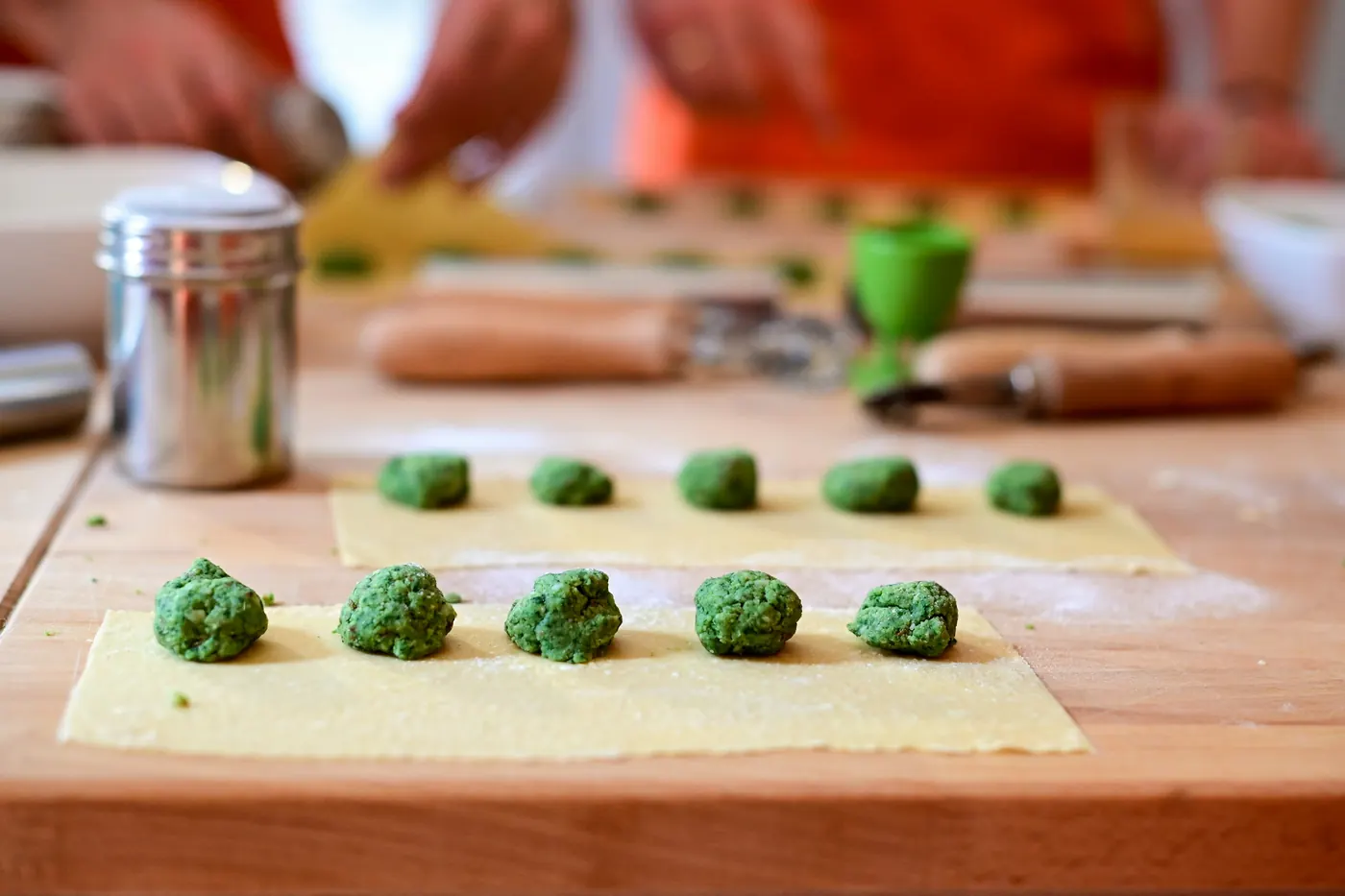
It comes as a tray and press. Lay the dough on the tray, use the press to form the wells, fill them, cover with a second sheet and seal. The listing calls the construction sturdy but does not state the materials, so we list them as not stated and would not assume the tray is all metal.
Big ravioli need a little more care. A larger square has a longer edge to seal and more weight when it hits the water, so keep the filling on the dry side and press out air before you lay the top sheet. Ten jumbo ravioli will not go far, so plan on running the tray a couple of times for a family dinner.
CucinaPro makes a companion tray with smaller 1-3/4 inch squares, sold separately, if you would rather have 12 at a time.
Why we like it
- Largest ravioli on this page, at 2.5 inches
- Tray and press both included
- Room for chunky fillings
- Customer satisfaction guarantee on the listing
Key specifications
| Model | 135-10 |
|---|---|
| Ravioli per batch | 10 |
| Ravioli size | 2.5 inches |
| Shape | Square |
| Material | Not stated |
| Rolling pin included | Not stated |
| Made in | Not stated |
| Care | Not stated |
Why we recommend it
It suits a cook who wants showpiece ravioli with a lot of filling, such as a good spoonful of ricotta and spinach or braised short rib.
Skip it if you want clear material and care information. This listing gives neither.
Pros and cons
Pros
- Very generous size
- Press helps form the wells
- Familiar pasta brand
Cons
- Materials and care not stated
- Only 10 per tray
- No independent review found
5. Imperia Raviolamp 44 Raviolini Mold – Tiny Ravioli for Broth
This is a different kind of mold, and the name says why. Raviolini da brodo are small ravioli meant for broth, and this mold makes 44 of them at once, with a 5/8-inch size given on the listing. Nothing else on this page comes close to that size or that count.
Imperia is the pasta machine name behind one of America’s Test Kitchen’s recommended manual machines. As with the Marcato, that review was of the machine and not this mold, so treat it only as a sign that the maker is a serious one.
The Raviolamp works in the same way as the other forms: place rolled dough over the form, add the filling, then cut and seal. The listing is short. It gives 44 cavities and the size, and it does not say what the mold is made of, whether a pin is included or how to clean it.
Filling 44 tiny wells takes patience, and a small spoon or a piping bag helps. A thin, smooth filling is the only sensible choice at this size. Dropped in a clear broth, these make a light first course.
Why we like it
- 44 small ravioli at once
- A size meant for broth
- From a well-known pasta machine name
- Simple fill, cut and seal method
Key specifications
| Model | Not clearly stated on the listing |
|---|---|
| Ravioli per batch | 44 |
| Ravioli size | 5/8 inch, per the listing |
| Shape | Square |
| Material | Not stated |
| Rolling pin included | Not stated |
| Made in | Not stated |
| Care | Not stated |
Why we recommend it
It suits a cook who already makes broth and wants small filled pasta to serve in it. It is a specialist tool, and a poor choice as your only mold.
Skip it if you want ravioli as a main course, or dislike fiddly filling. The listing is also thin, so confirm what is in the box when it arrives.
Pros and cons
Pros
- Unique small format
- Very high count
- Established pasta name
Cons
- Very little listing information
- Slow to fill
- Too small for a main course
6. Norpro 12-Ravioli Maker with Press – No Pasta Roller Needed
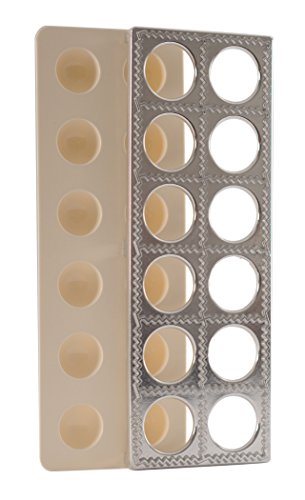
Norpro’s tray is a plain, approachable way to find out whether you enjoy making ravioli. It is a 12-inch tray with a press that makes 12 ravioli of about 1.5 inches, and the listing makes a point of saying that you can roll the dough with your own rolling pin. You do not need a pasta machine to start.
It also comes with recipes for pasta dough and meat-filled ravioli, which helps if this is your first batch. That is more useful than it sounds, because dough that is too soft or too thick causes a lot of ravioli trouble, whichever mold you use.
The listing suggests other uses for the tray, including dumplings such as manti, jiaozi, wontons, samosas, gujiya and kreplach, plus stuffed cookies and two-bite pies. That gives the tray a job outside pasta nights, though the 1.5-inch size keeps everything small.
Material and care are not spelled out, and the color is simply listed as metallic. Wash it by hand and dry it well until you can check the instructions in the box. Norpro also sells a jumbo version that makes 10 larger squares if you decide you want more room.
Why we like it
- Rolling by hand is enough, per the listing
- Dough and filling recipes included
- Listed for small dumplings and stuffed cookies
- 12-inch tray
Key specifications
| Model | 1043 |
|---|---|
| Ravioli per batch | 12 |
| Ravioli size | 1.5 inches |
| Shape | Square |
| Material | Not stated |
| Rolling pin included | No; the listing says to use your own |
| Made in | Not stated |
| Care | Not stated |
Why we recommend it
It suits a curious beginner with no pasta machine, or a cook who likes small filled dumplings of several kinds and wants one tray for all of them.
Skip it if you want generous ravioli for a main course. At 1.5 inches these are small, and the Fante’s gives you more room per piece.
Pros and cons
Pros
- No machine needed
- Recipes included
- Multi-purpose
Cons
- Small squares
- Material and care not stated
- No independent review found
7. Fox Run 10-Ravioli Maker – Serrated Edges for Sauce

This tray is specific about its construction. It is made of aluminum and plastic with a stainless steel blade, weighs 12.8 ounces and measures 12.5 by 5.25 by 1 inches. Few listings on this page go into that much detail.
It makes 10 ravioli of 2 inches each. Press the dough into the form, add the filling, then seal with another sheet of dough. The listing says the serrated edges give each ravioli a sauce-catching rim, which is the appeal of that familiar zigzag border.
Compared with the Fante’s, this tray makes two fewer ravioli at the same stated width. It earns a place because the stated blade and weight are details most trays leave out, and because it gives you a second 2-inch option if the Fante’s is out of stock. The listing also suggests it for pastries and quiches, so it is not limited to pasta.
The listing does not give care instructions. With a blade edge and small grooves, wash it by hand, take care around the cutting edge and dry it well before putting it away. We found no test kitchen review of this tray. Fox Run’s pasta machine landed in America’s Test Kitchen’s Recommended with Reservations group, which tells you nothing direct about this mold.
Why we like it
- Stainless steel blade, per the listing
- Aluminum and plastic build with stated weight
- Serrated edges on 2-inch squares
- Also suggested for pastries and quiches
Key specifications
| Model | 57672 |
|---|---|
| Ravioli per batch | 10 |
| Ravioli size | 2 inches |
| Shape | Serrated square |
| Material | Aluminum and plastic with a stainless steel blade |
| Rolling pin included | Not stated |
| Made in | Not stated |
| Care | Not stated |
Why we recommend it
It suits a cook who wants a mid-size square and likes to know what a tool is made of, or who found our first choice out of stock.
Skip it if you want the highest count at this size. The Fante’s makes 12 squares of the same width.
Pros and cons
Pros
- Good detail on construction
- Practical 2-inch size
- 12.8 ounces, per the listing
Cons
- Fewer ravioli than the Fante’s
- Rolling pin not listed as included
- Care not stated
How to choose a ravioli mold for your kitchen
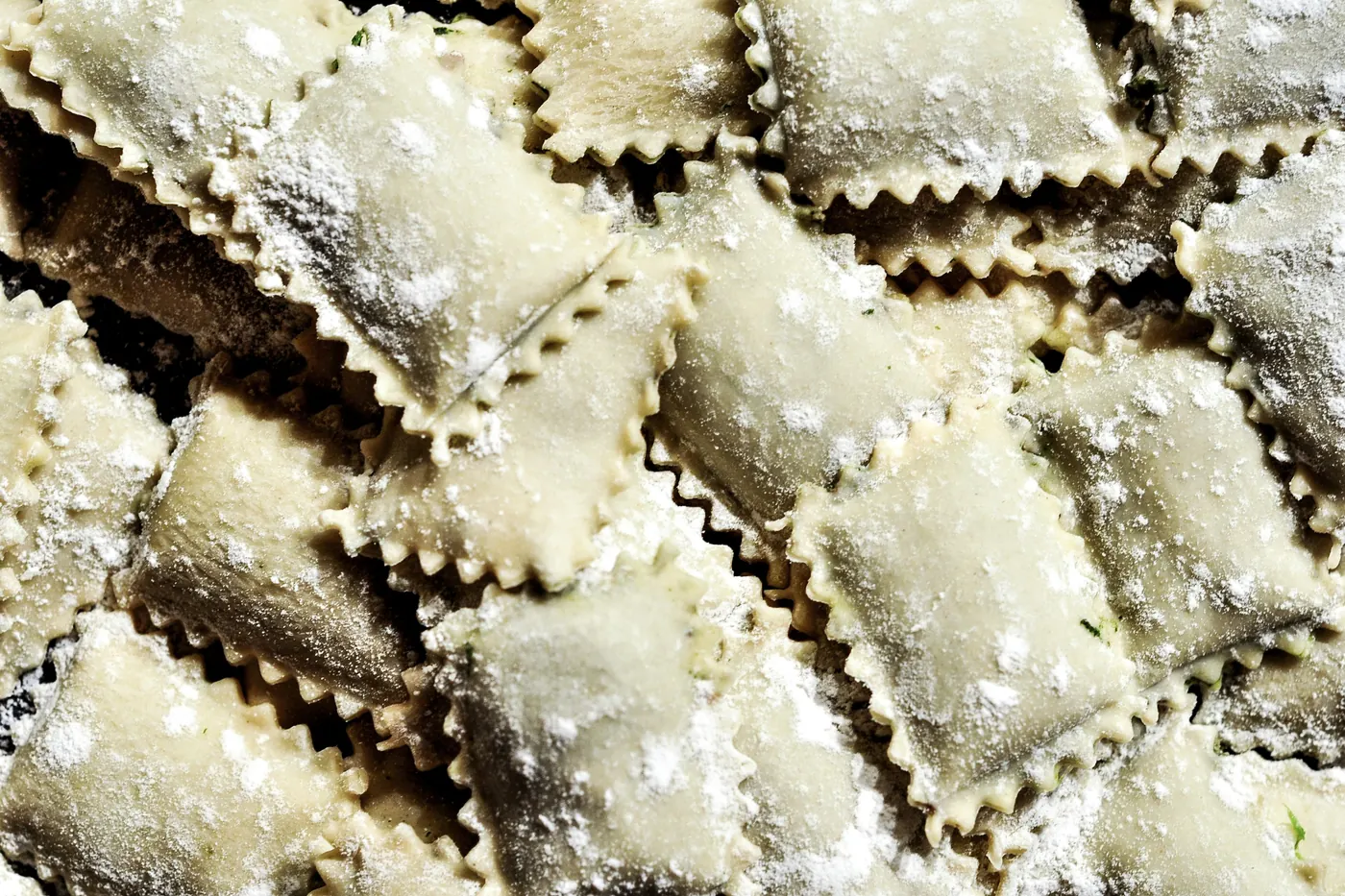
Start with the size of the ravioli. This matters more than anything else. At 5/8 of an inch you have soup pasta, at 1.5 to 1-3/4 inches you have small ravioli for a smooth filling, and at 2 to 2.5 inches you have a main course with room for something chunkier. Think about the filling you actually plan to make and buy for that.
Count what one pass gives you. A tray that makes 10 or 12 needs several passes for a family dinner. That is fine if you enjoy the rhythm, and each pass needs fresh dough sheets. A 24-hole mold saves passes, but its squares are small. No mold on this page gives you both big ravioli and a high count.
Decide between a metal mold with a pin and a tray with a press. The Marcato and Eppicotispai are aluminum molds sold with a pin. The Norpro and CucinaPro are sold with a press, and the Fante’s and Fox Run combine aluminum and plastic. Where no pin is listed, plan to use your own. Check our best rolling pin guide if yours is short, because the pin needs to cover the full width of the mold.
Look at how much the maker tells you. Since this tool touches food, we prefer listings that state the materials. Fante’s, Marcato, Eppicotispai and Fox Run do. CucinaPro, Norpro and Imperia say much less on these listings, which is why their material rows read “Not stated” and why they are not our first choices.
Match the mold to your dough. Any mold works best with thin, even sheets, because two layers meet at every seal. A thick sheet makes a heavy, doughy edge. You can roll by hand, but a machine makes it much easier. Our best pasta maker guide and our best value pasta maker guide both cover the options.
Plan your cleaning. Dough dries in grooves. Fante’s says hand wash, Eppicotispai recommends it, and Marcato wants dried residue brushed away. If the listing is silent, hand wash and dry it well, and keep clear of any cutting edge.
How we picked these seven molds
We have not used these products ourselves. We started from the full run of ravioli molds on Amazon, kept only in-stock items, and read each listing for size, count, materials, origin and care. We then looked for independent reviews. We found retailer comments and affiliate lists but no test kitchen review of any of these molds, so we do not quote any ranking as if it were test data. America’s Test Kitchen’s pasta machine reviews, which we cite above, cover machines from Marcato, Imperia and Fox Run and not their molds.
Because a mold touches food, we did not use sellers known mainly from their Amazon storefront, even though they fill the search results. Seven picks is the honest count: each one differs from the others in size, shape or design. We found no cpsc.gov recall for a ravioli mold from any of these makers after searching the CPSC recall database by brand name.
Ravioli mold questions, answered
How do you use a ravioli mold tray?
Dust the mold with flour, lay a thin sheet of dough over it and form the wells, using the press if one is included. Spoon in the filling, lay a second sheet on top, then roll a pin firmly across until the edges seal and cut. Turn the ravioli out and repeat. Follow the instructions with your own mold, because the details vary.
Do you need a pasta machine to use a ravioli mold?
No. Norpro’s listing says so directly, and a rolling pin does the job. The dough needs to be thin and even, which takes more effort by hand. If you make ravioli often, a machine will save time.
Why do my ravioli stick in the mold?
The usual causes are too little flour, dough that is too soft, or filling that has reached the sealing edge. Flour the mold well, let very soft dough rest for a few minutes uncovered and keep filling in the center of each well. Do not overfill.
Can a ravioli mold make empanadas?
Not full-size ones. The trays here top out at 2.5 inches. Norpro and Fox Run do suggest small pies and pastries, so a tray could make small bites, but none of these listings mentions empanadas. Our guide to Mexican empanadas explains what those are.
How should you store fresh ravioli?
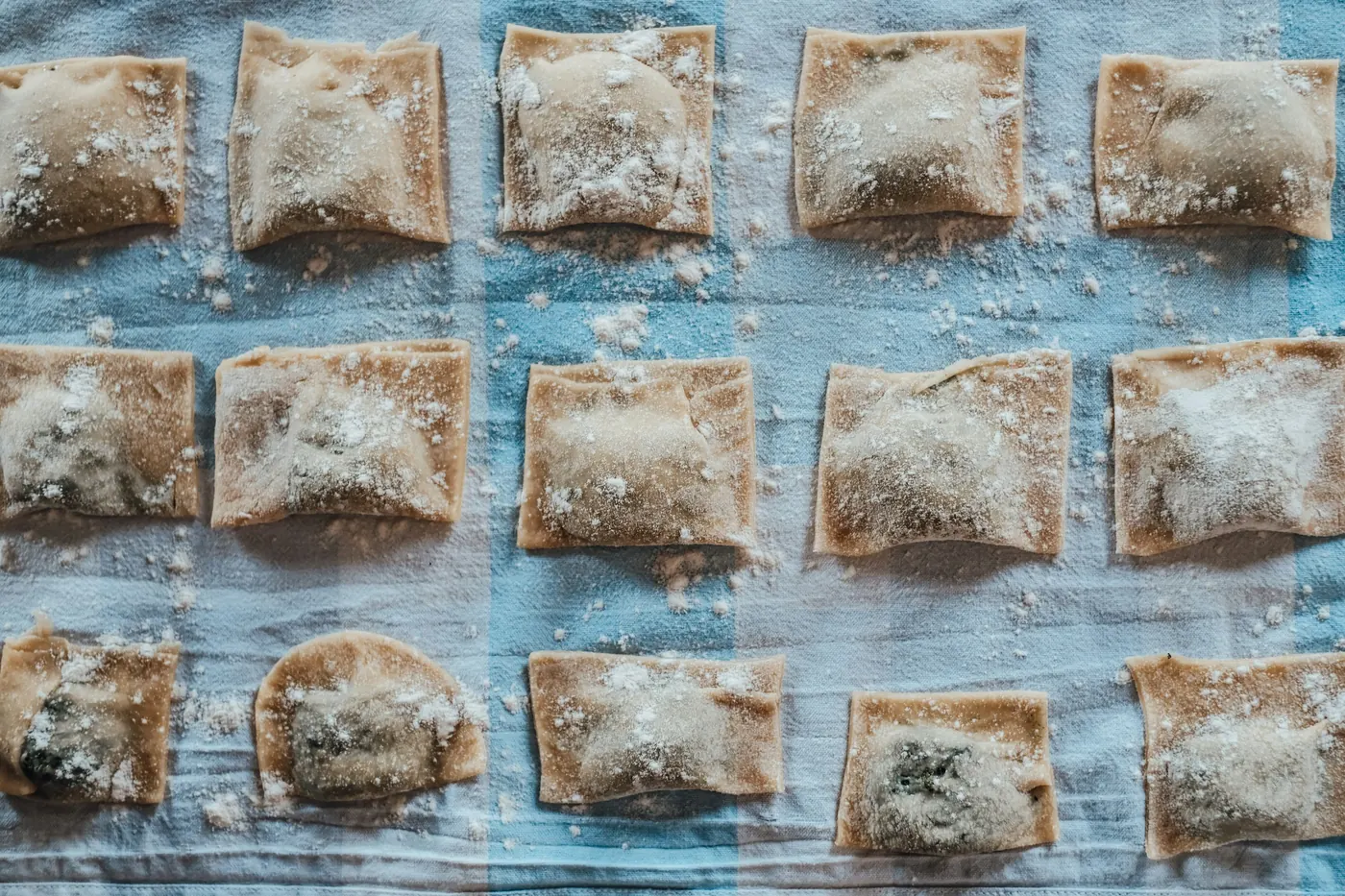
Dust them with flour and keep them in a single layer so they do not stick. Cook them the same day, or freeze them on a tray until firm and then bag them. Cook frozen ravioli straight from the freezer in plenty of gently boiling water.
Our final pick for homemade ravioli
Buy the Fante’s 12-Ravioli Maker if you want one good tray for dinner, and the Marcato if you prefer solid metal with the pin included. Choose the Eppicotispai for big freezer batches, the CucinaPro XL for jumbo ravioli and the Imperia only if you plan to serve them in broth. Whichever you choose, thin dough and a modest spoonful of filling will do more for the result than the mold.
When the ravioli are cooked, lift them out with a slotted spoon, since fresh ravioli are delicate, and save the pasta colander for sturdier shapes. Our guide to the best pasta bowls covers what to serve them in.
Related guide: Best ravioli cutter.
And if you would rather someone else did the cooking tonight, see the menu or call to order.