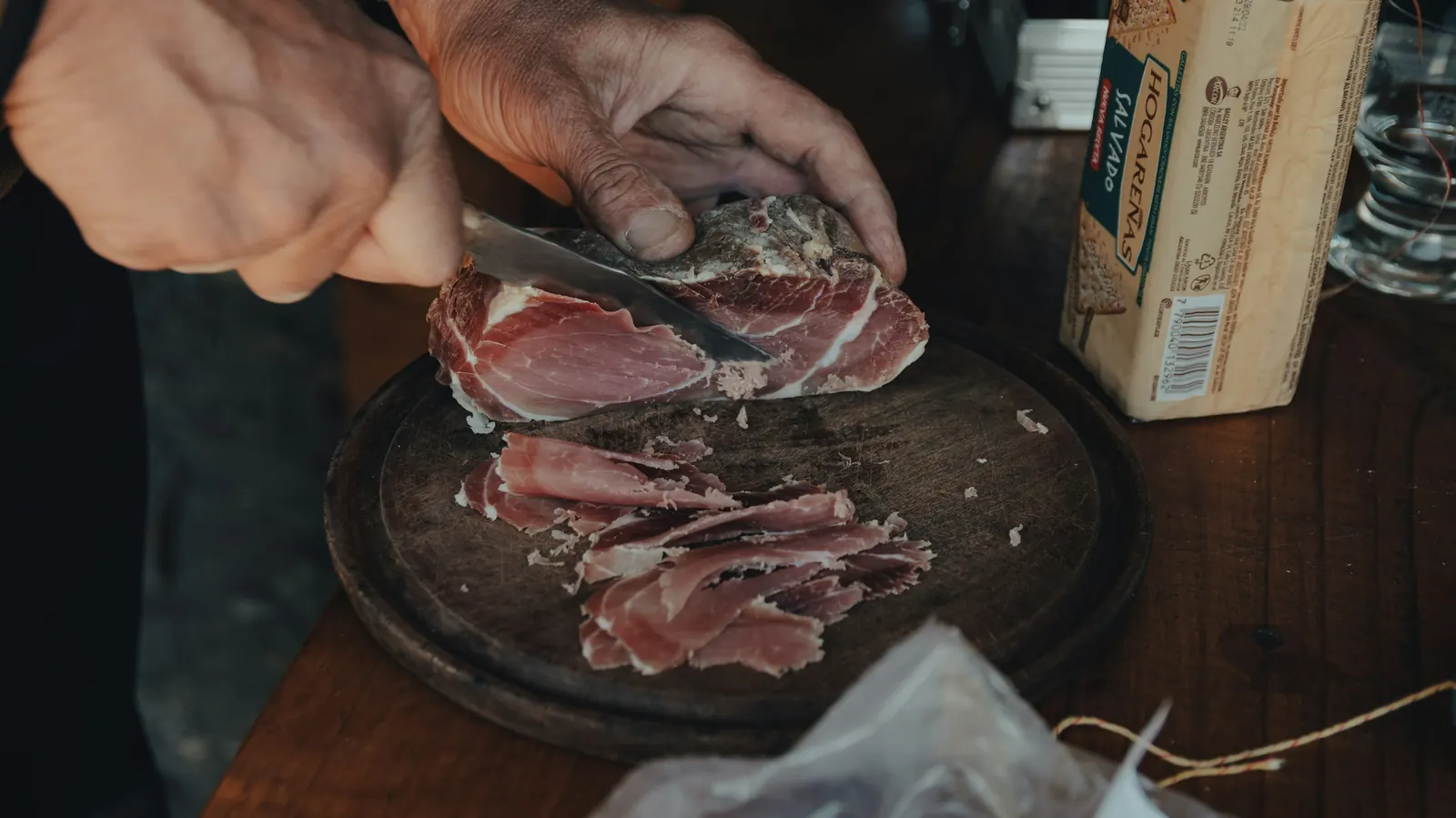
A boning knife earns its place the first time you take a pork shoulder apart for carnitas, pull the thighs off a chicken for tinga or trim the silver skin from a beef roast. It is a narrow, pointed blade that follows the bone instead of fighting it. It does not have to be expensive. Most of the job comes down to a sharp edge, the right amount of flex and a handle that stays put when your hands are greasy.
This guide is for the cook who wants a dependable boning knife from the entry tier of a known maker. Our main guide to the best boning knife covers the top picks, including two Victorinox Fibrox Pro models and a Mercer Millennia; here we look only at other entry-level knives and explain how to judge value when the price is low. None of the knives on this page appear on that guide or on our boning knife for deer guide.
Julia’s earns a commission on purchases made through links on this page, at no cost to you. Recommendations are based on what a restaurant kitchen looks for, product specifications and verified buyer reports.
Quick verdict: which value boning knife to buy
For most kitchens, the best value boning knife is the Victorinox Swiss Classic 6-inch Flexible Boning Knife: a thin, flexible Swiss-made blade, a handle the listing says is NSF approved, and a lifetime warranty against defects. If you want the lowest-cost restaurant-supply knife, choose the Mercer Ultimate White 6-inch Curved Boning Knife; for a firm blade made in the USA, the Dexter-Russell Sani-Safe 6-inch Wide Stiff Boning Knife.
Below are five standouts side by side, all eight knives in detail, and a plain explanation of what a cheaper boning knife gives up and which of those things actually matter at home.
Five value boning knives at a glance
Our five standout knives, one for each kind of cook, with the blade and care details each maker or listing states. All eight are reviewed in full below.
| Knife | Best for | Blade | Care (per maker) | Buy on Amazon |
|---|---|---|---|---|
| Chicken, pork and fish | Narrow, flexible | Not stated in listing | View on Amazon | |
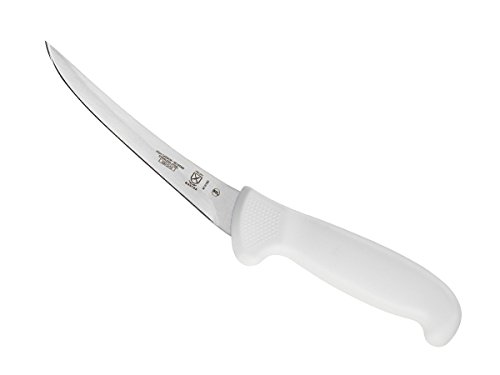
Mercer Ultimate White 6-inch Curved Boning KnifeLowest-cost tier
|
A first boning knife | Curved, Japanese steel | Hand wash only | View on Amazon |

Dexter-Russell Sani-Safe 6-inch Wide Stiff Boning KnifeMade in the USA
|
Pork and beef | Wide, stiff | Not stated in listing | View on Amazon |

Mercer Genesis 6-inch Flexible Boning KnifeBest forged value
|
A heavier, forged feel | Flexible, forged German steel | Hand wash only | View on Amazon |

Wüsthof Gourmet 5-inch Boning KnifePremium maker, entry line
|
Chicken and small cuts | Narrow, curved, stamped | Hand wash only | View on Amazon |
Product images from Amazon. Features and care instructions are as stated by each maker or listing; check the listing before you buy.
Our picks for the best value boning knife
These eight knives come from established cutlery makers, and most are the lowest tier of each maker’s range. They cover the choices that matter at this level: flexible or stiff, straight or curved, stamped or forged, plastic or wood. Each pick explains who it suits, the specifications that matter and one honest reason to skip it.
1. Victorinox Swiss Classic 6-inch Flexible Boning Knife – Thin, Flexible and Swiss Made

This is the boning knife from Victorinox’s Swiss Classic range, a separate series from the Fibrox Pro knives on our main boning knife page. The listing describes a thin blade with extra flexibility that is meant for separating meat, poultry or fish from the bone, and says the handle is NSF approved and shaped to reduce wrist strain. The knife ships with the number 6.8413.15 on the blade, which the listing says is the same 6-inch Swiss Classic boning knife.
Flex matters more than anything else in a boning knife. America’s Test Kitchen, in its review of flexible boning knives, says a boning knife “has to have a certain degree of give” so it can bend around bones, cartilage and joints, and it preferred moderate flexibility and slender, textured handles. This knife is built to that pattern: a narrow blade, a slim synthetic handle and a straight spine that is easy to guide.
Victorinox has made knives in Switzerland since 1884, according to the listing, and backs this one with a lifetime warranty against defects in material and workmanship. Retailer listings describe the blade as stamped high-carbon stainless steel. The Amazon listing does not give care instructions, so wash it by hand and dry it straight away.
Why we like it
- Thin, flexible blade for working around joints
- NSF-approved handle, per the listing
- Swiss made, per the listing
- Lifetime warranty against defects
Key specifications
| Model | 6.8413.15B |
|---|---|
| Blade length | 6 in |
| Flex and shape | Flexible, narrow |
| Steel | High-carbon stainless (retailers) |
| Construction | Stamped (retailers) |
| Handle | Synthetic, NSF approved |
| Care | Not stated in listing |
| Warranty | Lifetime, manufacturer defects |
Why we recommend it
Choose it if you want one boning knife for chicken thighs, pork shoulder and the occasional fish, from a maker with a long professional record and a clear warranty. It is the closest match on this page to what America’s Test Kitchen looked for.
Skip it if you mostly trim big beef cuts and want a firmer blade; the Dexter-Russell stiff knife below suits that better.
Pros and cons
Pros
- Flexible blade follows bones closely
- Slim, grippy synthetic handle
- Lifetime warranty
Cons
- Care instructions not in the listing
- Listing mixes Swiss Classic and Fibrox wording
2. Mercer Ultimate White 6-inch Curved Boning Knife – Restaurant Basic, Japanese Steel
Ultimate White is Mercer Culinary’s most basic line, and Mercer itself describes it as made “for the value minded kitchen”. This 6-inch boning knife has a curved blade of high-carbon Japanese steel, which Mercer says is easy to keep sharp. The listing names the jobs plainly: deboning chicken, ham and fish, and trimming fat and sinew.
The white handle has textured finger points for a non-slip grip. It is the kind of knife restaurant-supply stores sell by the dozen, and the curved blade gives you a bit more sweep when you peel meat off a long bone, such as a pork loin or a leg of lamb. America’s Test Kitchen had a slight preference for straighter blades but noted that curved blades “had their fans, too”.
Mercer is clear about care: wash by hand with warm water and mild soap, dry with a soft towel, and do not put it in the dishwasher or leave it soaking. The listing does not state a warranty or whether the blade is flexible or stiff.
Why we like it
- High-carbon Japanese steel, per Mercer
- Textured, non-slip handle
- Curved blade for long bones
- Clear care instructions from the maker
Key specifications
| Model | M18180 |
|---|---|
| Blade length | 6 in |
| Flex and shape | Curved; flex not stated |
| Steel | High-carbon Japanese steel |
| Construction | Not stated |
| Handle | White, textured |
| Care | Hand wash only |
| Warranty | Not stated |
Why we recommend it
Choose it if you want to try boning your own chicken and pork without much outlay, or want a spare knife for raw meat only. It is a plain tool from a foodservice maker, which is exactly what this job needs.
Skip it if you want a stated warranty or a known level of flex; the Victorinox gives you both.
Pros and cons
Pros
- Mercer’s entry line, built for daily kitchen use
- Curved blade for long cuts
- Grippy textured handle
Cons
- Flex and warranty not stated
- Not dishwasher safe
3. Dexter-Russell Sani-Safe 6-inch Wide Stiff Boning Knife – Firm, NSF Certified, Made in the USA
Dexter-Russell is an American food-service cutlery maker, and Sani-Safe is its plain, white-handled working line. This model, S136PCP (sold on Amazon under catalog number 01523), is the wide version of Dexter’s 6-inch Sani-Safe boning knife, and the Amazon title describes it as stiff.
A stiff, wide blade is the better choice for pork shoulder and beef, where you push through connective tissue rather than bend around a small bone. Food-service retailer Boelter lists the S136PCP as a 6-inch stamped, straight-edge, pointed-tip boning knife with a stain-free high-carbon steel blade and a polypropylene handle, NSF certified and made in the USA.
One caution: the Amazon listing itself gives almost no detail beyond the name, size and white handle, so the specifications here come from food-service retailers. The listing does not state care instructions or a warranty; wash it by hand and dry it straight away.
Why we like it
- Made in the USA, per retailers
- NSF certified for commercial kitchens
- Stiff, wide blade for pork and beef
- Plain white polypropylene handle
Key specifications
| Model | S136PCP (01523) |
|---|---|
| Blade length | 6 in |
| Flex and shape | Stiff, wide, straight edge |
| Steel | Stain-free high-carbon steel (retailer) |
| Construction | Stamped (retailer) |
| Handle | White polypropylene |
| Care | Not stated in listing |
| Warranty | Not stated |
Why we recommend it
Choose it if you break down pork shoulder for carnitas or beef for stews and want a firm, NSF-certified knife made in the USA. It is the plainest knife here and one of the most practical.
Skip it if you mostly bone chicken or fish; a stiff blade will not bend around a breastbone the way a flexible one does.
Pros and cons
Pros
- Firm blade for pork and beef
- Made in the USA
- NSF certified
Cons
- Too stiff for delicate fish
- Very little detail in the Amazon listing
4. Mercer Genesis 6-inch Flexible Boning Knife – A Forged Blade for Less
Genesis is Mercer’s forged line, a step up from Ultimate White and the least elaborate way on this page to get a forged blade. According to the listing, the blade is precision-forged from high-carbon German steel with a taper-ground edge, and the knife is flexible. Forging gives a slightly heavier knife with a bolster where the blade meets the handle, which some cooks find steadier in the hand.
Mercer calls the handle “the finest handle in forged cutlery” and says it stays non-slip with wet hands, which matters when you are working with raw chicken or pork fat. The listing names the same jobs as the Ultimate White: deboning chicken, ham and fish, and trimming fat and sinew. Mercer gives this knife a lifetime limited warranty.
Care is hand wash only. Mercer says to wash it with warm water and mild soap, dry it completely and keep it out of the dishwasher. That is good practice for any knife on this page.
Why we like it
- Forged high-carbon German steel
- Flexible blade with a taper-ground edge
- Non-slip handle when wet, per Mercer
- Lifetime limited warranty
Key specifications
| Model | M20206 |
|---|---|
| Blade length | 6 in |
| Flex and shape | Flexible |
| Steel | High-carbon German steel |
| Construction | Forged |
| Handle | Black, non-slip |
| Care | Hand wash only |
| Warranty | Lifetime limited |
Why we recommend it
Choose it if you like the weight and bolster of a forged knife but do not want to pay for a premium German name. It suits cooks who already own a forged chef’s knife and want a boning knife that feels similar.
Skip it if you want the lightest possible knife; the stamped Victorinox and Mercer Ultimate White are lighter by design.
Pros and cons
Pros
- Forged construction at an entry-level price tier
- Flexible blade
- Stated lifetime limited warranty
Cons
- Hand wash only
- Heavier style than the stamped knives
5. Wüsthof Gourmet 5-inch Boning Knife – Solingen Steel in the Entry Line
Gourmet is Wüsthof’s stamped, entry-level line: laser-cut blades rather than the forged blades of its Classic range. This 5-inch boning knife has a long, narrow, curved blade that the listing says moves cleanly along bones in pork, beef or chicken. The blade is high-carbon stainless steel, and retailers list its hardness at 56 HRC.
The handle is synthetic polypropylene that Wüsthof says resists fading, discoloration, heat and impact. The knife is made in Germany and carries the Solingen name, which Wüsthof says is reserved for products that meet strict quality standards. It comes with a limited lifetime warranty.
At 5 inches it is the shortest knife on this page, which makes it nimble on chicken and small cuts but a little short for a whole pork shoulder. Wüsthof says it is hand wash only.
Why we like it
- Made in Solingen, Germany
- Narrow curved blade follows bones
- Durable synthetic handle
- Limited lifetime warranty
Key specifications
| Model | 1025046114 |
|---|---|
| Blade length | 5 in |
| Flex and shape | Narrow, curved; flex not stated |
| Steel | High-carbon stainless |
| Construction | Laser-cut, stamped |
| Handle | Synthetic polypropylene |
| Care | Hand wash only |
| Warranty | Limited lifetime |
Why we recommend it
Choose it if you want a knife from a premium German maker without paying for a forged blade, and you mostly bone chicken and smaller cuts.
Skip it if you want a 6-inch blade for big roasts; every other knife here is longer.
Pros and cons
Pros
- German-made, Solingen steel
- Nimble short blade
- Limited lifetime warranty
Cons
- Shortest blade here
- Flex not stated
6. Henckels Classic 5.5-inch Boning Knife – Forged and Dishwasher Safe

Henckels is Zwilling’s value brand, and Classic is its fully forged range. Zwilling’s product page lists this boning knife as made in Spain from German stainless steel, with a triple-rivet handle. The listing describes a satin-finished blade that is finely honed and light in the hand, for cutting and trimming all kinds of meat.
It is the only knife on this page whose listing says it can go in the dishwasher, and the listing calls the blade stain and rust free. Hand washing is still kinder to any edge. Henckels gives a lifetime warranty against manufacturer defects.
The listing does not say whether the blade is flexible or stiff, and at 5.5 inches it sits between the short Wüsthof and the 6-inch knives.
Why we like it
- Fully forged, per the listing
- Dishwasher safe, per the listing
- Triple-rivet handle
- Lifetime warranty against defects
Key specifications
| Model | 31168-161 |
|---|---|
| Blade length | 5.5 in |
| Flex and shape | Not stated |
| Steel | German stainless (maker) |
| Construction | Fully forged |
| Handle | Triple rivet |
| Care | Dishwasher or hand wash |
| Warranty | Lifetime, manufacturer defects |
Why we recommend it
Choose it if you want a forged knife that matches a Henckels set and you value being allowed to use the dishwasher.
Skip it if you need a clearly flexible blade for fish; the listing does not state the flex.
Pros and cons
Pros
- Forged blade and riveted handle
- Dishwasher use allowed
- Lifetime warranty
Cons
- Flex not stated
- Heavier style than stamped knives
7. Winco Sof-Tek 6-inch Curved Boning Knife – Soft Grip for Long Prep Sessions

Winco is a restaurant-supply brand, and Sof-Tek is one of its working knife lines. This 6-inch curved boning knife has a blade of X50CrMoV15 German steel, according to the listing, and a soft, slip-resistant handle in black and blue. Winco says it is commercial grade and built for daily use in foodservice, and the knife is NSF listed.
The soft handle is the reason to choose it. America’s Test Kitchen liked textured, rubbery handles on boning knives, and food-service retailers describe this one as a TPR soft grip that stays secure in wet or greasy conditions. Restaurant-supply listings describe the blade as thin and flexible, though the Amazon listing does not state the flex.
The listing does not give care instructions or a warranty. Retailers disagree on whether it is stamped or full tang, so we list construction as not stated.
Why we like it
- Soft, slip-resistant handle
- X50CrMoV15 German steel, per the listing
- NSF listed
- Curved blade for long bones
Key specifications
| Model | KSTK-60 |
|---|---|
| Blade length | 6 in |
| Flex and shape | Curved; flexible (retailers) |
| Steel | X50CrMoV15 German steel |
| Construction | Not stated |
| Handle | Soft grip, black and blue |
| Care | Not stated in listing |
| Warranty | Not stated |
Why we recommend it
Choose it if you bone a lot of meat at once, for a big batch of carnitas or a party’s worth of chicken, and want a handle that is easy on your hand.
Skip it if a stated warranty matters to you; Winco’s listing does not give one.
Pros and cons
Pros
- Comfortable soft grip
- Commercial-grade, NSF listed
- Common German knife steel
Cons
- Care and warranty not stated
- Construction details conflict between retailers
8. imarku 6-inch Boning Knife – Pakkawood Handle and a Gift Box

imarku is a brand sold mainly on Amazon, and this is its 6-inch boning and fillet knife. The listing says the blade is high-carbon German stainless steel at 56 Rockwell hardness, narrow and balanced for close-to-bone slicing, and suited to deboning, filleting, skinning, trimming and butterflying.
The handle is Pakkawood, a resin-bonded wood, and the listing says it is FSC certified. It is the only wood-look handle on this page and the one most likely to be bought as a gift; it comes in a gift box. imarku offers a satisfaction refund policy rather than a stated lifetime warranty.
The listing recommends hand washing and says the dishwasher may damage the edge. The flex is not stated, though the listing names filleting fish among its uses.
Why we like it
- 56 HRC German stainless, per the listing
- FSC-certified Pakkawood handle
- Handles both meat and fish, per the listing
- Gift box
Key specifications
| Model | P6 |
|---|---|
| Blade length | 6 in |
| Flex and shape | Narrow; flex not stated |
| Steel | High-carbon German stainless, 56 HRC |
| Construction | Not stated |
| Handle | Pakkawood |
| Care | Hand wash recommended |
| Warranty | Satisfaction refund policy |
Why we recommend it
Choose it if you want a boning knife with a wood-style handle, or a ready-to-give gift for a cook who is starting to butcher at home.
Skip it if you want a maker with a long cutlery history and a written lifetime warranty; the knives above offer both.
Pros and cons
Pros
- Stated steel hardness
- Attractive wood-style handle
- Gift-ready packaging
Cons
- Amazon-first brand with a short record
- Refund policy, not a lifetime warranty
How to judge value in an inexpensive boning knife
We do not quote prices, because they change daily. Instead, here is what you give up compared with the knives on our main boning knife page, and which of those things matter.
- Stamped instead of forged. Most entry-level boning knives are stamped from a sheet of steel. That makes them lighter, which is no handicap in a boning knife; America’s Test Kitchen’s Best Buy, the Victorinox Fibrox Pro, is stamped too.
- Plain handles. Plastic and rubbery handles cost less than wood or polished composites, but they grip better with chicken fat on your hands. This is one area where cheaper can be better.
- Less said about the steel. Budget listings often skip hardness and flex. We marked anything missing as not stated. A knife that names its flex is easier to choose than one that does not.
- Warranty. Victorinox, Henckels, Mercer Genesis and Wüsthof state lifetime or limited lifetime warranties. A clear warranty is a good sign a maker expects its least expensive knife to last.
- Replacement and sharpening. Restaurant-supply makers such as Mercer, Dexter-Russell and Winco keep the same models in their catalogs for years, so a worn-out knife is easy to replace with the same one. Any of these can be resharpened with an ordinary sharpener.
How to choose a boning knife on a budget
1. Flexible or stiff
Flexible blades bend around chicken breastbones, joints and fish frames. Stiff blades push through pork shoulder and beef. America’s Test Kitchen preferred moderate flex for general home use. If you cook mostly pork and beef, choose stiff; if mostly chicken and fish, choose flexible.
2. Straight or curved
A straight blade is easier to control at the tip; a curved one sweeps along long bones. America’s Test Kitchen had a slight preference for straighter blades but called the choice personal.
3. Blade length
Five to six inches covers almost every home job. A 5-inch knife is nimble on chicken; a 6-inch knife reaches across a pork shoulder or a leg of lamb.
4. A handle that holds when greasy
Look for textured synthetic handles, a finger guard or a bolster. America’s Test Kitchen liked slender, rubbery handles that are easy to hold in different grips.
5. Care you will actually do
Most makers here say hand wash only. Wash the knife in hot, soapy water after raw meat, dry it and store it where the edge will not knock against other tools. Keep it sharp with a honing steel or one of the tools in our knife sharpener guide.
How we chose these eight knives
We started with the boning jobs a Mexican home kitchen actually does: pulling apart pork shoulder for carnitas, boning chicken thighs for tinga, trimming beef for stews and taking the bone out of a pork loin before it goes on the grill. We then looked at the entry tier of each established cutlery maker with a boning knife in stock on Amazon in the United States, and read each listing for the blade, flex, steel, construction, handle, care instructions and warranty. We cross-checked model details against maker pages and food-service retailers, and used America’s Test Kitchen’s published review of flexible boning knives for what makes a boning knife work.
We left out every knife already recommended on our best boning knife, deer and fish knife set guides, as well as knives that were in short supply when we checked and sellers with no identifiable maker. We checked the U.S. Consumer Product Safety Commission’s recall database for each brand on this page and found no boning knife recalls. We have not used these knives ourselves; where we describe how a feature performs, we say whose findings those are.
Value boning knife questions, answered
What is the best boning knife on a budget?
For most cooks, the Victorinox Swiss Classic 6-inch Flexible Boning Knife: a thin, flexible Swiss-made blade, a grippy handle and a lifetime warranty, according to the listing. The Mercer Ultimate White is the plainest low-cost alternative.
Are cheap boning knives worth buying?
Yes, if they come from a known maker. A boning knife does not need fancy steel or a forged bolster, and America’s Test Kitchen named a stamped Victorinox among its Best Buys. Spend your money on the right flex and a good handle, not on looks.
What should I expect from a boning knife on a small budget?
A stamped high-carbon stainless blade, a plastic or rubbery handle, hand-wash care and, from the better makers, a lifetime or limited lifetime warranty. Expect fewer details in the listing about steel hardness and flex.
Do I need a flexible or a stiff boning knife?
Flexible for chicken and fish, stiff for pork and beef. If you can only buy one, a moderately flexible 6-inch blade is the most versatile choice.
Can a boning knife go in the dishwasher?
Only the Henckels Classic here is listed as dishwasher safe. Mercer and Wüsthof say hand wash only, and hand washing is better for every knife on this page.
Our final pick for a value boning knife
Buy the Victorinox Swiss Classic 6-inch Flexible Boning Knife if you want one inexpensive knife for chicken, pork and fish, backed by a lifetime warranty. Choose the Dexter-Russell Sani-Safe stiff knife for pork and beef, and the Mercer Genesis if you want a forged blade for less. Whatever you choose, keep it sharp and wash it by hand.
If you would rather spend more, our main guide to the best boning knife covers the top picks. For a dish that starts with a well-trimmed pork shoulder, read our explainer on al pastor.
And if you would rather someone else did the butchering tonight, see the menu or call to order.