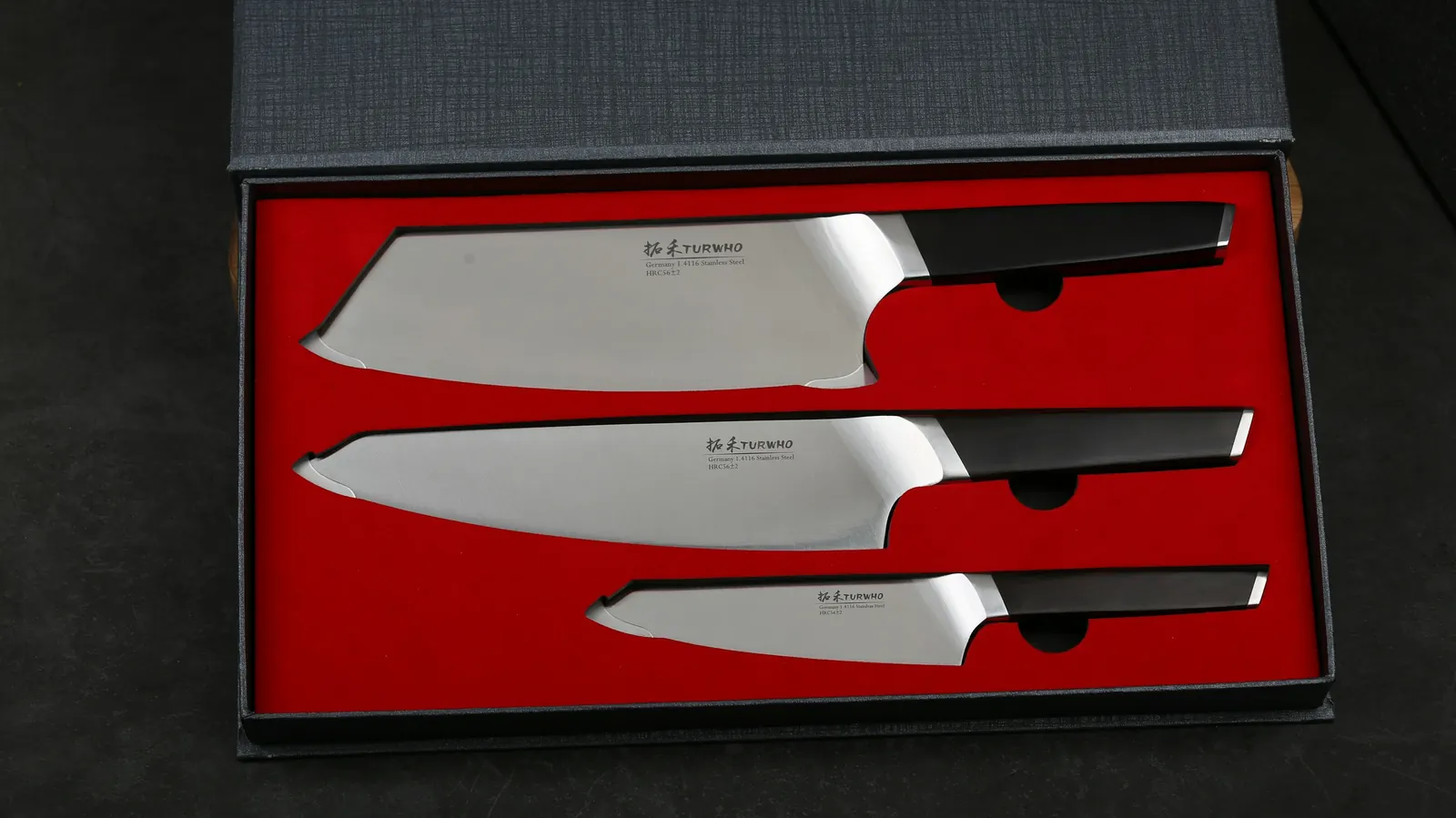
A knife block set looks like the sensible way to equip a kitchen: one box, one block, every knife you could need. Buying knives one at a time looks slower and fussier. In practice most cooks reach for the same two or three knives every day, and the rest of a big set sits in the block. That is the real question behind set or individual knives: how many of the pieces in the box will you use?
A restaurant line runs on very few knives: a chef’s knife for nearly everything, a serrated knife for bread and tomatoes, and a small knife for close work. Cooks pick each one for the job and replace them one by one. This guide compares buying a set with building your own on which knives matter, quality, cost, storage and care, then names one set and two individual knives as examples.
Julia’s earns a commission on purchases made through links on this page, at no cost to you. Recommendations are based on what a restaurant kitchen looks for, product specifications and verified buyer reports.
Quick verdict: set or individual knives?
For most home cooks, build your own. Buy a good chef’s knife, a bread knife and a paring knife, the three that America’s Test Kitchen says cover most tasks, and add a block or strip to hold them. You get the best knife of each kind, often from different makers, and nothing you will not use. Buy a set if you are stocking a kitchen from nothing, want matching knives with shears and a steel in one purchase, and can find one that includes a full-size chef’s knife and a bread knife.
The table sums up the differences. The sections after it explain each one.
Knife set vs individual knives, side by side
| Knife block set | Individual knives | |
|---|---|---|
| What you get | A fixed mix chosen by the maker, often with shears, a steel and a block | Only the knives you choose |
| Quality of each knife | Even across the set, strong and weak pieces together | The best of each type, from any maker |
| Pieces you will rarely use | Often several (ATK) | None |
| Cost | Can save money; ATK found savings up to 38 percent, but some sets cost more than their knives bought separately | Lower to start; you can spread it out |
| Storage | Block included | Buy a block, strip or in-drawer tray |
| Matching look | Yes | Usually not |
| Best for | Stocking a first kitchen in one go; gifts | Most cooks, and anyone upgrading |
The knives you will actually use
America’s Test Kitchen has reviewed knife block sets for years. Lisa McManus’s current review says its top sets include a chef’s knife, a serrated bread knife and a paring knife, and that those three cover most tasks. Its winner is not a 15-piece block at all, but a four-piece Victorinox set: an 8-inch chef’s knife, a 10.25-inch bread knife, a 6-inch utility knife and a 4-inch paring knife.
In a Mexican home kitchen that matches the work. The chef’s knife does the onions, cilantro, chiles and garlic for salsa, the carne asada and the chicken. The bread knife slices bolillos and teleras and, because a serrated edge bites through skin, ripe tomatoes. The paring knife seeds jalapeños, peels and trims. A utility knife is handy but optional. Steak knives are for the table, not the board.
That leaves most of the pieces in a large set: several small paring and trimming knives, a slicer, a santoku, a boning knife and six or eight steak knives. Some cooks use them. Many never do.
Quality: one maker rarely makes the best of everything
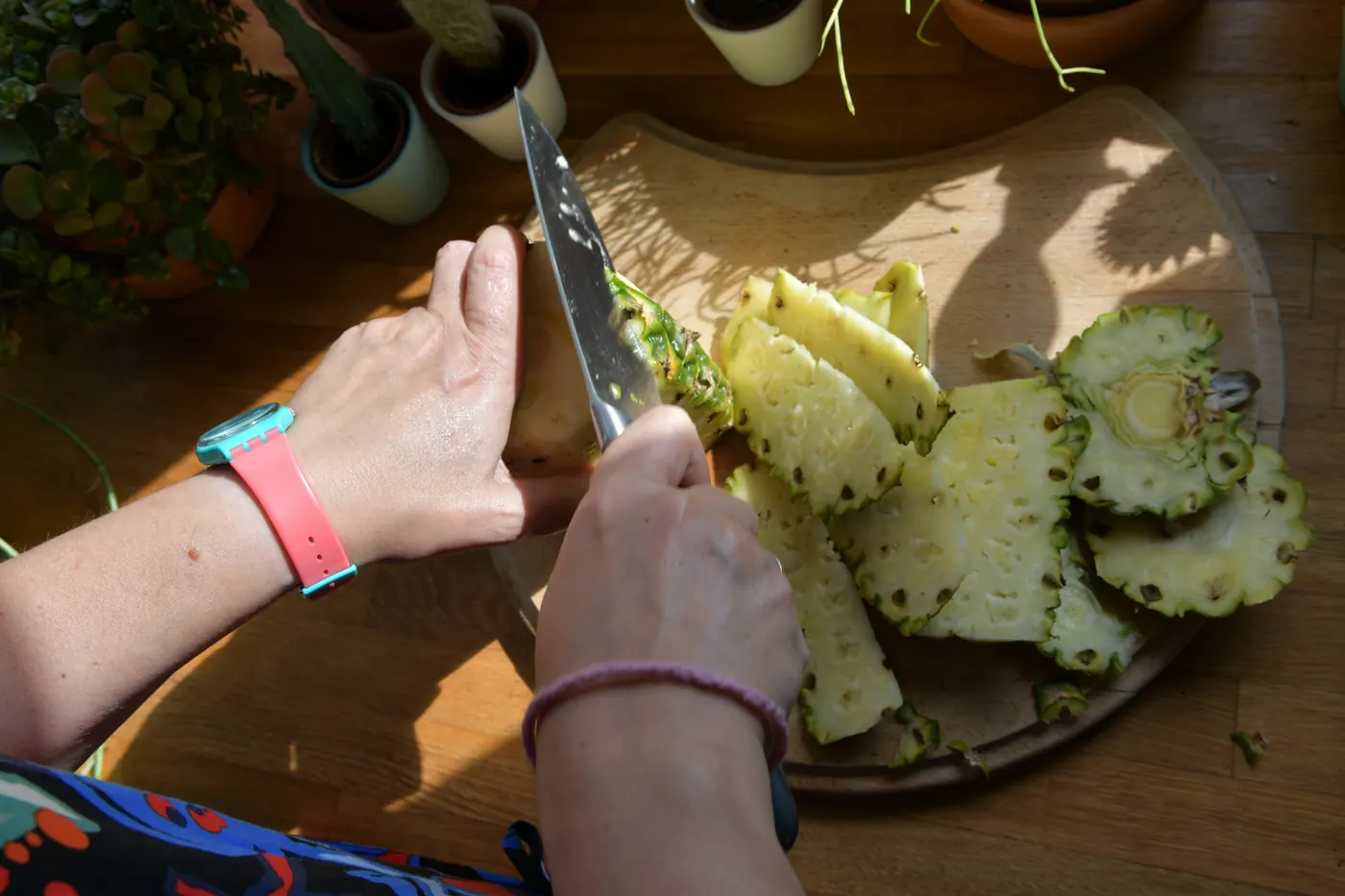
This is the strongest case for building your own. ATK says the best knife in each category usually comes from a different brand, so one maker’s set rarely holds the best of every type; its winners “inevitably come from different brands.” A set gives you one maker’s chef’s knife, one maker’s bread knife and one maker’s paring knife, whether or not those are the ones you would choose separately.
ATK also warns about padding. It says some sets are built to dazzle with a high piece count and a low price, and that it would rather skip sets that add weak extras “just to plump up the piece count.” It names mediocre shears and short honing steels among the filler; one set’s 8-inch steel did a so-so job, while its winning steel is 12 inches.
The other risk is a set that leaves out what you need. Read the contents before you buy. Wüsthof’s Gourmet 10-piece block set, for example, lists a 6-inch chef’s knife and no bread knife, according to its listing, while the same maker’s Gourmet 11-piece set lists an 8-inch chef’s knife and an 8-inch bread knife. One piece apart in count, same series, same German maker; only one has a full-size chef’s knife and a bread knife.
Cost: sets can save money, but not always
Without quoting prices, ATK’s math is the useful part. It found that buying a set can save money, with savings as high as 38 percent compared with buying the same knives separately. It also found sets that cost more than their pieces bought one by one. So a set is a bargain only if you would have bought most of its pieces anyway.
Building your own costs less up front, because you start with one knife. ATK quotes Josh Donald’s advice: pick the knives that will be most crucial with the budget you have. A first-rate chef’s knife alone does more work than a block of average knives. You can add the bread knife and the paring knife over the following months.
The cost to watch is the cheap, large set. Twenty pieces for the price of one good chef’s knife usually means twenty average knives, and ATK says owning a few good knives beats a block of subpar ones.
Storage: the block is not the point
A set’s block is part of its appeal, and it does keep the knives together. ATK says blocks are not essential, notes that most sets in its lineup came without one, and says it dislikes traditional wooden blocks that give you a row of nearly identical handles and a guessing game.
If you build your own, you choose the storage too. A universal block with flexible slots, a magnetic strip or an in-drawer tray all hold three or four knives safely. Our knife block vs magnet guide compares the two main options, and our universal knife block guide covers blocks that take knives from any maker.
Care: the same rules either way
Knife care does not depend on how you buy. Zwilling says its knives are dishwasher safe but recommends hand washing; Wüsthof lists its Gourmet knives as hand wash only; Mercer says to wash its knives by hand with warm water and mild soap, dry them completely and never put them in the dishwasher. In practice, wash and dry every good knife by hand.
A honing steel keeps an edge straight between sharpenings, and many sets include one. If yours does not, or its steel is short, a separate steel or sharpener is a better buy than extra knives. Our best knife sharpener guide covers the options.
When a set makes sense
None of this makes sets a bad buy. A set is the right choice in a few clear cases. If you are moving into your first kitchen with no knives at all, one purchase gets you a full kit, shears, a steel and storage. If you want the knives to match, on the counter or as a gift, only a set does that. And if a set includes a full-size chef’s knife, a bread knife and a paring knife you would happily choose anyway, the savings ATK found can be real.
Choose a smaller set over a larger one. Ten good pieces beat twenty average ones, and ATK’s own winner has only four.
Choose a knife set if… / Choose individual knives if…
Choose a knife set if…
- You are stocking a kitchen from nothing and want it done in one purchase.
- You want matching knives, shears, a steel and a block together.
- The set includes a full-size chef’s knife, a bread knife and a paring knife.
- You are buying a gift for someone setting up a home.
Choose individual knives if…
- You already own a few knives and want to upgrade the ones you use.
- You want the best chef’s knife you can afford, from any maker.
- You would rather spread the cost over time.
- You do not want a block full of knives you never reach for.
Our picks for the knife set vs individual knives question
One set and two individual knives, all from established makers and all in stock when we checked. None of these exact listings appears on our other pages. The set covers all three essentials, with a full-size chef’s knife and bread knife; the two individual knives show how building your own works, a forged chef’s knife from one maker and a bread knife from another. Add a paring knife of your choice; our best paring knife guide covers them.
1. Wüsthof Gourmet 11-Piece Knife Block Set – Chef’s and Bread Knife at Full Size

This is a set chosen for the knives most cooks use. Wüsthof’s listing names an 8-inch chef’s knife, an 8-inch bread knife, a 4.5-inch utility knife and a 2.75-inch paring knife, plus four 4.5-inch steak knives, kitchen shears, a honing steel and a 15-slot natural wood block. The chef’s knife and bread knife are full size, and the paring knife covers small work.
Wüsthof says the Gourmet knives are precisely laser-cut and stamped from high-carbon stainless steel, with synthetic polypropylene handles that resist fading, discoloration, heat and impact. Stamped knives are cut from sheet steel rather than forged; as general kitchen sense, they tend to be lighter than forged knives and have no heavy bolster, which some cooks prefer. The listing says the set is German made, carries the Solingen name and comes with a limited lifetime warranty.
The weaker parts are the ones ATK warns about. The four steak knives are for the table, not the board, and the 2.75-inch paring knife is smaller than the 4-inch paring knife in ATK’s winning set. The listing does not give the honing steel’s length. Wüsthof lists the knives as hand wash only.
Why we like it
- 8-inch chef’s and 8-inch bread knives included (listing)
- Shears, honing steel and 15-slot block in the box
- German made, limited lifetime warranty (listing)
- Room in the block for knives you add later
Key specifications
| Model | 1095071004 |
|---|---|
| Pieces or blade | 8 knives (4 of them steak knives), shears, honing steel, block |
| Construction | Laser-cut, stamped |
| Steel | High-carbon stainless |
| Storage | Natural wood block, 15 slots |
| Care | Hand wash only |
| Made in | Germany (listing) |
| Warranty | Limited lifetime (listing) |
Why we recommend it
It suits someone stocking a first kitchen who wants a matched set with a full-size chef’s knife and bread knife, plus storage and shears in one box.
Skip it if you already own a good chef’s knife; you would be paying for a second one.
Pros and cons
Pros
- Full-size chef’s and bread knives
- Only eleven pieces, little padding beyond the steak knives
- Limited lifetime warranty
Cons
- Four of the knives are steak knives
- 2.75-inch paring knife is small
- Hand wash only; a traditional block takes counter space
2. Zwilling Pro 8-Inch Chef’s Knife – A Forged Knife to Build Around

If you buy only one knife, make it a chef’s knife, and this is a forged one from a maker that sells knives individually. Zwilling lists the blade at 7.87 inches, forged from a single piece of special-formula high-carbon stainless steel, with a hardness of 55 to 58 on the Rockwell C scale. The knife weighs 0.58 pounds, according to Zwilling.
The Pro’s curved bolster is designed to support a pinch grip, with the thumb and forefinger on the blade, a common way to hold a chef’s knife for fine work like cilantro and minced chiles. The handle is matte black plastic with triple rivets and an exposed tang. Zwilling says the blade is ice-hardened and has a laser-controlled edge.
It is made in Germany and carries a lifetime warranty, according to Zwilling. The maker calls it dishwasher safe but recommends hand washing. This pick rests on Zwilling’s own specifications.
Why we like it
- Forged from one piece of steel (Zwilling)
- Curved bolster for a pinch grip
- 55–58 HRC, stated by the maker
- Made in Germany, lifetime warranty
Key specifications
| Model | 38401-203 |
|---|---|
| Pieces or blade | 7.87-inch chef’s knife |
| Construction | Forged, single piece, curved bolster |
| Steel | High-carbon stainless, 55–58 HRC |
| Storage | Not included |
| Care | Dishwasher safe; hand wash recommended |
| Made in | Germany |
| Warranty | Lifetime (Zwilling) |
Why we recommend it
It suits a cook building a kit one knife at a time who wants a forged German chef’s knife as the first and most-used piece.
Skip it if you prefer a thin, light Japanese-style blade; our best chef knife guide covers other styles.
Pros and cons
Pros
- Full maker specifications, including hardness
- Bolster shaped for a pinch grip
- Lifetime warranty
Cons
- Rests on maker specifications
- Heavier style than Japanese knives
- Needs separate storage
3. Mercer Millennia 8-Inch Offset Bread Knife – Serrated Edge for Bolillos and Tomatoes

The second knife to add is a serrated one, and this shows the point of mixing makers: Mercer Culinary’s Millennia line is built for professional chefs, according to its listing. The M22408 is an 8-inch wavy-edge bread knife with an offset handle, so your knuckles clear the board when you cut all the way through a loaf. Mercer says the blade is one-piece high-carbon Japanese steel, chosen for easy edge care.
Mercer says the wavy edge slices through crust or skin without tearing the soft inside, and names bread, angel food cake, meatloaf, fruit and tomatoes as uses. In a Mexican kitchen that means bolillos for tortas, teleras and conchas, and ripe tomatoes for pico de gallo. The handle has textured finger points for a non-slip grip.
Mercer is clear on care: wash by hand with warm water and mild soap, rinse, dry completely, and never put the knife in the dishwasher or leave it soaking. The listing says Mercer will repair or replace a knife found to be defective in material or workmanship under everyday use. This pick rests on Mercer’s listing details.
Why we like it
- Offset handle keeps knuckles off the board
- Wavy edge for crust and tomato skin (Mercer)
- Non-slip textured handle (Mercer)
- Defect warranty stated on the listing
Key specifications
| Model | M22408 |
|---|---|
| Pieces or blade | 8-inch offset wavy-edge bread knife |
| Construction | One-piece blade |
| Steel | High-carbon Japanese steel |
| Storage | Not included |
| Care | Hand wash only; not dishwasher safe |
| Made in | Not stated |
| Warranty | Repair or replace if defective (listing) |
Why we recommend it
It suits a cook building a kit who wants a working bread knife for rolls, crusty loaves and tomatoes without paying for a set.
Skip it if you slice wide country loaves often; a 10-inch bread knife covers them better, and our best bread knife guide has longer options.
Pros and cons
Pros
- Offset design clears the board
- Handles bread and tomatoes
- Professional line from a different maker
Cons
- 8 inches is short for big loaves
- Hand wash only
- Country of manufacture not stated
Knife buying questions, answered
Is it better to buy a knife set or individual knives?
For most cooks, individual knives. You can choose the best chef’s, bread and paring knife from any maker and skip pieces you will not use. A set is better when you are starting from nothing and it includes those three knives at full size.
What three knives does every kitchen need?
America’s Test Kitchen names a chef’s knife, a serrated bread knife and a paring knife, and says the three cover most tasks.
Are knife sets cheaper than buying knives separately?
Sometimes. ATK found savings as high as 38 percent with some sets, but also found sets that cost more than their knives bought one by one.
Do I need a knife block?
No. ATK says blocks are not essential. A universal block, magnetic strip or in-drawer tray works for knives bought one at a time.
How many pieces should a knife set have?
Fewer than you might think. ATK’s winning set has four pieces. Look for a chef’s knife, bread knife and paring knife first, and treat the rest as extras.
How to start your knife kit
Start with the knife you will use most, a good chef’s knife, and learn it. Add a bread knife and a paring knife when you find yourself wishing for them, then storage and a honing steel. If you would rather do it all at once, choose a compact set that includes all three at full size. Our best knife set guide compares nine sets, and our best knife block set guide covers sets that come with a block. And when you would rather someone else did the chopping, see the menu or call to order.