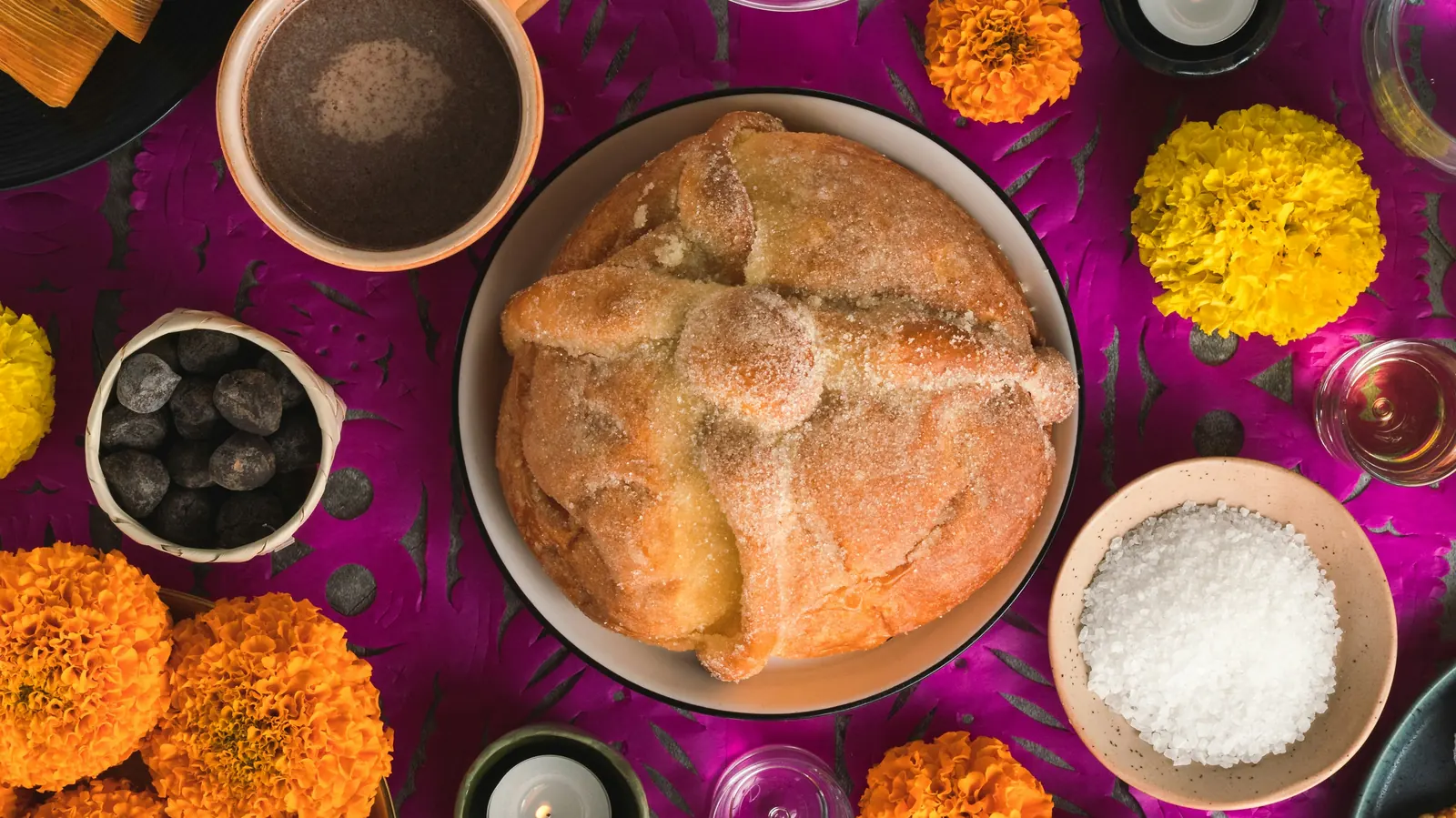
Día de Muertos is not Mexican Halloween. The dates sit next to each other on the calendar and the imagery gets mixed up in shop windows, but the holiday is a remembrance, and the food is the reason for it.
Almost everything on an altar is there because somebody who died used to like it.
The short answer
Día de Muertos falls on 1 and 2 November. Families build an ofrenda — an altar — and set out the food and drink their dead relatives enjoyed in life. The standard elements are pan de muerto, sugar skulls, marigolds, candles, water and salt, alongside dishes like tamales, mole and atole. The food is offered first and eaten afterwards by the living.
What the holiday is
It is a welcome rather than a mourning. The belief underlying it is that the dead return on those two nights, and that the household prepares for a visit.
The two dates divide the guests. 1 November is generally for children who have died, and 2 November for adults. Families clean and decorate graves, sit with them overnight in many regions, and keep an ofrenda at home for the same period.
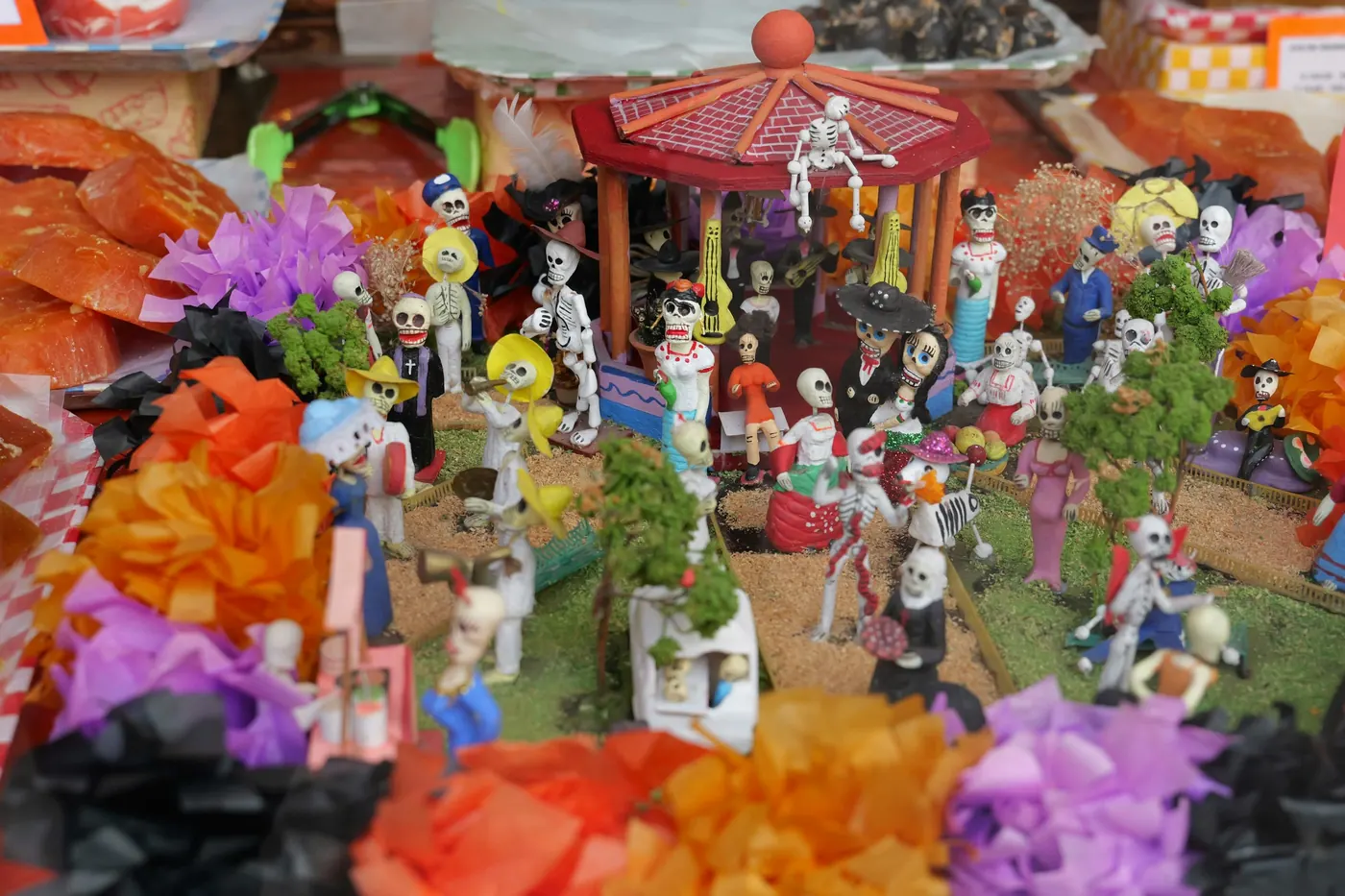
The tone surprises people who expect solemnity. It is affectionate and often funny — the skeleton figures are dressed up, given jobs and made to look ridiculous on purpose.
The ofrenda
An ofrenda is assembled to a pattern, and each element has a job.
- Photographs of the dead, at the center.
- Candles, to light the way back.
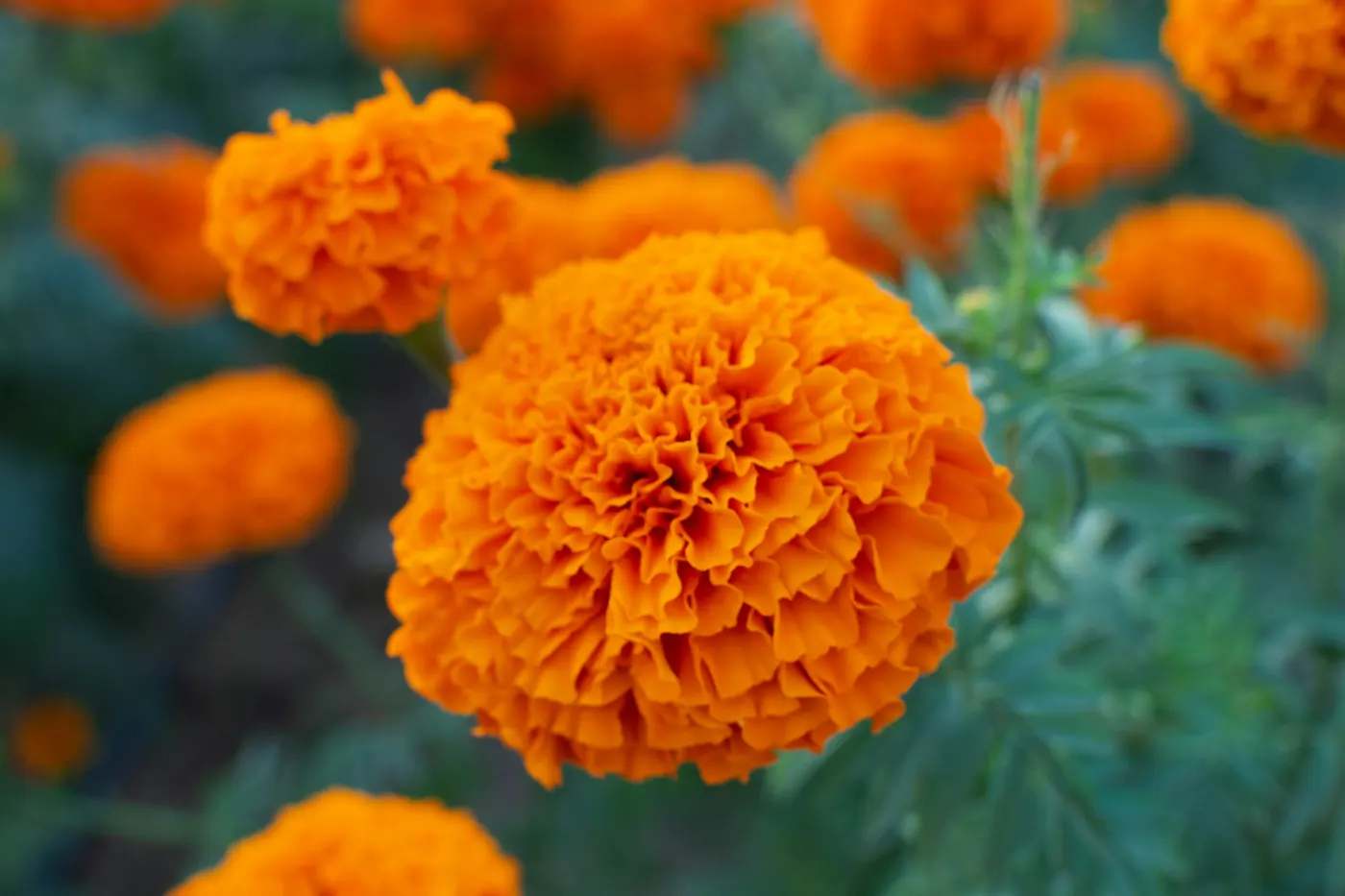
- Cempasúchil — marigolds — whose scent is said to guide the dead home. Petals are often scattered in a path to the door.
- Water, for a long journey, and salt, for purification.
- Copal incense, whose smoke carries prayers.
- Papel picado, cut paper, whose movement signals the presence of air, and of spirits.
- Food and drink — specifically what that person liked.
That last point is the one worth holding onto. There is no fixed menu. If a grandfather drank a particular beer or loved a particular candy, it goes on the altar. The traditional dishes below are the common ground, not a requirement.
Pan de muerto
The one baked specifically for the holiday, and the one most people can picture without knowing the details.
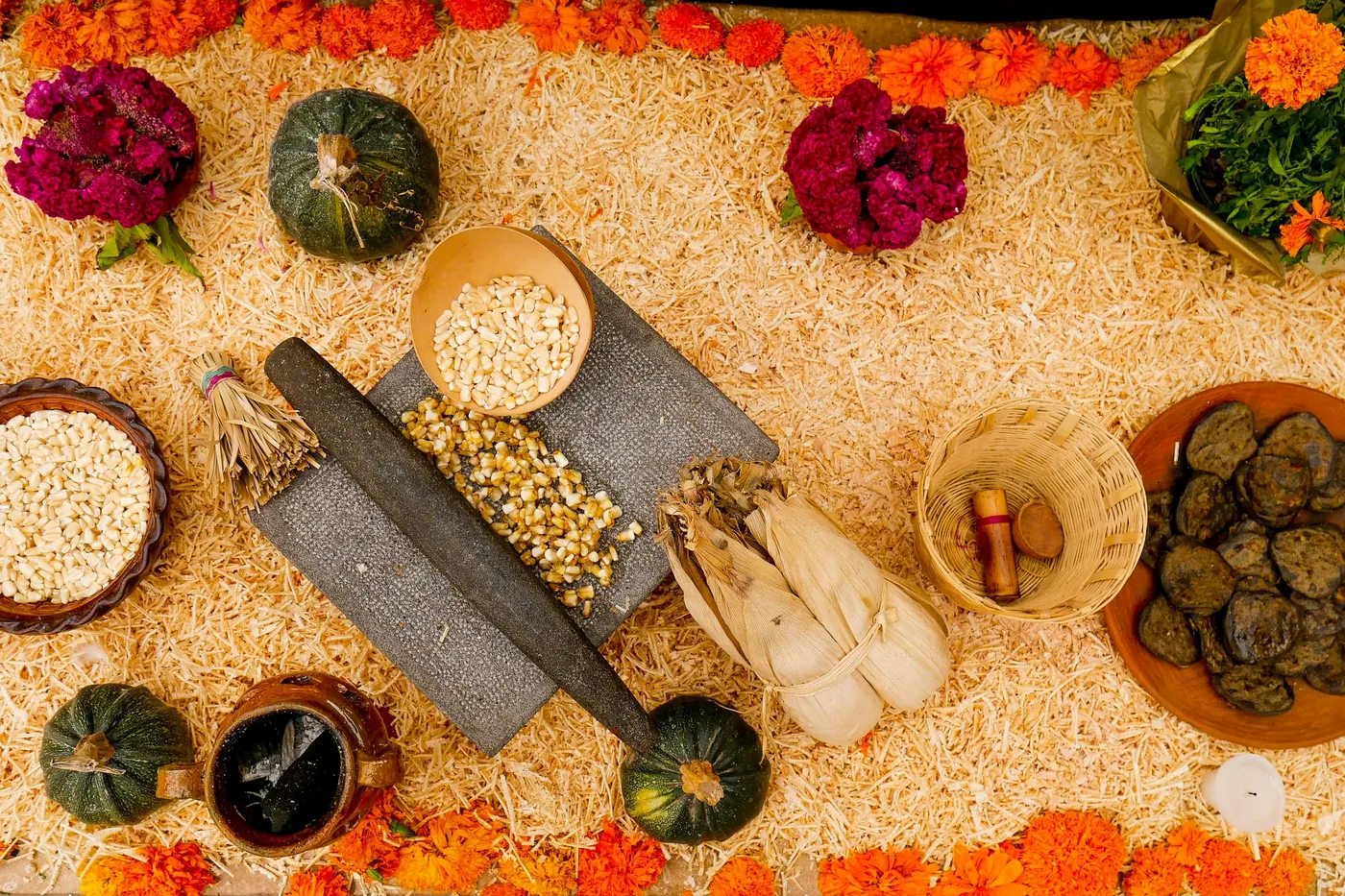
It is a round, soft, enriched sweet bread, usually flavored with orange blossom water and orange zest, and finished with a heavy dusting of sugar. On top sits a small ball with strips of dough radiating from it — conventionally read as a skull with bones arranged around it, though interpretations vary.
As the New Mexico Humanities Council notes in its short history of pan de muertos, the bread carries a great deal of symbolism and appears in many regional forms — not only the round loaf, but shapes including human figures, animals and hearts, varying by region.
It appears in bakeries across Mexico and much of Texas from around mid-October, and it disappears again in November.
Sugar skulls, which are mostly not eaten
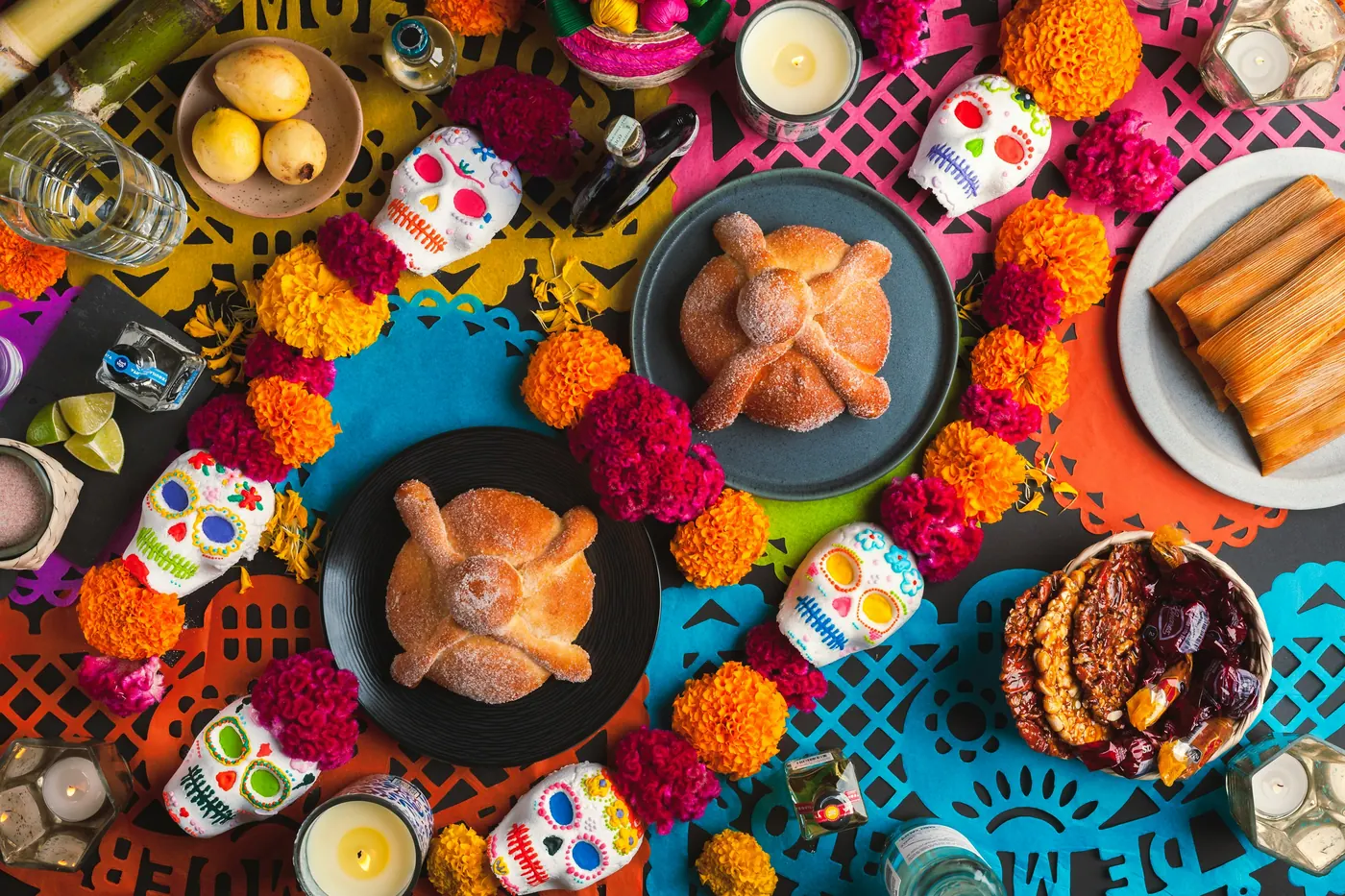
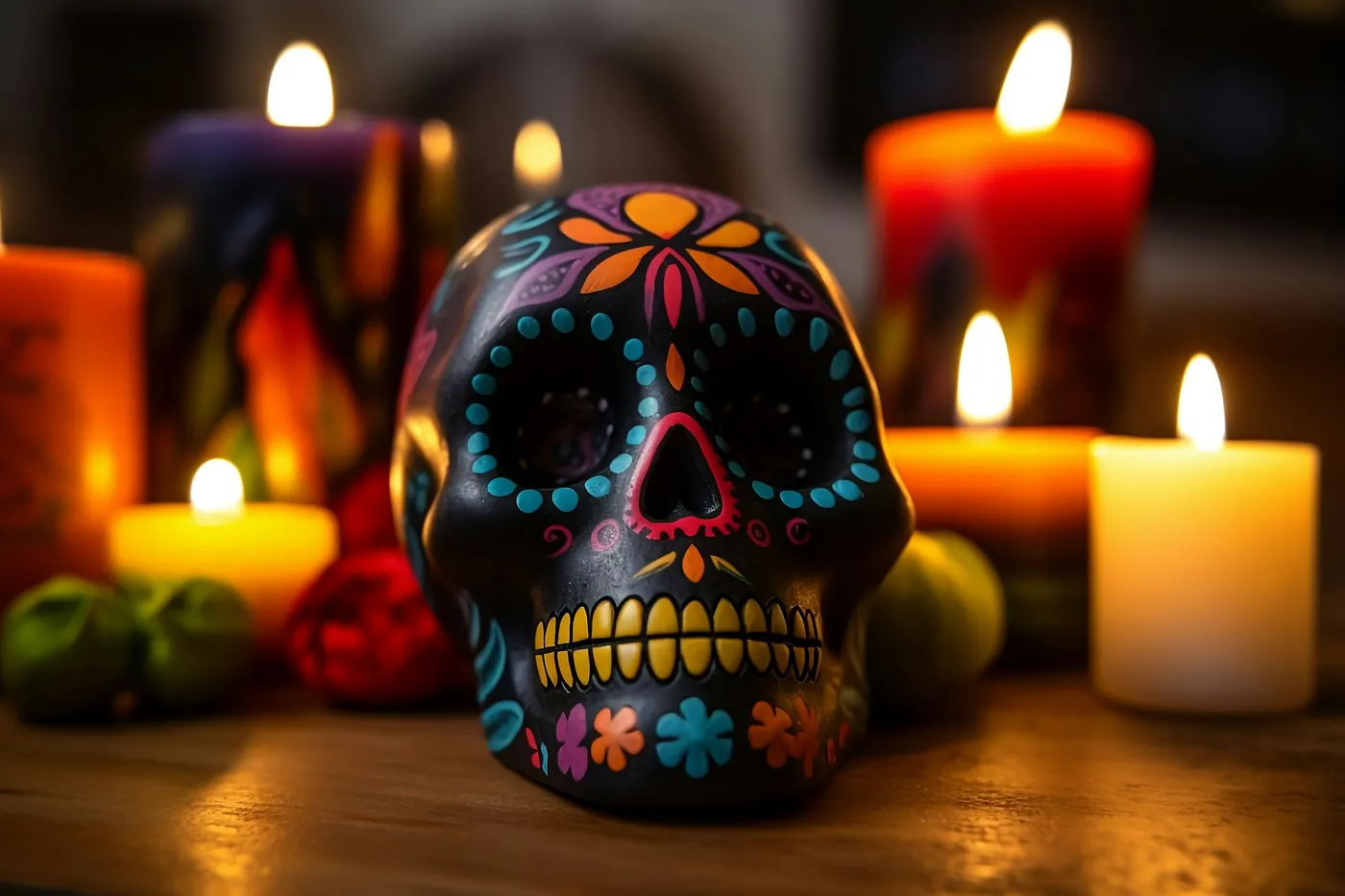
Calaveras de azúcar are made from sugar pressed into skull molds and decorated with colored icing, foil and sometimes a name written across the forehead.
The name is the point. A sugar skull with your name on it is not morbid — it is a small joke about mortality that everyone is in on, and children are given them.
They are technically edible but largely decorative, and the ones finished with foil are not meant to be eaten at all.
The savory food
The dishes that actually get cooked are the ones a family already makes for occasions.
Tamales are the most common, and for a practical reason as much as a symbolic one: they are made in large batches by several people working together, which suits a household preparing for a gathering. They also keep, and they travel to a graveside without falling apart.
Mole appears for the same reason a mole appears at any Mexican celebration — it takes a day to make and it feeds a crowd. In many households the mole served on 2 November is the one a particular grandmother used to make.
Atole and champurrado are hot masa-thickened drinks, champurrado being the chocolate version. They are the standard accompaniment to pan de muerto, and they suit sitting outside overnight in November.
Calabaza en tacha — pumpkin candied in piloncillo syrup — is the usual sweet alongside the bread.
Eaten, or only offered
Not everything on an ofrenda is meant to be eaten.
| Item | What it is | Eaten? |
|---|---|---|
| Pan de muerto | Orange-scented sweet bread | Yes, with atole |
| Tamales | Masa steamed in husks | Yes |
| Mole | Long-cooked chile sauce | Yes |
| Atole, champurrado | Hot masa drinks | Yes |
| Calabaza en tacha | Pumpkin in piloncillo syrup | Yes |
| Sugar skulls | Molded sugar, decorated | Rarely |
| Water and salt | Symbolic offerings | No |
| Marigolds, copal | Scent, to guide the dead | No |
What it is not
The confusion is common, so, plainly:
It is not Halloween with different decorations. Halloween is 31 October and has its own separate origins; Día de Muertos runs 1 and 2 November and is a family remembrance. The two now sit adjacent and borrow from each other in places, but they are not versions of the same thing.
It is also not a Mexican equivalent of a costume party. The painted faces have a specific reference — La Catrina, a satirical figure drawn in the early twentieth century to mock Mexicans who aspired to European gentility. She is a joke about class, and about the fact that death takes everyone regardless.
Eating it in Texas
Most of the holiday happens at home rather than in restaurants. What a restaurant can give you is the dishes themselves, and two of the central ones are on Julia’s menu year round.
The tamales are made in house, tierra caliente style, with pork or carne guisada — the same dish that gets made by the dozen for a gathering, explained in our guide to tamales. The pollo en mole is chicken braised in mole poblano, and the enchiladas de mole use the same sauce; both are covered in our guide to enchilada sauces.
Neither is on the menu because of the holiday. They are there because they are regional Mexican dishes that happen to be exactly what a family would cook for one — which is a more honest connection than a seasonal special would be.
For the other November-adjacent question, our comparison of Cinco de Mayo and Independence Day covers the two holidays people mix up in the other direction.
Frequently asked questions
When is Día de Muertos?
1 and 2 November. The first day is generally dedicated to children who have died, the second to adults.
Is Día de Muertos the same as Halloween?
No. Halloween is 31 October with separate origins. Día de Muertos is a family remembrance in which the dead are welcomed back, and the food is central to it.
What is pan de muerto?
A round sweet bread flavored with orange blossom and covered in sugar, decorated on top with a small ball and strips of dough. It is baked for the season and placed on the ofrenda.
Do people eat the sugar skulls?
Mostly not. They are made of sugar and are technically edible, but the decorated ones are display pieces, often carrying a name, and they stay on the altar.
What food goes on an ofrenda?
Whatever the person being remembered liked, plus the traditional elements: pan de muerto, water, salt, fruit, and usually tamales, mole and atole.
The short version
Two days at the start of November, an altar, and the food someone actually liked. Pan de muerto and sugar skulls are the specific ones; tamales, mole and atole are what gets cooked and eaten.
Julia’s serves the tamales and the mole on the regular menu, all year, which is where those dishes live the rest of the time.