Every year around the fifth of May, someone points out that Cinco de Mayo is not Mexican Independence Day. They are right, and the correction usually stops there without explaining what either one actually is.
They commemorate different wars, against different countries, fifty-two years apart.
The short answer
Cinco de Mayo marks the Battle of Puebla on 5 May 1862, when a Mexican army defeated invading French forces. Mexican Independence Day is 16 September, marking the 1810 call to arms that began the war against Spain. Independence Day is the major national holiday in Mexico. Cinco de Mayo is a minor regional observance there and a much bigger event in the United States.
What happened on 5 May 1862
France invaded Mexico in 1861, ostensibly over unpaid debts. At Puebla, a smaller and worse-equipped Mexican force under General Ignacio Zaragoza held off the French army, which at the time was considered among the best in the world.
It was a real victory and a genuine surprise. It was also temporary — the French took Puebla the following year and installed an emperor. The date commemorates the battle, not the outcome of the war.
That is why the holiday is concentrated in Puebla. It is a local anniversary of a local battle.
What happened on 16 September 1810
This is the one Mexico observes as a national holiday.
In the early hours of 16 September 1810, the priest Miguel Hidalgo y Costilla rang the bells of his church in the town of Dolores and called for revolt against Spanish colonial rule. The speech is remembered as the Grito de Dolores — the Cry of Dolores.
The war that followed lasted eleven years. Independence Day marks its beginning rather than its end, which is why the date is September and not the date of the final treaty.
Every year on the night of 15 September, the president rings the same bell from the National Palace balcony in Mexico City and repeats a version of the call, and crowds answer it. Every town square in the country does its own version. That ceremony, El Grito, is the heart of the holiday.
Side by side
| Cinco de Mayo | Independence Day | |
|---|---|---|
| Date | 5 May | 16 September |
| Commemorates | Battle of Puebla, 1862 | Grito de Dolores, 1810 |
| Against | France | Spain |
| Status in Mexico | Regional, mainly Puebla | National public holiday |
| Status in the US | Widely celebrated | Marked in Mexican-American communities |
| Central ritual | Parades and reenactments in Puebla | El Grito, the night before |
Why the United States celebrates the smaller one
This is the genuinely interesting part, and it is not really about Mexico.
Purdue University’s College of Liberal Arts puts it directly in a piece titled “Cinco de Mayo is not a Mexican festival. It is an American one”. The holiday took hold among Mexican-American communities in the western United States, where the Puebla victory was read as a symbol of resistance, and it grew from there into a broad celebration of Mexican-American identity.
Later it was picked up commercially, which is how a regional Mexican battle anniversary became a national American drinking occasion. Both of those things are true at once: it is a real Mexican-American observance with a long history, and it is also heavily marketed.
Knowing which is which does not spoil either. It just means the fifth of May is best understood as an American holiday about Mexican heritage, rather than a Mexican one that Americans borrowed.
What you will see at either
Some things overlap and some do not.
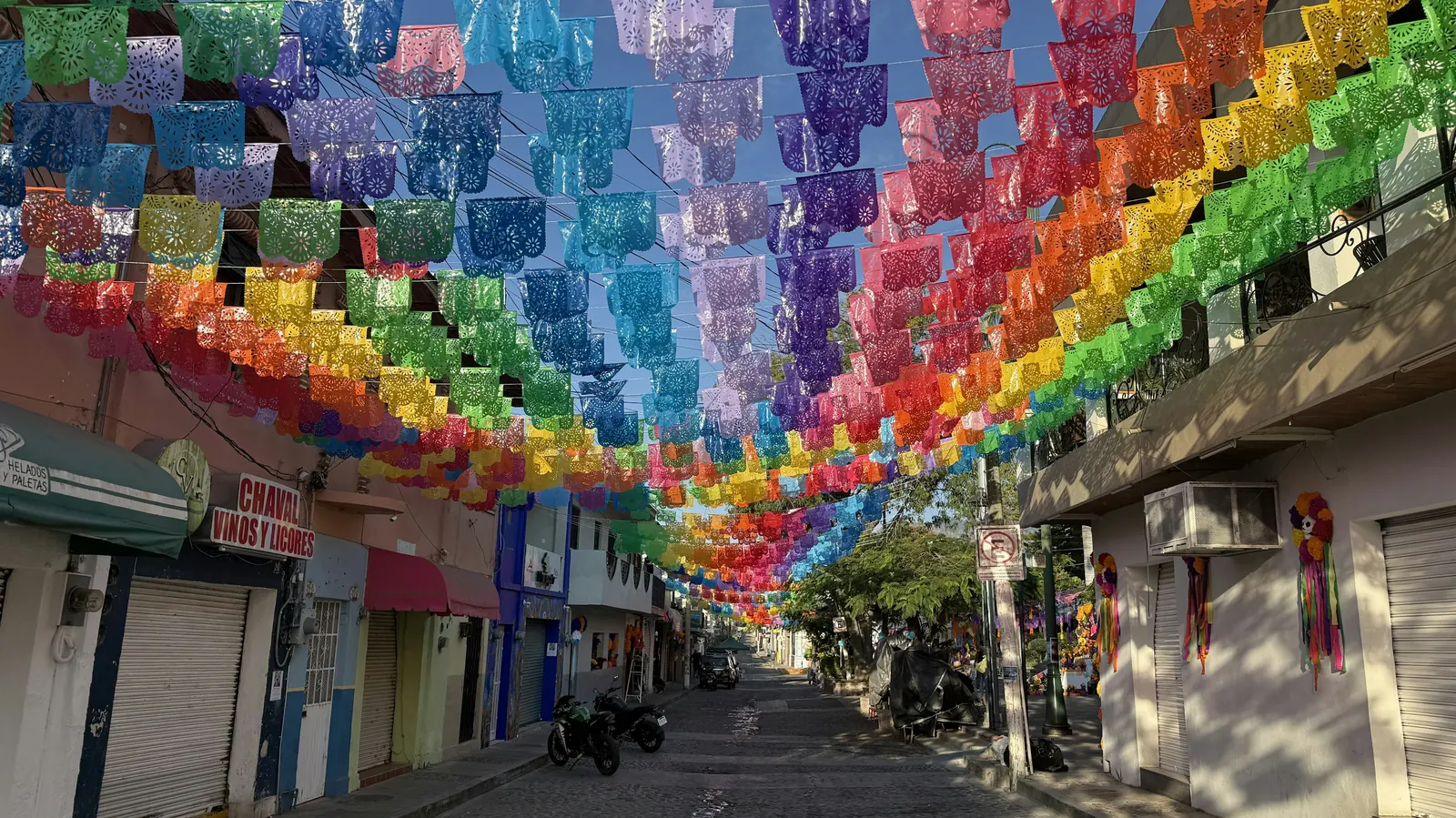
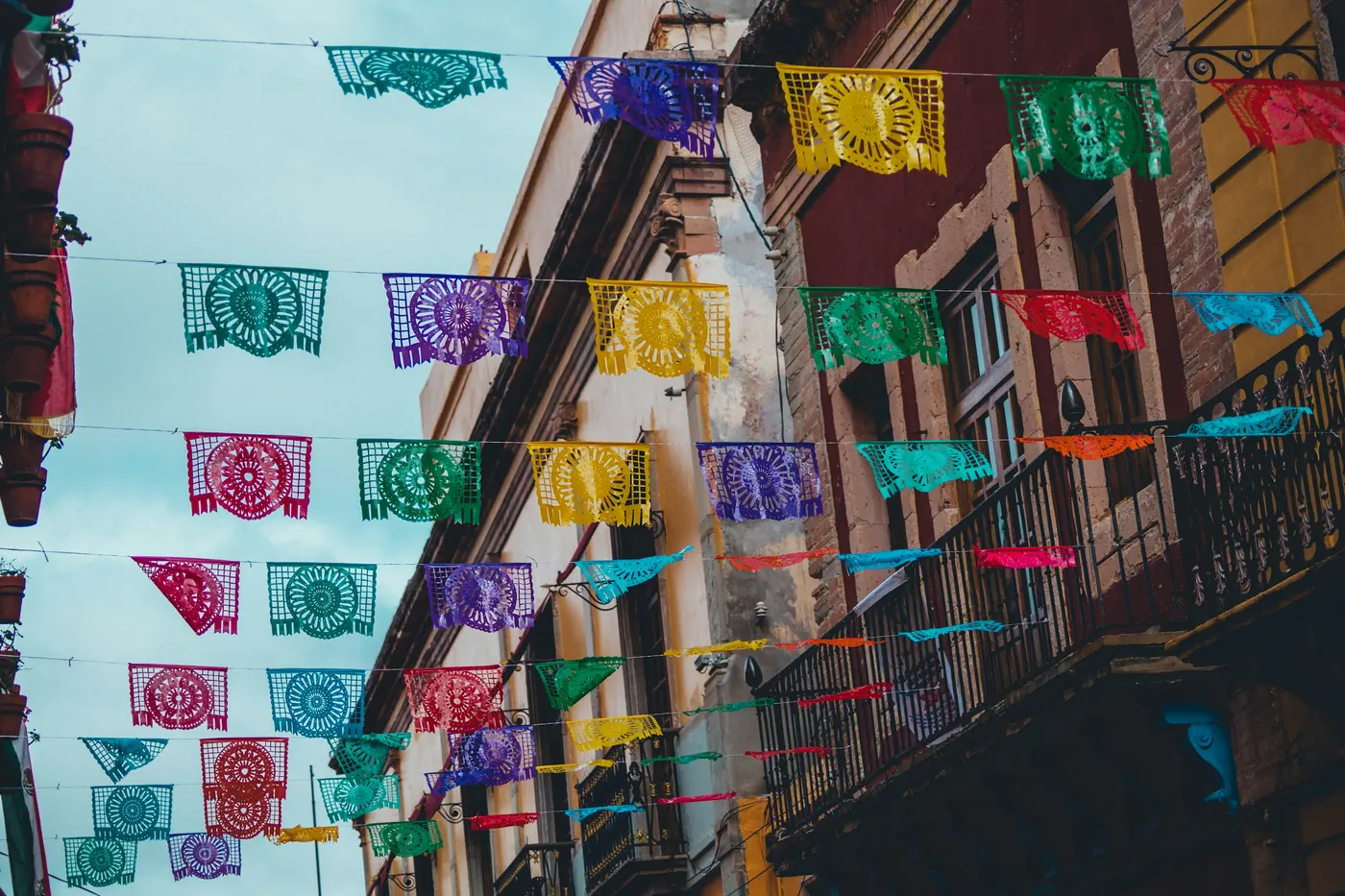
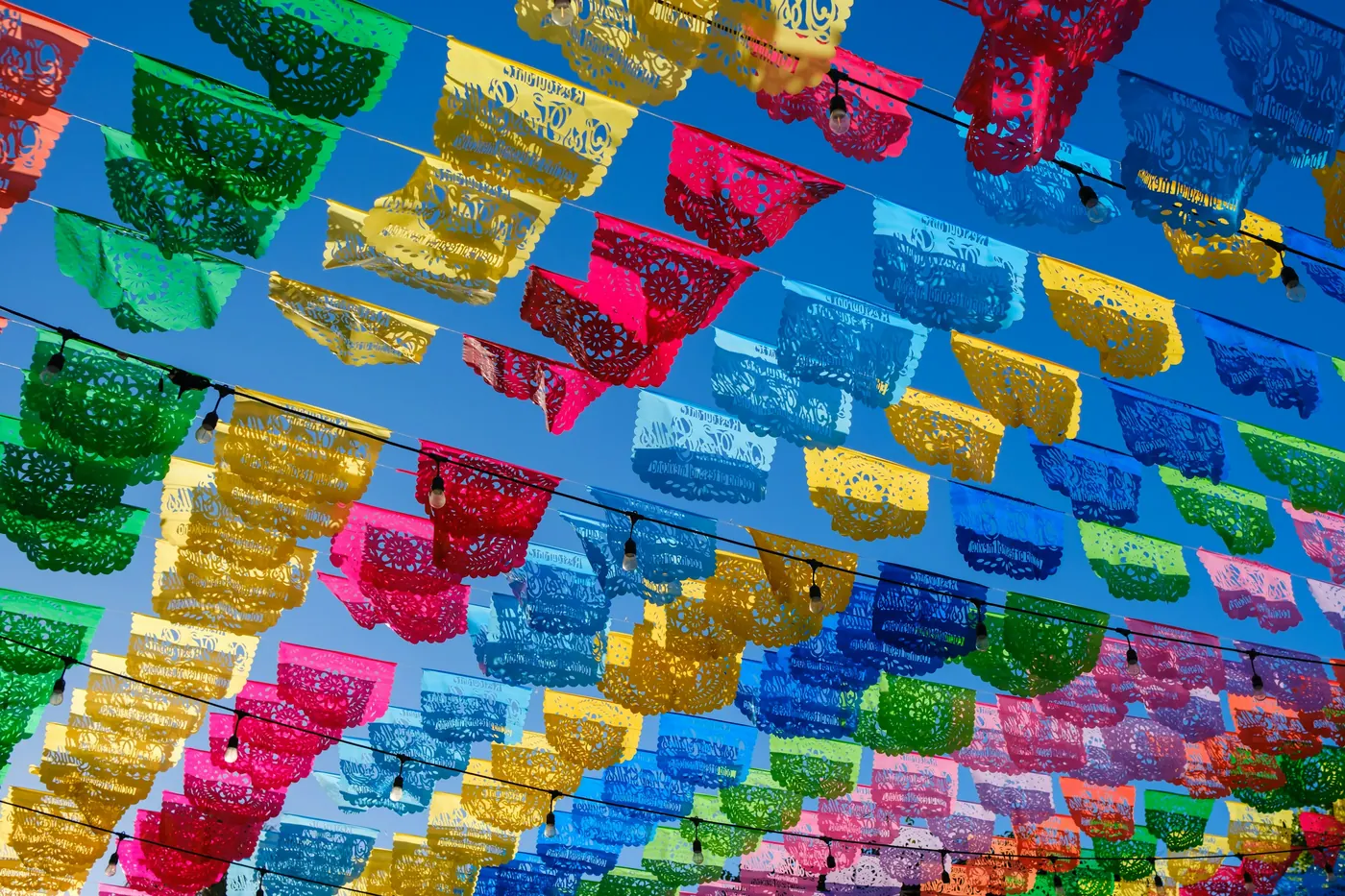
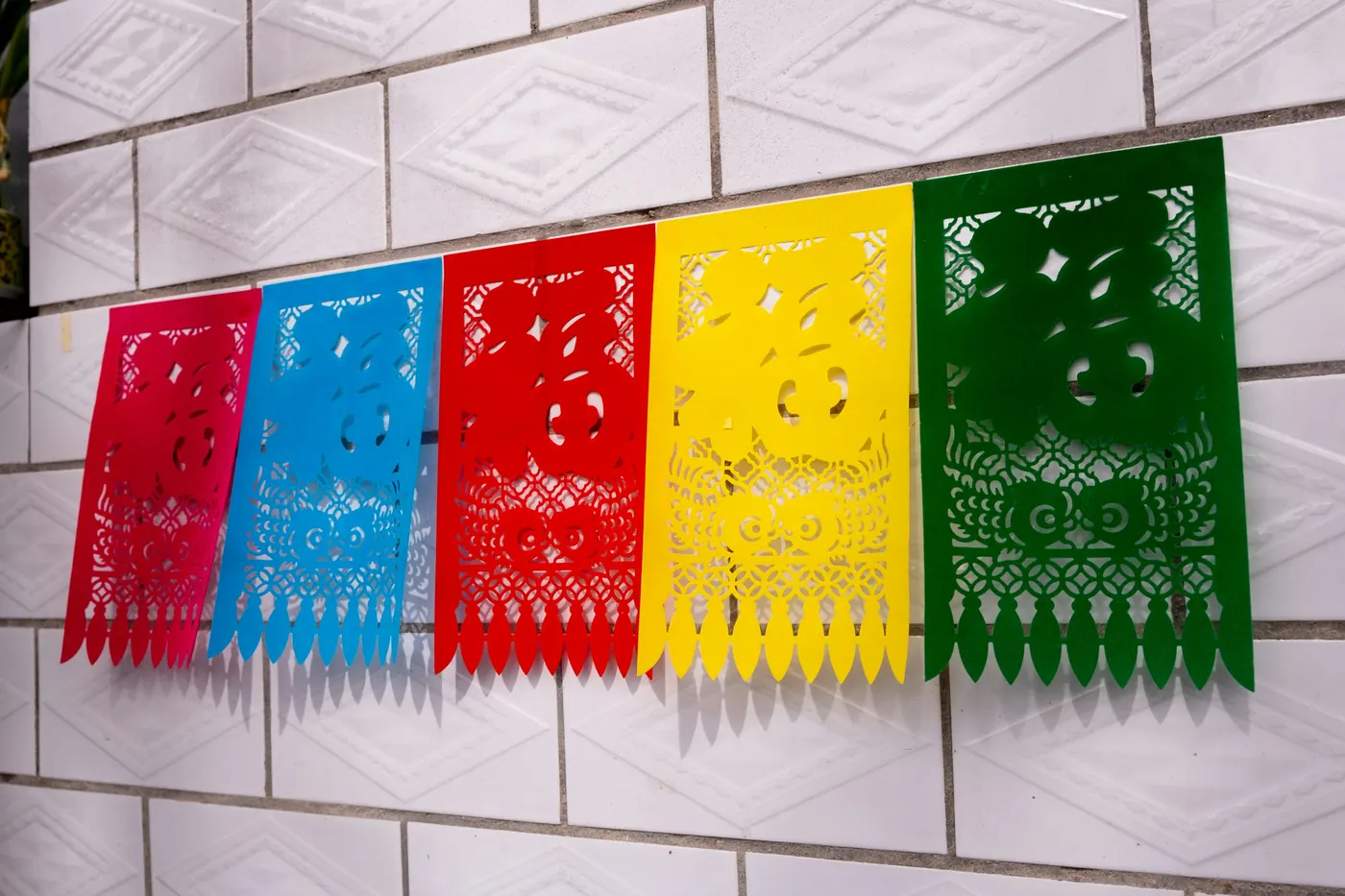
Papel picado — the cut-paper banners — goes up for both, and for weddings, and for Día de Muertos. It is not specific to either holiday.
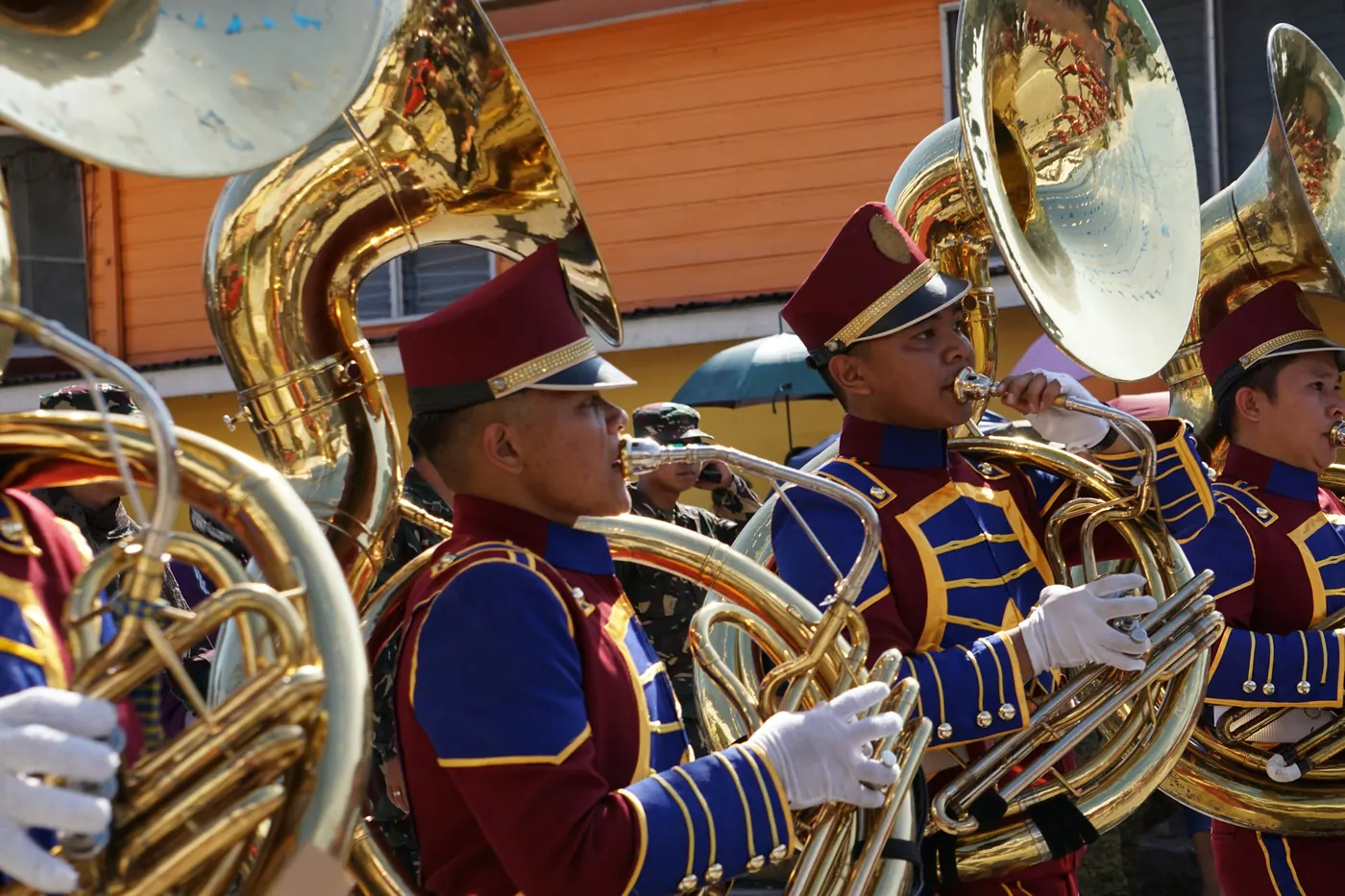
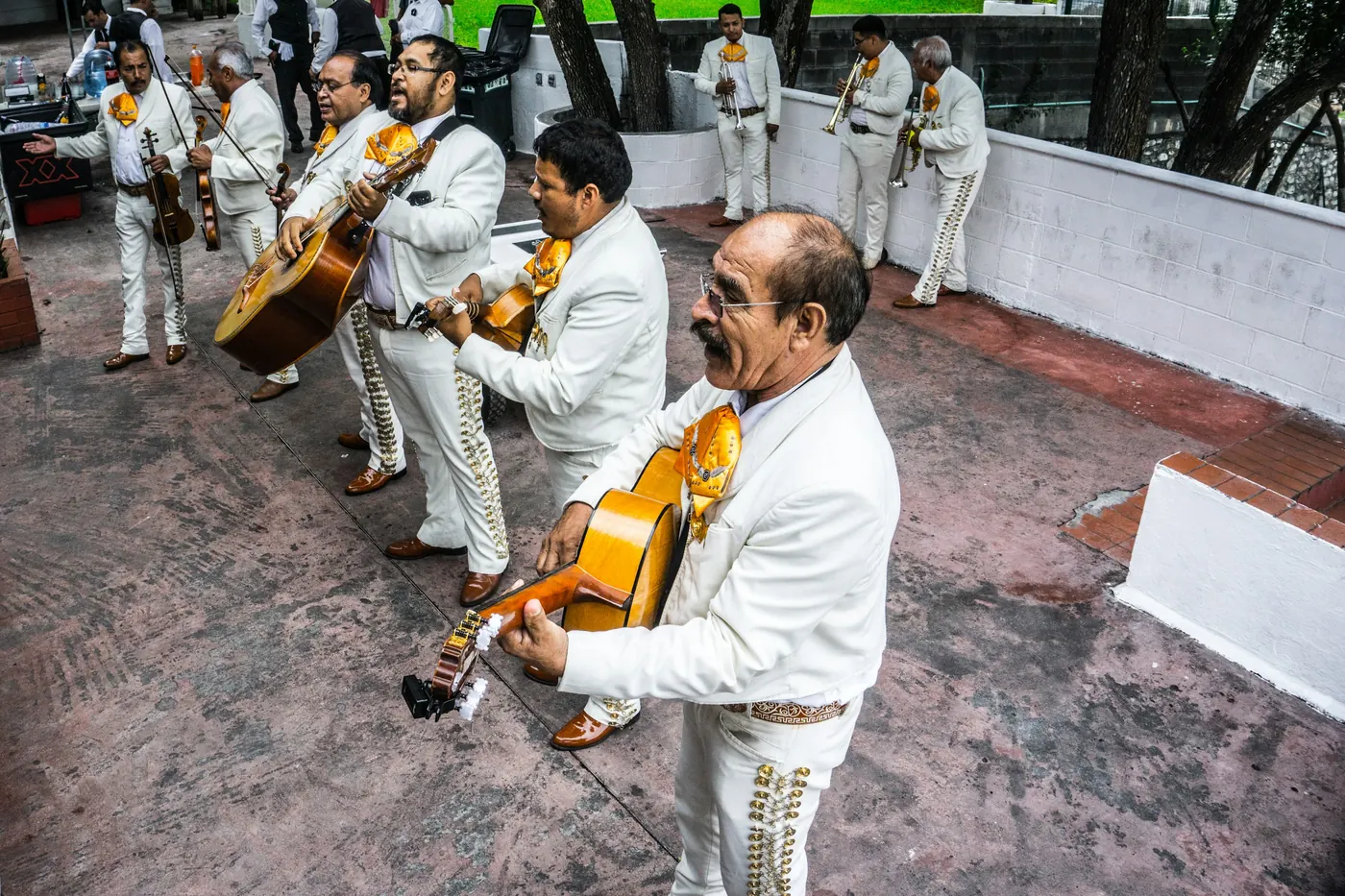
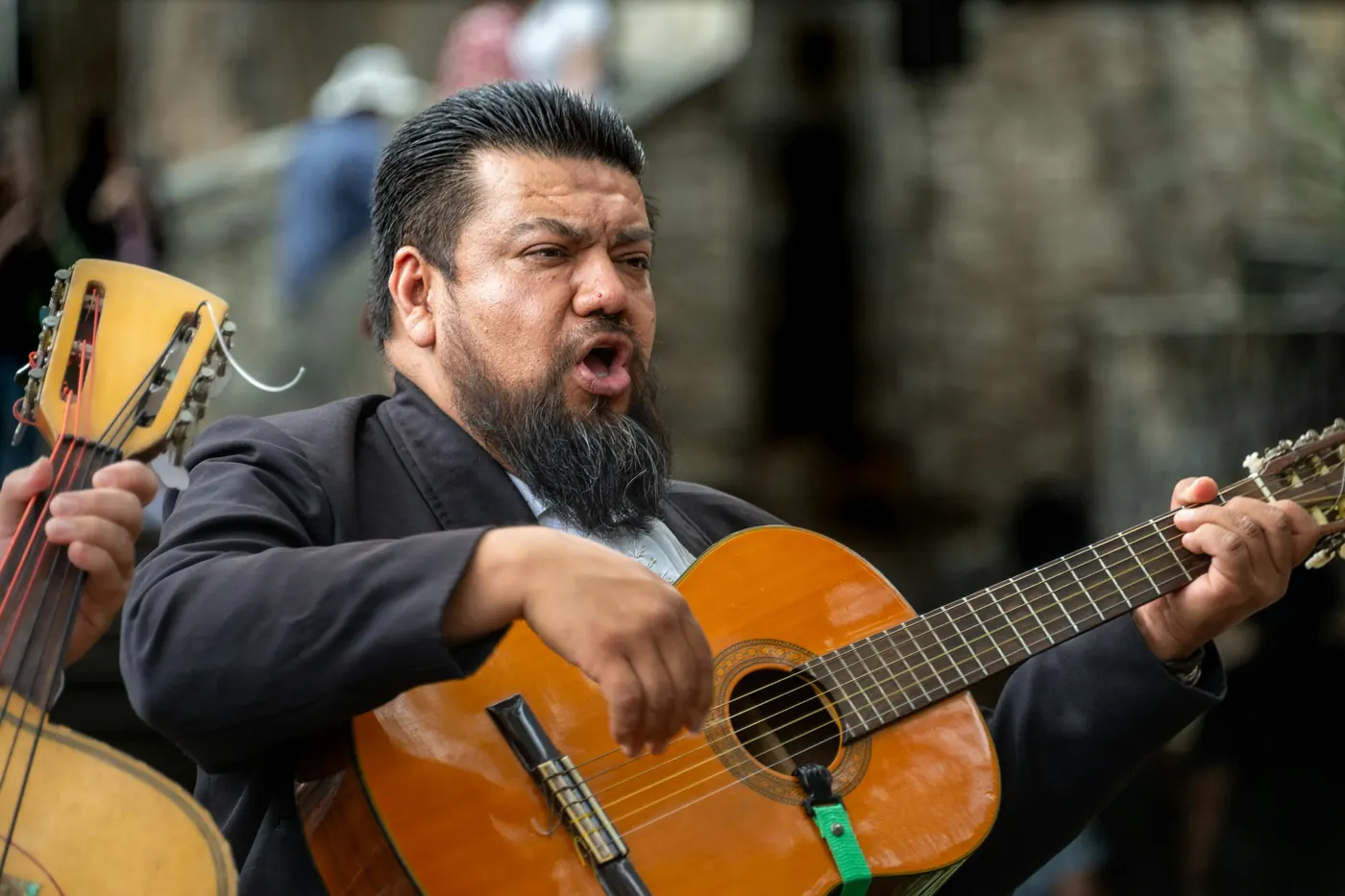
Mariachi is from Jalisco, and it is closely tied to September in Mexico. In the United States it turns up in May as shorthand for Mexican music generally.
Green, white and red is the flag, so it belongs to Independence Day in a way it does not belong to a battle anniversary — though it appears at both.
What to eat, and the Puebla connection
If you want to eat something that actually connects to the fifth of May rather than to the marketing, look for Puebla.
Puebla is one of the great regional kitchens of Mexico, and the battle happened there. Mole poblano is its most famous dish — a long-cooked sauce of dried chiles, nuts, seeds and spices, covered in our guide to enchilada sauces. Chiles en nogada is the other, and it is a September dish, traditionally eaten around Independence Day because its green, white and red match the flag.
So the food actually splits along the same line the holidays do. Mole for May, chiles en nogada for September.
The other Mexican date Americans routinely mix up is Mother’s Day, which falls on 10 May rather than on a Sunday.
What neither holiday traditionally involves is a bucket of yellow-cheese nachos. That is not a criticism — Tex-Mex is a real cuisine with its own history, as our comparison sets out — it is just a different tradition from the one being commemorated.
On Julia’s menu
Julia’s carries the Puebla connection without making anything of it.
The pollo en mole is chicken braised in mole poblano and served with corn tortillas, white rice and refried beans. The chile relleno is built on a roasted poblano pepper, the chile the region is named for. The enchiladas de mole use the same sauce.
Those are the dishes with an actual link to the fifth of May, and they are on the menu every day of the year rather than for one week in spring.
If you are marking either date with a group, the family packs that serve four are the practical route — our guide to ordering for a crowd covers the quantities.
Frequently asked questions
Is Cinco de Mayo Mexican Independence Day?
No. Independence Day is 16 September. Cinco de Mayo marks the Battle of Puebla in 1862, a victory over invading French forces fifty-two years after the independence war began.
Do Mexicans celebrate Cinco de Mayo?
In Puebla, yes, with parades and reenactments. Elsewhere in Mexico it passes with little notice. It is not a national public holiday there.
What is El Grito?
The reenactment of Miguel Hidalgo’s 1810 call to arms, performed on the night of 15 September by the president in Mexico City and by officials in towns across the country. It is the central ritual of Independence Day.
Why is Cinco de Mayo so big in the United States?
It was adopted by Mexican-American communities as a symbol of resistance and identity, and later amplified commercially. It functions as an American holiday about Mexican heritage.
What food is traditional for each?
Mole poblano connects to Cinco de Mayo through Puebla. Chiles en nogada is the September dish, its colors matching the Mexican flag.
The short version
May is a battle against France, observed mostly in Puebla and mostly in the United States. September is the start of the war against Spain, and it is the one Mexico treats as its national day.
If you want to eat along the line, mole is the Puebla dish, and it is on Julia’s menu year round.