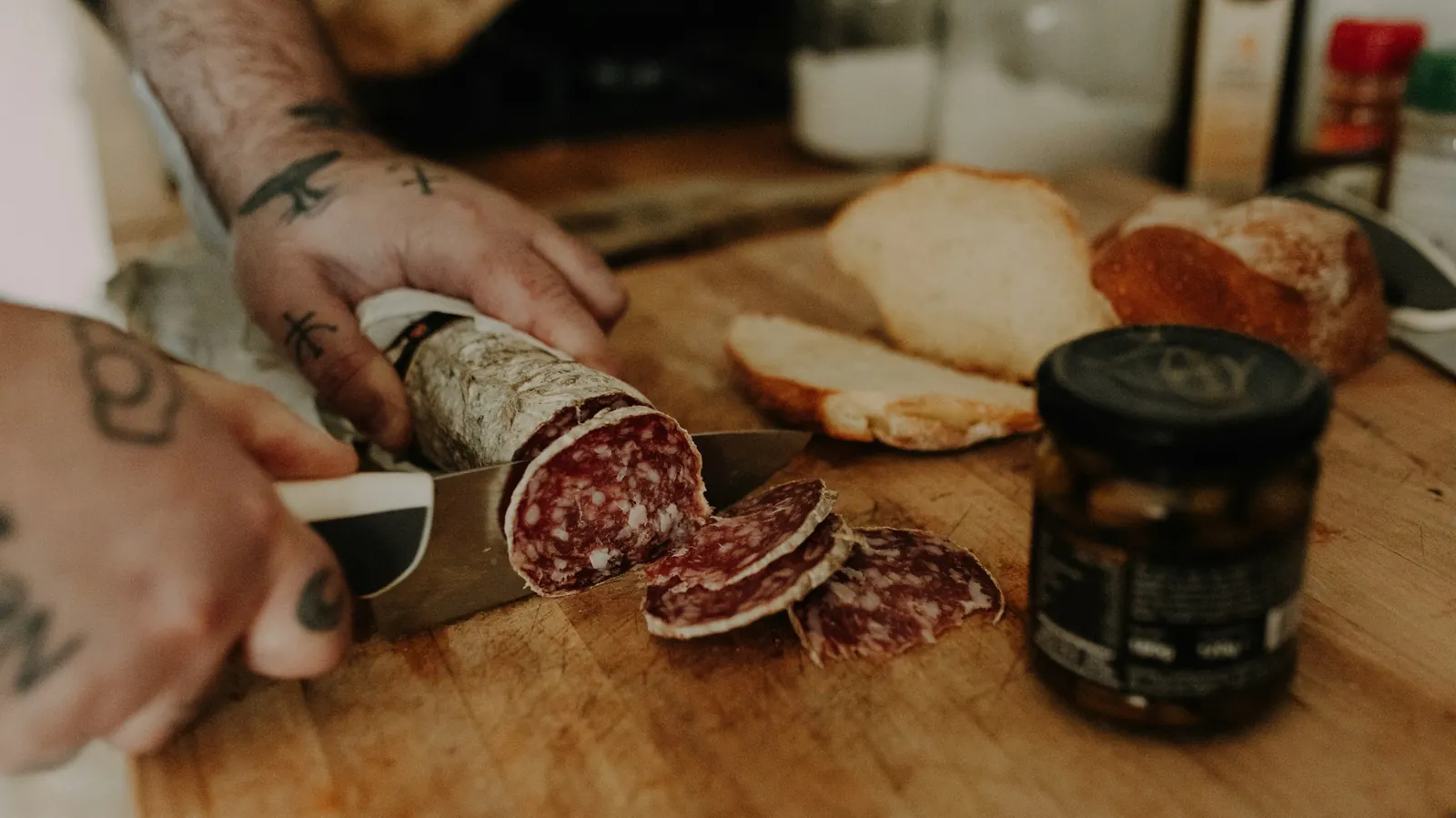
Kitchen shears are a convenience tool. They snip cilantro over a bowl of salsa, cut a stack of tortillas into wedges for chilaquiles and take the backbone out of a chicken. If yours have gone missing, broken at the pivot or never made it into the drawer, most of those jobs can still be done well with tools you may already own, or with one well-chosen blade.
This guide covers the kitchen shears alternative that suits each job: a chef’s knife for everyday cutting, a cleaver for the chicken backbone, a boning knife for breaking down a bird, a pizza wheel for flat foods and dough, a mezzaluna for herbs and a paring knife for small trimming. For each one we say how well it does the job and where it falls short.
Julia’s earns a commission on purchases made through links on this page, at no cost to you. Recommendations are based on what a restaurant kitchen looks for, product specifications and verified buyer reports.
Why cooks look for something other than shears
America’s Test Kitchen lists what its cooks use kitchen shears for: “cutting twine and parchment, snipping herbs, trimming pie dough,” cutting florets from cauliflower and broccoli, “butterflying chickens,” and opening food packaging. That is a long list, and it explains why shears are handy. It also shows that each job has another tool that can do it.
- The shears are gone or worn out. A loose pivot or dull blade makes them crush food rather than cut it.
- You do one shears job often. If you mince herbs every day, a tool built for herbs may suit you better than a pair of shears.
- You would rather not own another tool. ATK itself notes that you can cut up most of a chicken “with a good chef’s knife.”
- Cleaning. Shears that do not come apart are awkward to clean at the pivot. A knife has no hinge to trap food.
The one job where shears clearly win is the backbone. ATK says “shears are critical for removing the backbone of the chicken,” and that the task “can be really tough on your chef’s knife.” If you spatchcock every week, the right answer is a good pair from our best kitchen shears guide. For everything else, read on.
Quick verdict: the best kitchen shears alternative
For most kitchens, the best kitchen shears alternative is a good 8-inch chef’s knife, such as the Lamson Vintage 8-Inch Chef’s Knife: it chops herbs, slices scallions and chiles, cuts tortilla strips and, as Mississippi State University Extension shows, breaks down a whole chicken at the joints. For the backbone, a meat cleaver such as the Mueller 7-Inch does the heavy work a chef’s knife should not. A Mercer boning knife is the cleaner tool for deboning thighs and breasts, the Mercer Millennia pizza wheel handles pizza, flatbread and pastry dough, and an Amco mezzaluna minces herbs fast. If you butterfly chickens every week, though, buy shears.
Five ways to cut without kitchen shears, side by side
Our five main picks, one per job, with the details each maker or listing states. A sixth, a small paring knife for trimming and opening, is reviewed below the table.
| Pick | Replaces shears for | Blade | Care | Buy on Amazon |
|---|---|---|---|---|

Lamson Vintage 8-Inch Chef’s KnifeBest overall
|
Herbs, scallions, chiles, cutting up chicken | 8 in high-carbon stainless | Hand wash | View on Amazon |

Mueller 7-Inch Meat CleaverBest for the backbone
|
Chicken backbone and joints | 7 in high-carbon stainless | Dishwasher safe; hand wash advised | View on Amazon |

Mercer Ultimate White 6-Inch Boning KnifeBest for deboning
|
Deboning thighs, trimming fat | 6 in high-carbon steel | Hand wash | View on Amazon |
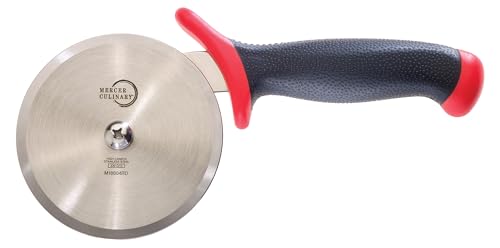
Mercer Millennia 4-Inch Pizza WheelBest for flat foods and dough
|
Pizza, flatbread, pastry dough | 4 in stainless wheel | Hand wash | View on Amazon |

Amco Mezzaluna with Silicone HandleBest for herbs
|
Mincing herbs and garlic | Curved stainless rocker | Dishwasher safe | View on Amazon |
Product images from Amazon. Details are as stated by each maker or listing. Check the listing before you buy.
Which tool replaces which shears job
Shears do many small jobs. No single knife covers all of them equally well, so it helps to match the job to the tool.
- Snipping herbs. A sharp chef’s knife or a mezzaluna. Both mince; neither snips straight over the pot, so you chop on a board and scrape the herbs in.
- Cutting up a chicken. A chef’s knife or boning knife at the joints, as Mississippi State University Extension describes, with no shears at all.
- Removing the backbone. A cleaver. This is the hardest job to replace, and the one ATK warns is tough on a chef’s knife.
- Trimming pie dough, cutting flatbread or pizza. A pizza wheel. ATK found its winning wheel “versatile enough to slice pastry dough.”
- Florets, stems and small trimming. A paring knife. University of Illinois Extension describes the paring knife for “removing stems and cores.”
- Twine, parchment and packaging. A paring knife works on a board; this is general kitchen sense rather than a sourced finding. Keep ordinary scissors for the paper jobs if you have them.
Our picks for a kitchen shears alternative
1. Lamson Vintage 8-Inch Chef’s Knife – One Blade for Most Shears Jobs
If you buy one thing instead of shears, make it a good chef’s knife. University of Illinois Extension calls the chef’s knife the “workhorse,” used “to chop, slice, dice and mince foods,” and describes a broad blade about 8 to 10 inches long. This Lamson is an 8-inch knife, which is the size most home cooks find easiest to control.
For the shears jobs it covers well, think herbs, green onions, chiles and tortilla strips: everything you would snip, you can slice on a board instead. It also handles a whole chicken. Mississippi State University Extension’s guide to cutting up a chicken uses only a knife and a cutting board: cut through the wing joint “from the top down,” bend the leg back “until the joint pops,” then cut through the joint. A chef’s knife does all of that.
Lamson says the full-tang blade is its own 420HC-LAM high-carbon stainless steel, tempered to 58 on the Rockwell scale and finished by hand, with a double-riveted walnut handle. The listing names a lifetime guarantee against manufacturing defects and free resharpening under Lamson’s Sharp for Life program. The listing is sold by Lamson itself.
Why we like it
- An 8-inch chef’s knife is the all-round cutting tool extension services recommend
- Cuts a whole chicken at the joints, as MSU Extension shows, with no shears
- Lifetime guarantee against defects and free resharpening, per the listing
- Sold by the maker
Key specifications
| Model | 56510 |
|---|---|
| Tool type | Chef’s knife |
| Blade | 8 in, 420HC-LAM high-carbon stainless, 58 Rockwell |
| Handle | Walnut, double-riveted, full tang |
| Shears jobs it covers | Herbs, scallions, chiles, tortilla strips, cutting up chicken |
| Dishwasher safe | No, hand wash only |
| Warranty | Lifetime against manufacturing defects; free resharpening |
| Seller | Lamson (maker) |
Why we recommend it
It suits a cook who wants one blade to cover most of what shears did, plus everything else a chef’s knife does every day.
Skip it if your main shears job was taking out the chicken backbone; ATK says that is tough on a chef’s knife, so add a cleaver or keep shears.
Pros and cons
Pros
- Covers herbs, vegetables and chicken joints
- Full tang with a riveted handle
- Free resharpening program
Cons
- Not for cutting through the backbone
- Hand wash only; wood handle needs drying
- Cannot snip directly over a pot
2. Mueller 7-Inch Meat Cleaver – Weight for the Backbone
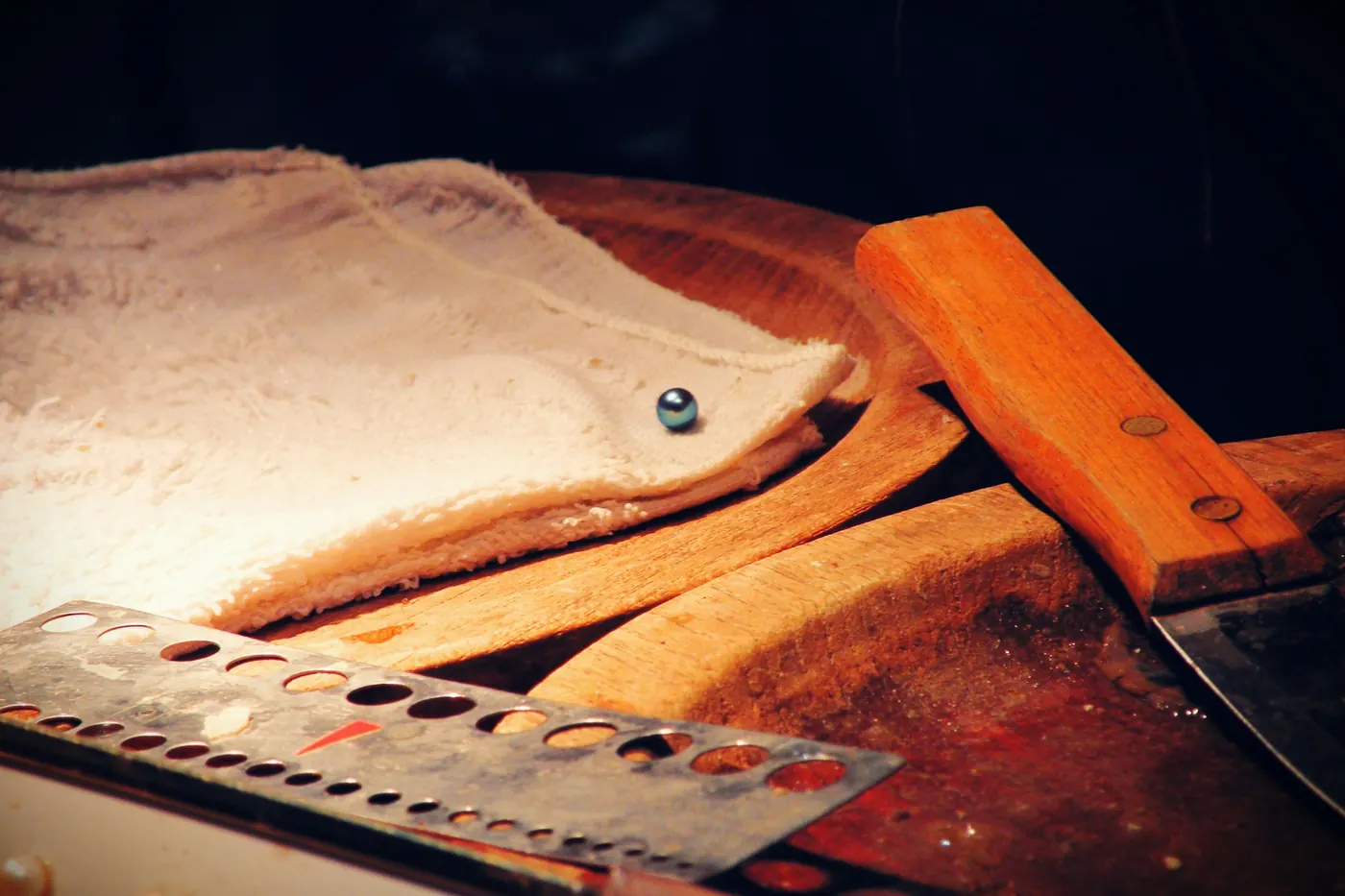
The backbone is the one job where a chef’s knife struggles, and a meat cleaver is the tool built for it. ATK’s guide to using a meat cleaver says to “let the weight of the cleaver do much of the work,” to chop from the wrist rather than with a big swing, and, for a long piece such as a backbone, to steady the end with your other hand well out of the way. If the blade sticks halfway through a bone, ATK says to put your other hand flat on the spine and press, rather than try to hit the same spot twice.
Mueller’s listing describes a 7-inch blade of German high-carbon stainless steel with an 18-degree edge on both sides, and a seamless, full-tang stainless steel handle. It names poultry joints, rib bones and brisket as jobs for it. The listing calls it dishwasher safe but recommends hand washing to keep the edge longer.
A cleaver is a heavier, blunter tool than shears. It takes the backbone out in a few chops instead of two long cuts, and it needs a sturdy board. ATK warns to chop across or at an angle to the board’s grain so you do not split it.
Why we like it
- Built for the bone work ATK says is hard on a chef’s knife
- Listing names poultry joints among its jobs
- Full-tang stainless handle with no wood to dry
Key specifications
| Model | SS-77 |
|---|---|
| Tool type | Meat cleaver |
| Blade | 7 in, German high-carbon stainless, 18-degree edge |
| Handle | Seamless stainless steel, full tang |
| Shears jobs it covers | Chicken backbone, joints, wing tips |
| Dishwasher safe | Yes; hand wash recommended |
| Warranty | Manufacturer’s warranty (terms not stated) |
| Seller | Third-party seller |
Why we recommend it
It suits a cook who spatchcocks or splits chickens now and then and does not want to buy shears just for that.
Skip it if you have a thin or glass cutting board, or you dislike chopping; a cleaver needs a solid wood or plastic board and some care.
Pros and cons
Pros
- Handles bone that would chip a chef’s knife
- Stainless handle is easy to clean
- Broad blade also scoops chopped food
Cons
- Mueller is an online-first brand, not a cutlery specialist
- Sold by a third-party seller
- Slower and louder than shears on a backbone
3. Mercer Ultimate White 6-Inch Boning Knife – Clean Cuts Around Bone
Shears are often used to trim chicken thighs and cut out small bones. A boning knife does that job more neatly. ATK’s boning knife review says its cooks use one most for “minor butchery—deboning chicken breasts or chicken thighs,” that the blade is “designed to shimmy and slice between joints or carve around bigger bones,” and that it lets you “trim away only what you don’t want, with little or no waste.” ATK found most good models had about 6 inches of usable blade.
This Mercer is a 6-inch boning knife from Mercer’s value-minded Ultimate White line. Mercer’s listing says it is made of high-carbon Japanese steel and is meant for “separating meat from the bone,” naming chicken, ham and fish, and trimming fat and sinew. The handle has textured finger points for grip when your hands are wet. It is hand wash only.
A boning knife does not replace shears for the backbone or for herbs. It is the right add-on if you buy whole chickens or bone-in thighs for tacos and want boneless meat without waste.
Why we like it
- 6-inch blade, the length ATK found most usable
- Made for deboning chicken and trimming fat, per Mercer
- Textured handle for wet hands
- Sold by Amazon.com
Key specifications
| Model | M18100 |
|---|---|
| Tool type | Boning knife |
| Blade | 6 in, high-carbon Japanese steel |
| Handle | Ergonomic, textured finger points |
| Shears jobs it covers | Deboning thighs and breasts, trimming fat and skin |
| Dishwasher safe | No, hand wash |
| Warranty | Not stated on the listing |
| Seller | Amazon.com |
Why we recommend it
It suits a cook who trims and debones chicken often and wants a narrow blade made for working around bone.
Skip it if you rarely handle raw chicken; a chef’s knife covers occasional joint work.
Pros and cons
Pros
- Narrow blade follows bones closely
- Value line from a cutlery maker
- Good grip with wet hands
Cons
- Not for herbs, dough or the backbone
- Hand wash only
4. Mercer Millennia 4-Inch Pizza Wheel – Long Straight Cuts in One Pass
Shears are a common way to cut pizza, flatbread and trimmed pie dough. A pizza wheel does it in one rolling pass instead of many snips. The Mercer Millennia 4-inch wheel is the winner of ATK’s pizza cutter review, which praised its “tall, visible 4-inch wheel” that “cruised through toppings and crust with ease,” and found it “versatile enough to slice pastry dough.” ATK also noted that handled wheels gave testers more force than the palm-held kind, and that this one’s open design did not trap food.
Mercer’s listing describes a high-carbon Japanese stainless steel wheel, a non-slip handle with a finger guard, and a limited lifetime warranty; replacement blades are sold separately. It names pizza and flatbread as its jobs. Like ATK, Mercer says to wash it by hand.
A note on the listing: this is the red-handled version of the same Mercer model listed in black on our best cheap pizza cutter guide. For more wheels, see our best pizza cutter guide. We chose it because it is ATK’s winning model and the red listing is in stock and sold by Amazon.com.
Why we like it
- The winner of ATK’s pizza cutter review
- ATK found it slices pastry dough as well as pizza
- Open design that does not trap food
- Limited lifetime warranty, per the listing
Key specifications
| Model | M18604RD |
|---|---|
| Tool type | Handled pizza wheel |
| Blade | 4 in, high-carbon Japanese stainless wheel |
| Handle | Non-slip, textured, with finger guard |
| Shears jobs it covers | Pizza, flatbread, pastry and pie dough |
| Dishwasher safe | No, hand wash |
| Warranty | Limited lifetime |
| Seller | Amazon.com |
Why we recommend it
It suits a cook who used shears mostly for pizza, flatbreads and dough and wants straighter, faster cuts.
Skip it if you want something for the dishwasher; ATK and Mercer both say to wash this one by hand.
Pros and cons
Pros
- Top pick in an independent review
- One pass instead of many snips
- Replacement blades available
Cons
- Not dishwasher safe
- Only for flat foods and dough
5. Amco Mezzaluna with Silicone Handle – Fast Herb Mincing
Snipping herbs is the shears job people miss most. A mezzaluna, a curved blade you rock from side to side, minces a pile of cilantro, parsley or garlic quickly on a board. Amco’s listing says it chops and minces herbs, garlic, fruit, vegetables, nuts and cooked meats with “a simple rocking motion,” and that the non-slip silicone handle gives a comfortable grip, including for people with reduced hand strength. The listing gives its size as 6.5 inches and says it is dishwasher safe.
Compared with shears, a mezzaluna gives a finer, more even mince but cannot snip straight over a pot; you mince on the board and scrape the herbs in. Compared with a chef’s knife, it is easier for a cook who has not learned a rocking knife technique. This pick rests on the listing and the maker’s details; we did not find this exact model in a review we could read.
Why we like it
- Rocking blade minces herbs and garlic fast
- Silicone handle suited to weaker grips, per Amco
- Dishwasher safe, per the listing
Key specifications
| Model | 8650 |
|---|---|
| Tool type | Single-blade mezzaluna |
| Blade | Curved stainless steel, 6.5 in (listing) |
| Handle | Non-slip silicone |
| Shears jobs it covers | Herbs, garlic, nuts, cooked meat |
| Dishwasher safe | Yes |
| Warranty | Not stated on the listing |
| Seller | Third-party seller |
Why we recommend it
It suits a cook who used shears mostly for cilantro and green herbs and wants a quick, even mince without knife skills.
Skip it if your herbs go straight from the plant into the pot; for that, a dedicated pair from our best herb scissors guide is still easier.
Pros and cons
Pros
- Easy rocking motion
- Comfortable silicone grip
- Goes in the dishwasher
Cons
- One job tool; needs a board
- Rests on the listing, not a review
- Third-party seller

6. Mercer Ultimate White 3-Inch Paring Knife – Small Trimming Jobs

Many shears jobs are small: cutting florets off a head of broccoli, trimming green beans, cutting the stem out of a chile. A paring knife handles those. University of Illinois Extension describes a paring knife as small, with a 2 to 4 inch blade “making it easy to handle,” and recommends it “for peeling soft foods” and “for removing stems and cores.”
This 3-inch Mercer is from the same Ultimate White line as the boning knife above. Mercer’s listing says it is made of high-carbon Japanese steel and suits “small slicing or intricate cutting,” naming garnishes, deveining shrimp, trimming beans and slicing mangos. It is hand wash only. A paring knife can also cut kitchen twine or slit open a bag on a board, though that is general kitchen sense rather than something Mercer states.
Why we like it
- Blade length within the 2 to 4 inches Illinois Extension describes
- Made for trimming and detail cuts, per Mercer
- Sold by Amazon.com
Key specifications
| Model | M18170 |
|---|---|
| Tool type | Paring knife |
| Blade | 3 in, high-carbon Japanese steel |
| Handle | Ergonomic, textured finger points |
| Shears jobs it covers | Florets, stems, trimming, twine |
| Dishwasher safe | No, hand wash |
| Warranty | Not stated on the listing |
| Seller | Amazon.com |
Why we recommend it
It suits a cook who used shears for small trimming and opening jobs and wants a small, easy blade for them.
Skip it if you already own a paring knife; any sharp one does these jobs.
Pros and cons
Pros
- Easy control for small cuts
- Value line from a cutlery maker
- Sold by Amazon.com
Cons
- Too short for herbs in bulk or chicken
- Hand wash only
How to cut up a chicken without shears
Mississippi State University Extension’s guide uses only a knife, a cutting board and a bowl. In short:
- Wings. Pull the wing away from the body and cut “from the top down through the joint.”
- Legs. Cut the skin between leg and body, then put the knife down, hold a leg in each hand and bend them back “until the joint pops.” Cut the leg and thigh away, then cut through the joint between them.
- Breasts. Make a shallow cut along the breastbone, then guide the knife along the ribcage with small cuts, pulling the meat away from the bone.
- Clean up. The guide ends with sanitizing the knife and cutting board and washing your hands.
That method leaves the back and ribs whole, which is fine for stock. To spatchcock instead, take out the backbone with a cleaver as ATK describes, or with shears. Our best cutting board guide covers boards sturdy enough for cleaver work.
When shears are still the better buy
Every tool above does part of the job. None replaces shears completely. Buy shears if:
- You spatchcock often. ATK calls shears “critical” for the backbone; a cleaver works but is slower and needs a strong board.
- You snip herbs straight into the pot or over a plate. No knife does that.
- You want fewer dishes. ATK notes that shears can stand in for “a chef’s knife and cutting board on occasion.”
Our kitchen shears vs scissors guide explains what makes a pair worth owning, and our best chef knife and best cleaver guides go deeper on the two blades that matter most here.
Cutting without kitchen shears: your questions
What can I use instead of kitchen shears?
A sharp chef’s knife covers most jobs: herbs, vegetables, tortilla strips and cutting a chicken at the joints. Add a cleaver for the backbone, a pizza wheel for pizza and dough, and a paring knife for small trimming.
Can I spatchcock a chicken without shears?
Yes, with a meat cleaver. ATK’s cleaver guide says to let the weight do the work, chop from the wrist and keep your other hand clear. ATK says the backbone is tough on a chef’s knife, so do not use your best one for it.
How do I cut herbs without scissors?
Chop them on a board with a sharp chef’s knife, or rock a mezzaluna over them. Then scrape them into the dish.
Can I use regular scissors on food?
Our kitchen shears vs scissors guide covers this in detail, including why food shears have one serrated blade. If you do use a pair for food, keeping it only for food is general kitchen sense.
Is a pizza wheel good for tortillas and quesadillas?
For flat foods, a pizza wheel makes long cuts in one pass. ATK reviewed it on pizza and pastry dough, not tortillas, so take that as general kitchen sense: a sharp 4-inch wheel should cut a quesadilla into wedges the same way.
Our final word on a kitchen shears alternative
You can cook well without kitchen shears. A sharp chef’s knife does most of what shears did, a cleaver takes care of the chicken backbone, and a pizza wheel and a mezzaluna cover flat foods and herbs. If your shears were mostly for spatchcocking, though, a good pair is still the simplest tool; start with our best kitchen shears guide.
And if you would rather someone else did the chopping, see the menu or call to order.