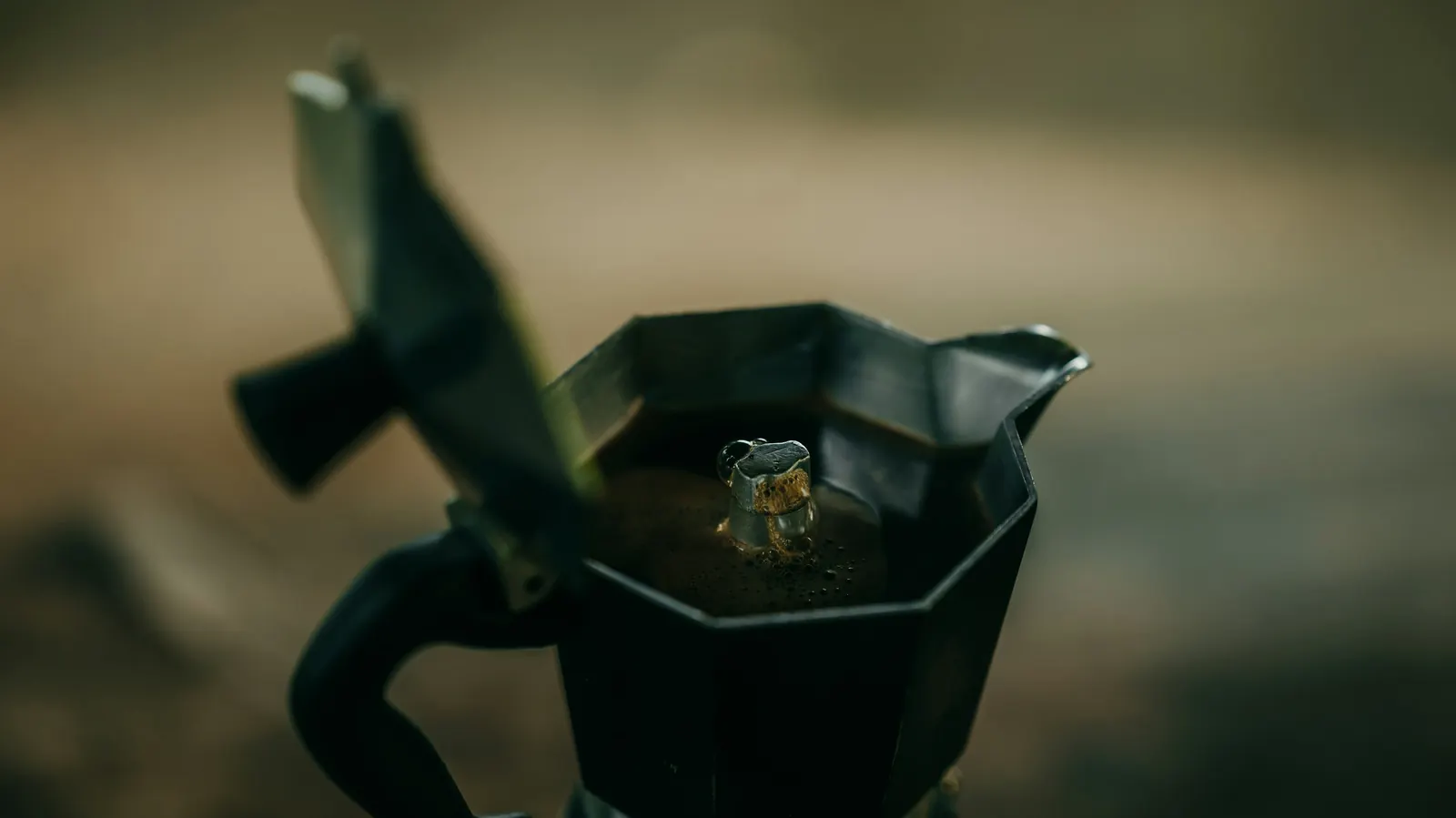
A moka pot is a cheap, sturdy way to get strong coffee from a stove, but it is not the only one, and it is not right for everyone. Some people are fed up with a pot that sputters if the heat is too high, a gasket that wears out, or an aluminum body that will not work on their induction cooktop. Others want something it cannot do: a true espresso shot, a cup brewed on the road with no stove at all, or a sweet Vietnamese iced coffee.
This guide looks at what to use instead and what each option really gives you. In a restaurant kitchen we judge a coffee tool the same way we judge a pan: how much attention it needs, how fast it cleans up and whether it gives the same result every day. Six tools pass that test, and each one does a different job.
Julia’s earns a commission on purchases made through links on this page, at no cost to you. Recommendations are based on what a restaurant kitchen looks for, product specifications and verified buyer reports.
Why people look for a moka pot alternative
The moka pot sits between drip coffee and espresso. The Wikipedia entry on the moka pot describes extraction at “relatively low pressures of 1 to 2 bar”, against the 9 bar named in espresso standards, and puts moka coffee at about 3 to 4 percent dissolved solids, with espresso at 9 to 10 percent and drip at about 2 percent. That is why moka coffee tastes strong but is not espresso. Our comparison of the moka pot vs espresso machine goes into that difference in detail.
The usual reasons to look elsewhere:
- You want real espresso. A moka pot cannot reach espresso pressure. A lever press, a hand-pump brewer or a pump machine can.
- Your stove is the problem. Classic aluminum moka pots need gas or a conventional electric burner. Several tools here need no burner at all, only water from a kettle.
- You are tired of watching the pot. A moka pot needs attention near the end of the brew. A Vietnamese phin drips on its own, and an electric cezve heats and switches itself off.
- You want a different style of coffee. Turkish coffee and Vietnamese coffee are traditions of their own, not moka pot substitutes, but both give a small, strong cup.
If you like the moka pot and only need a better one, read our guide to the best moka pot first. A stainless pot with an induction base fixes the stove problem without changing how you brew.
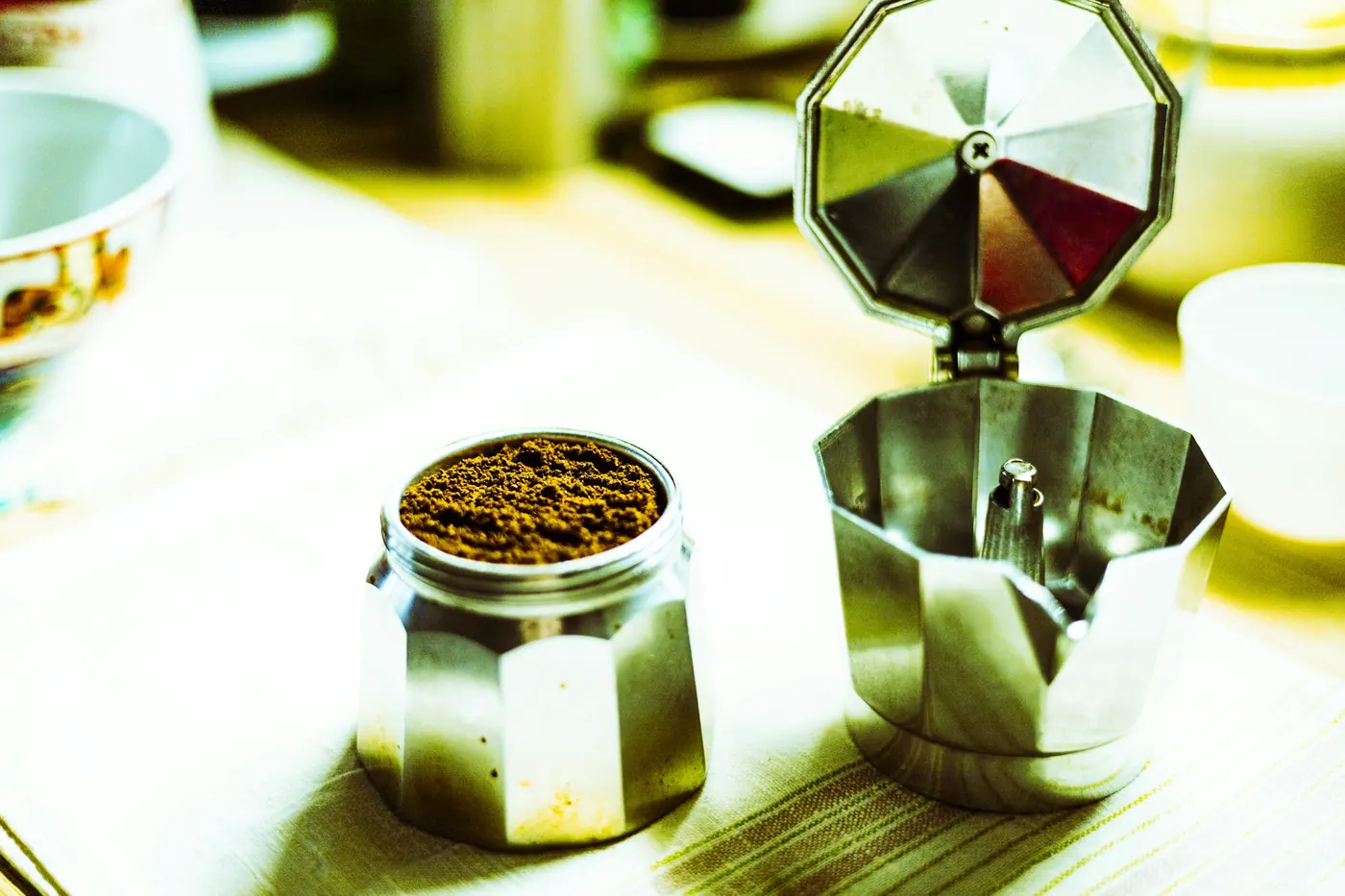
Quick verdict: the best moka pot alternative
For most people the best moka pot alternative is the AeroPress Clear: it makes a small, concentrated cup in about two minutes, needs only hot water and cleans up with one push. If you want genuine espresso without buying a machine, the Flair Classic lever press reaches espresso pressure by hand. For strong coffee with sweetened milk, a Thang Long phin is the simplest and cheapest tool here, and if you want espresso from a plug-in machine with a milk wand, the De’Longhi Stilosa is the entry point.
Five ways to replace a moka pot, side by side
Five standout options, one for each kind of coffee drinker, with what the maker or listing states. All six tools are reviewed in full below.
| Brewer | Best for | How it brews | Makes | Buy on Amazon |
|---|---|---|---|---|

AeroPress Clear Coffee PressBest overall
|
Strong cup, fast cleanup | Steep, then press through paper | 10 oz, 1 to 2 cups | View on Amazon |
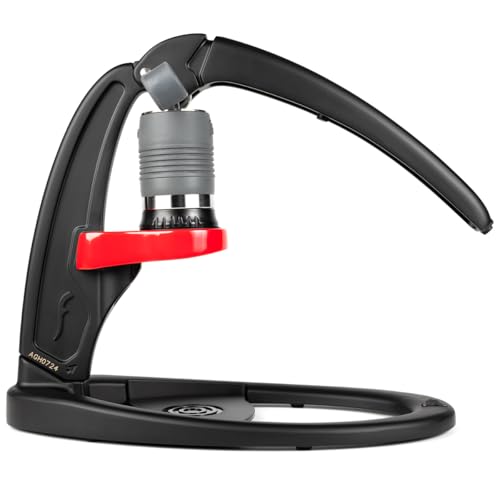
Flair Classic Manual Lever Espresso MakerBest for real espresso
|
Espresso without a machine | Hand lever, 9 bar target | One shot, up to 40 ml | View on Amazon |

Thang Long Screw-Down Vietnamese Phin, 8 ozBest for coffee with milk
|
Slow, strong single cups | Gravity drip through metal | About 6 to 7 oz | View on Amazon |

Arzum Cezve Electric Turkish Coffee MakerBest for Turkish coffee
|
Unfiltered coffee for several | Heated in the pot, 800 W | 600 ml, 1 to 4 cups | View on Amazon |

De’Longhi Stilosa Espresso Machine with TamperBest plug-in machine
|
Espresso and milk drinks | 15-bar electric pump | Single or double shot | View on Amazon |
Six picks for a moka pot alternative
The six tools below run from the easiest everyday swap to the most specialized. They use four different methods, so read the “skip it if” line for each before you buy.
1. AeroPress Clear Coffee Press – Strong Coffee in Two Minutes
The AeroPress is the most forgiving way to get a small, strong cup without a moka pot. You steep the coffee in hot water, then push it through a paper micro-filter with a plunger. The Wikipedia entry on the AeroPress notes that the pressure makes it “capable of brewing highly concentrated coffee”, and that it can also make ordinary filter-strength coffee. Use less water and you get a concentrate you can drink short or stretch with hot water or milk.
AeroPress puts the routine at about two minutes on the listing: add coffee and water, wait 30 seconds, then press. Cleanup is the reason many people never go back. The used grounds pop out in one puck, and you rinse the chamber. There is no gasket to replace, no stove to watch and nothing hot to handle except the water.
This is the Clear version, which AeroPress’s comparison page lists as Tritan, 10 ounces, for one to two cups, with paper micro-filters, a stirrer and a scoop included. The paper filter gives a cleaner cup than a moka pot’s metal basket. The limits are size and style: it is a one-person brewer, and the cup is strong but filtered, without the heavy body of moka coffee. We also list the AeroPress Clear in its black tint on our French press alternative page; it appears here again because it is the most direct answer to this question too.
Why we like it
- Can brew a concentrated cup, per Wikipedia’s AeroPress entry
- About two minutes from start to finish, per the listing
- Grounds eject in one push, then a rinse
- No burner needed, so any stove type works
Key specifications
| Model | AeroPress Clear, part 90CL01 |
|---|---|
| Brew method | Steep, then press through a paper micro-filter |
| Pressure | Hand pressure; no bar figure stated |
| Makes | 10 oz, 1 to 2 cups |
| Material | Tritan |
| Heat source | None; hot water from a kettle |
| Cleaning | Pop out grounds, rinse |
| Warranty | One year |
Why we recommend it
Anyone who uses a moka pot for one or two strong cups in the morning and wants less fuss. It works on any kitchen setup with a kettle, and it travels well.
Skip it if you want true espresso with crema or need coffee for four at once; it is a small, hand-pressed brewer.
Pros and cons
Pros
- Quick to brew and quicker to clean
- Strength is easy to adjust
- Shatterproof Tritan, per AeroPress
Cons
- Not espresso pressure
- Small batch
- Needs paper filters
2. Flair Classic Manual Lever Espresso Maker – Espresso Pressure by Hand
If your real complaint about the moka pot is that it is not espresso, this is the honest fix that does not need a machine. The Flair Classic is a direct lever press: you load the coffee into the portafilter, pour boiled water into the brewing cylinder and pull down on the lever. Flair’s product page talks about “9BAR brewing” and includes a pressure gauge so you can see where you are. Lever espresso is not new; Wikipedia’s espresso machine entry traces the design back to Gaggia in 1945.
Flair’s page gives a dose of 12 to 18 grams and a yield of up to 40 ml, and it says you need “freshly roasted coffee and a kettle that can boil water.” It comes with two portafilters. Flair says a burr grinder is essential for the bottomless one, while the flow-control portafilter can be used with any grinder or pre-ground coffee, which makes it easier to start. The brewing head comes off completely for rinsing.
The independent view is strong. GearLab named the Flair Classic its best portable option and credits it with great shots and good crema, while listing its drawbacks plainly: it “does not grind or steam” and you “must heat water separately.” It makes one shot at a time, so a round of drinks for a family is slow work.
Why we like it
- Built for 9-bar brewing with a gauge, per Flair
- GearLab’s best portable option
- Works with pre-ground coffee using the flow-control portafilter
- Three-year limited warranty on the stand and cylinder, per Flair
Key specifications
| Model | Flair Classic, 797822791673 |
|---|---|
| Brew method | Manual direct lever |
| Pressure | 9 bar target; gauge included |
| Makes | One shot, up to 40 ml from 12 to 18 g |
| Material | Cast aluminum stand, stainless steel brewing head |
| Heat source | None; boiled water from a kettle |
| Cleaning | Detachable brewing head, rinse |
| Warranty | 3-year limited on stand and cylinder (Flair) |
Why we recommend it
Coffee drinkers who want straight espresso, enjoy a little manual work and do not want a machine on the counter.
Skip it if you drink lattes most days: it has no steam wand, so you would need a separate milk frother. Also note that the Amazon listing data mentions a five-year warranty in one field and three years in another; Flair’s own page says three years on the stand and cylinder.
Pros and cons
Pros
- Real espresso pressure without electricity
- Strong independent review
- Two portafilters for beginners and enthusiasts
Cons
- One shot at a time
- No milk steaming
- Best results need a good grinder
3. WACACO Minipresso GR2 Portable Espresso Maker – Pocket-Size Espresso

A moka pot is a common camping brewer, but it needs a flame. The Minipresso GR2 needs only hot water and your hand. It is a small piston pump: you fill the basket with ground coffee, pour hot water into the built-in tank, unlock the piston and pump until espresso comes out. WACACO’s listing gives a maximum of 18 bar, an 80 ml tank, a basket that adjusts from 8 to 12 grams and shots up to 60 ml. It says the length is 12.5 cm and the weight 285 g.
Packstack’s review summary agrees it makes “genuine espresso with crema, not just hot brown water” and says it is easy to take apart and clean. It also gives the catch plainly: it needs “a genuinely fine, espresso-grade grind”, so most store-bought grounds will not work well, and pumping gets tiring if you make several cups. Packstack lists the weight as 363 g, more than the listing’s figure.
The double-wall body stays cool to hold, per the maker. Think of it as a one-shot tool for trips and the office, not a way to serve a table.
Why we like it
- Up to 18 bar by hand, per WACACO
- No battery or electricity needed
- Adjustable 8 to 12 g basket
- Packstack reports real crema and easy cleanup
Key specifications
| Model | Minipresso GR2 |
|---|---|
| Brew method | Hand-pumped piston |
| Pressure | Up to 18 bar |
| Makes | One shot, up to 60 ml; 80 ml tank |
| Material | Not fully stated; shell is 20% biomass polymer |
| Heat source | None; hot water from a kettle |
| Cleaning | Comes apart for rinsing |
| Warranty | Not stated |
Why we recommend it
Campers, travelers and anyone who wants a real shot at work, where a stove or a machine is not an option.
Skip it if you only have pre-ground drip coffee; it needs an espresso-fine grind to work well.
Pros and cons
Pros
- Fits in a bag
- Espresso-level pressure
- Cool-touch body, per WACACO
Cons
- Needs a fine grind
- Tiring for several cups
- Warranty not on the listing

4. Thang Long Screw-Down Vietnamese Phin, 8 oz – Slow Drip, Strong Cup
The phin is the simplest tool on this page, and for many moka pot owners it is the most satisfying swap. Wikipedia’s entry on Vietnamese iced coffee describes it as “a traditional metal filter, called a phin”, with hot water poured through dark-roast coffee into a glass that often holds sweetened condensed milk. Pour that over ice and you have a strong, sweet iced coffee that holds up well next to a plate of chilaquiles.
The phin sits on top of your mug. You add coffee, press it down with the insert, pour in hot water and wait. This Thang Long version has a screw-down insert, so you can set how firmly the coffee is packed, which the listing says controls the strength. It is a four-piece set: brew chamber, screw-down insert, drip tray and lid. The listing says it is made in Vietnam from stainless steel, is dishwasher safe and carries a lifetime warranty, and that the brew takes about four to five minutes. A medium-coarse grind is recommended.
It makes one cup: the 8 oz size brews about 6 to 7 ounces, per the listing. Nothing is pressurized, so it is not espresso, but nothing can sputter or boil over either.
Why we like it
- No paper, power or burner needed
- Screw-down insert sets the strength
- Made in Vietnam, stainless steel, per the listing
- Dishwasher safe, with a lifetime warranty from the seller
Key specifications
| Model | Screw-down phin, medium 8 oz |
|---|---|
| Brew method | Gravity drip through a metal filter |
| Pressure | None (gravity) |
| Makes | About 6 to 7 oz, one cup |
| Material | Stainless steel |
| Heat source | None; hot water from a kettle |
| Cleaning | Dishwasher safe |
| Warranty | Lifetime, per the listing |
Why we recommend it
Anyone who drinks moka coffee mostly with milk or over ice, and wants a tool that costs little, takes no space and cannot break.
Skip it if you are in a hurry in the morning; it drips for several minutes and makes only one cup at a time.
Pros and cons
Pros
- Very simple, nothing to wear out
- Strength is adjustable
- Great for iced coffee with condensed milk
Cons
- Slow, one cup at a time
- Metal filter lets some fines through
- Sold by a third-party store, not Amazon
5. Arzum Cezve Electric Turkish Coffee Maker – Turkish Coffee Without Watching
Turkish coffee is the oldest answer to strong coffee without a moka pot. According to Wikipedia’s Turkish coffee entry, very finely ground coffee, cold water and optional sugar go into a narrow pot called a cezve and are heated until the coffee nearly boils and foams; the grounds are not filtered, and the coffee is served in small cups of about 90 ml. The result is thick and strong, with a layer of grounds at the bottom of the cup that you leave behind.
A plain stovetop cezve works, but the tricky part is catching the foam before it boils over. Arzum, a Turkish appliance maker, sells this electric version for US kitchens. The listing gives a stainless steel body, a 600 ml capacity for one to four cups, 800 watts, a 120 V US plug, a cordless pot on a base, boil-dry protection and a lid, with a two-year manufacturer’s warranty. It is cleaned by hand.
The listing does not name a US safety certification, although the part number ends in “UL”. It is sold by a third-party store, à la turque, rather than by Amazon, so check the seller’s return terms.
Why we like it
- Makes one to four cups at once
- Boil-dry protection, per the listing
- Stainless steel pot with a lid
- Two-year manufacturer’s warranty
Key specifications
| Model | Arzum Cezve, AR3088-UL |
|---|---|
| Brew method | Coffee heated in the pot, unfiltered |
| Pressure | None |
| Makes | 600 ml, 1 to 4 cups |
| Material | Stainless steel |
| Heat source | Electric, 800 W, 120 V |
| Cleaning | By hand |
| Warranty | Two years, manufacturer |
Why we recommend it
Households that want small, strong cups for several people at once and like the idea of Turkish coffee without standing over a flame.
Skip it if grounds in the cup bother you; Turkish coffee is unfiltered by design. You will also need coffee ground to a powder, finer than for a moka pot.
Pros and cons
Pros
- Serves up to four in one batch
- No stove needed
- Cordless pot pours at the table
Cons
- Grounds settle in the cup
- No US safety certification stated
- Third-party seller

6. De’Longhi Stilosa Espresso Machine with Tamper – Pump Espresso and a Steam Wand
If you have decided you want an espresso machine, the Stilosa is the entry point from a major maker. It uses a 15-bar pump, which De’Longhi calls the right pressure for a single or double espresso, and it has a manual steam wand for lattes and cappuccinos, which no other tool on this page offers. This listing bundles the EC260BK machine with a De’Longhi tamper, and it is sold by Amazon.com.
Be clear on what the low cost buys. GearLab lists it as “inexpensive, easy to operate” with a “small footprint”, but also “slow to heat up” with no automation. It scored its espresso 4 out of 10 and described one shot as “watery” next to a far pricier Breville, and said the wand heated milk too quickly to control precisely. Its bottom line: a good option on a tight budget if you do not mind giving up some milk quality. In other words, it beats a moka pot for milk drinks but it is not café espresso. We also list the Stilosa on our best espresso machine guide; it appears again here because it is the most affordable pump machine from a major maker.
Why we like it
- 15-bar pump, per De’Longhi
- Steam wand for milk drinks
- Tamper included in this bundle
- Sold by Amazon.com
Key specifications
| Model | Stilosa EC260BK with DLSC058 tamper |
|---|---|
| Brew method | Electric pump espresso |
| Pressure | 15-bar pump |
| Makes | Single or double espresso |
| Material | Not fully stated; stainless steel tamper base |
| Heat source | Electric |
| Cleaning | Described as easy to clean; see the manual |
| Warranty | Not stated on the listing |
Why we recommend it
Moka pot owners who mostly make café con leche or lattes and want a steam wand without a big spend.
Skip it if straight espresso is the point; GearLab rated its shots well below the best machines, and the Flair Classic scored far higher for espresso.
Pros and cons
Pros
- Real pump pressure
- Steams milk
- Small footprint, per GearLab
Cons
- Espresso quality is modest
- Slow to heat, per GearLab
- Takes counter space and an outlet
How to choose a brewer to replace your moka pot
Decide what “strong” means to you
Strong can mean concentrated, like espresso, or heavy and unfiltered, like Turkish coffee. The Flair, the Minipresso and the Stilosa aim at espresso. The cezve gives body and grounds. The AeroPress and the phin sit closer to the moka pot itself: small, strong cups without espresso pressure.
Count the cups
Every tool here except the cezve is really a one-person brewer. A six-cup moka pot makes about six small servings in one go. If you brew for a household, the Arzum cezve or a larger moka pot will serve you better than pulling shots one after another.
Check your grinder
A moka pot wants a fairly fine grind. Lever and pump espresso want finer still, and Turkish coffee wants a powder. The phin and the AeroPress are the most forgiving with pre-ground coffee. If you plan to grind at home, our guide to the best hand coffee grinder covers grinders that reach espresso fineness.
Think about heat and power
Four of these tools need only hot water, which makes them indifferent to your stove type; a kettle does the work. The cezve and the Stilosa need an outlet. If you are buying a kettle for this, a gooseneck pours more precisely into a phin or a lever cylinder; see our stovetop gooseneck kettle guide.
Milk or no milk
Only the Stilosa steams milk. If lattes are the daily drink, that matters more than anything else on this list. For condensed-milk iced coffee, the phin is the traditional tool.

How we chose these six brewers
We started from the jobs a moka pot does, strong small cups from simple equipment, and looked for tools that do those jobs a different way. We kept one tool per method rather than several versions of the same idea, and we left out a steam espresso machine because GearLab rated its espresso the lowest in its lineup. Specifications come from the Amazon listings, AeroPress’s comparison page and Flair’s product page. Method and strength points come from the Wikipedia entries named above, and independent views from GearLab’s espresso machine review and Packstack’s Minipresso GR2 summary. Every pick was in stock with a new offer when we checked. We have not used these products ourselves, and nothing here says Julia’s uses them.
Strong coffee without a moka pot, questions answered
What can I use instead of a moka pot?
An AeroPress for a quick, concentrated cup; a manual lever press or a hand-pump espresso maker for true espresso; a Vietnamese phin for slow-drip coffee with milk; a cezve for Turkish coffee; or a pump espresso machine if you want a steam wand.
How do I make strong stovetop coffee without a moka pot?
Turkish coffee is the classic stovetop method. Following the method Wikipedia describes, put very finely ground coffee, cold water and sugar if you like into a small, narrow pot, heat it until it nearly boils and foams, take it off the heat, and serve without filtering. Let the grounds settle in the cup before you drink.
Which alternative comes closest to espresso?
The Flair Classic, the Minipresso GR2 and the Stilosa all use espresso-level pressure, which a moka pot does not reach. Of those, GearLab scored the Flair Classic’s espresso far higher than the Stilosa’s.
Is AeroPress coffee as strong as moka coffee?
It can be. Wikipedia’s AeroPress entry says the pressure lets it brew highly concentrated coffee. How strong your cup is depends mostly on how much coffee you use for the water.
Can I use pre-ground coffee in these?
Yes in the AeroPress and the phin. Flair says its flow-control portafilter works with pre-ground coffee too. The Minipresso needs an espresso-fine grind, and Turkish coffee needs a powder-fine grind, so buy coffee sold for those methods or grind it yourself.
Our last word on life after the moka pot
For most kitchens, the AeroPress Clear is the easiest switch: strong coffee, any stove, two-minute cleanup. If you want espresso itself, buy the Flair Classic, and if a steam wand matters more than the shot, the Stilosa. And if you still like what a moka pot does, our best moka pot guide and our moka pot vs French press comparison will help you pick a better one. When you would rather someone else make the coffee and breakfast, see the menu or call to order.