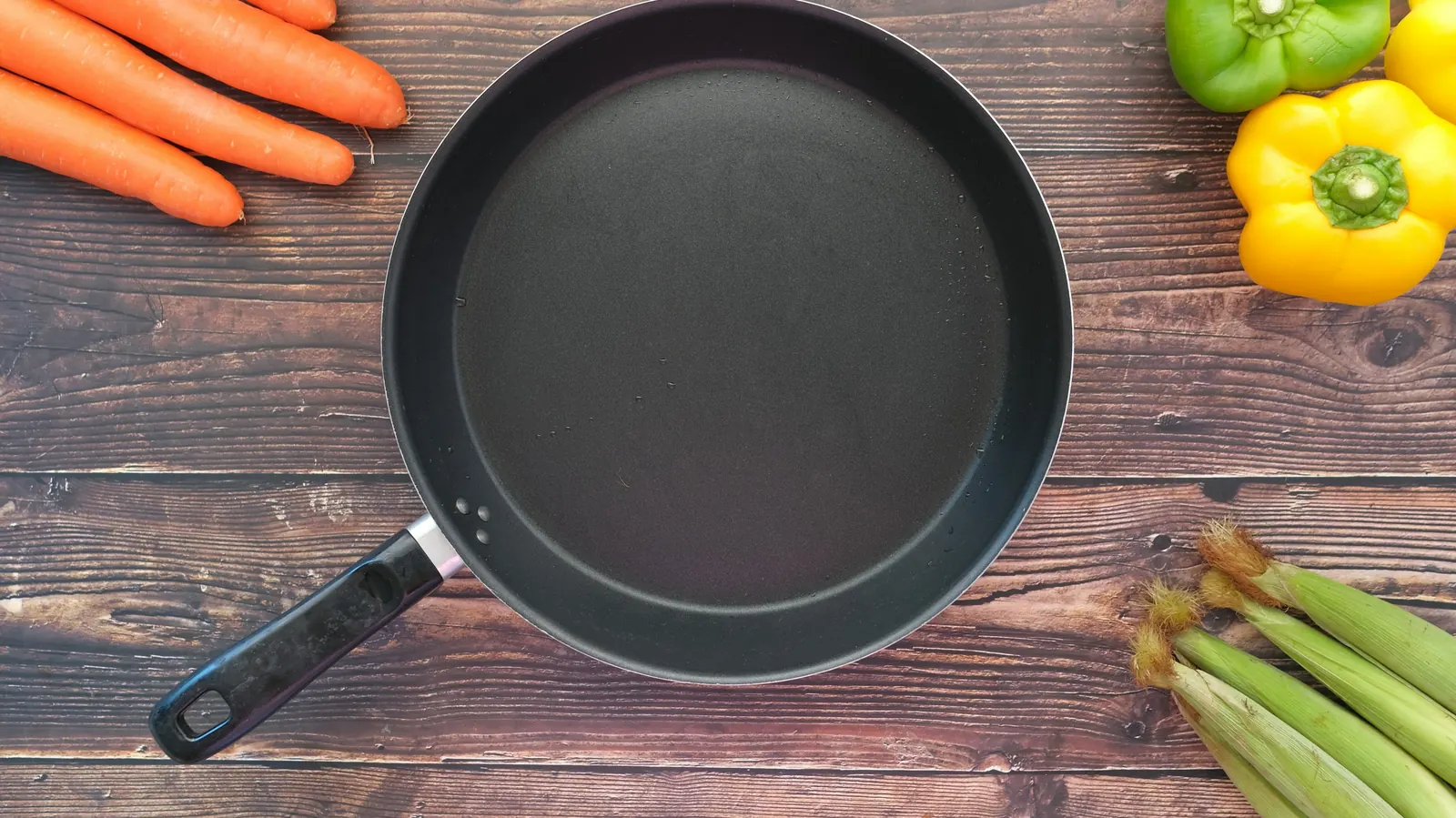
You have a bag of masa harina, a hot pan and no tortilla press. The good news is that a press is a convenience, not a requirement. All it does is flatten a ball of dough evenly between two flat surfaces, and most kitchens already hold something flat and heavy enough to do the same job, or a rolling pin that suits flour dough better than any press.
The less good news is that the substitutes are not equal. Some work well for corn masa and badly for flour, some take practice, and one is an appliance in its own right. This guide explains why people look for a tortilla press alternative, which household tools actually work, what results to expect from each, and which ones are worth buying if you do not already own them.
Julia’s earns a commission on purchases made through links on this page, at no cost to you. Recommendations are based on what a working Mexican kitchen looks for in tortilla tools, the makers’ own specifications and published techniques and reviews, which we name.
Why people look for a tortilla press alternative
The reasons fall into a few groups, and the right substitute depends on which one is yours.
- You want tortillas tonight. Ordering a press means waiting, and the masa is already mixed. A pie plate or a skillet in the cupboard will do.
- Storage. A cast iron press is a heavy object with one job. Some cooks would rather use a tool they already store.
- You make flour tortillas. America’s Test Kitchen found flour dough too elastic for a press, so a press is the wrong tool to begin with; a rolling pin is the usual answer.
- You want to try before you buy. Making a few batches with a pie plate tells you whether homemade corn tortillas are worth a dedicated press.
- Effort. A light press or a manual method asks more of your arms. Some people with sore hands or wrists look for a tool that does more of the work, including an electric one.
Quick verdict: the best tortilla press alternative
For corn tortillas, the best tortilla press alternative is a flat-bottomed glass pie plate such as the Pyrex fluted rim pie plate: America’s Test Kitchen presses masa with one, inside a zipper-lock bag cut open at the sides, and the clear glass lets you watch the tortilla spread. A heavy Lodge cast iron skillet works the same way with more weight behind it. For flour tortillas, use a slim rolling pin such as the GOBAM 13-inch, which handles flour dough better than a press does. If you want an appliance that presses and cooks flour tortillas in one step, the Starfrit Electric Roti Maker is the electric option. Whatever you use, line it with thin plastic.
Five press alternatives side by side
Our five standout picks, one for each kind of cook, with what each maker or listing states. All six products are reviewed in full below.
| Alternative | Best for | Dough it suits | Results to expect | Buy on Amazon |
|---|---|---|---|---|

Pyrex Fluted Rim Glass Pie Plates, 2-PackBest overall alternative
|
Corn tortillas tonight | Corn masa | Thin rounds; you see the spread through the glass | View on Amazon |

Lodge 10.25-inch Cast Iron SkilletHeaviest everyday weight
|
Cooks who want weight to do the work | Corn masa | Even pressure; spread hidden under the pan | View on Amazon |

GOBAM 13-inch Wood Rolling PinBest for flour tortillas
|
Flour tortillas of any size | Flour dough; corn between plastic | Thin, wide rounds after some practice | View on Amazon |

Starfrit Electric Roti MakerBest electric option
|
Frequent flour tortillas, less effort | Rested flour dough | Pressed and cooked in one step | View on Amazon |

Masienda Tortilla Press Liners, 5-packLiners for any method
|
Clean release with any substitute | Fresh corn masa | Thin plastic that peels away cleanly | View on Amazon |
Product images from Amazon. Sizes and materials are as stated by each maker or listing; check the listing before you buy.
How each substitute flattens dough
A tortilla press works because it squeezes a ball of masa evenly from above and below at once. Any substitute for corn tortillas has to copy that: a flat, rigid surface on top, a flat counter underneath, plastic on both sides of the dough, and enough weight or push to spread the ball thin. America’s Test Kitchen’s technique for tortillas without a press does exactly this with a glass pie plate, pressing a 1-inch ball into a round about 6½ inches wide and roughly a sixteenth of an inch thick. Food Republic, describing the same problem, lists a pie plate, a flat-bottomed casserole dish, a large skillet, a hardcover book and a cutting board as workable weights.
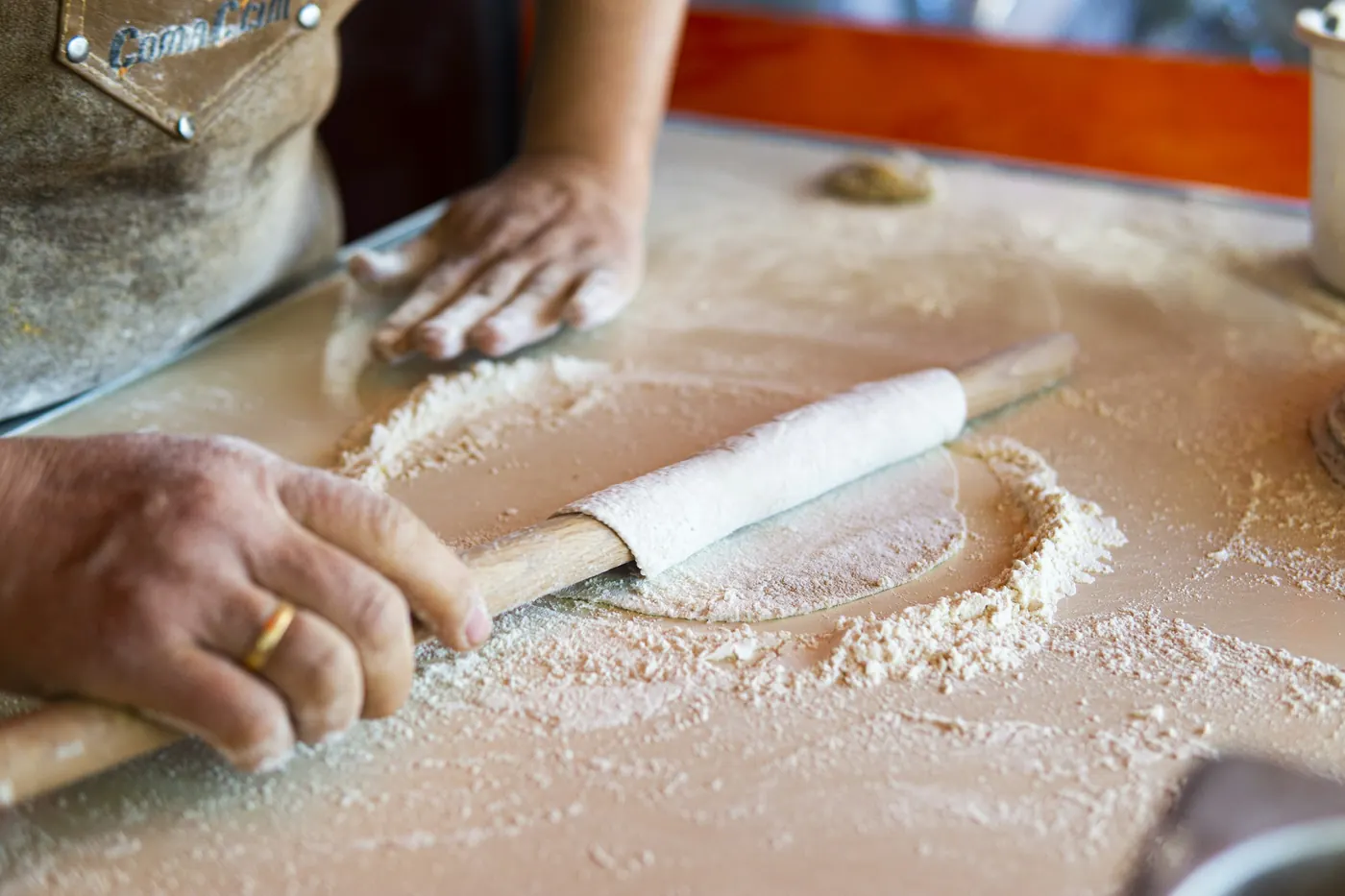
A rolling pin works differently. It stretches the dough a little with each stroke, which suits flour dough, whose gluten pulls back when it is squeezed all at once. America’s Test Kitchen’s tortilla press review found flour dough too elastic for a press and recommends a rolling pin, and says corn tortillas, which have no gluten, need to be pressed rather than rolled to stay cohesive. That one fact sorts most of the options below: flat weights for corn, a pin for flour. Our comparison of a tortilla press vs rolling pin goes through the two methods in detail.
Six tools that can stand in for a press
These are all from identifiable makers and were in stock on Amazon on the day of writing. Most cooks will already own one of the first three; buy only what you are missing. Each review says what results to expect and one honest reason to skip it.
1. Pyrex Fluted Rim Glass Pie Plates, 2-Pack – See the Tortilla as You Press
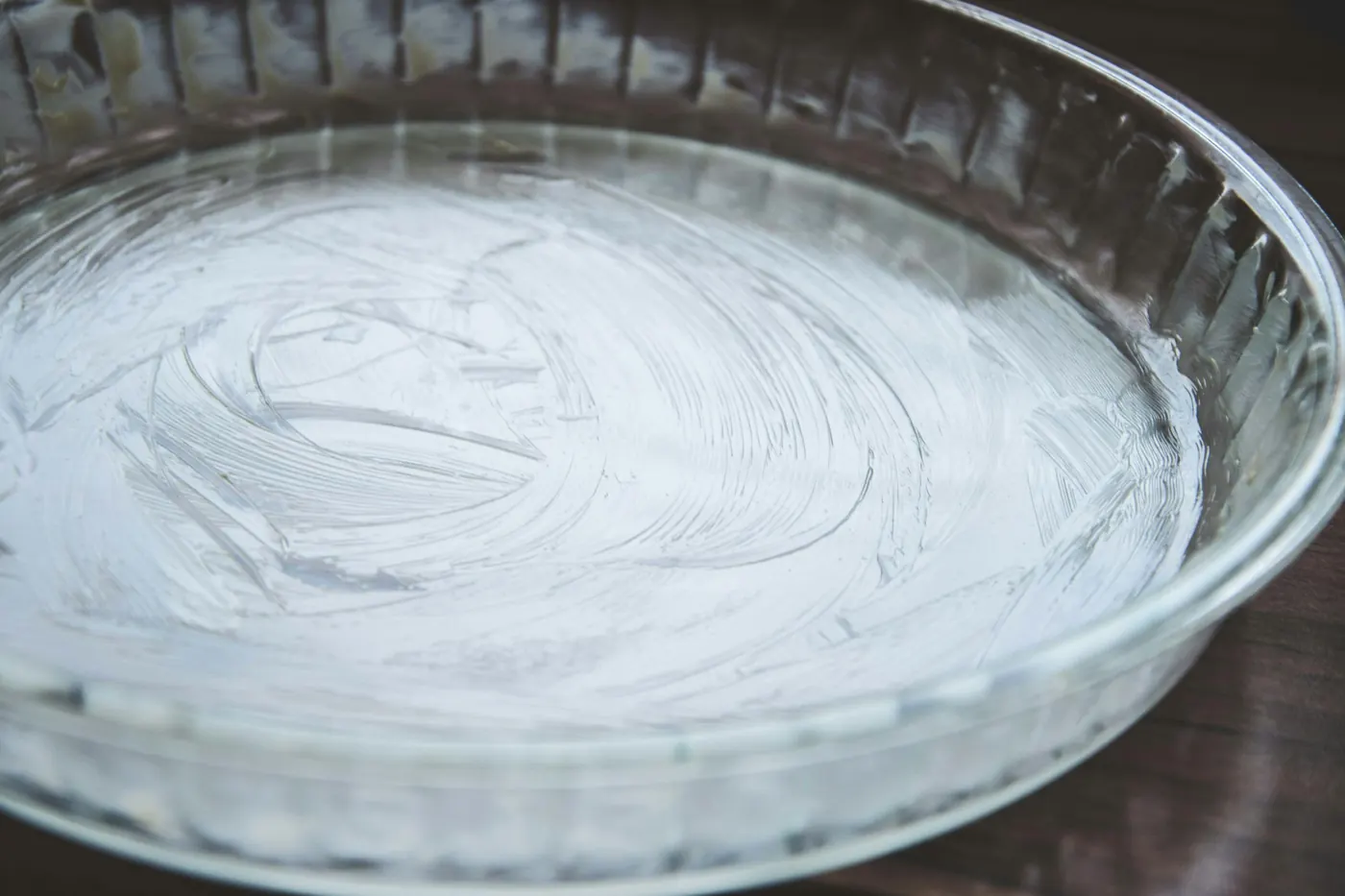
A glass pie plate is the substitute America’s Test Kitchen uses, and it has one real advantage over every other heavy object in the kitchen: you can see through it. Lay a ball of masa inside a zipper-lock bag cut open along both sides, fold the plastic over, set the pie plate on top and press straight down. Through the glass you can watch the round spread and stop when it reaches the size you want, then lift, turn the tortilla in its plastic and press again if one side is thicker.
Pyrex’s fluted plate is a plain clear tempered glass dish with a scalloped edge, and this listing is a pack of two, made in the USA. Pressing uses the flat underside, which is narrower than the rim. The listing does not give the diameter, so check the underside against the 6½-inch tortilla in America’s Test Kitchen’s method. Either way, the plates go back to baking pies when you are done.
Expect corn tortillas that are a little less even than from a heavy press, because your arms supply all of the force and a pie plate tilts easily. Press with the heels of both hands spread across the base, keep the dough centered, and use the second press to correct any wedge.
Why we like it
- The tool in America’s Test Kitchen’s no-press method
- Clear glass shows how far the masa has spread
- Flat underside for even pressure
- Two plates that go back to baking pies, so they earn their cupboard space
Key specifications
| Model | 8541890916 (listing model field) |
|---|---|
| Type | Glass pie plate used as a press weight |
| Material | Glass |
| Size | Not stated on the listing |
| Weight | Not stated |
| Dough it suits | Corn masa |
| Cleaning | Not stated on the listing |
| Made in | USA, per the listing |
Why we recommend it
Choose it if you want to try homemade corn tortillas before buying a press, or make them only now and then. It is the closest a household dish gets to the control a press gives you.
Skip it if you make corn tortillas every week; a heavy press does the work in one pull and saves your wrists.
Pros and cons
Pros
- Watch the tortilla spread
- Doubles as bakeware
- Published method to follow
Cons
- All the force comes from you
- Tilts easily, so edges can vary
- Size and weight not stated
2. Lodge 10.25-inch Cast Iron Skillet – Weight That Does the Pressing
America’s Test Kitchen found that weight is what makes a tortilla press work: a heavy press makes an evenly thin tortilla with little force. A cast iron skillet brings the same principle to a pan you probably already own. Set the masa between two sheets of plastic, place the skillet on top with its flat underside centered over the ball, and press down evenly on the rim and handle. The iron’s weight does part of the job before you push at all.
Lodge’s 10.25-inch skillet is the standard size and the one most kitchens have. Lodge says it arrives pre-seasoned, is made in the USA and carries a lifetime warranty, and it lists it for stovetop, oven, grill and campfire. It also gives you a second use straight away: once the tortilla is pressed, the same skillet, heated dry, can cook it, as America’s Test Kitchen’s method does with a cast iron or nonstick skillet.
The trade-off is that you cannot see the masa under an iron pan, so the first few tortillas are guesswork. Lift and check after the first press, and keep the ball small until you know how far it spreads. Lodge’s listing does not state the weight or the size of the flat base.
Why we like it
- Heavy cast iron supplies much of the pressing force
- Presses and then cooks the tortilla
- Pre-seasoned and made in the USA, per Lodge
- Lifetime warranty, per the listing
Key specifications
| Model | L8SK3 |
|---|---|
| Type | Cast iron skillet used as a press weight |
| Material | Pre-seasoned cast iron |
| Size | 10.25 inches |
| Weight | Not stated in the listing |
| Dough it suits | Corn masa |
| Cleaning | Not stated in the listing; dry and oil, as for any cast iron |
| Made in | USA |
Why we recommend it
Choose it if you find a pie plate takes too much push, or want one pan that presses and cooks. If you already own a cast iron skillet, you already own this alternative.
Skip it if you want to see the tortilla as it spreads; the glass pie plate is easier to judge.
Pros and cons
Pros
- Weight does much of the work
- Also cooks the tortillas
- Lifetime warranty
Cons
- Cannot see the masa spread
- Handle makes it lopsided to press
- Must be kept dry and oiled
3. OXO Good Grips 8 x 8-inch Glass Baking Dish – A Square Weight with Handles
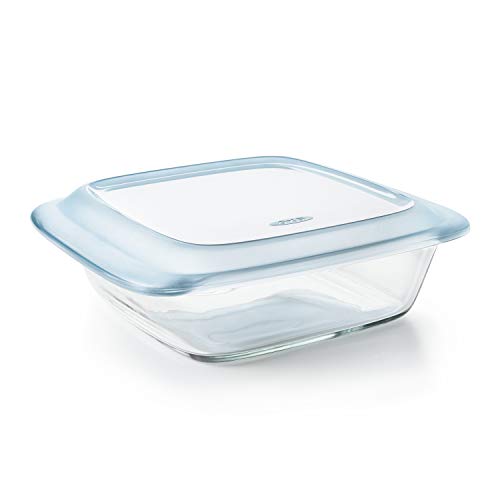
Food Republic names a flat-bottomed casserole dish among the weights that can replace a press, and a square glass baking dish is the version most kitchens own. It works like the pie plate: masa in plastic on the counter, dish on top, press straight down through the base. The square shape is easier to keep level than a round plate, and the handles give you somewhere to hold.
OXO’s 8 by 8-inch dish is borosilicate glass, which OXO says withstands extreme temperature changes and goes from freezer to oven. The glass is clear, so you can watch the masa spread as you can with the pie plate, and OXO lists it as microwave, dishwasher and freezer safe. It comes with a lid, which is irrelevant to tortillas but handy for leftovers.
Two cautions. OXO’s dimension markings are printed on the dish, but OXO does not state the size of the flat base, and a glass baking dish is sold for baking, not pressing, so press with steady, even force rather than leaning your full weight on one corner.
Why we like it
- Flat-bottomed dish, a weight Food Republic suggests
- Clear borosilicate glass shows the spread
- Generous handles for a steady grip
- Dishwasher safe, per OXO
Key specifications
| Model | 11176200 |
|---|---|
| Type | Glass baking dish used as a press weight |
| Material | Borosilicate glass; BPA-free lid |
| Size | 8 x 8 inches, 2 quarts |
| Weight | Not stated |
| Dough it suits | Corn masa |
| Cleaning | Dishwasher safe |
| Made in | Not stated |
Why we recommend it
Choose it if you already bake in square dishes and want a press stand-in that is easy to hold level.
Skip it if you own a glass pie plate; it does the same job, and a published method backs it.
Pros and cons
Pros
- Easy to keep level
- See-through glass
- Useful far beyond tortillas
Cons
- Flat base size not stated
- Not sold for pressing
- Your arms supply the force
4. GOBAM 13-inch Wood Rolling Pin – The Right Tool for Flour Dough
For flour tortillas, a rolling pin is not a second-best substitute; it is the better tool. America’s Test Kitchen recommends one for flour dough because the dough is too elastic for a press, and both its no-press method and King Arthur Baking’s flour tortilla recipe roll each round on a lightly floured surface after the dough has rested; King Arthur rests it for 30 minutes and rolls to 8 inches.
A slim, handle-free pin suits tortillas best, because you can feel the dough under your palms and turn the round easily between strokes. GOBAM’s medium pin is 13 inches long and 1.38 inches across, handcrafted from beech wood, hand-polished and finished with cooking oils, according to GOBAM. The extra length over its 11-inch sibling gives room for larger flour tortillas.
It can roll corn masa too, between two sheets of plastic, as Food Republic describes, but expect rougher edges than with a flat weight, and trim them if you want neat rounds. Care is simple: hand wash and pat dry, GOBAM says.
Why we like it
- The tool America’s Test Kitchen recommends for flour dough
- Slim, handle-free dowel, 13 x 1.38 inches
- Solid beech wood, finished with cooking oils
- Rolls pie crust and pizza as well
Key specifications
| Model | BM1032 |
|---|---|
| Type | Handle-free rolling pin (dowel) |
| Material | Beech wood |
| Size | 13 x 1.38 inches |
| Weight | Not stated |
| Dough it suits | Flour dough; corn masa between plastic |
| Cleaning | Hand wash and pat dry |
| Made in | Not stated |
Why we recommend it
Choose it if flour tortillas are what you make, or you want burrito-size rounds no press can match.
Skip it if you want even corn tortillas with no practice; a flat weight or a press is easier with masa.
Pros and cons
Pros
- Best results with flour dough
- Any tortilla size
- Fits a drawer
Cons
- Round, even tortillas take practice
- Corn masa edges crack more easily
- Weight and origin not stated
5. Starfrit Electric Roti Maker – Presses and Cooks Flour Tortillas
An electric tortilla maker is an alternative to a press in the sense that it replaces the press, the rolling pin and the comal at once for flour tortillas. Starfrit’s roti maker is two round nonstick plates on a hinge, both heated, with a wide handle. Starfrit says it presses and bakes flatbreads, including Mexican tortillas, roti and chapati, in one step.
The heat is what makes it work with flour. Warm plates soften the dough as they flatten it, so it spreads rather than springing back the way it does in a cold press. The listing gives 1,200 watts, thermostat temperature control, a power light, cool handles, non-slip feet and built-in cord storage. It describes the plates as both 12 inches and 10 inches and gives the size as 9.8 inches, so plan on tortillas of about ten inches at most.
Be clear about what it will not do well. It is built around flour dough; for corn masa, a manual press or one of the flat weights above and a hot comal give a better result, as our guide to the best electric tortilla maker explains. It is also the one alternative here that needs a power outlet and a cupboard of its own.
Why we like it
- Presses and cooks flour tortillas in one step
- 1,200 W with thermostat control, per the listing
- Wide handle for even pressing with less effort
- Nonstick plates and built-in cord storage
Key specifications
| Model | 024825-003-0000 |
|---|---|
| Type | Heated flat press (roti maker) |
| Material | Nonstick plates (coating type not stated); brushed stainless housing |
| Size | About 10 inches (listing gives 9.8 inches; also mentions 12) |
| Weight | Not stated |
| Dough it suits | Rested flour dough |
| Cleaning | Wipe the nonstick plates once cool |
| Made in | Not stated |
Why we recommend it
Choose it if you make flour tortillas often and want the least effort, or if rolling by hand is hard on your wrists.
Skip it if you mainly make corn tortillas; it is the wrong tool for masa, and it needs its own cupboard space.
Pros and cons
Pros
- One-step press and cook
- Little skill needed
- Thermostat control
Cons
- Not suited to corn masa
- Listing inconsistent on plate size
- Coating type and warranty not stated
6. Masienda Tortilla Press Liners, 5-pack – Clean Release Under Any Weight
Every corn method on this page depends on what sits between the masa and the tool. Masienda, which sells heirloom corn masa and its own press, says well-hydrated masa should never go directly on a press and finds parchment and zip-top bags too heavy to peel cleanly off fresh masa. America’s Test Kitchen, on the other hand, finds a zipper-lock bag cut open at both sides releases better than parchment. Both agree on the principle: thin, flexible plastic, not paper.
These are thin plastic liners made for the job. Masienda designed them for its Doña Rosa press but says they can be trimmed to fit any press, and they work just as well under a pie plate, a skillet or a rolling pin. Each has a printed tortilla sizing ruler, which is useful when you cannot see the masa under a pan: lift the top and check the spread. Wipe them after each use, let them dry and reuse them until they are damaged, Masienda says.
The free option still works. A bread bag or a zipper-lock bag cut open along the seams does the same job, and this pack is simply tidier and longer-lasting.
Why we like it
- Thin plastic that peels cleanly off fresh masa
- Trim to any size or shape
- Printed sizing ruler
- Wipe, dry and reuse
Key specifications
| Model | Not stated (pack of 5) |
|---|---|
| Type | Reusable tortilla press liners |
| Material | Thin plastic (type not stated) |
| Size | Trim to fit |
| Weight | Not stated |
| Dough it suits | Fresh corn masa |
| Cleaning | Wipe after use and let dry |
| Made in | Not stated |
Why we recommend it
Choose them if your masa keeps tearing as you peel it, or if you plan to make corn tortillas often enough that cut-up bags become a chore.
Skip them if you are happy cutting liners from bread bags; they do the same job for free.
Pros and cons
Pros
- Right thickness for masa
- Reusable
- Sizing ruler printed on
Cons
- Only five in a pack
- Plastic type not stated
- Free alternatives work too
How to press corn tortillas without a press
This is America’s Test Kitchen’s method, adapted for any of the flat weights above.
- Heat the pan first. Start a dry cast iron or nonstick skillet, or a comal, heating before you shape the first tortilla.
- Portion the masa. Knead it until soft and tacky but not sticky, divide it into 12 portions and roll each into a 1-inch ball. Keep the balls covered.
- Prepare the plastic. Cut a zipper-lock bag open along both sides, or use thin liners, and lay one ball on one half.
- Press. Fold the plastic over and press straight down with the pie plate, dish or skillet until the round is about 6½ inches wide and roughly a sixteenth of an inch thick. Turn it in the plastic and press again if one side is thicker.
- Peel and cook. Peel the plastic off, lay the tortilla in the hot pan and cook until spotty brown on both sides; corn tortillas often puff.
- Keep them warm. Stack the cooked tortillas under a dish towel so they steam and stay pliable.
If the edges crack, the masa is too dry: knead in a little water. If it sticks to the plastic, it is too wet, or the plastic is too heavy. Our guide to the best masa harina for tortillas helps if you are choosing the flour itself.
What we left out, and why
A few other ideas come up whenever people ask about pressing tortillas without a press. Hardcover books and cutting boards appear on Food Republic’s list and do work as weights, but they are harder to keep clean and level than glass or iron. A pasta machine comes up in bakers’ forums as a way to roll flour tortillas thin; we found only anecdotal reports, and a pasta roller makes long sheets rather than rounds, so we did not recommend one. Patting tortillas out by hand is the oldest method of all, and it takes real practice to do well; it is a skill rather than a product. And plastic tortilla presses are cheap, but America’s Test Kitchen found the one it reviewed could not press a tortilla more than about three inches wide.
When an alternative stops making sense
If you find yourself making corn tortillas every week, a press earns its space. A heavy cast iron press flattens a ball evenly in one pull, with no tilting and no guessing, and an 8-inch model fits most kitchens. Our guide to the best tortilla press compares cast iron, aluminum and wooden presses, and our guide to tortilla making tools covers the comal, warmer and masa that go with it.
Tortilla press alternative questions, answered
What can I use if I don’t have a tortilla press?
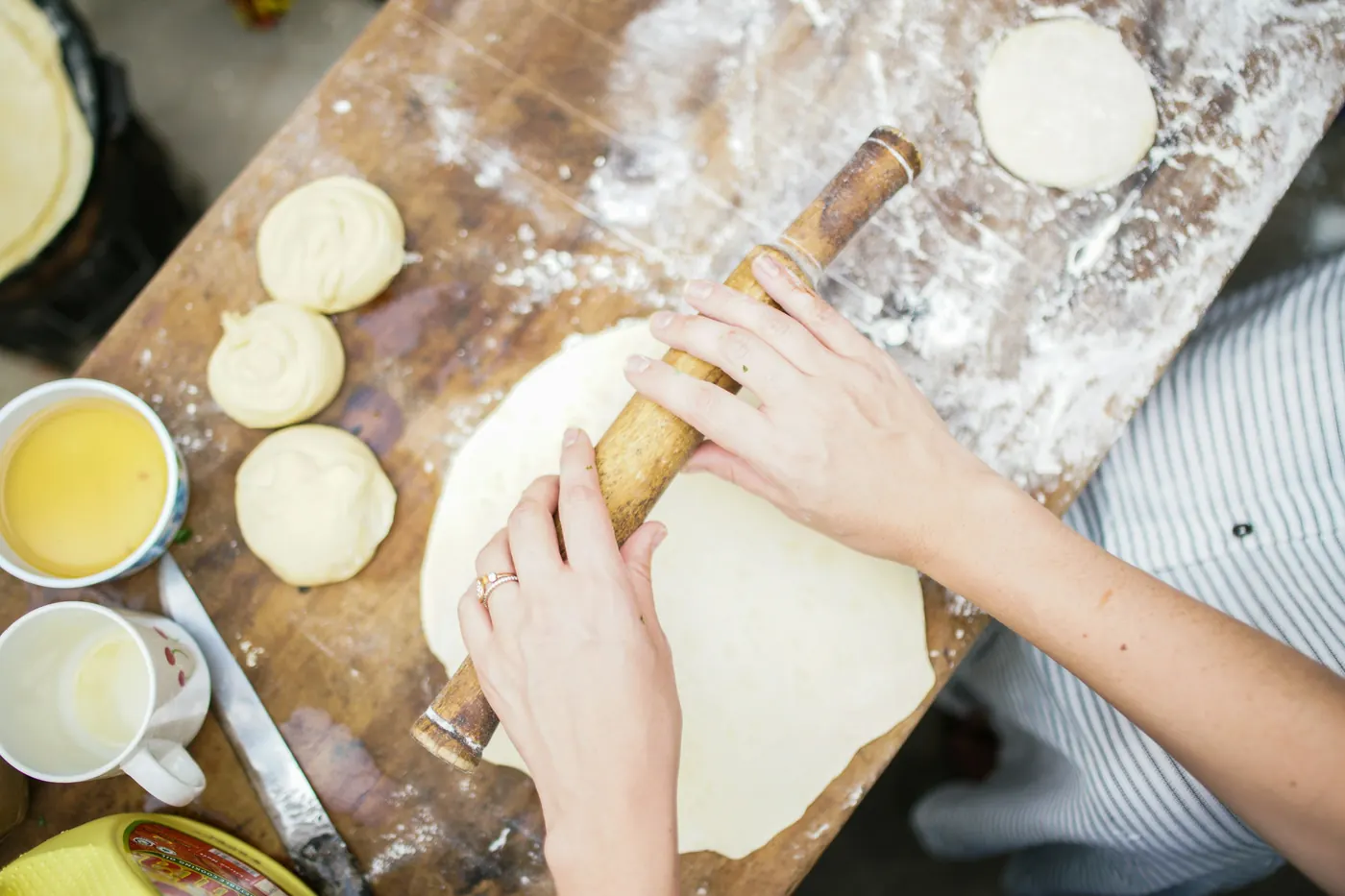
For corn tortillas, a flat-bottomed glass pie plate, a glass baking dish or a heavy skillet, pressed on masa between two sheets of thin plastic. For flour tortillas, a rolling pin, which works better than a press anyway.
Can I use a rolling pin for corn tortillas?
Yes, between two sheets of plastic, but corn masa has no gluten and cracks more easily when rolled. America’s Test Kitchen says corn tortillas need to be pressed rather than rolled to stay cohesive, which is why its no-press method uses a pie plate.
Is parchment paper or plastic better for pressing tortillas?
Plastic. America’s Test Kitchen finds a cut-open zipper-lock bag releases better than parchment, and Masienda finds parchment too heavy for fresh masa and recommends thin plastic.
Do electric tortilla makers work for corn tortillas?
Heated flat presses are built around flour dough. For corn masa, a manual press or a flat weight and a hot comal give a better result.
How thin should a corn tortilla be?
America’s Test Kitchen presses its corn tortillas to about a sixteenth of an inch, 6½ inches across. Thinner tortillas tear more easily when you peel them.
Our final word on pressing without a press
For corn tortillas, use a glass pie plate and thin plastic; it is the method America’s Test Kitchen publishes, and you can see what you are doing. Use a cast iron skillet if you want weight on your side. For flour tortillas, use a slim rolling pin, or the Starfrit roti maker if you want an appliance to do the work. If corn tortillas become a habit, buy a press. For why the two doughs behave so differently, read our guide to corn versus flour tortillas.
And if tonight is not a tortilla-making night, see the menu or call to order.