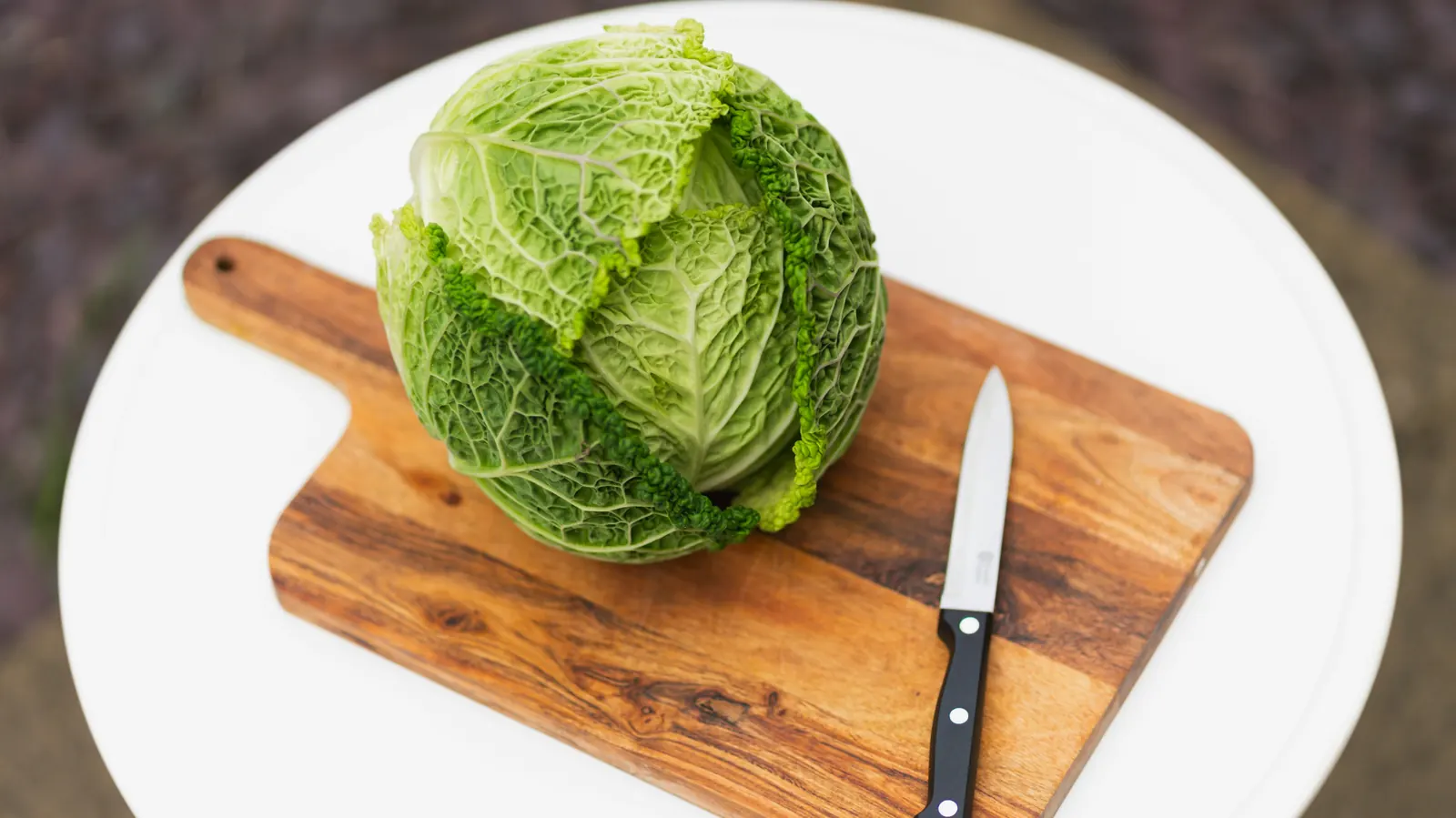
Most chef’s knives are sold at 8 inches, and most home cooks never question it. A 9-inch blade, or the 240 mm gyuto that most Japanese makers offer, gives you an extra inch of edge without the reach of a 10-inch knife. That inch matters when you halve a head of cabbage for pozole garnish, cut a pineapple for al pastor or work through a big pile of onions for a party-size batch of pico de gallo.
This guide is about that size only: knives with blades from 9 to about 9.5 inches, from German and Japanese makers. We compare forged and stamped Western knives with Japanese gyutos, explain who the extra length suits and who should stay with an 8-inch knife, and point out where each knife differs from the ones in our main guide. Every knife was in stock on Amazon when we checked.
Julia’s earns a commission on purchases made through links on this page, at no cost to you. Recommendations are based on what a restaurant kitchen looks for, product specifications and verified buyer reports.
Quick verdict: which 9-inch chef’s knife to buy
Buy the Wüsthof Classic Ikon 9-inch Chef’s Knife: forged in Solingen, 58 HRC, a double bolster for balance and a limited lifetime warranty. If you want a forged German-style knife for much less, the Mercer Renaissance 9-inch is NSF listed with a limited lifetime warranty. For a lighter, thinner Japanese blade with a Western handle, choose the Tojiro DP Damascus 9.5-inch.
Below are five standout knives side by side, all seven in detail, who a 9-inch blade suits and how to choose one.
Five 9-inch chef’s knives side by side
One knife for each kind of cook, with the blade length and steel each maker, listing or named retailer states. All seven knives are reviewed in full below.
| Knife | Best for | Blade | Steel | Buy on Amazon |
|---|---|---|---|---|

Wüsthof Classic Ikon 9-inch Chef’s KnifeBest overall
|
Forged German balance | 9 in | High-carbon stainless, 58 HRC | View on Amazon |

Mercer Renaissance 9-inch Chef’s KnifeBest forged value
|
Forged knife, lower cost | 9 in | High-carbon German | View on Amazon |

Tojiro DP Damascus 9.5-inch Chef’s KnifeBest Japanese steel
|
Thin blade, Western handle | 240 mm | VG-10 core, 60 HRC | View on Amazon |

Mercer Millennia 9-inch Chef’s KnifeBest on a budget
|
A first long knife | 9 in | High-carbon Japanese | View on Amazon |

Yoshihiro VG10 46-Layer Hammered Gyuto, 240 mmBest wa-handle gyuto
|
Traditional Japanese feel | 240 mm | VG10 core, 60 HRC | View on Amazon |
Product images from Amazon. Blade length, steel and hardness are as stated by the maker, the Amazon listing or a named retailer; 240 mm is about 9.4 inches. Check the listing before you buy.
Our picks for the best 9 inch chef knife
The first two are forged German-style knives, then come the Japanese knives and the lighter options. None repeats an exact knife from our other chef’s knife guides; where we chose a different size of a knife that appears elsewhere, we say so.
1. Wüsthof Classic Ikon 9-inch Chef’s Knife – Forged Balance With an Extra Inch
Wüsthof’s Classic 8-inch is the forged pick in our main best chef knife guide. The Classic Ikon line is its more sculpted sibling, and the 9-inch Ikon (model 1040330123) is one of the few forged German chef’s knives made at this length.
Wüsthof says the blade is forged from a single block of high-carbon stainless steel, tempered to 58 HRC, and sharpened with its Precision Edge Technology. The Ikon handle is black with a double bolster: one at the heel of the blade and one at the end of the handle, which Wüsthof says improves balance. The retailer Cutlery and More lists the knife at 9.3 ounces, with a blade about 1.75 inches tall and an overall length of 14-3/8 inches.
That weight helps on the jobs that make a longer knife worth having. A 9-inch blade goes through a whole cabbage or a big butternut squash in one stroke, and the forged spine handles the heavier work of jointing a chicken for tinga. It is made in Solingen, Germany, and comes with a limited lifetime warranty, according to the listing. Hand washing will keep the edge and handle in good shape.
Why we like it
- Forged from one piece of steel, 58 HRC
- Double bolster for balance at this length
- Made in Solingen, Germany
- Limited lifetime warranty
Key specifications
| Model | 1040330123 |
|---|---|
| Blade length | 9 in |
| Steel | High-carbon stainless |
| Hardness | 58 HRC |
| Construction | Forged, double bolster |
| Handle | Black, Ikon shape with rear bolster |
| Made in | Solingen, Germany |
| Warranty | Limited lifetime |
Why we recommend it
It suits a cook who likes the weight of a German knife and wants the extra reach for big vegetables and large cuts.
Skip it if you prefer a light, thin blade; a Japanese gyuto below will feel quicker in the hand.
Pros and cons
Pros
- Full forged construction
- Balanced by two bolsters
- Long warranty from a known maker
Cons
- Heavier than the Japanese picks
- Bolster makes full-length sharpening slower
2. Mercer Renaissance 9-inch Chef’s Knife – A Forged Commercial Knife for Less
Mercer Culinary makes knives for foodservice kitchens, and its Renaissance line is the forged, triple-riveted range. The 9-inch chef’s knife (M23520) is a straightforward German-pattern knife at a length that Mercer makes in several of its lines.
The listing says the blade is precision-forged from high-carbon German cutlery steel and that the handle is triple riveted, tough and lightweight, with a rounded spine for a comfortable grip. Wasserstrom, a restaurant supplier, describes a taper-ground blade with a shortened bolster, so you can sharpen the full edge right to the heel. Zesco lists a full tang, NSF listing and a limited lifetime warranty.
The shortened bolster is the practical difference from the Wüsthof. It keeps the heel usable for rocking through a pile of chiles and makes the knife easier to sharpen on a stone or pull-through. Mercer asks for hand washing with mild soap, drying straight away and no dishwasher. Mercer’s Genesis 8-inch is the budget pick in our main guide; the Renaissance is a different line with a riveted handle.
Why we like it
- Precision-forged German steel, per the listing
- Shortened bolster for full-edge sharpening
- NSF listed, per Zesco
- Limited lifetime warranty, per Zesco
Key specifications
| Model | M23520 |
|---|---|
| Blade length | 9 in |
| Steel | High-carbon German |
| Hardness | Not stated |
| Construction | Forged, full tang, short bolster |
| Handle | Triple-riveted Delrin |
| Made in | Not stated |
| Warranty | Limited lifetime (Zesco) |
Why we recommend it
It suits a cook who wants a forged 9-inch knife for daily work and would rather spend the difference on a good board and a honing steel.
Skip it if you want the hardness and country of origin stated before you buy; the listing gives neither.
Pros and cons
Pros
- Forged at a lower cost
- Easy to sharpen to the heel
- Commercial maker
Cons
- Hand wash only
- Hardness not published
3. Tojiro DP Damascus 9.5-inch Chef’s Knife – VG-10 Core in a 240 mm Gyuto
Tojiro’s DP Damascus 8.25-inch knife is in our main guide. We include the 9.5-inch version (model F-656) here because it is a different size of the same knife, and 240 mm is a common gyuto length: Tojiro, Misono, Masahiro and Yoshihiro all list one on Amazon.
The listing describes a thick core of VG-10 cobalt alloy steel clad in 37 layers of low- and high-carbon stainless steel, a bolster that adds heft and balance, and a Micarta handle with three stainless rivets. Cutlery and More lists the blade at 240 mm, a weight of 9.1 ounces and a hardness of 60 HRC, which is harder than the German knives on this page.
A harder, thinner blade glides through tomatoes and tomatillos for salsa and slices raw onion cleanly. It also needs a little more care: hand wash, dry straight away, and keep it off bones and frozen food. Tojiro states it is made in Japan with a limited lifetime warranty against defects.
Why we like it
- VG-10 core with stainless cladding
- 60 HRC, per Cutlery and More
- Western Micarta handle with bolster
- Made in Japan, limited lifetime warranty
Key specifications
| Model | F-656 |
|---|---|
| Blade length | 240 mm (9.4 in) |
| Steel | VG-10 core, 37-layer stainless cladding |
| Hardness | 60 HRC (retailer) |
| Construction | Clad blade with bolster |
| Handle | Micarta, three rivets |
| Made in | Japan |
| Warranty | Limited lifetime against defects |
Why we recommend it
It suits a cook who wants Japanese steel and a thin edge but prefers the familiar shape of a Western handle.
Skip it if your knives go in the dishwasher or you use them on bones.
Pros and cons
Pros
- Hard, thin, sharp blade
- Familiar Western grip
- Long warranty
Cons
- Harder steel can chip if misused
- Needs prompt drying
4. Mercer Millennia 9-inch Chef’s Knife – An Inexpensive Way to Try the Length
Millennia is Mercer’s lightweight everyday line, pitched at professional chefs and home cooks alike. The 10-inch version leads our professional chef knife guide and the 8-inch is in our beginner guide; we include the 9-inch (M22609) because it is the size in between, and the least expensive way on this page to find out whether a longer blade suits you.
The listing describes a one-piece high-carbon Japanese steel blade, chosen for easy edge maintenance, and an ergonomic handle with textured finger points for a non-slip grip. Mercer lists it for dicing onions, mincing shallots, chopping herbs, crushing garlic and shredding cabbage, which is close to a list of what you prep for tacos and pozole.
Being light is the point. Without a bolster or a heavy forged spine, it is easy to control for long prep sessions, and it is simple to sharpen. Mercer asks for hand washing and drying, no dishwasher and no long soaking. A warranty is not stated on the 9-inch listing; the 10-inch Millennia listing describes Mercer’s repair-or-replace promise for defects.
Why we like it
- Light one-piece blade
- Textured, non-slip handle with finger points
- Easy to sharpen
- Commercial line from a foodservice maker
Key specifications
| Model | M22609 |
|---|---|
| Blade length | 9 in |
| Steel | High-carbon Japanese |
| Hardness | Not stated |
| Construction | One-piece blade, no bolster |
| Handle | Textured, with finger points |
| Made in | Not stated |
| Warranty | Not stated on this listing |
Why we recommend it
It suits a cook who has only used 8-inch knives and wants to try a longer blade without a big outlay.
Skip it if you want the heft of a forged knife for heavy jobs.
Pros and cons
Pros
- Light and easy to control
- Grippy handle
- Lowest-cost pick here
Cons
- Plain, utilitarian look
- Warranty not on this listing

5. Yoshihiro VG10 46-Layer Hammered Gyuto, 240 mm – Octagonal Handle and a Saya
If you want the traditional Japanese version of a 9-inch knife, this is it: a 240 mm gyuto with a lightweight octagonal wa handle in place of a riveted Western grip. Yoshihiro (model NSGY24) lists a VG10 core under 46 layers of hammered Damascus steel, 60 HRC and a double-edged blade.
The hammered texture, Yoshihiro says, reduces friction and keeps food from sticking, which helps with sliced potatoes or wet cucumbers. The handle is ambrosia wood, and the knife comes with a natural magnolia wood saya, a sheath that protects the edge in a drawer. Yoshihiro states it is made in Japan.
The listing is direct about care: sharpen and hone only on water whetstones, hand wash and dry, dry straight away after acidic ingredients like lime juice, and do not use it on bones, nutshells or frozen food. A warranty is not stated. Our large chef knife guide includes a 240 mm Yoshihiro from its 16-layer series with a Western handle; this is a different series with a Japanese handle.
Why we like it
- VG10 core at 60 HRC
- Light octagonal wa handle
- Magnolia wood saya included
- Made in Japan
Key specifications
| Model | NSGY24 |
|---|---|
| Blade length | 240 mm (9.5 in listed) |
| Steel | VG10 core, 46-layer Damascus |
| Hardness | 60 HRC |
| Construction | Hammered clad blade, double bevel |
| Handle | Octagonal ambrosia wood |
| Made in | Japan |
| Warranty | Not stated |
Why we recommend it
It suits a cook who already sharpens on stones and wants a light, forward-balanced Japanese knife at full gyuto length.
Skip it if you want a knife you can use without thinking about care; this one asks for stones and prompt drying.
Pros and cons
Pros
- Light and nimble at 240 mm
- Hammered finish resists sticking
- Saya included
Cons
- Whetstone sharpening only
- Warranty not stated
6. F. Dick Superior 9-inch Chef’s Knife – Made in Germany at 56 HRC

F. Dick is a German cutlery maker. The Superior chef’s knife (listed as model 84447232) is its plain, working version at about 9 inches; the Amazon listing gives the size as 9.1 inches.
F. Dick chose 56 HRC on purpose. The listing calls it the best compromise between long edge retention and easy resharpening, so this is a softer steel than the Wüsthof or the Japanese knives. That means it may need a touch-up more often, but it comes back quickly on a steel or a pull-through. The blade is high-alloy stainless steel ground extra slim, according to the maker, and the handle is hard and resistant to heat and acid.
One point is unclear: the listing says all F. Dick knives are forged, while Knife Merchant and TigerChef describe the Superior line as stamped. Either way, it is a light knife made in Germany. A warranty is not stated on the listing. F. Dick’s ProDynamic 8.5-inch is in our professional guide; this is a different line.
Why we like it
- 56 HRC, chosen for easy resharpening
- Slim-ground blade
- Heat- and acid-resistant handle
- Made in Germany
Key specifications
| Model | 84447232 |
|---|---|
| Blade length | 9 in (9.1 in on the listing) |
| Steel | High-alloy stainless |
| Hardness | 56 HRC |
| Construction | Listing says forged; retailers say stamped |
| Handle | Hard synthetic, riveted (retailer) |
| Made in | Germany |
| Warranty | Not stated |
Why we recommend it
It suits a cook who hones often, cuts a lot of meat and wants a long knife that is quick to bring back to sharp.
Skip it if you want the longest edge life between sharpenings; the harder steels here hold an edge longer.
Pros and cons
Pros
- Easy to resharpen
- Established German maker
- Light
Cons
- Softer steel dulls sooner
- Construction details conflict between sources
7. Dalstrong Shogun Elite 9.5-inch Chef Knife – AUS-10V Steel With a Sheath

Dalstrong is a brand that sells mainly through Amazon and its own site rather than a traditional cutlery maker, and we include one of its knives because it is one of the few 9.5-inch chef’s knives with detailed specifications. Dalstrong describes the Shogun Elite (model SS1) as the size between its 8-inch and 10.25-inch Shogun chef’s knives.
The listing gives an AUS-10V Japanese steel core at 62+ HRC, 66 layers of Damascus cladding, a hand-sharpened edge of 8 to 12 degrees per side and a full-tang G10 handle. It ships with a sheath. An edge that acute is very sharp but needs careful use; keep it to vegetables, fish and boneless meat and off the bone.
The listing does not state where the knife is made, and the support it describes is a 70-day money-back guarantee rather than a long warranty. As with any Amazon-first brand, you are relying on the seller for support, which is the main thing you give up against the established makers above.
Why we like it
- Detailed specs: AUS-10V, 62+ HRC
- Very acute 8 to 12 degree edge
- Full-tang G10 handle
- Sheath included
Key specifications
| Model | SS1 |
|---|---|
| Blade length | 9.5 in |
| Steel | AUS-10V core, 66-layer Damascus |
| Hardness | 62+ HRC |
| Construction | Full tang, 8–12° edge per side |
| Handle | G10 |
| Made in | Not stated |
| Warranty | 70-day money back (listing) |
Why we recommend it
It suits a buyer who wants hard Japanese-style steel, a sheath and a long blade, and is comfortable buying from an Amazon-first brand.
Skip it if long-term support from an established cutlery maker matters to you.
Pros and cons
Pros
- Hardest steel on this page
- Sheath for drawer storage
- Full specifications published
Cons
- Amazon-first brand
- Country of manufacture not stated
- Thin edge needs careful use
Who a 9-inch blade suits, and who should stay at 8
An 8-inch chef’s knife is the default for good reasons: it fits a standard cutting board, it is easy to control and it does almost every job. A 9-inch or 240 mm knife is worth it when your prep is bigger.
It suits you if you cook for a crowd, batch-prep salsa and vegetables for the week, regularly cut large produce like cabbage, watermelon or pineapple, or have large hands that make an 8-inch knife feel short. The extra inch lets you slice through more in one stroke and keeps your knuckles higher off the board.
Stay at 8 inches if your cutting board is small, your counter is shallow, or you mostly cut small things like garlic, limes and herbs. A longer blade is also harder to control for a beginner. Our main best chef knife guide covers 8-inch knives in detail.
Go longer still only if you break down big cuts or cook in volume; our large chef knife guide covers 10-inch to 300 mm knives.
A long Japanese blade is not always heavier: the 240 mm Tojiro is listed at 9.1 ounces, slightly less than the 9-inch Wüsthof’s 9.3 ounces, and its blade is thinner. If length appeals but weight does not, look at the Japanese picks first. Our gyuto guide explains the profile.
How to choose a 9-inch chef’s knife
Check the actual blade length. “9-inch” and “240 mm” are close but not the same: 240 mm is about 9.4 inches. Listings also round; the F. Dick is sold as 9 inches but listed at 9.1, and some 240 mm gyutos are sold as 9.5 inches.
Think about weight and balance. At this length a forged blade with a full bolster feels heavier toward the tip than an 8-inch knife. The Wüsthof’s double bolster and the Tojiro’s bolster are there to balance that. Light stamped or thin Japanese blades feel quicker but give less weight for heavy cuts.
Choose a steel you can maintain. Softer German steels (about 56 to 58 HRC) are easier to resharpen and tolerate more abuse. Harder Japanese steels (60 HRC and up) hold a finer edge longer but can chip and are best sharpened on stones.
Match the handle to your grip. Western riveted handles feel familiar and sit further back in the hand. A Japanese wa handle is lighter and moves the balance forward. If you have large hands, read our chef knife for big hands guide too.
Check your board. A longer blade needs a longer board. If the tip hangs off the end of your board when you rock the knife, size up the board before you size up the knife.
Look at the warranty and the maker. Wüsthof, Mercer and Tojiro state lifetime or limited lifetime warranties; several others do not state one. A known maker also means replacement parts, sheaths and sharpening advice are easier to find.
How we picked these seven knives
We searched Amazon’s product data for chef’s knives and gyutos with blades from 9 to about 9.5 inches, kept only knives listed as in stock, and left out exact knives already reviewed in our main chef’s knife guide or its companion pages on large, value, professional, gyuto and budget Japanese knives. Two picks are different sizes of knives that appear elsewhere, the Tojiro DP Damascus and the Mercer Millennia, and we say why in each review. Several 9-inch knives we wanted, including Wüsthof’s Classic 9-inch, Shun’s 9-inch Master Prep and Victorinox’s Grand Maître 9-inch, were in short supply when we checked, so we left them out. Steel, hardness, construction and warranty come from the Amazon listings, the makers and named retailers; we write “not stated” where we could not find a figure. We allowed one Amazon-first brand and labeled it. We also searched the U.S. Consumer Product Safety Commission’s recall pages and found no chef’s knife recall for these brands. We did not use these knives for this guide, and we stopped at seven rather than pad the list.
Nine-inch chef’s knife questions, answered
Is a 9-inch chef’s knife too big for a home kitchen?
Not for most cooks with a full-size cutting board. It is an inch longer than standard, which helps with big produce and batch prep. If your board or counter is small, an 8-inch knife is easier.
Is 240 mm the same as 9 inches?
Close, but 240 mm is about 9.4 inches. Japanese knives are sold in millimeters and are often listed as 9.4 or 9.5 inches in the United States.
Should I choose a German or Japanese 9-inch knife?
Choose German, like the Wüsthof or Mercer Renaissance, if you want weight, a tougher edge and easy care. Choose Japanese, like the Tojiro or Yoshihiro, if you want a lighter, thinner blade and are willing to sharpen on stones and dry the knife promptly.
How do I keep a long chef’s knife sharp?
Hone it with a steel or ceramic rod every few uses and sharpen when honing no longer works. Our best knife sharpener guide covers the options, from pull-throughs to whetstones.
Can a 9-inch chef’s knife replace a slicer?
For most home jobs, yes. It carves a roast chicken and slices skirt steak across the grain for fajitas well. A long slicer is still better for a whole brisket or ham.
Our pick for a longer edge
Buy the Wüsthof Classic Ikon 9-inch if you want a forged German knife for life, the Mercer Renaissance for a forged knife at lower cost, the Tojiro DP Damascus or Yoshihiro gyuto if you want Japanese steel at 240 mm, and the Mercer Millennia if you simply want to find out whether a longer blade suits you.
For standard 8-inch knives, start with our best chef knife guide, and for the full range of long knives, see our large chef knife picks.
And if you would rather leave the chopping to us tonight, see the menu or call to order.