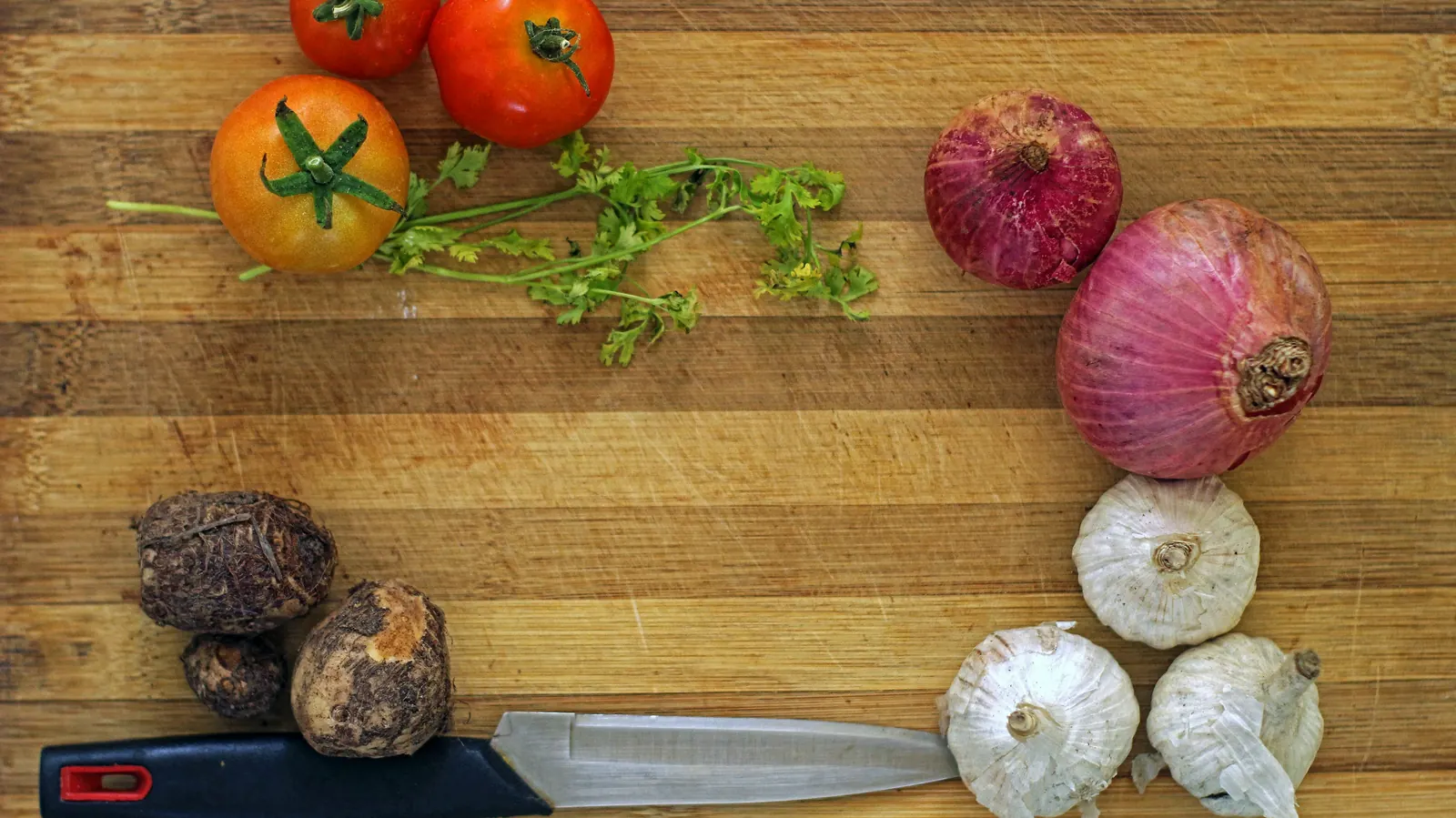
A good wooden cutting board is the quietest, most pleasant surface to cut on, and with a little oil it lasts for years. It is where onions get diced for pico de gallo, where a bunch of cilantro gets chopped down to almost nothing, and where a rested skirt steak gets sliced across the grain for tacos. It also costs more than plastic, needs hand washing and wants oil every few weeks, so it pays to buy the right one the first time.
Choosing comes down to three questions: which wood, edge grain or end grain, and how big. This guide answers all three, names eight wooden boards worth buying from makers who publish their specifications, and sets out the care each maker asks for.
Julia’s earns a commission on purchases made through links on this page, at no cost to you. Recommendations are based on what a restaurant kitchen looks for, product specifications and verified buyer reports.
Quick verdict: which wooden board to buy
For most kitchens, the best cutting board wood is a dense hardwood such as teak or maple in an edge-grain board. Our pick is the Teakhaus Edge-Grain Teak Cutting Board, 20 x 15 inch: large, heavy enough to stay put, reversible, pre-oiled, and Teakhaus says it needs only minimal care. If you want American maple, choose the John Boos Chop-N-Slice; if you want end grain for your best knives, the Larch Wood Canada End Grain Medium.
Below, the five standouts side by side, then all eight boards in full.
Five wooden boards compared
Our five standout picks, one for each kind of cook, with the specifications each maker or listing states. All eight boards are reviewed in full below.
| Wooden board | Best for | Wood & size | Grain | Buy on Amazon |
|---|---|---|---|---|
| Daily prep, low upkeep | Teak, 20 x 15 x 1.5 in | Edge grain | View on Amazon | |
| Classic American maple | Maple, 20 x 15 x 1.25 in | Edge grain | View on Amazon | |

Larch Wood Canada End Grain Board, MediumBest end grain
|
Fine knives, heavy chopping | Larch, 17.75 x 13.5 x 1.6 in | End grain | View on Amazon |
| Carving and serving | Black walnut, 17 x 13 x 1.5 in | End grain | View on Amazon | |

Ironwood Gourmet Charleston End Grain Board, 14 inchBudget end grain
|
End grain on a budget | Acacia, 14 x 14 x 1.25 in | End grain | View on Amazon |
Product images from Amazon. Woods, sizes and grain are as stated by each maker or listing; check the listing before you buy.
Our picks for the best cutting board wood
These eight boards cover the woods that make sense in a kitchen: teak, hard maple, black walnut, larch and acacia, plus Japanese hinoki and bamboo for contrast. There are edge-grain and end-grain boards, boards with and without juice grooves, and sizes from a 14-inch square to a full 20 by 15. Each pick explains who it suits and one honest reason to skip it. For plastic, composite and rubber boards, see our main guide to the best cutting board.
1. Teakhaus Edge-Grain Teak Cutting Board, 20 x 15 inch – Large Teak Board, Minimal Care
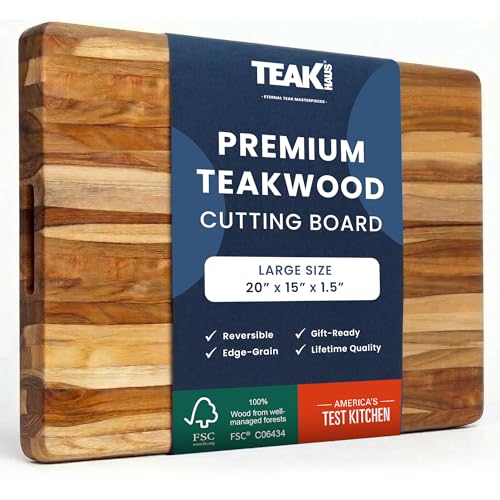
Teak is a dense tropical hardwood that Teakhaus describes as naturally oily and moisture resistant, and that is the reason it makes such an easy wooden board to live with. This edge-grain board is 20 by 15 inches and 1.5 inches thick, and Teakhaus lists it at 12 pounds, so it sits still while you work.
There is no juice groove on this version, which is what you want on a board used mostly for vegetables: the whole surface is flat and usable, edge to edge, for dicing onions, chopping cilantro and cutting tomatoes for salsa. Both faces can be used, and grip handles at the ends make it easier to lift. If you want a groove for carving, Teakhaus sells the same board with one.
The board comes pre-oiled and ready to use after a rinse. Teakhaus says to hand wash it with ordinary dish soap, never put it in the dishwasher, and give it a few drops of oil to keep it looking new. The listing states a one-year warranty against manufacturing defects.
Why we like it
- FSC-certified teak, pre-oiled at the factory
- Full 20 x 15 inch flat surface, reversible
- 12 pounds: steady under the knife
- One-year warranty against defects, per the listing
Key specifications
| Model | 106 |
|---|---|
| Material | FSC-certified teak |
| Size | 20 x 15 in (12 lb) |
| Thickness | 1.5 in |
| Grain/type | Edge grain, reversible |
| Juice groove | No |
| Dishwasher safe | No |
| Care | Hand wash; a few drops of oil |
Why we recommend it
It suits cooks who want a big wooden board for everyday prep without a demanding oiling schedule.
Skip it if your sink is small: a 12-pound, 20-inch board is awkward to wash, and you may prefer a smaller board for daily use.
Pros and cons
Pros
- Large, flat, reversible surface
- Teak needs little upkeep, per Teakhaus
- Stated one-year warranty
Cons
- Heavy and bulky
- No juice groove on this version
- Oil sold separately
2. John Boos Chop-N-Slice Maple Board, 20 x 15 inch – American Maple at a Lighter Weight

Hard maple is the traditional American butcher-block wood, and John Boos has been building with it since 1887, according to its listings. The Chop-N-Slice is the brand’s simpler line: an edge-grain maple board, 20 by 15 inches but only 1.25 inches thick, at 10 pounds. That gives you the same footprint as our top pick at a more manageable weight.
It is reversible, with eased corners and an oil finish, and has no juice groove, so the whole surface is available for chopping. It is made in the USA, and the listing states a one-year guarantee against defects in workmanship and material.
Boos is specific about care. Its care page says never to put a Boos board in the dishwasher, to wipe it with mild soap and water and dry it thoroughly, and to oil it at least once a month, or whenever it looks dry, with Mystery Oil left on overnight and then Board Cream to seal the surface.
Why we like it
- Edge-grain hard maple, reversible
- 20 x 15 inches at a manageable 10 pounds
- Made in the USA
- Clear, published care routine from the maker
Key specifications
| Model | 214 |
|---|---|
| Material | Maple |
| Size | 20 x 15 in (10 lb) |
| Thickness | 1.25 in |
| Grain/type | Edge grain, reversible |
| Juice groove | No |
| Dishwasher safe | No |
| Care | Hand wash; oil at least monthly |
Why we recommend it
It suits cooks who want a classic American maple board with plenty of room that is still light enough to lift into the sink.
Skip it if you will not oil a board monthly: Boos asks for it, and the University of Maine’s extension guide says regular oiling is what keeps wood from drying and cracking.
Pros and cons
Pros
- Large surface, lighter than most boards this size
- Made in the USA
- Stated one-year guarantee
Cons
- Monthly oiling
- No juice groove
- Thinner than Boos’s R-Board
3. Larch Wood Canada End Grain Board, Medium – Handmade End Grain on Rubber Feet
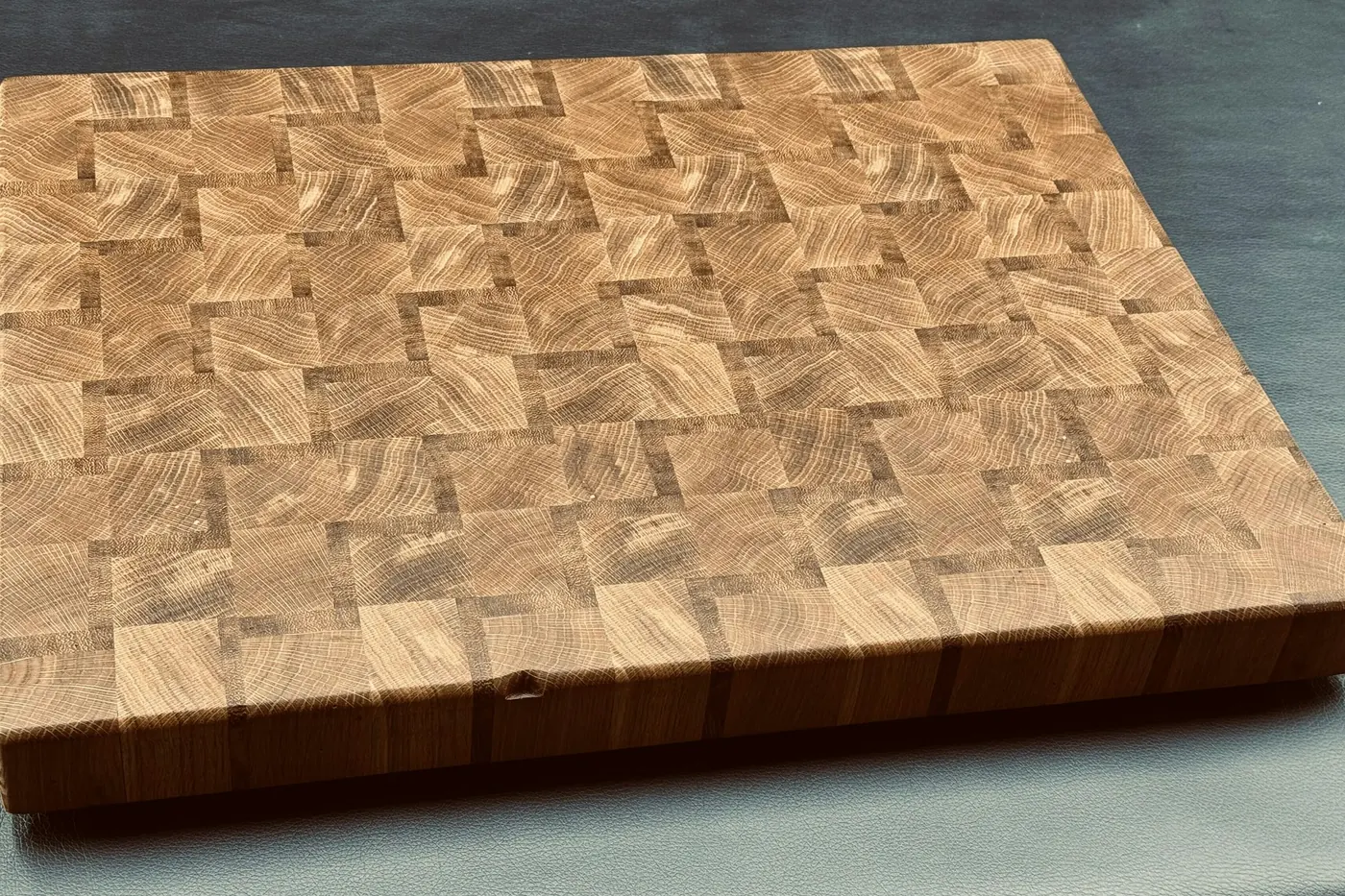
Larch Wood makes end-grain boards by hand in Margaree, Nova Scotia, from eastern Canadian larch (Larix laricina), according to the listing. Larch is an unusual choice for a cutting board, and end-grain construction is the brand’s whole focus.
This Standard Line Medium board is 17.75 by 13.5 inches and 1.625 inches thick, and weighs 8.5 pounds. Larch Wood says the end grain gives a smooth, impact-resistant surface that is kind to knives, suitable for busy commercial kitchens and daily home use. Soft rubber feet, attached with stainless steel screws, keep it from slipping and lift it off the counter so you can get your fingers underneath.
The Standard Line shows more of the wood’s natural character than the brand’s premium boards: small knots and colors ranging from pink to green and gray to dark brown, depending on where the trees grew. The listing does not give care instructions, so treat it like any end-grain board: hand wash, dry it standing up, and oil it whenever it looks dry.
Why we like it
- End-grain larch, handmade in Nova Scotia
- Rubber feet attached with stainless screws
- 8.5 pounds: substantial but movable
- Maker designs it for commercial kitchens
Key specifications
| Model | MD2 |
|---|---|
| Material | Eastern Canadian larch |
| Size | 17.75 x 13.5 in (8.5 lb) |
| Thickness | 1.625 in |
| Grain/type | End grain, rubber feet |
| Juice groove | Not stated |
| Dishwasher safe | Not stated |
| Care | Not stated on listing |
Why we recommend it
It suits cooks with good knives who chop a lot and want an end-grain board that stays put but can still be moved.
Skip it if you want a reversible board: the feet mean only one side is for cutting.
Pros and cons
Pros
- End grain, kind to knives per the maker
- Non-slip rubber feet
- Handmade in Canada
Cons
- One cutting side only
- Knots and color variation on this line
- No care guidance on the listing
4. Sonder Los Angeles Alfred Walnut End Grain Board – Juice Groove and Sorting Wells

Black walnut is softer and darker than maple, and Sonder Los Angeles builds this Alfred board from American black walnut in end grain, made in the USA. It is 17 by 13 inches and 1.5 inches thick, and it is the most feature-packed board on this list.
Sonder gives it a deep juice groove, which it rates at 3.5 fluid ounces, three built-in sorting wells for holding chopped ingredients, and removable non-slip feet. For taco night that layout is genuinely useful: diced onion in one well, chopped cilantro in another, lime wedges in the third, and the steak sliced in the middle with the juices caught by the groove.
Care is more frequent than with teak. Sonder says to hand wash only and oil the board every two to three weeks, and the warranty note on the listing says the wood needs oiling every three weeks so it does not dry out. Sonder will replace a board with a manufacturing defect within one year of the order, per the listing.
Why we like it
- American black walnut, end grain, made in the USA
- 3.5 fl oz juice groove, per Sonder
- Three sorting wells and removable feet
- One-year replacement warranty for defects
Key specifications
| Model | Alfred |
|---|---|
| Material | American black walnut |
| Size | 17 x 13 in |
| Thickness | 1.5 in |
| Grain/type | End grain, removable feet |
| Juice groove | Yes, 3.5 fl oz |
| Dishwasher safe | No |
| Care | Hand wash; oil every 2–3 weeks |
Why we recommend it
It suits cooks who carve and serve on the same board and like having chopped garnishes organized right beside the meat.
Skip it if you want low upkeep: oiling every two to three weeks is more often than most boards here ask.
Pros and cons
Pros
- Groove, wells and feet in one board
- End grain walnut
- Made in the USA
Cons
- Frequent oiling
- Wells reduce the flat chopping area
- Smaller than the 20 x 15 boards
5. Teakhaus End Grain Teak Butcher Block, 20 x 15 inch – End Grain in Teak

If you like the low upkeep Teakhaus claims for teak but want end grain, this is the board. It is the same 20 by 15 inch footprint and 1.5 inch thickness as our top pick, built from FSC-certified teak in end-grain construction, which Teakhaus says protects your knives.
It is reversible, with grip handles, and this version has no juice groove. Teakhaus also sells variants with a groove and a plate cut-out if you plan to carve on it. Care is the same as the edge-grain board: hand wash with regular dish soap, no dishwasher, and a few drops of oil to keep it looking new.
The listing does not give a weight for this board, so we have not stated one; expect it to be heavy at this size and thickness.
Why we like it
- End-grain FSC-certified teak
- Full 20 x 15 inch surface, reversible
- Grip handles
- Groove and plate cut-out versions available
Key specifications
| Model | 331 |
|---|---|
| Material | FSC-certified teak |
| Size | 20 x 15 in |
| Thickness | 1.5 in |
| Grain/type | End grain, reversible |
| Juice groove | No (groove version sold separately) |
| Dishwasher safe | No |
| Care | Hand wash; a few drops of oil |
Why we recommend it
It suits cooks who want end grain for their knives with the easy-care reputation of teak.
Skip it if you want to know exactly what you are lifting: the listing gives no weight.
Pros and cons
Pros
- End grain teak
- Large and reversible
- Minimal care, per Teakhaus
Cons
- Weight not stated
- No groove on this version
- Bulky to wash
6. Ironwood Gourmet Charleston End Grain Board, 14 inch – Affordable End Grain Acacia
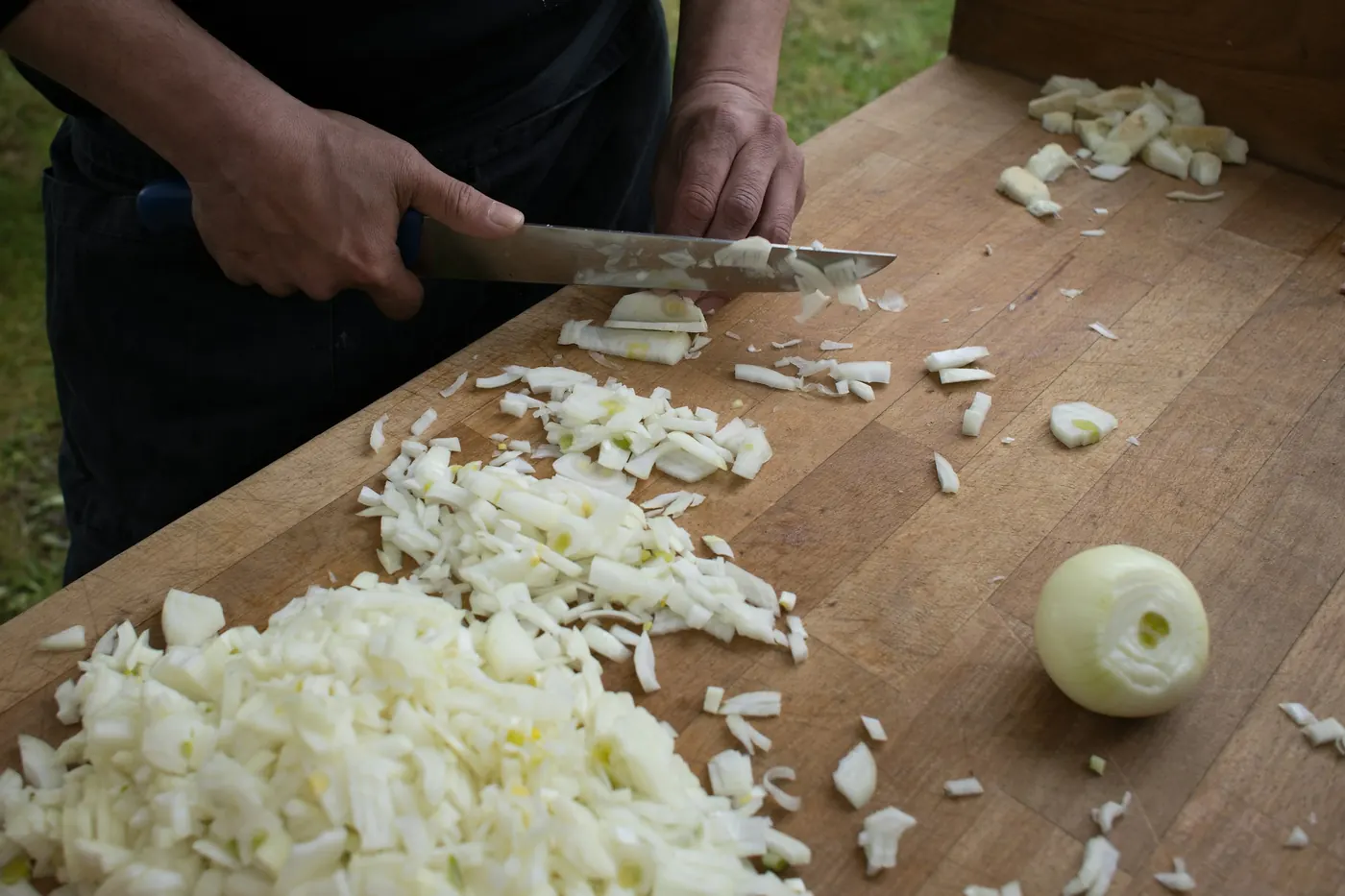
End-grain boards are usually expensive, and Ironwood Gourmet’s acacia boards are the usual way into end grain without spending much. This Charleston board is a 14-inch square, 1.25 inches thick, made from sustainably sourced acacia, according to the listing.
Ironwood says the end-grain surface absorbs impact rather than dulling the edge, and the square shape makes it a good secondary board: a place to mince garlic and jalapeños, chop a bunch of cilantro, or slice a lime without dragging out the big board. It doubles as a serving board for a plate of carne asada.
Care, per Ironwood: hand wash only and oil regularly. On its larger acacia board, the brand adds: dry immediately, do not soak or store it somewhere humid, and oil periodically to avoid cracking.
Why we like it
- End-grain acacia at an approachable size
- 14 x 14 inch square, 1.25 inches thick
- Doubles as a serving board
- Clear hand-wash-and-oil care
Key specifications
| Model | 28218 |
|---|---|
| Material | Acacia |
| Size | 14 x 14 in |
| Thickness | 1.25 in |
| Grain/type | End grain |
| Juice groove | Not stated |
| Dishwasher safe | No |
| Care | Hand wash; oil regularly |
Why we recommend it
It suits cooks who want to try end grain, or need a compact second board for small jobs.
Skip it if this is your only board: 14 inches square is tight for a full batch of salsa prep.
Pros and cons
Pros
- Affordable end grain
- Compact and easy to wash
- Serves as well as it cuts
Cons
- Small for a main board
- No juice groove stated
- Needs regular oiling
7. Shun Hinoki Cutting Board, Medium – Soft Japanese Cypress for Fine Knives

Hinoki is a Japanese cypress, and it is very different from teak or maple. Shun, the knife maker, describes it as a medium-soft wood that “gives” as you cut, helping to preserve knife edges, with a delicate natural fragrance. This medium board measures 15.75 by 10.75 inches, is double-sided and is FSC certified.
It is a board for knife work rather than heavy chopping or carving: fine-dicing onion, slicing fish for ceviche, or mincing herbs with a thin Japanese blade. A softer wood will show cut marks sooner than a hard maple board, which is the trade-off for being easier on the edge.
Shun’s care instructions are particular. Dampen the board before each use to help it resist staining, clean it with a mild detergent, towel dry, then air dry away from direct sunlight. For stubborn stains, Shun suggests rubbing a cut lemon over the area.
Why we like it
- Medium-soft hinoki, gentle on edges, per Shun
- Double-sided
- FSC certified
- Compact size, easy to store
Key specifications
| Model | DM0816 |
|---|---|
| Material | Hinoki (Japanese cypress) |
| Size | 15.75 x 10.75 in |
| Thickness | Not stated |
| Grain/type | Not stated; double-sided |
| Juice groove | No |
| Dishwasher safe | Not stated |
| Care | Dampen before use; mild detergent; air dry out of sun |
Why we recommend it
It suits owners of thin Japanese knives who want the gentlest wooden surface for precise work.
Skip it if you want one board for everything: soft hinoki is not the board for hacking through chicken bones or carving a roast.
Pros and cons
Pros
- Very gentle on knives
- Light and compact
- From a knife maker
Cons
- Shows cut marks sooner
- Particular care routine
- Thickness not stated
8. Totally Bamboo Kona Groove Carving Board, 18 x 12.5 inch – The Bamboo Alternative

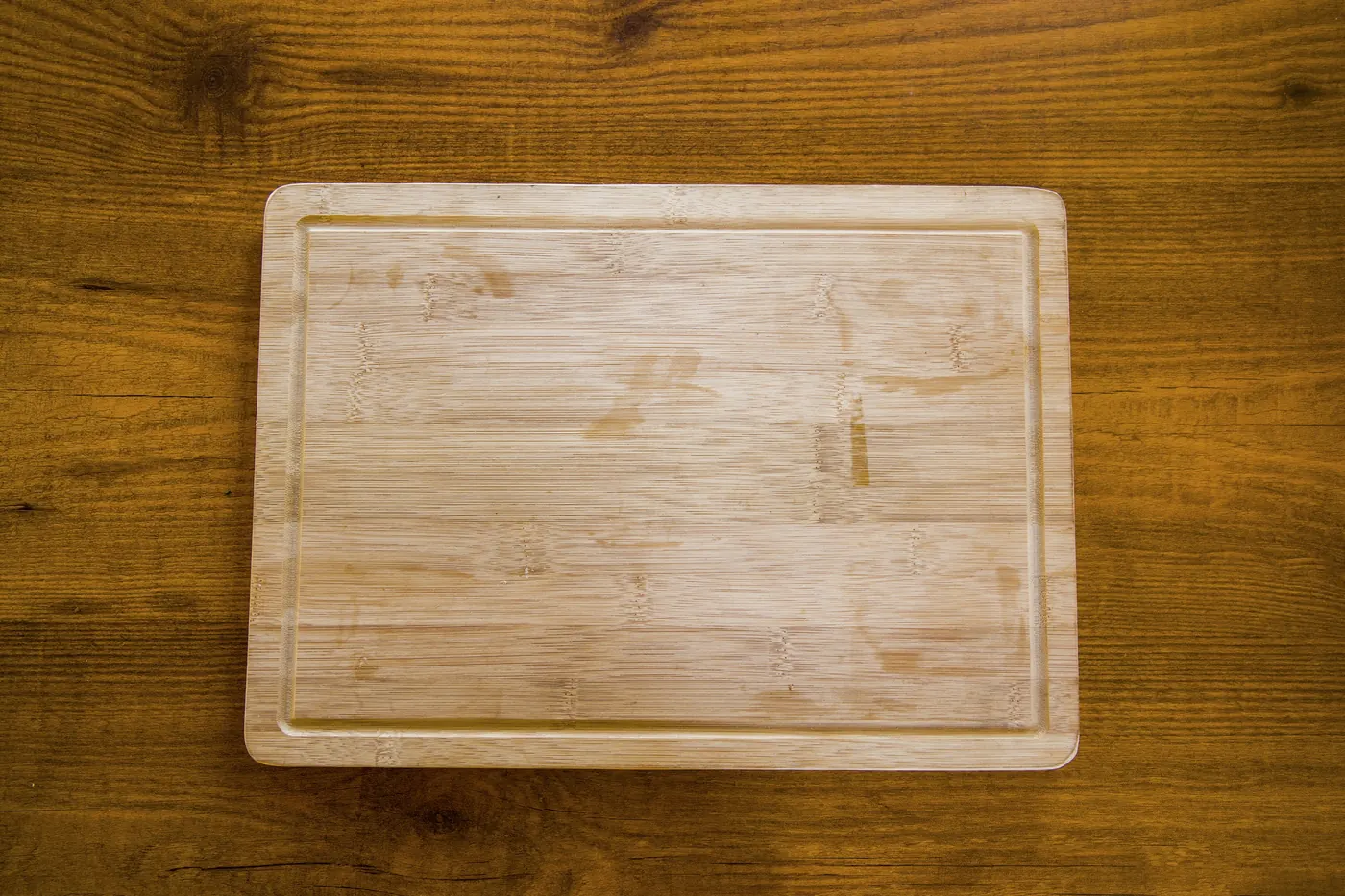
Bamboo is not wood in the botanical sense, but it is the material most people compare with wood, so it belongs here as a contrast. Totally Bamboo says it made some of the first bamboo cutting boards, and the Kona Groove is an 18 by 12.5 inch two-tone board with a juice groove around the edge for carving meat or juicy fruit.
Totally Bamboo describes Moso bamboo as durable, renewable and quick-growing, and calls the board gentle on knives. The University of Maine Cooperative Extension’s cutting-board guide is more cautious: it says bamboo is harder and less porous than most wood but can dull knives over time and is more prone to cracking if not properly cared for. That is the trade-off to weigh against its lighter weight.
Care, per Totally Bamboo: hand wash or wipe with a damp cloth, do not soak it, and do not put it in the dishwasher.
Why we like it
- Juice groove around the edge
- Renewable Moso bamboo, per the maker
- Lighter than hardwood boards of the same size
- Simple hand-wash care
Key specifications
| Model | BA201250 |
|---|---|
| Material | Moso bamboo |
| Size | 18 x 12.5 in |
| Thickness | Not stated |
| Grain/type | Laminated bamboo, two-tone |
| Juice groove | Yes |
| Dishwasher safe | No |
| Care | Hand wash or wipe; do not soak |
Why we recommend it
It suits cooks who want a lighter, renewable-material board with a groove for carving.
Skip it if knife edges matter most to you: extension guidance notes bamboo can dull knives over time.
Pros and cons
Pros
- Light for its size
- Juice groove
- Renewable material
Cons
- Harder on knives than most wood, per UMaine Extension
- Can crack if neglected
- Thickness not stated
How to choose a wooden cutting board
These are the factors that separate a board you reach for every day from one that lives in a cupboard.
1. The wood
Kitchen boards are made from hardwoods that are dense and close-grained. Maple is the classic American choice, hard and pale. Teak is oily and moisture resistant, by Teakhaus’s account, which makes it lower maintenance. Walnut is darker and a little softer. Acacia is common in lower-cost boards. Softer woods such as hinoki are gentler on knives but mark more easily.
2. Edge grain or end grain
Edge-grain boards are made from long strips glued side by side, so the knife cuts along the wood fibers. They are lighter, cheaper and need less oil. End-grain boards are built from short blocks with the ends of the fibers facing up, like a checkerboard. Makers such as Larch Wood, Sonder and Ironwood say the knife slips between the fibers, which is kinder to edges. End-grain boards are usually thicker, heavier and more expensive.
3. Size and thickness
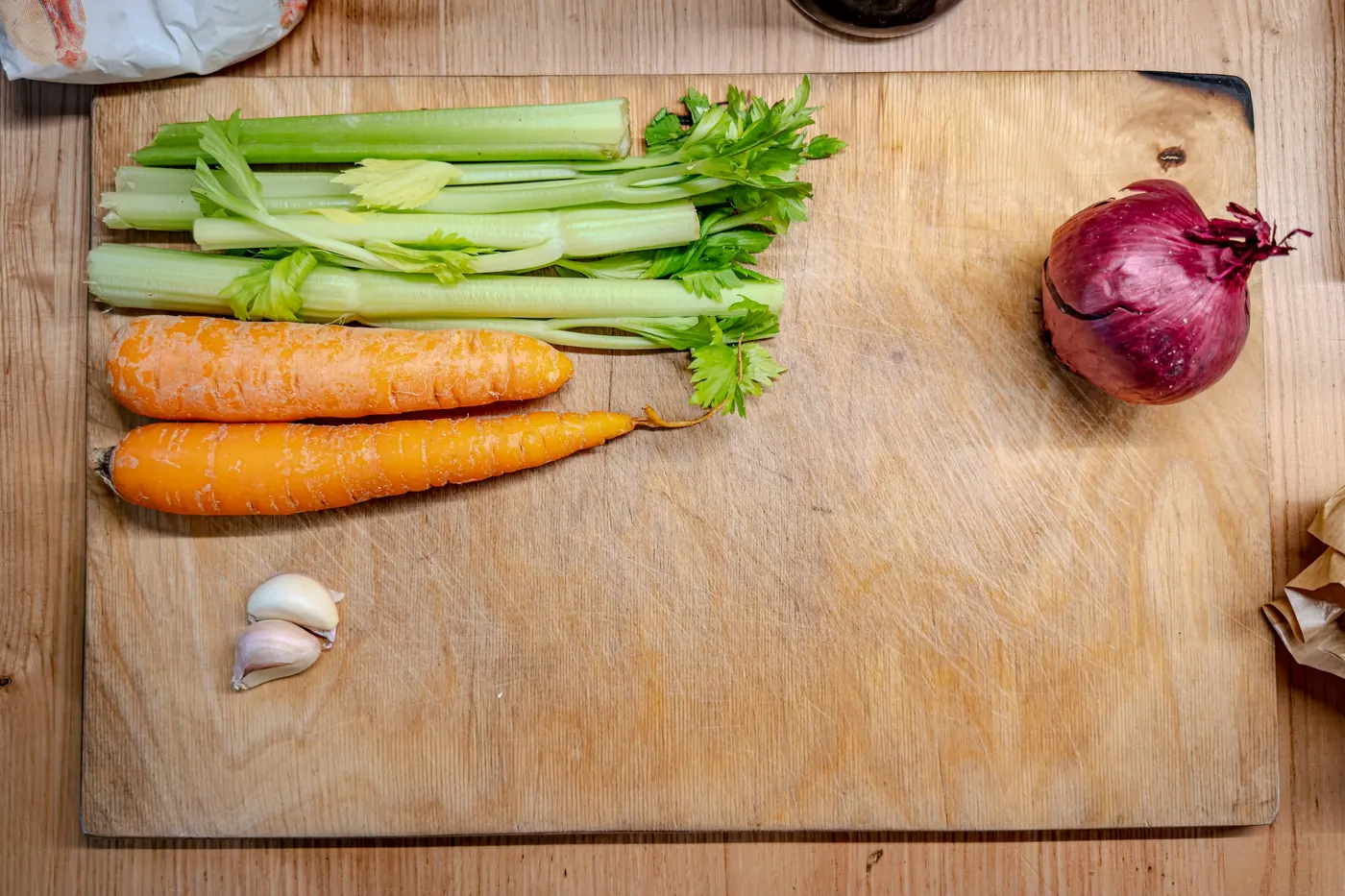
A main board should be at least 17 or 18 inches long so diced onion, tomato, chile and cilantro each get their own space. About 1.25 to 1.5 inches thick is a good balance: heavy enough to sit still, light enough to wash. Measure your sink before buying a 20-inch board.
4. Juice groove or flat
A groove catches juice when you slice rested carne asada or a roast chicken; it gets in the way when you sweep chopped vegetables off the edge. Reversible boards with a groove on one side give you both.
5. Feet or reversible
Rubber feet stop a board sliding, but they mean only one side is usable. A heavy reversible board stays put on its own weight; a light one needs a damp towel underneath.
Oiling and cleaning wood, per the makers
Every maker here agrees on the basics: hand wash, never the dishwasher, never soak, dry straight away, and oil the board regularly. They differ on how often. John Boos says at least once a month, or whenever the wood looks dry, with Mystery Oil left on overnight followed by Board Cream. Sonder says every two to three weeks. Teakhaus says a few drops of oil now and then. The University of Maine Cooperative Extension recommends food-safe mineral oil or beeswax about once a month and says to avoid olive or vegetable oil, which can turn sticky and rancid.
For food safety, Maine’s extension guide recommends one board for raw meat and another for ready-to-eat foods, and gives a sanitizing method for wooden boards: half a teaspoon of unscented liquid chlorine bleach per quart of water, left for one minute, then wiped dry. It also says to replace boards with deep grooves or cracks once they can no longer be cleaned effectively. Many cooks keep a wooden board for vegetables and bread and use a plastic one for raw meat; see our guide to the best cutting board plastic for that second board.
How we chose these eight wooden boards
We started from what a working kitchen asks of a wooden board: enough room for real prep, a stable footing, a wood that holds up to daily knife work and a care routine people will follow. We then looked for boards sold on Amazon in the United States from identifiable makers, covering the main woods in both edge grain and end grain, and checked each one’s stock with Amazon’s product data before writing. Woods, sizes, grain and care come from the maker’s listing or website; where neither states something, we say “not stated”. Food-safety and oiling advice comes from the University of Maine Cooperative Extension. We did not use these boards for this guide, and we have not cited published equipment reviews because we did not read them for these models.
Wooden board questions, answered
What is the best wood type for a cutting board?
Dense, close-grained hardwoods: maple, teak, walnut and acacia are the common ones, and each maker here uses one of them. Teak needs the least care by its maker’s account, maple is the classic, and walnut is a little softer and darker. Hinoki is a softer specialist wood for fine knife work.
Is end grain or edge grain better?
End grain is gentler on knives, according to the makers who build it, and suits heavy daily chopping. Edge grain is lighter, cheaper and needs less oil. For most home cooks a good edge-grain board is plenty.
What is the most durable wood cutting board for everyday use?
A thick hardwood board from a maker that publishes its care routine, oiled on schedule. The Teakhaus and John Boos boards here are 1.25 to 1.5 inches thick and built for daily use; end-grain boards from Larch Wood or Boos are thicker still.
Can wooden cutting boards go in the dishwasher?
Not according to any maker on this list. John Boos says never, Teakhaus says hand wash only, and Totally Bamboo says no dishwasher and no soaking. Maine’s extension guide warns wood may warp in a dishwasher.
What oil should I use on a wooden cutting board?
A food-safe mineral oil or the maker’s own board oil or cream. The University of Maine’s guide advises against olive and vegetable oils because they can go sticky and rancid.
Our wooden board for a busy counter
Buy the Teakhaus edge-grain board if you want a large wooden board that asks little of you. Choose the John Boos Chop-N-Slice for American maple at a manageable weight, the Larch Wood end-grain board if your knives come first, and the Sonder Alfred if you carve and serve on the same board. For plastic, composite and rubber boards alongside wood, see our main best cutting board guide.
A board is only part of the prep kit: our guide to Mexican cooking tools covers the rest, and our best meat claws help when a slow-cooked pork shoulder lands on that board. For what to make with all the chopped tomatoes and tomatillos, see salsa roja vs salsa verde.
On a budget? See our guide to the best budget wood cutting boards.
Related guide: Wood vs plastic cutting board.
Related guide: End grain vs edge grain cutting board.
Related guide: Bamboo vs wood cutting board.
Related guide: Best made in usa cutting board.
And if you would rather leave the chopping to someone else tonight, see the menu or call to order.