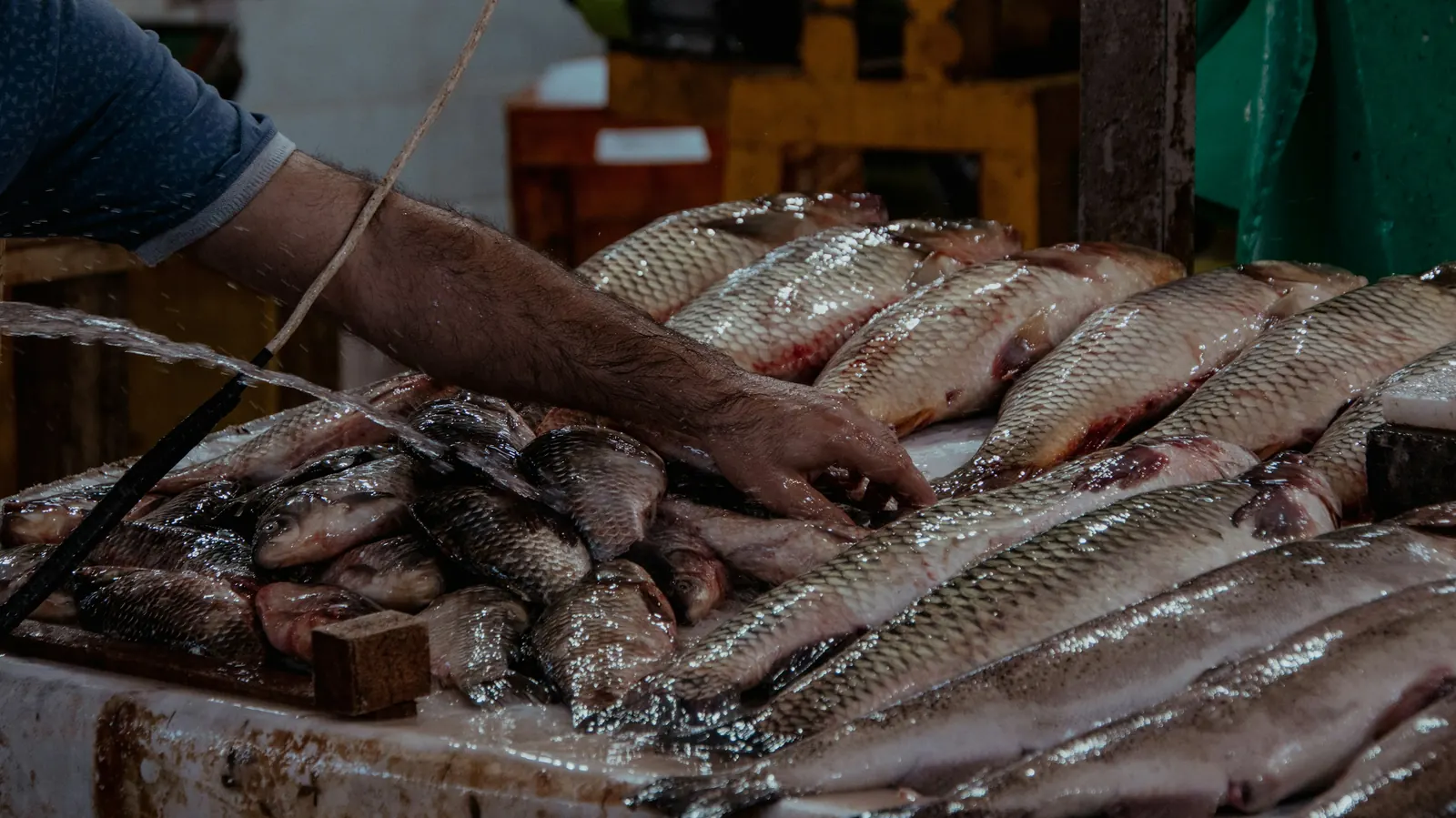
A fillet knife has one job: to follow the bones of a fish closely and leave as little flesh behind as possible. Its long, thin, flexible blade bends along the backbone and over the ribs, then slides between the flesh and the skin. No other knife in the kitchen does that as well.
Buying whole fish is often worth the trouble, whether you are planning fish tacos, ceviche or a simple plate of pescado. This guide compares eight true fillet knives from established makers, from a 3.5-inch panfish knife to 8-inch blades for snapper. Boning knives and fishing kits are left out, because they are different tools.
Julia’s earns a commission on purchases made through links on this page, at no cost to you. Recommendations are based on what a working kitchen looks for in a knife, the makers’ own specifications and independent reviews where they exist. We have not used these products ourselves.
Quick verdict: which fillet knife to buy
Start with the Dexter-Russell Sani-Safe 7-inch Narrow Fillet Knife. It is a plain, flexible, grippy knife, made in the USA, and an 8-inch knife from the same series was the top pick in Practical Sailor’s fillet knife test. For larger fish, choose the Dexter-Russell Basics 8-inch. For occasional use on a budget, choose the Mercer Culinary Millennia 7-inch.
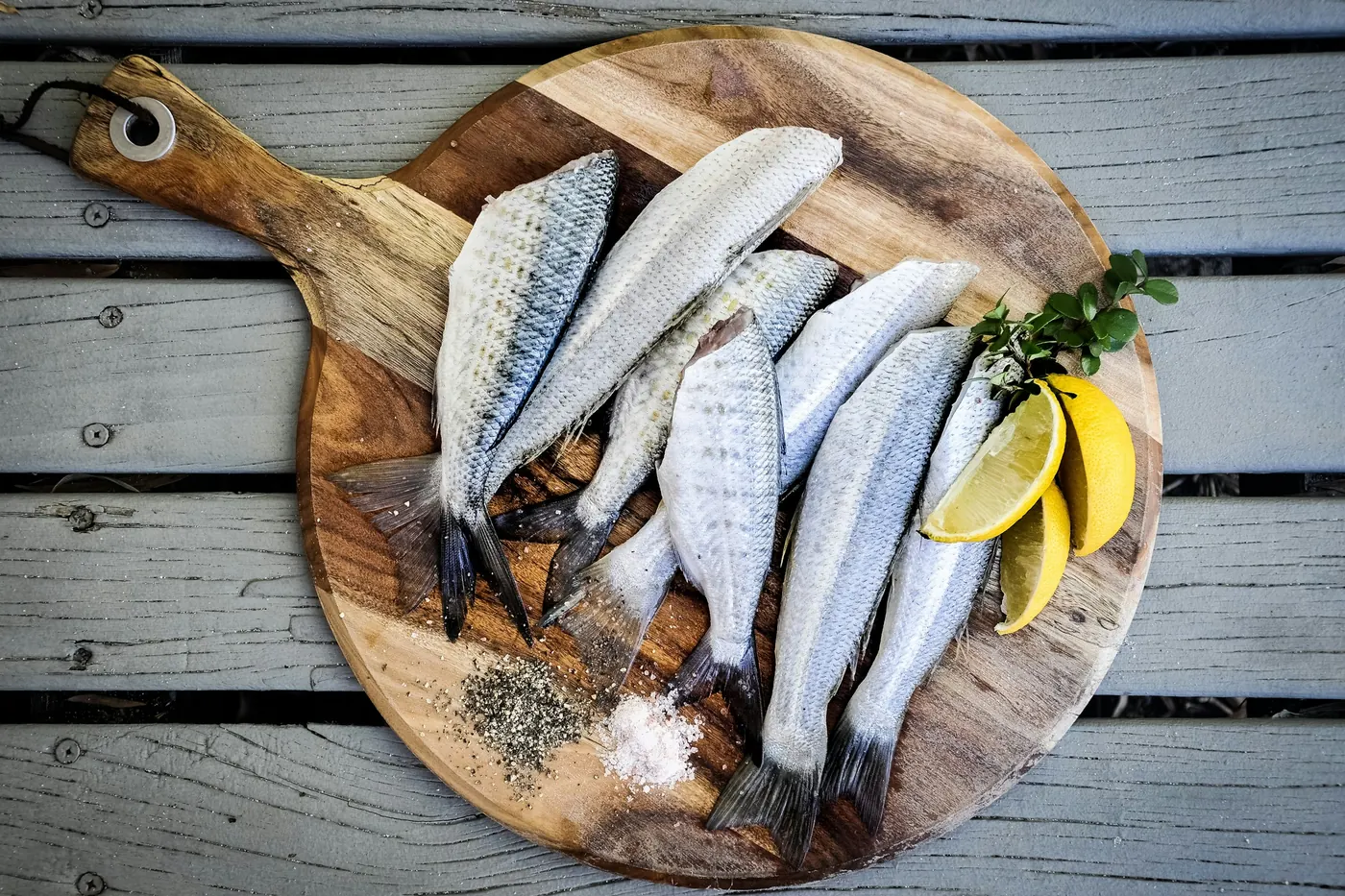
The table below compares our five standout knives. All eight are reviewed in full after it, followed by how to choose and answers to common questions.
Five fillet knives compared
One pick for each kind of cook or angler, with the details each maker or listing states.
| Fillet knife | Blade | Flex | Details | Buy on Amazon |
|---|---|---|---|---|
| 7 in | Flexible | NSF certified; made in USA | View on Amazon | |

Victorinox Fibrox 7-inch Fillet KnifeBest for the kitchen
|
7 in | Flexible | Fibrox handle; Swiss made | View on Amazon |
| 7 in | Flexible | Japanese steel; hand wash | View on Amazon | |

Wüsthof Classic Ikon 7-inch Fillet KnifeBest forged
|
7 in | Flexible | Forged in Germany | View on Amazon |

Morakniv Fishing Comfort 3.5-inch Fillet KnifeBest for panfish
|
3.5 in | Not stated | Sheath included; dishwasher safe | View on Amazon |
Our picks for the best fillet knife
The picks run from the best all-round choice to the more specialized knives. Each one is sold as a fillet knife by a maker with a long record, and each was in stock when we checked.
1. Dexter-Russell Sani-Safe 7-inch Narrow Fillet Knife – Plain, Proven and Made in the USA

This is the kind of knife you see on fishing boats and in commercial kitchens, and it looks the part: a plain white handle and a long, narrow blade. Nothing about it is fancy, which is much of its appeal. Seven inches is the length we would suggest first for a home kitchen, because it handles a trout or a small snapper and still fits a normal cutting board.
Dexter-Russell has made cutlery since 1818, according to its listings. The blade here is DEXSTEEL, the maker’s high-carbon, high-alloy stain-free steel, and it is flexible. The white Sani-Safe handle is textured for a slip-resistant grip, and the knife is NSF certified. It is made in the USA.
The Sani-Safe series also has the best independent support we could find for any fillet knife. In a Practical Sailor test of 10 fillet knives, first published in 2006 and updated in 2019, an 8-inch Dexter Russell Sani-Safe was the top pick. The reviewers praised its sharpness and blade flex, and called it a simple, get-the-job-done knife with a large finger guard. That was the longer size, not this exact 7-inch knife, and the test is old, so take it as a good sign for the series and not a verdict on this model. The testers did see some surface rust, so rinse and dry the knife after every use, especially around salt water.
Why we like it
- Same series as Practical Sailor’s top pick
- Slip-resistant textured Sani-Safe handle
- NSF certified
- Made in the USA
Key specifications
| Model | S133-7PCP |
|---|---|
| Blade length | 7 inches |
| Blade flex | Flexible |
| Steel | High-carbon DEXSTEEL |
| Construction | Not stated on listing |
| Handle | Textured white Sani-Safe |
| Sheath | Not included on this listing |
| Care | Rinse and dry after use |
Why we recommend it
It suits anyone who wants one dependable fillet knife for whole fish, with no frills and a strong record behind the series.
Skip it if you want a sheath for the tackle box. This listing has none, though Dexter sells a version with a sheath.
Pros and cons
Pros
- Independent test support for the series
- Grippy, easy-to-clean handle
- Practical length for most home kitchens
Cons
- Some surface rust on the 8-inch in the Practical Sailor test
- No sheath on this listing
- Plain to look at
2. Dexter-Russell Basics 8-inch Narrow Fillet Knife – More Reach for Larger Fish
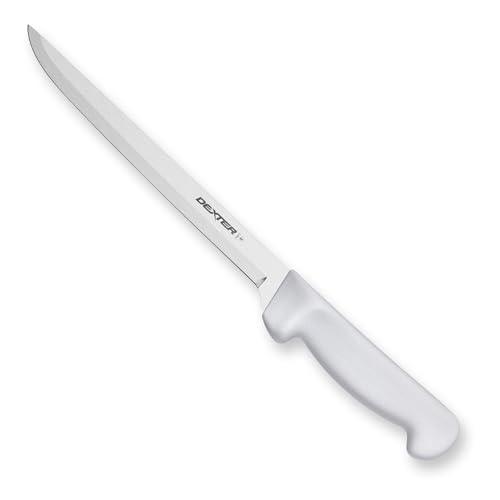
If you bring home larger fish, the extra inch matters, because a long stroke along the backbone is what keeps a fillet in one neat piece. The Basics series is Dexter’s most affordable line, according to the listing, and this is its 8-inch narrow fillet knife.
The blade is 400 series stain-free high-carbon steel, hollow ground for easy upkeep and quick resharpening. The handle is durable, slip-resistant polypropylene. It is made in the USA and carries a limited lifetime manufacturer’s warranty.
Outdoor Life gave its top no-frills spot to the 7-inch size of this same Basics knife, and the reviewer there said it comes sharp, is easy to resharpen and has just the right amount of flex. The one complaint was that the handle can get slick. The review covers the 7-inch size, so we are reading across to this longer one. That 7-inch knife already appears on our fish knife set page, so we list the 8-inch here for the reach it adds.
Why we like it
- 8-inch blade for larger fish
- Hollow ground for quick resharpening
- Slip-resistant polypropylene handle
- Made in the USA
Key specifications
| Model | P94813 |
|---|---|
| Blade length | 8 inches |
| Blade flex | Flexible |
| Steel | 400 series stain-free high-carbon |
| Construction | Hollow ground |
| Handle | White polypropylene |
| Sheath | Not stated on listing |
| Care | Not stated on listing |
Why we recommend it
It suits an angler or cook who handles larger fish and wants a simple knife that is quick to resharpen.
Skip it if you mostly buy small fish. The 7-inch Sani-Safe is easier to manage on a home cutting board.
Pros and cons
Pros
- Long reach
- Easy to resharpen, per the listing
- Dexter’s most affordable line
Cons
- Handle can get slick, per Outdoor Life’s review of the 7-inch
- No sheath mentioned
- Care not stated on the listing
3. Victorinox Fibrox 7-inch Fillet Knife – Swiss Blade, Non-Slip Fibrox Grip
Seven inches is a comfortable length for a kitchen. It reaches across a fish from the fish counter or a fillet that needs skinning, but it still fits a standard cutting board and sink. Victorinox is a name many cooks already know from its Fibrox chef’s knives, and this knife uses the same textured black handle.
Restaurant supply catalogs list this model, the 5.3813.18, as a flexible, straight, pointed blade in high-carbon stainless steel, with an NSF-certified handle. They also list it as dishwasher safe. The Amazon listing itself gives very little detail beyond calling it Swiss made and describing a secure non-slip grip, so we have drawn on those catalogs to fill the gaps. Treat the details as seller information, not as a maker’s specification sheet.
For a home cook who buys a whole fish a few times a year, it is hard to argue with a simple, grippy knife that can also trim a pork loin or skin a salmon side. Even if it is rated for the dishwasher, wash it by hand and dry it. A dishwasher is hard on a thin edge.
Why we like it
- 7-inch length suits a kitchen cutting board
- Textured, non-slip Fibrox handle
- Swiss made, per the listing
- Straight, flexible blade, per restaurant supply catalogs
Key specifications
| Model | 5.3813.18BK |
|---|---|
| Blade length | 7 inches |
| Blade flex | Flexible, per restaurant supply catalogs |
| Steel | High-carbon stainless, per catalogs |
| Construction | Not stated on listing |
| Handle | Black Fibrox |
| Sheath | Not stated on listing |
| Care | Hand wash and dry advised |
Why we recommend it
It suits a home cook who fillets at the kitchen counter and wants a familiar, comfortable handle.
Skip it if you want full details from the listing before you buy. This one is thin, so read the product page closely.
Pros and cons
Pros
- Familiar, grippy handle
- Practical kitchen length
- Well-known maker
Cons
- Amazon listing is very thin on detail
- No sheath mentioned
- No independent fillet test found
4. Mercer Culinary Millennia 7-inch Flexible Fillet Knife – Entry Tier, Serious Grip

Mercer pitches its Millennia series at professional chefs and home cooks alike, and it is a sensible place to start if you only fillet now and then. This knife has a 7-inch flexible blade made from one-piece high-carbon Japanese steel, which the listing says is easy to maintain.
The handle is what you notice first. It is ergonomic, with textured finger points on the grip, so it stays secure when your hands are wet and covered in fish scales. That matters more on a fillet knife than on most kitchen knives, because you are working on a slippery surface with a sharp, bending blade.
Care is plain. Wash it by hand with warm water and mild soap, rinse it and dry it with a soft towel. Mercer warns against the dishwasher and against long soaks, and its warranty excludes dishwasher damage. The warranty promises repair or replacement for defects in material or workmanship, which is reassuring on an entry-level knife.
Why we like it
- Flexible 7-inch blade
- Textured finger points on the grip
- Easy-to-maintain Japanese steel
- Repair or replace warranty on defects
Key specifications
| Model | M22807 |
|---|---|
| Blade length | 7 inches |
| Blade flex | Flexible |
| Steel | One-piece high-carbon Japanese steel |
| Construction | One piece |
| Handle | Textured ergonomic handle |
| Sheath | Not stated on listing |
| Care | Hand wash and dry; no dishwasher |
Why we recommend it
It suits a cook who wants a real fillet knife for occasional use and does not want to spend more than the job calls for.
Skip it if you fillet often and in volume. A knife built for commercial use, such as the Dexter-Russell, is the better long-term tool.
Pros and cons
Pros
- Entry tier from a kitchen-focused maker
- Secure wet grip
- Clear care and warranty terms
Cons
- Listing aims it at meat first, though the shape suits fish
- No dishwasher
- No sheath mentioned
5. Wüsthof Classic Ikon 7-inch Fillet Knife – Very Thin, Double-Bolster Balance
If you want a fillet knife that looks at home next to a good knife block, this is the one. Wüsthof forges the Classic Ikon from a single block of high-carbon stainless steel and tempers it to 58 HRC. The handle has a double bolster, which the maker says adds balance.
Wüsthof describes the blade as very thin and flexible, long and narrow enough to move smoothly along the backbone and to take the skin off a fillet. Its Precision Edge Technology is the maker’s way of finishing the edge, and the listing claims it is 20 percent sharper with twice the edge retention of earlier models. That is a maker’s claim, not an independent test result, so read it as such.
This is a kitchen knife, not a boat knife. Save it for clean work at the counter, and do not leave it wet at the dock. The listing notes a limited lifetime warranty and German manufacture. Wüsthof’s Gourmet listings call for hand washing, and it is the right call here too.
Why we like it
- Forged from one block of high-carbon stainless
- Very thin, flexible blade
- Tempered to 58 HRC
- Limited lifetime warranty
Key specifications
| Model | 1040333818 |
|---|---|
| Blade length | 7 inches |
| Blade flex | Very thin, flexible |
| Steel | High-carbon stainless, 58 HRC |
| Construction | Forged, double bolster |
| Handle | Black, double bolster |
| Sheath | Not stated on listing |
| Care | Hand wash advised |
Why we recommend it
It suits a serious home cook who fillets at the counter and wants a forged knife that matches a German set.
Skip it if you clean fish outdoors. A polypropylene-handled knife you do not mind getting wet and salty makes more sense.
Pros and cons
Pros
- Fine forged construction
- Thin, flexible blade
- Long-established German maker
Cons
- Premium tier
- Not built for dock use
- Maker’s sharpness claims are not independently confirmed
6. Wüsthof Gourmet 6-inch Flexible Fillet Knife – Short, Light and Laser Cut

A 6-inch blade is a good match for smaller fish and for skinning fillets you bought at the counter. It is also easier to control if you are new to filleting, since there is less blade to manage around a small rib cage.
The Gourmet line is Wüsthof’s stamped tier. The blade is laser cut from high-carbon stainless steel, and the triple-riveted handle is synthetic polypropylene that the maker says resists fading, discoloration, heat and impact. Wüsthof calls this knife particularly suitable for wafer-thin filleting, loosening a fillet from the skin, slicing meat and even peeling fruit.
It is made in Germany, backed by a limited lifetime warranty and hand wash only. The stamped blade has no heavy bolster, which helps it bend close to the bones. For most cooks who pick up whole trout or sea bass now and then, it is a practical size. If you often bring home larger fish, the 8-inch Dexter-Russell Basics has more reach.
Why we like it
- Flexible blade for thin fillets
- Shorter length is easy to control
- Polypropylene handle
- Limited lifetime warranty
Key specifications
| Model | 1025049116 |
|---|---|
| Blade length | 6 inches |
| Blade flex | Flexible |
| Steel | High-carbon stainless |
| Construction | Laser-cut, stamped |
| Handle | Triple-riveted polypropylene |
| Sheath | Not stated on listing |
| Care | Hand wash only |
Why we recommend it
It suits a cook handling smaller fish or skinning store-bought fillets who wants a known name at the entry tier of the line.
Skip it if you regularly clean large fish. Six inches will not reach across a big fillet in one long stroke.
Pros and cons
Pros
- Easy to control
- Clear care and warranty terms
- German made
Cons
- Short for large fish
- Hand wash only
- No sheath mentioned
7. Global G-41 8-inch Fillet Knife – Seamless CROMOVA 18 Stainless

Global’s all-stainless knives are easy to spot. Blade and handle join in one seamless shape, which the listing says helps with food safety and hygiene, since there are no joints or rivets for fish scales and bits to settle into. For a task as messy as filleting, that is a sensible design.
The G-41 has an 8-inch blade in CROMOVA 18, Global’s own stainless steel, which the listing calls rust, corrosion and stain resistant. It also says the knife is carefully weighted for balance and comes with a limited lifetime guarantee.
There are two cautions. The listing does not state how flexible the blade is, so if a very bendy knife is what you want, look at the Wüsthof picks instead. And an all-metal handle can get slick. ATK testers found the handle of another Global knife hard to grip, so think about how the knife will feel with wet, scaly hands. Hand washing and drying is the safe choice for care, as the listing does not state it.
Why we like it
- Seamless blade and handle
- CROMOVA 18 stainless steel
- Rust, corrosion and stain resistant, per the listing
- Limited lifetime guarantee
Key specifications
| Model | G-41 |
|---|---|
| Blade length | 8 inches |
| Blade flex | Not stated on listing |
| Steel | CROMOVA 18 stainless |
| Construction | Seamless stainless steel |
| Handle | All metal |
| Sheath | Not stated on listing |
| Care | Not stated on listing |
Why we recommend it
It suits a cook who values a seamless, easy-to-wipe knife and already likes the feel of Global’s handles.
Skip it if you fillet with wet hands and want a sure grip. A textured plastic handle is the safer choice for you.
Pros and cons
Pros
- No seams to trap scales
- Rust-resistant steel, per the listing
- Long 8-inch blade
Cons
- Blade flex not stated
- Metal handle can feel slick
- Care not stated on the listing
8. Morakniv Fishing Comfort 3.5-inch Fillet Knife – Tiny Blade, High-Friction Grip
This knife is built for one thing: small fish. The 3.5-inch blade is short even for a fillet knife, and the listing aims it at panfish and bone removal. If you catch bream or crappie, or you want a fine tool for pulling out bones after a larger knife has done the main work, it is a neat fit.
Morakniv is a Swedish maker, and this blade is Sandvik 12C27 stainless steel, a steel known for sharpness, hardness and corrosion resistance. The blade is 1.3 mm thick, the total length is 8 inches and the weight is 3.3 ounces. The patterned, high-friction handle is meant to keep its grip while you clean fish, and the listing says it does not absorb odors.
It comes with a plastic sheath and belt clip, and it is the only knife here with a sheath listed. The sheath is easy to clean, and the listing calls the knife dishwasher safe. Several fishing guides name Morakniv’s Fishing Comfort line as a good low-cost choice, though those are opinion pieces rather than tests. Keep your expectations in check: this is not the knife for a large snapper.
Why we like it
- Short blade for panfish and bone removal
- Sandvik 12C27 stainless steel
- High-friction handle that does not absorb odors
- Sheath with belt clip included
Key specifications
| Model | M-12207 |
|---|---|
| Blade length | 3.5 inches |
| Blade flex | Not stated on listing |
| Steel | Sandvik 12C27 stainless |
| Construction | Not stated on listing |
| Handle | Patterned high-friction grip |
| Sheath | Plastic with belt clip |
| Care | Dishwasher safe per listing |
Why we recommend it
It suits anglers who clean panfish, and cooks who want a small, cheap-to-replace knife for detail work.
Skip it if you plan to buy just one fillet knife for whole fish from the market. A blade this short cannot make one long cut along the backbone.
Pros and cons
Pros
- Sheath included
- Grippy handle
- Corrosion-resistant steel
Cons
- Too short for larger fish
- Flex not stated
- Not a general kitchen knife
Fillet knife or boning knife?
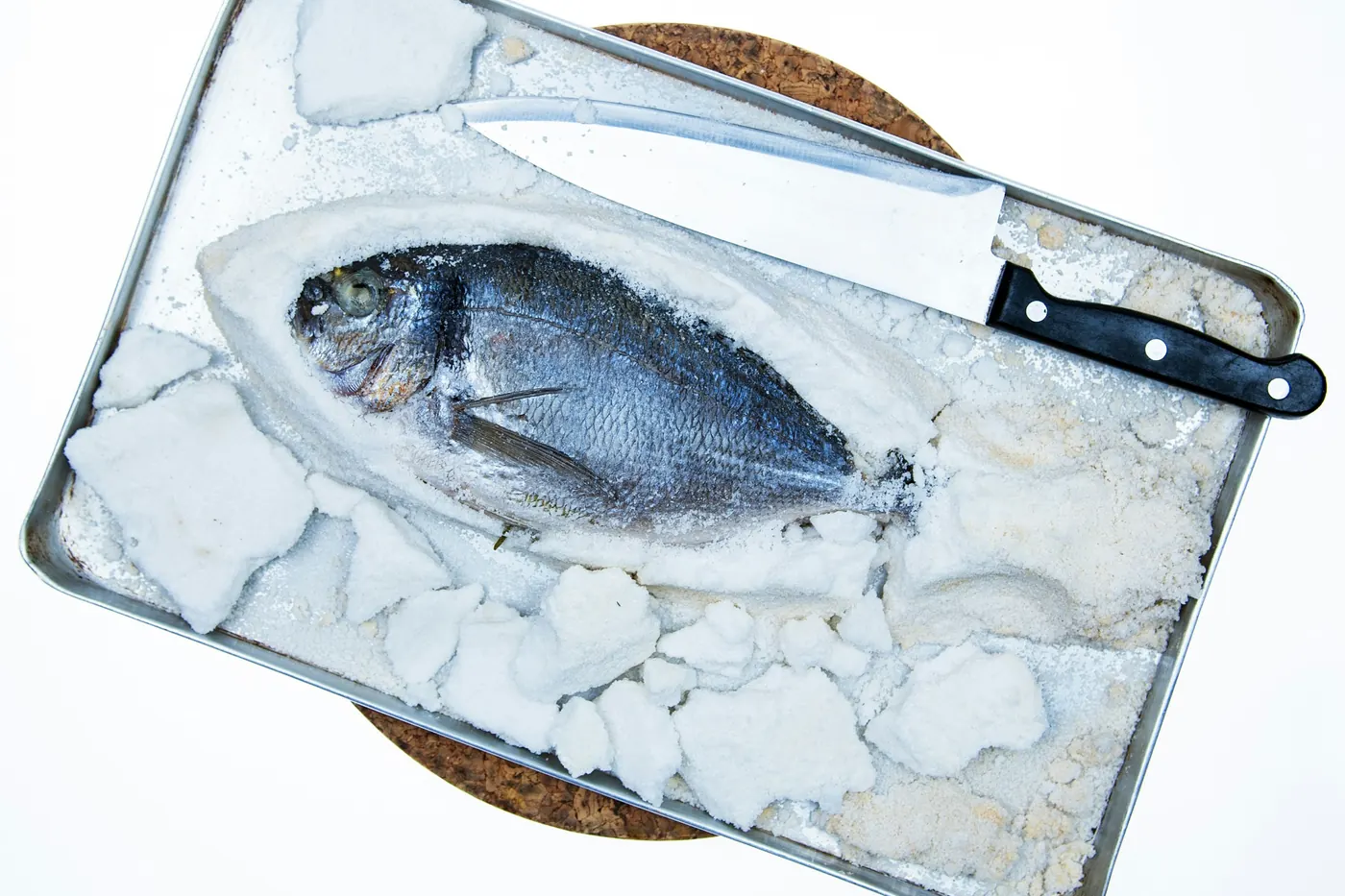
They look alike, and some makers sell one blade under both names. A fillet knife is usually longer, thinner and more flexible, and it is made for the fine, soft flesh of fish. A boning knife is shorter and often stiffer, because it has to work around the heavier joints of pork and poultry. If you mostly break down pork shoulders and chickens, see our guide to the best boning knife. If you want a full kit, with a sheath and several lengths, see our fish knife set guide.
How to choose a fillet knife for your fish
Match the blade to the fish. A blade should reach across the fish in one long stroke. Short blades of 3 to 6 inches suit panfish and small trout. A 7-inch knife is the best all-round kitchen length, and 8 inches or more suits snapper, redfish and larger fish.
Flex, but not too much. Flexibility lets the blade ride along the bones. Too much flex makes it hard to control, and that is a point both Practical Sailor and Outdoor Life raised. Practical Sailor marked down several knives for being too flexible, while its top pick was fairly stiff yet had the right amount of bend. Delicate fish reward a thinner blade, while bigger, firmer fish need more backbone.
Grip when wet. This matters more than steel. Your hands will be wet, and the fish will be slick. Textured polypropylene and rubber grips hold up well, and a large finger guard adds a margin of safety. Smooth metal and polished wood can get slippery.
Rust resistance. Even stainless blades can spot. Practical Sailor saw rust specks on several knives within days of cutting fish. Rinse, dry and put the knife away. Do not leave it in a sink or a wet sheath.
Keep it sharp. A dull fillet knife tears flesh and wastes fish. A simple knife sharpener is worth owning. Outdoor Life favors a knife that is easy to resharpen over a more exotic steel.
Your board and your spatula. A plastic cutting board cleans up easily after raw fish. Once you have clean fillets, a fish spatula gets them out of the pan in one piece.
Filleting a whole fish for tacos or ceviche
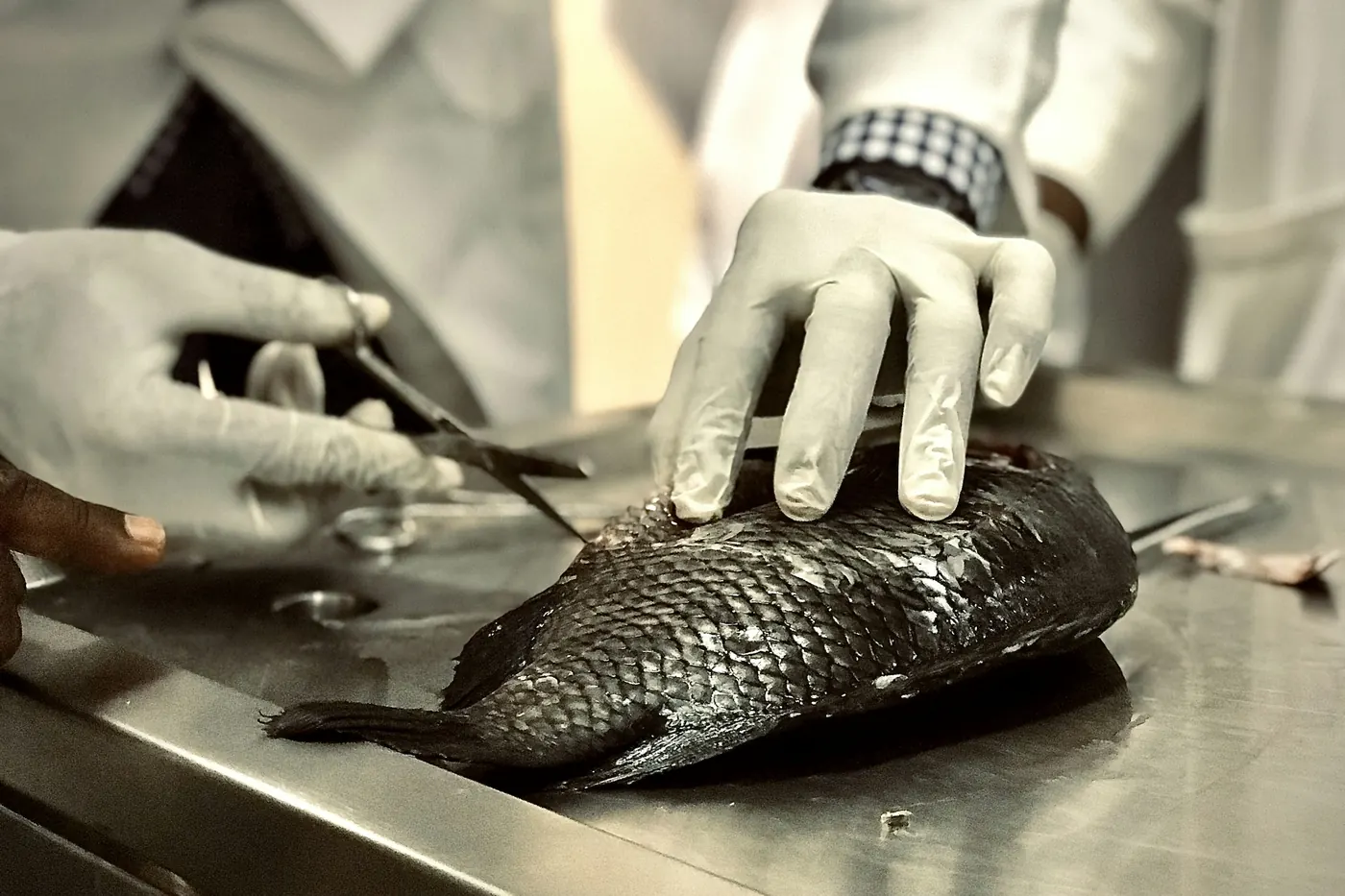
Start with a scaled and gutted fish, and pat it dry so it stays put. Make a cut behind the gills down to the backbone. Turn the blade flat and draw it toward the tail, keeping it against the bones. Use long strokes, not short sawing ones. Lift the fillet away and repeat on the other side.
To skin it, lay the fillet skin side down and start at the tail end. Hold the skin and run the blade between skin and flesh, angled slightly toward the skin. Run your fingers over the fillet to find pin bones, and pull them out with tweezers or cut them away. Then slice or cube it as your recipe asks. For more on how fish shows up on Mexican menus, read our guide to seafood at a Mexican restaurant.

How we picked these eight fillet knives
We did not use these knives ourselves. Every pick is sold by its maker as a fillet knife. We left out boning knives, even those sold as boning and fillet knives, along with electric knives and kits. We also avoided the exact knives on our fish knife set and knife for cutting fish pages. The one close overlap is the Dexter-Russell Basics, where the 7-inch appears on the fish knife set page and the 8-inch appears here for its extra reach.
Specifications come from the makers’ Amazon listings. For the Victorinox, whose listing is thin, we also used restaurant supply catalogs. Independent evidence is limited. Practical Sailor’s test is the most useful we found, but it is old, and the only series it shares with this list is the Dexter Sani-Safe, in a different length. Outdoor Life’s guide informed our advice on length and flex, and it reviewed the 7-inch Dexter Basics. Most other fillet knife roundups we saw were affiliate lists, so we gave them little weight.
We left out thin Amazon-only brands and fishing brands with no independent review. A sharp, flexible blade is not the place to gamble on an unknown name, and eight solid picks are better than ten padded ones.
We also searched the U.S. Consumer Product Safety Commission recall database by brand on October 31, 2026, and found no recall of a knife from Dexter-Russell, Victorinox, Mercer, Wüsthof, Global or Morakniv.
Fillet knife questions from home cooks
What size fillet knife is best?
For most home cooks, 7 inches is the best starting point. Choose 8 inches or more for large fish and 6 inches or less for panfish and small trout.
Should a fillet knife be stiff or flexible?
Flexible, but not floppy. It should bend along the ribs while still holding a straight line. Very large fish call for a stiffer blade.
Can you use a fillet knife on meat?
Yes, for trimming silverskin, slicing thin cuts and skinning a pork loin. It is not meant for joints or heavy bones, and a boning knife is better for those.
Can I use a fillet knife for salmon?
Yes. It works well for skinning a salmon side. A longer blade of 8 inches or more makes skinning a whole side easier.
How do you care for a fillet knife?
Rinse it soon after use, wash it with mild soap, dry it fully and store it dry. Follow the maker on the dishwasher. Mercer and Wüsthof advise against it, even though other listings allow it.
Our final pick for whole fish
For most cooks, the best fillet knife is the Dexter-Russell Sani-Safe 7-inch. It is plain, flexible and easy to grip, and its series has independent support that few fillet knives can match. If you need more reach, step up to the Dexter-Russell Basics 8-inch.
Related guide: Best fish bone tweezers.
If you would rather leave the fish work to somebody else, see the menu at Julia’s or call to order.