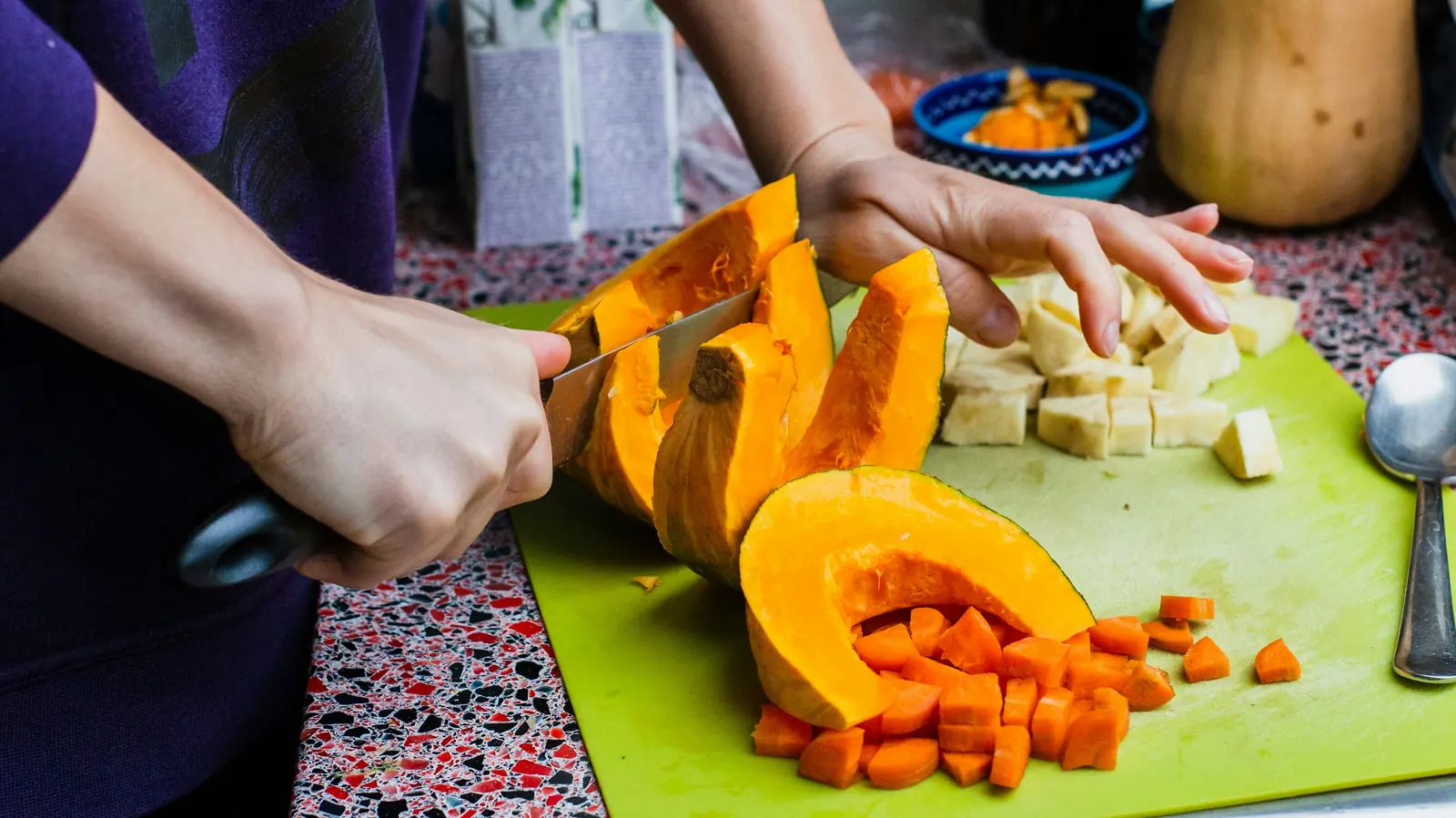
A nakiri is the Japanese home cook’s vegetable knife: a thin, rectangular blade with a straight edge that meets the board along its whole length. It makes clean, straight cuts through onions, cabbage and herbs, and it is just as handy for the tomatoes, chiles and cilantro of a Mexican kitchen. The name simply means “leaf cutter”.
Plenty of knives on Amazon call themselves Japanese nakiri while being made elsewhere in Japanese style. This guide is narrower than our main best nakiri knife roundup: every pick below is made in Japan, in knife towns such as Seki and Niigata, and none of them repeats a knife from that page, so you get eight more options to weigh.
Julia’s earns a commission on purchases made through links on this page, at no cost to you. Recommendations are based on what a restaurant kitchen looks for, product specifications and verified buyer reports.
Quick verdict: which Japanese nakiri to buy
For most cooks, the best nakiri knife Japanese makers sell right now is the Enso HD 6.5-inch Nakiri: a VG10 core at 61 HRC, a hand-ground 12-degree edge, a hammered finish that helps slices fall away and a familiar riveted handle, all made in Seki. If you want the longest-lasting edge, the Miyabi Mizu SG2 is harder still at 63 HRC. For heavy vegetables, choose the thick-spined Global X; on a budget, the Mac Japanese Series vegetable cleaver is a plain made-in-Japan nakiri.
Below, the five standouts side by side, then all eight in detail and how to choose between them.
Five Japanese nakiri knives compared
Our five standout picks, one for each kind of cook, with the specifications each maker or listing states. All eight knives are reviewed in full below.
| Nakiri | Best for | Blade & steel | Weight (as stated) | Buy on Amazon |
|---|---|---|---|---|

Enso HD 6.5-inch NakiriBest overall
|
Most cooks, first Japanese knife | 6.5 in, VG10 at 61 HRC | 8.2 oz | View on Amazon |

Miyabi Mizu SG2 6.5-inch NakiriHardest steel
|
Longest-lasting edge | 6.5 in, SG2 at 63 HRC | Not stated | View on Amazon |

Shun Premier 5.5-inch NakiriBest compact
|
Small hands, small boards | 5.5 in, VG-MAX, 16° | 6.1 oz (Kai USA) | View on Amazon |
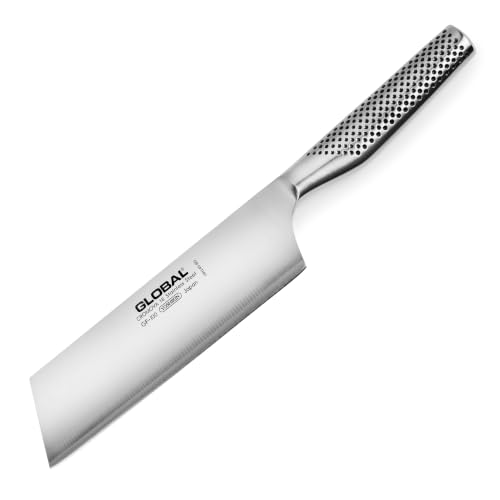
Global X 7-inch NakiriBest heavy-duty
|
Carrots, squash, cabbage | 7 in, CROMOVA 18, 4 mm spine | 10.6 oz | View on Amazon |
| Trying a nakiri on a budget | 6.5 in, molybdenum steel | Not stated | View on Amazon |
Product images from Amazon. Specifications are as stated by each maker or its Amazon listing.
Our eight picks for the best nakiri knife Japanese makers build
These eight cover the main choices in a made-in-Japan nakiri: hard VG10 and SG2 steels for edge retention, a softer, thicker blade for heavy chopping, compact and full sizes, hammered and hollow-ground finishes, and wood, micarta, polymer and steel handles. Each pick says who it suits and gives one honest reason to skip it.
1. Enso HD 6.5-inch Nakiri – Hammered VG10 From Seki
A made-in-Japan nakiri with every number published, from the steel to the spine thickness, and a handle that feels familiar to anyone raised on Western knives.
Enso makes its knives in Seki City, the knife-making town in Gifu Prefecture, and this one has a VG10 stainless core inside 37 layers of hammered Damascus. The listing gives a hardness of 61 on the Rockwell scale and an edge hand-ground to roughly 12 degrees, which is a finer angle than most German knives. The hammered (tsuchime) dimples break the suction that makes thin slices of potato or cucumber cling to a flat blade.
The shape is the classic nakiri rectangle: a 6.5-inch blade, 1.75 inches tall, with a 2 mm spine at the heel. That height gives your knuckles clearance above the board and makes the blade a handy scoop for carrying chopped onion to the pan. At 8.2 ounces it has a little more heft than the lightest Japanese nakiri, which helps when you push through a whole cabbage or a stack of chiles.
The handle is black canvas micarta with three stainless rivets and an end cap, a Western-style grip that suits either hand because the edge is double-bevel. Wash it by hand with warm water and mild soap, dry it straight away, and keep it on a wooden or rubber board rather than glass or stone.
Why we like it
- VG10 core in 37 hammered Damascus layers, hardened to 61 HRC
- Edge hand-ground to about 12 degrees, double bevel for either hand
- Full published dimensions: 6.5 x 1.75-inch blade, 2 mm spine, 8.2 oz
- Micarta handle with three rivets, a grip Western-knife users already know
- Handcrafted in Seki City, Japan, with a lifetime warranty
Key specifications
| Model | Enso HD nakiri (HD series) |
|---|---|
| Blade length | 6.5 in (1.75 in tall) |
| Steel | VG10 core, 37-layer hammered stainless Damascus |
| Hardness | 61 HRC |
| Edge angle | About 12° per side, double bevel |
| Handle | Black canvas micarta, three rivets |
| Weight | 8.2 oz (232 g) |
| Made in | Seki City, Japan |
Why we recommend it
Choose it if you want a genuinely Japanese nakiri without learning a new grip. It has the hard, thin-ground edge that makes a nakiri worth owning, the hammered finish helps food fall away, and the riveted handle and lifetime warranty make it an easy first Japanese knife.
Skip it if you want the lightest possible blade. At 8.2 ounces it is heavier than the Shun Premier below, and a VG10 edge this fine can chip if you twist it in a squash or hit a bone.
Pros and cons
Pros
- Every key spec published by the maker
- Hard VG10 core, fine 12-degree edge
- Hammered finish helps release slices
- Lifetime warranty
Cons
- Heavier than the lightest nakiri here
- Hand wash only
- Fine edge needs a whetstone, not a pull-through sharpener
2. Miyabi Mizu SG2 6.5-inch Nakiri – Powder Steel at 63 HRC
If edge retention is the reason you are shopping Japanese, this is the nakiri with the hardest steel on the list.
Miyabi, Zwilling’s Japanese brand, makes the Mizu in Seki from SG2, a powder stainless steel. Powder steels are made from very fine metal particles, which lets the maker harden them further without the blade turning brittle. Miyabi ice-hardens this one with its Cryodur process to 63 on the Rockwell scale, two points harder than the VG10 knives here.
The edge is finished with the honbazuke method, a three-step sharpening process Miyabi traces back to Japanese sword making, to about 12 degrees on each side. The blade carries a hammered Damascus finish, and the handle is a D-shaped micarta grip with a bolster and metal end cap, so it feels more Japanese than the Enso but still sits comfortably in a right or left hand.
Treat it as a precision tool. A hard, thin edge like this is superb on onions, cilantro and tomatoes, and less forgiving of twisting cuts and frozen food. Hand wash only, and sharpen it on a whetstone.
Why we like it
- SG2 powder stainless steel, ice-hardened to 63 HRC
- Honbazuke-sharpened edge at about 12 degrees per side
- Hammered Damascus finish to help slices fall away
- D-shaped micarta handle with bolster and end cap
- Handcrafted in Seki, Japan; limited lifetime warranty
Key specifications
| Model | Mizu SG2 nakiri, 1012474 |
|---|---|
| Blade length | 6.5 in |
| Steel | SG2 powder stainless, hammered Damascus finish |
| Hardness | 63 HRC |
| Edge angle | About 12° per side, double bevel |
| Handle | D-shaped micarta, bolster, metal end cap |
| Weight | Not stated |
| Made in | Seki, Japan |
Why we recommend it
Choose it if you cook a lot of vegetables and want an edge that stays keen for a long time between sharpenings. The D-shaped handle is a good halfway house between Western and traditional Japanese grips.
Skip it if you are new to Japanese knives or tend to scrape the board with the edge. Very hard steel holds its edge well but can chip under rough use, and the listing does not give a weight.
Pros and cons
Pros
- Hardest steel on this list (63 HRC)
- Very fine honbazuke edge
- Comfortable D-shaped handle
- Made in Seki
Cons
- Hard steel is more prone to chipping
- Weight not stated
- Hand wash and whetstone only
3. Shun Premier 5.5-inch Nakiri – Compact and Light
A shorter nakiri for small boards and small hands, at about six ounces.
Most nakiri are 6.5 to 7 inches long. Shun’s Premier version is 5.5 inches (140 mm), and Kai USA, Shun’s parent company in the United States, lists it at 6.1 ounces. That makes it the lightest knife on this list by a clear margin, and a good size for a narrow cutting board or a counter where you prep next to the stove.
It is still a serious blade. The core is Shun’s VG-MAX steel, wrapped in many layers of Damascus cladding (the Amazon listing says 68, Kai USA’s page says 69) with Shun’s hammered tsuchime finish. Shun sharpens it to 16 degrees per side, a little more robust than the 12-degree edges on the Enso and Miyabi.
The walnut-colored Pakkawood handle is contoured for either hand, and Shun offers free sharpening and honing for its knives, which takes the worry out of keeping a hard Japanese edge in shape. Wash by hand and dry it before putting it away.
Why we like it
- 5.5-inch blade, 6.1 oz according to Kai USA
- VG-MAX core with hammered Damascus cladding
- 16-degree edge on each side
- Pakkawood handle for either hand
- Handcrafted in Japan, with Shun’s free sharpening service
Key specifications
| Model | TDM0742 |
|---|---|
| Blade length | 5.5 in (140 mm) |
| Steel | VG-MAX core, Damascus cladding, hammered finish |
| Hardness | Not stated by Shun |
| Edge angle | 16° per side |
| Handle | Walnut-color Pakkawood |
| Weight | 6.1 oz (173 g, Kai USA) |
| Made in | Japan |
Why we recommend it
Choose it if you find a full-size nakiri tiring or awkward, or you mostly prep for one or two people. The short, light blade is easy to control on herbs, scallions and small onions.
Skip it if you regularly cut whole cabbages, big squash or large batches of vegetables. A 5.5-inch blade will not cross a big cabbage in one stroke.
Pros and cons
Pros
- Lightest knife here, at 6.1 oz
- Hammered finish
- Free sharpening from Shun
- Easy to control
Cons
- Short blade for big vegetables
- Hardness not published by Shun
- Layer count differs between Shun’s pages
4. Global X 7-inch Nakiri – Thick Spine for Heavy Chopping
A Japanese nakiri built for force: twice the spine of a standard Global knife and enough weight to push through dense vegetables.
Most nakiri are thin and light, which is lovely for onions and less comfortable on a butternut squash or a pile of carrots. The Global X takes the opposite approach. The listing gives a 4 mm spine, a 7-inch blade, an overall length of 12¾ inches and a weight of 10.6 ounces (300 g), the heaviest knife on this list. Global says the flat edge handles precise vegetable work and can double as a light-duty cleaver for meat.
Like other Global knives it is all stainless steel, including the seamless handle, so there is no wood or rivet joint to trap food. The steel is Global’s own CROMOVA 18, hardened to 56 to 58 HRC, softer than the other Japanese knives here. That trades some edge retention for toughness and easy sharpening, which suits a heavier chopper. The edge is 10 to 15 degrees.
It is made in Niigata, Japan, and comes with a felt-lined plastic blade guard, useful if it lives in a drawer.
Why we like it
- Extra-thick 4 mm spine and 10.6 oz weight for dense vegetables
- One-piece stainless construction with a seamless steel handle
- CROMOVA 18 steel at 56–58 HRC: tough and easy to sharpen
- Made in Niigata, Japan
- Includes a felt-lined blade guard
Key specifications
| Model | GF-100 |
|---|---|
| Blade length | 7 in (12¾ in overall) |
| Steel | CROMOVA 18 stainless |
| Hardness | 56–58 HRC |
| Edge angle | 10–15° |
| Handle | Seamless stainless steel |
| Weight | 10.6 oz (300 g) |
| Made in | Niigata, Japan |
Why we recommend it
Choose it if you prep a lot of hard vegetables, carrots, squash and cabbage for slaw, or you have chipped a thin Japanese edge before. The thicker spine and softer steel make it the most forgiving knife here.
Skip it if you want the delicate feel that draws most people to a nakiri. It is heavy for fine herb work, and some cooks find all-steel handles slippery when wet.
Pros and cons
Pros
- Handles dense vegetables
- Tough, easy-to-sharpen steel
- Seamless, easy-to-clean design
- Blade guard included
Cons
- Heaviest knife here
- Softer steel dulls sooner
- Steel handle can feel slick when wet
5. Yaxell Ran Plus 6.5-inch Nakiri – VG10 Damascus With a Micarta Handle

A VG10 Damascus nakiri from Yaxell, a Seki City knife maker, with a resin and linen micarta handle.
The listing says the knife is handcrafted in Seki City and has a Japanese VG10 stainless core at 61 on the Rockwell scale, with 34 layers of hard and soft stainless steel on each side. The title gives 67 layers in all and the details give 69, so treat the exact count as approximate. The blade angle is about 12 degrees.
At 6.5 inches it matches the Enso for length. The handle is black resin and linen canvas micarta, with two stainless steel rivets and an enclosed full tang, so it is a Western-style grip rather than a traditional octagonal wa handle.
Yaxell states a lifetime warranty and says to clean it with warm water and mild detergent. The listing gives no weight. Treat it like any VG10 knife: dry it immediately and sharpen it on a whetstone.
Why we like it
- VG10 core at 61 HRC, per the listing
- Full-size 6.5-inch blade
- Micarta handle with an enclosed full tang
- Lifetime warranty, per the listing
Key specifications
| Model | 36644 |
|---|---|
| Blade length | 6.5 in |
| Steel | VG10 core, stainless Damascus (listing gives 67 and 69 layers) |
| Hardness | 61 HRC |
| Edge angle | About 12 degrees |
| Handle | Black resin and linen canvas micarta |
| Weight | Not stated |
| Made in | Seki City, Japan |
Why we recommend it
Choose it if you want a Seki-made VG10 Damascus nakiri with a durable micarta handle and a stated lifetime warranty.
Skip it if you want a traditional wa handle, or a hammered finish to help slices fall away.
Pros and cons
Pros
- Seki-made VG10 Damascus
- Full-size 6.5-inch blade
- Micarta handle
- Lifetime warranty
Cons
- No weight in the listing
- No hammered finish
- Layer count inconsistent in the listing
6. Shun Kanso 6.5-inch Hollow Ground Nakiri – Plain Steel, Rugged Handle

A plain, rugged Shun with no Damascus pattern, a dense hardwood handle and hollow-ground scallops to help release slices.
Kanso means simplicity, and the knife follows the name. The blade is AUS10A, a high-carbon stainless steel refined with vanadium, without decorative cladding. Shun sharpens it to 16 degrees per side and grinds a row of hollow indentations above the edge, which the listing says reduce friction and help food release.
The full-tang handle is tagayasan, a dense hardwood often called iron sword wood, and the butt doubles as a bottle opener and hanging hook. It is shaped for right- or left-handed use. Shun does not state the weight on the listing, and retail figures vary, so expect a mid-weight 6.5-inch nakiri.
Like every Shun, it is handcrafted in Japan and covered by Shun’s free sharpening and honing service.
Why we like it
- AUS10A high-carbon stainless steel, sharpened to 16 degrees
- Hollow-ground indentations to reduce sticking
- Full-tang tagayasan wood handle
- Handcrafted in Japan, with Shun’s free sharpening
Key specifications
| Model | SWT0728 |
|---|---|
| Blade length | 6.5 in |
| Steel | AUS10A high-carbon stainless |
| Hardness | Not stated |
| Edge angle | 16° per side |
| Handle | Tagayasan wood, full tang |
| Weight | Not stated (retailer figures vary) |
| Made in | Japan |
Why we recommend it
Choose it if you want a no-frills Japanese nakiri with a real wood handle and food-release scallops, and you would rather not fuss over a decorative Damascus blade.
Skip it if you want the hardest steel or a hammered Damascus look. AUS10A is a step below VG10 and SG2 for edge retention, and Shun does not publish the hardness for this line.
Pros and cons
Pros
- No-frills plain blade
- Hollow ground for food release
- Dense wood handle, full tang
- Free sharpening from Shun
Cons
- Hardness and weight not stated
- Plain look will not suit everyone
- Hand wash only
7. Shun Sora 6-inch Hollow Ground Nakiri – VG10 Edge at a Lower Price

The most affordable way into a made-in-Japan Shun nakiri, with a VG10 cutting edge where it matters.
Sora knives use what Shun calls Composite Blade technology: a VG10 cutting edge in a san mai (three-layer) construction, joined to an upper blade of 420J stainless steel. The idea is to put the expensive, hard steel only along the edge. Shun sharpens it to 16 degrees per side and adds hollow-ground indentations to stop slices sticking.
At 6 inches it is a little shorter than the standard 6.5-inch nakiri. The full-tang handle is a textured PP/TPE polymer blend, which grips well with wet hands and needs no oiling, and it suits either hand.
Shun handcrafts it in Japan and offers the same free sharpening and honing as on its pricier lines. Hand wash it and dry it promptly, as with any Shun.
Why we like it
- VG10 cutting edge in a san mai construction
- 16-degree edge with hollow-ground indentations
- Textured polymer handle, full tang, either hand
- Handcrafted in Japan, with Shun’s free sharpening
Key specifications
| Model | VB0739 |
|---|---|
| Blade length | 6 in |
| Steel | VG10 edge, 420J stainless upper blade |
| Hardness | Not stated |
| Edge angle | 16° per side |
| Handle | Textured PP/TPE polymer, full tang |
| Weight | Not stated |
| Made in | Japan |
Why we recommend it
Choose it if you want a Japanese-made nakiri with a VG10 edge on a tighter budget, or a knife you do not mind handing to other people in the kitchen. The polymer handle is the easiest to care for here.
Skip it if you plan to sharpen it for decades. The VG10 is only along the edge, and Shun does not say how much of it there is, so heavy resharpening over many years may eventually reach the softer upper steel.
Pros and cons
Pros
- VG10 edge for less
- Grippy, low-care handle
- Hollow ground
- Free sharpening from Shun
Cons
- Hard steel only along the edge
- Weight and hardness not stated
- Slightly short at 6 inches
8. Mac Japanese Series 6.5-inch Vegetable Cleaver – A Simple Made-in-Japan Nakiri

Mac’s plainest nakiri: a thin, made-in-Japan vegetable knife without Damascus layers or premium steel.
Mac sells it as a vegetable cleaver, but the shape is a nakiri: a rectangular 6.5-inch blade with a straight edge. The listing gives a 2.5 mm blade of molybdenum steel and a Pakka wood handle, and says it is made in Japan. It is the simplest knife on this page, and that is its appeal: a light, sharp, straight-edged blade for slicing and chopping vegetables, without spending a lot.
We also name it as the budget nakiri in our best Japanese knife guide. It is not one of the picks on our main nakiri page, which is why it earns a place here as the entry point.
Mac recommends hand washing and says it is not dishwasher safe. The listing does not state hardness, edge angle or weight, so check the listing if those numbers matter to you.
Why we like it
- Straight-edged 6.5-inch blade, 2.5 mm thick
- Molybdenum steel blade, Pakka wood handle
- Made in Japan by a long-standing Japanese maker
- The least expensive way into a Japanese-made nakiri here
Key specifications
| Model | JU-65 |
|---|---|
| Blade length | 6.5 in |
| Steel | Molybdenum steel, 2.5 mm blade |
| Hardness | Not stated |
| Edge angle | Not stated |
| Handle | Pakka wood |
| Weight | Not stated |
| Made in | Japan |
Why we recommend it
Choose it if you want to try a nakiri before spending more, or you need a second vegetable knife for a busy kitchen. It does the core job, straight down through onions, tomatoes and herbs, without fuss.
Skip it if you want hard premium steel or a hammered finish. Mac publishes few numbers for this model, and a plain blade releases sticky slices less easily than a hammered or hollow-ground one.
Pros and cons
Pros
- Lowest-cost Japanese-made pick
- Thin, straight-edged blade
- Simple wood handle
- Easy to sharpen
Cons
- Few published specs
- No food-release finish
- Not dishwasher safe
What makes a nakiri Japanese
Nakiri started as the everyday vegetable knife of Japanese home kitchens. America’s Test Kitchen describes it as “one of the most important knives found in Japanese home kitchens”, with a rectangular blade, a relatively straight edge and a blunt tip. Three things set a made-in-Japan nakiri apart from the many Japanese-style versions made elsewhere.
Where it is made
Most of the knives here come from Seki in Gifu Prefecture (Enso, Miyabi, Shun, Yaxell) or Niigata (Global X). These towns have long histories of blade-making, and the makers state the origin on their listings. A listing that says “Japanese steel” or “Japanese style” without naming where the knife is made usually means it was made somewhere else.
Harder steel and finer edges
Japanese makers tend to use harder steels than German ones. On this page that runs from Global’s CROMOVA 18 at 56 to 58 HRC up to SG2 at 63 HRC, with VG10 in between at about 60 to 61. Harder steel can take a finer edge, often 12 to 16 degrees per side, and hold it longer. The trade-off, as America’s Test Kitchen notes for nakiri in general, is a thin, hard blade that can chip if you use it like a cleaver.
Single or double bevel
Every knife on this page has a double-bevel edge, sharpened on both sides, so it works the same for right- and left-handed cooks. Traditional single-bevel vegetable knives are usually sold as usuba and are a different tool for specialist cuts. If you are deciding between a nakiri and other Japanese shapes, our main nakiri guide covers nakiri, usuba and santoku side by side.
How to choose a Japanese nakiri
Five things decide which of these knives suits your kitchen.
1. Steel and hardness
VG10 (Enso, Yaxell, the edge of the Shun Sora) is the common middle ground: hard, stainless and not too difficult to sharpen. SG2 (Miyabi Mizu) is harder and holds an edge longer but is less forgiving. VG-MAX is Shun’s own variation of VG10. AUS10A (Shun Kanso) and CROMOVA 18 (Global X) are a little softer and tougher. If you are new to Japanese knives, VG10 is the safest place to start.
2. Blade length
A 6.5-inch blade crosses most onions and a half cabbage in one stroke and is the standard size. Go to 7 inches if you prep large batches, or down to 5.5 or 6 inches if you have small hands or a small board. Match the knife to your board too: a 6.5-inch blade wants a board at least 12 inches wide. Our wood cutting board guide covers boards that are kind to a fine edge.
3. Weight and spine
The knives here range from about 6 ounces (Shun Premier) to more than 10 (Global X). Light nakiri are nimble on herbs and scallions; heavier ones push through carrots and squash with less effort. A thin spine, around 2 mm, slices cleanly; a thick one, like the Global X’s 4 mm, is sturdier but wedges in dense vegetables.
4. Handle
Riveted micarta (Enso), D-shaped micarta (Miyabi), Pakkawood (Shun Premier, Mac), hardwood (Shun Kanso), polymer (Shun Sora) and seamless steel (Global X) are all here. Wood and Pakkawood feel warm and grippy; polymer and micarta shrug off water; steel is easiest to clean. If you can, hold a knife before buying, or choose a shape close to the knives you already like.
5. Finish and food release
Wet slices of potato, cucumber and onion stick to a flat blade. Hammered (tsuchime) finishes on the Enso, Miyabi and Shun Premier, and the hollow-ground scallops on the Shun Kanso and Sora, help them fall away. The Mac and Global X have plain blades.
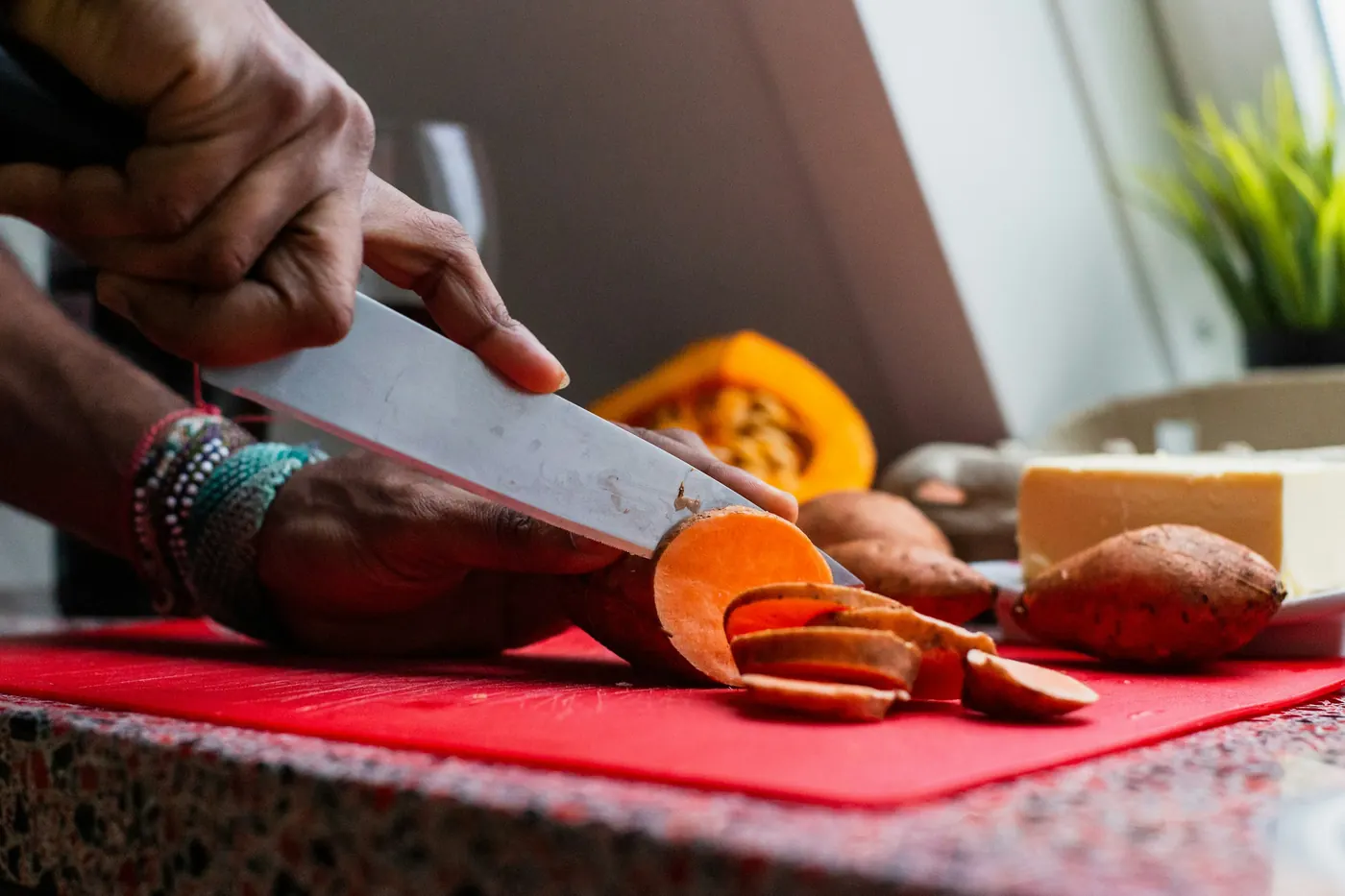
Cutting vegetables with a nakiri
A nakiri works differently from a Western chef’s knife. Because the edge is straight, America’s Test Kitchen points out that you “can’t rock through a cut from tip to heel”. Instead, use an up-and-down motion, or push the blade forward and down so the whole edge meets the board.
- Onions: halve, lay flat, and slice straight down; the straight edge cuts through every layer at once, which is useful for pico de gallo.
- Cilantro and herbs: bunch them tightly and chop with short downward strokes rather than rocking.
- Tomatoes and tomatillos: a sharp edge pierces the skin without crushing, which keeps a fresh salsa from turning watery. Our guide to salsa roja vs salsa verde explains what each needs.
- Cabbage: quarter it, cut out the core and shred thin for slaw or tacos.
Keep the edge off bones, frozen food and hard squash rinds, all of which can chip a hard Japanese blade, and never scrape chopped food across the board with the edge: turn the knife over and use the spine.
Sharpening and care for a Japanese nakiri
Wash by hand with warm water and a little soap, dry it straight away and store it in a block, on a magnetic strip or in a blade guard rather than loose in a drawer. None of the knives here is sold as dishwasher safe.
For sharpening, a whetstone is the right tool for hard Japanese steel and fine edges: our whetstone guide explains grits and technique. Between sharpenings, a ceramic or fine rod helps straighten the edge; see the honing steel for Japanese knives guide. Shun offers free sharpening for its knives, which is a real advantage for the three Shun picks here.
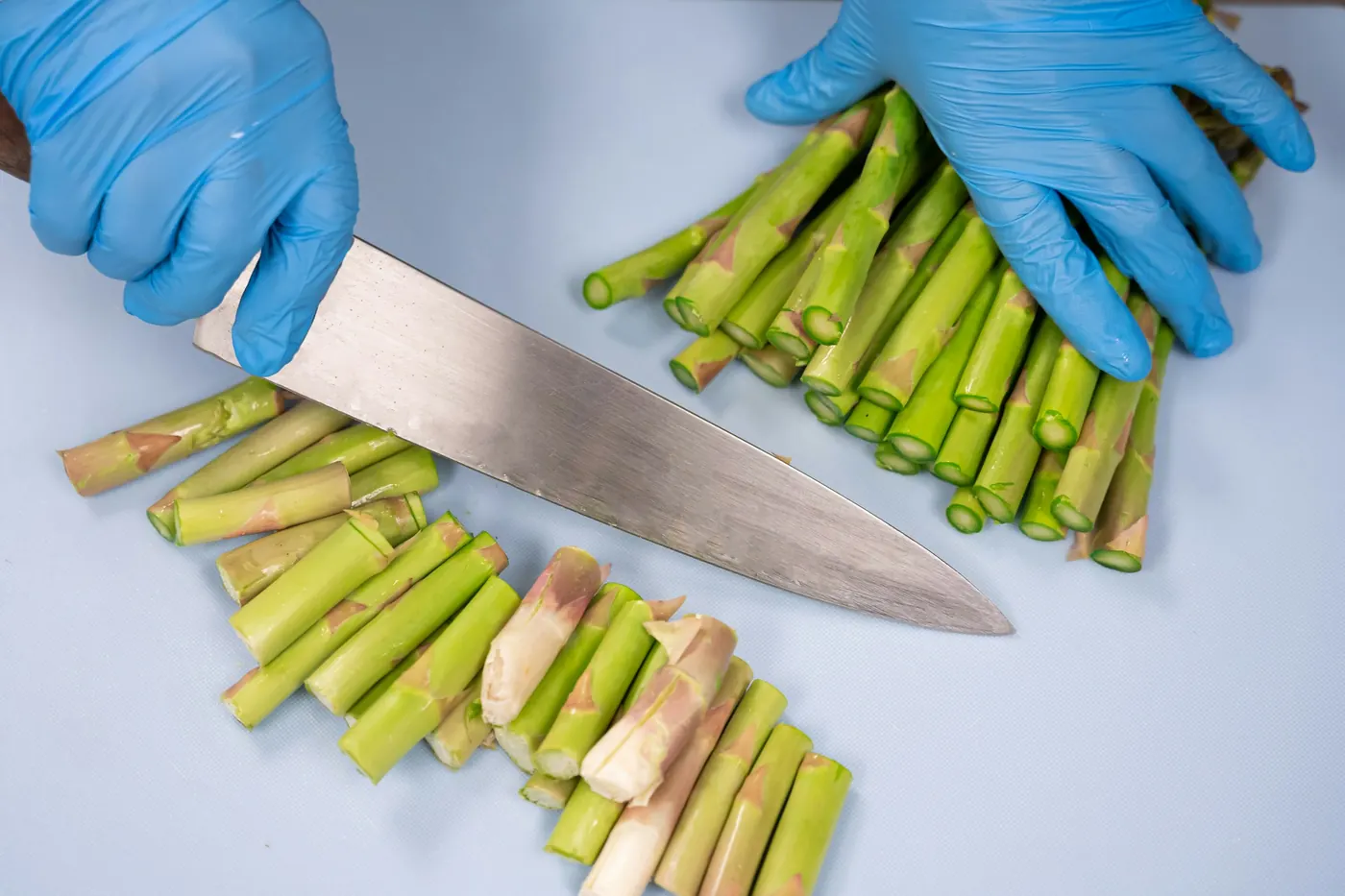
How we picked these eight Japanese nakiri
We started from what a working kitchen asks of a vegetable knife: a straight edge, a sharp, hard blade that holds up to a lot of onions and herbs, and a handle that stays comfortable through a long prep session. Then we limited the field to nakiri that the maker or its Amazon listing says are made in Japan, and that were in stock on Amazon US when we checked. We left out the knives on our main nakiri roundup so this page adds options rather than repeating them, and we passed over the many listings that call a knife “Japanese” while naming no maker or country of manufacture.
Specifications come from the makers’ Amazon listings, Kai USA’s Shun pages and, where a maker publishes little, named retailer spec sheets (each review says which). For how nakiri behave in general we relied on America’s Test Kitchen’s nakiri coverage. We have not used these products ourselves; where we describe how a blade or steel behaves, we say whose findings those are. Several good Japanese nakiri, from Kikuichi, Masamoto, several Kai Seki Magoroku models and the Miyabi Birchwood, showed limited stock when we checked and were left out for now.
Japanese nakiri questions, answered
What is the best Japanese knife for nakiri-style vegetable prep?
For most home cooks, a 6.5-inch double-bevel nakiri with a VG10 core, such as the Enso HD. It is hard enough to hold a fine edge, tough enough to forgive the odd mistake, and easy to find a whetstone for. If you would rather have one Japanese knife for everything, a santoku or gyuto is more versatile; our best Japanese knife guide compares them.
Is a nakiri better than a santoku for vegetables?
For pure vegetable work, often yes: the straight edge meets the board along its full length, so cuts go all the way through without rocking. A santoku has a pointed tip and slight curve, which makes it more versatile for meat and fish. Many cooks own both. See our santoku guide if you want one knife for everything.
Can you cut meat with a nakiri?
Boneless meat, yes, carefully. A thin, hard nakiri should not meet bones or frozen food, which can chip the edge. The Global X, with its thick spine and softer steel, is the only knife here its maker describes as a light-duty cleaver for meat.
How do I know a nakiri is really made in Japan?
Look for a named maker and a stated town or country of manufacture, such as “handcrafted in Seki, Japan”, on the listing or the maker’s own site. “Japanese steel”, “Japanese style” or a Japanese-sounding brand name alone does not tell you where the knife was made.
Are Japanese nakiri dishwasher safe?
None of the knives on this page is sold as dishwasher safe. Hard, thin blades and wood or Pakkawood handles last longer with a quick hand wash and an immediate dry.
Our final pick for a made-in-Japan nakiri
Buy the Enso HD if you want one Japanese nakiri that does everything well and tells you exactly what you are getting. Choose the Miyabi Mizu SG2 for the longest-lasting edge, the Shun Premier if a lighter, shorter knife suits your hands, and the Global X if most of your prep is carrots, squash and cabbage. The Mac Japanese Series is the simple, lower-cost way in.
For more nakiri choices, including our overall favorites and how nakiri compare with usuba and santoku, see the best nakiri knife. And if you would rather someone else did the chopping tonight, see the menu or call to order.