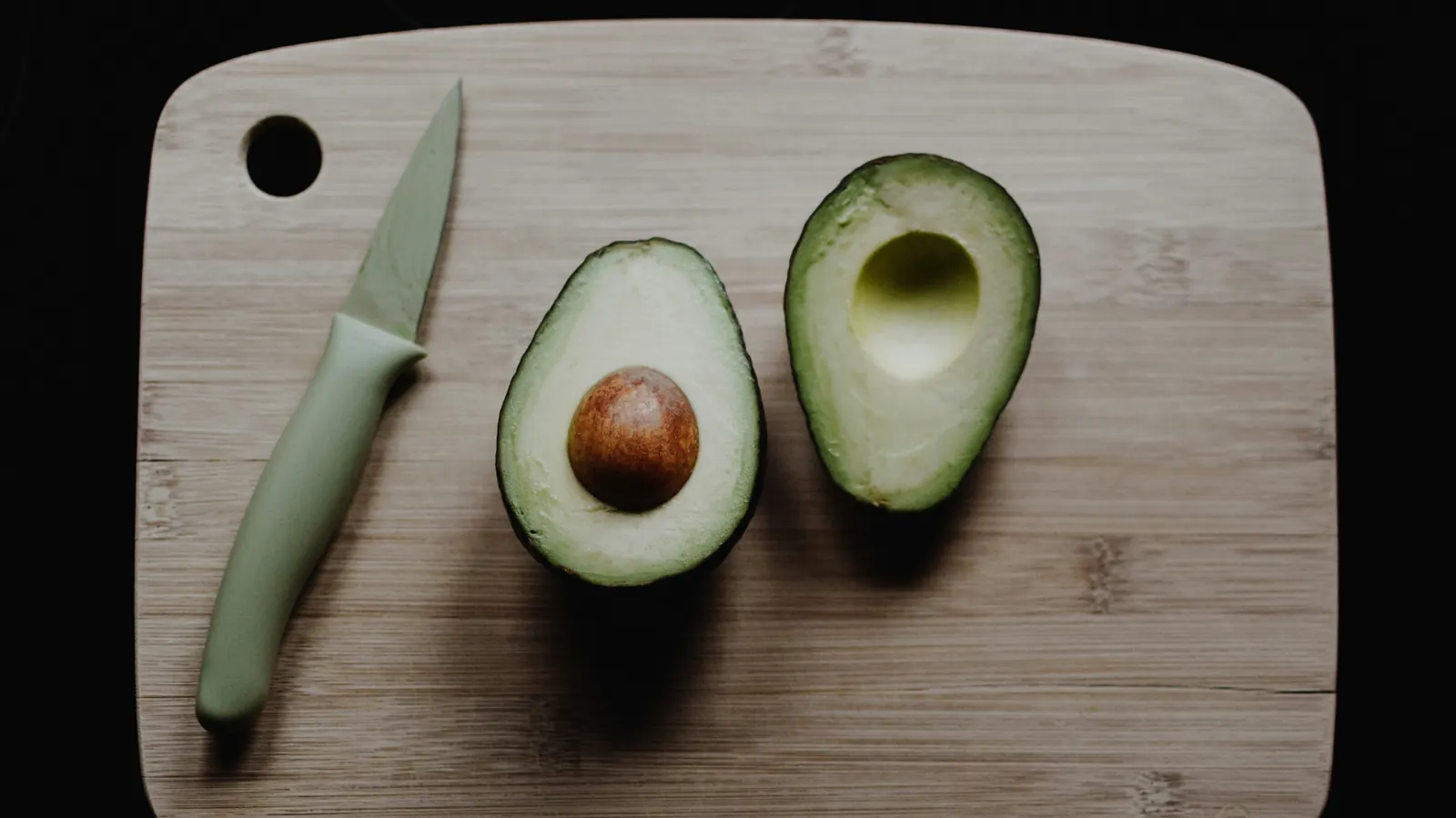
More cooks are asking us about moving off plastic cutting boards. Some are unsettled by the knife scars on an old board, some just want a nicer object on the counter, and some have read about microplastics. Whatever the reason, the choices come down to four materials: wood, bamboo, paper composite and rubber.
Each one solves part of the problem and hands you a new chore. This guide is for that decision, and it complements our main cutting board guide, which covers plastic too. We have left glass and stone out on purpose, because hard surfaces like those are rough on knife edges.
Julia’s earns a commission on purchases made through links on this page, at no cost to you. Recommendations are based on what a restaurant kitchen looks for, product specifications and the sources we name. We have not used these boards ourselves.
Quick verdict: which plastic-free board to buy
For most kitchens, buy the Teakhaus Essential Duo: a small and a large board of FSC-certified teak with modest care. If you need a dishwasher, choose the Epicurean Gourmet composite, knowing that its binder is not named. For a large daily board, the John Boos Au Jus is hard to argue with. No board here makes a health promise, and neither do we.
Five boards at a glance
Five of the eight boards, one for each kind of cook. Details are as stated by each maker or listing.
| Board | Best for | Material & size | Upkeep | Buy on Amazon |
|---|---|---|---|---|

Teakhaus Essential Duo Teak Cutting Board SetBest overall
|
Replacing every plastic board | Teak, set of 2 | Hand wash | View on Amazon |

Epicurean Gourmet Series Cutting Board, 14.5 x 11.25 inchBest dishwasher safe
|
Dishwasher users | Paper composite, 14.5 x 11.25 in | Dishwasher safe | View on Amazon |
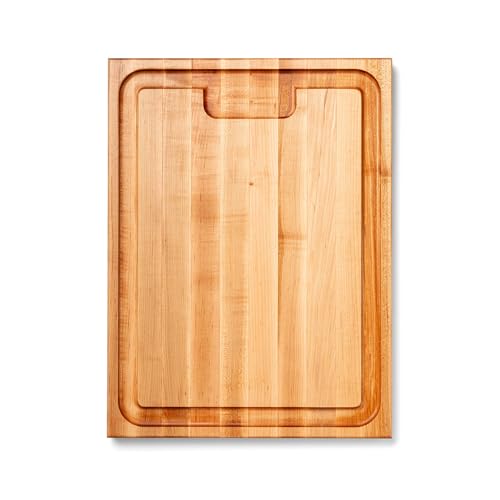
John Boos Au Jus Maple Board, 24 x 18 inchBest large wood
|
Cooks with counter space | Maple, 24 x 18 x 1.5 in | Hand wash, oil | View on Amazon |
| Fine knives, no wood upkeep | Synthetic rubber, 16.5 x 9.8 in | Sand to renew | View on Amazon | |

Totally Bamboo 3-Piece Cutting Board Set with Juice GrooveBest bamboo set
|
View on Amazon |
Product images from Amazon. Specifications are as stated by each maker or listing.
Our picks for the best non plastic cutting board
Each entry says what the board is made of, what holds it together if the listing tells us, and whether any plastic-like part is stated. Where a listing says nothing, we say that too, since that silence matters to the buyer reading this page.
1. Teakhaus Essential Duo Teak Cutting Board Set – Two Sizes of Solid Teak
If you are clearing plastic boards out of your kitchen all at once, a set makes more sense than one board. This Teakhaus duo replaces the small and large boards most people reach for, in edge-grain teak. Teakhaus says it is 100 percent FSC-certified teak, known for moisture resistance, and that the surface is gentle on knives.
The boards are reversible, and the listing says they need only hand washing with regular dish soap and minimal care, which is less fuss than some hardwoods. They are not dishwasher safe. That is the main practical change when you leave plastic behind, and it is worth deciding up front whether you can live with it.
The listing gives one size, 17.13 by 13.13 inches, without separating the two boards, so check the product details for the small board’s measurements. Unlike Teakhaus’s three-board set, this listing does not mention a juice groove. The lead offer comes from Teakhaus itself.
Why we like it
- Replaces two plastic boards at once
- FSC-certified teak
- Reversible
- Sold by the maker
Key specifications
| Model | Not stated |
|---|---|
| Material | Edge-grain teak |
| Size | Set of 2; largest listed 17.13 x 13.13 in |
| Binder or finish stated | Not stated |
| Non-wood parts | None stated |
| Juice groove | Not stated |
| Dishwasher | No |
| Made in | Not stated |
Why we recommend it
This is the one for someone replacing a whole stack of plastic boards in one go, who is happy to wash by hand. Teak is well suited to a kitchen sink routine, and the set covers most jobs.
Skip it if you need a dishwasher-safe board. Epicurean’s composite is the better fit for that.
Pros and cons
Pros
- A full set in one buy
- Moisture-resistant wood
- Gentle on knives, per the maker
Cons
- Hand wash only
- Sizes not all listed
2. Epicurean Gourmet Series Cutting Board, 14.5 x 11.25 inch – The Dishwasher-Safe Answer
Many people give up on wood because it cannot go in the dishwasher. This is the usual way around that. Epicurean’s boards are a paper composite, and the maker says they are dishwasher safe, thin, lightweight and reversible, with a juice groove on this Gourmet model and a thumb hole for storage. It is made in the USA, per the title.
Here is the honest catch for this page. A composite has to be held together by something, and the listing does not name the binder. Epicurean’s title does say microplastics free, but that is the maker’s own claim, and we could not open its site to read how it backs that up. If your goal is no synthetic material at all, choose solid wood.
Epicurean says knives will lightly score the board and that this shows it is protecting the edges, and that the natural color will develop a deeper patina over time. Our other pages use a larger Gourmet board and a Kitchen Series board. This 14.5-inch size is our one Epicurean here, picked because it fits most counters and racks.
Why we like it
- Dishwasher safe, per the maker
- Light and thin
- Juice groove
- Made in the USA
Key specifications
| Model | 003-15110301 |
|---|---|
| Material | Paper composite |
| Size | 14.5 x 11.25 in |
| Binder or finish stated | Binder not stated |
| Non-wood parts | None stated |
| Juice groove | Yes |
| Dishwasher | Yes |
| Made in | USA |
Why we recommend it
Choose it if you want to retire plastic but will not give up the dishwasher. It handles daily use with very little attention.
Skip it if you want no synthetic binder at all, because the listing does not rule one out, or if you prefer a softer feel under the knife.
Pros and cons
Pros
- Goes in the dishwasher
- Light to carry
- Takes up little storage
Cons
- Binder not named
- Harder feel than soft woods
- Scores and darkens with use
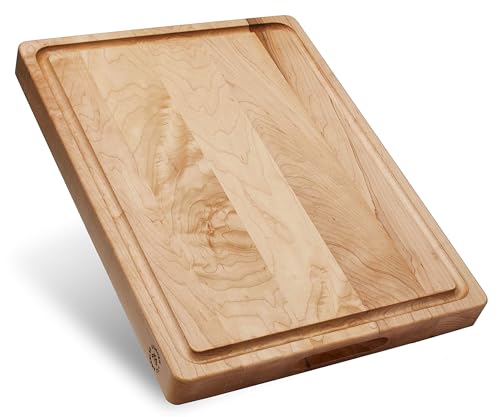
3. John Boos Au Jus Maple Board, 24 x 18 inch – A Big Block for Daily Work
This is the kind of board that stays on the counter for years. It is edge-grain maple, 24 by 18 inches and 1.5 inches thick, reversible, with a sloped juice groove and recessed finger grips, and Boos describes its goods as American-made. The listing gives no weight, but a slab this size will not be going in and out of a cabinet every day.
The care routine is the known one: hand wash only and use Boos’s board oil and cream, sold separately. The finish is oil, which is what you want if the point is to avoid plastics at the surface. See our guide to cutting board oil for choices.
Our other pages list Boos’s R-Board and Chop-N-Slice boards and a CCB block. This Au Jus board is a different line, with a groove that slopes to collect juice when you carve. The lead offer comes from a third-party seller, so review the seller details.
Why we like it
- Generous 24 x 18 inch surface
- 1.5-inch thick edge-grain maple
- Sloped juice groove and finger grips
- American-made, per Boos
Key specifications
| Model | AUJUS |
|---|---|
| Material | Edge-grain maple |
| Size | 24 x 18 x 1.5 in; weight not stated |
| Binder or finish stated | Oil finish |
| Non-wood parts | None stated |
| Juice groove | Yes, sloped |
| Dishwasher | No |
| Made in | USA, per Boos’s American-made wording |
Why we recommend it
Buy it if you have counter space and cook most nights. The size means you can chop a whole meal without moving anything, and solid maple is about as far from plastic as a board gets.
Skip it if you have a small kitchen or dislike heavy lifting. A board this size will not fit a small sink for washing.
Pros and cons
Pros
- Very stable
- Plenty of room
- Maker’s long record
Cons
- Big and heavy; weight not stated
- Regular oiling
- Hard to wash in a small sink
4. Asahi Cookin’ Cut Rubber Cutting Board, 16.5 x 9.8 inch – Soft on Knives, Not Wood

Rubber boards are what you might choose if you like the washability of plastic and the give of wood. Parker Asahi has made these in Japan since 1965, per the listing. The elasticity of synthetic rubber gives a soft surface that is gentle on knives, and the listing says it recovers from cuts, absorbs little water and dries quickly.
This is a synthetic material, and we want to be clear about that. It is not plastic in the usual cutting-board sense, but it is not natural either, so it fits the buyer who wants to avoid polyethylene and polypropylene boards, not one who wants only plant-based materials.
One nice feature is that it can be renewed: you can sand stains and surface scratches away with a board scraper or waterproof sandpaper. The listing does not mention dishwasher use, so hand wash it. The offer comes from a seller importing from Japan, so check return terms. The main cutting board guide lists a slightly different size of this board; this longer one suits a chef’s knife stroke.
Why we like it
- Very kind to knife edges
- Low water absorption, per the listing
- Can be sanded back to clean
- Made in Japan since 1965
Key specifications
| Model | 688-0004 |
|---|---|
| Material | Synthetic rubber |
| Size | 16.5 x 9.8 x 0.5 in |
| Binder or finish stated | Synthetic rubber throughout |
| Non-wood parts | None stated |
| Juice groove | No |
| Dishwasher | Not stated |
| Made in | Japan |
Why we recommend it
This suits a cook with good Japanese knives who wants a soft surface and no plastic board or wood upkeep. The listing describes it as a professional-quality board.
Skip it if your goal is only natural materials. Solid wood or bamboo is the right choice for that.
Pros and cons
Pros
- Gentle on edges
- Resurfacing is possible
- No oil needed
Cons
- Still synthetic
- Dishwasher use not stated
- Imported by a third-party seller
5. Totally Bamboo 3-Piece Cutting Board Set with Juice Groove – A Budget Way Off Plastic
Bamboo is the cheapest common way to get away from plastic, and this set is a straightforward place to start. It includes 8 by 6, 11 by 8.5 and 13 by 9.5-inch boards, each with a juice groove and a hanging hole. Totally Bamboo describes them as lightweight and made for regular kitchen use.
Laminated bamboo is strips of grass glued together, and the listing does not name the adhesive, so this has the same open question as the composite boards. If you want to avoid that question entirely, a solid piece of wood is the safer buy, though most wood boards are glued from strips too.
Care is simple but firm: hand wash with warm, soapy water, dry thoroughly, and never put it in the dishwasher. Many cooks find bamboo firm under the knife. Sold by Totally Bamboo itself at the time we checked.
Why we like it
- Three useful sizes
- Juice groove on each board
- Light with hanging holes
- Sold by the maker
Key specifications
| Model | 20-7931 |
|---|---|
| Material | Bamboo |
| Size | 8 x 6, 11 x 8.5, 13 x 9.5 in |
| Binder or finish stated | Adhesive not stated |
| Non-wood parts | None stated |
| Juice groove | Yes |
| Dishwasher | No |
| Made in | Not stated |
Why we recommend it
Choose it if you want to swap out your plastic boards without spending much, and you are fine with a firmer surface.
Skip it if you want a large board for big meals, as the biggest here is 13 by 9.5 inches.
Pros and cons
Pros
- An easy way to start
- Light and easy to store
- Groove on all three
Cons
- Adhesive not stated
- Firm under the knife
- Hand wash only
6. Lipper International Bamboo Board with Cork Backing, 13.75 x 9.75 inch – Cork Feet, Not Rubber

Check the bottom of a wood board before you assume it is plastic free, since many non-slip feet are rubber or silicone. This one takes a different route: it has a cork backing to prevent slipping. That detail suits this page, since both faces of the board come from plants.
It is 13.75 by 9.75 inches and 5/8 of an inch thick, a good everyday size, and Lipper says it works for cutting and for serving cheese and crudités. The cork means only one side is for cutting, and you hand wash it. Do not leave it soaking, or the backing will suffer.
The listing is short. It does not state where the board is made or what adhesive is used, so this pick rests on the listing.
Why we like it
- Cork backing instead of rubber feet
- Comfortable everyday size
- Can go to the table
- Sold and shipped by Amazon at the time we checked
Key specifications
| Model | 8817 |
|---|---|
| Material | Bamboo with cork backing |
| Size | 13.75 x 9.75 x 0.63 in |
| Binder or finish stated | Adhesive not stated |
| Non-wood parts | Cork backing |
| Juice groove | No |
| Dishwasher | No |
| Made in | Not stated |
Why we recommend it
This suits a cook who wants a non-slip board with no rubber or silicone feet and is happy to use one side only.
Skip it if you want to cut on both sides, or want a juice groove for ripe tomatoes.
Pros and cons
Pros
- Natural grip material
- Sensible size
- Also a serving board
Cons
- One cutting side
- No groove
- Thin listing details
7. Ziruma Acacia Cutting Board, 16 x 11 inch – A Beeswax and Plant-Oil Finish
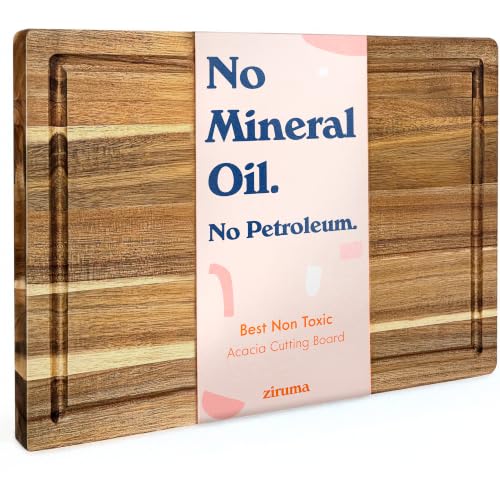
Most wood boards are finished in mineral oil. Ziruma aimed at the buyer who wants to avoid that as well: its acacia board is finished with beeswax, flaxseed and lemon oil, and the title says it is free of mineral oil and plastic. It is FSC-certified acacia, 16 by 11 inches and 1 inch thick.
These are the seller’s claims, and Ziruma is a small brand that mostly sells online. We do not repeat the “non-toxic” wording from its title as a safety finding, because we have no independent source for it. What you can rely on is the plain description: solid acacia with a natural finish.
As with any wood, wash it by hand and keep up the oil.
Why we like it
- No mineral oil in the stated finish
- FSC-certified acacia
- 1-inch thickness
- Sold by the maker
Key specifications
| Model | ZIRUCUTBOARDM |
|---|---|
| Material | Acacia |
| Size | 16 x 11 x 1 in |
| Binder or finish stated | Beeswax, flaxseed and lemon oil |
| Non-wood parts | None stated |
| Juice groove | Not stated |
| Dishwasher | No |
| Made in | Not stated |
Why we recommend it
Choose it if you want to avoid mineral oil as well as plastic, and you do not mind that the case for it rests on the brand’s own description.
Skip it if you want a maker with a long track record. Boos or Teakhaus will suit you better.
Pros and cons
Pros
- Stated natural finish
- Good everyday size
- Sturdy thickness
Cons
- Claims come from the seller
- Newer, smaller brand
- Hand wash only
8. Sonder Los Angeles Winsome Maple Board, 17 x 13 inch – American Maple with a Serving Well
Sonder’s board does two jobs. On one side you have a deep juice groove, listed at 3.5 fluid ounces, and a built-in well meant for crackers, bread or olives, so it moves from prep to the table for a cheese spread. It is edge-grain American maple, 17 by 13 by 1.5 inches, made in the USA, per the listing.
The listing asks for hand washing and for oiling every two to three weeks, which is a fair amount more care than the composite and rubber boards here. The upside is a bright, clean-looking maple surface that many cooks like for prep.
Sonder sells largely online, and the offer here is sold by Sonder itself. Other pages on our site list Sonder’s acacia and walnut boards; this maple version is a separate product.
Why we like it
- Made in the USA, per the listing
- Deep juice groove
- Built-in serving well
- Comes in a gift box
Key specifications
| Model | Winsome Maple |
|---|---|
| Material | Edge-grain maple |
| Size | 17 x 13 x 1.5 in |
| Binder or finish stated | Not stated |
| Non-wood parts | None stated |
| Juice groove | Yes |
| Dishwasher | No |
| Made in | USA |
Why we recommend it
This suits a host who wants one good-looking wood board for chopping and for serving, and will keep up with the oil.
Skip it if you want low upkeep. The oiling schedule is the most demanding on this page.
Pros and cons
Pros
- Prep and serving in one
- American maple
- Generous groove
Cons
- Frequent oiling
- Hand wash only
- Well reduces flat cutting space
How to choose a board without plastic
Wood
Solid maple, teak and acacia feel good under a knife and last a long time with care. You will wash by hand and oil now and then. Most boards are glued from strips, and few listings name the glue.
Bamboo
Bamboo is light and costs less, but it is laminated by necessity and tends to feel firmer under the blade. Read the care notes, since none of the bamboo boards here go in the dishwasher.
Paper composite
Composite is the one to pick if you need a dishwasher. It is made of fibers held with a binder, so “not plastic” is a looser idea here. The boards are often thin and light.
Rubber
Synthetic rubber is very kind to knives and low on upkeep. It is still synthetic, so it suits people avoiding polyethylene and polypropylene, not those who want only natural materials.
The parts you might miss
Look underneath. Feet are usually rubber or silicone, and wrapped edges and handles can also be plastic. The Lipper’s cork backing is one way around that, and a plain slab avoids the question.
What the microplastics research says
A small study in Environmental Science & Technology, as reported by Phys.org, estimated that food preparation could release 14 to 71 million polyethylene microplastics and 79 million polypropylene microplastics a year from those boards. The same report says wooden boards shed 4 to 22 times more microparticles than plastic in different tests, though those are wood fibers and not microplastics, and that polyethylene and wood particles from chopping carrots did not appear to significantly change mouse cells’ viability. We read the news report and not the paper. It is a good reason to be curious and not a health finding, so please do not read this page as saying that any board here is safer for you.
How we picked these eight boards
We started with boards in stock on Amazon that are mostly wood, bamboo, composite or rubber, from makers we could identify, and skipped every exact board on our other cutting board pages. Two picks are other sizes of boards on our site, the Epicurean and the Asahi, and each entry explains why. We excluded wheat-straw and titanium boards from the search results: wheat-straw boards are often plant fiber mixed with plastic, and many titanium boards are thin sheets over a plastic base. We read the Phys.org report on the study above and the FDA’s food handling page. We have not used these boards ourselves, and we state no prices because they change.
Plastic-free board questions, answered
What is the best type of non plastic cutting board?
For most kitchens, solid wood. If you need a dishwasher, a paper composite. If you want a soft surface with little upkeep, synthetic rubber, with the note above about what that means.
Is a wood cutting board safe for raw meat?
Any board used for raw meat needs a good wash. The FDA advises one board for fresh produce and a separate one for raw meat, poultry and seafood, with hot soapy water after each food item. Our guide to the best cutting board for meat goes into more detail.
Are bamboo boards bad for knives?
Bamboo tends to be firmer than maple, so your edge may need touching up more often. A honing steel helps. Rubber is the most forgiving surface here.
Why are glass and stone boards not on this list?
They avoid plastic, but they are hard on knife edges, so we leave them out.
Does a board labeled microplastics free mean anything?
It is the maker’s claim. We repeat it only as that, and we could not read the backing for it.
Our final pick for a kitchen without plastic boards
Buy the Teakhaus duo if you are replacing everything, the Epicurean if the dishwasher is not negotiable and the Boos if you have the counter for it. Whichever you pick, it will get plenty of use on the onions and chiles for our red and green salsas.
And if tonight you would like to skip the chopping altogether, see the menu or call to order.
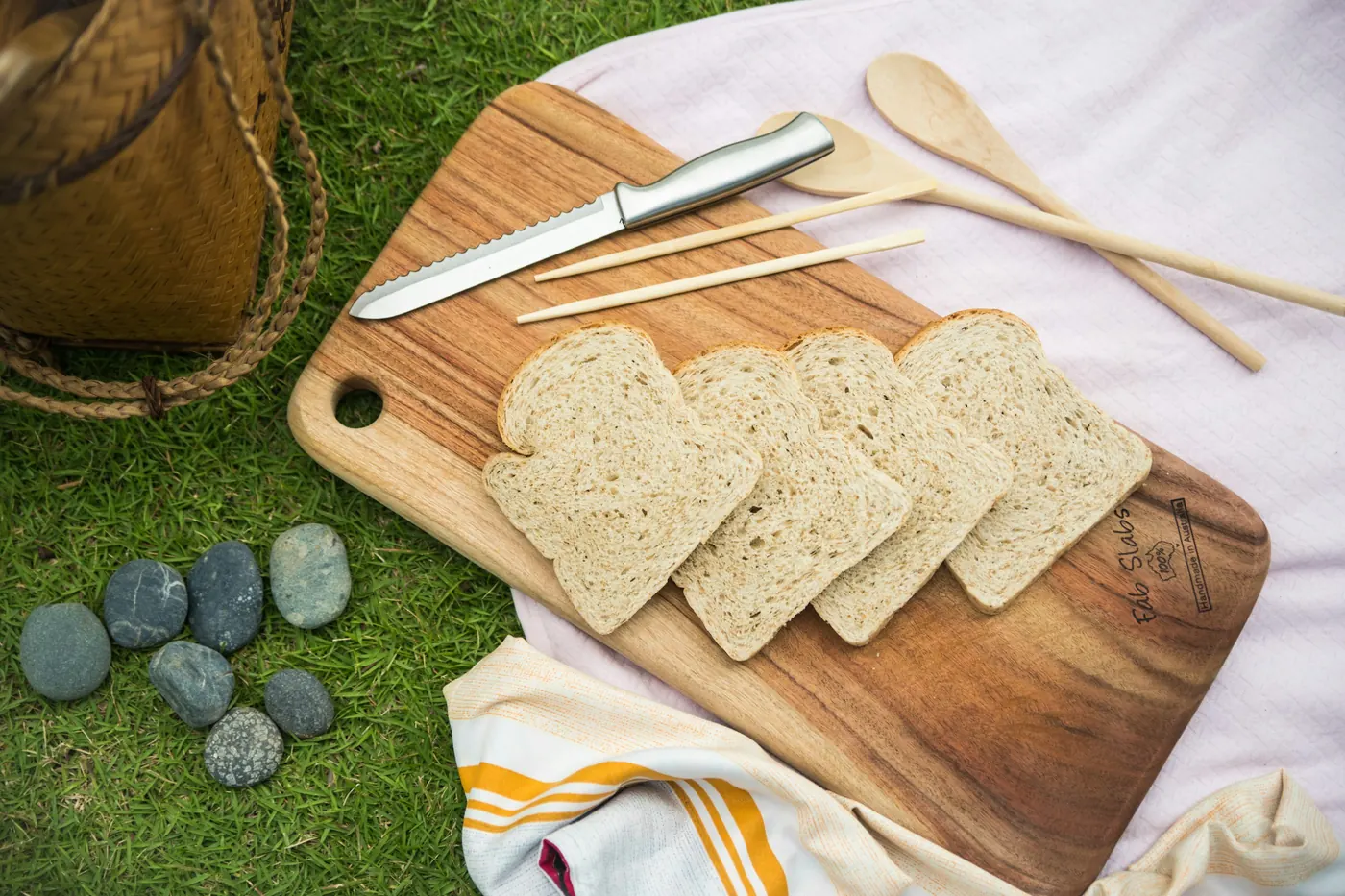
Wood and bamboo boards last longer with a regular coat of oil, and our guide to cutting board oil explains what to buy.