A ceramic knife and a steel knife look like the same tool with a different blade, and in the hand they feel very different. Ceramic blades are made from zirconia, a material far harder than knife steel, so they start very sharp and stay that way for a long time. That same hardness makes them brittle. Steel is softer, so it dulls sooner, but it flexes a little instead of chipping, and anyone can bring it back with a honing rod or a stone.
In a restaurant kitchen the choice is easy to see: every cook’s main knife is steel, because it has to cut onions, break down chicken, split squash and get knocked around all shift. This guide compares the two materials on edge life, chipping, sharpening, weight, cleanup and reactivity, using what the makers themselves say, and then names one ceramic and two steel knives worth buying.
Julia’s earns a commission on purchases made through links on this page, at no cost to you. Recommendations are based on what a restaurant kitchen looks for, product specifications and verified buyer reports.
Quick verdict: ceramic or steel for your main knife?
For most home cooks, the main knife should be steel. It handles every job, including bones, hard squash, frozen food and prying out an avocado pit, and you can keep it sharp yourself. Buy a ceramic knife as a second blade if you slice a lot of vegetables, fruit and boneless meat, hate sharpening, and will treat it gently. Kyocera, which makes the ceramic pick on this page, says so itself: for prying, twisting, carving, boning and frozen foods, use steel.
The table sums up the differences; the sections after it explain each one.
Ceramic vs steel kitchen knife, side by side
| Ceramic (zirconia) | Steel (stainless or high-carbon stainless) | |
|---|---|---|
| Hardness | 8.2 on the Mohs scale (Kyocera) | 5 to 6 Mohs (Kyocera’s comparison); Wüsthof Classic is tempered to 58 HRC |
| Edge life | Stays sharp much longer, per Kyocera | Dulls sooner; regular honing keeps it working |
| Main risk | Chipped edge or snapped tip from hard food, twisting or a drop | Rolled or dull edge; spots or corrosion if left wet |
| Sharpening at home | Diamond-wheel sharpener only, or a sharpening service | Honing steel, whetstone or a standard sharpener |
| Weight | “Significantly lighter” than steel (Kyocera) | About 6.4 oz for an 8-inch stamped Victorinox; forged knives weigh more |
| Foods to avoid | Frozen food, bones, hard squash, coconuts, large blocks of hard cheese | None in normal kitchen use |
| Dishwasher | Hand washing recommended | Depends on the maker: Victorinox says yes, Wüsthof says no |
| Reactivity | Non-reactive; no metallic taste or browning from the blade (Kyocera) | Stainless resists stains; acidic food left on the blade can still mark it |
Edge life: where ceramic earns its reputation
Hardness is the whole story here. Kyocera puts its zirconia at 8.2 on the Mohs scale, against 5 to 6 for steel and 10 for diamond, and says that translates to a sharper edge that keeps its sharpness significantly longer. On its 7-inch Revolution listing it goes further and claims the blade outlasts traditional blades by up to ten times. That is the maker’s own figure, not an independent measurement, but the direction is not in doubt: a harder edge wears more slowly.
The best independent comparison we found is old but direct. In 2011 Jordan Milford compared several ceramic chef’s knives against a steel control for Cooking For Engineers, and the Kyocera Revolution ranked first in every test; on carrots its cuts were “effortless and extremely clean,” while the steel control struggled on thick pieces. He was working with knives out of the box, so he did not measure how long either edge lasted. His conclusion is the useful part: he did not think ceramic knives were ready to replace steel, and he planned to keep using both.
A steel edge starts to drift sooner, but that is not a flaw so much as a routine. Wüsthof explains that honing realigns the microscopic teeth on the edge and prolongs the knife’s life, while sharpening removes a little steel to make a new edge. A few strokes on a honing steel before you cook keeps a good steel knife cutting well between sharpenings.
Chipping and breakage: the trade for that hardness
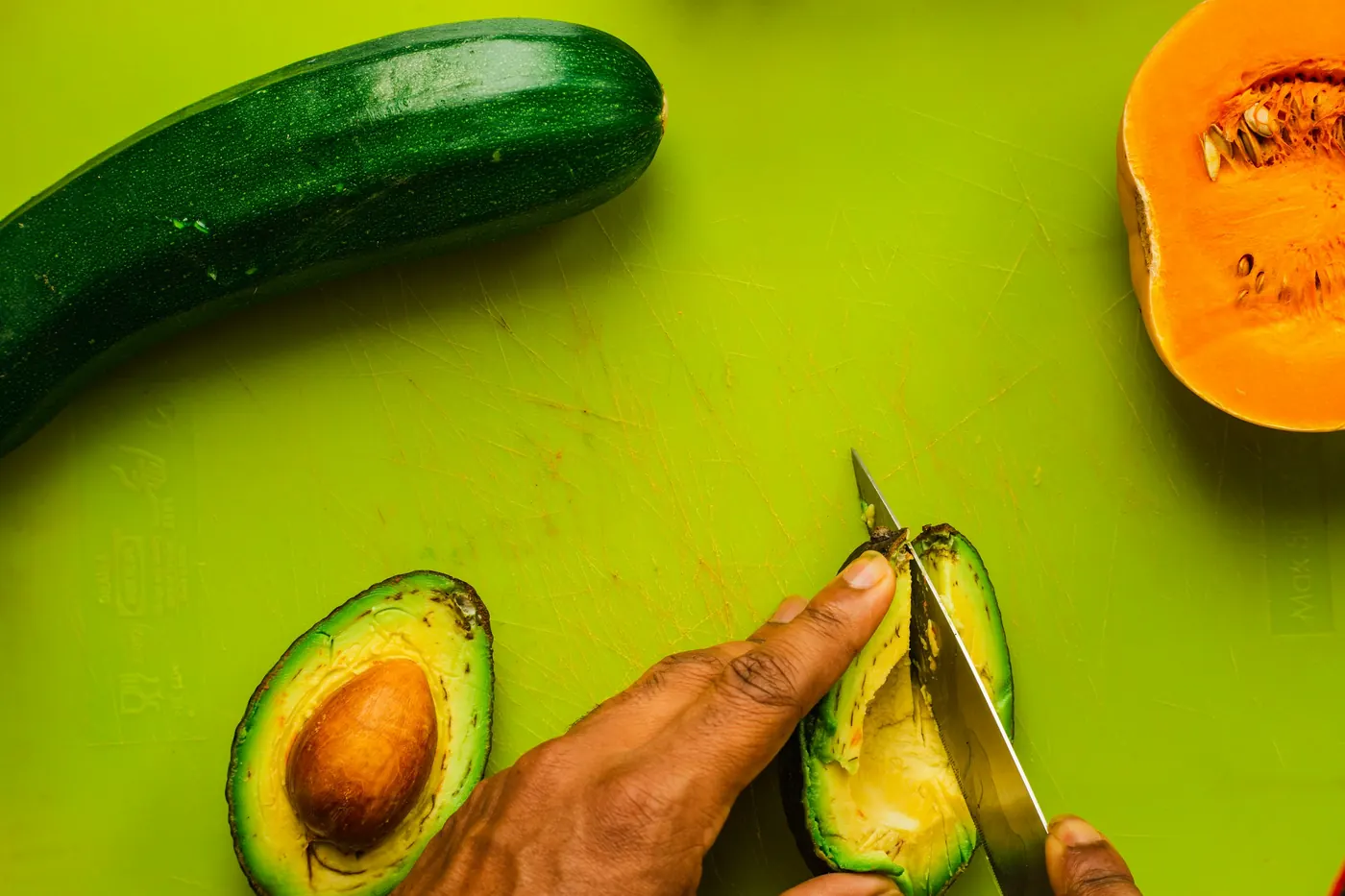
This is the clearest win for steel. Ceramic does not bend, so a sideways load that would only roll a steel edge can chip a ceramic one or snap off the tip. Kyocera’s own care guide lists what to avoid to protect the blade and the warranty: frozen foods, bones, pumpkins, coconuts, tough squash, large blocks of hard cheese, removing avocado pits, opening shells and smashing garlic with the side of the blade. It also says that for any job needing prying, twisting or high-impact force, a steel knife is the better tool. Milford’s review says the same in fewer words: ceramic knives are brittle and known for the tip breaking off.
Drops are the other risk. Kyocera is honest that any knife, steel or ceramic, can break if it lands on a hard surface at the wrong angle, but a dropped steel knife usually just needs a hone, while a dropped ceramic one often needs repair. Kyocera also asks you to keep its knives in a block, tray or sheath, not loose in a drawer or sink.
Think about what you actually cut. In a Mexican kitchen that list includes winter squash, chayote, whole chickens and avocados by the dozen, and each of those is on Kyocera’s caution list or close to it. A ceramic knife can still do the onions, tomatoes, chiles and cilantro, which is a big share of the prep, but it can’t be the only knife on the board.
Sharpening: easy for steel, a service for ceramic
Steel is the easy one to look after. Wüsthof gives a 14.5-degree angle on a honing steel or whetstone for its Western knives and 10 degrees for Asian-style blades, and its electric and hand-held sharpeners do the same job for people who would rather not learn a stone. Our knife sharpener vs whetstone guide covers that choice.
Ceramic is too hard for ordinary sharpening tools. Kyocera says to use a diamond-wheel sharpener or a certified sharpening service that uses a diamond wheel, and warns against ceramic sharpening rods on its knives. It names EVERSHARP as its authorized resharpening and repair provider. The edge needs that work far less often than a steel edge does, but when it is chipped or dull, you are sending it away or buying a special tool, not reaching for the rod in the drawer.
Weight and feel in the hand
Kyocera describes its ceramic blades as significantly lighter than steel knives, and its 7-inch listing says the light weight makes for effortless handling. For people with sore wrists or weak grip, that is a real reason to choose ceramic for slicing work.
Light has a cost, though. Milford noticed that ceramic knives need you to supply the pressure, because the weight of the knife is not enough to finish the cut. A steel chef’s knife does more of the work on its own. Victorinox lists its stamped 8-inch Fibrox Pro at 6.4 ounces, already a light knife; a forged knife with a bolster and full tang, like the Wüsthof Classic, has more heft and more momentum through a dense carrot or a stack of onions.
Cleanup, rust and reactive foods
Kyocera recommends washing its knives by hand, though it says plastic-handled models can go on the top rack of a dishwasher. Its care guide asks for water and mild detergent and a wooden, bamboo or plastic cutting board, never glass, marble, granite, tile or stone, because hard surfaces cause premature dulling and microscopic edge damage. That board rule is good advice for steel knives too; our best wood cutting board guide covers boards that are kind to any edge.
Steel makers differ on the dishwasher. Victorinox lists its Fibrox Pro chef’s knife as dishwasher safe. Wüsthof says not to put knives in the dishwasher at all, to hand-wash them right after use, dry them immediately and never leave them soaking, because food residue such as spices, sauces and juices can spot and corrode the blade.
Ceramic’s other selling point is that it is non-reactive. Kyocera says the blade will not cause food oxidation, so cut apples and avocados do not pick up a metallic taste or brown faster from the knife. That is a nice benefit with limes, tomatillos and fruit, though a clean stainless blade is not a big problem for most cooks either.
Choose a ceramic knife if… / Choose a steel knife if…
Choose a ceramic knife if…
- You already own a steel chef’s knife and want a second blade for vegetables, fruit and boneless meat.
- You don’t want to hone or sharpen often, and you are happy to send the knife out when it needs it.
- A lighter knife matters to you because of your wrists or grip.
- You will store it in a block or sheath and keep it away from bones, frozen food and hard squash.
Choose a steel knife if…
- You want one knife that handles everything, including chicken, squash and frozen food.
- You like to keep your own edge with a honing steel or a whetstone.
- Your knives get shared, dropped or tossed in the sink now and then.
- You prefer a heavier knife that does some of the work for you.
Our picks for the ceramic vs steel kitchen knife choice
One ceramic knife and two steel ones, all in stock when we checked. The Kyocera is not on any of our other pages. Both steel picks are different listings of knives we cover elsewhere, and we say why in each: the Victorinox is a separate listing of the 8-inch Fibrox in our best chef knife guide, chosen because a light stamped knife is the closest steel match to a ceramic blade, and the Wüsthof is the white-handled version of the Classic 8-inch from the same guide, chosen as the forged, heavier contrast.
1. Kyocera Revolution 7-inch Ceramic Chef’s Knife – Long-Lasting Edge for Produce

This is the knife Milford ranked first in his Cooking For Engineers comparison (he used the 6-inch Revolution; this is the 7-inch). The blade is Kyocera’s own zirconia, made in Japan, with a black blade and a lightweight handle. The listing says the edges are hand-sharpened and calls it suited to slicing fruit, vegetables and boneless meats.
The listing is also clear about the limits: not for hard or frozen foods. Read that together with Kyocera’s care guide, which adds bones, hard squash, coconuts, hard cheese, avocado pits and smashing garlic. Use it on a wood, bamboo or plastic board and wash it by hand.
When it eventually dulls or chips, Kyocera points owners to a diamond-wheel sharpener or its authorized service, EVERSHARP. One detail to check before you buy: the listing states a five-year limited warranty, while Kyocera’s FAQ says a one-year limited warranty applies when bought from an authorized reseller. The Amazon offer we saw was sold by Kyocera itself.
Why we like it
- Zirconia blade made in Japan (listing)
- Ranked first among ceramic knives by Cooking For Engineers
- Non-reactive blade, per Kyocera
- Maker-backed resharpening and repair service
Key specifications
| Model | FK-180 BK |
|---|---|
| Blade material | Zirconia ceramic |
| Blade length | 7 inches |
| Weight | Not stated |
| Edge care | Diamond-wheel sharpener or Kyocera’s service |
| Dishwasher | Hand washing recommended |
| Made in | Japan |
| Warranty (stated) | 5-year limited on the listing; 1-year in Kyocera’s FAQ |
Why we recommend it
It suits a cook who already has a steel chef’s knife and wants a light, very sharp second blade for vegetables, fruit and boneless meat that rarely needs attention.
Skip it if it would be your only knife, or if anyone in your kitchen uses a knife to pry, scrape or hack.
Pros and cons
Pros
- Very hard edge that stays sharp a long time
- Light in the hand
- Strong independent ranking against other ceramics
Cons
- Can chip or snap at the tip
- Not for bones, frozen food or hard squash
- Needs special sharpening
- Warranty terms differ between listing and maker FAQ
2. Victorinox 8-inch Fibrox Chef’s Knife – Light Steel That Shrugs Off Hard Jobs

If the appeal of ceramic is a light, sharp knife that doesn’t fuss you, this is the steel answer. It is the stamped 8-inch Victorinox chef’s knife with a straight edge, a high-carbon stainless blade and a black Fibrox handle, item 47520 on this listing. Victorinox’s own page for the current Fibrox Pro 8-inch lists a 7.9-inch blade, a weight of 6.4 ounces, a lifetime warranty, Swiss manufacture and dishwasher-safe construction.
Because it is steel, nothing on Kyocera’s caution list applies. It will split a squash, joint a chicken and take a knock without chipping. The trade is the edge: it needs a few strokes on a honing steel often and a proper sharpening now and then, which any standard sharpener can do.
This listing is sold by a third-party seller rather than Victorinox; check that the knife arrives in Victorinox packaging, and register any warranty with Victorinox directly.
Why we like it
- About 6.4 oz, light for a steel chef’s knife (Victorinox)
- Dishwasher safe, per Victorinox
- Lifetime warranty, per Victorinox
- Sharpens on any standard sharpener or stone
Key specifications
| Model | 47520 |
|---|---|
| Blade material | High-carbon stainless steel, stamped |
| Blade length | 8 inches |
| Weight | About 6.4 oz (Victorinox, Fibrox Pro 8-inch) |
| Edge care | Honing steel, whetstone or standard sharpener |
| Dishwasher | Yes, per Victorinox |
| Made in | Switzerland |
| Warranty (stated) | Lifetime |
Why we recommend it
It suits a cook who wants one light, low-fuss knife for everything, including the jobs a ceramic blade has to avoid.
Skip it if you want a heavy forged knife with a bolster; the Wüsthof below has more weight behind the edge.
Pros and cons
Pros
- Light, close in feel to a ceramic knife
- No foods off limits
- Easy to sharpen at home
Cons
- Needs regular honing
- Sold by a third-party seller on this listing
- Listing details are sparse; specs come from Victorinox
3. Wüsthof Classic White 8-inch Chef’s Knife – Forged Weight and Easy Upkeep

This is the classic German forged chef’s knife, made in Solingen from a single piece of high-carbon stainless steel. The listing says it is tempered to 58 HRC, has a full tang triple-riveted to a white polyoxymethylene handle, and uses Wüsthof’s Precision Edge Technology, which the maker claims is 20 percent sharper with twice the edge retention. Those are Wüsthof’s own figures.
Next to a ceramic knife, the difference is weight and forgiveness. The heavier forged blade carries more momentum through dense vegetables, and a steel edge that rolls on a hard squash can be brought back with a honing steel at the 14.5-degree angle Wüsthof recommends. It is the knife to choose if you want steel that still holds its edge well between sharpenings.
Wüsthof asks that it never go in the dishwasher: wash it by hand right after use and dry it at once.
Why we like it
- Forged from one piece of steel, 58 HRC (listing)
- Full tang, triple-riveted handle
- Made in Solingen, Germany (listing)
- Limited lifetime warranty (listing)
Key specifications
| Model | 1040200120 |
|---|---|
| Blade material | High-carbon stainless steel, forged |
| Blade length | 8 inches |
| Weight | Not stated |
| Edge care | Hone at 14.5 degrees; whetstone or sharpener |
| Dishwasher | No, per Wüsthof |
| Made in | Solingen, Germany |
| Warranty (stated) | Limited lifetime |
Why we recommend it
It suits a cook who wants a heavier, forged steel knife that holds its edge well and will last for years with regular honing.
Skip it if you want the lightest possible knife or need something dishwasher safe; the Victorinox is lighter and can go in the machine.
Pros and cons
Pros
- Solid forged build with full tang
- Edge-retention claims from the maker
- White handle the maker says resists fading
Cons
- Hand wash only
- Heavier than stamped or ceramic knives
- Weight not stated on the listing
Ceramic and steel knife questions, answered
Are ceramic knives better than steel?
Only at one thing: holding a very sharp edge for a long time on soft and medium foods. Steel is better at almost everything else, including toughness, versatility and easy sharpening. That is why ceramic works best as a second knife, not a replacement.
Do ceramic knives ever need sharpening?
Yes, just much less often. Kyocera recommends a diamond-wheel sharpener or a certified sharpening service, and names EVERSHARP as its authorized provider. Ordinary steel sharpeners and ceramic rods are not the right tools for a zirconia blade.
Can a ceramic knife cut meat?
Boneless meat, yes; Kyocera lists boneless meats among its uses. Keep it away from bones, frozen meat and joints, where twisting or impact can chip the edge.
Why did my ceramic knife chip?
Usually because of a hard food, a twist, a hard cutting surface or a drop. Kyocera names frozen food, bones, hard squash, hard cheese, avocado pits and glass, marble or stone boards as common causes. Small chips can often be ground out by a sharpening service.
Do ceramic knives rust?
Zirconia is not a metal, so the blade itself does not rust, and Kyocera describes it as non-reactive. Steel knives resist rust if they are stainless and dried promptly, which is why Wüsthof says to dry knives straight after washing.
Which knife belongs on your board first
Start with steel. A good steel chef’s knife is the one tool that does every job in a home kitchen, and our best chef knife guide compares the strongest options. If you then find yourself slicing piles of vegetables and fruit and wishing the edge stayed sharp longer, a ceramic knife makes a lovely second blade, as long as it stays away from bones and squash. Keep both in a knife block rather than a drawer, and keep the steel one sharp with a decent knife sharpener. And when you would rather someone else did the chopping, see the menu or call to order.