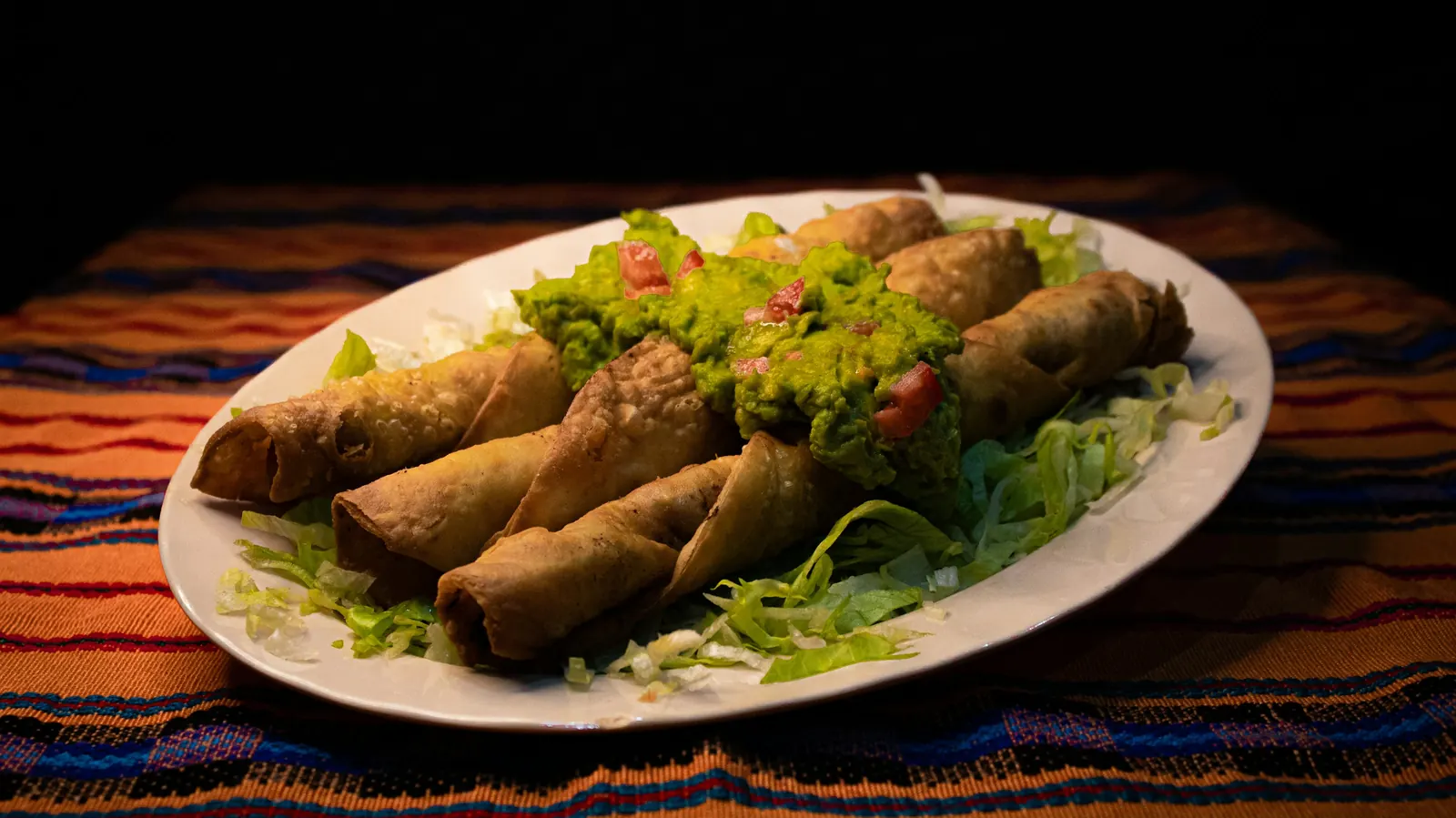
Both are tortillas rolled around a filling and fried until crisp. That is where the agreement ends, and it ends fast.
The honest answer is that the two words overlap, and which one a menu uses tells you as much about where the kitchen is from as about what arrives.
The short answer
Taquitos are shorter, made with corn tortillas, and served three or four to an order. Flautas are longer and thinner — the word means “flutes” — usually made with flour tortillas, and served one or two to a plate as a main. Size is the more reliable difference; plenty of restaurants use the words interchangeably.
The textbook distinction
Fine Dining Lovers, comparing the flauta and the taquito, sets out the standard version: taquitos use corn tortillas, flautas usually use flour.
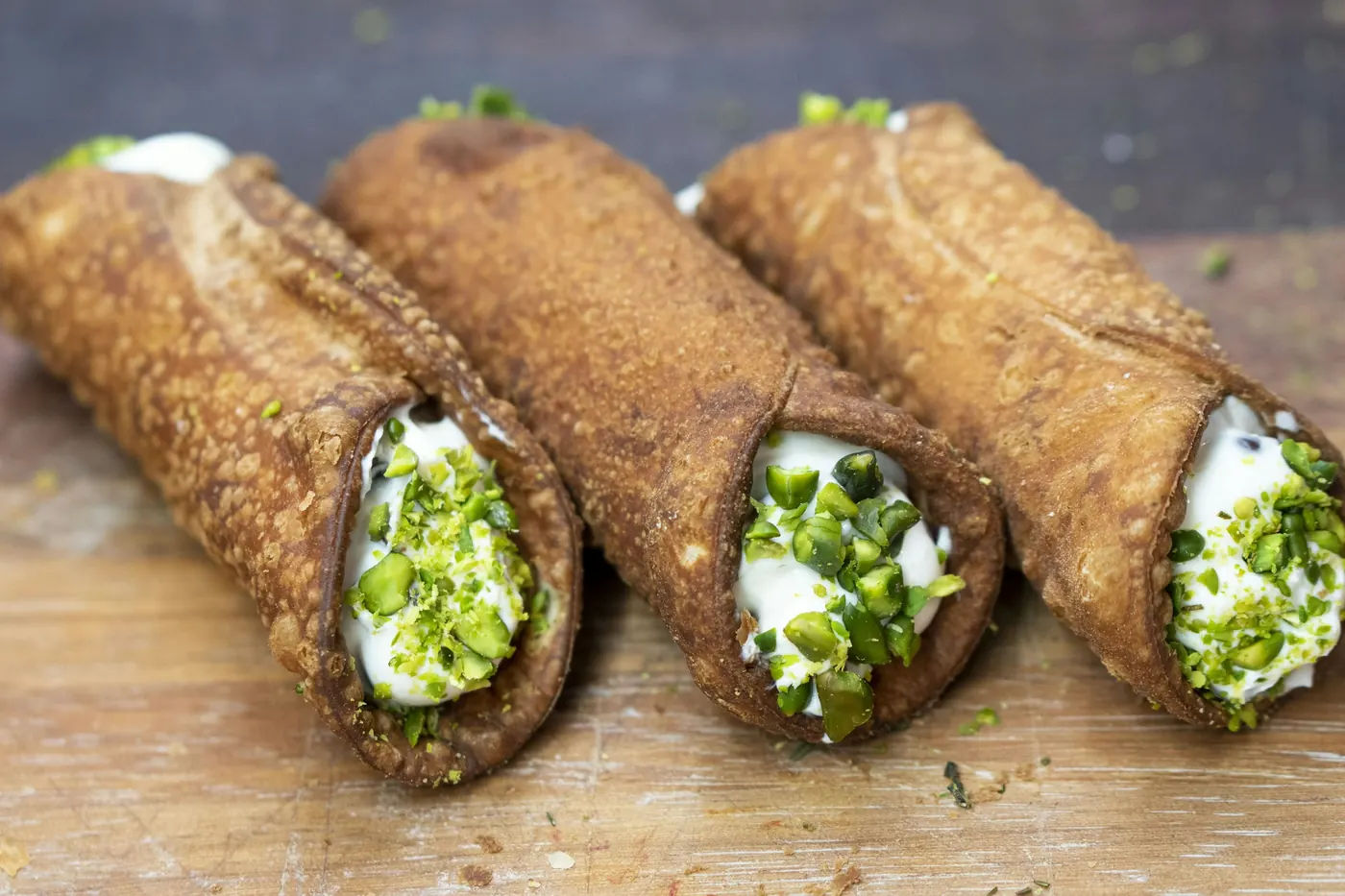
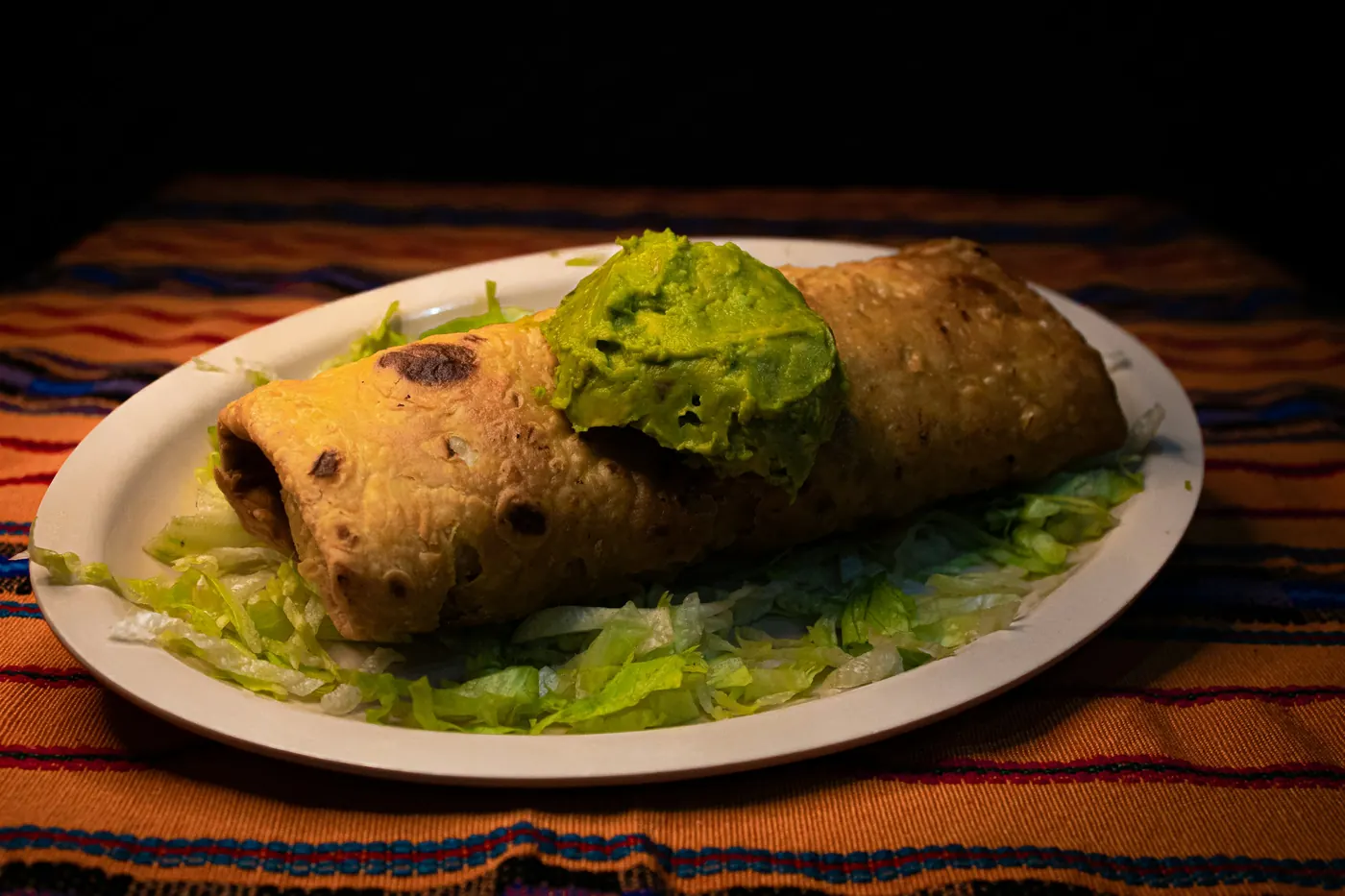
Length is the other half. It puts a standard flauta at around 20 centimeters — roughly eight inches — with some running to 40. A taquito is a normal-sized tortilla rolled up, so it comes out short.
There is a shape consequence too. Flautas hold a round, cylindrical cross-section because they are deep fried. Taquitos are often flattened somewhat so they can be fried in shallower oil.
Where each one comes from
The corn-versus-flour split maps onto Mexican geography, and once you see it the naming makes more sense.
Taquitos belong to central and southern Mexico, where corn is the grain and the corn tortilla is the default. Flautas turn up more in the north, where wheat is grown and the flour tortilla took hold — the same divide our corn and flour guide traces across the whole cuisine.
Which is to say the difference is not really a recipe difference. It is two regions doing the same thing with the tortilla they had.
Side by side
| Taquito | Flauta | |
|---|---|---|
| Tortilla | Corn, usually | Flour, usually |
| Length | Short — a standard tortilla rolled | Long — eight inches and up |
| Shape | Often slightly flattened | Round, tube-like |
| Count | Three or four to an order | One or two to a plate |
| Role | Appetizer or snack | Usually a main |
| Region | Central and southern Mexico | Northern Mexico |
Read down the Count and Role rows rather than the Tortilla row. Those are the ones that hold up in practice.
Why the words blur
Because nobody is enforcing them.
Plenty of restaurants serve corn-tortilla flautas. Plenty serve long taquitos. In much of Mexico the two names are used more or less interchangeably, and in the United States “taquito” won the freezer aisle, which pushed the word toward meaning “any small rolled fried taco” regardless of length or grain.
There is a third name in circulation too. In parts of Mexico these are simply tacos dorados — golden tacos — which sidesteps the argument entirely and is arguably the most accurate of the three.
The practical upshot: read the description and the count, not the noun. This is the same advice our menu glossary gives about most menu Spanish.
What goes inside
Less than people expect, and that is deliberate.
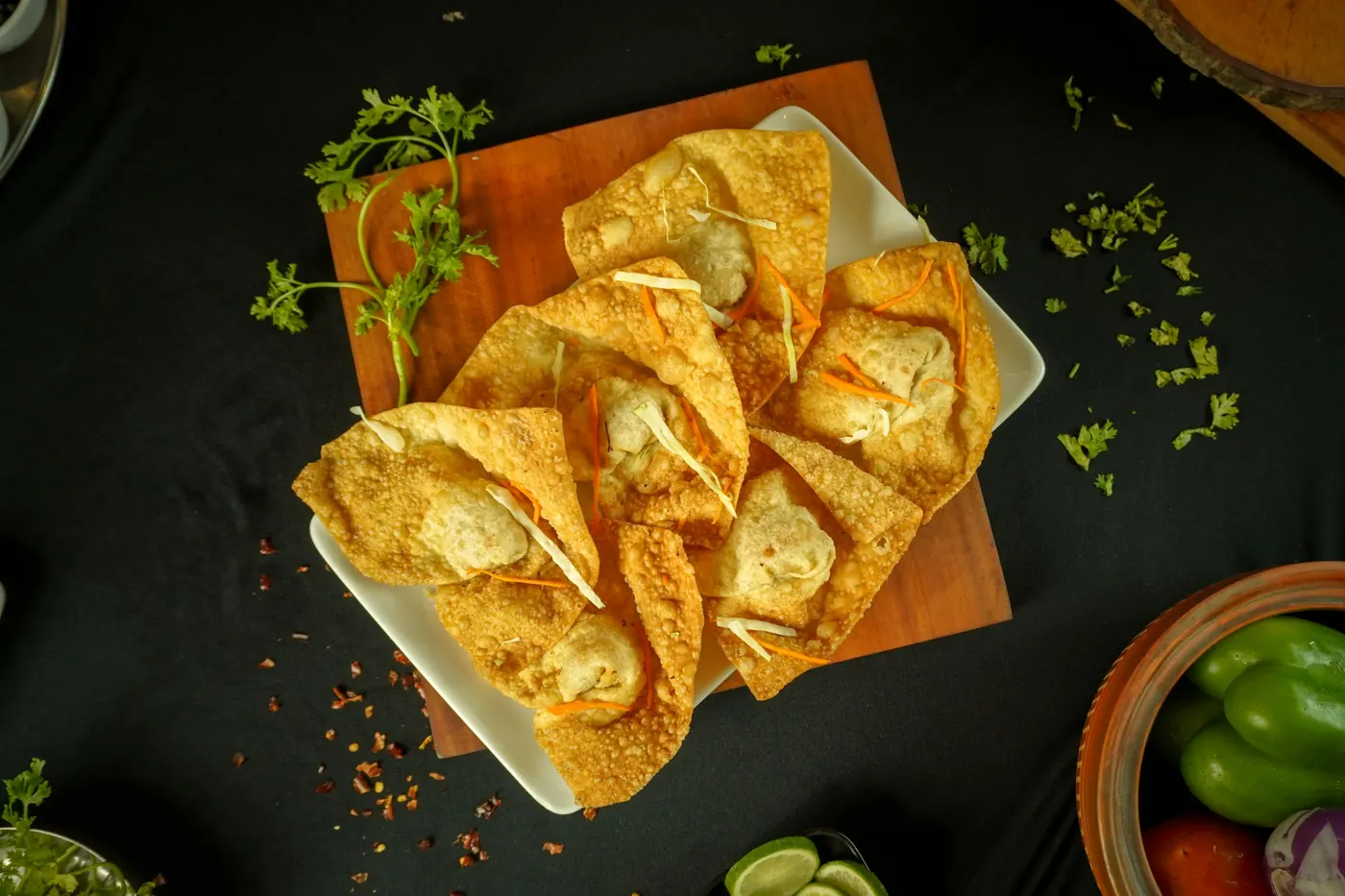
Shredded chicken is the most common filling, followed by shredded beef and potato. It goes in as a thin line down the tortilla, not a heap. Overfill it and the roll bursts in the oil, which is the standard failure at home.
The filling is also cooked before it goes in. The fry is short and hot, and it is there to crisp the tortilla, not to cook anything.
Why anyone rolls a tortilla in the first place
The technique is older than either name, and it started as a preservation problem rather than a culinary idea.
A corn tortilla goes stale within a day. Frying one drives off the remaining moisture and makes it keep, which is the same logic behind totopos, tostadas and chilaquiles. Rolling a filling inside before frying just adds lunch to the equation.
It also solves a transport problem. A rolled, fried taco holds its shape, does not leak, and can be carried in a basket to a market or a field. A soft taco cannot do any of those things, which is why it is eaten standing at the stall it came from.
The dressing came later. Lettuce, cream and salsa are what a restaurant adds to something that was designed to travel without them.
What goes on top
The classic dressing is lettuce, crema, crumbled queso fresco and salsa, usually with guacamole either on the plate or under it.
Two things are happening there. The cream and cheese soften a very crisp, very dry object. The lettuce and salsa add the moisture and acidity that a fried tortilla badly needs.
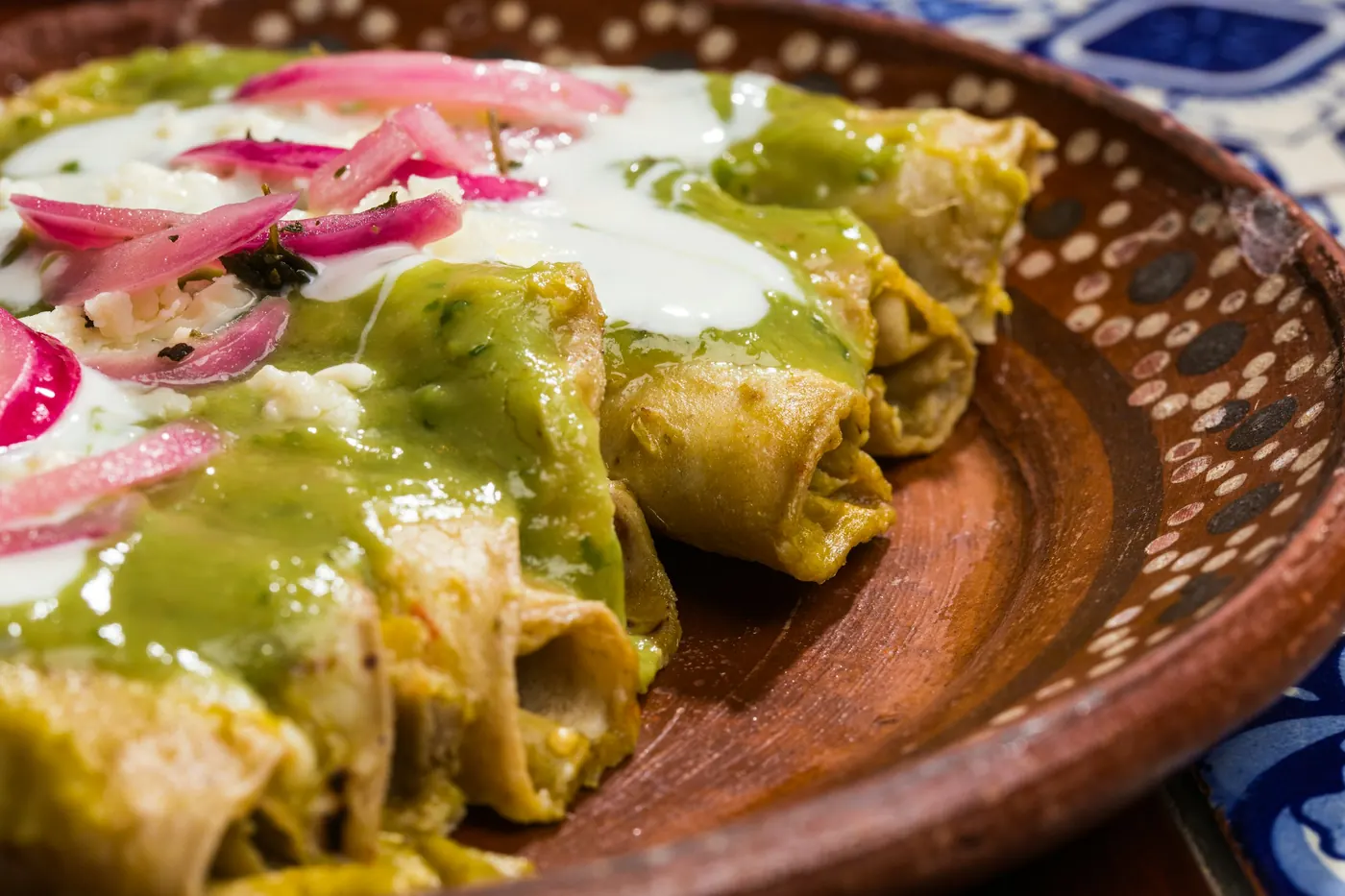
The other regional habit is to sauce them outright — ladle green or red salsa over the whole plate. That produces something closer to an enchilada in texture and is a legitimate way to serve them, not a mistake.
On Julia’s menu
Julia’s has the short version, and calls it by the short name.
The taquitos de pollo on the appetizer list are four crispy chicken tacos topped with queso fresco, sour cream and tomatillo salsa. Four to an order, chicken filling, dressed rather than sauced — that is the taquito pattern all the way through.
They also appear inside the sampler platter, alongside nachos Tejanos, a spinach quesadilla and camarones adobados. That is the other thing taquitos are good at: they travel well on a shared plate, which our guide to ordering for a group gets into.
There is no flauta on the menu, which is consistent. This is not a northern-Mexican kitchen, and the rest of the cooking says the same thing — cochinita pibil from the Yucatán, mole poblano from Puebla, tamales tierra caliente style. Our regional guide covers where each of those sits.
Frequently asked questions
What is the difference between flautas and taquitos?
Length mostly. Flautas are long and usually flour; taquitos are short and usually corn. Flautas are a main, taquitos an appetizer served three or four at a time.
Are flautas and taquitos the same thing?
Nearly. Both are rolled, fried tacos. Many restaurants use the words interchangeably, and in parts of Mexico both are just called tacos dorados.
Why are they called flautas?
Flauta is Spanish for flute. A long, thin, round fried tortilla looks like one.
What is usually inside?
Shredded chicken most often, then shredded beef or potato. The filling is cooked first and goes in as a thin line.
Are they served with anything?
Typically lettuce, crema, queso fresco, salsa and guacamole. Some kitchens ladle salsa over the whole plate instead.
The short version
Same technique, different scale. Short and corn and several to an order is a taquito; long and flour and one to a plate is a flauta. Everything in between is somebody’s regional habit.
Julia’s serves taquitos de pollo, four to an order, on the menu.