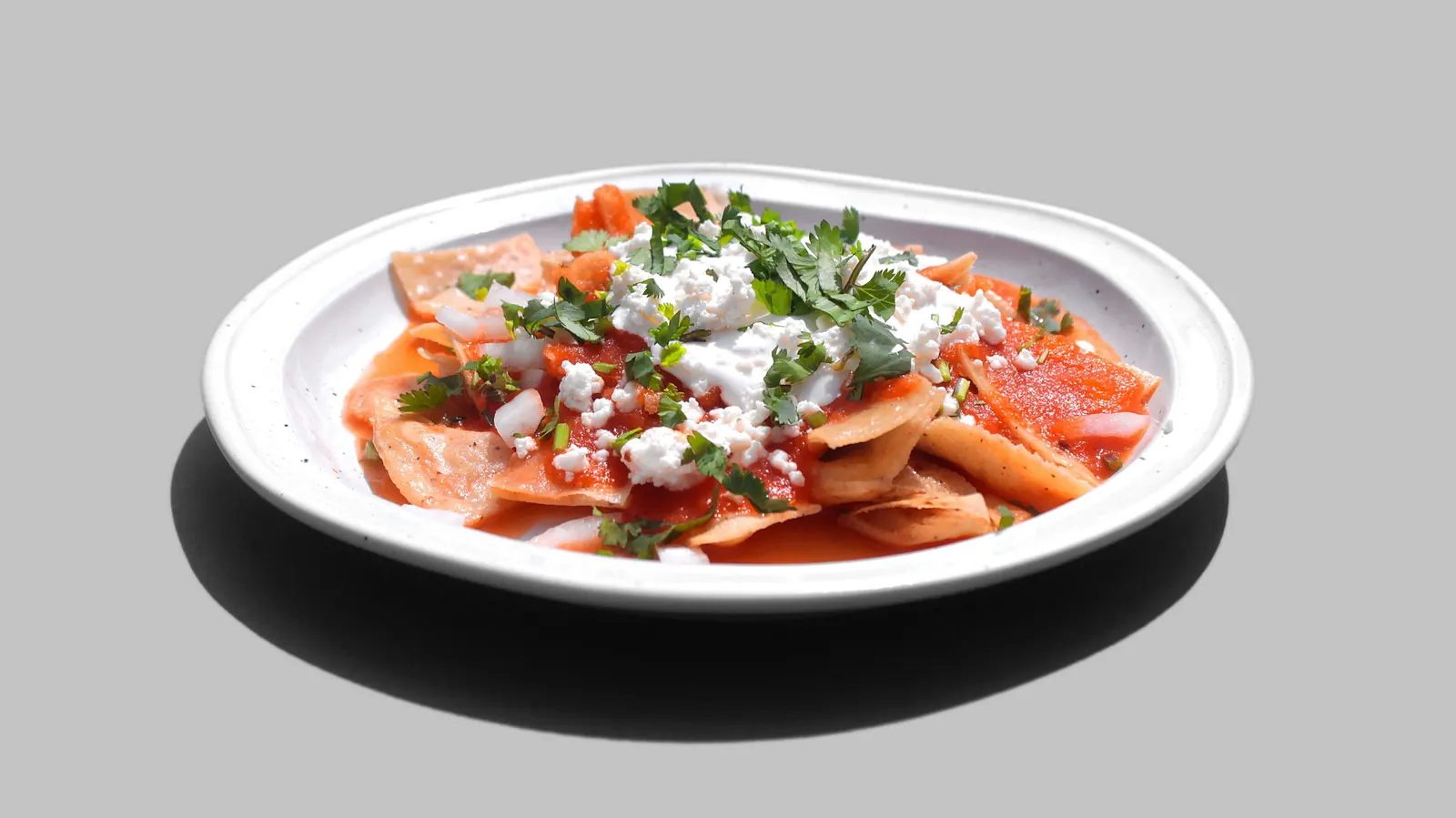
Chilaquiles are what happens when a kitchen refuses to throw away yesterday’s tortillas, and the result is better than most things made from scratch.
They are also a fixture of the Mexican breakfast table, and the reason is not sentimentality about leftovers.
The short answer
Chilaquiles are fried tortilla pieces simmered briefly in salsa — red or green — and topped with crema, crumbled cheese, onion and often a fried egg or shredded chicken. The tortillas soften but keep some bite. It is a breakfast and brunch dish, built originally to use up tortillas that had gone stale.
How they are made
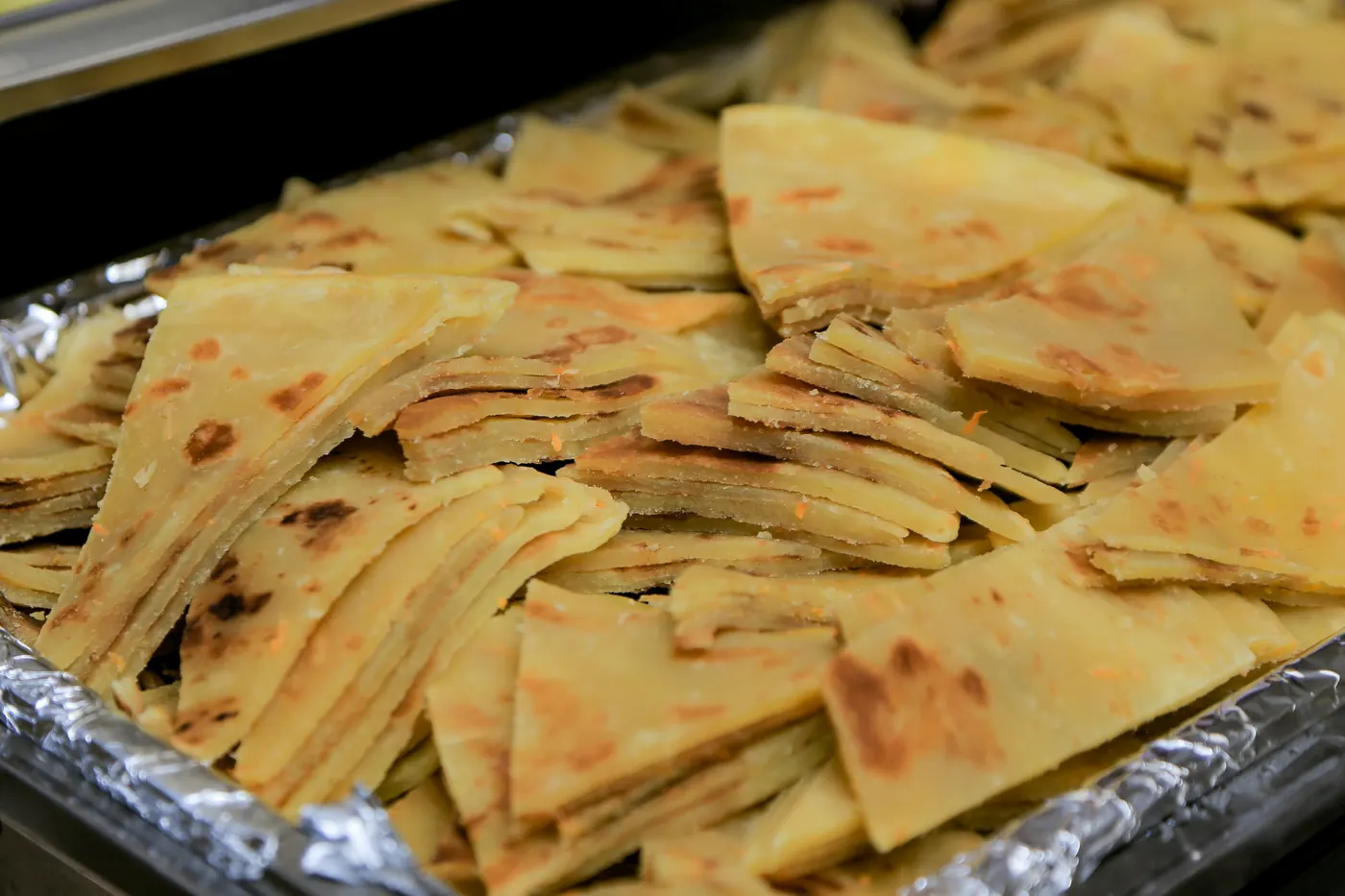
Corn tortillas are cut into wedges and fried until crisp. Those are totopos — the same thing sold in a basket as tortilla chips.
Salsa is heated separately, then the totopos go in and get tossed until coated. This is the part that matters: it lasts a minute or two, not longer. The tortillas are supposed to absorb sauce while keeping structure.
Then the toppings go on and the plate goes out immediately. Chilaquiles do not hold. A plate that sits for five minutes becomes something else.
Where the name comes from
The word is Nahuatl. The Takeout, in its history of the dish, gives the root as chīlaquilli, which translates roughly as “something covered in chili.”
That is a plain description rather than a poetic one, and it is accurate. The dish is tortillas covered in chile sauce, and it has been called that for a very long time.
The article also makes a point worth repeating: there is no historical record showing the Aztecs ate chilaquiles in a recognizable form, even though corn and chiles were both central to their cooking. The dish is old, but the popular “the Aztecs invented it” line is a stretch.
Red or green
| Version | Sauce | Tastes like |
|---|---|---|
| Rojos | Red, from dried or roasted red chiles and tomato | Deeper, slightly sweet, mildly smoky |
| Verdes | Green, from tomatillo and green chile | Tart, brighter, sharper |
| Divorciados | Both, one on each half of the plate | A way of not choosing |
Neither is hotter than the other by default. Heat depends on which chiles went into the sauce, not on its color — the same point our guide to red and green salsa makes about salsa generally.
Verdes tend to read as fresher because tomatillo is acidic. Rojos read as richer. Most people have a preference and most kitchens do both.
What goes on top
The base is nearly always the same three things: crema, crumbled queso fresco, and thin rings of raw white onion.
Crema is the pourable Mexican cream, not sour cream, and it is there to cut the chile rather than to add flavor of its own. Queso fresco crumbles rather than melts, which is exactly the point — our cheese guide covers why the melting cheeses are wrong for this job.
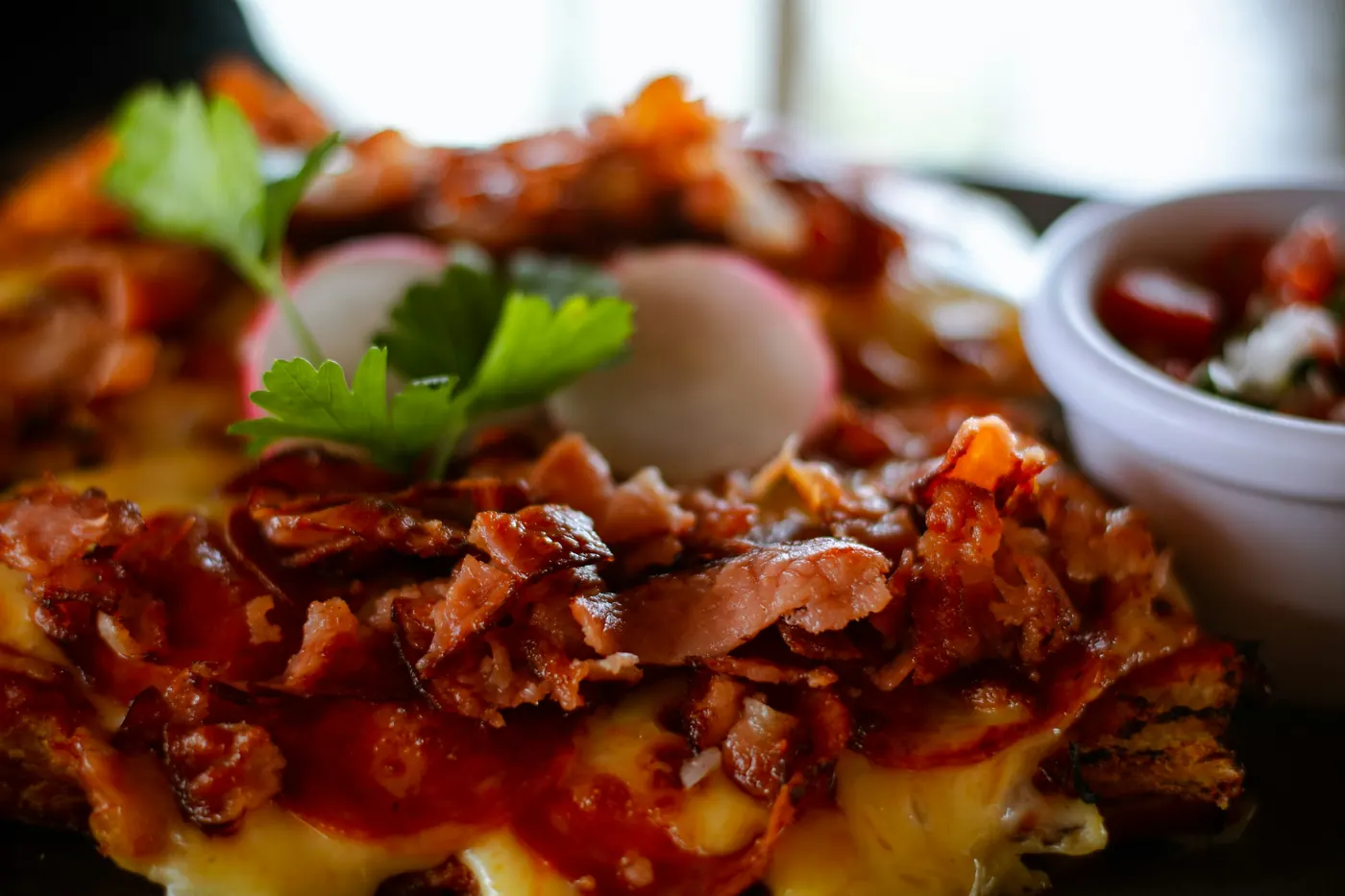
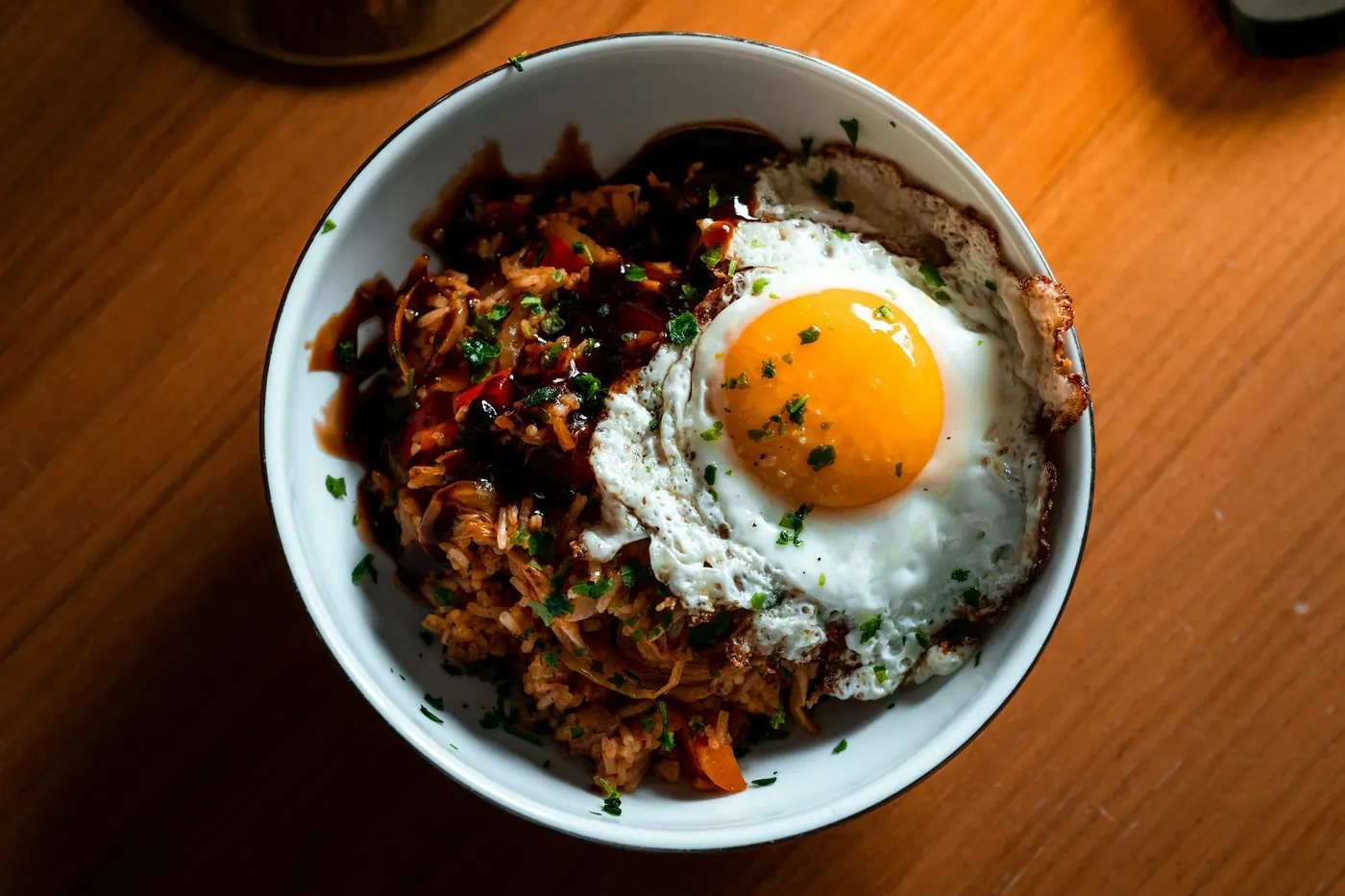
After that it varies. Avocado, cilantro, sliced radish. Refried beans on the side. And the two big additions: a fried egg, or shredded chicken.
When they are eaten
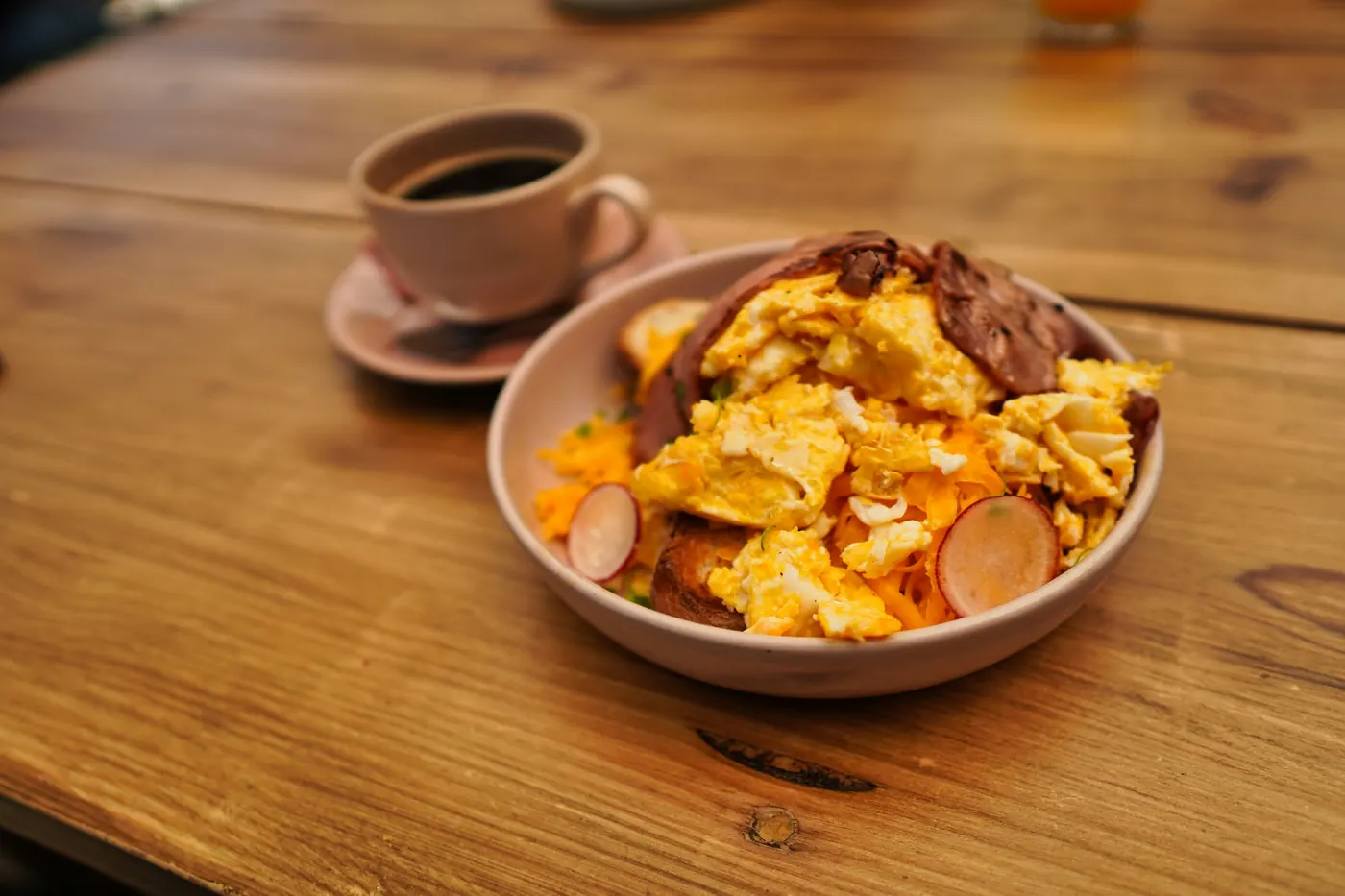
Breakfast, mostly, and late breakfast at that. In Mexico the standard slot is almuerzo — the substantial mid-morning meal that sits between coffee and lunch, and which our brunch guide describes in more detail.
The other well-known slot is the morning after. Chilaquiles have a durable reputation as recovery food, which is what you would expect of something salty, starchy and hot.
They are not usually a dinner dish, though nothing stops you.
How to tell a good plate
There are three tells, and they all come down to timing.
Texture. The tortillas should be sauced through but still have structure — a little resistance in the middle of the piece. Uniformly limp means they sat in the pan. Dry and crunchy in the center means the sauce went on too late or too cold.
Speed. Chilaquiles should arrive fast, because they cannot be held. A long wait usually means the plate is being assembled from something that has been sitting.
The salsa. A kitchen making its own sauce will taste of roasted chile and tomato or tomatillo. One using a jarred base tastes flat and slightly sweet. This is the same test our guide to spotting a good Mexican restaurant applies to the table salsa.
One thing that is not a tell: how much cheese is on top. That is presentation, and more of it does not mean the underlying plate was made better.
Chilaquiles are not nachos
This gets confused constantly in the United States, and the difference is real.
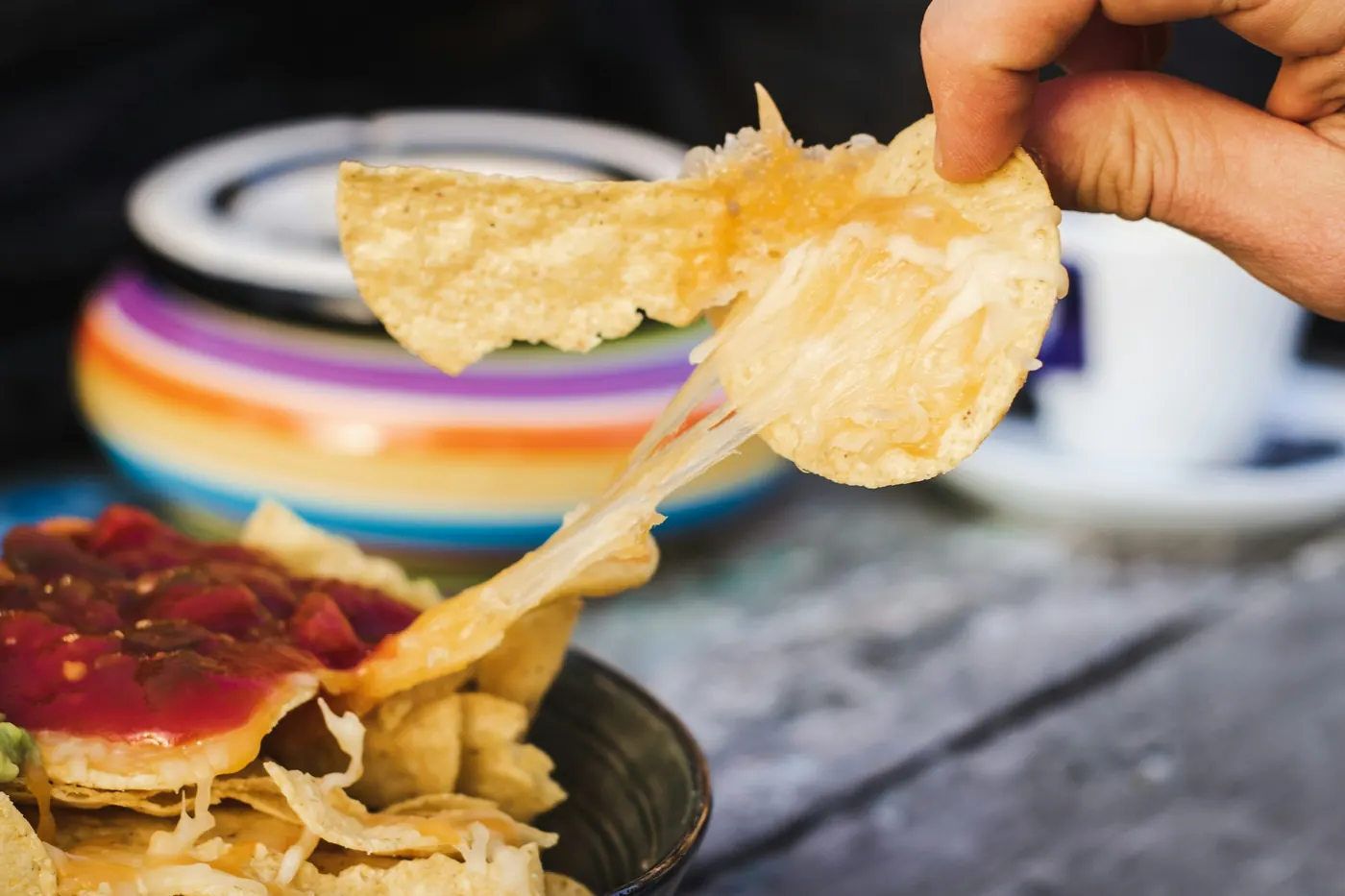
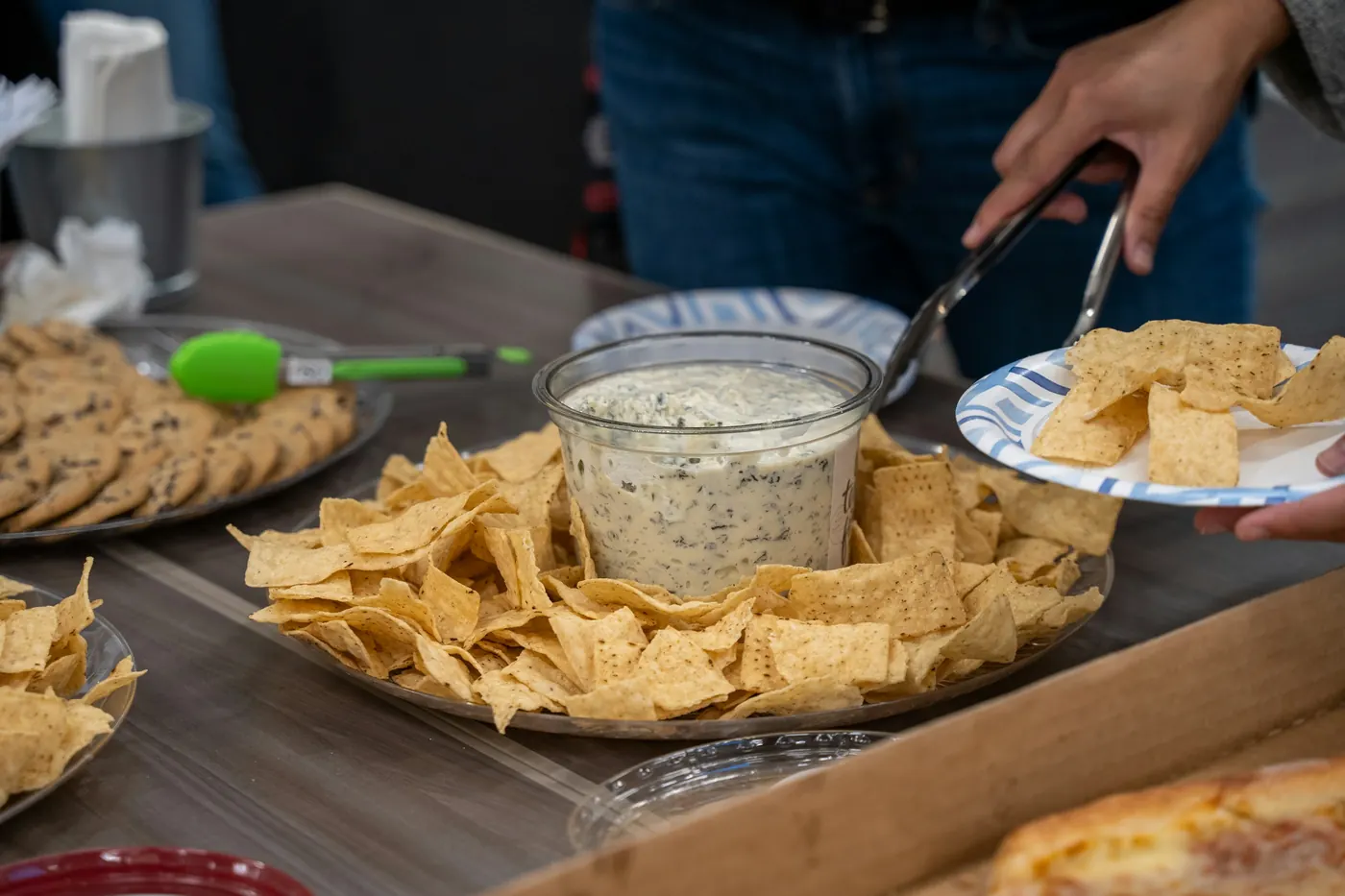
Nachos are chips with things laid on top of them. The chip is supposed to stay crisp and act as a scoop, and the whole plate is a shared appetizer. Our history of nachos covers where that arrangement came from — and it was Piedras Negras in 1943, not central Mexico.
Chilaquiles are chips cooked in sauce until they are no longer crisp. It is a single-person plate, eaten with a fork, at breakfast. The only shared ingredient is the fried tortilla.
On Julia’s menu
Chilaquiles are on the brunch menu, which runs Saturday and Sunday from 10am to 2pm.
The house version is red or green salsa — your choice — with crema, queso fresco and avocado. That is the classic build, without shortcuts.
Four ways to order it: plain, with fried eggs, with chicken, or with steak. Plain is the traditional one, and the egg is the most common addition. All brunch plates come with refritos and papas a la mexicana.
If you are choosing between this and the eggs, our comparison of huevos rancheros and divorciados covers the other side of the brunch menu. The short version: chilaquiles are the tortilla-forward option, huevos rancheros the egg-forward one.
Frequently asked questions
What are chilaquiles?
Fried corn tortilla pieces simmered briefly in red or green salsa and topped with crema, crumbled cheese and onion, usually with an egg or chicken added.
Are chilaquiles supposed to be soggy?
Partly. The tortillas should soften and absorb sauce while keeping some chew. Fully soggy means they sat too long, either in the pan or on the pass.
What is the difference between chilaquiles and nachos?
Nachos are crisp chips with toppings laid on. Chilaquiles are chips cooked in sauce until they soften. Different dish, different meal, different country of origin.
Are chilaquiles spicy?
Usually mild to moderate. The heat comes from which chiles are in the salsa, and most restaurant versions are built for a general audience.
Red or green — which should I get?
Green if you want tart and bright, red if you want deeper and slightly sweeter. Neither is reliably hotter than the other.
The short version
Fried tortillas, salsa, cream, cheese, onion. A dish invented to use up leftovers that ended up being the thing people get up for.
Julia’s serves them at weekend brunch, red or green, plain or with eggs, chicken or steak.