Knife boxes love the word “forged”. It sounds old-fashioned and serious, and forged knives usually cost more, so it is easy to assume they cut better. The truth is narrower. Forging and stamping are two ways of making a blade blank, and each gives the finished knife a different weight, shape at the heel and sharpening routine. Neither one decides, on its own, whether a knife is good.
In a busy kitchen you see both side by side: heavy forged chef’s knives for squash and joints, and light stamped knives that get passed down the line for hours of onion and cilantro. This guide explains how each is made, according to the makers, compares forged vs stamped knives on weight, balance, hardness, sharpening and care, and names one example of each in the same size.
Julia’s earns a commission on purchases made through links on this page, at no cost to you. Recommendations are based on what a restaurant kitchen looks for, product specifications and verified buyer reports.
Quick verdict: does forged matter?
Less than the marketing says. Choose a forged knife if you like weight in the hand, cut a lot of hard squash or joints, and want a bolster that guards your fingers. Choose a stamped knife if you want something light that is easy on the wrist and easy to sharpen along the whole edge. Victorinox, which sells both, calls the choice very much a matter of personal preference and says stamped knives give the best value over years of daily kitchen work. For a first chef’s knife, a good stamped blade is a sound buy; forged is a feel you pay for, not a guarantee of a better edge.
The table sums up the differences; each section after it explains one, with the maker or review behind it.
Forged vs stamped knives, side by side
| Forged | Stamped | |
|---|---|---|
| How it is made | One piece of steel heated and shaped under force (Zwilling, Victorinox) | Blade blank cut from a sheet of steel (Zwilling, Victorinox) |
| Bolster | Usually yes, formed in forging | None (Zwilling) |
| Weight | Heavier, more weight and balance in the hand (Victorinox) | Lighter, easy on wrists and hands (Victorinox) |
| Hardness | Varies by maker; not automatically harder | Varies by maker; Victorinox says slightly lower on its own |
| Sharpening | Harder to sharpen; bolster can block the heel | Simple to resharpen (Victorinox), full edge reachable |
| Cost class | Usually higher; more production steps | Usually lower; Zwilling calls the process economical |
| Best for | Cooks who like a planted, heavy knife | Long prep sessions, first knives, busy kitchens |
How each kind of blade is made
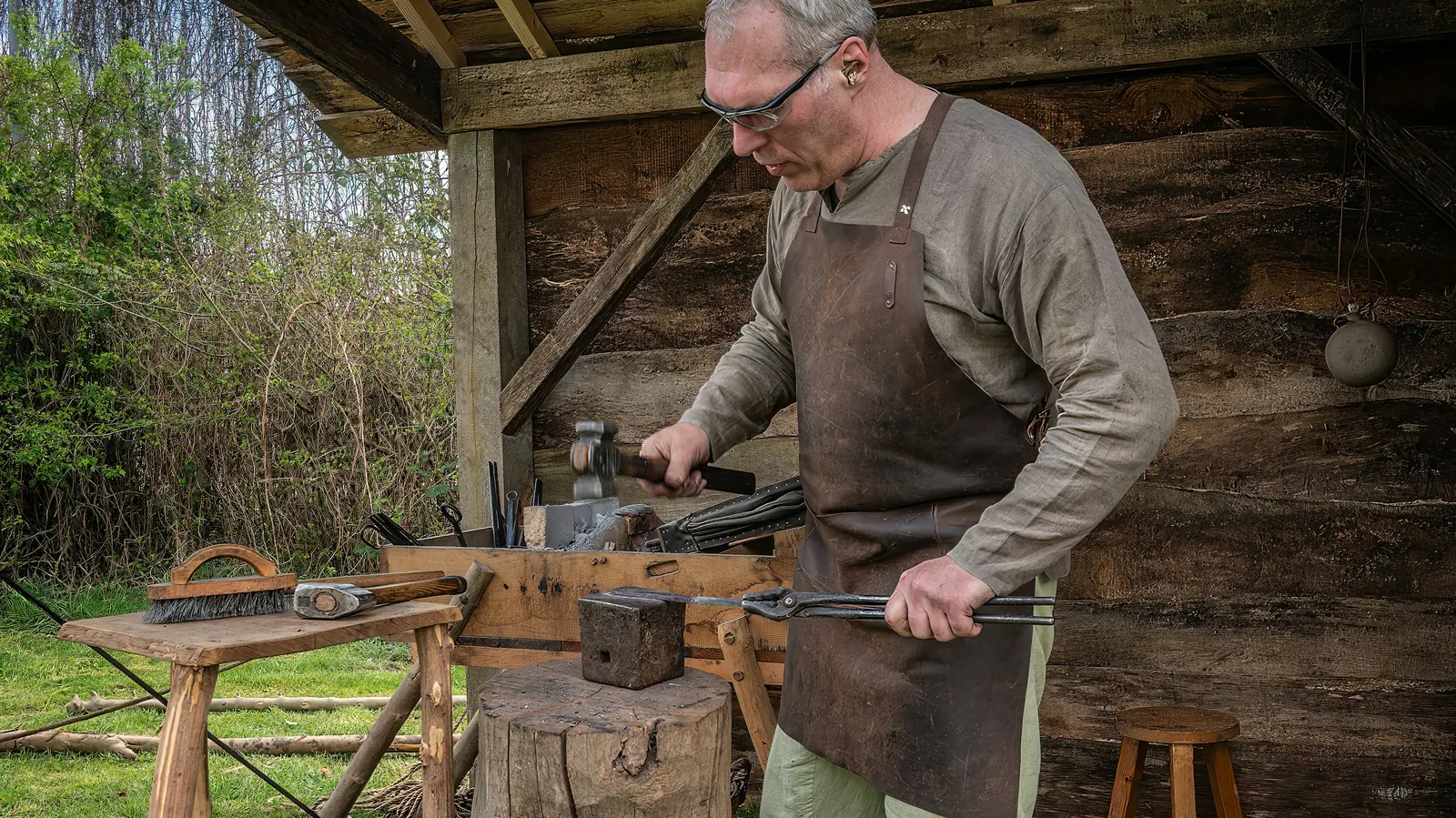
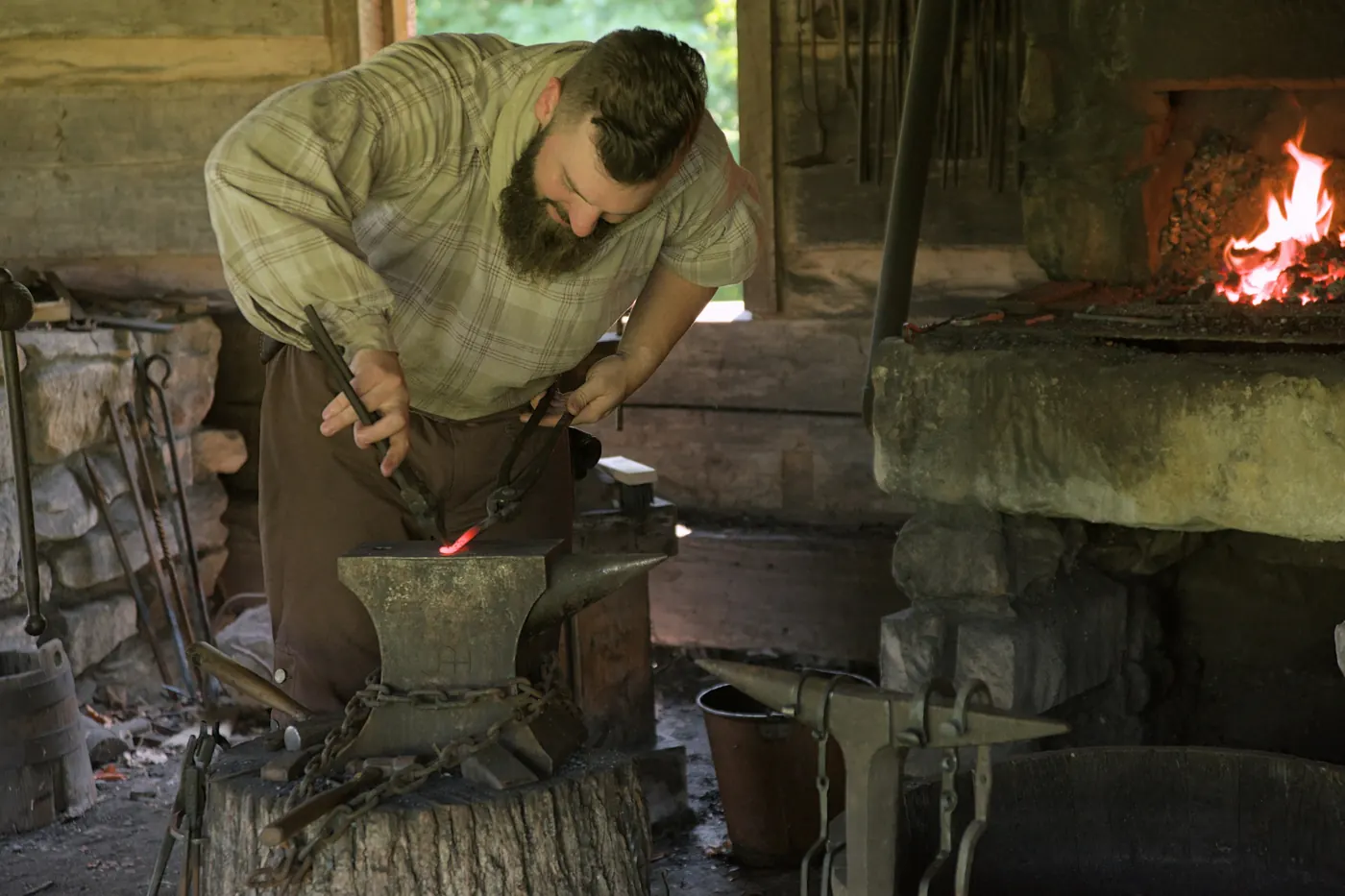
Zwilling, which makes both kinds, describes the two processes in detail. In traditional forging, it says, the whole blank is heated to above 1,100°C and shaped in a die with a drop hammer, in three to four steps. Its own SIGMAFORGE method precision-forges each knife from one piece of steel, and the bolster, the thick collar between blade and handle, is formed by applying temperature and force. Victorinox puts it simply: forged blades are made from a single piece of metal, so there is a seamless transition from blade to handle with a built-up bolster.
Stamping starts with a flat sheet. Zwilling says a sheet of steel is used to stamp out the blade blank, that several blades can be stamped in a single press stroke, and that this pre-production process is simple and therefore economical. Victorinox says stamped knives are cut from a sheet of steel and the handle is attached separately. After that, both kinds are hardened, ground, sharpened and fitted with handles, and that later work decides much of how the knife performs.
Many makers now say “laser-cut” for a stamped blade. Wüsthof’s listing for its Gourmet line, for example, calls those knives precisely laser-cut stamped knives. It is the same idea: a blank cut from sheet steel, not shaped by forging.
Weight and balance
This is the difference you feel first. Victorinox says forged knives tend to be heavier, giving great weight and balance in the hand, and that a stamped blade is lighter and easy on wrists and hands. A bolster puts more steel near the handle, which moves the balance back toward your grip. Mercer says the bolster on its forged Genesis knives adds durability and provides balance, and that the tang also provides balance.
Which is better depends on the work. Our general kitchen sense: a heavier knife lets its own weight do more of the work through a winter squash or a chicken joint, while a light one tires you less over an hour of dicing onions and tomatoes.
The bolster: guard, balance, and a sharpening catch
The bolster is the most visible sign of a forged knife, and it has two sides. Victorinox says that with a forged knife it is more difficult for your hand to slip from the handle onto the blade, which is a real safety point for beginners and wet hands. Mercer says its Genesis bolster strengthens the knife.
The catch is sharpening. A full bolster that runs down to the edge stops a sharpener or stone from reaching the heel, and over years of sharpening the heel can end up proud of the rest of the edge. Some makers answer this with a shortened bolster: Mercer, for example, sells a Genesis 6-inch “Short Bolster” chef’s knife according to its listing, and describes the shortened bolster on its Renaissance line as exposing the full blade edge for easier sharpening. Stamped knives, which Zwilling describes as knives without bolsters, avoid the question entirely.

Hardness and edge: the myth to drop
The common claim is that forged blades are harder and hold an edge longer. Victorinox does say that the forged blade of a Victorinox knife contains more carbon, which makes the steel harder and helps it stay sharper longer, and that its stamped steel has a slightly lower hardness. That is a statement about Victorinox’s own two lines, not a law of knife making.
Other makers show why. Mercer lists its forged Genesis 6-inch chef’s knife at HRC 56 plus or minus 1, and its stamped Ultimate White boning knife at the same HRC 56 plus or minus 1. Within that maker, at least, stamping did not mean softer steel. Hardness comes from the alloy and the heat treatment, which Zwilling, for example, applies through its FRIODUR ice-hardening process, which it says improves hardness, wear resistance and corrosion resistance. So read the stated hardness, or the steel, rather than the word “forged”.
Sharpening and day-to-day care
Victorinox says forged blades may stay sharper longer but are also more difficult to sharpen, and that its forged blades must be sharpened with a diamond or ceramic tool. For stamped blades, it says the slightly lower hardness makes them simple to resharpen. In practice that means a stamped knife is more forgiving of a basic pull-through or a beginner on a whetstone, and a forged one rewards a little more skill. Our best knife sharpener guide covers tools for both.
Care is otherwise the same. Mercer does not recommend the dishwasher for its forged or its stamped knives, and asks you to hand wash with warm water and mild soap and dry completely. A forged knife is no tougher in a dishwasher than a stamped one.
Cost and value
Forging takes more steps, and Zwilling calls stamping simple and therefore economical, so forged knives usually sit in a higher cost class within a maker’s range. That does not make the cheaper method a compromise. Victorinox, which makes both, says that with years of daily work in a kitchen in mind, its stamped knives offer the best value for money. Our best value chef knife guide shows how good a light stamped blade can be.
The honest way to spend more is on what you can feel and measure: the steel and its stated hardness, the edge angle, the handle and the warranty. Forging is worth paying for if you want the weight and the bolster, not because the word is on the box.
Choose forged if… / Choose stamped if…
Choose a forged knife if…
- You like a heavier knife that feels planted on the board.
- You cut a lot of hard squash, roots or chicken joints.
- You want a bolster between your fingers and the edge.
- You don’t mind a little more care when sharpening the heel.
Choose a stamped knife if…
- You prep for long stretches and want a light, easy knife.
- You are buying a first chef’s knife and want good value.
- You sharpen at home and want the whole edge easy to reach.
- You have small hands or sore wrists, and weight is a burden.
Our pick on each side of the forged vs stamped knives question
One pick per side, both 6-inch chef’s knives from established makers, so the main difference between them is construction. Both were in stock when we checked, and neither appears on our other guides. A 6-inch chef’s knife is a handy, easy-to-control size for smaller hands and smaller boards; for 8-inch choices, see our best chef knife guide, and for how steel and weight differ by country, our German vs Japanese knives guide.
1. Mercer Culinary Genesis 6-inch Chef’s Knife – Forged Blade, Grippy Handle
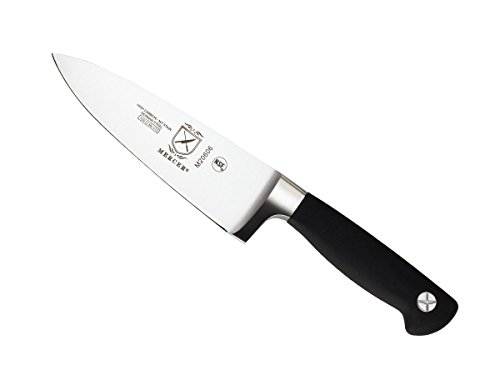
The Genesis is a forged knife in the German style from a maker with a large professional range. Mercer lists precision forged construction for better strength and durability, high-carbon German steel that it says resists rust, corrosion and discoloration, a hardness of HRC 56 plus or minus 1 and a 15-degree blade angle. It has a bolster, which Mercer says strengthens the knife and provides balance, and a tang that also aids balance.
The handle is the unusual part for a forged knife. Instead of riveted wood or plastic, Mercer uses Santoprene, which it says gives a non-slip grip even with wet hands. The listing describes a taper-ground edge and names the usual chef’s knife jobs: dicing onions, mincing shallots, chopping herbs, crushing garlic and shredding cabbage.
At 6 inches, this is a compact chef’s knife: easier to steer than an 8-inch, with some of the forged weight that helps on harder vegetables. Mercer does not recommend the dishwasher. The knife is NSF certified and covered by a limited lifetime warranty. If you want to sharpen right to the heel, Mercer also sells a Short Bolster version of the same knife.
Why we like it
- Precision forged, with bolster and tang (Mercer)
- Stated hardness and 15-degree angle
- Non-slip handle even when wet (Mercer)
- NSF certified
Key specifications
| Model | M20606 |
|---|---|
| Blade length | 6 inches |
| Construction | Precision forged |
| Steel and hardness | High-carbon German steel, HRC 56 ±1 |
| Edge angle | 15 degrees |
| Bolster | Yes |
| Handle | Santoprene |
| Care | Hand wash; dishwasher not recommended |
Why we recommend it
It suits a cook who wants to try a forged knife’s weight and bolster in a compact size, with a handle that stays secure when wet.
Skip it if you sharpen often at home and want the full edge exposed; the Short Bolster version or a stamped knife is easier.
Pros and cons
Pros
- Forged weight and balance
- Bolster guards the fingers
- Limited lifetime warranty
Cons
- Bolster limits sharpening at the heel
- Short for big batches
- Not for the dishwasher
2. Wüsthof Gourmet 6-inch Chef’s Knife – Laser-Cut, Light and Simple

Wüsthof’s Classic knives are forged (its Classic listings say hand-forged), which makes its Gourmet line a useful counterpoint. The listing describes Gourmet knives as precisely laser-cut stamped knives offering quality and value, with synthetic polypropylene handles that resist fading, discoloration, heat and impact. Wüsthof is a Solingen maker, and the listing says the knife carries the Solingen name.
The listing calls this 6-inch knife an all-purpose cook’s knife for chopping, mincing, slicing and dicing, and says its weight and balance also suit heavier work such as cutting thicker vegetables and meats. That is a stamped knife from a maker that also forges, sold as an everyday workhorse rather than a lesser blade.
Wüsthof’s own site was not reachable when we checked, so this pick rests on the listing: steel hardness, edge angle and weight are not stated there, and we don’t guess. It comes with a limited lifetime warranty, according to the listing. The listing gives no dishwasher guidance, so hand wash it and dry it straight away.
Why we like it
- Stamped (laser-cut) blade from a forging specialist
- No bolster, so the full edge is easy to sharpen
- Tough polypropylene handle (listing)
- Limited lifetime warranty (listing)
Key specifications
| Model | 1025044816 |
|---|---|
| Blade length | 6 inches |
| Construction | Laser-cut stamped |
| Steel and hardness | Not stated in the listing |
| Edge angle | Not stated |
| Bolster | No |
| Handle | Synthetic polypropylene |
| Care | Hand wash and dry |
Why we recommend it
It suits a cook who wants a light, compact German chef’s knife that is easy to sharpen and easy to live with, at a lower cost class than a forged Wüsthof.
Skip it if you want full maker specifications in hand before buying; the Mercer above lists its hardness and angle.
Pros and cons
Pros
- Light, simple stamped construction
- Whole edge reachable for sharpening
- Established Solingen maker
Cons
- Hardness and angle not stated
- No bolster to guard the fingers
- Short for big batches
Forged and stamped knife questions, answered
Are forged knives better than stamped?
Not automatically. They are heavier, usually have a bolster and often cost more. Victorinox, which makes both, calls the choice very much a matter of personal preference, and some stamped knives match forged ones on stated hardness.
How can I tell if a knife is forged or stamped?
Check the maker’s description first. A thick bolster between blade and handle usually means forged; Zwilling describes stamped knives as having no bolsters. Words like “laser-cut” also mean stamped.
Do stamped knives dull faster?
It depends on the steel and heat treatment, not the method alone. Victorinox says its own stamped steel is slightly softer and easier to resharpen, while Mercer lists the same HRC 56 for a forged and a stamped knife.
Is a forged knife worth it for a beginner?
It can be, if you like the weight and the bolster’s finger guard. But a light stamped knife is easier to control and sharpen, and is a sound first buy; our best chef knife for beginners guide covers both.
Can forged and stamped knives go in the dishwasher?
Most makers say no for either kind. Mercer does not recommend the dishwasher for its forged or stamped lines.
Pick by feel, not by the label
Forged vs stamped knives is a question of feel, weight and sharpening habits more than quality. If you like a heavy, planted knife with a bolster, buy forged and keep a good sharpener. If you want something light that is easy on your wrist and easy to keep sharp, a stamped knife from a good maker will serve you for years. Either way, read the steel and the stated hardness, and hold the knife if you can.
And when you would rather someone else did the chopping, see the menu or call to order.