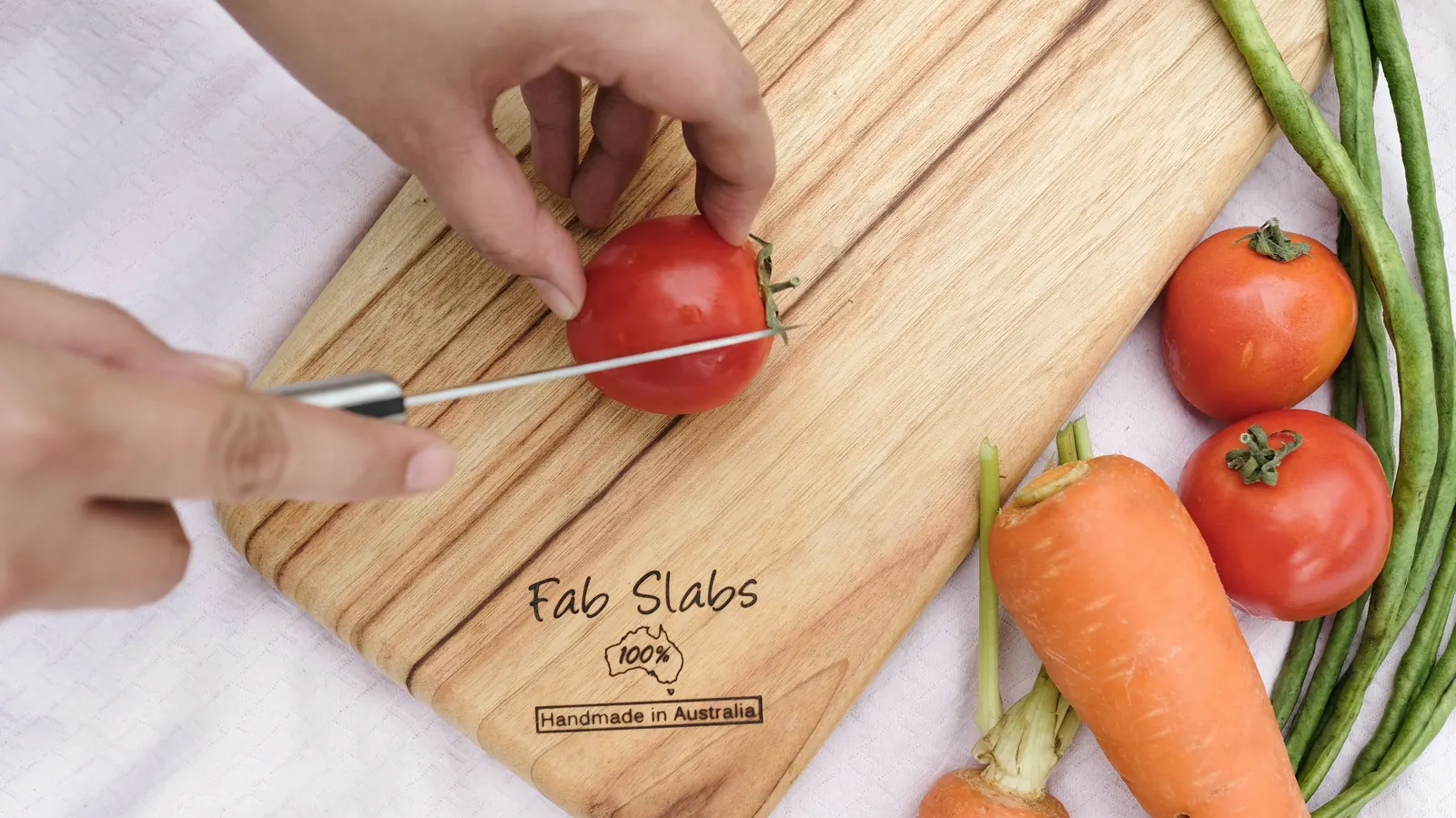
Glass cutting boards look clean and modern, they never stain, and they go in the dishwasher. Wood boards need oil, hand washing and a little care. On paper, glass sounds like the easier choice. In practice, the question that decides it is the one most shoppers ask too late: what does the board do to your knives?
This guide compares glass and wood cutting boards on knife edges, control and safety, hygiene and cleaning, upkeep, and what each one is actually good for. It draws on America’s Test Kitchen and the University of Maine Cooperative Extension, then says who should buy which and names one example of each.
Julia’s earns a commission on purchases made through links on this page, at no cost to you. Recommendations are based on what a restaurant kitchen looks for, product specifications and verified buyer reports.
Quick verdict: glass or wood for chopping?
For cutting, choose wood. Glass is much harder than knife steel and dulls a sharp edge quickly; America’s Test Kitchen says you should never cut on glass with knives you care about. A wood board is gentler on the edge, grips the blade so it doesn’t skate, and lasts for years with simple care. A glass board still has a place as a counter protector, a trivet for hot pans, or a serving board for cheese and bread, where no sharp knife touches it. If you are choosing one board to chop on, it should not be glass.
The table sums up the differences; the sections after it explain each one.
Glass vs wood cutting board, side by side
| Glass board | Wood board | |
|---|---|---|
| Effect on knives | Dulls the edge quickly (ATK, UMaine) | Gentler; end grain especially so (maker) |
| Knife control | Blade slides on the slick surface (ATK) | Surface grips the edge |
| Noise | Loud metal-on-glass (ATK) | Quiet |
| Porous | No; easy to clean (UMaine) | Yes; can absorb moisture if not cared for (UMaine) |
| Dishwasher | Often yes; check the maker | Hand wash; don’t soak (UMaine, maker) |
| Upkeep | None beyond washing | Food-safe mineral oil about monthly (UMaine) |
| Breakage | Can shatter if dropped (ATK) | Can warp or crack if soaked (UMaine) |
| Best use | Serving, counter protector, trivet | Everyday chopping and slicing |
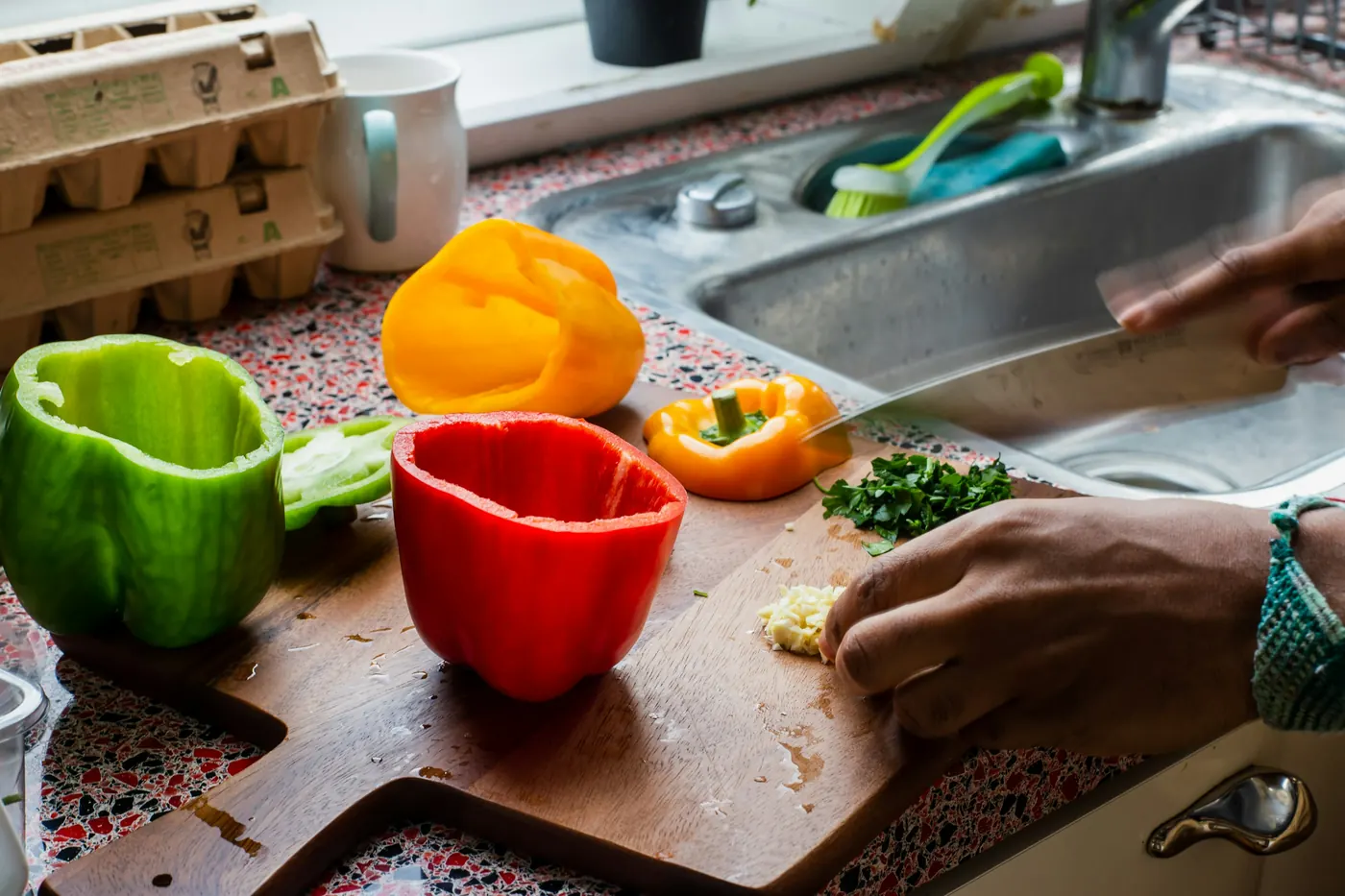
Knives: the deciding difference
Are glass boards bad for knives? Yes, and the sources agree on it. The editors of America’s Test Kitchen put it bluntly: glass is “simply too hard a material for most knives to withstand,” and every time the blade knocks against it, the sharp edge gets duller. They know this firsthand: when ATK tests honing rods, it uses a glass board on purpose to dull new chef’s knives before the test. The University of Maine Cooperative Extension’s bulletin on safe cutting boards makes the same point about glass, marble and stone: a hard surface “can dull knives quickly,” and it does not recommend them for heavy-duty chopping.
Wood gives a little under the edge instead of stopping it dead, which is why cooks with good knives use it. End grain, where the board’s surface is made of the ends of the wood fibers, is the gentlest. Ironwood Gourmet, which makes the wood board we pick below, says its end-grain construction minimizes wear on both the cutlery and the board. That is the maker’s claim, not an independent measurement.
Control and safety: glass is slippery
A knife edge needs a little grip. ATK says that on glass the knife “will slide against the slick, smooth surface, making it more difficult to control where the blade stops.” That matters most when you are slicing something round and firm, like an onion or a tomato skin, where a skating blade can end up in your fingers. Glass is also fragile in a way wood is not: ATK notes that a dropped glass board can shatter across the floor. Many glass boards have rubber feet to stop the board itself from sliding, but the feet don’t change how the blade behaves on the surface.
Then there is the noise. “Metal against glass is also loud and annoying,” ATK says, and anyone who has chopped on glass will agree.
Hygiene and cleaning: glass is easier, wood is fine with care
This is where glass has a real advantage. UMaine’s bulletin says nonporous boards, including glass, marble, stone, plastic and ceramic, are easier to clean and do not absorb bacteria. Wood can absorb moisture and bacteria if it isn’t maintained, and the bulletin says wood can be harder to sanitize thoroughly after raw meat or seafood.
That doesn’t make wood unsafe. UMaine’s routine for wood is to wash it with warm water and dish soap, and to sanitize when needed with 1/2 teaspoon of unscented liquid chlorine bleach per quart of water, leave it for a minute, then wipe it dry. The bulletin warns against soaking wood, which can warp or crack it. Many cooks keep a separate plastic board for raw meat for exactly this reason; our wood vs plastic cutting board comparison covers that choice in detail.
On both materials, UMaine says to replace a board once it has deep grooves, cracks or wear that can’t be cleaned. Glass rarely gets there, but wood can be sanded back; that is general workshop sense rather than a source’s claim.
Upkeep and lifespan
A glass board needs nothing but washing. A wood board needs a little more. UMaine recommends a food-safe mineral oil or beeswax about once a month, and says to avoid olive and vegetable oils, which can turn sticky and rancid. Ironwood gives similar care advice for its boards: hand wash with warm soapy water, towel dry promptly, and oil periodically with butcher block or mineral oil. If that sounds like a chore, it takes a few minutes, and a well-oiled board resists stains and drying out. For oils and creams, see our best cutting board oil guide.
What a glass board is actually good for
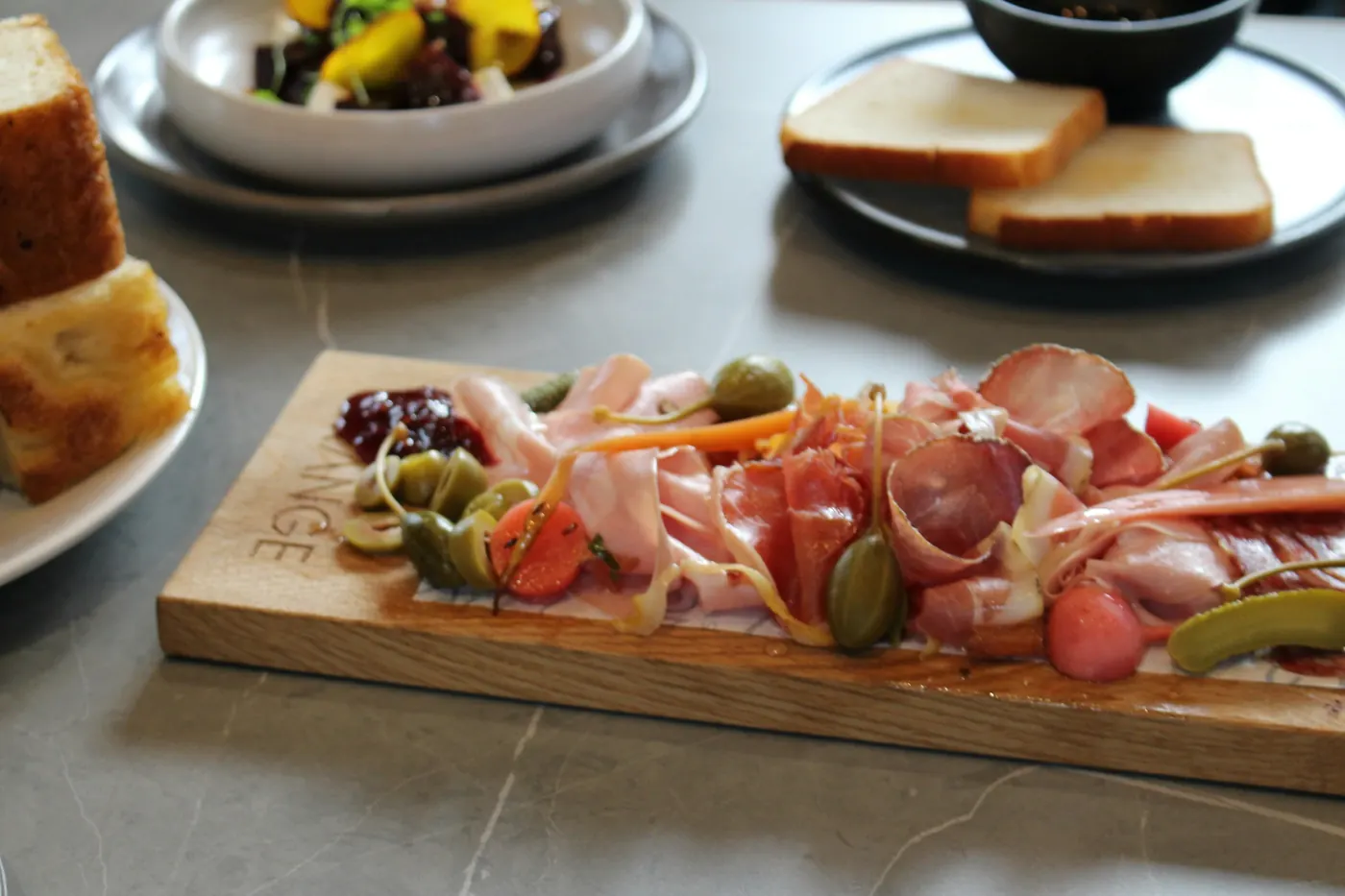
Glass does a few jobs well, and none of them involves a sharp knife. Farberware sells its tempered glass board as something you can leave out all the time to protect the counter from heat, condensation and scratches. ATK says glass or ceramic boards are fine for serving cheese or charcuterie, as long as the knives you use are not sharp. UMaine is a little more relaxed and lists chopping herbs and slicing bread as suitable light tasks, but given ATK’s findings on edges, we would keep even light cutting on a softer surface if your knives matter to you.
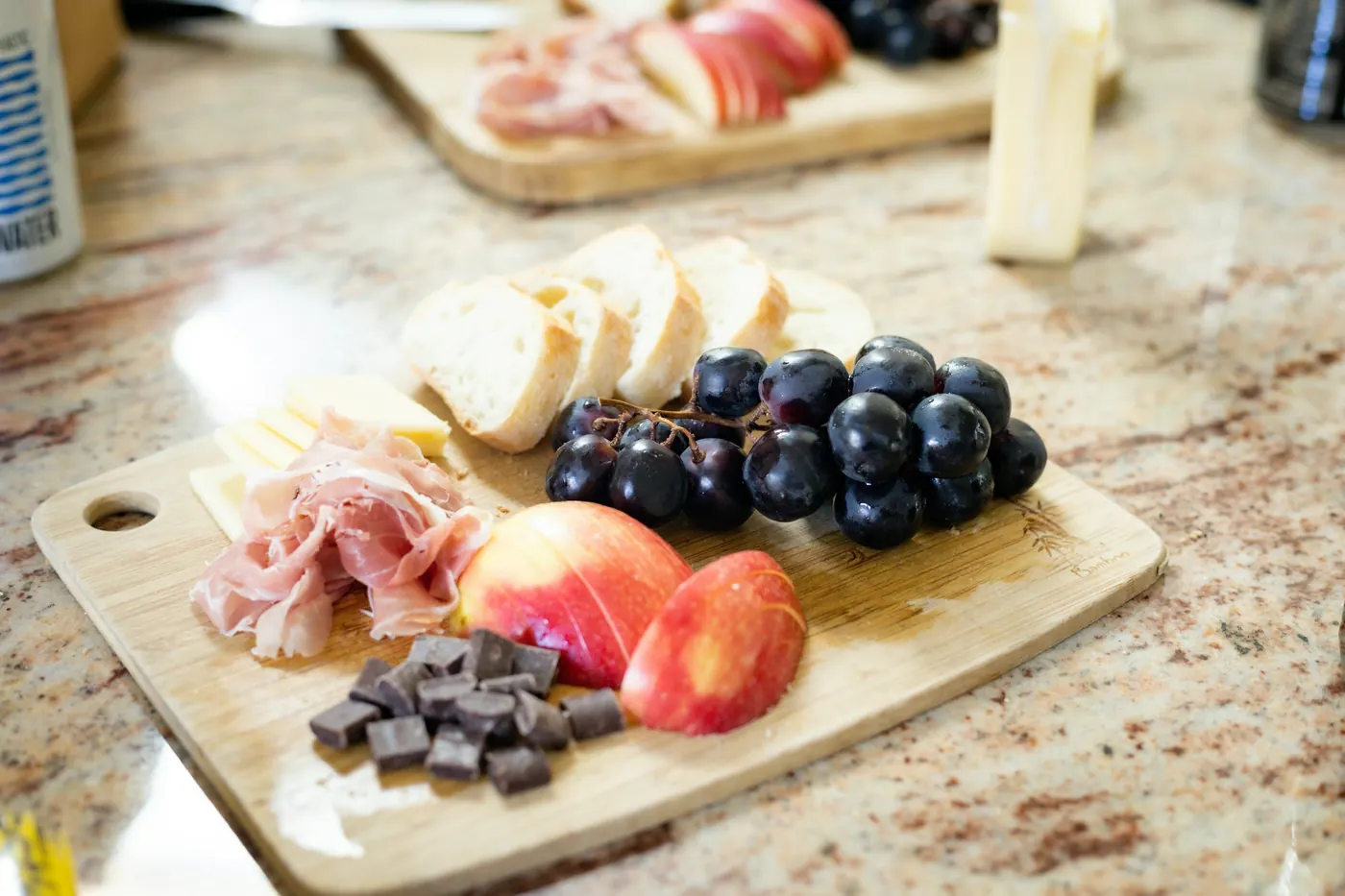
So a glass board makes sense as a landing spot for hot pans, a pastry or serving surface, or a protective layer on a counter you don’t want marked. Wood can also serve: the same board you chop on can carry bread or cheese to the table.
Choose a glass board if… / Choose a wood board if…
Choose a glass board if…
- You want a heat-safe counter protector or trivet that stays out all the time.
- You need a serving surface for cheese, bread or desserts with non-sharp knives.
- You want something you can put in the dishwasher and never oil.
- You don’t plan to chop on it with knives you care about.
Choose a wood board if…
- You want a daily chopping board that keeps your knives sharp.
- You want a surface that grips the blade for better control.
- You don’t mind hand washing and oiling about once a month.
- You want one board that also looks good for serving.
Our pick on each side of the glass vs wood cutting board question
One pick per side, both sold by Amazon itself when we checked and both in stock. The glass board appears on no other page of ours, and we recommend it for serving and counter protection rather than chopping. The wood board is the 12-inch square size of the Ironwood Oslo end-grain board in our best cheap end grain cutting board guide, where we review the larger 16 by 14-inch board; we include the smaller size because it is a handy everyday prep board that matches the glass board’s footprint. For more wood boards, see our best cutting board guide.
1. Farberware 12 x 14-inch Tempered Glass Board – A Counter Protector and Trivet

If you want a glass board, buy it for what glass does well. Farberware’s is a 12 by 14-inch sheet of tempered glass, 1/4 inch thick, with rubber feet underneath to keep it from sliding, according to the listing. Farberware says it is break-resistant, stain-resistant and won’t absorb odors, and that you can leave it out to protect the counter from heat, condensation and scratches. It is dishwasher safe.
That makes it a useful landing spot next to the stove for a hot pan or casserole, a clean surface for serving cheese and bread, or a protective layer on a counter. It is not the board to dice onions on with your chef’s knife: everything above about glass and edges applies to it too.
Farberware calls it break-resistant, but ATK’s warning about dropped glass still stands, so keep it away from the counter edge.
Why we like it
- Tempered glass, 12 x 14 x 1/4 inch (listing)
- Rubber feet keep the board from sliding (listing)
- Protects the counter from heat and scratches (listing)
- Dishwasher safe (listing)
Key specifications
| Model | 78624-10 |
|---|---|
| Material | Tempered glass |
| Size | 12 x 14 x 0.25 in |
| Grip | Rubber feet |
| Knife-friendly | No |
| Cleaning | Dishwasher safe |
| Upkeep | None |
Why we recommend it
It suits a cook who wants a heat-safe, easy-clean surface for serving and for protecting the counter.
Skip it if you were hoping for a chopping board; it will dull your knives.
Pros and cons
Pros
- Nonporous, won’t stain or hold odors
- Doubles as a trivet and counter protector
- Sold by Amazon when we checked
Cons
- Dulls knife edges
- Slippery under the blade and noisy
- Can break if dropped
2. Ironwood Gourmet Oslo End Grain Board, 12-inch Square – Easy on Knife Edges

For chopping, this is the kind of board to choose instead. Ironwood Gourmet’s Oslo is a 12-inch square, 0.8-inch-thick board in end-grain acacia, according to the listing. Ironwood says the end-grain construction minimizes wear on both cutlery and board, and that it was designed by a restaurateur and woodworker in North Carolina and is made in Thailand from sustainably harvested acacia.
Twelve inches square is a good everyday size: big enough to dice an onion or slice a few tomatoes, small enough to wash in the sink and store upright. It also works as a cheese or bread board, so it covers the glass board’s serving job too.
Care is the trade-off. Ironwood says to hand wash it with warm soapy water, towel dry promptly, and oil it periodically with butcher block or mineral oil, which matches UMaine’s advice. Don’t put it in the dishwasher or leave it soaking.
Why we like it
- End-grain acacia, easier on knives (maker)
- 12 x 12 x 0.8 inch, a handy prep size (listing)
- Clear care instructions from the maker
- Also works as a serving board (listing)
Key specifications
| Model | 28736 |
|---|---|
| Material | End-grain acacia wood |
| Size | 12 x 12 x 0.8 in |
| Grip | Not stated (no feet listed) |
| Knife-friendly | Yes, end grain (maker) |
| Cleaning | Hand wash, towel dry |
| Upkeep | Oil periodically |
Why we recommend it
It suits anyone who cooks with good knives and wants one everyday board that keeps them sharp and doubles for serving.
Skip it if you need to cut raw meat and want to run the board through the dishwasher; a plastic board is the easier choice for that job.
Pros and cons
Pros
- Gentle on knife edges
- Grips the blade for control
- Sold by Amazon when we checked
Cons
- Hand wash and oiling needed
- Too small for a whole chicken or brisket
- No feet; put a damp towel underneath
Glass and wood board questions, answered
Are glass boards bad for knives?
Yes. America’s Test Kitchen says glass is too hard for most knives and dulls the edge every time the blade hits it; it even uses a glass board to dull knives on purpose before testing honing rods. UMaine’s extension bulletin also says hard surfaces like glass dull knives quickly.
Is glass more hygienic than wood?
Glass is nonporous and easier to clean, UMaine says, while wood can absorb moisture and bacteria if it isn’t cared for. A wood board washed with hot soapy water, dried promptly and sanitized when needed is fine for everyday use; many cooks keep a separate plastic board for raw meat.
Can you put a glass cutting board in the dishwasher?
Many, yes. Farberware says its board is dishwasher safe, but some glass boards are labeled hand wash only, so check the maker’s instructions. Wood boards should be washed by hand.
What is a glass cutting board good for?
Serving cheese and bread with non-sharp knives, protecting the counter, and holding hot pans. Farberware markets its board as a counter protector, and ATK says glass is fine for serving as long as the knives aren’t sharp.
What is the best wood for a cutting board?
Maple, walnut and acacia are the woods you will see most often, and makers such as Ironwood say end grain is easier on knives. Our end grain vs edge grain comparison explains the difference.
Our take: chop on wood, serve on glass
If you only buy one board, make it wood: it keeps your knives sharp, gives you control, and lasts for years with a monthly oiling. A glass board is worth having only as a second piece, for serving, protecting the counter, or setting down a hot pan. Keep your chef’s knife off it, and both will serve you well.