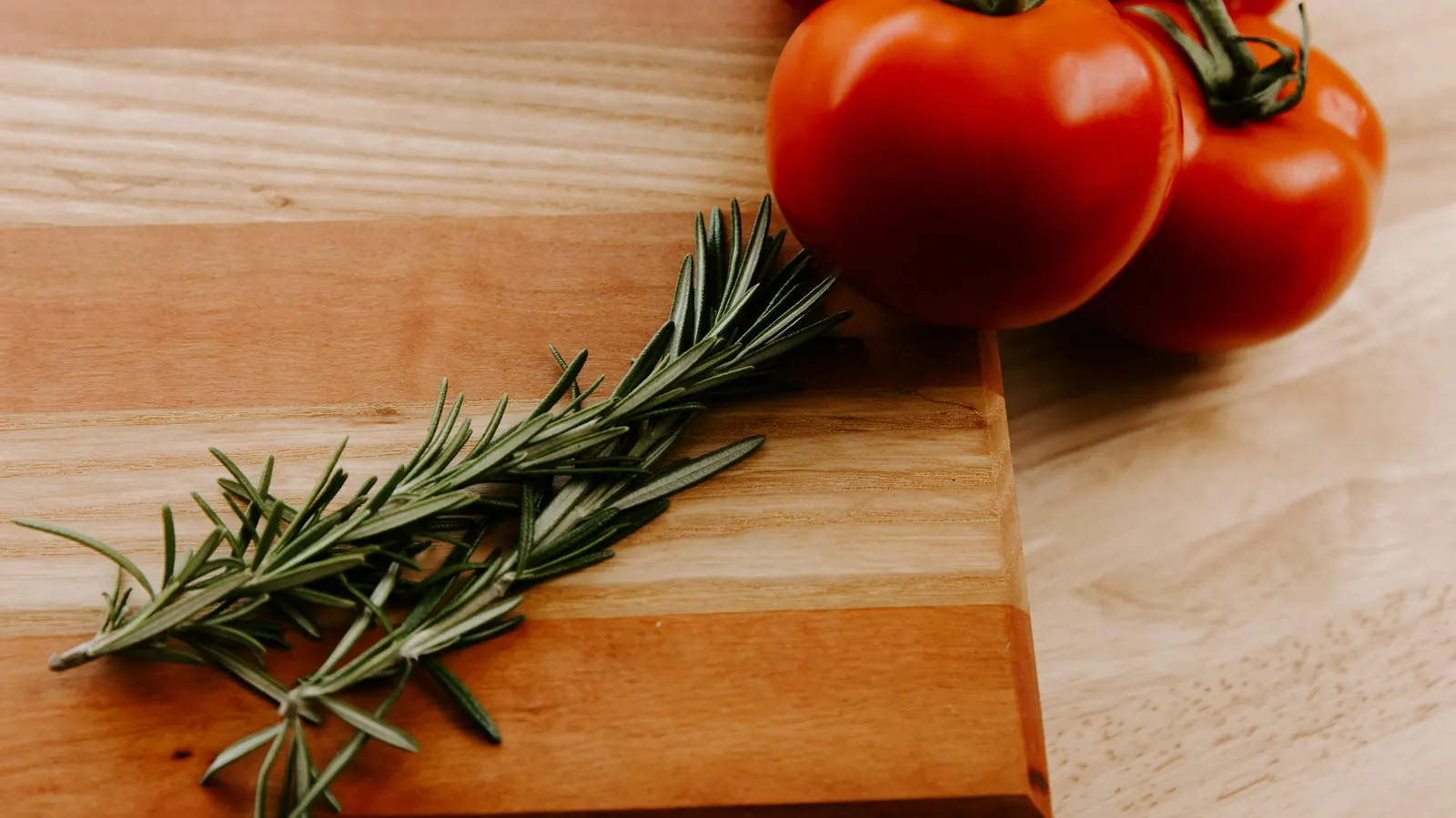
Wood or plastic is one of the oldest arguments in home kitchens, and most of it comes down to one question: which board is more sanitary? The short version is that neither material wins on its own. Food safety specialists at several university extension services say the same thing in different words: a board that is cleaned straight after use and replaced once it is badly scarred is safe, and a neglected board of either material is not.
That does not mean the choice makes no difference. Wood and plastic differ in how they clean, how they treat your knives, what upkeep they need and how long they last. In a restaurant kitchen the habit is simple: color-coded plastic boards for raw meat and seafood that go through the dish machine, and a solid wood board for bread, herbs and vegetables. This guide explains why that split works at home too, then names one board for each side.
Julia’s earns a commission on purchases made through links on this page, at no cost to you. Recommendations are based on what a restaurant kitchen looks for, product specifications and verified buyer reports.
Quick verdict: wood or plastic for your counter?
For most home cooks the best answer is both: a plastic board kept for raw meat, poultry and seafood, because it can go in the dishwasher, and a hardwood board for everything else, because it is kinder to knives and lasts for years with a little oil. If you can only own one, choose wood if you mostly cut produce, bread and cooked food and will wash it by hand right away, and choose plastic if you handle a lot of raw meat and want the dishwasher to do the cleaning.
The table sums up the differences; the sections after it explain each one and where the advice comes from.
Wood vs plastic cutting board, side by side
| Wood board | Plastic board | |
|---|---|---|
| Common materials | Maple, walnut, cherry, teak; edge or end grain | Polyethylene or polypropylene |
| Surface | Porous; absorbs moisture | Non-porous, but knife scars build up |
| Raw meat | Usable if washed at once; harder to sanitize (UMaine) | “Excellent” for raw meat, seafood and poultry (UMaine) |
| Dishwasher | Solid wood may be OK but can warp; glued boards may crack | Most plastic boards, yes |
| Knives | Hardwood such as maple less likely to dull them (NDSU) | Chefs note it can dull knives more quickly (NDSU) |
| Upkeep | Food-safe mineral oil or beeswax about once a month | None beyond washing |
| When to replace | Deep grooves, cracks or splits | Deep grooves or heavy scarring, usually sooner |
Which board is more sanitary?
This is the question behind most searches, and the honest answer is that the research has pointed both ways. Julie Garden-Robinson, food and nutrition specialist at North Dakota State University Extension, writes that researchers have studied wood and plastic boards “with various recommendations.” Sometimes plastic has come out ahead, she notes, while other research finds wood boards safe as long as they are cleaned thoroughly right away. University of Wisconsin Extension puts it more bluntly: there is “no easy answer,” either wood or a non-porous surface such as plastic can work, and what matters is how you handle the board.
Each material has a specific weakness. The University of Maine Cooperative Extension bulletin on cutting boards says wood can absorb moisture and harbor bacteria if it is not properly maintained, and is more difficult to sanitize thoroughly after raw meat or seafood. Plastic starts out non-porous, but the same bulletin warns that it develops knife scars where bacteria can grow, especially when used for raw meat. University of Illinois Extension makes the same point about any board: cut marks are good places for bacteria to hide.
So a brand-new plastic board is easy to clean, and an old, deeply scored one is not. A well-kept hardwood board is safe, and a cracked, damp one is not. The material sets the care routine; the routine decides the safety.
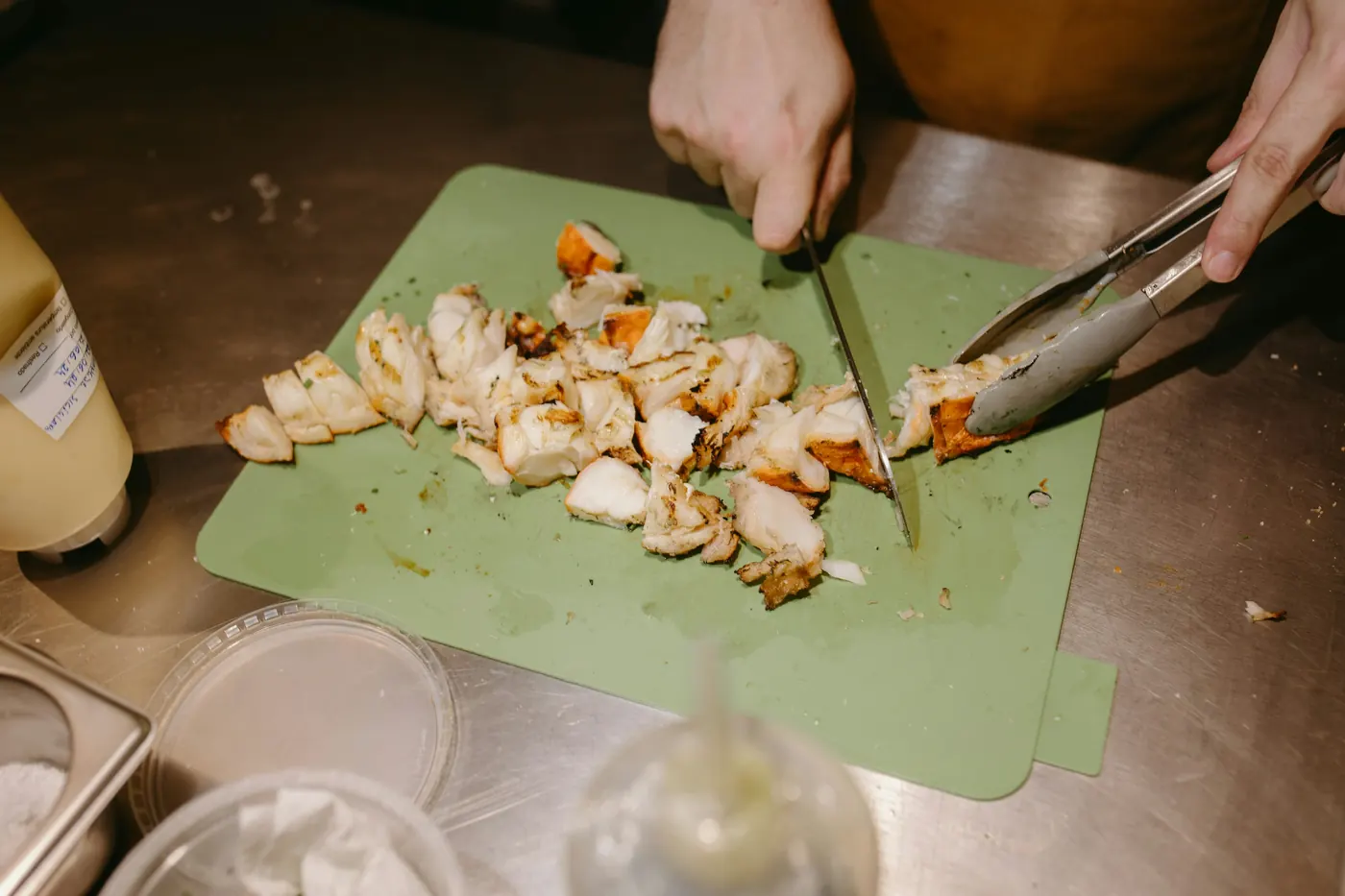
Raw meat: why plastic is the usual choice
Raw meat, poultry and seafood carry bacteria such as E. coli, salmonella and campylobacter, NDSU notes, and these can be left behind on the board. That is why the FDA’s safe food handling advice is to use one cutting board for fresh produce and a separate one for raw meat, poultry and seafood.
Plastic suits that second board for a practical reason: it can be cleaned hard. The UMaine bulletin calls plastic “excellent” for raw meat, seafood and poultry, and NDSU and Wisconsin Extension both say non-porous plastic boards can go through the dishwasher. A wood board can be used for raw meat if it is scrubbed with hot, soapy water at once, but it cannot take a dishwasher cycle as reliably, and UMaine says it is harder to sanitize. In our kitchen view, the raw-meat board is the one you want to throw in the machine without thinking twice, and that is a plastic board. Our best cutting board for meat guide covers that job in detail.
Cleaning and sanitizing each one
Both start the same way. Wisconsin Extension and NDSU say to wash the board with hot, soapy water after each use, scrubbing with a brush after raw meat, then rinse it. The FDA says to wash cutting boards with hot soapy water after preparing each food item.
For an extra sanitizing step after raw meat, NDSU and Wisconsin Extension give the same household solution: 1 tablespoon of unscented liquid chlorine bleach in 1 gallon of water. Flood the board or let it sit in the solution for a couple of minutes, rinse, and let it air-dry or pat it dry with a clean paper towel. Extension services do not all use the same mix: the UMaine bulletin gives half a teaspoon of bleach per quart, and for wood it advises soaking for no more than two minutes. Pick one published recipe and follow it, and do not soak a wood board for long.
The dishwasher is where the two part ways. NDSU says non-porous boards such as most plastic ones can go in the dishwasher. For wood, Wisconsin Extension says solid wood boards can be washed in a dishwasher but laminated boards may crack and split, while UMaine says solid wood may be OK but some boards may warp, and glued slabs are prone to cracking or separation. Most wood board makers ask for hand washing, so read the care card for yours; the J.K. Adams listing below does not say either way.
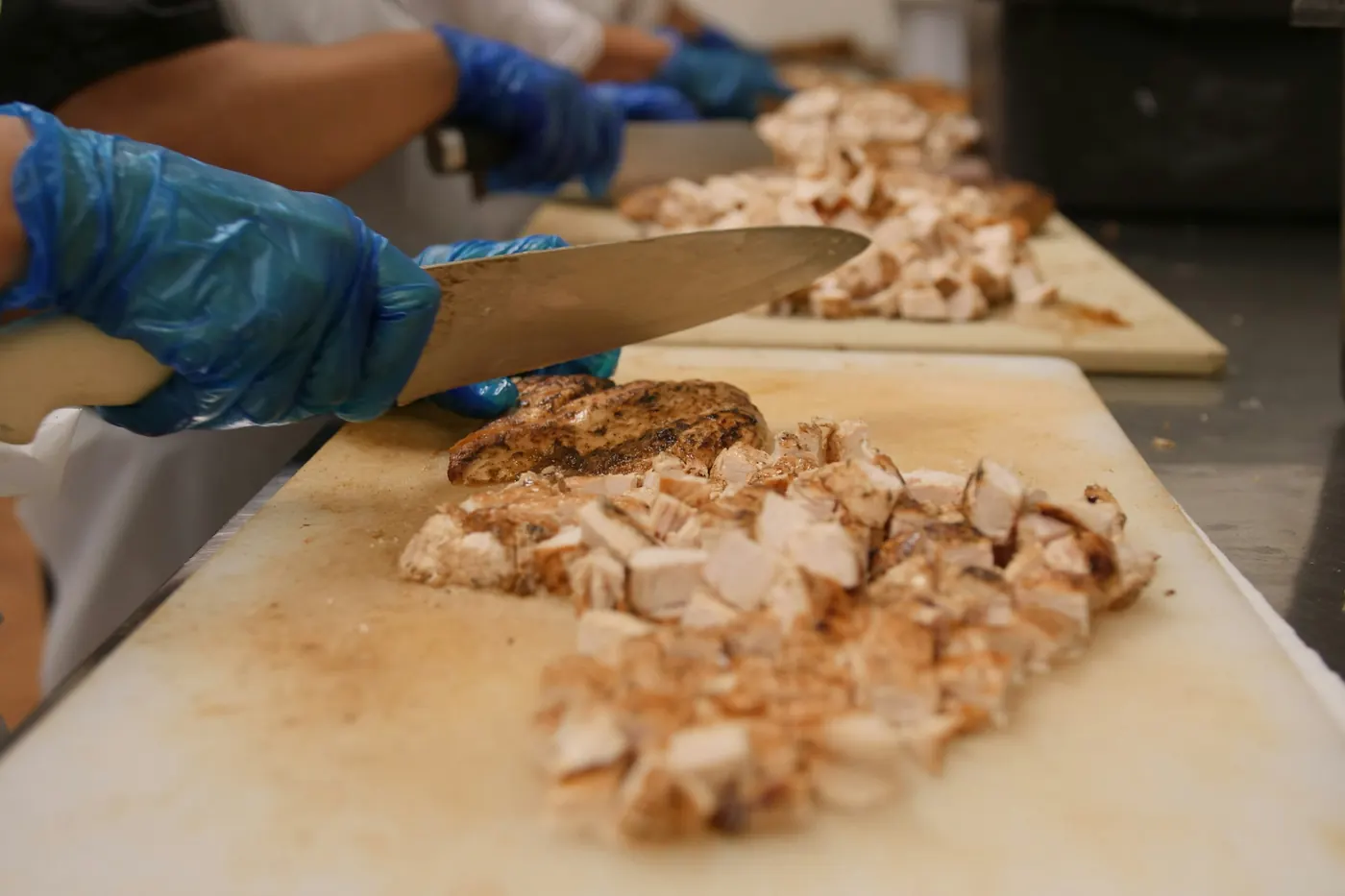
Knives: wood is the gentler surface
A board that dulls your knife makes every task slower and less safe, because a dull blade slips. NDSU’s Garden-Robinson notes that chefs find plastic boards can dull knives more quickly, and that boards made of hardwood such as maple are less likely to dull them. Plastic makers say their boards are gentle too; Dexas, for example, says its Polysafe board is gentle even on professional knives. Treat that as the maker’s claim. If you own good knives and do a lot of chopping, the wood board is the one to reach for, and our best cutting board for Japanese knives guide goes further on that point.
Upkeep and lifespan
Plastic needs nothing beyond washing, but it wears out. Illinois Extension says that once there are many cut marks, including deep grooves, it is time for a new board, and Wisconsin Extension says to discard boards that are excessively worn or have hard-to-clean grooves. NDSU suggests a simple check: does the board have grooves that are difficult to clean? A thin plastic board in daily use reaches that point sooner than a thick hardwood one. That is general kitchen experience rather than a published figure.
Wood asks for a few minutes a month. The UMaine bulletin recommends a food-safe mineral oil or beeswax about once a month, and says to avoid cooking oils such as olive or vegetable oil, which can turn sticky and rancid. Oil keeps the wood from drying out and cracking, and a cracked board is one to replace whatever it is made of. Our best cutting board oil guide covers what to use.
Weight, size and everyday handling
Plastic boards are usually thinner and lighter, which makes them easy to carry to the sink and to store upright. A thick hardwood board stays put on the counter but is heavier to lift into a sink, and that is one reason people put off washing it. If you would rather not lift a heavy board after every use, a lighter wood board of around three quarters of an inch, like the J.K. Adams pick below, is a fair middle ground. Whichever you choose, put a damp towel under any board that slides.
Choose a wood board if… / Choose a plastic board if…
Choose a wood cutting board if…
- You mostly cut vegetables, herbs, bread, fruit and cooked meat.
- You care about keeping your knives sharp.
- You will wash it by hand straight after use and oil it about once a month.
- You want one board that can sit out on the counter or go to the table.
Choose a plastic cutting board if…
- You need a dedicated board for raw meat, poultry or seafood.
- You want to clean it in the dishwasher.
- You want something light and easy to store.
- You are happy to replace it once it is deeply scored.
One board on each side of the wood vs plastic cutting board question
One pick per side, chosen to be close in size so the comparison is fair: a 14 by 10-inch maple board and an 11 by 14.5-inch polypropylene board. Both were in stock when we checked, both are made in the USA according to their listings, and neither appears on our other cutting board pages.
1. J.K. Adams Williston Maple Prep Board, 14 x 10 inch – Vermont Maple for Daily Prep

J.K. Adams makes wooden kitchenware in Dorset, Vermont, and this is its medium prep board in maple. The listing gives the size as 14 by 10 inches and three quarters of an inch thick, made from sustainably grown and harvested North American hardwoods, with a hole in one corner so it can hang on the wall.
It is a working board rather than a showpiece. At 14 by 10 inches it handles an onion, a few peppers or a bunch of cilantro, and at three quarters of an inch it is light enough to carry to the sink after every use, which is the habit that keeps a wood board safe. Maple is the hardwood NDSU names as less likely to dull knives.
The listing does not give a weight or say whether the board is dishwasher safe, so treat it as hand wash only: hot, soapy water straight after use, dry it standing on edge, and oil it with food-safe mineral oil about once a month, as the UMaine bulletin advises. J.K. Adams offers a lifetime guarantee and says it will replace a product if you ever have a problem with it.
Why we like it
- Made in Vermont from North American hardwood (listing)
- Maple, a knife-friendly hardwood (NDSU)
- Light enough at 0.75 inch to wash after every use
- Lifetime guarantee from the maker (listing)
Key specifications
| Model | WLS-1410 |
|---|---|
| Material | Maple |
| Size | 14 x 10 inches |
| Thickness | 0.75 inch |
| Reversible | Not stated |
| Dishwasher safe | Not stated; hand wash |
| Made in | USA (Vermont) |
| Care | Hot soapy water, dry, oil monthly |
Why we recommend it
It suits a home cook who wants a plain, well-made maple board for vegetables, herbs and bread, and who will wash it by hand.
Skip it if you want a big board for carving or a thick end-grain block; our best cutting board wood guide covers larger boards.
Pros and cons
Pros
- Made in Vermont
- Manageable size and weight
- Hanging hole for storage
Cons
- No juice groove
- Weight and dishwasher use not stated
- Too small for a roast or a whole chicken
2. Dexas Polysafe Cutting Board, 11 x 14.5 inch – NSF-Certified, Dishwasher Safe

Dexas’s Polysafe line is a plain polypropylene board that suits a dedicated raw-meat role. The listing describes this one as 11 by 14.5 inches, NSF certified, non-porous and non-absorbent, with a handle and a reversible surface, and says it is made in the USA.
The reason to choose it is the cleaning. Dexas says it is dishwasher safe, which is exactly what you want from the board that handles raw chicken or shrimp: scrape it, rinse it and put it in the machine. Being reversible, you can also keep one side for raw meat and the other for cooked food, though a second board in a different color is the clearer way to keep them apart.
Dexas says the surface is stain resistant and gentle even on professional knives; those are the maker’s words. Like any plastic board, it will collect knife marks over time, and the extension advice is to replace it once the grooves are deep and hard to clean. The listing does not state the thickness or weight.
Why we like it
- NSF certified, per the listing
- Dishwasher safe (maker)
- Made in the USA (listing)
- Handle and reversible surface
Key specifications
| Model | 451S-133 |
|---|---|
| Material | Polypropylene |
| Size | 11 x 14.5 inches |
| Thickness | Not stated |
| Reversible | Yes |
| Dishwasher safe | Yes |
| Made in | USA |
| Care | Dishwasher; replace when deeply scored |
Why we recommend it
It suits a cook who wants a separate, easy-to-sanitize board for raw meat, poultry and seafood, from an established maker.
Skip it if you want a juice groove or color coding; our best cutting board plastic guide covers those.
Pros and cons
Pros
- Goes in the dishwasher
- NSF certified
- Light, with a handle
Cons
- No juice groove
- Will scar and need replacing in time
- Thickness not stated
Wood and plastic board questions, answered
Is a wood or plastic cutting board more sanitary?
Neither is clearly cleaner in every case. Extension specialists at NDSU and Wisconsin say research has pointed both ways and that handling matters most. Wood is harder to sanitize after raw meat, according to UMaine; plastic is easier to clean when new but harbors bacteria in deep knife scars. Wash either one right after use and replace it when it is deeply grooved.
Can I use a wood cutting board for raw meat?
You can, if you scrub it with hot, soapy water straight away and sanitize it. But UMaine says wood is harder to sanitize after raw meat and calls plastic excellent for that job, so most kitchens keep a plastic board for raw meat. The FDA advises a separate board for raw meat, poultry and seafood either way.
Can wood cutting boards go in the dishwasher?
Extension advice is cautious. Wisconsin Extension says solid wood boards can, but laminated boards may crack and split; UMaine says some solid boards may warp. Most wood board makers ask for hand washing, so follow your board’s care instructions.
How often should you replace a plastic cutting board?
There is no fixed schedule. Illinois and Wisconsin Extension say to replace it once it has many cut marks or deep, hard-to-clean grooves.
Do plastic boards dull knives faster than wood?
NDSU notes that chefs find plastic can dull knives more quickly, and that hardwoods such as maple are less likely to. A wood board is the better everyday surface for good knives.
Our take: own one of each
If you cook raw meat at home, the most practical setup is the one restaurant kitchens use: a plastic board for raw meat that goes straight in the dishwasher, and a hardwood board for everything else. If you buy only one, buy for what you cut most. For more choices, our guide to the best cutting board wood covers maple, walnut and teak in edge and end grain, our best cutting board plastic guide covers plastic and composite boards, and our overall best cutting board guide compares every material. And when you would rather leave the chopping to someone else, see the menu or call to order.